Trampoline Park Design Mistakes That Reduce Repeat Visits
Publication Date
author
Even the most promising venue can lose momentum when trampoline park design overlooks what drives guests to return. For business decision-makers, small layout, safety, and flow errors often translate into shorter dwell time, weaker word-of-mouth, and lower repeat revenue. This article explores the most common design mistakes that quietly reduce repeat visits—and how smarter planning can turn first-time traffic into lasting customer loyalty.
Why does trampoline park design have such a strong impact on repeat visits?
Many operators assume that novelty alone keeps a trampoline venue busy. In reality, first visits are often driven by curiosity, but repeat visits depend on experience quality. That makes trampoline park design a strategic business issue, not just an architectural one. Guests return when the park feels safe, intuitive, energetic, and worth the time and money. They stay away when the space feels confusing, overcrowded, repetitive, or stressful for parents and group organizers.
For enterprise decision-makers, the key point is simple: poor design reduces the lifetime value of every acquired customer. If the venue creates friction at entry, causes long waits at popular zones, limits visibility for supervision, or fails to support multiple age groups, the business will spend more on marketing just to replace lost repeat traffic. In data-driven terms, design influences dwell time, queue tolerance, safety perception, social sharing, birthday booking conversion, and membership renewal rates.
A well-planned trampoline park design should therefore be evaluated like any other operating asset. It must support throughput, minimize avoidable risk, and create enough variety to motivate guests to come back. When the design misses these fundamentals, the venue may still open strong, but retention usually weakens over time.
What is the most common layout mistake that makes guests feel the park is “not worth another visit”?
The most frequent mistake is over-prioritizing capacity while under-prioritizing flow. Some projects try to fit in as many attractions as possible, but the result is a crowded floor plan with poor circulation, bottlenecks between zones, and limited recovery space around high-energy activities. On paper, this can look efficient. In practice, it often creates stress, collisions, waiting, and a lower-quality visit.
Guests rarely describe this problem using technical language. They simply say the park felt chaotic, too packed, or hard to enjoy. Parents may feel they cannot easily monitor children. Teen groups may get frustrated when high-demand attractions are always blocked. Staff may struggle to enforce rules because sightlines are interrupted by walls, equipment placement, or poorly positioned seating.
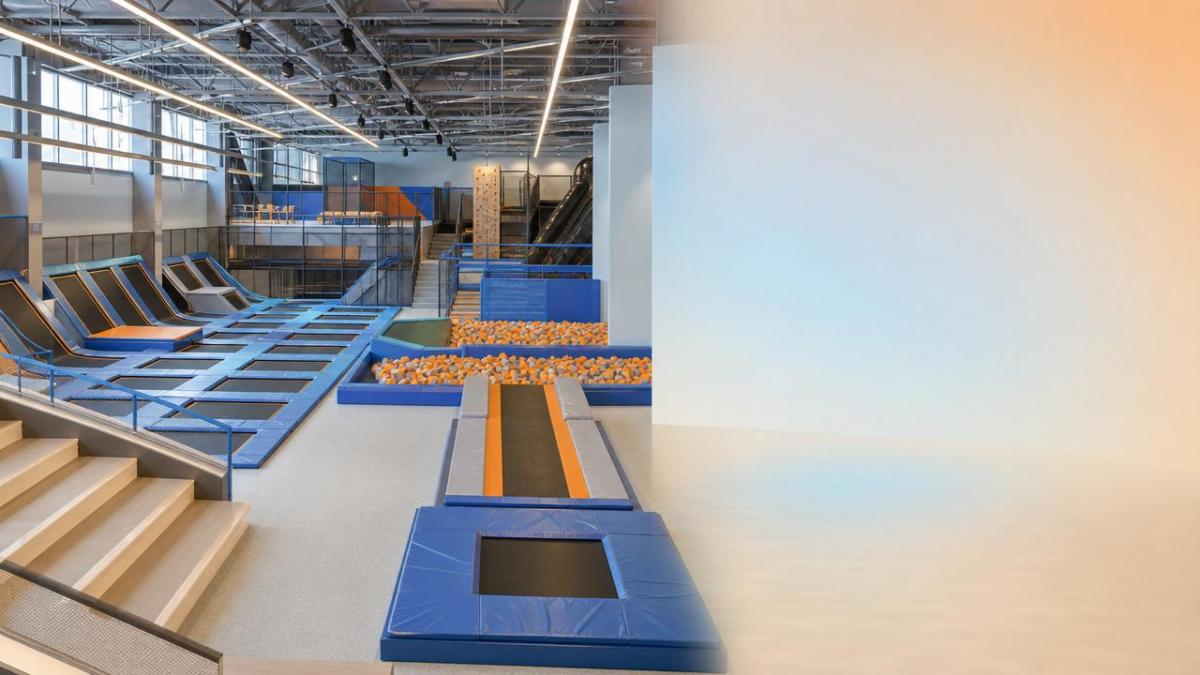
Effective trampoline park design should separate high-intensity zones, beginner-friendly areas, spectator space, and circulation paths with operational logic in mind. The goal is not empty space for its own sake. The goal is productive space that improves comfort, safety, and movement. Operators that treat circulation as a revenue enabler often see better repeat behavior because guests can actually experience more of the venue during each visit.
How do safety-related design mistakes reduce loyalty even when no major incident occurs?
Business leaders often focus on safety only in terms of compliance and liability. That is necessary, but incomplete. In customer behavior terms, safety perception is just as important as actual incident rates. A venue can meet baseline standards and still feel risky if guests see blind corners, mixed skill levels in the same zone, harsh transitions between attractions, or staff who cannot observe activity clearly.
This matters because repeat visits are strongly influenced by emotional memory. Parents do not need a formal accident to decide not to return. A few near-misses, uncontrolled landings, or difficult entry and exit points can be enough to reduce trust. For teens and young adults, the issue may be different: if the park feels overly restrictive because the design itself creates avoidable safety conflicts, the experience becomes less fun and less shareable.
Strong trampoline park design addresses safety through spatial intelligence. That includes better transition zones, clearer user separation, stable observation lines for staff, impact-aware padding strategy, and queue positioning that does not push waiting guests into active play areas. The best designs make safety feel natural rather than heavily enforced. When users feel both freedom and control, they are more likely to come back.
Why do “too few attractions” and “too many attractions” both hurt repeat business?
This is one of the most misunderstood planning questions. A park with too few activity types becomes repetitive after one or two visits. Guests feel they have already experienced everything. That is especially damaging for local markets where repeat attendance, memberships, and birthday events are core revenue drivers.
At the same time, trying to solve that problem by cramming in every trending feature often creates the opposite issue. The venue loses coherence, maintenance complexity rises, and core attractions may receive less usable space. Some features look impressive in a proposal but fail to deliver consistent replay value. If a zone has low throughput, a narrow age appeal, or frequent downtime, it can occupy expensive floor area without supporting repeat demand.
The smarter approach to trampoline park design is attraction mix planning based on guest segments and visit patterns. Ask which experiences drive first-time excitement, which support repeat mastery, which work well for family groups, and which increase party or event monetization. A balanced park usually includes signature attractions, broad-appeal play zones, progressive challenge elements, and comfortable supporting spaces. The objective is not maximum feature count. It is durable entertainment value.
How does poor zoning for age groups and user types lead to fewer returning families?
Family retention depends heavily on whether different user groups can enjoy the venue without interfering with one another. One of the clearest trampoline park design mistakes is treating all guests as if they have similar physical ability, risk tolerance, and play expectations. In reality, toddlers, young children, teens, and adults use the same environment very differently.
When young children are placed too close to fast-moving older users, parents feel immediate concern. When teens are pushed into low-challenge zones because the venue is overly simplified, they lose interest quickly. When party groups have no semi-private staging area, celebrations feel disorganized. When spectators and café users are disconnected from the action, adults may shorten the visit even if children want to stay longer.
Good zoning solves several business problems at once. It improves comfort, raises perceived value, and supports broader audience capture throughout the week. Decision-makers should review whether the trampoline park design includes age-calibrated play, flexible event use, adequate acoustic separation where possible, and supervision-friendly relationships between active zones and support spaces. These details are not cosmetic. They shape whether the venue becomes a recurring family destination or a one-time outing.
What operational friction points should owners watch for during trampoline park design planning?
Many repeat-visit problems begin outside the trampoline zones themselves. Guests remember the entire journey: arrival, check-in, waiver processing, locker access, shoe storage, seating availability, food and beverage access, restroom convenience, and exit flow. If these support systems are poorly integrated, even a visually attractive park can lose return customers.
For example, a high-volume venue with a weak front-of-house layout often creates long entry lines and a rushed first impression. In contrast, a park with limited rest areas or poorly placed concessions may reduce dwell time because families have no comfortable way to take breaks. Similarly, if party rooms interrupt circulation or absorb prime space without operational efficiency, they can undermine both event performance and general admission experience.
From a business perspective, trampoline park design should be reviewed through an operations lens before construction begins. Can staff manage supervision efficiently? Can peak traffic be absorbed without congestion? Are premium services positioned to convert naturally? Are maintenance access and cleaning routines practical? Design that ignores daily operations may still look strong in renderings, but it usually underperforms in retention metrics.
How can decision-makers tell whether a design concept supports loyalty instead of just opening-day appeal?
A useful test is to stop asking whether the venue looks exciting and start asking whether it remains rewarding after the third or fourth visit. That shift changes the evaluation criteria significantly. Opening-day appeal often comes from visual impact and feature novelty. Loyalty comes from usability, comfort, social interaction, repeatable challenge, and operational consistency.
During concept review, decision-makers should pressure-test the trampoline park design against a few practical scenarios. How does a parent with two children of different ages experience the park? How does a birthday group move from check-in to play to food service? How does the venue perform on a rainy weekend at near-peak capacity? What happens when one popular feature is offline for maintenance? If the design still works under these conditions, it is more likely to support repeat visits.
Another strong indicator is whether the design can evolve. Markets change, guest preferences shift, and operators often need to refresh attractions over time. A flexible layout with modular thinking is usually more resilient than a rigid plan built around a single trend. Long-term value comes from a venue that can adapt without major disruption.
What are the smartest ways to avoid costly trampoline park design mistakes before build-out?
The first step is to define success metrics before finalizing the layout. If the business model depends on repeat family traffic, party bookings, school groups, or memberships, the design must reflect those priorities from the start. Too many projects begin with available square footage and then force a concept into it, instead of aligning space planning with revenue logic.
Second, evaluate design proposals using operational data, not just visual presentations. Benchmark expected throughput by zone, supervision ratios, queue exposure, maintenance intensity, and age-group compatibility. This aligns well with a data-first decision culture: parameters matter more than adjectives. A concept described as “premium” or “innovative” is far less useful than one that clearly shows how it reduces congestion, improves line-of-sight supervision, or increases multi-segment usability.
Third, involve cross-functional review early. Owners, operators, safety consultants, front-line managers, and commercial teams often see different risks. The strongest trampoline park design outcomes come from integrating these perspectives before procurement and construction lock in expensive mistakes.
Quick due-diligence checklist for buyers and investors
Before approving a final concept, ask whether the design supports clear user flow, visible supervision, balanced attraction mix, age-group zoning, efficient front-of-house operations, comfortable spectator space, and future adaptability. Also verify whether the plan protects revenue during peak periods instead of simply maximizing fixture density.
What should you clarify first if you want a design partner to improve repeat-visit performance?
If the next step is evaluating a vendor, consultant, or design-build partner, start the conversation with business-critical questions rather than style preferences. Ask how they approach guest flow, how they segment users by age and behavior, how they reduce hidden friction in the arrival-to-exit journey, and how they balance first-visit excitement with long-term replay value. Request examples of how their trampoline park design process addresses queue pressure, supervision visibility, support-space planning, and refresh flexibility over time.
For decision-makers, that level of questioning creates a better filter. It separates decorative concepts from performance-oriented design thinking. In a competitive leisure market, repeat visits are rarely won by aesthetics alone. They are earned through planning that turns safety, circulation, comfort, and attraction strategy into a consistent customer experience. If you need to confirm a specific concept, timeline, investment direction, or partner fit, begin with the operational questions that most directly affect retention and revenue quality.
Search News
Hot Articles
- Carbon Fiber StructuresHow to Specify Aerospace Carbon Fiber Assemblies for Lightweight, Load-Bearing PartsJul 11, 2026
- Machine VisionXiaomi, Alibaba DAMO Academy Drive Open-Source Robotics Model Ecosystem, Lowering Algorithm Development Barriers for Overseas SMEs Adopting Chinese Robotics SolutionsMar 30, 2026
- Cobots & ArmsShanxi 'AI+' Conference Showcases Embodied Intelligence with Multinational Buyer Engagement: Key Industry ImplicationsMar 30, 2026
Popular Tags
Recommended News
 Jul 11, 2026How to Specify Aerospace Carbon Fiber Assemblies for Lightweight, Load-Bearing PartsAerospace carbon fiber assemblies: learn how to specify laminate design, load data, joining methods, and inspection controls for lighter, reliable load-bearing aerospace parts.Elena Rostova (UAV Systems Researcher)
 Mar 30, 2026Xiaomi, Alibaba DAMO Academy Drive Open-Source Robotics Model Ecosystem, Lowering Algorithm Development Barriers for Overseas SMEs Adopting Chinese Robotics SolutionsXiaomi & Alibaba DAMO Academy's open-source robotics models lower algorithm barriers for global SMEs. Boost efficiency in manufacturing, logistics & smart retail with ROS 2 compatible solutions.TSV Data Lab
 Mar 30, 2026Shanxi 'AI+' Conference Showcases Embodied Intelligence with Multinational Buyer Engagement: Key Industry ImplicationsShanxi 'AI+' Conference highlights embodied intelligence with Tesla, Ubtech & Jiantao showcasing multimodal robotics. 40+ global buyers validated tech on-site, creating new B2B channels for industrial automation & AI solutions.Chen Wei (Automation Lead Engineer)
 Mar 30, 2026Zhongguancun Unveils 6G Integrated Sensing-Computing-Intelligence Platform to Empower Embodied Robots for Global Industrial ApplicationsZhongguancun's new 6G platform revolutionizes industrial robotics with <10ms latency, empowering global automotive, logistics & port automation. Discover how this tech boosts China's smart manufacturing exports.TSV Data Lab
 Mar 30, 2026Mech-Mind Tianjin Embodied Intelligence R&D and Production Base Goes Live, Cutting Delivery Time by 20%–30% for Global Customized AMR+Vision SolutionsMech-Mind's Tianjin AMR+Vision production base cuts delivery time by 20%-30% for欧美 & Latin American markets. Discover how this PLd-certified facility accelerates customized robotics solutions for smart manufacturing and logistics.Chen Wei (Automation Lead Engineer)
 Mar 30, 2026Boao Forum Reveals 'Co-evolution of Big and Small Brains' Trend in Humanoid Robots, China's Embodied Intelligence Accelerates Adaptation to Overseas Manufacturing Service ScenariosDiscover how China's humanoid robots, featuring 'Co-evolution of Big and Small Brains,' are revolutionizing global manufacturing. Learn about Embodied Tian Gong 3.0's ISO compliance and overseas deployment at Boao Forum 2026.Chen Wei (Automation Lead Engineer)
 Mar 30, 2026China Railway Industrial Secures Patent for Embodied Robotics in Material Handling, Boosting High-Precision Delivery Capabilities for Overseas Infrastructure and Manufacturing ProjectsChina Railway Industrial's new patent for embodied robotics in material handling boosts high-precision delivery for global infrastructure & manufacturing. Discover how this innovation enhances logistics accuracy in automotive, rail transit & EPC projects.Chen Wei (Automation Lead Engineer)
 Sep 29, 2026ISO 9283 Repeatability: How to Evaluate Cobot Positioning PerformanceISO 9283 cobot repeatability explained: learn how payload, reach, approach direction, and test conditions affect positioning performance and cell capability.Chen Wei (Automation Lead Engineer)
 Sep 28, 2026Spindle Runout Measurement in Germany: DIN Standards, Methods, and Acceptance LimitsSpindle runout measurement Germany: explore DIN standards, proven methods, acceptance limits, and audit-ready practices for reliable machining quality.Dr. Marcus Vance
 Sep 27, 2026How to Select Wall-Mount Edge Devices for Space-Constrained Factory NetworksWall mount edge devices for space-constrained factories: evaluate workload, thermal design, power resilience, cable access, and network reliability for smarter deployments.TSV Data Lab
 Sep 26, 2026Machining Tolerance Analysis: How to Set Limits That Meet Function and Cost TargetsMachining tolerance analysis: learn how to set functional limits, control tolerance stacks, reduce inspection risk, and balance precision with production cost.Dr. Marcus Vance
 Sep 25, 2026How to Evaluate an Industrial Infrastructure Data Platform for Multi-Site OperationsIndustrial infrastructure data platform evaluation guide for multi-site operations: compare data quality, edge resilience, interoperability, governance, and scalable proof-of-value criteria.Victor Lin (Chief Software Architect)
 Sep 24, 2026How to Select Machine Vision Optics for Accurate Inspection at Different Working DistancesMachine vision optics selection guide for accurate inspection at every working distance. Compare FOV, pixel scale, DOF, distortion, lighting, and telecentric options.TSV Data Lab
 Sep 23, 2026How to Evaluate a Machine Vision System Integrator for High-Speed Inspection LinesChoose a machine vision system integrator with proven expertise in high-speed inspection, reliable reject timing, robust optics, and measurable acceptance criteria.TSV Data Lab
 Sep 28, 2026When is a SCADA API the right choice for connecting plant systems?SCADA API guide: learn when governed plant data integration improves traceability, security, and scalability—without compromising real-time control.Victor Lin (Chief Software Architect)
 Sep 27, 2026How SCADA data integration improves traceability across production linesSCADA data integration connects production-line data to improve traceability, accelerate quality investigations, and strengthen safety decisions.Victor Lin (Chief Software Architect)
 Sep 26, 2026What to define before starting SCADA integration planningSCADA integration planning starts with clear scope, control boundaries, data models, cybersecurity, and testing. Discover the definitions that reduce risk and costly rework.Victor Lin (Chief Software Architect)
 Sep 25, 2026How a smart factory with Industrial IoT reduces production blind spotsDiscover how a smart factory with Industrial IoT turns real-time machine, quality, and workflow data into actionable insights that reduce production blind spots and delivery risks.Victor Lin (Chief Software Architect)
 Sep 24, 2026When does Industrial IoT make smart manufacturing easier to scale?Smart manufacturing Industrial IoT scales when trusted data, interoperable systems, and secure workflows turn connected assets into measurable gains.TSV Data Lab
 Sep 23, 2026What drives ultra-precision machining cost at 1-micron tolerance?Ultra precision machining cost per part at 1 micron tolerance depends on process, material, metrology, and yield. Learn how to compare quotes confidently.Dr. Marcus Vance
 Sep 22, 2026Drone Engine-T550CC Applications: Build the UAV Power System Around the MissionAn application guide for Drone Engine-T550CC integration, covering payload planning, airframe matching, cooling, fuel, vibration, test procedures, documentation, and service preparation.Elena Rostova (UAV Systems Researcher)
 Sep 22, 2026How to Evaluate Industrial Edge Computing Vendors for Factory DeploymentIndustrial edge computing vendor evaluation guide for factories: compare latency, protocol fit, reliability, security, and lifecycle support before deployment.TSV Data Lab
 Sep 21, 2026Drone Payload Integration: Matching Power, Data, and Center of Gravity for Reliable FlightsDrone payload integration made practical: balance power, data, center of gravity, and endurance to build safer, more reliable mission-ready flights.Elena Rostova (UAV Systems Researcher)
 Sep 20, 2026Autonomous Navigation Pricing: Cost Drivers and Budget Benchmarks for AMR ProjectsAutonomous navigation price explained: compare AMR cost drivers, software, sensors, integration, safety, and lifecycle budgets to build a scalable project plan.Chen Wei (Automation Lead Engineer)