How Trampoline Park Layout Affects Safety and Flow
Publication Date
author
In any trampoline facility, trampoline park design directly shapes both safety outcomes and operational flow. For quality control and safety management teams, layout decisions influence impact zones, traffic patterns, supervision lines, and emergency response efficiency. A well-planned design does more than improve guest experience—it reduces collision risks, supports compliance, and creates a measurable foundation for safer, more controllable daily operations.
Why trampoline park design is a safety-control issue, not just a space-planning task
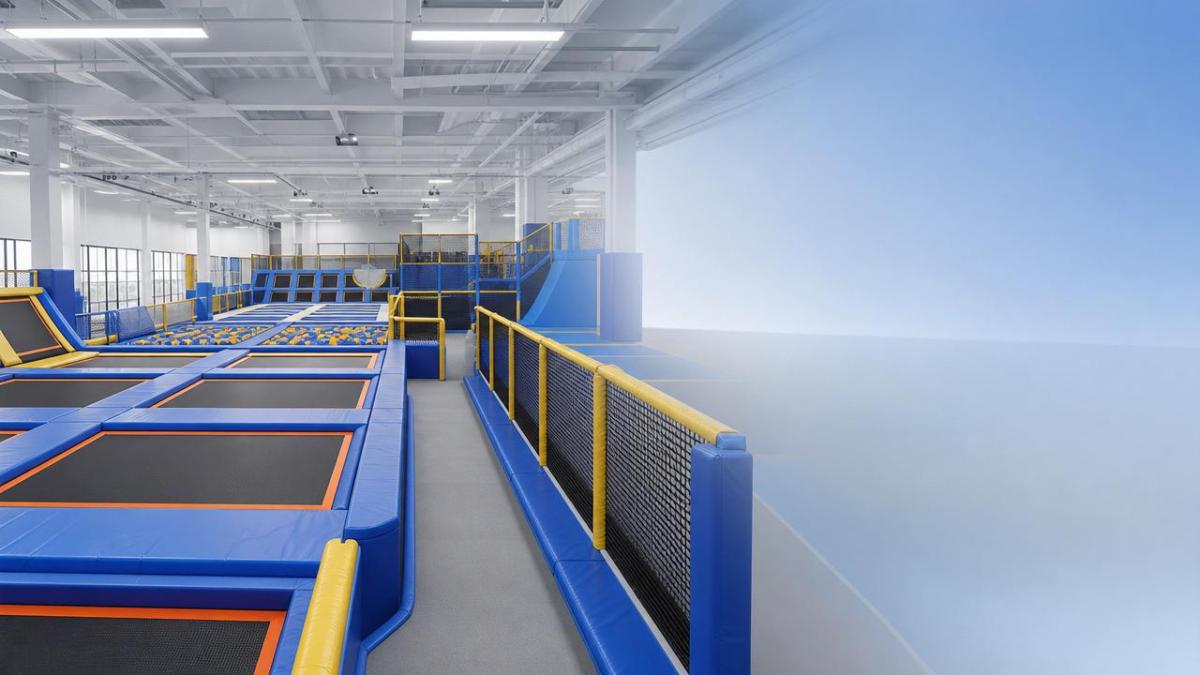
For operators, a trampoline venue may look like an entertainment environment. For quality control personnel, it is a dynamic risk system made up of jumping surfaces, buffer zones, spectator areas, queue lines, visibility corridors, and staff response paths. That is why trampoline park design should be reviewed with the same discipline used in industrial layout analysis: identify variables, reduce uncertainty, and document control points.
Many preventable incidents do not start with equipment failure. They start with layout friction. A basketball lane placed too close to a foam pit entrance can create crossing trajectories. A popular attraction positioned beside a narrow passage can create sudden crowd compression. A wall-run zone without sufficient run-out distance can overload staff supervision and increase near-miss frequency. In each case, the geometry of the venue becomes a safety variable.
This is where a data-led evaluation approach matters. TechStat Vanguard emphasizes engineering truth over promotional language. For safety managers assessing a new build or retrofit, that mindset is essential. Instead of asking whether a layout looks modern, the better question is whether it can be measured, audited, supervised, and corrected under peak occupancy conditions.
- Safe trampoline park design separates incompatible movement patterns rather than forcing different user behaviors into the same operational corridor.
- Efficient layouts reduce staff workload by improving sightlines, shortening intervention distance, and simplifying rule enforcement.
- Auditable layouts make incident review easier because event causes can be linked to physical design choices instead of vague operational assumptions.
Which layout factors most affect accident rates and operational flow?
Quality teams often need a practical framework to review trampoline park design before procurement, commissioning, or expansion. The table below organizes the most important layout variables by their direct impact on safety and flow management.
The main lesson is simple: the safest trampoline park design reduces movement conflict before staff intervention becomes necessary. When the layout itself guides behavior, rule compliance becomes easier to enforce and less dependent on constant verbal correction.
High-risk conflict points that are frequently underestimated
In many facilities, the most serious layout flaws are not dramatic. They are small interface errors between zones. A dodgeball court next to an open circulation path, shared access to foam pits and performance lanes, or a birthday-party waiting area placed near the main jump field can all create unpredictable movement density. These issues matter because user behavior in family entertainment venues is not linear or disciplined.
- Transition zones between low-intensity and high-intensity attractions often create speed mismatch and sudden entry errors.
- Shared stairs, ramps, or narrow gates can turn minor congestion into delayed emergency access.
- Obstructed corners and decorative barriers can damage line-of-sight control more than operators initially expect.
How to evaluate trampoline park design from a quality and compliance perspective
For safety managers, layout review should move beyond aesthetics and attraction count. A useful method is to treat the venue like a controlled system with input variables, failure modes, and verification checkpoints. This approach aligns with TSV’s broader philosophy: remove marketing claims, examine measurable parameters, and ask how the design performs under stress, not just during ideal presentation conditions.
A practical review checklist before approval
- Map every user path from entry to attraction, attraction to rest area, and attraction to exit. Look for intersections with active jump or landing zones.
- Test peak-capacity assumptions. A layout that works with 30 users may fail with 120 users when queues expand into circulation space.
- Check supervision geometry. If staff must rotate repeatedly to observe separate hazards, the post is overloaded.
- Review edge protection, padded boundaries, and clear separation markers between active and inactive zones.
- Simulate emergency extraction routes for an injured participant, including stretcher access and crowd bypass capability.
Standards and local code requirements vary by market, but the logic behind compliance remains consistent: circulation must be intelligible, protective areas must be sufficient for the activity performed, and supervision must be operationally realistic. If the layout depends on perfect user behavior to remain safe, it is not a robust design.
Why documentation matters during design review
A documented layout review reduces disputes later. It helps procurement teams compare suppliers on specific criteria such as spacing assumptions, guard positioning, access route logic, and maintenance access. It also gives safety managers a baseline for post-opening audits, incident trend analysis, and future redesign decisions.
Comparing common layout strategies: which one supports safer flow?
Not all trampoline park design strategies create the same risk profile. Some layouts prioritize attraction density, while others prioritize supervision simplicity or age-group separation. The right choice depends on your customer mix, staffing model, and incident tolerance threshold.
For many operators, a hybrid model performs best: visually open supervision with controlled zoning by age, skill, or activity risk. That combination usually supports both throughput and manageable incident control, especially where staffing levels change by daypart.
What safety managers should ask suppliers before approving a design
Supplier proposals often emphasize appearance, capacity, or signature attractions. Yet for procurement teams, the stronger questions relate to design assumptions and verifiable safeguards. A credible partner should be able to explain why a given trampoline park design reduces risk, not simply state that it does.
Key questions for procurement and design validation
- What occupancy assumptions were used to determine queue space, circulation width, and supervision points?
- How are high-impact activities separated from low-skill users and rest zones?
- Which areas create the longest staff response time, and how was that reduced in the design?
- Does the design allow routine inspection, padding replacement, and maintenance access without operational disruption?
- How can the layout be adapted if injury trends later show concentration in one zone?
These questions matter because layout decisions are expensive to reverse after installation. A lower upfront build cost can become a higher lifetime risk cost if the facility needs added barriers, extra staffing, circulation changes, or repeated incident mitigation measures. In procurement terms, the best design is not always the one with the most attractions. It is the one with the most controllable operating profile.
Common mistakes in trampoline park design that create hidden risk
Some layout errors remain invisible during concept review because they only appear under real operating pressure. Safety managers should watch for these recurring mistakes during planning and site acceptance.
Frequent misconceptions
One common misconception is that more padding always solves safety issues. Padding helps reduce severity, but it does not fix conflict geometry, poor sightlines, or crossing traffic. Another mistake is assuming staff presence can compensate for layout flaws. In reality, a weak layout multiplies monitoring tasks and increases human error risk.
A third issue is overvaluing attraction density. Adding features without preserving circulation discipline can reduce both safety and revenue if sessions become harder to manage, guests wait longer, or incident-related shutdowns increase. Good trampoline park design balances capacity with control, not novelty with congestion.
- Blind corners near active zones increase delayed interventions.
- Shared waiting areas for multiple attractions create unplanned surges.
- Poorly defined exits can keep users inside landing areas longer than intended.
FAQ: practical decisions around trampoline park design
How should a safety team judge whether a layout is too dense?
Start with movement overlap, not just floor area. If queues spill into circulation paths, if entry points face landing zones, or if one supervisor must monitor several non-adjacent hazards, the design is functionally dense even if the space appears large. Review peak-hour user behavior, not empty-floor visuals.
Is zoning by age really necessary in trampoline facilities?
In many cases, yes. Zoning is one of the most effective methods for reducing mismatch between body size, coordination level, and risk-taking behavior. It also simplifies rule communication. Even if full physical separation is not possible, designated time slots or controlled attraction access can support the same safety objective.
What should be prioritized when budget is limited?
Prioritize circulation clarity, supervision visibility, and adequate buffer zones before adding additional attractions. These elements influence every operating hour and every user. Signature features can drive marketing value, but foundational layout controls reduce recurring risk, staffing stress, and corrective spending.
Can an existing park improve safety without a full rebuild?
Often, yes. Operators can reassign uses by zone, relocate queue barriers, improve separation markers, reposition staff stations, and redesign access sequencing. However, some structural errors—such as poor line-of-sight geometry or inadequate run-out space—may require partial reconstruction. The first step is a documented layout audit based on actual movement patterns.
Why data-driven layout review gives operators a stronger control position
The strongest operational advantage comes from converting layout decisions into measurable controls. That means defining observation points, tracking near-miss locations, reviewing congestion patterns, and connecting incident reports to physical design causes. This is the same principle TSV applies across hard-tech sectors: meaningful decisions depend on verified parameters, not subjective claims.
For quality control teams, this approach improves supplier evaluation and internal accountability. For safety managers, it supports better staffing plans, clearer corrective actions, and stronger evidence when recommending redesign investment. In short, better trampoline park design is not just about safer play. It is about creating an operating environment that can be managed with fewer assumptions and more engineering clarity.
Why choose us for design review and technical decision support
TechStat Vanguard supports buyers and technical decision-makers who need more than surface-level recommendations. Our value is not built on promotional language. It is built on analytical discipline, parameter-focused review, and the ability to filter noise out of complex sourcing and design decisions. When evaluating trampoline park design, that means helping teams focus on risk interfaces, supervision logic, operational measurability, and implementation trade-offs.
You can contact us to discuss layout parameter review, supplier comparison, zoning logic, compliance-oriented design checkpoints, retrofit priorities, expected delivery implications, and documentation needs for procurement or internal approval. If your team is comparing concepts, validating a redesign, or preparing a technical specification sheet, we can help structure the decision around verifiable criteria rather than broad claims.
Search News
Hot Articles
- Carbon Fiber StructuresHow to Specify Aerospace Carbon Fiber Assemblies for Lightweight, Load-Bearing PartsJul 11, 2026
- Machine VisionXiaomi, Alibaba DAMO Academy Drive Open-Source Robotics Model Ecosystem, Lowering Algorithm Development Barriers for Overseas SMEs Adopting Chinese Robotics SolutionsMar 30, 2026
- Cobots & ArmsShanxi 'AI+' Conference Showcases Embodied Intelligence with Multinational Buyer Engagement: Key Industry ImplicationsMar 30, 2026
Popular Tags
Recommended News
 Jul 11, 2026How to Specify Aerospace Carbon Fiber Assemblies for Lightweight, Load-Bearing PartsAerospace carbon fiber assemblies: learn how to specify laminate design, load data, joining methods, and inspection controls for lighter, reliable load-bearing aerospace parts.Elena Rostova (UAV Systems Researcher)
 Mar 30, 2026Xiaomi, Alibaba DAMO Academy Drive Open-Source Robotics Model Ecosystem, Lowering Algorithm Development Barriers for Overseas SMEs Adopting Chinese Robotics SolutionsXiaomi & Alibaba DAMO Academy's open-source robotics models lower algorithm barriers for global SMEs. Boost efficiency in manufacturing, logistics & smart retail with ROS 2 compatible solutions.TSV Data Lab
 Mar 30, 2026Shanxi 'AI+' Conference Showcases Embodied Intelligence with Multinational Buyer Engagement: Key Industry ImplicationsShanxi 'AI+' Conference highlights embodied intelligence with Tesla, Ubtech & Jiantao showcasing multimodal robotics. 40+ global buyers validated tech on-site, creating new B2B channels for industrial automation & AI solutions.Chen Wei (Automation Lead Engineer)
 Mar 30, 2026Zhongguancun Unveils 6G Integrated Sensing-Computing-Intelligence Platform to Empower Embodied Robots for Global Industrial ApplicationsZhongguancun's new 6G platform revolutionizes industrial robotics with <10ms latency, empowering global automotive, logistics & port automation. Discover how this tech boosts China's smart manufacturing exports.TSV Data Lab
 Mar 30, 2026Mech-Mind Tianjin Embodied Intelligence R&D and Production Base Goes Live, Cutting Delivery Time by 20%–30% for Global Customized AMR+Vision SolutionsMech-Mind's Tianjin AMR+Vision production base cuts delivery time by 20%-30% for欧美 & Latin American markets. Discover how this PLd-certified facility accelerates customized robotics solutions for smart manufacturing and logistics.Chen Wei (Automation Lead Engineer)
 Mar 30, 2026Boao Forum Reveals 'Co-evolution of Big and Small Brains' Trend in Humanoid Robots, China's Embodied Intelligence Accelerates Adaptation to Overseas Manufacturing Service ScenariosDiscover how China's humanoid robots, featuring 'Co-evolution of Big and Small Brains,' are revolutionizing global manufacturing. Learn about Embodied Tian Gong 3.0's ISO compliance and overseas deployment at Boao Forum 2026.Chen Wei (Automation Lead Engineer)
 Mar 30, 2026China Railway Industrial Secures Patent for Embodied Robotics in Material Handling, Boosting High-Precision Delivery Capabilities for Overseas Infrastructure and Manufacturing ProjectsChina Railway Industrial's new patent for embodied robotics in material handling boosts high-precision delivery for global infrastructure & manufacturing. Discover how this innovation enhances logistics accuracy in automotive, rail transit & EPC projects.Chen Wei (Automation Lead Engineer)
 Sep 29, 2026ISO 9283 Repeatability: How to Evaluate Cobot Positioning PerformanceISO 9283 cobot repeatability explained: learn how payload, reach, approach direction, and test conditions affect positioning performance and cell capability.Chen Wei (Automation Lead Engineer)
 Sep 28, 2026Spindle Runout Measurement in Germany: DIN Standards, Methods, and Acceptance LimitsSpindle runout measurement Germany: explore DIN standards, proven methods, acceptance limits, and audit-ready practices for reliable machining quality.Dr. Marcus Vance
 Sep 27, 2026How to Select Wall-Mount Edge Devices for Space-Constrained Factory NetworksWall mount edge devices for space-constrained factories: evaluate workload, thermal design, power resilience, cable access, and network reliability for smarter deployments.TSV Data Lab
 Sep 26, 2026Machining Tolerance Analysis: How to Set Limits That Meet Function and Cost TargetsMachining tolerance analysis: learn how to set functional limits, control tolerance stacks, reduce inspection risk, and balance precision with production cost.Dr. Marcus Vance
 Sep 25, 2026How to Evaluate an Industrial Infrastructure Data Platform for Multi-Site OperationsIndustrial infrastructure data platform evaluation guide for multi-site operations: compare data quality, edge resilience, interoperability, governance, and scalable proof-of-value criteria.Victor Lin (Chief Software Architect)
 Sep 24, 2026How to Select Machine Vision Optics for Accurate Inspection at Different Working DistancesMachine vision optics selection guide for accurate inspection at every working distance. Compare FOV, pixel scale, DOF, distortion, lighting, and telecentric options.TSV Data Lab
 Sep 23, 2026How to Evaluate a Machine Vision System Integrator for High-Speed Inspection LinesChoose a machine vision system integrator with proven expertise in high-speed inspection, reliable reject timing, robust optics, and measurable acceptance criteria.TSV Data Lab
 Sep 28, 2026When is a SCADA API the right choice for connecting plant systems?SCADA API guide: learn when governed plant data integration improves traceability, security, and scalability—without compromising real-time control.Victor Lin (Chief Software Architect)
 Sep 27, 2026How SCADA data integration improves traceability across production linesSCADA data integration connects production-line data to improve traceability, accelerate quality investigations, and strengthen safety decisions.Victor Lin (Chief Software Architect)
 Sep 26, 2026What to define before starting SCADA integration planningSCADA integration planning starts with clear scope, control boundaries, data models, cybersecurity, and testing. Discover the definitions that reduce risk and costly rework.Victor Lin (Chief Software Architect)
 Sep 25, 2026How a smart factory with Industrial IoT reduces production blind spotsDiscover how a smart factory with Industrial IoT turns real-time machine, quality, and workflow data into actionable insights that reduce production blind spots and delivery risks.Victor Lin (Chief Software Architect)
 Sep 24, 2026When does Industrial IoT make smart manufacturing easier to scale?Smart manufacturing Industrial IoT scales when trusted data, interoperable systems, and secure workflows turn connected assets into measurable gains.TSV Data Lab
 Sep 23, 2026What drives ultra-precision machining cost at 1-micron tolerance?Ultra precision machining cost per part at 1 micron tolerance depends on process, material, metrology, and yield. Learn how to compare quotes confidently.Dr. Marcus Vance
 Sep 22, 2026Drone Engine-T550CC Applications: Build the UAV Power System Around the MissionAn application guide for Drone Engine-T550CC integration, covering payload planning, airframe matching, cooling, fuel, vibration, test procedures, documentation, and service preparation.Elena Rostova (UAV Systems Researcher)
 Sep 22, 2026How to Evaluate Industrial Edge Computing Vendors for Factory DeploymentIndustrial edge computing vendor evaluation guide for factories: compare latency, protocol fit, reliability, security, and lifecycle support before deployment.TSV Data Lab
 Sep 21, 2026Drone Payload Integration: Matching Power, Data, and Center of Gravity for Reliable FlightsDrone payload integration made practical: balance power, data, center of gravity, and endurance to build safer, more reliable mission-ready flights.Elena Rostova (UAV Systems Researcher)
 Sep 20, 2026Autonomous Navigation Pricing: Cost Drivers and Budget Benchmarks for AMR ProjectsAutonomous navigation price explained: compare AMR cost drivers, software, sensors, integration, safety, and lifecycle budgets to build a scalable project plan.Chen Wei (Automation Lead Engineer)