
Tethered UAV continuous flight time: what is realistic
Publication Date
author
For engineers, operators, buyers, and decision-makers evaluating tethered UAV deployments, the key question is simple: what is a realistic tethered uav continuous flight time in actual field conditions? Beyond marketing claims, endurance depends on power architecture, payload demand, cable losses, weather, and mission profile. This introduction outlines the engineering limits, benchmark variables, and procurement considerations that define credible performance expectations.
What does realistic tethered UAV continuous flight time actually mean?
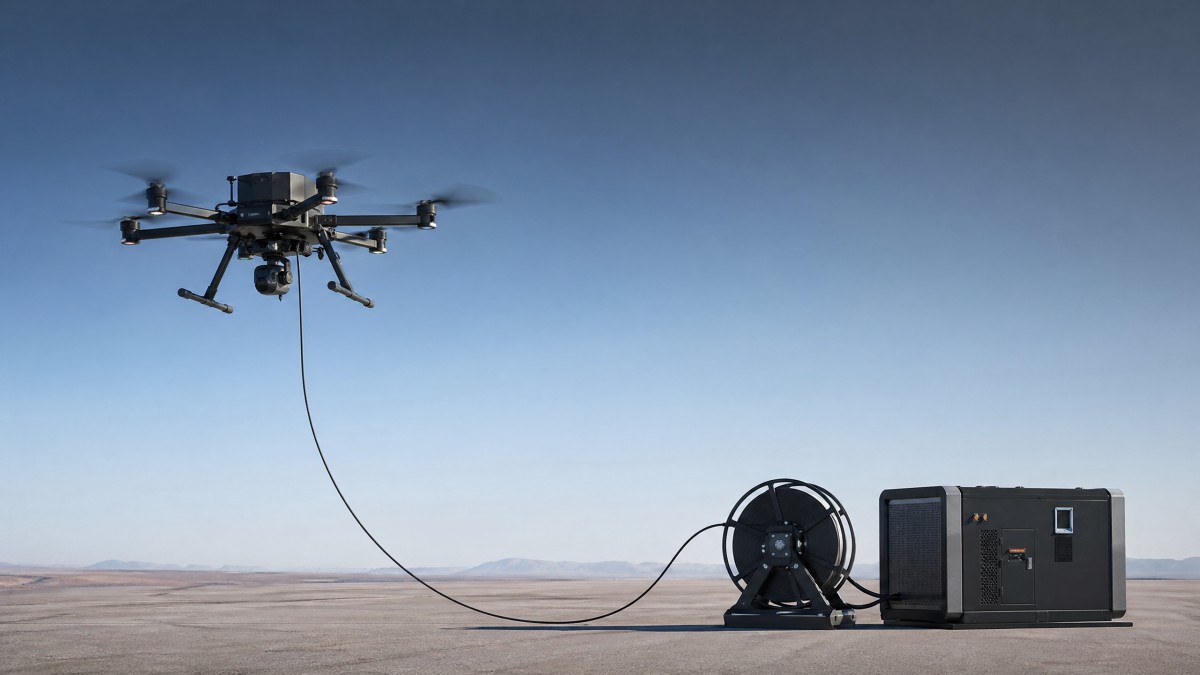
In practice, tethered UAV continuous flight time does not mean infinite endurance under all conditions. It means the aircraft can remain airborne for mission-relevant periods as long as ground power is stable, the tether system is within its rated load and voltage range, and environmental conditions stay inside operational limits. For most professional users, the real question is not whether the drone can technically stay up for hours, but whether it can do so with the required payload, link stability, and safety margin.
This matters because brochures often compress multiple variables into one headline figure. A claim such as 8 hours, 12 hours, or 24 hours may refer to a low-wind hover, reduced payload, moderate ambient temperature, and a short tether length. Once the aircraft carries EO/IR gimbals, communication relays, or observation sensors, power draw rises and the margin narrows. That is why procurement teams should always ask for a complete operating envelope rather than a single endurance number.
A realistic benchmark starts with three layers. First is the aircraft layer: propulsion efficiency, hover power, takeoff weight, and thermal design. Second is the tether layer: cable length, conductor gauge, voltage conversion, and drag. Third is the ground power layer: generator, battery buffer, or fixed-grid source, typically sized with reserve capacity rather than nominal consumption alone. In field deployments, a 15%–30% reserve is often more meaningful than a headline maximum.
For search teams, operators, and enterprise buyers, it is more useful to classify tethered UAV continuous flight time into practical mission bands: short-duration tactical missions of 2–4 hours, extended observation windows of 6–12 hours, and rotation-supported operations that can stretch beyond 24 hours with planned maintenance, crew changes, and controlled downtime. That framing reflects engineering reality far better than simplified “unlimited flight” language.
Why headline endurance numbers often mislead buyers
Endurance claims become misleading when the stated figure excludes setup losses, climb power, wind correction, payload heating, or power conversion inefficiency. Even a well-designed system will lose energy at several points between the ground source and the motors. Voltage drop along a long tether, inverter efficiency, and onboard regulation can each cut usable power. A system that looks generous on paper may operate much closer to its limit in hot weather or turbulent air.
Another common issue is confusion between station-keeping and mission effectiveness. A drone may remain airborne for 10 hours, yet produce poor surveillance value if wind-induced oscillation degrades image quality or if the payload’s thermal load forces derating after 3–5 hours. For enterprise use, realistic continuous flight time should include not only air time but also sensor performance stability, data link integrity, and maintenance intervals.
- Ask whether the quoted endurance assumes a no-payload, half-payload, or full-payload condition.
- Confirm if the flight time applies at 0–5 m/s wind or at a more demanding 8–12 m/s field condition.
- Check whether the system was evaluated with continuous sensor operation, not intermittent use.
- Request the duty cycle for planned maintenance after every 6, 8, or 12 hours of operation.
Which engineering variables most strongly affect continuous flight time?
When evaluating tethered UAV continuous flight time, five variables dominate most outcomes: payload power, tether length, power conversion efficiency, wind loading, and thermal management. These are the variables TSV-style benchmarking focuses on because they reveal whether an endurance claim remains credible under mission conditions rather than showroom conditions. For hard-tech buyers, this is where meaningful comparison begins.
Payload is usually the first source of endurance compression. An optical gimbal, IR module, spotlight, radio relay, or edge AI processor can materially increase total power demand. Even when propulsion is externally powered, onboard electronics still generate heat and can drive system derating. A tethered UAV carrying a light observation payload may sustain extended hover, while the same platform with heavier multi-sensor equipment may require shorter duty windows or lower altitude to remain within safe limits.
Tether length also matters more than many buyers expect. Longer cables increase voltage drop, add aerodynamic drag, and raise mechanical load on the aircraft. In many deployments, moving from 50 m to 100 m is not just a matter of doubling line length; it can change the entire power and stability balance. Operators should therefore evaluate altitude requirement and cable architecture together, not as separate procurement items.
Weather is the next reality filter. Sustained winds in the 8–12 m/s range, gusty urban canyons, coastal salt exposure, and ambient temperatures above 35°C can all reduce the realistic tethered UAV continuous flight time window before maintenance or operational pauses are needed. In colder conditions, power electronics may perform differently, and ice risk on the tether can alter handling and safety margins.
Technical variables that should appear on every evaluation sheet
A serious procurement review should force suppliers to present endurance-related variables in a structured format. The table below highlights the parameters that most directly shape realistic performance in surveillance, temporary communications, perimeter security, and industrial observation missions.
The key takeaway is simple: the realistic endurance answer is always conditional. If a supplier does not provide these variables side by side, the stated tethered UAV continuous flight time should be treated as preliminary, not decision-grade. TSV’s engineering-first approach is to normalize these conditions before any technical or commercial comparison is made.
A practical four-step verification method
- Define the mission window: 2–4 hours, 6–12 hours, or multi-shift operation beyond 12 hours.
- Lock the payload state, including active sensor power, data transmission, and any auxiliary devices.
- Match tether height and wind condition to the actual site rather than a generic test field.
- Require maintenance intervals, thermal limits, and power reserve assumptions in writing.
This four-step method helps prevent a common procurement failure: comparing two systems with different assumptions and then treating the endurance figures as directly equivalent. In real sourcing, equivalence only exists after the operating conditions have been aligned.
How do tethered and untethered UAV endurance profiles compare in real missions?
For many organizations, the decision is not just about tethered UAV continuous flight time in isolation. It is about whether a tethered system is the right tool compared with battery-based multirotors, generator-supported swaps, or fixed surveillance towers. This comparison matters in public safety, border observation, industrial security, event overwatch, and temporary communications support.
Untethered multirotors offer mobility, wider horizontal coverage, and easier rapid redeployment. However, they usually face tighter endurance windows and repeated battery logistics. A tethered UAV trades mobility for persistence, stable elevation, and reduced battery change burden. That makes it attractive where the mission objective is to “stay above one point” for 4, 8, or 12 hours rather than fly repeated search patterns across a large area.
The table below compares the two approaches using procurement-relevant criteria instead of broad marketing language. Buyers can use it to decide whether persistence, site access, and staffing models support a tethered architecture.
This comparison shows why tethered UAV continuous flight time is valuable only when persistence is mission-critical. If the real task demands movement across kilometers of infrastructure, an untethered platform may be operationally better even with shorter flight duration. If the requirement is a stable elevated sensor mast for several hours, tethered architecture often becomes more defensible.
Which application scenarios justify tethered endurance?
Several scenarios repeatedly justify the added complexity of tethered systems. First is fixed-site security, where teams need elevated optics over a gate, industrial yard, port zone, or event perimeter for 6–10 hours at a time. Second is temporary communications support, where a relay node must hold altitude consistently across a defined area. Third is emergency command visibility, where an elevated view is needed without repeated battery interruptions.
By contrast, infrastructure inspection over pipelines, power corridors, or dispersed assets often values route flexibility more than continuous hover. In those cases, the right decision may be a hybrid fleet model: one tethered UAV for overwatch and one untethered aircraft for task-specific movement. Decision-makers should assess the mission as a system, not as a single aircraft purchase.
- Use tethered platforms when uninterrupted vertical persistence is worth more than lateral range.
- Use untethered platforms when route coverage, obstacle bypass, and agile redeployment are the priority.
- Use mixed fleets when command visibility and mobile action must happen in parallel.
What should buyers and technical teams check before procurement?
A disciplined procurement process for tethered UAV systems should examine performance, integration, safety, and lifecycle support together. Too many sourcing decisions focus on aircraft price and stated endurance while ignoring generator compatibility, cable management, operator training, spare parts, and downtime procedures. For enterprise buyers, those hidden variables often determine the real total cost of ownership within the first 12–24 months.
Technical teams should begin with a clear requirement sheet. That means defining target altitude, expected wind range, payload package, mission window, deployment surface, transport constraints, and desired setup time. A realistic field target might be deployment within 15–30 minutes, operation over a 4–8 hour shift, and service checks at defined intervals. Without this baseline, vendors will naturally optimize proposals around their own strengths rather than your mission reality.
Buyers should also verify compliance and operating discipline. Depending on jurisdiction and use case, the system may need alignment with aviation procedures, electrical safety expectations, local operating permissions, and internal enterprise safety protocols. Even where no single certification fully defines tethered endurance performance, documented maintenance schedules, power protection design, and fault response logic remain essential evaluation points.
At TSV, this is exactly where engineering benchmarking creates value. Instead of accepting broad product language, procurement teams can compare systems using measurable checkpoints, ask for normalized test conditions, and shorten supplier qualification cycles. The result is fewer surprises during deployment and a more defensible capital decision.
A practical procurement checklist for tethered UAV continuous flight time
- Confirm the endurance figure under at least 3 conditions: baseline payload, full mission payload, and moderate wind operation.
- Request setup time, recovery time, and crew requirement for one shift and multi-shift operation.
- Check the ground power path, including generator compatibility, voltage stability, surge handling, and backup reserve.
- Review tether handling, abrasion protection, connector durability, and replacement cycle assumptions.
- Ask for maintenance intervals, critical spare parts list, and field troubleshooting responsibilities.
Common decision mistakes that increase project risk
The first mistake is buying on maximum altitude or longest claimed endurance without mapping those numbers to the real payload. The second is underestimating site logistics. A tethered system that performs well on a clean test pad may struggle on uneven terrain, mobile vehicle roofs, or congested industrial yards. The third is skipping operator process design. Even a strong aircraft can produce weak mission results if crews do not follow structured preflight, tether inspection, and thermal observation routines.
A final mistake is treating support infrastructure as optional. Continuous flight claims depend on stable energy input, clean cable management, and disciplined maintenance. If the program budget covers only the aircraft and ignores these supporting layers, the delivered outcome rarely matches the procurement expectation.
FAQ: realistic expectations, risks, and next-step decisions
The following questions reflect common search behavior from engineers, operators, procurement teams, and business leaders comparing tethered UAV systems for real deployment. They also help clarify where “continuous” should be understood as an engineered operational capability rather than a simple advertising number.
Can a tethered UAV really fly continuously for 24 hours?
It can be possible in controlled conditions, but 24-hour operation should be understood as a system-level mission claim, not just an aircraft claim. The ground power source, thermal behavior, tether durability, weather exposure, crew rotation, and scheduled checks all become critical. For many organizations, a more realistic planning basis is 6–12 hour continuous mission coverage with documented inspection and maintenance windows.
What is a realistic tethered UAV continuous flight time for enterprise use?
A realistic answer depends on payload, altitude, wind, and support infrastructure. In practical enterprise scenarios, many teams should evaluate performance in mission bands rather than a single number: 2–4 hours for rapid deployments, 6–12 hours for persistent observation, and longer durations only where site controls and maintenance processes are strong. The more demanding the payload and environment, the more important conservative planning becomes.
Which missions are most suitable for tethered endurance?
The best fits are perimeter security, event overwatch, temporary communications relay, command-post visibility, and semi-static industrial observation. These missions benefit from stable elevated sensing over one area. Missions that require long horizontal travel, dense obstacle navigation, or frequent relocation often favor untethered aircraft or mixed-fleet concepts.
What should procurement teams ask suppliers first?
Start with the test conditions behind the endurance claim. Ask for payload state, tether length, wind range, ambient temperature, power source type, and maintenance interval. Then ask for deployment workflow, spare parts assumptions, and operator requirements. These questions usually expose whether the quoted tethered UAV continuous flight time is field-realistic or only nominal.
Why work with TSV when endurance claims need technical verification?
TechStat Vanguard exists for exactly this kind of decision problem. In hard-tech procurement, inflated adjectives are easy to find, but normalized engineering truth is harder to obtain. Our value is not generic promotion. It is structured technical interpretation: comparing payload assumptions, reviewing power architecture logic, checking operational boundaries, and helping teams separate plausible endurance from optimistic formatting.
For information researchers, we help turn scattered claims into comparable criteria. For operators, we highlight the field variables that affect mission stability over 2-hour, 8-hour, and multi-shift windows. For buyers, we support supplier screening and requirement-sheet refinement. For enterprise decision-makers, we reduce trial-and-error cost by grounding procurement in measurable parameters rather than broad narratives.
If your team is reviewing tethered UAV continuous flight time claims, contact TSV for focused support on parameter confirmation, solution comparison, deployment assumptions, delivery-cycle discussions, payload matching, and compliance-oriented evaluation. We can help you define the right questions before issuing RFQs, compare alternative architectures, and build a sourcing framework that reflects engineering reality instead of marketing noise.
The most useful next step is specific. Bring your target altitude, payload list, site wind conditions, expected mission duration, and preferred power source. With those 5 inputs, the conversation moves from vague endurance language to a decision-grade technical review that supports better planning, cleaner supplier communication, and more reliable deployment outcomes.
Search News
Hot Articles
- Carbon Fiber StructuresHow to Specify Aerospace Carbon Fiber Assemblies for Lightweight, Load-Bearing PartsJul 11, 2026
- Machine VisionXiaomi, Alibaba DAMO Academy Drive Open-Source Robotics Model Ecosystem, Lowering Algorithm Development Barriers for Overseas SMEs Adopting Chinese Robotics SolutionsMar 30, 2026
- Cobots & ArmsShanxi 'AI+' Conference Showcases Embodied Intelligence with Multinational Buyer Engagement: Key Industry ImplicationsMar 30, 2026
Popular Tags
Recommended News
 Jul 11, 2026How to Specify Aerospace Carbon Fiber Assemblies for Lightweight, Load-Bearing PartsAerospace carbon fiber assemblies: learn how to specify laminate design, load data, joining methods, and inspection controls for lighter, reliable load-bearing aerospace parts.Elena Rostova (UAV Systems Researcher)
 Mar 30, 2026Xiaomi, Alibaba DAMO Academy Drive Open-Source Robotics Model Ecosystem, Lowering Algorithm Development Barriers for Overseas SMEs Adopting Chinese Robotics SolutionsXiaomi & Alibaba DAMO Academy's open-source robotics models lower algorithm barriers for global SMEs. Boost efficiency in manufacturing, logistics & smart retail with ROS 2 compatible solutions.TSV Data Lab
 Mar 30, 2026Shanxi 'AI+' Conference Showcases Embodied Intelligence with Multinational Buyer Engagement: Key Industry ImplicationsShanxi 'AI+' Conference highlights embodied intelligence with Tesla, Ubtech & Jiantao showcasing multimodal robotics. 40+ global buyers validated tech on-site, creating new B2B channels for industrial automation & AI solutions.Chen Wei (Automation Lead Engineer)
 Mar 30, 2026Zhongguancun Unveils 6G Integrated Sensing-Computing-Intelligence Platform to Empower Embodied Robots for Global Industrial ApplicationsZhongguancun's new 6G platform revolutionizes industrial robotics with <10ms latency, empowering global automotive, logistics & port automation. Discover how this tech boosts China's smart manufacturing exports.TSV Data Lab
 Mar 30, 2026Mech-Mind Tianjin Embodied Intelligence R&D and Production Base Goes Live, Cutting Delivery Time by 20%–30% for Global Customized AMR+Vision SolutionsMech-Mind's Tianjin AMR+Vision production base cuts delivery time by 20%-30% for欧美 & Latin American markets. Discover how this PLd-certified facility accelerates customized robotics solutions for smart manufacturing and logistics.Chen Wei (Automation Lead Engineer)
 Mar 30, 2026Boao Forum Reveals 'Co-evolution of Big and Small Brains' Trend in Humanoid Robots, China's Embodied Intelligence Accelerates Adaptation to Overseas Manufacturing Service ScenariosDiscover how China's humanoid robots, featuring 'Co-evolution of Big and Small Brains,' are revolutionizing global manufacturing. Learn about Embodied Tian Gong 3.0's ISO compliance and overseas deployment at Boao Forum 2026.Chen Wei (Automation Lead Engineer)
 Mar 30, 2026China Railway Industrial Secures Patent for Embodied Robotics in Material Handling, Boosting High-Precision Delivery Capabilities for Overseas Infrastructure and Manufacturing ProjectsChina Railway Industrial's new patent for embodied robotics in material handling boosts high-precision delivery for global infrastructure & manufacturing. Discover how this innovation enhances logistics accuracy in automotive, rail transit & EPC projects.Chen Wei (Automation Lead Engineer)
 Oct 26, 2026AMAXiMAL Releases Open-Source TopMod 3D v3 With Claude AIExplore AMAXiMAL’s free, open-source TopMod 3D v3 with Claude AI assistance, topology-based modeling and plywood fabrication tools that connect complex designs to physical builds.Dr. Marcus Vance
 Oct 26, 2026Choosing a SCADA System Integrator Company: PLC Compatibility and Long-Term SupportChoose a scada system integrator company with proven PLC compatibility and reliable long-term support. Discover what to test, compare, and require before investing.Victor Lin (Chief Software Architect)
 Oct 25, 2026Hesai Leads Global ADAS Main Lidar Shipments in Yole’s 2026 ReportHesai led global ADAS main lidar shipments with a 43% share in 2025, according to Yole’s 2026 report. Explore what this ranking reveals about its automotive market position.TSV Data Lab
 Oct 25, 2026Choosing an Aerospace Materials Manufacturer: Quality and Traceability ChecksChoosing an aerospace materials manufacturer? Learn how to verify certifications, test reports, and lot traceability to qualify suppliers confidently and reduce costly sourcing risks.Dr. Marcus Vance
 Oct 24, 2026Guotai Haitong: Global Entry-Level 3D Printer Shipments Rose 39% in Q1 2026Entry-level 3D printer shipments rose 39% in Q1 2026, Guotai Haitong reports. Explore how AI, multicolor printing and print farms are shaping market growth.Dr. Marcus Vance
 Oct 24, 2026Choosing an Industrial Vision Inspection Supplier: Acceptance Tests That MatterChoose an industrial vision inspection supplier with confidence. Discover acceptance tests for defect detection, false rejects, production speed, and reliable part rejection before you buy.TSV Data Lab
 Oct 23, 2026US Navy Raises Gecko Robotics Contract Ceiling to $300M for Robotic Fleet MaintenanceUS Navy raises Gecko Robotics’ contract ceiling to $300M for Pacific Fleet robotic inspections. Explore potential opportunities for maintenance suppliers and key procurement considerations.Chen Wei (Automation Lead Engineer)
 Oct 23, 2026Choosing Industrial Sensing Systems for Global Plants: Protocol CompatibilityCompare industrial sensing systems international buyers can trust. Explore protocol compatibility, reduce integration risks, and select proven configurations for reliable global plant deployments.TSV Data Lab
 Oct 22, 2026KUKA Showcases Physical AI and iiQKA.AI Vision at NVIDIA GTC BerlinExplore KUKA’s Physical AI showcase at NVIDIA GTC Berlin and discover how iiQKA.AI Vision aims to simplify robotic vision integration and improve 2D and 3D scene recognition.TSV Data Lab
 Oct 22, 2026Robotic Machining of Advanced Composites: What Tolerances Are Achievable?Explore advanced materials machining robotics: discover what drives achievable composite tolerances and how to validate accuracy before investing in your next machining system.Dr. Marcus Vance
 Oct 21, 2026China’s Industrial Robot Exports Near RMB 10 Billion in First Nine Months of 2026China’s industrial robot exports neared RMB 10 billion in January–September 2026, with value rising faster than volume. Explore the data and what it could mean for suppliers.Chen Wei (Automation Lead Engineer)
 Oct 21, 2026Low-Latency Industrial Data Processing: Pricing and Key Cost DriversExplore industrial data latency price drivers, from edge hardware to integration and support. Learn how to compare quotes, verify performance, and avoid unnecessary costs.TSV Data Lab
 Oct 20, 2026KUKA Launches iiQKA.AI Vision to Simplify Industrial Image ProcessingKUKA iiQKA.AI Vision simplifies industrial image processing with controller-based 2D and 3D vision. Explore drag-and-drop setup for vision-guided automation.TSV Data Lab
 Oct 20, 2026Smart Industrial Edge Devices: Key Criteria for Legacy PLC IntegrationChoose smart industrial edge devices for legacy PLC integration. Discover key criteria for compatibility, data quality, security, and reliable collection without disrupting control.TSV Data Lab
 Oct 19, 2026Choosing a Radar Sensor by Application: Range, Resolution, and Field of ViewSimplify radar sensor application based product selection. Compare range, resolution, and field of view to avoid blind spots and choose with confidence. Explore the guide.TSV Data Lab
 Oct 18, 2026Comparing Material Options for Procurement: Specs, Costs, and Supply RisksExplore procurement oriented technical content on material options, specs, costs, and supply risks. Compare alternatives to cut hidden expenses and make confident sourcing decisions.Dr. Marcus Vance
 Oct 17, 20265-Axis CNC Positioning Accuracy: How to Interpret ISO 230-2 Test ResultsAssess 5 axis CNC machining positioning accuracy with ISO 230-2. Learn to interpret repeatability, reversal error, and test conditions to compare suppliers and make confident acceptance decisions.Dr. Marcus Vance























