
Is the trampoline park business still attractive in 2026?
Publication Date
author
As investors reassess location-based entertainment, the trampoline park business remains a compelling but more data-sensitive opportunity in 2026. Rising customer expectations, tighter safety standards, and shifting operating costs mean profitability now depends less on hype and more on measurable fundamentals. For decision-makers, the real question is not whether demand exists, but which metrics, market signals, and competitive benchmarks still make this business attractive.
What makes the trampoline park business attractive in 2026?
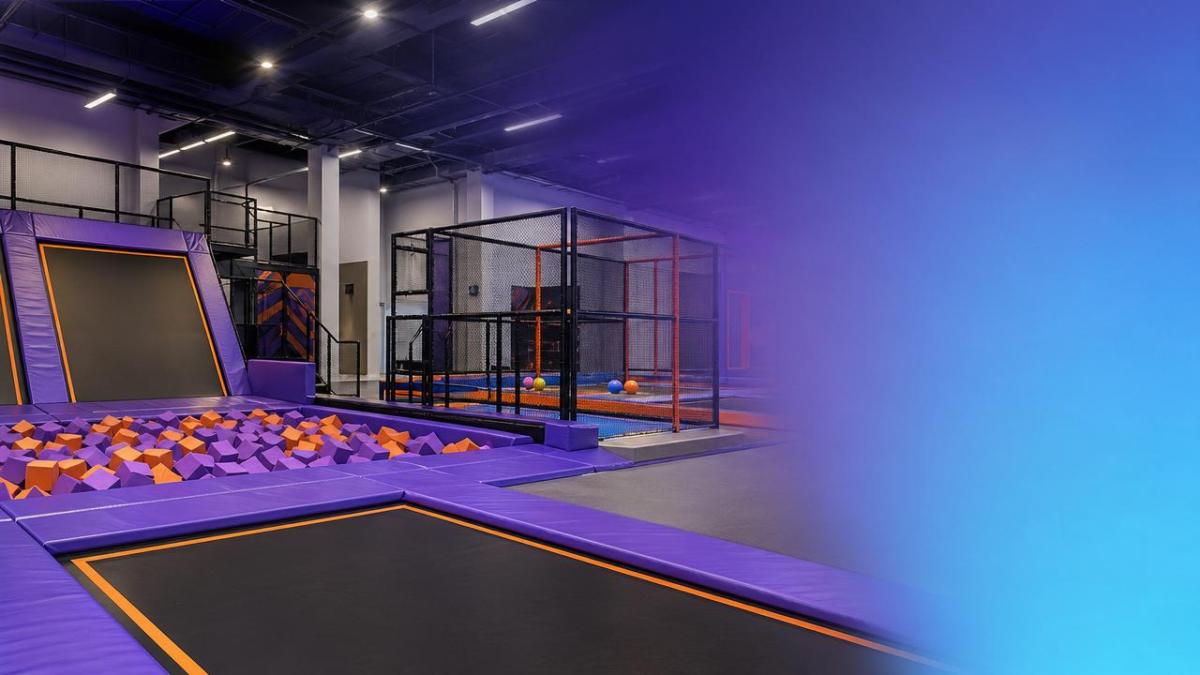
The trampoline park business still attracts serious operators because it sits at the intersection of family entertainment, youth fitness, social experiences, and event-driven spending. Unlike single-use attractions, a well-positioned park can generate revenue from open jump sessions, birthday parties, group bookings, school programs, memberships, food and beverage sales, and branded merchandise.
That said, the economics have changed. In 2026, the winning parks are not simply large or visually impressive. They are operationally disciplined. They understand throughput, dwell time, staffing ratios, maintenance cycles, waiver conversion, and local demand density. This is where a data-first decision framework matters.
From a TSV-style perspective, the question is similar to any capital-intensive investment: what are the tolerances, failure points, utilization assumptions, and supply chain dependencies? Marketing claims about “high traffic” or “great family appeal” are not enough. Enterprise decision-makers need auditable assumptions and benchmarkable operating indicators.
- Recurring local demand can be more resilient than destination entertainment if the park serves repeat family visits and organized group traffic.
- CapEx can be significant, but the asset can support layered revenue streams when layout, pricing, and scheduling are engineered correctly.
- Competitive pressure has increased, which means underperforming concepts fail faster, but disciplined operators can still secure strong regional positions.
Which market signals should investors watch before entering the trampoline park business?
The first signal is local demographic fit. A trampoline park business usually performs better where there is a healthy concentration of families with children, middle-income households, school networks, and suburban or secondary urban catchments. Dense downtown traffic alone does not guarantee success if parking, accessibility, and family convenience are weak.
The second signal is competitive saturation. In some markets, the broader indoor entertainment category has become crowded with family entertainment centers, arcade concepts, climbing gyms, inflatable parks, VR venues, and hybrid sports attractions. A new entrant must identify whether local consumers are under-served, price-sensitive, or already fragmented across too many options.
The third signal is cost stability. Rent, labor, utilities, insurance, and replacement components directly affect breakeven. This is especially relevant for operators using imported steel structures, nets, foam components, sensor systems, access control hardware, and ticketing software. Supply chain variability matters more than many first-time buyers expect.
Core pre-investment indicators
Before approving a new trampoline park business, decision-makers should review a practical matrix rather than relying on concept decks. The table below summarizes the most useful screening indicators.
A key insight here is that the trampoline park business is less about broad entertainment demand and more about operational fit within a specific trade area. The same concept can perform very differently across locations with similar population counts but different rent structures, access conditions, and competition profiles.
How do profitable operators differ from weak operators?
In 2026, profitable operators do three things better than weak operators: they manage capacity scientifically, build revenue diversity, and control safety-related downtime. A trampoline park business with heavy weekend traffic but weak weekday utilization often looks healthy in headline sales yet struggles in margin and cash flow.
Strong operators also design the floor plan around monetization logic. They do not treat every square meter equally. High-value zones include party rooms, toddler areas, challenge elements, dodgeball courts, foam or airbag features, and observation-friendly layouts that support food and beverage purchases by guardians.
Operational traits that usually separate winners from underperformers
- They monitor utilization by hour and by zone instead of relying only on total ticket volume.
- They push party, school, and corporate bookings to smooth demand across lower-traffic periods.
- They invest in maintenance logs, parts traceability, and inspection discipline to avoid avoidable closures.
- They use pricing ladders, memberships, and bundled offers rather than a single flat admission model.
This is where TSV’s broader philosophy is useful even outside hard-tech manufacturing. Parameters matter. If an operator cannot quantify occupancy, turnover time, equipment refresh cycles, or incident response procedures, the trampoline park business becomes a story-driven investment instead of a controlled one.
What cost structure should decision-makers model?
A realistic cost model for a trampoline park business should separate one-time launch costs from recurring operating expenses. Many feasibility studies underestimate soft costs such as permitting, local code adaptation, staff training, software integration, opening marketing, and reserve inventory for wear-prone components.
The second table highlights the categories that deserve board-level scrutiny before approval. The ranges will vary by region, building condition, concept size, and supplier strategy, but the cost logic remains broadly consistent.
The practical takeaway is simple: the trampoline park business can still be attractive, but only if the financial model includes maintenance reality, not just opening-day excitement. Decision-makers should ask what happens under lower-than-expected weekday occupancy, higher insurance costs, or slower party-booking conversion.
How should buyers compare trampoline park concepts and suppliers?
Not every trampoline park business should look the same. Some markets need a compact neighborhood format focused on birthdays and repeat visits. Others can support a larger destination-style family entertainment center with food service, advanced challenge zones, and multi-attraction integration. Supplier selection must match the intended business model, not the other way around.
Concept comparison for 2026
When evaluating a trampoline park business, a comparison framework helps investors avoid paying for complexity that the market cannot absorb.
The right supplier should support more than equipment delivery. Buyers should ask for material specifications, structural documentation, maintenance schedules, installation scope boundaries, spare part lead times, and post-opening technical support. In TSV terms, traceability and benchmarkability matter more than polished brochures.
Procurement checklist for enterprise buyers
- Define the target operating model first: local repeat traffic, party-heavy model, school partnerships, or destination entertainment.
- Map facility constraints early: ceiling height, column spacing, loading limits, emergency access, and observation flow.
- Request detailed component breakdowns rather than a single packaged quotation.
- Verify maintenance expectations and replacement cycles for high-wear items.
- Review installation responsibilities, local compliance adaptation, and post-launch support response times.
What about standards, compliance, and risk control?
A trampoline park business is not only a leisure investment. It is also a risk-managed public venue. The quality of compliance planning directly affects insurance conversations, operating procedures, and long-term brand trust. Decision-makers should treat safety documentation and inspection processes as core infrastructure, not administrative afterthoughts.
Specific regulatory requirements vary by country and jurisdiction, but operators should generally review local building codes, fire safety provisions, public liability requirements, maintenance records, waiver handling, staff supervision procedures, and equipment inspection protocols. Any imported equipment should be checked for documentation quality, test records where available, and compatibility with local compliance needs.
Common risk areas often overlooked
- Assuming all equipment packages are equal without reviewing structural details and wear-part replacement planning.
- Understaffing supervision zones during peak sessions to reduce labor costs.
- Treating maintenance as reactive rather than preventive, which raises incident and downtime risk.
- Ignoring queue flow, parent visibility, and age-zone separation in the layout design.
For investors, risk control is not just about avoiding incidents. It also shapes customer reviews, repeat visit confidence, staff retention, and insurer comfort. In the trampoline park business, operational credibility is a revenue variable.
FAQ: what do decision-makers still ask about the trampoline park business?
Is the trampoline park business oversaturated?
In some metro areas, yes. In many suburban and secondary markets, not necessarily. Saturation should be judged by catchment demand, concept overlap, price positioning, and occupancy patterns of existing venues. A market with three weak operators may still support one disciplined entrant if the new concept fixes layout, pricing, and service issues that customers already notice.
What is the biggest mistake in evaluating a trampoline park business?
The biggest mistake is using top-line demand assumptions without verifying operating constraints. Investors often focus on weekend crowd potential but miss weekday fill rates, maintenance reserves, supervision costs, and party-room utilization. Profitability usually depends on these finer operational variables.
How should enterprises compare quotes from different suppliers?
Do not compare only total price. Break the quotation into structural components, padding systems, jump surfaces, add-on attractions, installation scope, shipping, spare parts, documentation, and after-sales support. A lower quote may exclude critical elements that later increase both project cost and launch delay.
Can a trampoline park business work as part of a broader entertainment portfolio?
Yes, especially when paired with arcades, climbing, soft play, food service, or event rooms. The combined model can improve dwell time and diversify revenue, but it also increases design complexity, staffing needs, and maintenance coordination. The operator should confirm that each add-on strengthens the customer journey rather than simply increasing CapEx.
Why data-driven operators will have the advantage
The trampoline park business is still attractive in 2026, but the easy phase is over. Decision-makers now need discipline in site selection, supplier review, cost modeling, and compliance planning. The strongest investments will come from teams that replace assumption-heavy planning with measurable benchmarks.
This is exactly where TSV’s mindset is valuable. We cut through information noise by focusing on parameters, comparability, and traceable decision logic. Whether the question involves entertainment equipment sourcing, facility readiness, supplier filtering, or specification review, better data reduces trial-and-error cost and shortens qualification cycles.
Why choose us for investment screening and supplier benchmarking?
If you are evaluating a trampoline park business, TechStat Vanguard can support a more rigorous decision process. We help enterprise buyers and investors move beyond promotional language and focus on the technical and commercial details that shape real outcomes.
- Parameter confirmation: review component specifications, layout assumptions, and maintenance-sensitive elements before procurement.
- Supplier comparison: structure vendor evaluations around documentation quality, scope clarity, lead times, and support depth.
- Project planning: assess delivery schedules, installation interfaces, and risk points that may affect opening timelines.
- Custom decision support: align concept size, feature mix, and CapEx priorities with your target market and operating model.
- Compliance discussion: identify the documentation and inspection questions worth addressing early with local advisors and insurers.
If you want to validate supplier parameters, compare concept options, discuss delivery timing, or build a clearer quotation review framework for the trampoline park business, contact us for a decision-oriented consultation. The goal is not more marketing noise. The goal is a sharper investment case built on usable data.
Search News
Hot Articles
- Carbon Fiber StructuresHow to Specify Aerospace Carbon Fiber Assemblies for Lightweight, Load-Bearing PartsJul 11, 2026
- Machine VisionXiaomi, Alibaba DAMO Academy Drive Open-Source Robotics Model Ecosystem, Lowering Algorithm Development Barriers for Overseas SMEs Adopting Chinese Robotics SolutionsMar 30, 2026
- Cobots & ArmsShanxi 'AI+' Conference Showcases Embodied Intelligence with Multinational Buyer Engagement: Key Industry ImplicationsMar 30, 2026
Popular Tags
Recommended News
 Jul 11, 2026How to Specify Aerospace Carbon Fiber Assemblies for Lightweight, Load-Bearing PartsAerospace carbon fiber assemblies: learn how to specify laminate design, load data, joining methods, and inspection controls for lighter, reliable load-bearing aerospace parts.Elena Rostova (UAV Systems Researcher)
 Mar 30, 2026Xiaomi, Alibaba DAMO Academy Drive Open-Source Robotics Model Ecosystem, Lowering Algorithm Development Barriers for Overseas SMEs Adopting Chinese Robotics SolutionsXiaomi & Alibaba DAMO Academy's open-source robotics models lower algorithm barriers for global SMEs. Boost efficiency in manufacturing, logistics & smart retail with ROS 2 compatible solutions.TSV Data Lab
 Mar 30, 2026Shanxi 'AI+' Conference Showcases Embodied Intelligence with Multinational Buyer Engagement: Key Industry ImplicationsShanxi 'AI+' Conference highlights embodied intelligence with Tesla, Ubtech & Jiantao showcasing multimodal robotics. 40+ global buyers validated tech on-site, creating new B2B channels for industrial automation & AI solutions.Chen Wei (Automation Lead Engineer)
 Mar 30, 2026Zhongguancun Unveils 6G Integrated Sensing-Computing-Intelligence Platform to Empower Embodied Robots for Global Industrial ApplicationsZhongguancun's new 6G platform revolutionizes industrial robotics with <10ms latency, empowering global automotive, logistics & port automation. Discover how this tech boosts China's smart manufacturing exports.TSV Data Lab
 Mar 30, 2026Mech-Mind Tianjin Embodied Intelligence R&D and Production Base Goes Live, Cutting Delivery Time by 20%–30% for Global Customized AMR+Vision SolutionsMech-Mind's Tianjin AMR+Vision production base cuts delivery time by 20%-30% for欧美 & Latin American markets. Discover how this PLd-certified facility accelerates customized robotics solutions for smart manufacturing and logistics.Chen Wei (Automation Lead Engineer)
 Mar 30, 2026Boao Forum Reveals 'Co-evolution of Big and Small Brains' Trend in Humanoid Robots, China's Embodied Intelligence Accelerates Adaptation to Overseas Manufacturing Service ScenariosDiscover how China's humanoid robots, featuring 'Co-evolution of Big and Small Brains,' are revolutionizing global manufacturing. Learn about Embodied Tian Gong 3.0's ISO compliance and overseas deployment at Boao Forum 2026.Chen Wei (Automation Lead Engineer)
 Mar 30, 2026China Railway Industrial Secures Patent for Embodied Robotics in Material Handling, Boosting High-Precision Delivery Capabilities for Overseas Infrastructure and Manufacturing ProjectsChina Railway Industrial's new patent for embodied robotics in material handling boosts high-precision delivery for global infrastructure & manufacturing. Discover how this innovation enhances logistics accuracy in automotive, rail transit & EPC projects.Chen Wei (Automation Lead Engineer)
 Sep 28, 2026Spindle Runout Measurement in Germany: DIN Standards, Methods, and Acceptance LimitsSpindle runout measurement Germany: explore DIN standards, proven methods, acceptance limits, and audit-ready practices for reliable machining quality.Dr. Marcus Vance
 Sep 27, 2026How to Select Wall-Mount Edge Devices for Space-Constrained Factory NetworksWall mount edge devices for space-constrained factories: evaluate workload, thermal design, power resilience, cable access, and network reliability for smarter deployments.TSV Data Lab
 Sep 26, 2026Machining Tolerance Analysis: How to Set Limits That Meet Function and Cost TargetsMachining tolerance analysis: learn how to set functional limits, control tolerance stacks, reduce inspection risk, and balance precision with production cost.Dr. Marcus Vance
 Sep 25, 2026How to Evaluate an Industrial Infrastructure Data Platform for Multi-Site OperationsIndustrial infrastructure data platform evaluation guide for multi-site operations: compare data quality, edge resilience, interoperability, governance, and scalable proof-of-value criteria.Victor Lin (Chief Software Architect)
 Sep 24, 2026How to Select Machine Vision Optics for Accurate Inspection at Different Working DistancesMachine vision optics selection guide for accurate inspection at every working distance. Compare FOV, pixel scale, DOF, distortion, lighting, and telecentric options.TSV Data Lab
 Sep 23, 2026How to Evaluate a Machine Vision System Integrator for High-Speed Inspection LinesChoose a machine vision system integrator with proven expertise in high-speed inspection, reliable reject timing, robust optics, and measurable acceptance criteria.TSV Data Lab
 Sep 28, 2026When is a SCADA API the right choice for connecting plant systems?SCADA API guide: learn when governed plant data integration improves traceability, security, and scalability—without compromising real-time control.Victor Lin (Chief Software Architect)
 Sep 27, 2026How SCADA data integration improves traceability across production linesSCADA data integration connects production-line data to improve traceability, accelerate quality investigations, and strengthen safety decisions.Victor Lin (Chief Software Architect)
 Sep 26, 2026What to define before starting SCADA integration planningSCADA integration planning starts with clear scope, control boundaries, data models, cybersecurity, and testing. Discover the definitions that reduce risk and costly rework.Victor Lin (Chief Software Architect)
 Sep 25, 2026How a smart factory with Industrial IoT reduces production blind spotsDiscover how a smart factory with Industrial IoT turns real-time machine, quality, and workflow data into actionable insights that reduce production blind spots and delivery risks.Victor Lin (Chief Software Architect)
 Sep 24, 2026When does Industrial IoT make smart manufacturing easier to scale?Smart manufacturing Industrial IoT scales when trusted data, interoperable systems, and secure workflows turn connected assets into measurable gains.TSV Data Lab
 Sep 23, 2026What drives ultra-precision machining cost at 1-micron tolerance?Ultra precision machining cost per part at 1 micron tolerance depends on process, material, metrology, and yield. Learn how to compare quotes confidently.Dr. Marcus Vance
 Sep 22, 2026Drone Engine-T550CC Applications: Build the UAV Power System Around the MissionAn application guide for Drone Engine-T550CC integration, covering payload planning, airframe matching, cooling, fuel, vibration, test procedures, documentation, and service preparation.Elena Rostova (UAV Systems Researcher)
 Sep 22, 2026How to Evaluate Industrial Edge Computing Vendors for Factory DeploymentIndustrial edge computing vendor evaluation guide for factories: compare latency, protocol fit, reliability, security, and lifecycle support before deployment.TSV Data Lab
 Sep 21, 2026Drone Payload Integration: Matching Power, Data, and Center of Gravity for Reliable FlightsDrone payload integration made practical: balance power, data, center of gravity, and endurance to build safer, more reliable mission-ready flights.Elena Rostova (UAV Systems Researcher)
 Sep 20, 2026Autonomous Navigation Pricing: Cost Drivers and Budget Benchmarks for AMR ProjectsAutonomous navigation price explained: compare AMR cost drivers, software, sensors, integration, safety, and lifecycle budgets to build a scalable project plan.Chen Wei (Automation Lead Engineer)
 Sep 19, 2026How to Scope Automation Integration Services for Multi-System Factory ProjectsAutomation integration services: learn how to scope multi-system factory projects with clear workflows, interface contracts, safety boundaries, and acceptance criteria.Victor Lin (Chief Software Architect)























