
How to evaluate a tethered drone system factory
Publication Date
author
Choosing the right tethered drone system factory requires more than brochures and bold claims. For buyers comparing tethered uav continuous flight time, drone thermal camera resolution comparison, and uav ground control station wholesale options, the real question is engineering credibility. This guide explains how to assess factory capabilities, production quality, test standards, and supply-chain reliability before committing to a tethered drone system partner.
What should you verify first when evaluating a tethered drone system factory?
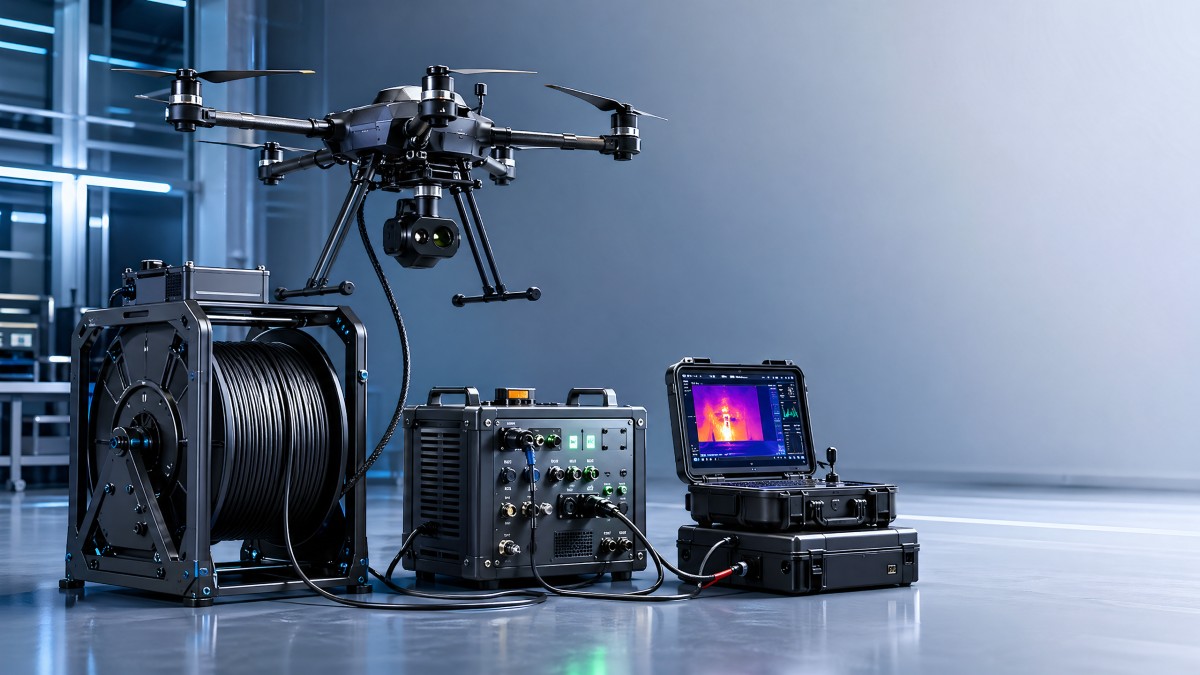
A tethered drone system is not a single flying unit. It is an integrated platform made up of the aircraft, tether cable, power conversion unit, winch, payload, communication link, and ground control station. That is why factory evaluation should begin with system integration capability rather than with a simple airframe catalog. In many procurement cases, the biggest risk appears at the interface between subsystems, not in the headline specification.
For information researchers and procurement teams, the first 3 questions are straightforward: Does the factory build core subsystems in-house, does it control critical test procedures, and can it provide traceable technical documentation? If the answer is vague, the supplier may be relying heavily on outsourced assembly. That can increase lead-time uncertainty from a typical 4–8 weeks to a far less predictable sourcing cycle when key components are delayed or changed.
Operators should also look beyond continuous flight marketing language. A tethered UAV can theoretically stay airborne for extended periods, but real performance depends on payload mass, wind conditions, cable drag, altitude, and power stability. A credible factory should explain operating envelopes, such as recommended wind ranges, payload thresholds, and duty-cycle expectations for 8-hour, 12-hour, or longer missions, instead of using only generic endurance claims.
From a TSV-style engineering review perspective, the principle is simple: parameters matter more than adjectives. Ask for test records, subsystem compatibility notes, and measurable acceptance criteria. A factory worth shortlisting should be able to discuss voltage management, EMI shielding, payload interface protocols, and maintenance intervals with the same confidence it uses to discuss product features.
A practical first-pass checklist
- Confirm whether the factory manufactures or directly validates the airframe, tether power module, winch assembly, and ground station as one integrated system.
- Request a documented test list covering power continuity, communication stability, tether fatigue handling, and payload compatibility across at least 3 common mission profiles.
- Check whether software, firmware, and hardware revisions are version-controlled so later maintenance does not create mismatch problems.
- Verify whether the supplier can support training, spare parts, and fault response within a defined service window such as 24–72 hours for critical issues.
Which factory capabilities matter most for product quality and field reliability?
A capable tethered drone system factory should demonstrate more than assembly capacity. It should show evidence of engineering control across mechanical, electrical, and operational layers. For example, a stable platform for perimeter security may prioritize thermal imaging, low-altitude hover consistency, and 24/7 serviceability, while an emergency response configuration may prioritize rapid deployment in 10–20 minutes and simplified ground station operation under pressure.
The following evaluation matrix helps procurement teams compare factories using practical, decision-ready criteria. It is especially useful when multiple suppliers appear similar on brochures but differ sharply in technical depth, documentation quality, and support readiness.
This table highlights a key reality: the best factory is rarely the one with the loudest claim. It is the one that can explain process control, failure modes, and service recovery in measurable terms. When buyers compare tethered UAV continuous flight time or UAV ground control station wholesale offers, these supporting capabilities often determine total project success more than the headline airframe specification.
Operators should also pay attention to maintainability. Ask how often tether reels, connectors, cooling modules, and flight-critical consumables require inspection. A factory that recommends clear intervals, such as pre-mission checks, every 100–200 operating hours, and quarterly preventive reviews, usually has stronger field experience than one that provides only a basic user manual.
Signs of stronger engineering maturity
Documentation discipline
Look for revision-controlled drawings, wiring diagrams, payload interface references, and acceptance checklists. These reduce misunderstanding during installation, training, and post-sale upgrades.
Test environment realism
A mature factory should be able to discuss tests under different temperatures, moderate wind conditions, and continuous operation windows. Even a general test framework is more useful than a polished but unsupported brochure.
Cross-functional support
Reliable suppliers usually coordinate sales engineers, production teams, and after-sales personnel. That alignment becomes critical when procurement asks for custom payloads, local compliance documents, or deployment training across multiple sites.
How do you compare technical parameters without being misled by marketing language?
Technical comparison is where many buyers lose clarity. A tethered drone system factory may advertise long endurance, stable imaging, or industrial-grade design, but those terms are too broad to support a purchase decision. The better method is to compare 5 core parameter groups: airborne platform, tether and power system, payload performance, control architecture, and serviceability. If one group is weak, the full system may underperform in actual deployment.
For example, a drone thermal camera resolution comparison is useful only when paired with stabilization performance, data latency, and target recognition distance assumptions. Likewise, UAV ground control station wholesale pricing means little unless you know whether the station supports encrypted communication, integrated display recording, remote diagnostics, and multi-user access control.
Use the following table to structure apples-to-apples comparison across suppliers. It helps technical teams and decision-makers align around measurable procurement criteria instead of fragmented feature lists.
A comparison table like this keeps the discussion grounded. It also supports cross-team review. R&D can examine interfaces and performance limits, operators can focus on usability and maintenance, procurement can compare risk exposure, and executives can judge whether the supplier fits the organization’s deployment timeline and service expectations.
Three parameter traps to avoid
- Do not compare continuous flight time without payload, altitude, and weather assumptions. A claim that ignores those variables has limited buying value.
- Do not compare thermal imaging only by pixel count. Lens choice, stabilization, and detection objective affect usable image quality.
- Do not judge the factory only by unit price. Spare parts, commissioning support, and downtime response can outweigh a lower upfront quote within the first 6–12 months.
This is exactly where a data-first evaluation approach creates value. In hard-tech procurement, a narrower but verified parameter set is more useful than a wide and poorly defined feature list.
What standards, tests, and supply-chain signals should buyers request?
Not every tethered drone system factory will hold the same certifications, and buyers should avoid assuming that one general certificate proves full system readiness. Instead, ask for a layered view: quality management process, electrical safety approach, component traceability, software maintenance practice, and operational testing. This method is more practical than chasing badges without understanding scope.
For many industrial buyers, there are 4 sensible documentation categories to request during supplier qualification: factory process documents, key component origin records, final inspection or acceptance reports, and after-sales service procedures. A factory that can provide these materials within 3–7 business days usually has stronger internal control than one that needs repeated follow-up to assemble basic information.
Testing matters just as much as certificates. Ask how the factory validates power continuity, tether handling, communication redundancy, and emergency recovery logic. In long-duration use cases such as event security, border observation, industrial site patrol, or temporary communications relay, weak test discipline often leads to the most expensive failures: unstable links, premature component wear, and avoidable downtime.
Key signals of supply-chain reliability
- The factory can identify which parts are long-lead items and which are standard inventory items, helping you estimate whether delivery is closer to 2–4 weeks or 8–12 weeks.
- It maintains documented incoming inspection procedures for cables, connectors, structural parts, and control electronics.
- It can explain substitution rules when a component becomes unavailable, including revalidation steps and customer notification practices.
- It provides a defined spare-parts strategy for the first 6–12 months of operation, rather than leaving maintenance planning to the buyer alone.
Why this matters for executives
Senior decision-makers are often less concerned with one isolated technical feature than with project continuity. A robust supplier shortens qualification cycles, reduces integration surprises, and gives clearer forecasting for deployment budgets, staffing, and compliance review.
Why this matters for operators
Operators need practical confidence that the tethered UAV system can be inspected, deployed, and recovered with repeatable steps. Clear maintenance guidance and fault workflows make day-to-day use safer and easier, especially when crews rotate across shifts.
How should procurement teams run the final factory selection process?
The strongest buying process usually follows 4 stages: requirement definition, technical screening, validation review, and commercial negotiation. This sequence prevents teams from choosing a low quote first and discovering compatibility issues later. For tethered drone system sourcing, that discipline is especially important because airframe, power, sensor, and software choices affect each other directly.
Start by defining mission profiles. Is the system intended for perimeter surveillance, industrial inspection, public safety overwatch, temporary telecom support, or mixed use? A realistic requirement set should specify 3–5 items such as expected operating duration, payload type, deployment speed, operator headcount, and environmental constraints. Without this step, supplier comparison becomes inconsistent and expensive.
Then move to validation. Ask shortlisted factories for a technical Q&A session, sample documentation, and if feasible, a remote or on-site demonstration. Even a 60–90 minute engineering review can reveal whether the team understands tether management, ground power protection, and payload behavior in the field. These details are difficult to fake under direct questioning.
A buyer-friendly decision process
- Define use case, duty cycle, payload priority, and required service response time.
- Compare 2–4 suppliers using the same technical matrix and the same request list.
- Review documents for traceability, testing scope, and spare-part planning before discussing price in detail.
- Negotiate delivery schedule, acceptance criteria, training scope, and after-sales responsibilities in writing.
FAQ for buyers comparing tethered drone system factories
How many factories should we compare before making a decision?
In most B2B procurement cycles, comparing 2–4 qualified factories is enough. Fewer than 2 limits perspective, while too many often creates noise and slows decision-making without improving quality.
What is a reasonable delivery expectation?
It depends on configuration and component sourcing, but buyers should ask for a breakdown by subsystem. A standard package may move faster than a customized payload and ground station solution that requires integration review and validation.
Should we prioritize lower price or stronger documentation?
For tethered UAV systems, stronger documentation often reduces total risk more effectively than a lower initial quote. Clear inspection records, technical support scope, and spare-part planning can save substantial cost after deployment.
What is the most overlooked issue in factory evaluation?
Many buyers overlook serviceability. A system that looks good on paper but lacks clear maintenance intervals, replacement procedures, and troubleshooting support can create long downtime once deployed.
Why work with a data-driven evaluation partner before you commit?
When buyers face multiple tethered drone system factories, the real challenge is not access to information but filtering it. TechStat Vanguard approaches this problem from an engineering-first perspective. Instead of relying on vague supplier positioning, we focus on parameter logic, test discipline, subsystem compatibility, and supply-chain transparency so your team can qualify options with less noise and fewer assumptions.
This approach is useful for researchers building a shortlist, operators assessing usability, procurement teams managing risk, and enterprise leaders planning long-term deployment. Whether you need help with tethered UAV continuous flight time interpretation, drone thermal camera resolution comparison, or UAV ground control station wholesale evaluation, the goal is the same: make the purchase decision based on verifiable engineering criteria.
You can contact us for specific support on parameter confirmation, factory comparison frameworks, delivery-cycle review, custom configuration planning, documentation checklists, sample evaluation strategy, and quote discussion preparation. If your team is already reviewing suppliers, we can also help identify missing technical questions before the final commercial stage.
In hard-tech procurement, better decisions come from sharper questions. If you want a clearer way to evaluate a tethered drone system factory, start with the data, define the acceptance criteria, and build your shortlist around engineering truth rather than marketing volume.
Search News
Hot Articles
- Carbon Fiber StructuresHow to Specify Aerospace Carbon Fiber Assemblies for Lightweight, Load-Bearing PartsJul 11, 2026
- Machine VisionXiaomi, Alibaba DAMO Academy Drive Open-Source Robotics Model Ecosystem, Lowering Algorithm Development Barriers for Overseas SMEs Adopting Chinese Robotics SolutionsMar 30, 2026
- Cobots & ArmsShanxi 'AI+' Conference Showcases Embodied Intelligence with Multinational Buyer Engagement: Key Industry ImplicationsMar 30, 2026
Popular Tags
Recommended News
 Jul 11, 2026How to Specify Aerospace Carbon Fiber Assemblies for Lightweight, Load-Bearing PartsAerospace carbon fiber assemblies: learn how to specify laminate design, load data, joining methods, and inspection controls for lighter, reliable load-bearing aerospace parts.Elena Rostova (UAV Systems Researcher)
 Mar 30, 2026Xiaomi, Alibaba DAMO Academy Drive Open-Source Robotics Model Ecosystem, Lowering Algorithm Development Barriers for Overseas SMEs Adopting Chinese Robotics SolutionsXiaomi & Alibaba DAMO Academy's open-source robotics models lower algorithm barriers for global SMEs. Boost efficiency in manufacturing, logistics & smart retail with ROS 2 compatible solutions.TSV Data Lab
 Mar 30, 2026Shanxi 'AI+' Conference Showcases Embodied Intelligence with Multinational Buyer Engagement: Key Industry ImplicationsShanxi 'AI+' Conference highlights embodied intelligence with Tesla, Ubtech & Jiantao showcasing multimodal robotics. 40+ global buyers validated tech on-site, creating new B2B channels for industrial automation & AI solutions.Chen Wei (Automation Lead Engineer)
 Mar 30, 2026Zhongguancun Unveils 6G Integrated Sensing-Computing-Intelligence Platform to Empower Embodied Robots for Global Industrial ApplicationsZhongguancun's new 6G platform revolutionizes industrial robotics with <10ms latency, empowering global automotive, logistics & port automation. Discover how this tech boosts China's smart manufacturing exports.TSV Data Lab
 Mar 30, 2026Mech-Mind Tianjin Embodied Intelligence R&D and Production Base Goes Live, Cutting Delivery Time by 20%–30% for Global Customized AMR+Vision SolutionsMech-Mind's Tianjin AMR+Vision production base cuts delivery time by 20%-30% for欧美 & Latin American markets. Discover how this PLd-certified facility accelerates customized robotics solutions for smart manufacturing and logistics.Chen Wei (Automation Lead Engineer)
 Mar 30, 2026Boao Forum Reveals 'Co-evolution of Big and Small Brains' Trend in Humanoid Robots, China's Embodied Intelligence Accelerates Adaptation to Overseas Manufacturing Service ScenariosDiscover how China's humanoid robots, featuring 'Co-evolution of Big and Small Brains,' are revolutionizing global manufacturing. Learn about Embodied Tian Gong 3.0's ISO compliance and overseas deployment at Boao Forum 2026.Chen Wei (Automation Lead Engineer)
 Mar 30, 2026China Railway Industrial Secures Patent for Embodied Robotics in Material Handling, Boosting High-Precision Delivery Capabilities for Overseas Infrastructure and Manufacturing ProjectsChina Railway Industrial's new patent for embodied robotics in material handling boosts high-precision delivery for global infrastructure & manufacturing. Discover how this innovation enhances logistics accuracy in automotive, rail transit & EPC projects.Chen Wei (Automation Lead Engineer)
 Oct 26, 2026AMAXiMAL Releases Open-Source TopMod 3D v3 With Claude AIExplore AMAXiMAL’s free, open-source TopMod 3D v3 with Claude AI assistance, topology-based modeling and plywood fabrication tools that connect complex designs to physical builds.Dr. Marcus Vance
 Oct 26, 2026Choosing a SCADA System Integrator Company: PLC Compatibility and Long-Term SupportChoose a scada system integrator company with proven PLC compatibility and reliable long-term support. Discover what to test, compare, and require before investing.Victor Lin (Chief Software Architect)
 Oct 25, 2026Hesai Leads Global ADAS Main Lidar Shipments in Yole’s 2026 ReportHesai led global ADAS main lidar shipments with a 43% share in 2025, according to Yole’s 2026 report. Explore what this ranking reveals about its automotive market position.TSV Data Lab
 Oct 25, 2026Choosing an Aerospace Materials Manufacturer: Quality and Traceability ChecksChoosing an aerospace materials manufacturer? Learn how to verify certifications, test reports, and lot traceability to qualify suppliers confidently and reduce costly sourcing risks.Dr. Marcus Vance
 Oct 24, 2026Guotai Haitong: Global Entry-Level 3D Printer Shipments Rose 39% in Q1 2026Entry-level 3D printer shipments rose 39% in Q1 2026, Guotai Haitong reports. Explore how AI, multicolor printing and print farms are shaping market growth.Dr. Marcus Vance
 Oct 24, 2026Choosing an Industrial Vision Inspection Supplier: Acceptance Tests That MatterChoose an industrial vision inspection supplier with confidence. Discover acceptance tests for defect detection, false rejects, production speed, and reliable part rejection before you buy.TSV Data Lab
 Oct 23, 2026US Navy Raises Gecko Robotics Contract Ceiling to $300M for Robotic Fleet MaintenanceUS Navy raises Gecko Robotics’ contract ceiling to $300M for Pacific Fleet robotic inspections. Explore potential opportunities for maintenance suppliers and key procurement considerations.Chen Wei (Automation Lead Engineer)
 Oct 23, 2026Choosing Industrial Sensing Systems for Global Plants: Protocol CompatibilityCompare industrial sensing systems international buyers can trust. Explore protocol compatibility, reduce integration risks, and select proven configurations for reliable global plant deployments.TSV Data Lab
 Oct 22, 2026KUKA Showcases Physical AI and iiQKA.AI Vision at NVIDIA GTC BerlinExplore KUKA’s Physical AI showcase at NVIDIA GTC Berlin and discover how iiQKA.AI Vision aims to simplify robotic vision integration and improve 2D and 3D scene recognition.TSV Data Lab
 Oct 22, 2026Robotic Machining of Advanced Composites: What Tolerances Are Achievable?Explore advanced materials machining robotics: discover what drives achievable composite tolerances and how to validate accuracy before investing in your next machining system.Dr. Marcus Vance
 Oct 21, 2026China’s Industrial Robot Exports Near RMB 10 Billion in First Nine Months of 2026China’s industrial robot exports neared RMB 10 billion in January–September 2026, with value rising faster than volume. Explore the data and what it could mean for suppliers.Chen Wei (Automation Lead Engineer)
 Oct 21, 2026Low-Latency Industrial Data Processing: Pricing and Key Cost DriversExplore industrial data latency price drivers, from edge hardware to integration and support. Learn how to compare quotes, verify performance, and avoid unnecessary costs.TSV Data Lab
 Oct 20, 2026KUKA Launches iiQKA.AI Vision to Simplify Industrial Image ProcessingKUKA iiQKA.AI Vision simplifies industrial image processing with controller-based 2D and 3D vision. Explore drag-and-drop setup for vision-guided automation.TSV Data Lab
 Oct 20, 2026Smart Industrial Edge Devices: Key Criteria for Legacy PLC IntegrationChoose smart industrial edge devices for legacy PLC integration. Discover key criteria for compatibility, data quality, security, and reliable collection without disrupting control.TSV Data Lab
 Oct 19, 2026Choosing a Radar Sensor by Application: Range, Resolution, and Field of ViewSimplify radar sensor application based product selection. Compare range, resolution, and field of view to avoid blind spots and choose with confidence. Explore the guide.TSV Data Lab
 Oct 18, 2026Comparing Material Options for Procurement: Specs, Costs, and Supply RisksExplore procurement oriented technical content on material options, specs, costs, and supply risks. Compare alternatives to cut hidden expenses and make confident sourcing decisions.Dr. Marcus Vance
 Oct 17, 20265-Axis CNC Positioning Accuracy: How to Interpret ISO 230-2 Test ResultsAssess 5 axis CNC machining positioning accuracy with ISO 230-2. Learn to interpret repeatability, reversal error, and test conditions to compare suppliers and make confident acceptance decisions.Dr. Marcus Vance























