
UAV ground control station wholesale pitfalls to avoid
Publication Date
author
Buying a UAV ground control station wholesale sounds straightforward, but hidden risks in compatibility, data links, interface design, and lifecycle support can quickly erode ROI. For teams comparing options alongside vtol drone for pipeline inspection platforms, tethered drone system factory solutions, or carbon fiber drone frame wholesale sourcing, this guide highlights the most common pitfalls and the technical checkpoints that matter before you sign a contract.
In commercial UAV programs, the ground control station is not a simple accessory. It is the operational nerve center for mission planning, telemetry, payload control, safety intervention, and post-flight data handling. A weak purchasing decision at the station level can compromise flight reliability, operator efficiency, training costs, and compliance readiness across the full fleet lifecycle.
That is why procurement teams, operators, engineering leads, and decision-makers should assess wholesale offers using measurable checkpoints rather than broad supplier claims. In line with TechStat Vanguard’s engineering-first approach, the right question is not whether a unit looks advanced, but whether its parameters, interfaces, and support model fit the mission profile over 24–60 months of actual deployment.
Why wholesale ground control station procurement fails more often than expected
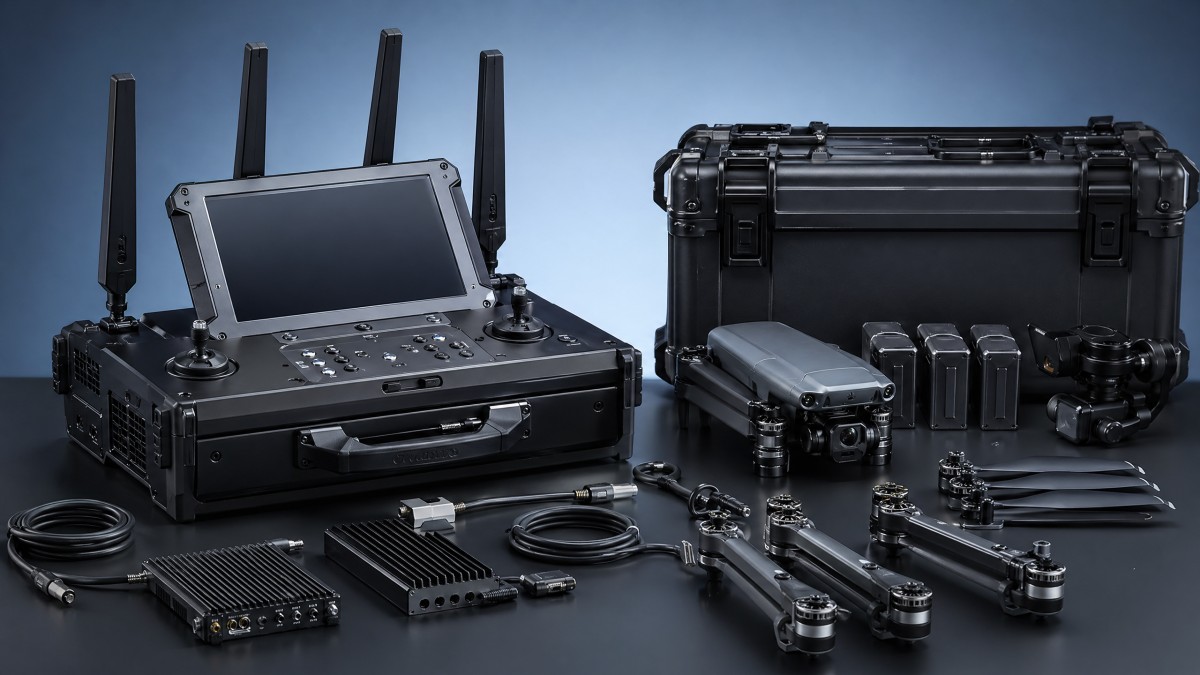
Many UAV ground control station wholesale projects fail before the first field test because buyers evaluate only headline specifications. A 15 km data link claim, a bright display, or a rugged enclosure may look sufficient on a quotation sheet. In practice, what matters is system-level compatibility with flight controllers, payload software, radio architecture, power requirements, and operator workflow under real environmental stress.
This problem grows when the station is sourced together with adjacent platforms such as a vtol drone for pipeline inspection or a tethered drone system factory package. These missions have very different control logic, bandwidth needs, and endurance profiles. A station optimized for short-range mapping may struggle with persistent hover monitoring, multi-camera payload switching, or dense telemetry logging at 10 Hz to 50 Hz refresh rates.
Another common issue is procurement fragmentation. One team negotiates radios, another validates software, and a third compares enclosure quality. The result is a partially matched system where each component passes isolated review, but the complete operating stack creates latency, UI confusion, or update failures. Even a 200–400 millisecond delay in payload control feedback can be significant for inspection, security, or precision response use cases.
A disciplined sourcing process should review the ground control station as part of an engineering chain: command link, video link, mission software, payload interface, battery subsystem, and field serviceability. If one of these layers is weak, wholesale pricing advantages can disappear within the first 6–12 months through retraining, retrofit adapters, or replacement purchases.
Four root causes behind bad purchasing outcomes
- Specification mismatch between aircraft firmware, payload drivers, and control station OS versions.
- Overreliance on nominal range figures measured in ideal line-of-sight rather than urban, coastal, or EMI-heavy environments.
- Insufficient review of spare parts, field repair turnaround, and software patch support over 2–5 years.
- Operator-centric design ignored during bulk purchasing, leading to fatigue, slower workflows, and higher training error rates.
Where buyers should shift their evaluation lens
Teams should move from appearance-based selection to mission assurance metrics. Instead of asking whether the station supports “multiple payloads,” ask how many simultaneous control channels are exposed, whether the interface supports dual-operator mode, and how quickly the system recovers after signal interruption. Those answers are operationally meaningful and easier to compare across suppliers.
The table below summarizes the most frequent wholesale blind spots and the likely downstream consequences for industrial UAV deployments.
The pattern is clear: the real cost of a poor UAV ground control station wholesale decision rarely appears in the initial invoice. It emerges later as integration friction, mission interruption, and support dependency. For B2B buyers, that is why evaluation should begin with failure modes, not brochure highlights.
Compatibility and interface traps that undermine deployment speed
Compatibility is the most underestimated risk in ground control station procurement. A station may support MAVLink, proprietary telemetry, IP video, or serial payload commands, but partial support is not the same as deployment-ready support. For example, one supplier may provide aircraft control and live video, yet omit zoom control, gimbal sync, or custom waypoint import needed by inspection teams.
This issue becomes more serious when fleets combine fixed-wing VTOL aircraft, multirotors, and tethered systems. A single station intended to control 2–3 UAV categories must manage different battery logic, flight mode transitions, fail-safe behavior, and payload control layers. Without a verified compatibility matrix, buyers often discover post-delivery that only 70%–80% of planned functions are usable out of the box.
Interface design is equally important. Field operators are not evaluating the station inside a quiet office; they may be working in direct sunlight, cold weather, windy rooftops, or oil and gas corridors. Screen brightness below roughly 800–1000 nits can become difficult outdoors. Poor alarm prioritization can hide critical notifications under less important telemetry. A control layout that looks clean on a product page may slow emergency response in a real incident.
A reliable evaluation process should therefore combine protocol validation, payload command testing, and operator workflow assessment. Engineering teams should request a function checklist instead of general compatibility claims. Procurement should ask which features are native, which require middleware, and which are planned only in future software releases.
Critical interface checks before contract signature
- Confirm supported flight controllers, firmware versions, and protocol layers in writing.
- Verify whether payload controls include zoom, focus, thermal palette switching, and gimbal reset.
- Test UI readability at outdoor brightness levels and with gloves if the mission requires it.
- Review alarm logic for low battery, link degradation, GPS anomalies, and geofence warnings.
- Check whether data export supports your existing GIS, inspection, or maintenance software stack.
A practical compatibility review matrix
The following matrix helps teams compare ground control station options using engineering checkpoints rather than generic product language.
For wholesale buyers, this matrix is especially useful when comparing bundled offers. A lower unit price may still be the more expensive option if it forces custom software work, manual workflows, or operator workarounds after delivery. Speed of deployment depends less on nominal compatibility and more on validated functional depth.
Data links, cybersecurity, and environmental durability: the hidden technical checkpoints
In UAV operations, the ground control station is only as dependable as its communications chain. Buyers often focus on maximum transmission distance while ignoring packet stability, frequency management, and fallback behavior under interference. Yet in urban inspection, industrial plants, ports, and pipeline corridors, electromagnetic noise and partial obstructions are routine conditions rather than exceptions.
A practical review should ask how the station handles degraded links. Does it support redundant channels, automatic bitrate adjustment, or clear operator warning thresholds? Can it separate command-and-control traffic from payload video? In many industrial missions, a clean control link matters more than preserving high-resolution video during temporary congestion. These prioritization rules should be explicit before procurement approval.
Cybersecurity also deserves more attention in wholesale discussions. If stations use removable storage, network sync, or remote update capability, access control and software integrity become procurement issues, not only IT issues. Teams should ask about user permission layers, update signing methods, and offline deployment options. Even a simple distinction between admin, pilot, and observer profiles can reduce accidental configuration errors.
Environmental durability is another weak spot. A ruggedized shell does not automatically mean field-ready endurance. Procurement teams should review operating temperature ranges, ingress protection expectations, connector retention quality, battery swapping ergonomics, and transport survivability. A station that performs well at 20°C may not maintain stable touch response or battery output at -10°C or in heavy summer heat above 45°C.
Technical risk signals buyers should not ignore
- Range claims listed without environment assumptions such as line-of-sight, antenna setup, or payload bitrate.
- No documented recovery behavior after temporary link interruption or station reboot.
- Unclear user access management for multi-operator or multi-site deployments.
- Battery runtime quoted without display brightness, radio load, or recording status conditions.
- Connectors and ports exposed without adequate strain relief for repeated field use.
Field-check parameters worth documenting
The table below captures the type of engineering data that helps separate a viable UAV ground control station wholesale option from a high-risk one.
These checkpoints do not require speculative claims or inflated marketing language. They are practical values procurement teams can request, compare, and test. That aligns with TSV’s principle that engineering truth emerges from measurable limits, not slogans.
Lifecycle support, spare parts, and total cost of ownership in wholesale programs
A ground control station purchase should be evaluated over its service life, not just at the quotation stage. In many wholesale projects, the visible unit cost represents only part of the total expense. Over 24–48 months, software updates, replacement batteries, antenna modules, carrying cases, display repairs, and operator training can materially change the economics of the procurement decision.
One major pitfall is assuming support quality from product quality. A station can be technically sound but still become a poor investment if spare parts require long lead times or if the supplier cannot define repair escalation paths. For teams running 5, 20, or 50 stations across multiple sites, an unclear service structure can create uneven fleet readiness and force procurement of excess backup inventory.
Buyers should also review software support discipline. How often are updates issued? Are patch notes available? Can the organization defer updates until after internal validation? In controlled industrial operations, forced updates are often undesirable. A stable release path with scheduled maintenance windows is usually better than frequent feature releases that introduce retraining or compatibility surprises.
From a procurement perspective, lifecycle support should be written into vendor evaluation criteria. That includes response time targets, availability of field-replaceable components, documented accessory continuity, and training scope. A station with a modest initial premium may still produce lower total cost of ownership if it shortens downtime and simplifies fleet standardization.
Questions that should appear in every RFQ or supplier review
- What is the expected support window for the current hardware platform: 24 months, 36 months, or longer?
- Which parts are field-replaceable, and which require factory service?
- What is the typical repair or replacement turnaround for batteries, displays, antennas, and joysticks?
- Are operator manuals, maintenance guides, and update records included in English and other required languages?
- Can one software image be standardized across all units in a fleet lot?
A simple TCO comparison framework
The table below shows how buyers can compare ground control station wholesale offers beyond unit price alone.
For decision-makers, this framework helps convert technical uncertainty into sourcing discipline. It also creates a stronger basis for comparing bundled procurement packages that include aircraft, payloads, and ground infrastructure in one offer.
A practical supplier selection and acceptance workflow for B2B buyers
The most effective way to avoid UAV ground control station wholesale pitfalls is to formalize the buying process around acceptance evidence. Teams should not wait until mass delivery to validate fit. Instead, a staged workflow helps procurement, engineering, and operations align before volume commitment, especially where stations will support critical inspection, monitoring, or industrial aerial data collection.
An effective workflow typically runs through four stages: requirements definition, sample validation, contractual control, and incoming acceptance. Each stage should use measurable checkpoints. This structure is particularly useful when the station must work with related assets such as carbon fiber drone frame wholesale airframes, tethered platforms, or VTOL aircraft with long-distance inspection tasks.
During requirements definition, the buyer should document not only basic control needs but also environment, operator profile, software ecosystem, and service expectations. In the sample stage, teams should run a limited field test lasting at least 1–3 mission days, including outdoor use, payload switching, and link recovery scenarios. Without this stage, many interface or endurance problems remain invisible.
Contractually, it is wise to define what constitutes acceptance: confirmed interfaces, accessory completeness, software version traceability, and basic support obligations. Incoming inspection after delivery should verify lot consistency, documentation, battery health, port integrity, and firmware alignment. This is simple discipline, but it reduces downstream surprises considerably.
Recommended 5-step procurement workflow
- Define mission profile, UAV type, payload type, operator count, and environmental constraints.
- Request a compatibility matrix, support terms, and sample unit configuration details.
- Run field validation for control stability, UI usability, battery duration, and data export.
- Lock software version, acceptance criteria, and spare parts commitments into the purchase terms.
- Inspect delivered units for consistency before deployment across sites or customer projects.
FAQ for procurement teams and operators
How many units should be sampled before a wholesale order?
For small orders, 1–2 sample units are often enough if the test scope is rigorous. For fleet programs or multi-site rollouts, 2–5 units can provide better confidence in configuration consistency, battery behavior, and accessory quality. The key is not just quantity, but whether the sample represents the final software and hardware build.
What delivery timeline is reasonable for ground control station wholesale projects?
For standard configurations, commercial lead times are often in the range of 2–8 weeks depending on quantity and accessory bundling. Custom interfaces, language localization, or bundled UAV system integration can extend schedules further. Buyers should separate production lead time from validation and acceptance lead time when planning projects.
Which metrics matter most during field acceptance?
Priority metrics usually include link stability, display readability, battery runtime, payload command response, data export success, and operator error rate during repetitive tasks. If the mission is safety-sensitive, teams should also observe warning clarity and fallback behavior during partial signal degradation.
A strong procurement workflow turns subjective preference into repeatable evaluation. For engineering-led organizations, that is the difference between buying a control device and qualifying a dependable operational platform.
The biggest UAV ground control station wholesale mistakes are rarely dramatic at the start. They appear as small specification gaps, weak link behavior, confusing interfaces, and vague service commitments that compound over time. Buyers who focus on compatibility depth, environmental fit, lifecycle support, and acceptance criteria are far more likely to protect ROI and shorten deployment cycles.
For teams sourcing complete UAV ecosystems, the ground control station should be reviewed with the same discipline applied to aircraft, payloads, and structural components. TechStat Vanguard’s engineering-first perspective is simple: parameters, tolerances, and support traceability matter more than generic claims. If you are comparing suppliers or planning a multi-unit procurement, now is the right time to benchmark your shortlist against the checkpoints above.
Contact us to discuss your application, request a customized evaluation framework, or explore more hard-tech sourcing insights for UAV systems, inspection platforms, and industrial airborne operations.
Search News
Hot Articles
- Carbon Fiber StructuresHow to Specify Aerospace Carbon Fiber Assemblies for Lightweight, Load-Bearing PartsJul 11, 2026
- Machine VisionXiaomi, Alibaba DAMO Academy Drive Open-Source Robotics Model Ecosystem, Lowering Algorithm Development Barriers for Overseas SMEs Adopting Chinese Robotics SolutionsMar 30, 2026
- Cobots & ArmsShanxi 'AI+' Conference Showcases Embodied Intelligence with Multinational Buyer Engagement: Key Industry ImplicationsMar 30, 2026
Popular Tags
Recommended News
 Jul 11, 2026How to Specify Aerospace Carbon Fiber Assemblies for Lightweight, Load-Bearing PartsAerospace carbon fiber assemblies: learn how to specify laminate design, load data, joining methods, and inspection controls for lighter, reliable load-bearing aerospace parts.Elena Rostova (UAV Systems Researcher)
 Mar 30, 2026Xiaomi, Alibaba DAMO Academy Drive Open-Source Robotics Model Ecosystem, Lowering Algorithm Development Barriers for Overseas SMEs Adopting Chinese Robotics SolutionsXiaomi & Alibaba DAMO Academy's open-source robotics models lower algorithm barriers for global SMEs. Boost efficiency in manufacturing, logistics & smart retail with ROS 2 compatible solutions.TSV Data Lab
 Mar 30, 2026Shanxi 'AI+' Conference Showcases Embodied Intelligence with Multinational Buyer Engagement: Key Industry ImplicationsShanxi 'AI+' Conference highlights embodied intelligence with Tesla, Ubtech & Jiantao showcasing multimodal robotics. 40+ global buyers validated tech on-site, creating new B2B channels for industrial automation & AI solutions.Chen Wei (Automation Lead Engineer)
 Mar 30, 2026Zhongguancun Unveils 6G Integrated Sensing-Computing-Intelligence Platform to Empower Embodied Robots for Global Industrial ApplicationsZhongguancun's new 6G platform revolutionizes industrial robotics with <10ms latency, empowering global automotive, logistics & port automation. Discover how this tech boosts China's smart manufacturing exports.TSV Data Lab
 Mar 30, 2026Mech-Mind Tianjin Embodied Intelligence R&D and Production Base Goes Live, Cutting Delivery Time by 20%–30% for Global Customized AMR+Vision SolutionsMech-Mind's Tianjin AMR+Vision production base cuts delivery time by 20%-30% for欧美 & Latin American markets. Discover how this PLd-certified facility accelerates customized robotics solutions for smart manufacturing and logistics.Chen Wei (Automation Lead Engineer)
 Mar 30, 2026Boao Forum Reveals 'Co-evolution of Big and Small Brains' Trend in Humanoid Robots, China's Embodied Intelligence Accelerates Adaptation to Overseas Manufacturing Service ScenariosDiscover how China's humanoid robots, featuring 'Co-evolution of Big and Small Brains,' are revolutionizing global manufacturing. Learn about Embodied Tian Gong 3.0's ISO compliance and overseas deployment at Boao Forum 2026.Chen Wei (Automation Lead Engineer)
 Mar 30, 2026China Railway Industrial Secures Patent for Embodied Robotics in Material Handling, Boosting High-Precision Delivery Capabilities for Overseas Infrastructure and Manufacturing ProjectsChina Railway Industrial's new patent for embodied robotics in material handling boosts high-precision delivery for global infrastructure & manufacturing. Discover how this innovation enhances logistics accuracy in automotive, rail transit & EPC projects.Chen Wei (Automation Lead Engineer)
 Oct 26, 2026AMAXiMAL Releases Open-Source TopMod 3D v3 With Claude AIExplore AMAXiMAL’s free, open-source TopMod 3D v3 with Claude AI assistance, topology-based modeling and plywood fabrication tools that connect complex designs to physical builds.Dr. Marcus Vance
 Oct 26, 2026Choosing a SCADA System Integrator Company: PLC Compatibility and Long-Term SupportChoose a scada system integrator company with proven PLC compatibility and reliable long-term support. Discover what to test, compare, and require before investing.Victor Lin (Chief Software Architect)
 Oct 25, 2026Hesai Leads Global ADAS Main Lidar Shipments in Yole’s 2026 ReportHesai led global ADAS main lidar shipments with a 43% share in 2025, according to Yole’s 2026 report. Explore what this ranking reveals about its automotive market position.TSV Data Lab
 Oct 25, 2026Choosing an Aerospace Materials Manufacturer: Quality and Traceability ChecksChoosing an aerospace materials manufacturer? Learn how to verify certifications, test reports, and lot traceability to qualify suppliers confidently and reduce costly sourcing risks.Dr. Marcus Vance
 Oct 24, 2026Guotai Haitong: Global Entry-Level 3D Printer Shipments Rose 39% in Q1 2026Entry-level 3D printer shipments rose 39% in Q1 2026, Guotai Haitong reports. Explore how AI, multicolor printing and print farms are shaping market growth.Dr. Marcus Vance
 Oct 24, 2026Choosing an Industrial Vision Inspection Supplier: Acceptance Tests That MatterChoose an industrial vision inspection supplier with confidence. Discover acceptance tests for defect detection, false rejects, production speed, and reliable part rejection before you buy.TSV Data Lab
 Oct 23, 2026US Navy Raises Gecko Robotics Contract Ceiling to $300M for Robotic Fleet MaintenanceUS Navy raises Gecko Robotics’ contract ceiling to $300M for Pacific Fleet robotic inspections. Explore potential opportunities for maintenance suppliers and key procurement considerations.Chen Wei (Automation Lead Engineer)
 Oct 23, 2026Choosing Industrial Sensing Systems for Global Plants: Protocol CompatibilityCompare industrial sensing systems international buyers can trust. Explore protocol compatibility, reduce integration risks, and select proven configurations for reliable global plant deployments.TSV Data Lab
 Oct 22, 2026KUKA Showcases Physical AI and iiQKA.AI Vision at NVIDIA GTC BerlinExplore KUKA’s Physical AI showcase at NVIDIA GTC Berlin and discover how iiQKA.AI Vision aims to simplify robotic vision integration and improve 2D and 3D scene recognition.TSV Data Lab
 Oct 22, 2026Robotic Machining of Advanced Composites: What Tolerances Are Achievable?Explore advanced materials machining robotics: discover what drives achievable composite tolerances and how to validate accuracy before investing in your next machining system.Dr. Marcus Vance
 Oct 21, 2026China’s Industrial Robot Exports Near RMB 10 Billion in First Nine Months of 2026China’s industrial robot exports neared RMB 10 billion in January–September 2026, with value rising faster than volume. Explore the data and what it could mean for suppliers.Chen Wei (Automation Lead Engineer)
 Oct 21, 2026Low-Latency Industrial Data Processing: Pricing and Key Cost DriversExplore industrial data latency price drivers, from edge hardware to integration and support. Learn how to compare quotes, verify performance, and avoid unnecessary costs.TSV Data Lab
 Oct 20, 2026KUKA Launches iiQKA.AI Vision to Simplify Industrial Image ProcessingKUKA iiQKA.AI Vision simplifies industrial image processing with controller-based 2D and 3D vision. Explore drag-and-drop setup for vision-guided automation.TSV Data Lab
 Oct 20, 2026Smart Industrial Edge Devices: Key Criteria for Legacy PLC IntegrationChoose smart industrial edge devices for legacy PLC integration. Discover key criteria for compatibility, data quality, security, and reliable collection without disrupting control.TSV Data Lab
 Oct 19, 2026Choosing a Radar Sensor by Application: Range, Resolution, and Field of ViewSimplify radar sensor application based product selection. Compare range, resolution, and field of view to avoid blind spots and choose with confidence. Explore the guide.TSV Data Lab
 Oct 18, 2026Comparing Material Options for Procurement: Specs, Costs, and Supply RisksExplore procurement oriented technical content on material options, specs, costs, and supply risks. Compare alternatives to cut hidden expenses and make confident sourcing decisions.Dr. Marcus Vance
 Oct 17, 20265-Axis CNC Positioning Accuracy: How to Interpret ISO 230-2 Test ResultsAssess 5 axis CNC machining positioning accuracy with ISO 230-2. Learn to interpret repeatability, reversal error, and test conditions to compare suppliers and make confident acceptance decisions.Dr. Marcus Vance























