
Tethered drone system factory checklist for OEM buyers
Publication Date
author
For OEM buyers evaluating a tethered drone system factory, the real challenge is verifying engineering truth behind claims. From tethered uav continuous flight time and drone thermal camera resolution comparison to uav ground control station wholesale options and carbon fiber drone frame wholesale capacity, this checklist helps procurement teams, operators, and decision-makers compare suppliers with sharper technical confidence.
In tethered UAV procurement, the headline specification is rarely the only risk. A supplier may advertise 24-hour endurance, but the real purchasing question is whether the power module, tether cable, winch, flight controller, payload interface, and ground station can sustain that endurance under heat, wind, and continuous duty cycles. OEM buyers need a factory checklist that moves beyond brochures and into measurable engineering evidence.
This article is designed for technical researchers, operators, procurement teams, and business decision-makers who need a practical framework for supplier qualification. It focuses on factory capability, product consistency, component integration, testing discipline, and after-sales readiness, with special attention to continuous flight systems, thermal imaging payloads, carbon fiber structures, and wholesale ground control station options.
Why a tethered drone system factory audit matters before price comparison
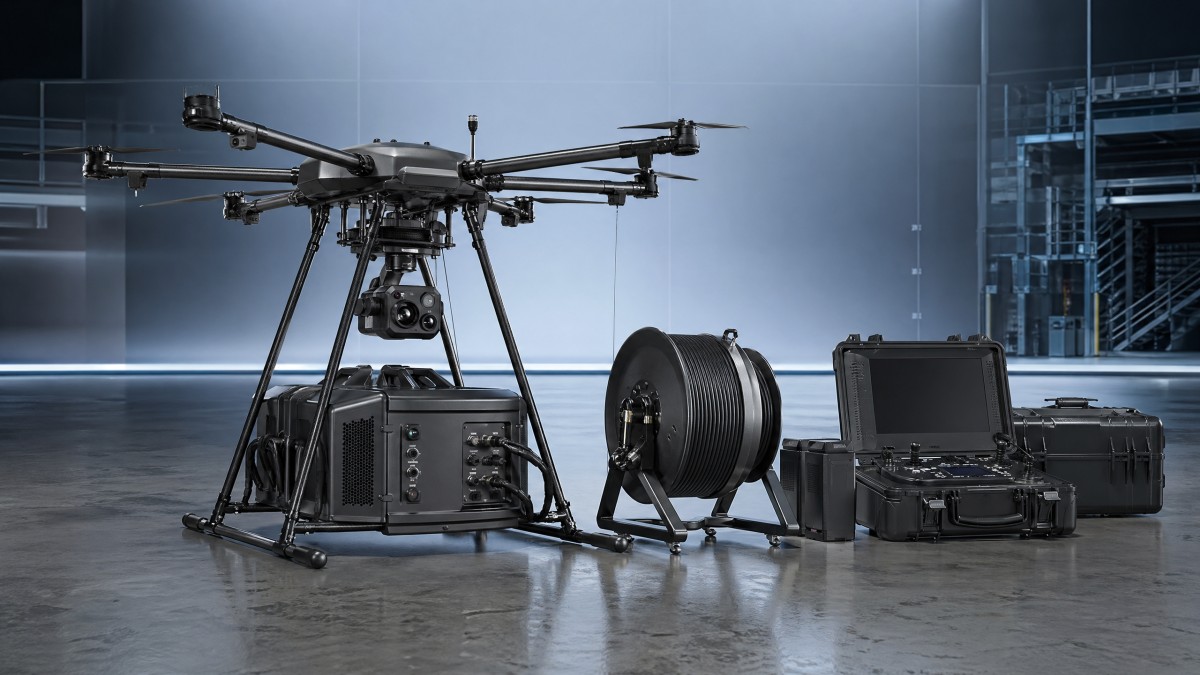
A tethered drone system is not a single product. It is a system-level assembly that typically combines an airframe, tether cable, onboard power conversion, ground power source, winch or reel mechanism, communication link, payload mount, and control software. When one subsystem is weak, the entire platform becomes difficult to deploy in security, emergency response, industrial inspection, or event monitoring environments.
For OEM buyers, early factory evaluation can reduce qualification mistakes by identifying hidden gaps in engineering, traceability, and process control. In many industrial procurement cycles, a 2- to 6-week audit and sample validation phase is far less costly than discovering field instability after 50 or 100 units have already been scheduled for deployment.
The most common sourcing mistake is comparing only headline figures such as endurance time, payload weight, or camera resolution. A factory should also be assessed on assembly repeatability, incoming quality control, burn-in testing time, firmware version management, spare parts policy, and the ability to adapt OEM requirements without creating undocumented product changes.
A robust audit also helps separate integrators from actual manufacturers. Some suppliers can assemble a demonstration unit quickly but cannot maintain stable batch delivery over 3 production runs or support customization requests such as alternative tether lengths, payload voltage outputs, or encrypted data transmission options. That distinction matters if your project depends on predictable lead times and repeatable field performance.
What OEM buyers should verify in the first screening round
- Whether the supplier manufactures core assemblies in-house or relies on external integration for the power module, frame, or winch.
- Whether technical drawings, BOM revisions, and test records are version-controlled across at least 3 production stages: prototype, pilot batch, and mass production.
- Whether the factory can provide application-specific validation for 8-hour, 12-hour, or 24-hour operating windows instead of generic endurance claims.
- Whether service support includes commissioning documents, operator training, spare parts planning, and remote troubleshooting response within 24 to 72 hours.
Initial factory checklist summary
The table below summarizes the first-pass review points that OEM buyers can use before visiting a tethered drone system factory or requesting a sample build. It is especially useful when comparing 3 to 5 suppliers in the same sourcing round.
The key takeaway is simple: a qualified tethered drone system factory should prove process control, not just product ambition. If answers are vague at the first screening stage, later negotiations on cost, delivery, and customization usually become harder, not easier.
Core technical checkpoints: endurance, tether power, payload integration, and thermal imaging
When buyers review technical specifications, tethered UAV continuous flight time is often the first metric discussed. Yet continuous flight claims are meaningful only if the supplier explains the operating conditions behind them. Ask whether the stated endurance assumes sea-level conditions, 0 to 3 m/s wind, no payload movement, and standard ambient temperatures such as 20°C to 25°C. A claim of continuous operation should be backed by power architecture details and test logs, not only by a marketing diagram.
The tether itself deserves close attention. Buyers should ask about cable length ranges, such as 50 m, 100 m, or 150 m options, along with conductor structure, insulation material, tensile reinforcement, minimum bend radius, and reel cycle durability. A good factory should be able to discuss both electrical performance and mechanical fatigue, because tether failure in the field is often caused by repeated handling, abrasion, or poor strain relief rather than by a headline voltage issue alone.
Payload integration is another decisive checkpoint. Many OEM projects require thermal imaging, dual-sensor EO/IR payloads, loudspeakers, lighting, or communication relays. The supplier should specify payload power output, data interface compatibility, mounting tolerances, and vibration management. If the drone thermal camera resolution comparison is part of your sourcing brief, go beyond 640×512 versus 384×288 and ask about frame rate, lens options, latency, and stabilization quality during continuous hover.
The onboard power conversion and thermal management design also affect reliability. In a tethered platform operating for 8 to 24 hours, heat accumulation can degrade components over time. Ask whether the factory has conducted thermal rise tests under full payload, what enclosure temperature thresholds trigger warnings, and whether derating is required above 35°C ambient conditions. These answers reveal whether the engineering team has validated long-duration deployment rather than only short demo flights.
Technical questions that expose real engineering depth
- What is the stated tethered UAV continuous flight time under defined payload and weather conditions?
- What is the maximum supported payload range in kilograms, and how does it affect hover stability at 50 m to 100 m altitude?
- What thermal camera resolutions are available, and what are the frame rates at each resolution level?
- What redundancy exists if communication is interrupted for 1 to 3 seconds?
- How many reel deployment cycles has the tether management system been tested for under normal handling conditions?
Example technical comparison points
The following comparison framework helps buyers normalize supplier data during RFQ review. It is not a universal pass-fail standard, but it helps identify whether the factory can discuss measurable engineering limits with clarity.
If a supplier can provide these technical details with defined assumptions, your risk profile is lower. If not, the advertised performance may not be transferable to your real deployment environment, especially in public safety, perimeter security, or long-duration site monitoring applications.
Manufacturing capability: carbon fiber drone frame wholesale capacity and batch consistency
A tethered drone system factory should not be judged only by the final assembled aircraft. Manufacturing depth matters, especially when projects require recurring batch orders, custom branding, or regional distribution. One frequent sourcing topic is carbon fiber drone frame wholesale capability. Buyers need to verify whether the supplier controls frame lamination, machining, bonding, drilling tolerances, and post-processing, or whether the frame is purchased from an unrelated external vendor.
Frame quality directly affects vibration, payload stability, corrosion resistance, maintenance intervals, and crash survivability. Ask about material stack-up, wall thickness consistency, joint reinforcement, and dimensional control. Even without a published aerospace-grade tolerance chart, a serious factory should explain how it controls hole position, arm alignment, and bonding consistency across pilot batches and repeat orders. In practical OEM terms, the issue is not only strength-to-weight ratio, but whether Unit 1 and Unit 80 behave the same way.
Batch consistency also depends on process documentation. A factory should be able to show incoming inspection criteria, torque standards for critical fasteners, assembly instructions, and final test checklists. If the product includes a detachable payload module or modular tether interface, the repeatability of these interfaces becomes important in maintenance planning. Small inconsistency at assembly can create larger problems after 6 to 12 months of field use.
Production capacity should be discussed realistically. Some factories can deliver 5 custom units in 3 weeks but struggle with 50 units over a 60-day schedule because component sourcing, fixture availability, or QC staffing becomes a bottleneck. Capacity discussions should therefore include not just monthly output estimates, but also bottleneck components, subcontracted processes, and buffer stock planning for replacement parts.
Factory capability signals that matter during batch procurement
- Dedicated assembly fixtures for repeatable frame alignment and tether interface installation.
- Documented incoming inspection for motors, ESCs, connectors, cables, and carbon fiber structural parts.
- Functional test stations for hover simulation, payload communication, and power delivery validation.
- Traceability by batch or serial number for critical components replaced during warranty service.
Capacity and consistency review table
Use the table below to compare whether a supplier’s manufacturing story matches its likely delivery performance. This is especially helpful for OEM buyers seeking private-label or region-specific tethered UAV packages.
The strongest suppliers are not always the ones with the biggest workshop footprint. They are usually the ones that can explain exactly how repeatability is maintained from sample to mass shipment and how a replacement frame, tether reel, or flight controller can be matched to the original system configuration.
Ground segment review: uav ground control station wholesale options, software, and serviceability
Many buyers focus heavily on the aircraft and overlook the ground segment. That is a mistake, because the user experience of a tethered drone system often depends on the ground control station, power box, operator interface, and field deployment logistics. If your sourcing scope includes uav ground control station wholesale options, compare not only hardware size and monitor count, but also interface design, enclosure durability, cooling layout, power conversion, transport convenience, and maintenance access.
For operators, the practical questions are straightforward. How long does setup take on-site: 10 minutes, 20 minutes, or more than 30? Can one person deploy the station safely, or are 2 operators recommended? Are controls readable under strong sunlight or in low-light conditions? Does the software display tether status, payload feed, fault messages, and event logs clearly? A station that saves even 8 to 12 minutes per deployment can materially improve field efficiency over frequent daily use.
For procurement teams, wholesale options should be analyzed at the platform level. Some suppliers offer portable cases, vehicle-mounted stations, or semi-fixed deployment cabinets. Each format affects shipping, after-sales support, and spare part strategy. A fixed-site monitoring project may prioritize weather protection and uninterrupted power integration, while a mobile emergency team may prefer modular cases under 35 kg per transport unit.
Serviceability is another critical factor. Ask whether fuses, power modules, connectors, fans, and communication ports can be replaced in the field. Also confirm software update procedures, language customization, local regulation settings, and log export capability. These details shape lifecycle cost more than many buyers expect, particularly when systems are deployed across multiple sites in different regions.
Ground station selection checklist
- Define deployment model: fixed site, vehicle-mounted, portable, or hybrid.
- Confirm operator workflow: single-user or dual-user control architecture.
- Check external interfaces: video output, network ports, data logging, and payload control compatibility.
- Review maintenance access: replaceable components, cable routing, and diagnostic visibility.
- Match enclosure design to target environment, such as dust exposure, coastal humidity, or high ambient heat.
Questions buyers should put into the RFQ
An effective RFQ should ask for setup time, operating temperature range, input power options, display readability conditions, supported software languages, and recommended preventive maintenance intervals. It should also ask the factory to identify wear parts expected to require replacement within the first 12 months or first 500 operating hours. This makes supplier offers more comparable and reduces ambiguity during contract review.
If the supplier can clearly explain how the ground control station integrates with the tether reel, data link, and thermal payload workflow, that is a good sign. If the answer remains centered only on generic “smart control” language, deeper engineering support may be limited after purchase.
Procurement workflow, common mistakes, and final OEM decision criteria
A disciplined procurement workflow helps buyers compare tethered drone system factories on evidence rather than presentation quality. In most B2B purchasing cycles, the most effective path includes 4 stages: document screening, technical Q&A, sample or demo validation, and batch delivery review. This structure creates a record of what was promised, what was tested, and what was accepted before production commitments are made.
One common mistake is skipping sample validation because a supplier appears responsive and competitively priced. Another is approving a sample without locking configuration details such as payload bracket type, firmware version, tether length, connector standard, or packaging method. In OEM projects, undocumented changes between sample and mass order are a frequent source of post-delivery disputes.
Buyers should also align internal stakeholders early. Operators often prioritize usability and maintenance access, while procurement teams may focus on cost and lead time, and management may emphasize deployment speed or branding flexibility. A supplier should therefore be evaluated against a weighted decision matrix rather than a single commercial score. For many projects, technical stability and service readiness deserve at least 50% of total weighting.
Before final selection, ask the factory for a clear delivery and support roadmap: sample lead time, pilot batch lead time, spare parts list, warranty scope, software update policy, and escalation contacts. A trustworthy manufacturer should be able to define what is included, what is optional, and what lead times may extend if custom payloads or enclosures are requested.
Recommended OEM qualification process
- Stage 1: Review technical files, factory profile, and subsystem ownership within 5 to 7 working days.
- Stage 2: Conduct engineering Q&A and clarify payload, tether, and ground station requirements within 1 to 2 weeks.
- Stage 3: Validate sample performance, setup process, and operator usability over a documented test plan.
- Stage 4: Approve pilot batch with frozen specifications and defined acceptance criteria for packaging, labeling, and firmware.
Final decision matrix for buyer teams
The table below provides a practical way to score suppliers before contract award. It is useful when multiple internal departments must agree on a single factory choice.
Using a structured matrix keeps the decision anchored in operational value. In practice, the best tethered drone system factory is usually the one that can explain limits, document changes, and support scale-up without creating uncertainty for engineering, procurement, or end users.
FAQ for OEM buyers
How should buyers verify tethered UAV continuous flight claims?
Ask for the exact test conditions, including payload mass, wind range, ambient temperature, tether height, and power source configuration. A credible answer should define whether the system was tested for 8 hours, 12 hours, or 24 hours continuously, and what maintenance checks were required during that period.
What matters more in thermal payload selection: resolution or usability?
Resolution is important, but usability often depends on lens configuration, stabilization, frame rate, and target distance. A 640×512 sensor may not deliver better operational results than a lower-resolution unit if integration, latency, or image tuning is weak.
What is a reasonable lead time for OEM orders?
For standard configurations, sample lead times may range from 2 to 4 weeks. Pilot batches may take 4 to 8 weeks depending on payload integration, branding, packaging, and component availability. Buyers should always separate sample lead time from mass production lead time in the quotation stage.
A reliable tethered drone system factory should demonstrate more than endurance claims and polished product photos. It should show engineering transparency, stable carbon fiber drone frame wholesale capability, realistic uav ground control station wholesale options, and clear evidence behind drone thermal camera and continuous-flight specifications. For OEM buyers, that combination reduces sourcing risk and improves long-term deployment confidence.
If you are comparing suppliers for a tethered UAV project, now is the right time to turn your checklist into a structured RFQ and validation plan. Contact us to discuss your application requirements, request a tailored evaluation framework, or explore more data-driven sourcing solutions for industrial drone procurement.
Search News
Hot Articles
- Carbon Fiber StructuresHow to Specify Aerospace Carbon Fiber Assemblies for Lightweight, Load-Bearing PartsJul 11, 2026
- Machine VisionXiaomi, Alibaba DAMO Academy Drive Open-Source Robotics Model Ecosystem, Lowering Algorithm Development Barriers for Overseas SMEs Adopting Chinese Robotics SolutionsMar 30, 2026
- Cobots & ArmsShanxi 'AI+' Conference Showcases Embodied Intelligence with Multinational Buyer Engagement: Key Industry ImplicationsMar 30, 2026
Popular Tags
Recommended News
 Jul 11, 2026How to Specify Aerospace Carbon Fiber Assemblies for Lightweight, Load-Bearing PartsAerospace carbon fiber assemblies: learn how to specify laminate design, load data, joining methods, and inspection controls for lighter, reliable load-bearing aerospace parts.Elena Rostova (UAV Systems Researcher)
 Mar 30, 2026Xiaomi, Alibaba DAMO Academy Drive Open-Source Robotics Model Ecosystem, Lowering Algorithm Development Barriers for Overseas SMEs Adopting Chinese Robotics SolutionsXiaomi & Alibaba DAMO Academy's open-source robotics models lower algorithm barriers for global SMEs. Boost efficiency in manufacturing, logistics & smart retail with ROS 2 compatible solutions.TSV Data Lab
 Mar 30, 2026Shanxi 'AI+' Conference Showcases Embodied Intelligence with Multinational Buyer Engagement: Key Industry ImplicationsShanxi 'AI+' Conference highlights embodied intelligence with Tesla, Ubtech & Jiantao showcasing multimodal robotics. 40+ global buyers validated tech on-site, creating new B2B channels for industrial automation & AI solutions.Chen Wei (Automation Lead Engineer)
 Mar 30, 2026Zhongguancun Unveils 6G Integrated Sensing-Computing-Intelligence Platform to Empower Embodied Robots for Global Industrial ApplicationsZhongguancun's new 6G platform revolutionizes industrial robotics with <10ms latency, empowering global automotive, logistics & port automation. Discover how this tech boosts China's smart manufacturing exports.TSV Data Lab
 Mar 30, 2026Mech-Mind Tianjin Embodied Intelligence R&D and Production Base Goes Live, Cutting Delivery Time by 20%–30% for Global Customized AMR+Vision SolutionsMech-Mind's Tianjin AMR+Vision production base cuts delivery time by 20%-30% for欧美 & Latin American markets. Discover how this PLd-certified facility accelerates customized robotics solutions for smart manufacturing and logistics.Chen Wei (Automation Lead Engineer)
 Mar 30, 2026Boao Forum Reveals 'Co-evolution of Big and Small Brains' Trend in Humanoid Robots, China's Embodied Intelligence Accelerates Adaptation to Overseas Manufacturing Service ScenariosDiscover how China's humanoid robots, featuring 'Co-evolution of Big and Small Brains,' are revolutionizing global manufacturing. Learn about Embodied Tian Gong 3.0's ISO compliance and overseas deployment at Boao Forum 2026.Chen Wei (Automation Lead Engineer)
 Mar 30, 2026China Railway Industrial Secures Patent for Embodied Robotics in Material Handling, Boosting High-Precision Delivery Capabilities for Overseas Infrastructure and Manufacturing ProjectsChina Railway Industrial's new patent for embodied robotics in material handling boosts high-precision delivery for global infrastructure & manufacturing. Discover how this innovation enhances logistics accuracy in automotive, rail transit & EPC projects.Chen Wei (Automation Lead Engineer)
 Oct 26, 2026AMAXiMAL Releases Open-Source TopMod 3D v3 With Claude AIExplore AMAXiMAL’s free, open-source TopMod 3D v3 with Claude AI assistance, topology-based modeling and plywood fabrication tools that connect complex designs to physical builds.Dr. Marcus Vance
 Oct 26, 2026Choosing a SCADA System Integrator Company: PLC Compatibility and Long-Term SupportChoose a scada system integrator company with proven PLC compatibility and reliable long-term support. Discover what to test, compare, and require before investing.Victor Lin (Chief Software Architect)
 Oct 25, 2026Hesai Leads Global ADAS Main Lidar Shipments in Yole’s 2026 ReportHesai led global ADAS main lidar shipments with a 43% share in 2025, according to Yole’s 2026 report. Explore what this ranking reveals about its automotive market position.TSV Data Lab
 Oct 25, 2026Choosing an Aerospace Materials Manufacturer: Quality and Traceability ChecksChoosing an aerospace materials manufacturer? Learn how to verify certifications, test reports, and lot traceability to qualify suppliers confidently and reduce costly sourcing risks.Dr. Marcus Vance
 Oct 24, 2026Guotai Haitong: Global Entry-Level 3D Printer Shipments Rose 39% in Q1 2026Entry-level 3D printer shipments rose 39% in Q1 2026, Guotai Haitong reports. Explore how AI, multicolor printing and print farms are shaping market growth.Dr. Marcus Vance
 Oct 24, 2026Choosing an Industrial Vision Inspection Supplier: Acceptance Tests That MatterChoose an industrial vision inspection supplier with confidence. Discover acceptance tests for defect detection, false rejects, production speed, and reliable part rejection before you buy.TSV Data Lab
 Oct 23, 2026US Navy Raises Gecko Robotics Contract Ceiling to $300M for Robotic Fleet MaintenanceUS Navy raises Gecko Robotics’ contract ceiling to $300M for Pacific Fleet robotic inspections. Explore potential opportunities for maintenance suppliers and key procurement considerations.Chen Wei (Automation Lead Engineer)
 Oct 23, 2026Choosing Industrial Sensing Systems for Global Plants: Protocol CompatibilityCompare industrial sensing systems international buyers can trust. Explore protocol compatibility, reduce integration risks, and select proven configurations for reliable global plant deployments.TSV Data Lab
 Oct 22, 2026KUKA Showcases Physical AI and iiQKA.AI Vision at NVIDIA GTC BerlinExplore KUKA’s Physical AI showcase at NVIDIA GTC Berlin and discover how iiQKA.AI Vision aims to simplify robotic vision integration and improve 2D and 3D scene recognition.TSV Data Lab
 Oct 22, 2026Robotic Machining of Advanced Composites: What Tolerances Are Achievable?Explore advanced materials machining robotics: discover what drives achievable composite tolerances and how to validate accuracy before investing in your next machining system.Dr. Marcus Vance
 Oct 21, 2026China’s Industrial Robot Exports Near RMB 10 Billion in First Nine Months of 2026China’s industrial robot exports neared RMB 10 billion in January–September 2026, with value rising faster than volume. Explore the data and what it could mean for suppliers.Chen Wei (Automation Lead Engineer)
 Oct 21, 2026Low-Latency Industrial Data Processing: Pricing and Key Cost DriversExplore industrial data latency price drivers, from edge hardware to integration and support. Learn how to compare quotes, verify performance, and avoid unnecessary costs.TSV Data Lab
 Oct 20, 2026KUKA Launches iiQKA.AI Vision to Simplify Industrial Image ProcessingKUKA iiQKA.AI Vision simplifies industrial image processing with controller-based 2D and 3D vision. Explore drag-and-drop setup for vision-guided automation.TSV Data Lab
 Oct 20, 2026Smart Industrial Edge Devices: Key Criteria for Legacy PLC IntegrationChoose smart industrial edge devices for legacy PLC integration. Discover key criteria for compatibility, data quality, security, and reliable collection without disrupting control.TSV Data Lab
 Oct 19, 2026Choosing a Radar Sensor by Application: Range, Resolution, and Field of ViewSimplify radar sensor application based product selection. Compare range, resolution, and field of view to avoid blind spots and choose with confidence. Explore the guide.TSV Data Lab
 Oct 18, 2026Comparing Material Options for Procurement: Specs, Costs, and Supply RisksExplore procurement oriented technical content on material options, specs, costs, and supply risks. Compare alternatives to cut hidden expenses and make confident sourcing decisions.Dr. Marcus Vance
 Oct 17, 20265-Axis CNC Positioning Accuracy: How to Interpret ISO 230-2 Test ResultsAssess 5 axis CNC machining positioning accuracy with ISO 230-2. Learn to interpret repeatability, reversal error, and test conditions to compare suppliers and make confident acceptance decisions.Dr. Marcus Vance























