
How to estimate tethered UAV continuous flight time
Publication Date
author
Estimating tethered UAV continuous flight time requires more than a simple battery calculation. For engineers, operators, buyers, and decision-makers evaluating a tethered drone system factory or broader UAV infrastructure, the real answer depends on payload, cable power loss, weather, and mission profile. This guide breaks down the engineering logic behind tethered UAV continuous flight time with practical, procurement-ready clarity.
What is the real answer to tethered UAV continuous flight time?
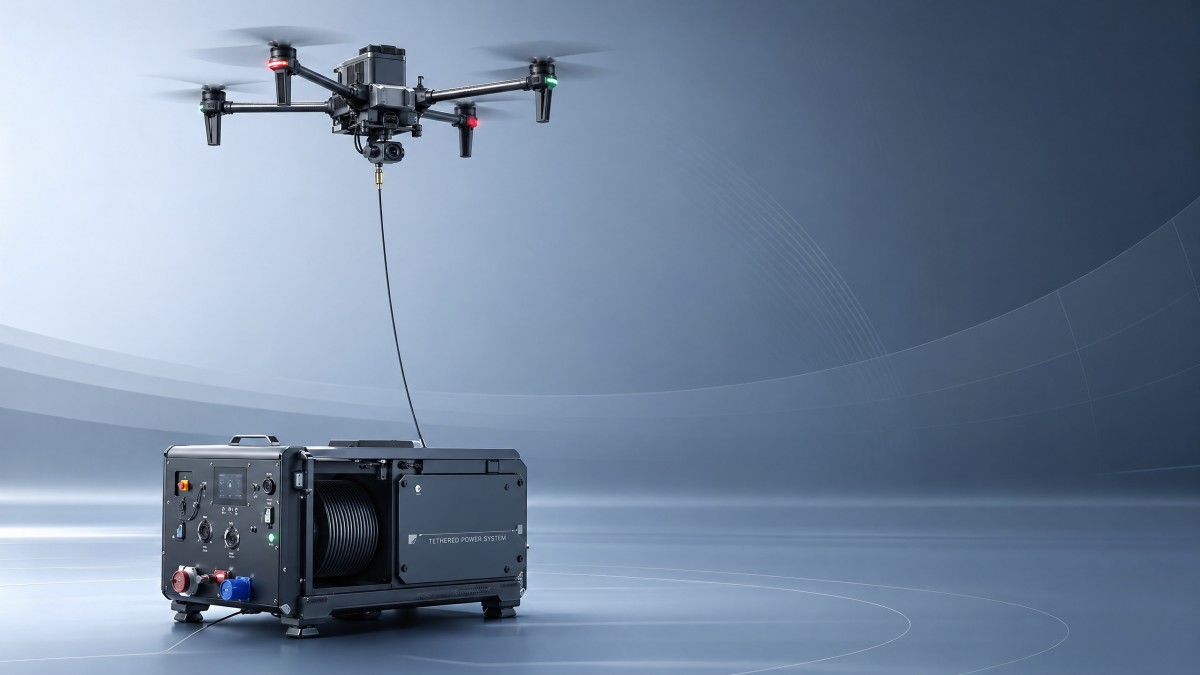
In most practical cases, a tethered UAV does not have a fixed “flight time” in the same way a battery-powered drone does. Its continuous flight time is better understood as endurance limited by the complete system, not just by onboard energy storage.
If the ground power unit is stable, the tether is correctly sized, thermal limits are controlled, and local weather remains within operating limits, a tethered UAV can stay airborne for many hours, multiple shifts, or near-continuous operation. In real deployments, the practical ceiling is usually defined by:
- power delivery efficiency through the tether,
- payload power consumption,
- airframe hover power demand,
- wind and ambient temperature,
- operator procedures and maintenance intervals,
- regulatory or mission-based limits.
So the most accurate answer is this: a tethered UAV can theoretically fly continuously as long as external power is continuously supplied, but actual continuous flight time must be estimated from system losses, operating conditions, and operational constraints.
Why battery-style flight time estimates do not work for tethered UAV systems
Many buyers and first-time evaluators make the mistake of asking for a single endurance number, such as “8 hours” or “24 hours.” That is useful for marketing, but not for engineering or procurement.
A conventional UAV endurance estimate often starts with battery watt-hours divided by average power draw. A tethered system changes that logic because the aircraft receives power from the ground through a cable. That introduces several variables absent from standard drone calculations:
- Tether resistance: long cables create voltage drop and heat loss.
- Power conversion stages: AC-to-DC, DC-to-DC, and airborne power modules all introduce efficiency losses.
- Ground power stability: generator, grid, or mobile power source quality matters.
- Mechanical cable effects: tether weight and drag increase hover power demand.
- Environmental loading: wind raises thrust requirement and current draw.
For this reason, “continuous flight time” in a tethered UAV system is really a system endurance assessment. It should be treated like an infrastructure question, not just an aircraft question.
How to estimate tethered UAV continuous flight time step by step
For a realistic estimate, use a structured engineering approach instead of a headline endurance claim.
1. Define the actual mission load
Start with the mission, not the airframe brochure. Clarify:
- hover altitude,
- payload type and payload power draw,
- day/night operation,
- expected wind range,
- continuous or intermittent operation,
- deployment duration per day.
A surveillance payload, telecom relay payload, spotlight, or EO/IR gimbal all affect power differently. Some missions also require onboard compute, edge AI modules, or stabilized communication links that materially change total demand.
2. Calculate total airborne power demand
Total airborne power is not only propulsion power. It includes:
- hover power of the UAV,
- payload power,
- avionics and communications,
- airborne tether interface or power conversion module losses.
A practical formula is:
Total airborne power = propulsion power + payload power + avionics power + onboard conversion losses
Use worst-case hover power, not ideal lab hover power. For procurement and field planning, many teams use a margin of 15% to 30% above nominal demand.
3. Estimate tether and conversion losses
This is where many endurance estimates fail. Even if ground power is abundant, insufficient delivered power at altitude can force descent or unstable operation.
Key factors include:
- tether length,
- conductor material and gauge,
- operating voltage,
- current level,
- ambient cooling conditions.
Higher transmission voltage usually reduces current and lowers cable loss. That is one reason serious tethered UAV platforms often use higher-voltage architecture with onboard voltage conversion.
A simplified loss relationship is:
Cable power loss ≈ I²R
That means small changes in current can produce large changes in heating and efficiency. If the payload becomes heavier and propulsion current rises, cable losses may increase faster than expected.
4. Check thermal limits, not just electrical limits
Continuous flight time can be cut short by heat, even when the electrical power budget appears adequate. Review:
- tether temperature rise,
- connector heating,
- power supply thermal derating,
- onboard converter cooling,
- motor and ESC temperature at steady hover.
If a vendor claims “unlimited endurance,” ask under what ambient temperature, wind condition, and payload condition that statement was validated.
5. Apply an operational availability factor
Even if airborne endurance is theoretically continuous, operational reality is not. Add allowances for:
- planned inspections,
- operator shift changes,
- tether reel handling,
- preventive maintenance,
- weather pauses.
This is especially important for enterprise buyers comparing tethered drone system factories or system integrators. A platform that can fly 24 hours in theory but needs frequent resets, cooling pauses, or manual interventions may deliver lower real mission uptime than a more conservative system.
Which variables have the biggest impact on continuous flight time?
Not all factors matter equally. The following variables usually have the strongest effect on real tethered UAV endurance.
Payload weight and payload power draw
Weight increases thrust demand. Active payloads also consume electrical power directly. A large EO/IR gimbal, radar, LTE relay, or spotlight can significantly reduce operating margin.
Tether length and altitude
Longer tether means greater resistance, more weight, and more drag exposure. A system that is stable at 50 meters may behave very differently at 100 or 150 meters.
Wind
Wind is one of the biggest real-world endurance stressors. Strong or gusting winds increase motor loading, positional corrections, and cable drag. If you want a credible estimate, use the expected site wind profile rather than calm-condition test data.
Ground power architecture
Grid-connected, vehicle-powered, and generator-backed systems have different stability and redundancy profiles. Poor power quality can affect converters, communications, or overall platform reliability.
Environmental temperature
High heat can force derating of power electronics. Very cold conditions may affect moving parts, cable handling, and startup performance. Continuous operation claims should always be tied to a specified temperature range.
What is a practical estimation model buyers and engineers can use?
If you need a procurement-level estimate rather than a detailed electrical simulation, use this decision model:
- Confirm mission altitude and payload.
- Obtain nominal and worst-case hover power from the UAV supplier.
- Add payload and avionics continuous power draw.
- Calculate tether loss at the planned cable length and operating voltage.
- Add converter inefficiency and thermal derating margin.
- Compare required delivered airborne power against guaranteed ground system output.
- Apply weather and uptime assumptions to estimate real mission duration.
A useful high-level expression is:
Continuous operation feasibility = Ground power capacity × system efficiency − total airborne demand − environmental margin
If the result remains positive under worst-case operating assumptions, the system is a candidate for sustained operation. If the power margin is small, real-world continuous flight time will be fragile and mission interruptions become more likely.
How to evaluate a tethered drone system factory or supplier claim
For procurement teams and decision-makers, the main question is not “Can it fly?” but “Can it fly continuously under our exact operating conditions?”
Ask suppliers for the following data:
- continuous hover power at stated payload and altitude,
- maximum validated payload for tethered operation,
- tether conductor specification and cable loss data,
- ground power output stability and redundancy design,
- thermal performance test reports,
- wind tolerance during continuous operation,
- MTBF or service interval data for reel, connectors, and power electronics,
- proof of endurance testing under real mission conditions.
Be cautious if a vendor provides only headline endurance language without stating:
- payload condition,
- test altitude,
- wind speed,
- ambient temperature,
- power source type,
- duty cycle assumptions.
For TSV-style technical due diligence, a reliable supplier should be able to show not just a demo, but a defensible engineering chain from input power to airborne delivered power and sustained uptime.
When is “continuous flight” truly realistic, and when is it not?
Tethered UAV continuous flight is most realistic in scenarios such as:
- fixed-site surveillance,
- temporary communications relay,
- event security overwatch,
- border or perimeter monitoring,
- industrial facility observation.
It becomes less straightforward when:
- payload demand is highly variable,
- the operating altitude is high,
- the site has strong or turbulent winds,
- the deployment is mobile and power quality is inconsistent,
- the system must operate unattended for very long intervals.
In these cases, “continuous” may still be possible, but only with stricter system engineering, larger safety margins, and more disciplined field support.
Common mistakes that lead to bad flight time estimates
- Using battery-drone endurance logic for a tethered platform.
- Ignoring cable loss and connector heating.
- Estimating based on calm indoor conditions.
- Excluding payload power from total demand.
- Accepting vendor endurance claims without mission-specific test conditions.
- Confusing theoretical airborne capability with operational uptime.
For operators, these mistakes lead to unstable missions. For buyers, they lead to poor supplier selection. For enterprise decision-makers, they can distort total cost of ownership and deployment planning.
Final takeaways for estimating tethered UAV continuous flight time
The best way to estimate tethered UAV continuous flight time is to stop treating it as a single battery-style number. A tethered UAV can support very long or near-continuous operation, but only if the entire power chain, tether design, payload demand, and environment remain within validated limits.
In practical terms, continuous flight time should be judged through five questions:
- What is the real airborne power demand?
- How much power is actually delivered after tether and conversion losses?
- What happens under wind, heat, and worst-case payload conditions?
- What maintenance or operational interruptions are still required?
- Can the supplier prove performance with engineering data rather than marketing language?
For engineers and operators, this approach improves mission planning. For procurement teams, it creates a better vendor comparison framework. For business leaders, it turns “continuous flight” from a slogan into a measurable infrastructure capability.
Search News
Hot Articles
- Carbon Fiber StructuresHow to Specify Aerospace Carbon Fiber Assemblies for Lightweight, Load-Bearing PartsJul 11, 2026
- Machine VisionXiaomi, Alibaba DAMO Academy Drive Open-Source Robotics Model Ecosystem, Lowering Algorithm Development Barriers for Overseas SMEs Adopting Chinese Robotics SolutionsMar 30, 2026
- Cobots & ArmsShanxi 'AI+' Conference Showcases Embodied Intelligence with Multinational Buyer Engagement: Key Industry ImplicationsMar 30, 2026
Popular Tags
Recommended News
 Jul 11, 2026How to Specify Aerospace Carbon Fiber Assemblies for Lightweight, Load-Bearing PartsAerospace carbon fiber assemblies: learn how to specify laminate design, load data, joining methods, and inspection controls for lighter, reliable load-bearing aerospace parts.Elena Rostova (UAV Systems Researcher)
 Mar 30, 2026Xiaomi, Alibaba DAMO Academy Drive Open-Source Robotics Model Ecosystem, Lowering Algorithm Development Barriers for Overseas SMEs Adopting Chinese Robotics SolutionsXiaomi & Alibaba DAMO Academy's open-source robotics models lower algorithm barriers for global SMEs. Boost efficiency in manufacturing, logistics & smart retail with ROS 2 compatible solutions.TSV Data Lab
 Mar 30, 2026Shanxi 'AI+' Conference Showcases Embodied Intelligence with Multinational Buyer Engagement: Key Industry ImplicationsShanxi 'AI+' Conference highlights embodied intelligence with Tesla, Ubtech & Jiantao showcasing multimodal robotics. 40+ global buyers validated tech on-site, creating new B2B channels for industrial automation & AI solutions.Chen Wei (Automation Lead Engineer)
 Mar 30, 2026Zhongguancun Unveils 6G Integrated Sensing-Computing-Intelligence Platform to Empower Embodied Robots for Global Industrial ApplicationsZhongguancun's new 6G platform revolutionizes industrial robotics with <10ms latency, empowering global automotive, logistics & port automation. Discover how this tech boosts China's smart manufacturing exports.TSV Data Lab
 Mar 30, 2026Mech-Mind Tianjin Embodied Intelligence R&D and Production Base Goes Live, Cutting Delivery Time by 20%–30% for Global Customized AMR+Vision SolutionsMech-Mind's Tianjin AMR+Vision production base cuts delivery time by 20%-30% for欧美 & Latin American markets. Discover how this PLd-certified facility accelerates customized robotics solutions for smart manufacturing and logistics.Chen Wei (Automation Lead Engineer)
 Mar 30, 2026Boao Forum Reveals 'Co-evolution of Big and Small Brains' Trend in Humanoid Robots, China's Embodied Intelligence Accelerates Adaptation to Overseas Manufacturing Service ScenariosDiscover how China's humanoid robots, featuring 'Co-evolution of Big and Small Brains,' are revolutionizing global manufacturing. Learn about Embodied Tian Gong 3.0's ISO compliance and overseas deployment at Boao Forum 2026.Chen Wei (Automation Lead Engineer)
 Mar 30, 2026China Railway Industrial Secures Patent for Embodied Robotics in Material Handling, Boosting High-Precision Delivery Capabilities for Overseas Infrastructure and Manufacturing ProjectsChina Railway Industrial's new patent for embodied robotics in material handling boosts high-precision delivery for global infrastructure & manufacturing. Discover how this innovation enhances logistics accuracy in automotive, rail transit & EPC projects.Chen Wei (Automation Lead Engineer)
 Oct 26, 2026AMAXiMAL Releases Open-Source TopMod 3D v3 With Claude AIExplore AMAXiMAL’s free, open-source TopMod 3D v3 with Claude AI assistance, topology-based modeling and plywood fabrication tools that connect complex designs to physical builds.Dr. Marcus Vance
 Oct 26, 2026Choosing a SCADA System Integrator Company: PLC Compatibility and Long-Term SupportChoose a scada system integrator company with proven PLC compatibility and reliable long-term support. Discover what to test, compare, and require before investing.Victor Lin (Chief Software Architect)
 Oct 25, 2026Hesai Leads Global ADAS Main Lidar Shipments in Yole’s 2026 ReportHesai led global ADAS main lidar shipments with a 43% share in 2025, according to Yole’s 2026 report. Explore what this ranking reveals about its automotive market position.TSV Data Lab
 Oct 25, 2026Choosing an Aerospace Materials Manufacturer: Quality and Traceability ChecksChoosing an aerospace materials manufacturer? Learn how to verify certifications, test reports, and lot traceability to qualify suppliers confidently and reduce costly sourcing risks.Dr. Marcus Vance
 Oct 24, 2026Guotai Haitong: Global Entry-Level 3D Printer Shipments Rose 39% in Q1 2026Entry-level 3D printer shipments rose 39% in Q1 2026, Guotai Haitong reports. Explore how AI, multicolor printing and print farms are shaping market growth.Dr. Marcus Vance
 Oct 24, 2026Choosing an Industrial Vision Inspection Supplier: Acceptance Tests That MatterChoose an industrial vision inspection supplier with confidence. Discover acceptance tests for defect detection, false rejects, production speed, and reliable part rejection before you buy.TSV Data Lab
 Oct 23, 2026US Navy Raises Gecko Robotics Contract Ceiling to $300M for Robotic Fleet MaintenanceUS Navy raises Gecko Robotics’ contract ceiling to $300M for Pacific Fleet robotic inspections. Explore potential opportunities for maintenance suppliers and key procurement considerations.Chen Wei (Automation Lead Engineer)
 Oct 23, 2026Choosing Industrial Sensing Systems for Global Plants: Protocol CompatibilityCompare industrial sensing systems international buyers can trust. Explore protocol compatibility, reduce integration risks, and select proven configurations for reliable global plant deployments.TSV Data Lab
 Oct 22, 2026KUKA Showcases Physical AI and iiQKA.AI Vision at NVIDIA GTC BerlinExplore KUKA’s Physical AI showcase at NVIDIA GTC Berlin and discover how iiQKA.AI Vision aims to simplify robotic vision integration and improve 2D and 3D scene recognition.TSV Data Lab
 Oct 22, 2026Robotic Machining of Advanced Composites: What Tolerances Are Achievable?Explore advanced materials machining robotics: discover what drives achievable composite tolerances and how to validate accuracy before investing in your next machining system.Dr. Marcus Vance
 Oct 21, 2026China’s Industrial Robot Exports Near RMB 10 Billion in First Nine Months of 2026China’s industrial robot exports neared RMB 10 billion in January–September 2026, with value rising faster than volume. Explore the data and what it could mean for suppliers.Chen Wei (Automation Lead Engineer)
 Oct 21, 2026Low-Latency Industrial Data Processing: Pricing and Key Cost DriversExplore industrial data latency price drivers, from edge hardware to integration and support. Learn how to compare quotes, verify performance, and avoid unnecessary costs.TSV Data Lab
 Oct 20, 2026KUKA Launches iiQKA.AI Vision to Simplify Industrial Image ProcessingKUKA iiQKA.AI Vision simplifies industrial image processing with controller-based 2D and 3D vision. Explore drag-and-drop setup for vision-guided automation.TSV Data Lab
 Oct 20, 2026Smart Industrial Edge Devices: Key Criteria for Legacy PLC IntegrationChoose smart industrial edge devices for legacy PLC integration. Discover key criteria for compatibility, data quality, security, and reliable collection without disrupting control.TSV Data Lab
 Oct 19, 2026Choosing a Radar Sensor by Application: Range, Resolution, and Field of ViewSimplify radar sensor application based product selection. Compare range, resolution, and field of view to avoid blind spots and choose with confidence. Explore the guide.TSV Data Lab
 Oct 18, 2026Comparing Material Options for Procurement: Specs, Costs, and Supply RisksExplore procurement oriented technical content on material options, specs, costs, and supply risks. Compare alternatives to cut hidden expenses and make confident sourcing decisions.Dr. Marcus Vance
 Oct 17, 20265-Axis CNC Positioning Accuracy: How to Interpret ISO 230-2 Test ResultsAssess 5 axis CNC machining positioning accuracy with ISO 230-2. Learn to interpret repeatability, reversal error, and test conditions to compare suppliers and make confident acceptance decisions.Dr. Marcus Vance























