
AGV Charging Station Setup: How to Size Capacity
Publication Date
author
For engineers, buyers, and operations leaders planning an AGV charging station setup, sizing capacity is not just about charger count—it affects fleet uptime, safety margins, and total system efficiency. This guide explains how to calculate demand, evaluate power loads, and align charging infrastructure with real AGV traffic, helping decision-makers build scalable, data-driven charging strategies.
Why AGV Charging Station Capacity Sizing Is a System Decision
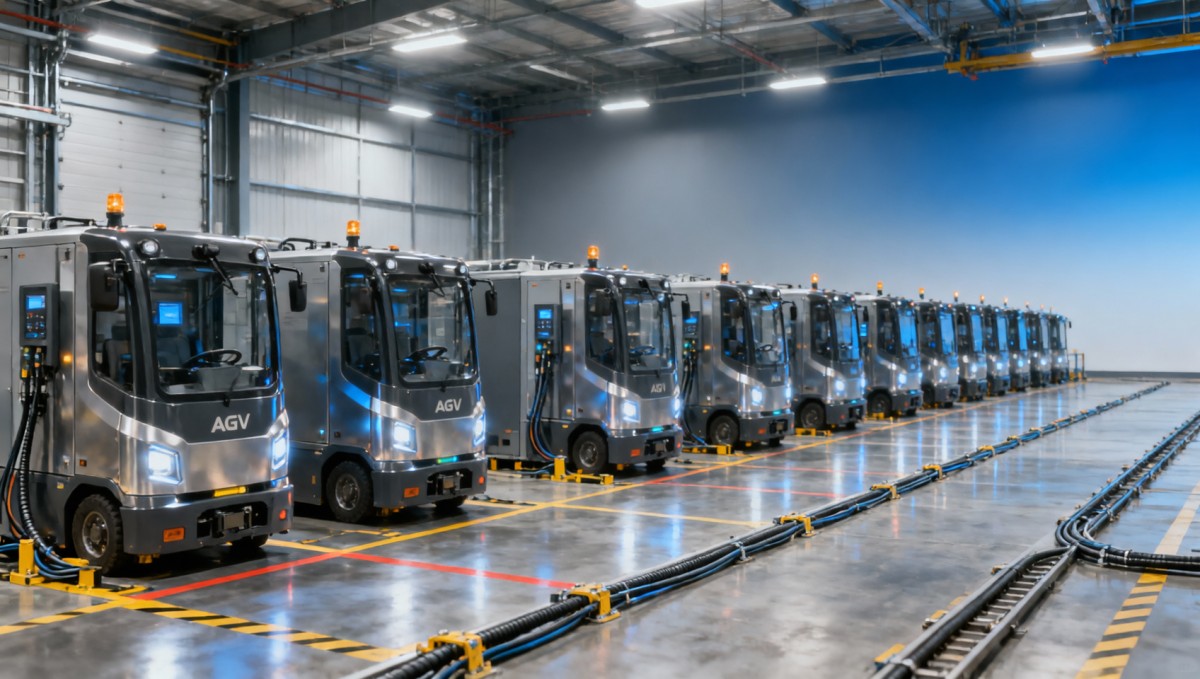
An AGV charging station setup is often treated as a simple utility task. In practice, it is a fleet engineering decision that directly shapes throughput, dispatch stability, battery life, and operator intervention rates. If capacity is too small, vehicles queue for power during peak demand. If capacity is oversized, the site locks unnecessary capital into chargers, switchgear, cable routing, and floor space that may remain underused for 12–24 months.
For information researchers and procurement teams, the main challenge is separating marketing language from usable design inputs. Charger power ratings alone do not reveal whether a station can support 6 AGVs, 20 AGVs, or a mixed fleet with different battery chemistries. A reliable sizing process must start with measurable variables: fleet count, battery capacity, average discharge per shift, available charging window, charger efficiency, and expected traffic concentration by route or zone.
In most industrial environments, charging demand is not evenly distributed across a day. A facility running 2 shifts may see one charging profile, while a 24/7 plant with narrow logistics peaks may experience heavy simultaneous demand within 30–90 minutes. This is why AGV charging station setup planning should be linked to actual duty cycle data rather than nominal fleet size. TSV’s engineering perspective is simple: parameters do not lie, and assumptions without utilization data create avoidable downtime risk.
Decision-makers should also view charger capacity in relation to the wider electrical and operational system. The charger is only one node. Transformer margin, distribution panel loading, safety isolation, ventilation, cable protection, traffic segregation, and battery management strategy all influence what “sufficient capacity” really means. A technically sound design balances electrical capacity, physical layout, and dispatch logic instead of optimizing one variable in isolation.
What typically drives under-sizing or over-sizing?
- Using total AGV count as the only sizing input, without checking battery consumption per route or per shift.
- Ignoring concurrency, especially when multiple vehicles return to the same area during break windows, shift change, or scheduled idle periods.
- Selecting charger power based on supplier catalog ranges such as 3kW–15kW, without verifying battery acceptance limits and charging strategy.
- Overbuilding station quantity before the fleet growth plan, software dispatch rules, and charging discipline are defined.
How to Calculate Charging Demand for an AGV Fleet
A practical AGV charging station setup starts with an energy balance. First, estimate how much energy each vehicle uses during a standard duty period. This can be taken from measured battery discharge logs, telematics, or route simulation. For example, if one AGV uses 5kWh–8kWh during a shift and the site operates 10 vehicles, the fleet energy demand per shift falls in a 50kWh–80kWh range before charging losses. That is a more useful design input than only knowing battery voltage or top travel speed.
Second, determine the true charging window. Some facilities rely on opportunity charging in 5–15 minute intervals during loading pauses. Others depend on centralized charging during 1–2 longer off-duty periods. The shorter the available window, the higher the required charger power or the greater the number of charging points. In many applications, a fleet can remain stable with lower installed power if traffic scheduling allows frequent short charging events across the full operating cycle.
Third, account for efficiency and reserve. Charger efficiency commonly varies by design and load condition, so total input energy should exceed battery energy delivered. A planning reserve is also advisable because battery aging, seasonal temperature changes, route extensions, and payload variation can increase charging demand over time. A common engineering approach is to evaluate current demand, near-term expansion over 6–12 months, and a stress case where peak concurrency rises above the average operating pattern.
Finally, map charger demand to station behavior. Two fleets with the same daily energy requirement may need very different AGV charging station setups if one uses distributed charging near work cells and the other funnels all vehicles into one corridor. The key output is not only total kWh per day but also simultaneous charger occupancy, average queue time, and the maximum acceptable delay before fleet productivity drops.
A simple calculation framework
The table below summarizes a practical sizing logic that engineering, procurement, and operations teams can use during early planning. It does not replace site testing, but it creates a disciplined basis for comparing charging concepts and supplier proposals.
This framework supports a more objective review of AGV charging station capacity. It helps procurement teams ask better questions, such as whether the proposal includes measured duty-cycle assumptions, how peak concurrency was calculated, and whether the offered station can handle real traffic rather than only nominal charger availability.
Key checks before freezing the design
- Validate energy use under loaded and unloaded routes, not just average movement.
- Check whether charging behavior changes across day shift, night shift, and weekend operation.
- Confirm battery type and charging acceptance so the charger does not exceed what the battery system can safely absorb.
- Review whether software dispatch logic can spread charging traffic instead of concentrating it in one period.
Which Charging Architecture Fits Your Operation Best?
Not every AGV charging station setup should use the same layout. Centralized charging can simplify electrical distribution, maintenance, and access control, but it may create traffic congestion if the route network forces too many vehicles into the same area. Distributed charging points near work zones reduce travel-to-charge time, yet they often require more installation coordination, more cable routing complexity, and closer attention to pedestrian and forklift interaction.
Operations teams should compare architectures based on traffic density, floor availability, dispatch software maturity, and maintenance practices. A site with 8 AGVs in stable loops may work well with a compact centralized station. A large plant with 20–40 mobile robots across multiple zones may gain resilience from distributed points or a hybrid strategy. The right choice depends on how charging interacts with material flow, not on a generic preference for one topology.
From a procurement perspective, architecture comparison should include more than charger pricing. Electrical expansion cost, protective devices, civil work, queue risk, future line changes, and service accessibility all matter. This is where a data-driven hard-tech review adds value. TSV’s position is to benchmark the operating consequences of each design, because a lower equipment price can be outweighed by route inefficiency or avoidable downtime during the first year of operation.
A useful method is to compare options against 3 categories: energy delivery, traffic compatibility, and expandability. These three dimensions usually reveal whether a station concept is robust or merely looks economical in a quotation sheet.
Centralized vs distributed vs hybrid charging
The comparison table below helps identify which AGV charging station setup is more suitable for your operating profile and procurement priorities.
In many projects, hybrid charging becomes the most practical answer because it supports phased deployment. One central area can handle deep charging or maintenance charging, while selected distributed points support daily opportunity charging. This lowers the risk of early overinvestment and keeps the AGV charging station setup aligned with actual fleet growth.
Questions buyers should ask suppliers
- What charger count is required at current fleet size, and what changes if the fleet expands by 25% or 50%?
- How is peak simultaneous charging modeled: by average utilization or by route-level event clustering?
- What is the expected queue threshold before AGV mission completion time is affected?
- Can the station layout be expanded without reworking major cable runs or shutting down production zones for several days?
What Technical and Compliance Factors Should Be Checked Before Procurement?
A robust AGV charging station setup depends on electrical compatibility, mechanical suitability, and site safety controls. Charger output voltage and current must match the battery system and AGV interface requirements. Procurement teams should request clear confirmation of charger-to-battery compatibility, communication behavior where relevant, protective shutoff logic, and any thermal or environmental operating limits. In facilities with dust, washdown exposure, or variable ambient temperatures, enclosure suitability and connector durability deserve special review.
Electrical capacity upstream also matters. Even if the charger specification looks acceptable, the site distribution network may not support additional peak load without panel changes or transformer review. Typical project delays occur when charging station planning is completed before electrical load analysis. For this reason, buyers should align AGV charging station sizing with utility and facilities teams at an early stage, ideally before final quotation approval or civil routing decisions.
Compliance should be assessed in a practical, site-specific way. While exact requirements vary by region and application, common review points include electrical safety practices, emergency isolation, cable management, grounding continuity, traffic marking, and maintenance access. If charging occurs in mixed traffic zones shared with pedestrians or forklifts, the layout should support safe segregation and visibility. In high-availability production, lockout procedures and service clearance are as important as nameplate power.
TSV’s engineering-first approach is especially useful here because many procurement documents emphasize rated power but omit acceptance criteria. A better specification defines measurable checks: installation environment, charging cycle expectations, shutdown behavior, service points, and inspection records. That reduces ambiguity during supplier comparison and site acceptance.
A practical procurement checklist
- Confirm charger output range, battery compatibility, and whether the station is intended for opportunity charging, scheduled charging, or both.
- Review upstream electrical capacity, including panel availability, protective devices, and likely expansion over the next 6–12 months.
- Check physical clearance for AGV approach, safe operator access, maintenance access, and emergency isolation points.
- Define 4–6 acceptance items in advance, such as charge start reliability, queue behavior, emergency stop response, and connection repeatability.
Common mistakes during supplier evaluation
One common error is comparing quotations only by charger quantity and unit power. Another is overlooking service workflow: who supports commissioning, what data is recorded during startup, and how faults are escalated. In B2B operations, a charger that takes 2–4 weeks longer to integrate or requires repeated software adjustments can cost more than the original hardware savings suggest. The procurement process should therefore review implementation path, not only bill-of-material details.
A second error is failing to specify future integration assumptions. If the business expects a larger AGV fleet, line rebalancing, or higher mission density in the next planning cycle, the charging station should be evaluated for modular expansion. This may include spare conduits, reserved panel capacity, or station layout that can add chargers without forcing a full traffic redesign.
Implementation, Cost Control, and Common Sizing Mistakes
The most effective AGV charging station setup is rarely the one with the highest installed power. It is the one that meets duty requirements with manageable queue risk, maintainable infrastructure, and a realistic expansion path. Cost control starts by separating essential capacity from premature redundancy. For example, if the fleet can sustain operations through distributed 10-minute top-up events, there may be no immediate need for a large central charging cluster occupying valuable floor space.
Implementation is usually smoother when the project is divided into 3 stages: site data collection, engineering validation, and phased commissioning. During the first stage, teams collect route and battery data over several operating days. During the second, they verify charger count, power distribution, and traffic interaction. During the third, they commission in a limited area before scaling plant-wide. This reduces disruption and makes it easier to correct queue behavior or charger assignment logic before full deployment.
Cost should also be understood beyond purchase price. Installation labor, cable routing, floor marking, protection barriers, software integration, and production interruption can materially alter project economics. A cheaper charger arrangement may become more expensive if it requires more frequent battery stress, operator intervention, or later relocation. In contrast, a slightly higher initial investment may lower long-term service calls and preserve fleet utilization.
The most common sizing mistake is designing for average conditions only. AGV systems fail operationally during peaks, not during averages. If the analysis does not test shift change behavior, maintenance downtime overlap, or temporary route congestion, the station may appear adequate on paper but underperform in live production. This is exactly why a parameter-led review is preferable to brochure-led selection.
A phased rollout path that reduces risk
- Measure fleet behavior over 3–7 days, including peak periods, battery discharge, and queue-prone routes.
- Model at least 2 charging concepts: current fleet support and near-term expansion support.
- Pilot the selected AGV charging station setup in one zone or one traffic loop before plant-wide replication.
- Review charge logs monthly during the first quarter to verify actual concurrency and reserve margin.
FAQ: questions teams ask before final approval
How many chargers do I need for my AGV fleet?
There is no reliable answer based on fleet count alone. The correct number depends on energy use per AGV, available charging windows, concurrency, and reserve margin. A fleet of 12 AGVs with frequent opportunity charging may need fewer charging points than 8 AGVs that all return to charge in the same 60-minute period.
Is higher charger power always better?
No. Higher power can reduce charging time, but only if the battery system and operational strategy support it. Oversized power may increase cost and stress without solving queueing if the root problem is station location or synchronized charging demand.
When should we choose distributed charging points?
Distributed charging is often suitable when AGVs work in multiple zones, deadhead travel is costly, and short 5–15 minute charging opportunities occur throughout the day. It requires stronger site coordination, but it can materially improve route efficiency in larger facilities.
What should procurement request in a technical proposal?
Ask for explicit assumptions on battery demand, charging windows, peak concurrency, electrical load, expansion capacity, and acceptance criteria. A good proposal should explain not only what hardware is supplied, but why the AGV charging station setup matches the actual duty profile.
Why Work With a Data-Driven Technical Partner
AGV charging station setup decisions affect uptime, floor planning, procurement timing, and long-term automation economics. That is why technical teams need more than generic vendor language. They need a parameter-based view that connects charger capacity, route behavior, battery demand, and site constraints. TechStat Vanguard supports this decision process by focusing on engineering truth, measurable benchmarks, and supplier-side clarity rather than unsupported claims.
For research teams, TSV helps convert scattered market information into spec-ready evaluation logic. For operators, the value is practical: fewer charging bottlenecks, safer traffic design, and better alignment between AGV behavior and installed infrastructure. For procurement managers and enterprise decision-makers, the benefit is reduced trial-and-error cost, shorter supplier qualification cycles, and stronger confidence when comparing proposals across technical and commercial dimensions.
If you are evaluating an AGV charging station setup, you can consult TSV on concrete issues such as charger count assumptions, charging architecture comparison, electrical load planning, phased deployment logic, procurement checklists, and acceptance criteria definition. This is particularly valuable when your project includes mixed fleet growth, strict delivery windows, or uncertainty around whether centralized, distributed, or hybrid charging is the right path.
Contact us if you need support with parameter confirmation, station sizing review, specification drafting, delivery-cycle evaluation, customization scope, compliance considerations, or quotation comparison. In hard-tech procurement, better decisions start with better data—and that is exactly where TSV is built to help.
Search News
Hot Articles
- Carbon Fiber StructuresHow to Specify Aerospace Carbon Fiber Assemblies for Lightweight, Load-Bearing PartsJul 11, 2026
- Machine VisionXiaomi, Alibaba DAMO Academy Drive Open-Source Robotics Model Ecosystem, Lowering Algorithm Development Barriers for Overseas SMEs Adopting Chinese Robotics SolutionsMar 30, 2026
- Cobots & ArmsShanxi 'AI+' Conference Showcases Embodied Intelligence with Multinational Buyer Engagement: Key Industry ImplicationsMar 30, 2026
Popular Tags
Recommended News
 Jul 11, 2026How to Specify Aerospace Carbon Fiber Assemblies for Lightweight, Load-Bearing PartsAerospace carbon fiber assemblies: learn how to specify laminate design, load data, joining methods, and inspection controls for lighter, reliable load-bearing aerospace parts.Elena Rostova (UAV Systems Researcher)
 Mar 30, 2026Xiaomi, Alibaba DAMO Academy Drive Open-Source Robotics Model Ecosystem, Lowering Algorithm Development Barriers for Overseas SMEs Adopting Chinese Robotics SolutionsXiaomi & Alibaba DAMO Academy's open-source robotics models lower algorithm barriers for global SMEs. Boost efficiency in manufacturing, logistics & smart retail with ROS 2 compatible solutions.TSV Data Lab
 Mar 30, 2026Shanxi 'AI+' Conference Showcases Embodied Intelligence with Multinational Buyer Engagement: Key Industry ImplicationsShanxi 'AI+' Conference highlights embodied intelligence with Tesla, Ubtech & Jiantao showcasing multimodal robotics. 40+ global buyers validated tech on-site, creating new B2B channels for industrial automation & AI solutions.Chen Wei (Automation Lead Engineer)
 Mar 30, 2026Zhongguancun Unveils 6G Integrated Sensing-Computing-Intelligence Platform to Empower Embodied Robots for Global Industrial ApplicationsZhongguancun's new 6G platform revolutionizes industrial robotics with <10ms latency, empowering global automotive, logistics & port automation. Discover how this tech boosts China's smart manufacturing exports.TSV Data Lab
 Mar 30, 2026Mech-Mind Tianjin Embodied Intelligence R&D and Production Base Goes Live, Cutting Delivery Time by 20%–30% for Global Customized AMR+Vision SolutionsMech-Mind's Tianjin AMR+Vision production base cuts delivery time by 20%-30% for欧美 & Latin American markets. Discover how this PLd-certified facility accelerates customized robotics solutions for smart manufacturing and logistics.Chen Wei (Automation Lead Engineer)
 Mar 30, 2026Boao Forum Reveals 'Co-evolution of Big and Small Brains' Trend in Humanoid Robots, China's Embodied Intelligence Accelerates Adaptation to Overseas Manufacturing Service ScenariosDiscover how China's humanoid robots, featuring 'Co-evolution of Big and Small Brains,' are revolutionizing global manufacturing. Learn about Embodied Tian Gong 3.0's ISO compliance and overseas deployment at Boao Forum 2026.Chen Wei (Automation Lead Engineer)
 Mar 30, 2026China Railway Industrial Secures Patent for Embodied Robotics in Material Handling, Boosting High-Precision Delivery Capabilities for Overseas Infrastructure and Manufacturing ProjectsChina Railway Industrial's new patent for embodied robotics in material handling boosts high-precision delivery for global infrastructure & manufacturing. Discover how this innovation enhances logistics accuracy in automotive, rail transit & EPC projects.Chen Wei (Automation Lead Engineer)
 Oct 15, 2026R&D Cost Reduction Services: How to Evaluate Fees, Savings, and ROIEvaluate R&D cost reduction services with confidence. Compare fees, verify savings, and calculate ROI without compromising performance. Discover how to choose a provider that delivers real value.Chen Wei (Automation Lead Engineer)
 Oct 14, 2026Drone Frame Composites: Carbon Fiber vs. Fiberglass for Weight and StiffnessExplore drone structural materials composites: compare carbon fiber and fiberglass for weight, stiffness, cost, and antenna compatibility. Find the right material for your drone frame.Elena Rostova (UAV Systems Researcher)
 Oct 13, 2026Smart Cameras vs. PC-Based Machine Vision: Which Fits High-Speed Inspection?This industrial product comparison for machine vision weighs smart cameras vs. PC-based systems on latency, throughput, and cost. Discover your best fit for high-speed inspection.TSV Data Lab
 Oct 12, 2026How to Verify RoHS Compliance in Industrial Sensing Systems Before DeploymentRoHS compliant sensing systems: learn how to verify materials, supplier declarations, testing, and configuration controls before industrial deployment.TSV Data Lab
 Oct 11, 2026How Procurement-Oriented Content Taxonomy Improves B2B Buying JourneysProcurement-oriented content taxonomy streamlines B2B buying journeys with clearer evidence, supplier comparisons, risk visibility, and faster approvals.TSV Data Lab
 Oct 10, 2026How to Select a Machine Performance Monitoring Platform for OEE and Downtime ReductionMachine performance monitoring platform selection guide: validate machine states, OEE data, downtime reasons, integrations, and scalability to reduce losses with confidence.TSV Data Lab
 Oct 08, 2026How to Machine Inconel 625 Blades Without Heat Cracks or Edge ChippingInconel 625 blade machining guide: prevent heat cracks, edge chipping, chatter, and work hardening with proven tooling, cooling, fixturing, and inspection strategies.Dr. Marcus Vance
 Oct 07, 2026How to Evaluate an HMI Panel Distributor for Industrial Automation ProjectsHMI panel distributor evaluation guide: verify technical compatibility, traceability, supply reliability, lifecycle support, and total cost for automation projects.Victor Lin (Chief Software Architect)
 Oct 06, 2026Navigation Fault Tolerance Standards for AMRs: What Safety Teams Must VerifyNavigation fault tolerance standards: learn what AMR safety teams must verify, from localization loss and sensor faults to stopping distance, safe restart, and site-specific validation.Chen Wei (Automation Lead Engineer)
 Oct 05, 2026Calculating Edge Computing Total Cost of Ownership Across Distributed SitesEdge computing ownership cost explained: calculate deployment, energy, connectivity, security, remote support, and refresh costs across distributed sites.TSV Data Lab
 Oct 04, 2026CAD/CAM Benchmarking in the GCC: What Manufacturers Should Ask a ConsultantCAD CAM benchmark consultant GCC guide: learn the key questions manufacturers should ask to validate post-processors, workflows, machine performance, and production risk.Victor Lin (Chief Software Architect)
 Oct 03, 2026Selecting Automotive Radar Sensor Modules for ADAS Range, Resolution, and IntegrationAutomotive radar sensor module selection guide for ADAS: compare range, resolution, field of view, latency, and integration to build safer, reliable vehicle systems.TSV Data Lab
 Oct 02, 2026How to Qualify Machined Parts Suppliers for Hard Tech ProgramsHard tech supply chain machined parts demand rigorous supplier qualification. Learn how to assess capability, traceability, quality controls, and delivery resilience.Dr. Marcus Vance
 Oct 01, 2026How to Select an Outdoor Security Radar Sensor for Perimeter Detection?Outdoor security radar sensor selection guide: compare range, accuracy, false-alarm control, integration, and field testing for reliable perimeter detection.TSV Data Lab
 Sep 30, 2026How to Evaluate Solid-State LiDAR Hardware for Outdoor Autonomous VehiclesSolid state LiDAR hardware evaluation guide for outdoor autonomous vehicles—compare range, point-cloud quality, environmental resilience, integration, and safety.TSV Data Lab
 Sep 29, 2026ISO 9283 Repeatability: How to Evaluate Cobot Positioning PerformanceISO 9283 cobot repeatability explained: learn how payload, reach, approach direction, and test conditions affect positioning performance and cell capability.Chen Wei (Automation Lead Engineer)
 Oct 14, 2026How tight can micro machining aerospace tolerances be in production?Micro machining aerospace tolerances can reach low-micron levels in production. Learn what controls repeatability, inspection confidence, and flight-critical quality.Dr. Marcus Vance























