Drone Delivery System Logistics: Cost Drivers, Route Limits, and Where ROI Makes Sense
Publication Date
author
Drone delivery system logistics is no longer a novelty discussed only in innovation labs. It now sits inside real network design decisions, capital planning, and service-level analysis across healthcare, retail, industrial supply, and remote infrastructure support.
The shift matters because drones change the economics of urgent, lightweight movement, but only under strict operating conditions. Payload, battery endurance, airspace constraints, and fleet utilization decide whether speed becomes a margin advantage or an expensive experiment.
For organizations trying to separate engineering reality from marketing noise, the useful question is not whether drones are transformative in theory. It is where drone delivery system logistics produces measurable returns once maintenance, compliance, routing, and asset downtime are included.
Why the market is paying closer attention
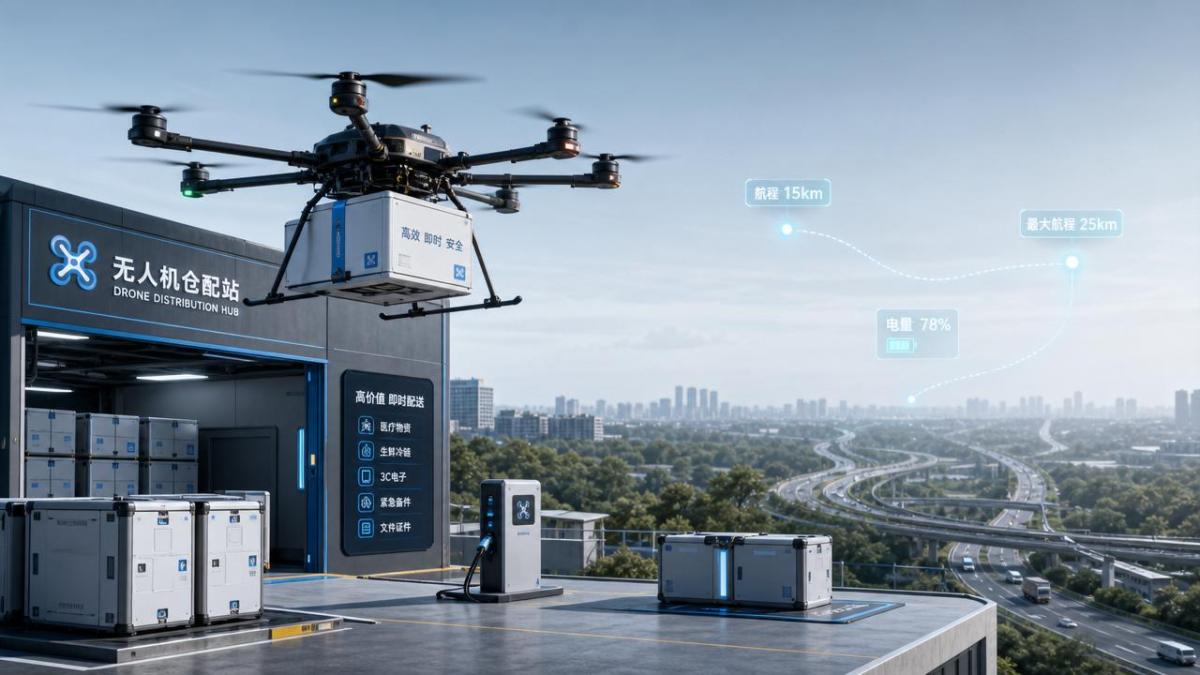
Interest is rising for practical reasons. Last-mile delivery remains one of the most volatile cost layers in modern supply chains, especially where road congestion, low drop density, or terrain complexity reduce vehicle productivity.
At the same time, autonomous UAV ecosystems have matured beyond demonstration flights. Better batteries, lighter composite structures, improved flight controllers, edge AI navigation, and stronger telemetry links have reduced several technical barriers.
That does not mean the model works everywhere. It means decision quality now depends on metrics, not slogans. This data-first view aligns with the wider hard-tech discipline promoted by TechStat Vanguard, where operational truth comes from parameters, tolerances, and benchmark evidence.
In that context, drone delivery system logistics becomes a network engineering question. It is less about futuristic branding and more about route geometry, turnaround time, fleet scheduling, reliability thresholds, and cost per successful drop.
What drone delivery system logistics really includes
A useful definition is broader than the aircraft itself. Drone delivery system logistics covers the full operating chain that moves a payload from dispatch point to destination and back into the service loop.
That chain usually includes aircraft selection, payload packaging, charging or battery swap, mission planning, flight control software, communication links, landing or drop mechanisms, compliance procedures, and exception handling.
It also includes the surrounding ground system. Warehousing, micro-fulfillment nodes, launch pads, maintenance stations, and digital integration with order management all shape performance.
This is why headline claims about delivery time can mislead. A ten-minute flight may still sit inside a forty-minute service cycle if battery handling, loading delays, weather holds, and airspace checks are poorly managed.
The main cost drivers behind the model
Cost in drone delivery system logistics is driven by a mix of asset economics and operational friction. The aircraft price matters, but recurring factors often decide long-term viability.
Capital and infrastructure
Initial investment includes aircraft, batteries, docking or landing hardware, charging systems, software platforms, safety systems, and site preparation. A low-cost drone without durable infrastructure often creates higher lifecycle expense.
Maintenance and battery turnover
Battery degradation is a major variable. Flight cycles, temperature exposure, payload strain, and charging patterns directly affect replacement frequency. Rotor wear, motor servicing, and sensor calibration also accumulate faster than many pilot budgets assume.
Regulatory overhead
Compliance is not a side cost. Flight permissions, airworthiness checks, operator oversight, incident logging, cybersecurity controls, and insurance can materially change the unit economics of each route.
Labor that still remains
Autonomous does not mean labor-free. Teams are still needed for mission supervision, loading, battery handling, maintenance, exception recovery, and customer support when delivery conditions fail.
Utilization rate
The single most important economic lever is often utilization. If drones fly too few missions per day, fixed costs dominate. If they are overscheduled, reliability drops and maintenance intervals tighten.
Route limits are where many business cases weaken
Route design is the hard boundary of drone delivery system logistics. The aircraft may be technically capable of a long flight, but the commercially useful route is shorter once reserve power, wind margin, payload mass, and return requirements are included.
Payload is the first limit. The heavier the package, the lower the practical range. This creates a narrow sweet spot where drones outperform vans or motorcycles: lightweight, time-sensitive, relatively high-value items.
Weather is the second limit. Wind, rain, icing risk, temperature, and visibility can reduce dispatch reliability. A network that depends on perfect weather is not a logistics network. It is a fair-weather pilot program.
The third limit is urban complexity. Dense buildings, signal interference, restricted zones, and safe landing access can make city operations harder than rural corridors, even when delivery distances are shorter.
Finally, route economics depend on stop pattern. Drones usually favor point-to-point missions. They are less efficient when the model requires many sequential drops, heavy consolidation, or frequent rerouting mid-mission.
Where ROI usually makes sense first
The strongest ROI cases appear where urgency is high, payloads are light, and ground transport is slow or expensive. In these environments, speed creates either direct revenue protection or meaningful cost avoidance.
Healthcare and medical supply
Transporting blood, lab samples, vaccines, or critical medicines can justify premium unit economics. The value comes from shorter clinical turnaround, reduced spoilage risk, and better access to remote sites.
Industrial spare parts
A delayed low-weight component can stop a high-value production line. In this case, drone delivery system logistics may be justified by avoided downtime rather than by transport cost alone.
Remote infrastructure support
Utilities, energy assets, telecom sites, and offshore-adjacent operations often face difficult road access. Drones can reduce dispatch delays for sensors, tools, and urgent replacement parts.
Premium retail and food delivery
This segment gets attention, but margins are tighter. ROI depends on dense demand pockets, premium service pricing, and low failed-delivery rates. Without those conditions, scale becomes difficult.
How to evaluate a deployment without relying on hype
A disciplined evaluation starts with route-level data, not vendor narratives. The right baseline compares drones with existing service options under the same demand pattern, geography, and service expectation.
- Map actual payload bands, not average package weight only.
- Measure door-to-door cycle time, including loading and recovery.
- Model weather-related mission loss across seasons.
- Include spare fleet requirements in uptime assumptions.
- Calculate cost per successful delivery, not cost per flight.
- Test regulatory constraints at corridor level before scaling claims.
This is where an engineering benchmarking mindset becomes valuable. A credible review should examine battery performance under load, navigation fault tolerance, telemetry resilience, landing accuracy, and maintenance intervals under realistic operating conditions.
That approach fits the TSV perspective well. In hard-tech procurement and network design, procurement speed improves when technical parameters are verified early and supplier claims are translated into measurable operating thresholds.
What the next decision step should look like
Drone delivery system logistics deserves attention, but not as a universal replacement for ground transport. Its value is highly conditional, and those conditions can be mapped with surprising precision.
A sensible next step is to define a narrow operating envelope: target payload range, route distance, dispatch urgency, weather exposure, and acceptable cost per completed mission. That creates a real filter for technical options.
From there, compare suppliers and operating models against evidence that matters: reliability under load, battery degradation curves, turnaround efficiency, compliance readiness, and integration with existing logistics systems.
When drone delivery system logistics is assessed this way, the conversation becomes more useful. It shifts from speculative innovation to measurable fit, which is exactly where durable ROI decisions are made.
Search News
Hot Articles
- Carbon Fiber StructuresHow to Specify Aerospace Carbon Fiber Assemblies for Lightweight, Load-Bearing PartsJul 11, 2026
- Machine VisionXiaomi, Alibaba DAMO Academy Drive Open-Source Robotics Model Ecosystem, Lowering Algorithm Development Barriers for Overseas SMEs Adopting Chinese Robotics SolutionsMar 30, 2026
- Cobots & ArmsShanxi 'AI+' Conference Showcases Embodied Intelligence with Multinational Buyer Engagement: Key Industry ImplicationsMar 30, 2026
Popular Tags
Recommended News
 Jul 11, 2026How to Specify Aerospace Carbon Fiber Assemblies for Lightweight, Load-Bearing PartsAerospace carbon fiber assemblies: learn how to specify laminate design, load data, joining methods, and inspection controls for lighter, reliable load-bearing aerospace parts.Elena Rostova (UAV Systems Researcher)
 Mar 30, 2026Xiaomi, Alibaba DAMO Academy Drive Open-Source Robotics Model Ecosystem, Lowering Algorithm Development Barriers for Overseas SMEs Adopting Chinese Robotics SolutionsXiaomi & Alibaba DAMO Academy's open-source robotics models lower algorithm barriers for global SMEs. Boost efficiency in manufacturing, logistics & smart retail with ROS 2 compatible solutions.TSV Data Lab
 Mar 30, 2026Shanxi 'AI+' Conference Showcases Embodied Intelligence with Multinational Buyer Engagement: Key Industry ImplicationsShanxi 'AI+' Conference highlights embodied intelligence with Tesla, Ubtech & Jiantao showcasing multimodal robotics. 40+ global buyers validated tech on-site, creating new B2B channels for industrial automation & AI solutions.Chen Wei (Automation Lead Engineer)
 Mar 30, 2026Zhongguancun Unveils 6G Integrated Sensing-Computing-Intelligence Platform to Empower Embodied Robots for Global Industrial ApplicationsZhongguancun's new 6G platform revolutionizes industrial robotics with <10ms latency, empowering global automotive, logistics & port automation. Discover how this tech boosts China's smart manufacturing exports.TSV Data Lab
 Mar 30, 2026Mech-Mind Tianjin Embodied Intelligence R&D and Production Base Goes Live, Cutting Delivery Time by 20%–30% for Global Customized AMR+Vision SolutionsMech-Mind's Tianjin AMR+Vision production base cuts delivery time by 20%-30% for欧美 & Latin American markets. Discover how this PLd-certified facility accelerates customized robotics solutions for smart manufacturing and logistics.Chen Wei (Automation Lead Engineer)
 Mar 30, 2026Boao Forum Reveals 'Co-evolution of Big and Small Brains' Trend in Humanoid Robots, China's Embodied Intelligence Accelerates Adaptation to Overseas Manufacturing Service ScenariosDiscover how China's humanoid robots, featuring 'Co-evolution of Big and Small Brains,' are revolutionizing global manufacturing. Learn about Embodied Tian Gong 3.0's ISO compliance and overseas deployment at Boao Forum 2026.Chen Wei (Automation Lead Engineer)
 Mar 30, 2026China Railway Industrial Secures Patent for Embodied Robotics in Material Handling, Boosting High-Precision Delivery Capabilities for Overseas Infrastructure and Manufacturing ProjectsChina Railway Industrial's new patent for embodied robotics in material handling boosts high-precision delivery for global infrastructure & manufacturing. Discover how this innovation enhances logistics accuracy in automotive, rail transit & EPC projects.Chen Wei (Automation Lead Engineer)
 Oct 22, 2026KUKA Showcases Physical AI and iiQKA.AI Vision at NVIDIA GTC BerlinExplore KUKA’s Physical AI showcase at NVIDIA GTC Berlin and discover how iiQKA.AI Vision aims to simplify robotic vision integration and improve 2D and 3D scene recognition.TSV Data Lab
 Oct 22, 2026Robotic Machining of Advanced Composites: What Tolerances Are Achievable?Explore advanced materials machining robotics: discover what drives achievable composite tolerances and how to validate accuracy before investing in your next machining system.Dr. Marcus Vance
 Oct 21, 2026China’s Industrial Robot Exports Near RMB 10 Billion in First Nine Months of 2026China’s industrial robot exports neared RMB 10 billion in January–September 2026, with value rising faster than volume. Explore the data and what it could mean for suppliers.Chen Wei (Automation Lead Engineer)
 Oct 21, 2026Low-Latency Industrial Data Processing: Pricing and Key Cost DriversExplore industrial data latency price drivers, from edge hardware to integration and support. Learn how to compare quotes, verify performance, and avoid unnecessary costs.TSV Data Lab
 Oct 20, 2026KUKA Launches iiQKA.AI Vision to Simplify Industrial Image ProcessingKUKA iiQKA.AI Vision simplifies industrial image processing with controller-based 2D and 3D vision. Explore drag-and-drop setup for vision-guided automation.TSV Data Lab
 Oct 20, 2026Smart Industrial Edge Devices: Key Criteria for Legacy PLC IntegrationChoose smart industrial edge devices for legacy PLC integration. Discover key criteria for compatibility, data quality, security, and reliable collection without disrupting control.TSV Data Lab
 Oct 19, 2026Choosing a Radar Sensor by Application: Range, Resolution, and Field of ViewSimplify radar sensor application based product selection. Compare range, resolution, and field of view to avoid blind spots and choose with confidence. Explore the guide.TSV Data Lab
 Oct 18, 2026Comparing Material Options for Procurement: Specs, Costs, and Supply RisksExplore procurement oriented technical content on material options, specs, costs, and supply risks. Compare alternatives to cut hidden expenses and make confident sourcing decisions.Dr. Marcus Vance
 Oct 17, 20265-Axis CNC Positioning Accuracy: How to Interpret ISO 230-2 Test ResultsAssess 5 axis CNC machining positioning accuracy with ISO 230-2. Learn to interpret repeatability, reversal error, and test conditions to compare suppliers and make confident acceptance decisions.Dr. Marcus Vance
 Oct 16, 2026Choosing a Rugged Edge AI Box Supplier: Thermal Tests and Lifecycle SupportChoose a rugged edge AI box supplier with proven thermal performance and reliable lifecycle support. Discover the tests and commitments to verify before you buy.TSV Data Lab
 Oct 15, 2026R&D Cost Reduction Services: How to Evaluate Fees, Savings, and ROIEvaluate R&D cost reduction services with confidence. Compare fees, verify savings, and calculate ROI without compromising performance. Discover how to choose a provider that delivers real value.Chen Wei (Automation Lead Engineer)
 Oct 22, 2026How Do You Test AMR Navigation Accuracy in a Warehouse?Test AMR navigation accuracy in warehouses with practical methods for localization, path tracking, and docking. Learn to set tolerances and compare robots before deployment.Chen Wei (Automation Lead Engineer)
 Oct 21, 2026How Should You Balance Cobot Payload Against Reach?Explore cobot payload versus reach to choose the right robot. Learn how tooling, load limits, workspace, and cycle time affect performance—and avoid costly selection mistakes.Chen Wei (Automation Lead Engineer)
 Oct 20, 2026How Do You Measure Industrial IoT Gateway Latency Under Load?Measure industrial IoT gateway latency under load with reliable timestamps, realistic traffic, and tail-latency analysis. Discover how to expose bottlenecks and choose the right gateway.TSV Data Lab
 Oct 19, 2026How Do You Verify That Precision Machined Parts Meet Tolerances?Master precision machining tolerance verification with the right tools, datum setups, and acceptance rules. Learn how to validate parts confidently and reduce costly inspection errors.Dr. Marcus Vance
 Oct 18, 2026What Should an AS9100 Machining Supplier Checklist Include?Build an AS9100 machining supplier checklist that verifies capability, traceability, inspection, and outsourced processes. Discover what to check before approving your next aerospace supplier.Dr. Marcus Vance
 Oct 17, 2026How Should You Interpret Industrial Robot Repeatability Specs?Decode industrial robot repeatability specifications, understand ISO 9283 test conditions, and avoid costly selection mistakes. Learn how to verify performance for your process.Chen Wei (Automation Lead Engineer)