Commercial drone payload capacity benchmark can mislead comparisons
Publication Date
author
A commercial drone payload capacity benchmark may look like a clear buying signal, but for business evaluators, it often obscures the conditions that truly determine field performance. Payload figures without context on endurance, stability, power draw, and mission profile can distort supplier comparisons. This article explains why a commercial drone payload capacity benchmark can mislead decisions and how to evaluate UAV capability with engineering-grade rigor.
Why scenario differences matter more than a headline payload figure
For procurement teams, technical managers, and commercial evaluators, the biggest mistake is treating one commercial drone payload capacity benchmark as a universal truth. In practice, drone performance is scenario-bound. A platform that lifts a large payload in a short hover test may underperform in corridor mapping, crop spraying, mountainous logistics, or offshore inspection. The benchmark can be technically correct in a narrow test condition while still being commercially misleading for the real job.
This is especially important in hard-tech sourcing, where TSV-style engineering evaluation prioritizes tested conditions over marketing headlines. Payload capacity interacts with battery chemistry, propulsion reserve, environmental temperature, wind resistance, altitude, route complexity, and safety margins. A drone that carries 10 kg for 12 minutes in calm sea-level conditions is not directly comparable to one that carries 8 kg for 28 minutes with acceptable control stability in gusting wind. For business evaluators, the second system may create higher operational value and lower total project risk.
In other words, a commercial drone payload capacity benchmark is not useless. It becomes useful only when tied to mission duration, control quality, redundancy design, takeoff profile, and the exact application setting. That is why scenario-based comparison is a better buying method than brochure-level capacity ranking.
Where the benchmark usually appears in real business evaluation
Commercial buyers usually encounter payload benchmarks during early vendor screening, tender review, or technical bid comparison. The number is attractive because it is simple. It promises an easy way to narrow a supplier list. Yet each business case imposes different load behavior and risk tolerance.
Typical scenarios include:
- Surveying and mapping, where sensors are expensive but not always heavy, and vibration isolation matters as much as mass.
- Agricultural spraying, where liquid weight changes during flight and directly affects stability and route consistency.
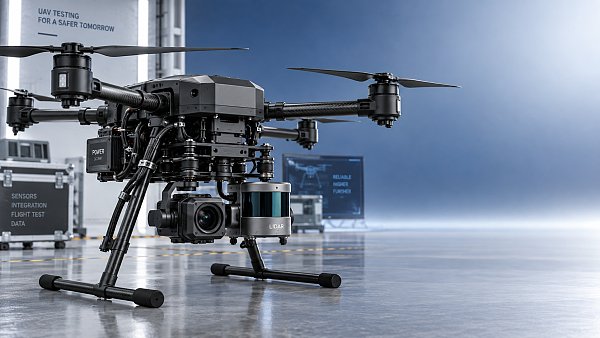
- Industrial inspection, where thermal cameras, LiDAR, zoom optics, and edge computing modules create combined payload and power constraints.
- Cargo delivery, where legal reserve, landing precision, and weather tolerance may matter more than maximum lift.
- Public safety or emergency response, where rapid deployment and reliable hover under stress outweigh peak payload claims.
Because these scenarios differ so sharply, the same commercial drone payload capacity benchmark can mean “strong fit” in one procurement case and “high-risk mismatch” in another.
Scenario comparison: what buyers should really compare
The table below shows why payload should never be isolated from mission context. It helps business evaluators convert a commercial drone payload capacity benchmark into a more realistic sourcing framework.
How the benchmark misleads in surveying, spraying, inspection, and delivery
Surveying and mapping: stable data beats peak lift
In mapping projects, buyers sometimes overvalue a high commercial drone payload capacity benchmark because they assume more payload means more sensor options. But in practice, mapping value comes from data integrity and coverage economics. If extra payload causes shorter endurance, fewer hectares or kilometers are covered per sortie. If vibration control is weak, point cloud density or image overlap quality may fall below project spec. Here, the better platform is often the one with lower advertised payload but stronger flight stability under a realistic sensor stack.
Agricultural operations: dynamic payload is not static payload
A commercial drone payload capacity benchmark is particularly easy to misuse in crop spraying because liquid payload changes minute by minute. The aircraft’s center of gravity shifts, pump demand affects battery draw, and route repeatability becomes critical for uniform coverage. Evaluators should ask how much area can be treated per battery cycle, not only how much tank weight the drone can lift at takeoff. In many farming operations, refill logistics and down-time create a larger cost impact than raw payload capacity.
Inspection missions: auxiliary equipment changes the equation
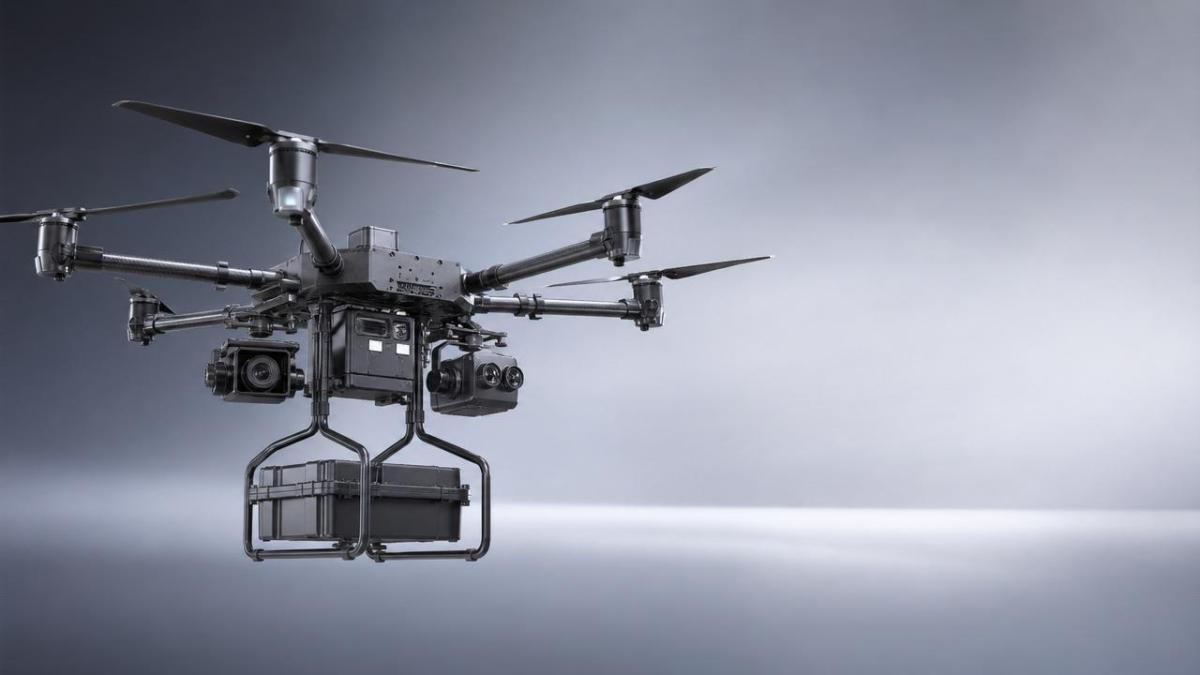
Inspection payload is rarely just a camera. The real stack may include stabilized gimbals, thermal sensors, zoom optics, lighting, onboard processing, and encrypted transmission equipment. A supplier may present a strong commercial drone payload capacity benchmark, yet the aircraft can lose substantial hover time once the full operational kit is mounted. Business evaluators should request performance data with the exact mission payload, not a stripped demonstration setup.
Delivery use cases: distance and reserve define commercial viability
For logistics, the benchmark can become dangerously simplistic. A drone may lift a package that meets target weight, but still fail the mission economically if range under load is too short or if reserve capacity for safe return is insufficient. Delivery buyers should model payload against route length, climb profile, landing zone constraints, and weather windows. The meaningful comparison is payload-at-distance with required safety reserve, not laboratory maximum lift.
The engineering variables that should sit next to any commercial drone payload capacity benchmark
A rigorous review should pair the benchmark with a structured set of adjacent variables. For business evaluation, these variables often reveal more than the benchmark itself:
- Endurance under mission load: not empty-airframe endurance, but time with actual payload, accessories, and reserve policy.
- Wind and altitude performance: payload claims at sea level in calm air are weak indicators for mountain, coastal, or industrial environments.
- Energy efficiency curve: some aircraft show steep performance drop after a certain payload threshold.
- Control stability and vibration: critical for imaging, spraying consistency, and precision landing.
- Redundancy and fault tolerance: especially relevant when heavy loads raise operational risk.
- Payload integration quality: mechanical mounting, power interfaces, EMI compatibility, and software synchronization.
- Cycle economics: battery swaps, maintenance intervals, operator training, and spare-part availability.
This broader view aligns with the TSV philosophy that parameters must be tied to tolerances, test conditions, and operational thresholds. A commercial drone payload capacity benchmark gains decision value only when these neighboring variables are disclosed and verified.
Common misjudgments business evaluators should avoid
Several recurring procurement errors appear in UAV comparison projects:
- Assuming higher payload always means higher operational productivity.
- Comparing payload claims from different test methods without checking temperature, wind, altitude, or battery state of charge.
- Ignoring accessory mass such as mounting brackets, protective housings, data links, and onboard compute units.
- Overlooking legal or insurance constraints that reduce usable payload in commercial deployments.
- Failing to distinguish between maximum lift, recommended working payload, and continuous-use payload.
These errors can distort supplier scoring, inflate ROI projections, and lengthen qualification cycles. In many bids, the issue is not dishonesty but non-equivalent comparison. One vendor provides a short-duration peak test, while another provides a conservative sustained mission figure. Without normalization, the commercial drone payload capacity benchmark becomes a poor proxy for actual fit.
A practical scenario-based evaluation framework
To improve sourcing quality, evaluators can use a simple sequence. First, define the mission scenario in measurable terms: payload type, route length, altitude, wind band, required reserve, and sortie frequency. Second, ask each supplier to restate their commercial drone payload capacity benchmark under those same conditions. Third, compare output metrics that matter commercially, such as hectares per hour, inspected assets per shift, or deliveries per battery set. Fourth, request proof from test logs, field trials, or benchmark reports rather than brochure summaries.
This framework helps teams move from abstract comparison to fit-for-purpose decision-making. It also shortens internal debate between engineering, procurement, and operations because the benchmark is translated into a shared operating scenario.
FAQ for teams reviewing a commercial drone payload capacity benchmark
Is a higher payload benchmark ever the right shortcut?
Only in a narrow early-screening stage. Even then, it should be treated as a filter, not a final ranking tool.
What is the most important follow-up question?
Ask for payload performance at your required mission duration and environmental conditions. This usually exposes whether the published figure is commercially meaningful.
Should evaluators prioritize benchmark reports or field demos?
Both matter. Benchmark reports create comparison discipline, while field demos reveal integration, handling, and operator reality. The strongest decision uses both.
Conclusion: compare mission-fit, not just maximum lift
A commercial drone payload capacity benchmark can be useful, but only when interpreted through the lens of application scenario, engineering limits, and business outcome. For surveying, agriculture, inspection, and delivery, the winning platform is rarely the one with the biggest headline number alone. It is the one that sustains the required payload with stable control, acceptable endurance, safe reserve, and predictable operating economics.
For business evaluators, the next step is straightforward: rewrite supplier comparison around your real mission profile and require every commercial drone payload capacity benchmark to be normalized to that scenario. That approach reduces noise, improves technical confidence, and creates a more defensible sourcing decision—exactly the kind of evidence-based evaluation that advanced hard-tech procurement now demands.
Search News
Hot Articles
- Carbon Fiber StructuresHow to Specify Aerospace Carbon Fiber Assemblies for Lightweight, Load-Bearing PartsJul 11, 2026
- Machine VisionXiaomi, Alibaba DAMO Academy Drive Open-Source Robotics Model Ecosystem, Lowering Algorithm Development Barriers for Overseas SMEs Adopting Chinese Robotics SolutionsMar 30, 2026
- Cobots & ArmsShanxi 'AI+' Conference Showcases Embodied Intelligence with Multinational Buyer Engagement: Key Industry ImplicationsMar 30, 2026
Popular Tags
Recommended News
 Jul 11, 2026How to Specify Aerospace Carbon Fiber Assemblies for Lightweight, Load-Bearing PartsAerospace carbon fiber assemblies: learn how to specify laminate design, load data, joining methods, and inspection controls for lighter, reliable load-bearing aerospace parts.Elena Rostova (UAV Systems Researcher)
 Mar 30, 2026Xiaomi, Alibaba DAMO Academy Drive Open-Source Robotics Model Ecosystem, Lowering Algorithm Development Barriers for Overseas SMEs Adopting Chinese Robotics SolutionsXiaomi & Alibaba DAMO Academy's open-source robotics models lower algorithm barriers for global SMEs. Boost efficiency in manufacturing, logistics & smart retail with ROS 2 compatible solutions.TSV Data Lab
 Mar 30, 2026Shanxi 'AI+' Conference Showcases Embodied Intelligence with Multinational Buyer Engagement: Key Industry ImplicationsShanxi 'AI+' Conference highlights embodied intelligence with Tesla, Ubtech & Jiantao showcasing multimodal robotics. 40+ global buyers validated tech on-site, creating new B2B channels for industrial automation & AI solutions.Chen Wei (Automation Lead Engineer)
 Mar 30, 2026Zhongguancun Unveils 6G Integrated Sensing-Computing-Intelligence Platform to Empower Embodied Robots for Global Industrial ApplicationsZhongguancun's new 6G platform revolutionizes industrial robotics with <10ms latency, empowering global automotive, logistics & port automation. Discover how this tech boosts China's smart manufacturing exports.TSV Data Lab
 Mar 30, 2026Mech-Mind Tianjin Embodied Intelligence R&D and Production Base Goes Live, Cutting Delivery Time by 20%–30% for Global Customized AMR+Vision SolutionsMech-Mind's Tianjin AMR+Vision production base cuts delivery time by 20%-30% for欧美 & Latin American markets. Discover how this PLd-certified facility accelerates customized robotics solutions for smart manufacturing and logistics.Chen Wei (Automation Lead Engineer)
 Mar 30, 2026Boao Forum Reveals 'Co-evolution of Big and Small Brains' Trend in Humanoid Robots, China's Embodied Intelligence Accelerates Adaptation to Overseas Manufacturing Service ScenariosDiscover how China's humanoid robots, featuring 'Co-evolution of Big and Small Brains,' are revolutionizing global manufacturing. Learn about Embodied Tian Gong 3.0's ISO compliance and overseas deployment at Boao Forum 2026.Chen Wei (Automation Lead Engineer)
 Mar 30, 2026China Railway Industrial Secures Patent for Embodied Robotics in Material Handling, Boosting High-Precision Delivery Capabilities for Overseas Infrastructure and Manufacturing ProjectsChina Railway Industrial's new patent for embodied robotics in material handling boosts high-precision delivery for global infrastructure & manufacturing. Discover how this innovation enhances logistics accuracy in automotive, rail transit & EPC projects.Chen Wei (Automation Lead Engineer)
 Sep 28, 2026Spindle Runout Measurement in Germany: DIN Standards, Methods, and Acceptance LimitsSpindle runout measurement Germany: explore DIN standards, proven methods, acceptance limits, and audit-ready practices for reliable machining quality.Dr. Marcus Vance
 Sep 27, 2026How to Select Wall-Mount Edge Devices for Space-Constrained Factory NetworksWall mount edge devices for space-constrained factories: evaluate workload, thermal design, power resilience, cable access, and network reliability for smarter deployments.TSV Data Lab
 Sep 26, 2026Machining Tolerance Analysis: How to Set Limits That Meet Function and Cost TargetsMachining tolerance analysis: learn how to set functional limits, control tolerance stacks, reduce inspection risk, and balance precision with production cost.Dr. Marcus Vance
 Sep 25, 2026How to Evaluate an Industrial Infrastructure Data Platform for Multi-Site OperationsIndustrial infrastructure data platform evaluation guide for multi-site operations: compare data quality, edge resilience, interoperability, governance, and scalable proof-of-value criteria.Victor Lin (Chief Software Architect)
 Sep 24, 2026How to Select Machine Vision Optics for Accurate Inspection at Different Working DistancesMachine vision optics selection guide for accurate inspection at every working distance. Compare FOV, pixel scale, DOF, distortion, lighting, and telecentric options.TSV Data Lab
 Sep 23, 2026How to Evaluate a Machine Vision System Integrator for High-Speed Inspection LinesChoose a machine vision system integrator with proven expertise in high-speed inspection, reliable reject timing, robust optics, and measurable acceptance criteria.TSV Data Lab
 Sep 28, 2026When is a SCADA API the right choice for connecting plant systems?SCADA API guide: learn when governed plant data integration improves traceability, security, and scalability—without compromising real-time control.Victor Lin (Chief Software Architect)
 Sep 27, 2026How SCADA data integration improves traceability across production linesSCADA data integration connects production-line data to improve traceability, accelerate quality investigations, and strengthen safety decisions.Victor Lin (Chief Software Architect)
 Sep 26, 2026What to define before starting SCADA integration planningSCADA integration planning starts with clear scope, control boundaries, data models, cybersecurity, and testing. Discover the definitions that reduce risk and costly rework.Victor Lin (Chief Software Architect)
 Sep 25, 2026How a smart factory with Industrial IoT reduces production blind spotsDiscover how a smart factory with Industrial IoT turns real-time machine, quality, and workflow data into actionable insights that reduce production blind spots and delivery risks.Victor Lin (Chief Software Architect)
 Sep 24, 2026When does Industrial IoT make smart manufacturing easier to scale?Smart manufacturing Industrial IoT scales when trusted data, interoperable systems, and secure workflows turn connected assets into measurable gains.TSV Data Lab
 Sep 23, 2026What drives ultra-precision machining cost at 1-micron tolerance?Ultra precision machining cost per part at 1 micron tolerance depends on process, material, metrology, and yield. Learn how to compare quotes confidently.Dr. Marcus Vance
 Sep 22, 2026Drone Engine-T550CC Applications: Build the UAV Power System Around the MissionAn application guide for Drone Engine-T550CC integration, covering payload planning, airframe matching, cooling, fuel, vibration, test procedures, documentation, and service preparation.Elena Rostova (UAV Systems Researcher)
 Sep 22, 2026How to Evaluate Industrial Edge Computing Vendors for Factory DeploymentIndustrial edge computing vendor evaluation guide for factories: compare latency, protocol fit, reliability, security, and lifecycle support before deployment.TSV Data Lab
 Sep 21, 2026Drone Payload Integration: Matching Power, Data, and Center of Gravity for Reliable FlightsDrone payload integration made practical: balance power, data, center of gravity, and endurance to build safer, more reliable mission-ready flights.Elena Rostova (UAV Systems Researcher)
 Sep 20, 2026Autonomous Navigation Pricing: Cost Drivers and Budget Benchmarks for AMR ProjectsAutonomous navigation price explained: compare AMR cost drivers, software, sensors, integration, safety, and lifecycle budgets to build a scalable project plan.Chen Wei (Automation Lead Engineer)
 Sep 19, 2026How to Scope Automation Integration Services for Multi-System Factory ProjectsAutomation integration services: learn how to scope multi-system factory projects with clear workflows, interface contracts, safety boundaries, and acceptance criteria.Victor Lin (Chief Software Architect)