Why Carbon Fiber Tensile Strength Data Changes Across Suppliers
Publication Date
author
When carbon fiber tensile strength aerospace data differs from one supplier to another, the issue is rarely a simple quality gap. Test methods, fiber grade, resin systems, layup design, and reporting standards all shape the final numbers. For engineers, buyers, and decision-makers comparing UAV structures, understanding how these variables affect carbon fiber frame vibration dampening, drone payload capacity vs flight time, and aerospace aluminum alloy yield strength is essential before trusting any datasheet.
Why the same carbon fiber tensile strength can look different on paper
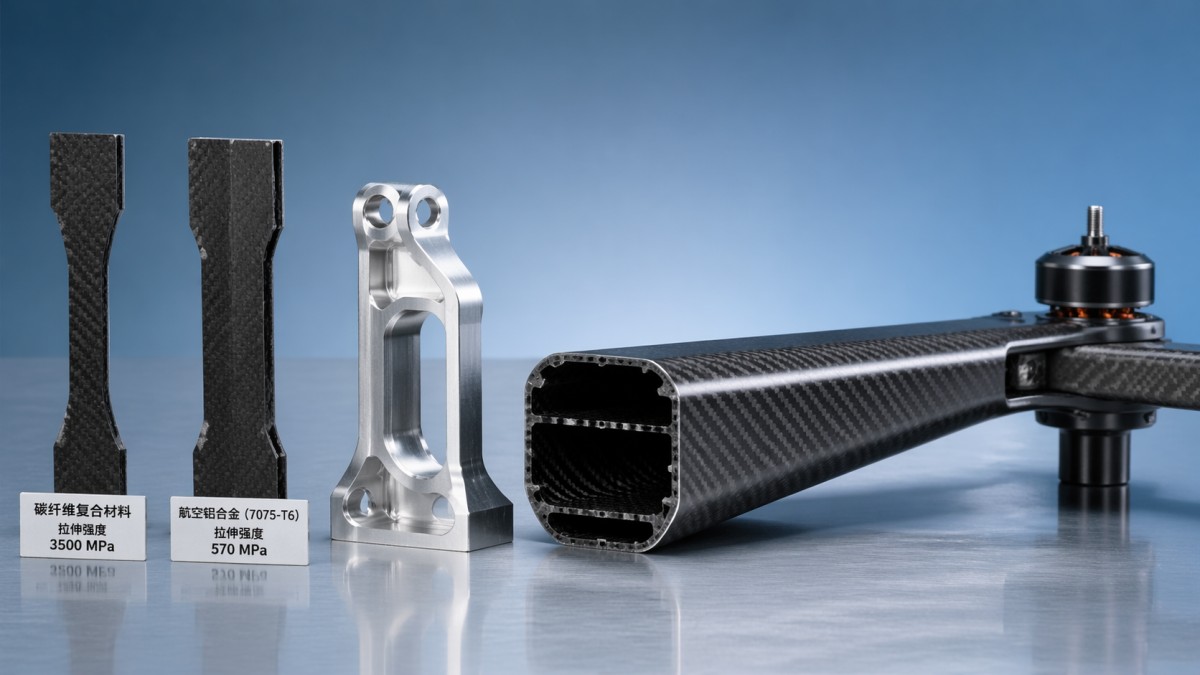
In hard-tech sourcing, a tensile strength number only becomes meaningful when the test context is visible. One supplier may publish filament tensile strength for the raw fiber, while another reports laminate tensile strength for a cured composite panel. Those are not interchangeable values. In aerospace, UAV, and precision structural design, this difference can shift engineering judgment within the first 2–4 weeks of supplier screening.
The first reason data changes across suppliers is specimen definition. Carbon fiber can be tested as a single filament, tow, prepreg laminate, quasi-isotropic panel, or finished structural tube. Each format has a different stress path, resin content, fiber volume fraction, and failure mode. A procurement team that compares these values side by side without normalization may reject a capable supplier or approve an unsuitable one.
The second reason is test standard selection. Results can vary depending on whether the supplier follows common methods such as ASTM-based tensile procedures for composites, internal factory protocols, or customer-defined acceptance criteria. Grip design, coupon dimensions, strain measurement method, and conditioning environment can all influence the reported result. Even a difference between room-temperature dry testing and conditioned testing can change the value used for design margins.
The third reason is reporting intent. Some suppliers publish peak values from optimized lab samples. Others provide batch-average values, design allowables, or minimum guaranteed thresholds. For enterprise decision-makers, this is a major distinction. A peak number can support marketing. A statistically controlled minimum is what supports purchasing contracts, certification planning, and long-term risk control.
Three data layers that are often confused
Before comparing any datasheet, teams should separate at least 3 layers of data: raw fiber data, composite laminate data, and structure-level performance data. This simple step prevents many sourcing errors in UAV arms, aerospace panels, robotics frames, and lightweight automation parts.
- Raw fiber data describes the carbon filament or tow itself. It is useful for material science benchmarking, but it does not represent the actual performance of a finished arm, shell, or frame.
- Laminate data reflects fiber plus resin plus layup. This is usually more relevant for engineering selection because it captures matrix behavior, void content, cure quality, and directional strength.
- Structure-level data includes geometry, joints, inserts, drilling effects, and load path complexity. This layer matters most for drone payload capacity vs flight time and carbon fiber frame vibration dampening in real use.
At TechStat Vanguard, the practical rule is straightforward: if the supplier cannot clearly state which layer is being reported, the number should not drive a sourcing decision. Parameters do not lie, but unlabeled parameters do mislead.
Which variables actually move the numbers in aerospace and UAV applications?
For information researchers and engineers, the most useful comparison is not who claims the highest value, but which variables explain the value. In carbon fiber aerospace procurement, at least 5 factors routinely shift tensile strength interpretation: fiber grade, resin system, fiber orientation, cure process, and test environment. Each of these also affects stiffness, fatigue response, and vibration behavior.
Fiber grade matters because high-strength and high-modulus fibers are optimized differently. A supplier can improve one target while compromising another. For example, a material selected for stiffness-sensitive optical payload structures may not behave the same way as a material chosen for impact-prone UAV landing gear or agricultural drone arms. The engineering question is never just tensile strength. It is tensile strength within the intended load case.
Resin systems also change outcomes. Epoxy, toughened epoxy, high-temperature matrices, and other resin families influence interlaminar behavior, environmental resistance, and damage tolerance. In a 10°C–25°C office test, one material may appear stable. In hot, wet, or cyclic outdoor service, the ranking may change. This is especially important where drone flight controllers and payload sensors are sensitive to vibration transfer and dimensional drift.
Layup design is another major source of confusion. A unidirectional coupon loaded along the fiber axis can post a much stronger tensile result than a quasi-isotropic laminate used in a real drone frame. Once 0°, 45°, 90°, and woven layers are combined to handle multidirectional loads, the number changes. That is not a defect. It is the cost of making a usable structure rather than a lab-optimized strip.
Key variables procurement teams should request in writing
The table below summarizes the most common variables behind carbon fiber tensile strength aerospace discrepancies. It can be used during RFQ preparation, technical review, or supplier qualification meetings.
This comparison shows why a single number never tells the full story. If a supplier offers strong data but no layup, cure, or test-environment disclosure, the practical value of that datasheet is limited. For teams managing 3–5 suppliers in parallel, data discipline often saves more time than chasing the highest headline value.
Why vibration and payload discussions must be linked to material data
In UAV structures, carbon fiber frame vibration dampening and drone payload capacity vs flight time cannot be separated from material reporting. A lighter laminate may improve endurance, but if stiffness drops too far, vibration transmission can rise and sensor stability can worsen. A stronger coupon value does not guarantee a better airframe if joint areas, inserts, or layup transitions become the weak points.
That is why TSV emphasizes structure-level interpretation. For aerospace and autonomous platform buyers, the right question is not “Which supplier claims the best tensile strength?” but “Which supplier’s data remains valid when translated into a complete load-bearing assembly?”
How to compare carbon fiber against aerospace aluminum alloy yield strength fairly
Many buyers still benchmark carbon fiber against aerospace aluminum alloy yield strength as if both were simple one-to-one substitutes. That shortcut creates costly errors. Aluminum yield strength is a metal property tied to plastic deformation behavior in a relatively isotropic material. Carbon fiber composite performance is directional and depends on fiber orientation, matrix support, and laminate architecture. These are different engineering languages.
The better comparison framework uses at least 4 dimensions: specific strength, specific stiffness, fatigue behavior, and manufacturing constraints. For UAV booms, gimbals, sensor mounts, and lightweight automation structures, the correct material choice depends on load direction, assembly complexity, and damage tolerance requirements over a service interval that may span months or multiple maintenance cycles.
Aerospace aluminum remains attractive where machining precision, predictable isotropic behavior, repair familiarity, and threaded features are priorities. Carbon fiber often wins where mass reduction, directional stiffness, and corrosion resistance are more critical. Yet hybrid architectures are common because composite skins, aluminum inserts, and bonded interfaces can together outperform either material used alone.
For decision-makers, the lesson is clear: do not compare a supplier’s carbon fiber tensile headline directly with an aerospace aluminum alloy yield strength number and declare a winner. Compare complete design intent, structural efficiency, joining method, and lifecycle maintenance burden over the expected 12–36 month use window.
Decision matrix for carbon fiber vs aluminum in structural sourcing
The following table helps procurement teams align material selection with engineering priorities rather than vendor marketing claims.
This matrix shows that the carbon fiber versus aluminum choice is not binary. In many projects, the optimal sourcing route uses carbon fiber for the main span or shell and aluminum for precision interfaces. That hybrid logic often improves payload efficiency while keeping assembly and service risk manageable.
A practical rule for buyers
If the application has 3 or more of these constraints—strict mass limit, high vibration sensitivity, outdoor exposure, and long unsupported spans—carbon fiber deserves serious evaluation. If the application is dominated by dense machining, repeated field repairs, and short lead-time prototyping, aerospace aluminum may still be the lower-risk option for the first production phase.
What should procurement teams ask before approving a supplier?
For procurement personnel and enterprise decision-makers, supplier evaluation should move beyond headline mechanical properties. A robust review typically covers 5 checkpoints: material traceability, process consistency, test transparency, structural suitability, and delivery realism. This is where many qualification cycles either accelerate or stall.
Material traceability means the supplier can identify fiber source, resin family, lot control, and where relevant, prepreg or fabric batch information. Process consistency means they can explain whether parts are made by autoclave, compression, vacuum bag, filament winding, or another route, and what controls exist for cure temperature, pressure, and void management. Without these basics, the tensile number has weak purchasing value.
Test transparency means the supplier can tell you the specimen type, test orientation, conditioning state, and whether the number is average, typical, or minimum. Structural suitability means they can connect material data to your actual use case, such as a multirotor arm, fixed-wing spar, robotic housing, or sensor bracket. Delivery realism means prototype lead times of 2–6 weeks and production planning windows are discussed honestly rather than hidden behind generic promises.
At TSV, this is exactly where engineering benchmarking adds value. By translating material claims into comparable procurement logic, we help reduce the noise between lab values and sourcing decisions. That shortens trial-and-error loops and helps cross-functional teams align faster.
A practical supplier qualification checklist
- Confirm whether the carbon fiber tensile strength aerospace value refers to raw fiber, laminate coupon, or finished structure testing.
- Request the layup description, fiber orientation, nominal thickness range, and resin system used in the tested specimen.
- Check if the data was generated under room-temperature dry conditions or after environmental conditioning relevant to your service profile.
- Ask how the material affects carbon fiber frame vibration dampening and whether structure-level validation exists for your payload class.
- Compare with aerospace aluminum alloy yield strength only within the same design function, not as an isolated headline metric.
This checklist is especially useful when 2–3 shortlisted suppliers present conflicting datasheets. In many cases, the strongest supplier is not the one with the biggest number, but the one with the clearest testing language, the most transferable process data, and the most realistic explanation of production constraints.
Common procurement mistake
A common error is approving material based on coupon strength while ignoring drilled holes, bonded joints, insert zones, and edge finishing. These features often define failure initiation in real structures. For UAV and aerospace assemblies, assembly details can matter as much as the laminate headline value, particularly under cyclic load or repeated vibration exposure.
FAQ: common misconceptions when reading carbon fiber supplier data
Search intent around carbon fiber tensile strength aerospace topics often revolves around trust. The questions below address the most common confusion points for researchers, operators, buyers, and technical managers.
Does a higher tensile strength number always mean a better carbon fiber part?
No. A higher number may reflect a different specimen type, a unidirectional test orientation, or a lab-optimized condition. For real structures, stiffness balance, fatigue behavior, joint design, impact sensitivity, and manufacturing repeatability all matter. In many projects, a slightly lower laminate value from a stable process is a safer purchasing choice than a higher but poorly documented claim.
How does carbon fiber frame vibration dampening relate to tensile strength?
They are related but not identical. Tensile strength describes load capacity under a specific pull test. Vibration behavior depends on stiffness distribution, damping characteristics, joint design, mass placement, and operating frequency range. A frame that performs well in a static coupon test may still transmit harmful vibration to cameras, LiDAR, or control electronics if the structure is not tuned properly.
What matters more for drone payload capacity vs flight time: strength or weight?
Both matter, but they must be evaluated together. Weight reduction improves endurance and payload margin, yet excessive lightening can reduce stiffness and worsen vibration or structural stability. A useful review compares at least 3 factors: mass, stiffness, and fatigue robustness across the expected mission duration. That is why structure-level validation is more valuable than isolated datasheet claims.
Should buyers always switch from aluminum to carbon fiber for aerospace or UAV parts?
Not always. Carbon fiber is often advantageous in long-span, weight-critical, and corrosion-sensitive applications. Aerospace aluminum remains highly competitive where machining precision, predictable isotropic behavior, and repair convenience are priorities. For many procurement programs, the best result comes from a hybrid solution rather than a full replacement strategy.
The underlying principle is simple: numbers must be comparable, and material decisions must be tied to use-case physics. This is where disciplined benchmarking creates real commercial value.
Why work with a data-driven benchmarking partner before supplier selection?
In global hard-tech sourcing, the cost of misunderstanding a datasheet is rarely limited to one purchase order. It can affect prototyping speed, test failures, redesign loops, compliance timing, and supplier qualification cycles. For organizations managing UAV structures, aerospace components, robotics frames, or advanced machining projects, early-stage parameter clarity can save one or more full evaluation rounds.
TechStat Vanguard is built for this exact problem. We act as a commercial filter for engineering truth, helping teams interpret tensile strength claims, compare carbon fiber against aerospace aluminum alloy yield strength in context, and identify what each supplier is actually proving. Our role is not to amplify generic marketing language, but to help engineering, procurement, and executive teams make cleaner decisions based on verifiable technical logic.
If your team is comparing 3–5 suppliers, preparing a spec sheet, or validating whether carbon fiber frame vibration dampening and drone payload capacity vs flight time claims are technically aligned, we can support the review. We can also help structure the right questions around test methods, layup disclosure, batch consistency, delivery expectations, and application-specific risk.
Contact TSV to discuss parameter confirmation, material comparison, supplier shortlist review, sample evaluation strategy, certification-related data preparation, prototype lead-time planning, or quote-stage technical clarification. In high-value industrial sourcing, better decisions start with better definitions, and better definitions start with clean data.
Search News
Hot Articles
- Carbon Fiber StructuresHow to Specify Aerospace Carbon Fiber Assemblies for Lightweight, Load-Bearing PartsJul 11, 2026
- Machine VisionXiaomi, Alibaba DAMO Academy Drive Open-Source Robotics Model Ecosystem, Lowering Algorithm Development Barriers for Overseas SMEs Adopting Chinese Robotics SolutionsMar 30, 2026
- Cobots & ArmsShanxi 'AI+' Conference Showcases Embodied Intelligence with Multinational Buyer Engagement: Key Industry ImplicationsMar 30, 2026
Popular Tags
Recommended News
 Jul 11, 2026How to Specify Aerospace Carbon Fiber Assemblies for Lightweight, Load-Bearing PartsAerospace carbon fiber assemblies: learn how to specify laminate design, load data, joining methods, and inspection controls for lighter, reliable load-bearing aerospace parts.Elena Rostova (UAV Systems Researcher)
 Mar 30, 2026Xiaomi, Alibaba DAMO Academy Drive Open-Source Robotics Model Ecosystem, Lowering Algorithm Development Barriers for Overseas SMEs Adopting Chinese Robotics SolutionsXiaomi & Alibaba DAMO Academy's open-source robotics models lower algorithm barriers for global SMEs. Boost efficiency in manufacturing, logistics & smart retail with ROS 2 compatible solutions.TSV Data Lab
 Mar 30, 2026Shanxi 'AI+' Conference Showcases Embodied Intelligence with Multinational Buyer Engagement: Key Industry ImplicationsShanxi 'AI+' Conference highlights embodied intelligence with Tesla, Ubtech & Jiantao showcasing multimodal robotics. 40+ global buyers validated tech on-site, creating new B2B channels for industrial automation & AI solutions.Chen Wei (Automation Lead Engineer)
 Mar 30, 2026Zhongguancun Unveils 6G Integrated Sensing-Computing-Intelligence Platform to Empower Embodied Robots for Global Industrial ApplicationsZhongguancun's new 6G platform revolutionizes industrial robotics with <10ms latency, empowering global automotive, logistics & port automation. Discover how this tech boosts China's smart manufacturing exports.TSV Data Lab
 Mar 30, 2026Mech-Mind Tianjin Embodied Intelligence R&D and Production Base Goes Live, Cutting Delivery Time by 20%–30% for Global Customized AMR+Vision SolutionsMech-Mind's Tianjin AMR+Vision production base cuts delivery time by 20%-30% for欧美 & Latin American markets. Discover how this PLd-certified facility accelerates customized robotics solutions for smart manufacturing and logistics.Chen Wei (Automation Lead Engineer)
 Mar 30, 2026Boao Forum Reveals 'Co-evolution of Big and Small Brains' Trend in Humanoid Robots, China's Embodied Intelligence Accelerates Adaptation to Overseas Manufacturing Service ScenariosDiscover how China's humanoid robots, featuring 'Co-evolution of Big and Small Brains,' are revolutionizing global manufacturing. Learn about Embodied Tian Gong 3.0's ISO compliance and overseas deployment at Boao Forum 2026.Chen Wei (Automation Lead Engineer)
 Mar 30, 2026China Railway Industrial Secures Patent for Embodied Robotics in Material Handling, Boosting High-Precision Delivery Capabilities for Overseas Infrastructure and Manufacturing ProjectsChina Railway Industrial's new patent for embodied robotics in material handling boosts high-precision delivery for global infrastructure & manufacturing. Discover how this innovation enhances logistics accuracy in automotive, rail transit & EPC projects.Chen Wei (Automation Lead Engineer)
 Oct 22, 2026KUKA Showcases Physical AI and iiQKA.AI Vision at NVIDIA GTC BerlinExplore KUKA’s Physical AI showcase at NVIDIA GTC Berlin and discover how iiQKA.AI Vision aims to simplify robotic vision integration and improve 2D and 3D scene recognition.TSV Data Lab
 Oct 22, 2026Robotic Machining of Advanced Composites: What Tolerances Are Achievable?Explore advanced materials machining robotics: discover what drives achievable composite tolerances and how to validate accuracy before investing in your next machining system.Dr. Marcus Vance
 Oct 21, 2026China’s Industrial Robot Exports Near RMB 10 Billion in First Nine Months of 2026China’s industrial robot exports neared RMB 10 billion in January–September 2026, with value rising faster than volume. Explore the data and what it could mean for suppliers.Chen Wei (Automation Lead Engineer)
 Oct 21, 2026Low-Latency Industrial Data Processing: Pricing and Key Cost DriversExplore industrial data latency price drivers, from edge hardware to integration and support. Learn how to compare quotes, verify performance, and avoid unnecessary costs.TSV Data Lab
 Oct 20, 2026KUKA Launches iiQKA.AI Vision to Simplify Industrial Image ProcessingKUKA iiQKA.AI Vision simplifies industrial image processing with controller-based 2D and 3D vision. Explore drag-and-drop setup for vision-guided automation.TSV Data Lab
 Oct 20, 2026Smart Industrial Edge Devices: Key Criteria for Legacy PLC IntegrationChoose smart industrial edge devices for legacy PLC integration. Discover key criteria for compatibility, data quality, security, and reliable collection without disrupting control.TSV Data Lab
 Oct 19, 2026Choosing a Radar Sensor by Application: Range, Resolution, and Field of ViewSimplify radar sensor application based product selection. Compare range, resolution, and field of view to avoid blind spots and choose with confidence. Explore the guide.TSV Data Lab
 Oct 18, 2026Comparing Material Options for Procurement: Specs, Costs, and Supply RisksExplore procurement oriented technical content on material options, specs, costs, and supply risks. Compare alternatives to cut hidden expenses and make confident sourcing decisions.Dr. Marcus Vance
 Oct 17, 20265-Axis CNC Positioning Accuracy: How to Interpret ISO 230-2 Test ResultsAssess 5 axis CNC machining positioning accuracy with ISO 230-2. Learn to interpret repeatability, reversal error, and test conditions to compare suppliers and make confident acceptance decisions.Dr. Marcus Vance
 Oct 16, 2026Choosing a Rugged Edge AI Box Supplier: Thermal Tests and Lifecycle SupportChoose a rugged edge AI box supplier with proven thermal performance and reliable lifecycle support. Discover the tests and commitments to verify before you buy.TSV Data Lab
 Oct 15, 2026R&D Cost Reduction Services: How to Evaluate Fees, Savings, and ROIEvaluate R&D cost reduction services with confidence. Compare fees, verify savings, and calculate ROI without compromising performance. Discover how to choose a provider that delivers real value.Chen Wei (Automation Lead Engineer)
 Oct 22, 2026How Do You Test AMR Navigation Accuracy in a Warehouse?Test AMR navigation accuracy in warehouses with practical methods for localization, path tracking, and docking. Learn to set tolerances and compare robots before deployment.Chen Wei (Automation Lead Engineer)
 Oct 21, 2026How Should You Balance Cobot Payload Against Reach?Explore cobot payload versus reach to choose the right robot. Learn how tooling, load limits, workspace, and cycle time affect performance—and avoid costly selection mistakes.Chen Wei (Automation Lead Engineer)
 Oct 20, 2026How Do You Measure Industrial IoT Gateway Latency Under Load?Measure industrial IoT gateway latency under load with reliable timestamps, realistic traffic, and tail-latency analysis. Discover how to expose bottlenecks and choose the right gateway.TSV Data Lab
 Oct 19, 2026How Do You Verify That Precision Machined Parts Meet Tolerances?Master precision machining tolerance verification with the right tools, datum setups, and acceptance rules. Learn how to validate parts confidently and reduce costly inspection errors.Dr. Marcus Vance
 Oct 18, 2026What Should an AS9100 Machining Supplier Checklist Include?Build an AS9100 machining supplier checklist that verifies capability, traceability, inspection, and outsourced processes. Discover what to check before approving your next aerospace supplier.Dr. Marcus Vance
 Oct 17, 2026How Should You Interpret Industrial Robot Repeatability Specs?Decode industrial robot repeatability specifications, understand ISO 9283 test conditions, and avoid costly selection mistakes. Learn how to verify performance for your process.Chen Wei (Automation Lead Engineer)