Drone Payload Capacity vs Flight Time: Where the Tradeoff Gets Expensive
Publication Date
author
In commercial UAV operations, drone payload capacity vs flight time is where engineering optimism meets budget reality. For teams evaluating a heavy lift uav for construction or a mapping drone for mining industry, every extra kilogram affects endurance, stability, and total mission cost. This article breaks down the hard tradeoffs behind thrust, battery draw, center of gravity, and payload selection to help engineers, operators, and buyers make data-driven decisions.
For R&D teams, the payload-flight time equation determines whether a mission profile is technically feasible. For operators, it decides if one sortie can finish a corridor inspection, stockpile scan, or multisensor survey. For procurement leaders, it becomes a lifecycle-cost problem involving batteries, spare propulsion components, charging logistics, training, and downtime risk.
At TechStat Vanguard, the practical question is not whether a drone can lift more on paper. It is whether the aircraft can carry the required payload for 20-45 minutes in real wind, at real altitude, with acceptable thermal margin, vibration control, and reserve power for safe landing. That is where many promising specifications become expensive operational compromises.
Why Payload Capacity and Flight Time Pull in Opposite Directions
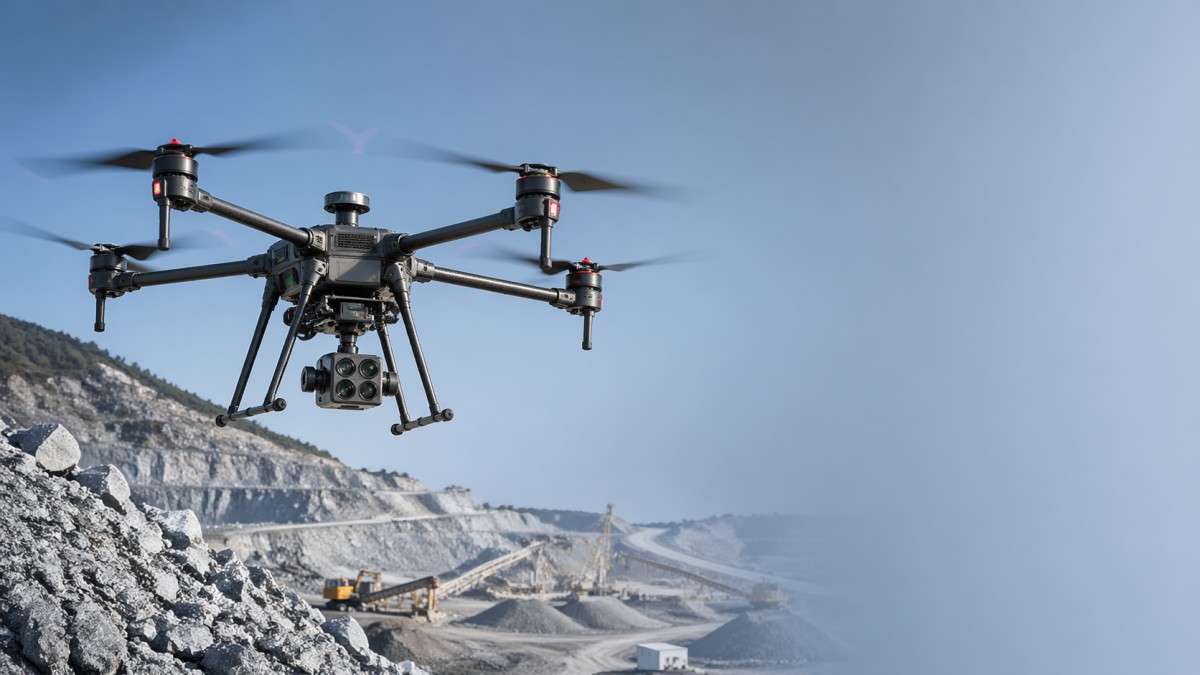
Every multirotor follows the same basic energy logic: higher payload increases all-up weight, which demands more thrust, which raises current draw, which reduces endurance. The relationship is not perfectly linear. In many commercial UAV platforms, adding the first 1-2 kg may reduce endurance by 10%-20%, while adding the next 2-3 kg can cut useful flight time much faster because motors and batteries move closer to less efficient operating zones.
This is why a drone advertised with a 10 kg payload rating may only sustain that load for a short mission segment. The maximum payload figure often reflects lift capability under controlled conditions, not optimal endurance under operational wind loads, payload drag, temperature variation, and battery aging. For decision-makers, a more useful metric is mission payload at required reserve, such as 25 minutes with 20% battery remaining.
Battery mass adds another layer of tradeoff. Larger batteries increase stored energy, but they also add weight. Past a certain point, the extra battery no longer delivers proportional flight time because part of the added energy is consumed carrying the battery itself. In heavy lift UAV design, this diminishing return can appear sharply once the platform moves beyond a balanced thrust-to-weight ratio of roughly 2.0:1 to 2.5:1 for stable commercial work.
The economic impact is immediate. If a payload upgrade shortens each sortie from 32 minutes to 18 minutes, an operator may need 2-3 extra battery sets, more field charging hardware, and additional pilot cycles to complete the same daily workload. What looked like a single hardware decision becomes a labor, logistics, and maintenance cost multiplier.
The four variables that usually drive the tradeoff
- All-up takeoff weight, including payload, battery, mounting hardware, landing gear, and any quick-release systems.
- Propulsion efficiency, especially motor torque curve, propeller diameter, blade pitch, and ESC thermal capacity.
- Battery chemistry and discharge behavior, including nominal voltage, C-rate, cycle life, and voltage sag under peak load.
- Mission environment, such as wind above 8-10 m/s, high elevation above 1,500 m, and ambient temperatures below 5°C or above 35°C.
A buyer evaluating drone payload capacity vs flight time should therefore request three separate figures: no-load endurance, nominal mission endurance, and max-payload endurance. Without all three, published numbers are difficult to compare across suppliers or airframe classes.
What the Tradeoff Looks Like in Real Commercial Missions
The cost of the payload-flight time tradeoff varies by application. A construction team using a heavy lift UAV to carry a LiDAR unit plus RGB camera may accept shorter endurance if one flight captures a high-value dataset. A mining operator flying repeated volumetric scans across large stockpiles may instead prioritize predictable 25-35 minute endurance to reduce landing cycles and calibration interruptions.
Payload is not just mass. It includes size, aerodynamic drag, vibration sensitivity, power demand, and mounting location. A 1.5 kg stabilized gimbal can affect flight behavior differently from a 1.5 kg compact sensor block because the moment arm and center of gravity shift are not the same. For operators, this often appears as slower response, more correction in hover, or reduced confidence during crosswind legs.
Teams also underestimate turnaround time. If a heavier payload reduces endurance by 30%, field productivity may decline by more than 30% because each landing adds battery swaps, preflight checks, data confirmation, and route resets. On a 6-hour field day, that can mean losing 60-90 minutes of effective data capture time.
The table below shows how typical commercial missions react differently to payload increases. These are common planning ranges rather than universal performance guarantees, but they illustrate why “best payload” depends on mission economics, not just lift capability.
The key conclusion is that drone payload capacity vs flight time should be evaluated against mission completion cost. A platform that carries 30% more but requires 40% more support equipment may not be the better commercial choice. In many B2B fleets, the lowest total cost per hectare, per kilometer, or per inspected asset matters more than the highest payload figure.
Where operators usually feel the penalty first
Battery rotation and charging load
A fleet that needs 6 battery pairs per aircraft instead of 3 may double its battery budget and increase transport weight significantly. In remote sites, generator fuel, inverter sizing, and cooling time become non-trivial planning factors.
Maintenance intervals
Higher sustained current and hotter ESC operation can shorten inspection intervals for motors, connectors, and propellers. Components that were checked every 50 hours may need closer attention at 25-30 hours under heavier load profiles.
The Engineering Factors Buyers Should Verify Before Procurement
When procurement teams compare platforms, published payload ratings should never be reviewed in isolation. The real benchmark is whether the aircraft can complete the planned mission with acceptable control authority, vibration isolation, thermal margin, and battery reserve. For many industrial users, a minimum landing reserve of 15%-20% is a sensible planning threshold, not an optional bonus.
Center of gravity is one of the most overlooked variables. A payload mounted 120 mm below the frame can behave very differently from one mounted close to the fuselage. The aircraft may still take off, but control loops work harder, especially in gust response or precision hover. That extra correction burns power and reduces mapping consistency.
Propeller and motor matching also matter. Larger props can improve lift efficiency, but only if the airframe geometry, motor KV, and ESC settings are optimized for the mission band. An under-matched propulsion set may technically lift the load while operating near current peaks that accelerate heat buildup and wear.
The following checklist helps engineering and sourcing teams compare platforms beyond headline claims. It is especially useful when reviewing a heavy lift UAV for construction, mining, industrial inspection, or multisensor data acquisition.
A disciplined procurement process should also include a short field acceptance plan. Even a 2-3 hour validation session can reveal whether endurance numbers are realistic with the actual payload, local wind profile, and operating temperature. That small test cost is usually far lower than correcting a fleet mismatch after deployment.
Practical selection standards for B2B teams
- Define the mission payload as the complete flying stack, not just the sensor mass.
- Set a minimum useful endurance target, commonly 20, 25, or 30 minutes depending on workflow.
- Require reserve battery margin and environmental derating assumptions in writing.
- Model battery quantity, charger count, and field turnaround for an 8-hour operating day.
- Compare cost per completed mission, not cost per aircraft alone.
Where the Tradeoff Gets Expensive: Hidden Cost Drivers and Common Mistakes
The most expensive payload-flight time mistakes usually happen after purchase, when operational reality exposes planning assumptions. A common example is selecting a drone that can carry a 3 kg mapping package but only delivers 16-18 minutes on-site once wind rises above 7 m/s. The aircraft is still functional, yet the workflow becomes inefficient enough to require additional crews or more deployment days.
Another hidden cost is battery aging. A platform that initially flies 28 minutes at nominal payload may drop closer to 22-24 minutes after 150-200 cycles, depending on chemistry, charging discipline, and heat exposure. If the original mission plan had little time reserve, normal battery degradation can force route redesign or fleet expansion earlier than expected.
Insurance, compliance, and safety procedure also scale with aircraft size and energy state. Heavier aircraft may require more conservative operating distances, stricter handling protocols, or additional site controls. Those are not reasons to avoid high-payload drones, but they should be priced into the business case from the beginning.
The most reliable way to control cost is to match aircraft class to mission architecture rather than buying for theoretical flexibility. Overspecification looks safe in procurement meetings, but in field operations it often means excess mass, more battery inventory, and unnecessary maintenance burden.
Frequent decision errors
- Using maximum payload as the primary comparison metric instead of mission endurance at working load.
- Ignoring payload drag and mounting position, especially with LiDAR, gimbals, spray tanks, or antenna assemblies.
- Assuming lab endurance numbers will hold at altitude, in gusts, or during repeated hover segments.
- Underbudgeting for batteries, chargers, propeller replacements, and spare propulsion components.
- Buying a single platform for multiple jobs whose payload and endurance needs are structurally different.
A better budgeting frame
Instead of asking, “What is the highest payload this drone can lift?” ask, “What payload can it carry for our required 25-35 minute mission window, with 15%-20% reserve, across a realistic 6-8 hour field shift?” That framing aligns engineering truth with commercial planning and sharply reduces unpleasant surprises after deployment.
How to Build a Smarter Selection and Validation Workflow
A disciplined workflow turns the drone payload capacity vs flight time problem into a measurable procurement decision. Start by separating missions into at least 3 buckets: light sensor inspection, medium-weight survey payloads, and high-load delivery or spray tasks. Each bucket should have its own endurance floor, payload stack definition, and environmental assumptions.
Next, require vendors or internal teams to provide performance at multiple payload points, not one single maximum. A practical matrix may include 0%, 50%, 75%, and 100% of recommended payload, each with endurance, hover power draw, and takeoff weight. This makes cross-platform comparison much more meaningful than brochure claims alone.
Then run a field validation protocol. Even a compact protocol can be rigorous if it includes repeatable variables and a pass-fail framework. For most industrial teams, testing in two wind bands and two battery states reveals more operational truth than a long indoor demo.
The table below outlines a practical validation workflow that engineering, operations, and procurement can share. It is designed to reduce trial-and-error cost while producing evidence useful for budget approval and supplier qualification.
This process matters because most expensive mistakes come from skipping stage 3 or stage 4. A drone that looks efficient in acquisition cost can become more expensive over 12 months if it needs 2 extra battery sets, more field support, and more frequent downtime checks. Data-led validation is what prevents specification optimism from becoming procurement regret.
FAQ for engineers, operators, and buyers
How much flight time reserve is usually sensible?
For many commercial missions, planning around a 15%-20% landing reserve is prudent. High-wind, high-altitude, or high-value payload missions may justify even more conservative thresholds, especially when recovery zones are constrained.
Is a bigger battery always the answer?
No. Bigger batteries improve energy capacity only up to the point where added mass starts to erode efficiency. The best result usually comes from balancing airframe, propulsion, and payload rather than solving endurance with battery mass alone.
What should procurement ask suppliers first?
Ask for endurance at the real payload, expected battery cycle window, wind and altitude derating guidance, and the number of battery sets recommended for a full operating shift. Those four data points often reveal more than a headline payload number.
Drone payload capacity vs flight time is never just an aerodynamics issue. It is a system-level decision that affects data quality, mission continuity, fleet economics, and supplier fit. The most effective commercial UAV programs do not buy the highest payload by default; they buy the platform that delivers the required payload within a repeatable endurance window and an acceptable cost model.
For teams planning heavy lift UAV operations, mapping fleets, or industrial inspection programs, the right next step is a requirements-led review of payload stack, reserve policy, environmental conditions, and 12-24 month operating cost. If you need a clearer benchmark for payload-endurance tradeoffs, procurement evaluation criteria, or mission-fit analysis, contact TechStat Vanguard to get a data-driven assessment and a more defensible selection path.
Search News
Hot Articles
- Carbon Fiber StructuresHow to Specify Aerospace Carbon Fiber Assemblies for Lightweight, Load-Bearing PartsJul 11, 2026
- Machine VisionXiaomi, Alibaba DAMO Academy Drive Open-Source Robotics Model Ecosystem, Lowering Algorithm Development Barriers for Overseas SMEs Adopting Chinese Robotics SolutionsMar 30, 2026
- Cobots & ArmsShanxi 'AI+' Conference Showcases Embodied Intelligence with Multinational Buyer Engagement: Key Industry ImplicationsMar 30, 2026
Popular Tags
Recommended News
 Jul 11, 2026How to Specify Aerospace Carbon Fiber Assemblies for Lightweight, Load-Bearing PartsAerospace carbon fiber assemblies: learn how to specify laminate design, load data, joining methods, and inspection controls for lighter, reliable load-bearing aerospace parts.Elena Rostova (UAV Systems Researcher)
 Mar 30, 2026Xiaomi, Alibaba DAMO Academy Drive Open-Source Robotics Model Ecosystem, Lowering Algorithm Development Barriers for Overseas SMEs Adopting Chinese Robotics SolutionsXiaomi & Alibaba DAMO Academy's open-source robotics models lower algorithm barriers for global SMEs. Boost efficiency in manufacturing, logistics & smart retail with ROS 2 compatible solutions.TSV Data Lab
 Mar 30, 2026Shanxi 'AI+' Conference Showcases Embodied Intelligence with Multinational Buyer Engagement: Key Industry ImplicationsShanxi 'AI+' Conference highlights embodied intelligence with Tesla, Ubtech & Jiantao showcasing multimodal robotics. 40+ global buyers validated tech on-site, creating new B2B channels for industrial automation & AI solutions.Chen Wei (Automation Lead Engineer)
 Mar 30, 2026Zhongguancun Unveils 6G Integrated Sensing-Computing-Intelligence Platform to Empower Embodied Robots for Global Industrial ApplicationsZhongguancun's new 6G platform revolutionizes industrial robotics with <10ms latency, empowering global automotive, logistics & port automation. Discover how this tech boosts China's smart manufacturing exports.TSV Data Lab
 Mar 30, 2026Mech-Mind Tianjin Embodied Intelligence R&D and Production Base Goes Live, Cutting Delivery Time by 20%–30% for Global Customized AMR+Vision SolutionsMech-Mind's Tianjin AMR+Vision production base cuts delivery time by 20%-30% for欧美 & Latin American markets. Discover how this PLd-certified facility accelerates customized robotics solutions for smart manufacturing and logistics.Chen Wei (Automation Lead Engineer)
 Mar 30, 2026Boao Forum Reveals 'Co-evolution of Big and Small Brains' Trend in Humanoid Robots, China's Embodied Intelligence Accelerates Adaptation to Overseas Manufacturing Service ScenariosDiscover how China's humanoid robots, featuring 'Co-evolution of Big and Small Brains,' are revolutionizing global manufacturing. Learn about Embodied Tian Gong 3.0's ISO compliance and overseas deployment at Boao Forum 2026.Chen Wei (Automation Lead Engineer)
 Mar 30, 2026China Railway Industrial Secures Patent for Embodied Robotics in Material Handling, Boosting High-Precision Delivery Capabilities for Overseas Infrastructure and Manufacturing ProjectsChina Railway Industrial's new patent for embodied robotics in material handling boosts high-precision delivery for global infrastructure & manufacturing. Discover how this innovation enhances logistics accuracy in automotive, rail transit & EPC projects.Chen Wei (Automation Lead Engineer)
 Oct 23, 2026US Navy Raises Gecko Robotics Contract Ceiling to $300M for Robotic Fleet MaintenanceUS Navy raises Gecko Robotics’ contract ceiling to $300M for Pacific Fleet robotic inspections. Explore potential opportunities for maintenance suppliers and key procurement considerations.Chen Wei (Automation Lead Engineer)
 Oct 23, 2026Choosing Industrial Sensing Systems for Global Plants: Protocol CompatibilityCompare industrial sensing systems international buyers can trust. Explore protocol compatibility, reduce integration risks, and select proven configurations for reliable global plant deployments.TSV Data Lab
 Oct 22, 2026KUKA Showcases Physical AI and iiQKA.AI Vision at NVIDIA GTC BerlinExplore KUKA’s Physical AI showcase at NVIDIA GTC Berlin and discover how iiQKA.AI Vision aims to simplify robotic vision integration and improve 2D and 3D scene recognition.TSV Data Lab
 Oct 22, 2026Robotic Machining of Advanced Composites: What Tolerances Are Achievable?Explore advanced materials machining robotics: discover what drives achievable composite tolerances and how to validate accuracy before investing in your next machining system.Dr. Marcus Vance
 Oct 21, 2026China’s Industrial Robot Exports Near RMB 10 Billion in First Nine Months of 2026China’s industrial robot exports neared RMB 10 billion in January–September 2026, with value rising faster than volume. Explore the data and what it could mean for suppliers.Chen Wei (Automation Lead Engineer)
 Oct 21, 2026Low-Latency Industrial Data Processing: Pricing and Key Cost DriversExplore industrial data latency price drivers, from edge hardware to integration and support. Learn how to compare quotes, verify performance, and avoid unnecessary costs.TSV Data Lab
 Oct 20, 2026KUKA Launches iiQKA.AI Vision to Simplify Industrial Image ProcessingKUKA iiQKA.AI Vision simplifies industrial image processing with controller-based 2D and 3D vision. Explore drag-and-drop setup for vision-guided automation.TSV Data Lab
 Oct 20, 2026Smart Industrial Edge Devices: Key Criteria for Legacy PLC IntegrationChoose smart industrial edge devices for legacy PLC integration. Discover key criteria for compatibility, data quality, security, and reliable collection without disrupting control.TSV Data Lab
 Oct 19, 2026Choosing a Radar Sensor by Application: Range, Resolution, and Field of ViewSimplify radar sensor application based product selection. Compare range, resolution, and field of view to avoid blind spots and choose with confidence. Explore the guide.TSV Data Lab
 Oct 18, 2026Comparing Material Options for Procurement: Specs, Costs, and Supply RisksExplore procurement oriented technical content on material options, specs, costs, and supply risks. Compare alternatives to cut hidden expenses and make confident sourcing decisions.Dr. Marcus Vance
 Oct 17, 20265-Axis CNC Positioning Accuracy: How to Interpret ISO 230-2 Test ResultsAssess 5 axis CNC machining positioning accuracy with ISO 230-2. Learn to interpret repeatability, reversal error, and test conditions to compare suppliers and make confident acceptance decisions.Dr. Marcus Vance
 Oct 16, 2026Choosing a Rugged Edge AI Box Supplier: Thermal Tests and Lifecycle SupportChoose a rugged edge AI box supplier with proven thermal performance and reliable lifecycle support. Discover the tests and commitments to verify before you buy.TSV Data Lab
 Oct 15, 2026R&D Cost Reduction Services: How to Evaluate Fees, Savings, and ROIEvaluate R&D cost reduction services with confidence. Compare fees, verify savings, and calculate ROI without compromising performance. Discover how to choose a provider that delivers real value.Chen Wei (Automation Lead Engineer)
 Oct 22, 2026How Do You Test AMR Navigation Accuracy in a Warehouse?Test AMR navigation accuracy in warehouses with practical methods for localization, path tracking, and docking. Learn to set tolerances and compare robots before deployment.Chen Wei (Automation Lead Engineer)
 Oct 21, 2026How Should You Balance Cobot Payload Against Reach?Explore cobot payload versus reach to choose the right robot. Learn how tooling, load limits, workspace, and cycle time affect performance—and avoid costly selection mistakes.Chen Wei (Automation Lead Engineer)
 Oct 20, 2026How Do You Measure Industrial IoT Gateway Latency Under Load?Measure industrial IoT gateway latency under load with reliable timestamps, realistic traffic, and tail-latency analysis. Discover how to expose bottlenecks and choose the right gateway.TSV Data Lab
 Oct 19, 2026How Do You Verify That Precision Machined Parts Meet Tolerances?Master precision machining tolerance verification with the right tools, datum setups, and acceptance rules. Learn how to validate parts confidently and reduce costly inspection errors.Dr. Marcus Vance