
Carbon fiber drone frame wholesale: prepreg or plate cut
Publication Date
author
Choosing the right carbon fiber drone frame wholesale strategy can determine UAV strength, weight, lead time, and total cost. For buyers comparing prepreg layup with plate cut production, the real decision goes beyond price into structural performance, repeatability, and supply chain fit. This guide breaks down the engineering trade-offs for commercial and industrial UAV programs, with context relevant to applications such as vtol drone for pipeline inspection and other demanding aerospace missions.
Why the prepreg versus plate cut decision matters in UAV sourcing
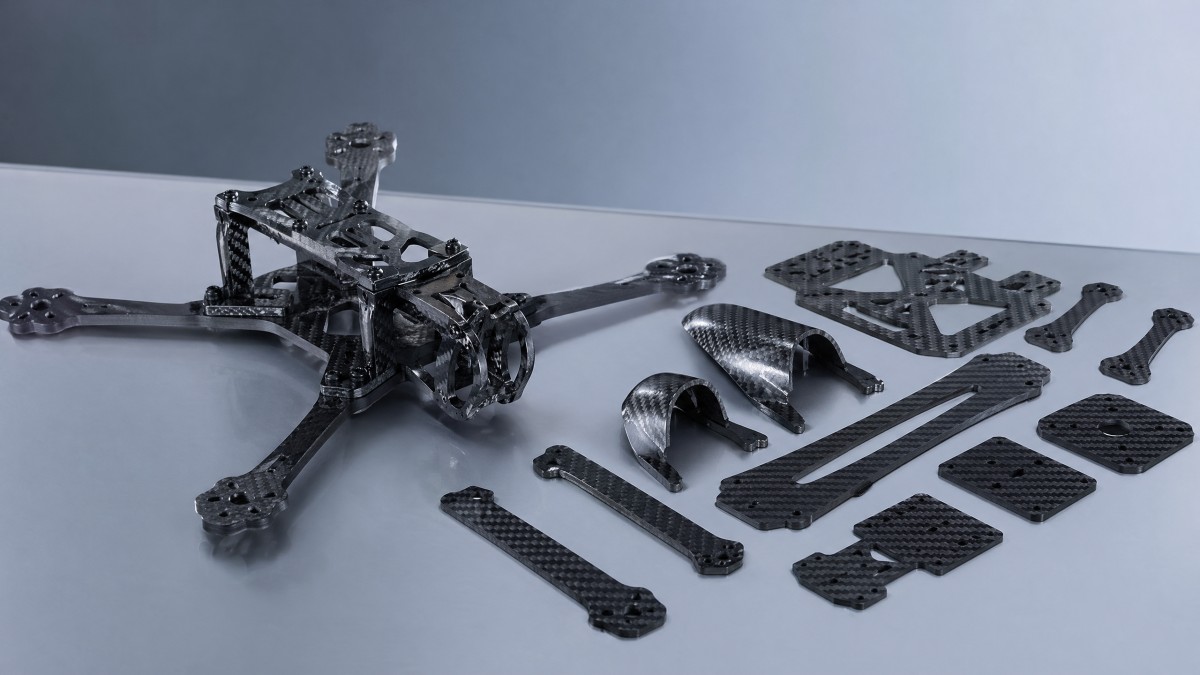
In carbon fiber drone frame wholesale, the manufacturing route affects more than part appearance. It changes laminate consistency, edge quality, hole stability, assembly repeatability, and how the frame behaves after hundreds of flight cycles. For information researchers and procurement teams, this is the point where marketing language must give way to measurable variables such as thickness tolerance, fiber orientation, resin content, and machining condition.
Prepreg frames are typically built from pre-impregnated carbon fabrics cured under controlled temperature and pressure. Plate cut frames are usually machined from finished carbon fiber sheets using CNC routers, waterjet systems, or similar cutting methods. Both routes can be valid, but they serve different commercial priorities: one emphasizes structural tuning and aerospace-style layup control, while the other often favors speed, standardization, and easier scaling for flat components.
For UAV and aerospace procurement, a bad match between design intent and frame process can create a 3-stage problem. First comes underperformance in stiffness-to-weight ratio. Second comes assembly deviation, especially around arm joints and mounting holes. Third comes lifecycle cost growth through rework, vibration tuning, and field replacement. Those downstream costs often matter more than the initial unit quote.
This is where TSV’s engineering-first perspective is useful. Instead of asking which option sounds premium, ask which option holds dimensional stability within the required range, supports the payload profile, and fits the target production batch. For small pilot runs, medium-volume commercial fleets, and specialized long-endurance systems, the answer may differ.
What wholesale buyers should define before comparing suppliers
- Flight profile: multirotor, fixed wing, or VTOL mission with vibration, endurance, and payload constraints clearly stated.
- Frame architecture: mostly flat plates, mixed plate-and-tube structures, or molded shell geometry with curved load paths.
- Batch expectation: prototype quantities, low-volume validation, or repeating orders over 3–12 months.
- Inspection points: hole diameter consistency, laminate thickness, edge finish, and hardware interface tolerance.
Without these four inputs, supplier quotations are difficult to compare on an equal basis. One vendor may quote lower because it assumes standard plate stock and relaxed cosmetic criteria, while another may price a tighter process window with more documentation and inspection. Procurement decisions become clearer when the RFQ is anchored in engineering conditions rather than generic quality claims.
Prepreg and plate cut compared by structure, process, and production logic
The most practical way to evaluate carbon fiber drone frame wholesale is to compare both methods across the dimensions that affect program success: geometry freedom, weight efficiency, tolerance behavior, tooling burden, and production pace. For UAV teams sourcing frames for mapping, inspection, agriculture, or security payloads, these factors drive the true fit between frame technology and mission profile.
In general, prepreg is stronger when the frame must integrate tailored fiber orientation, local reinforcement, or curved composite sections. Plate cut is stronger when the design relies on flat structural plates that can be machined repeatedly with relatively fast setup. The key is not which process is universally better, but which process is better aligned with the load path and order structure.
The table below summarizes the most relevant sourcing differences for engineering teams, operators, and buyers. The ranges are presented as common procurement logic rather than fixed guarantees, because actual outcomes depend on layup design, equipment condition, and inspection discipline.
A common mistake is to use plate cut pricing as the baseline for a frame that actually needs preload-sensitive joints, integrated stiffening, or local ply buildup around motor mounts. That usually results in a frame that is easy to buy but harder to tune. On the other hand, using prepreg for a simple flat-plate agricultural drone frame may add process cost without creating proportional mission value.
How each route behaves in commercial production
For prototype-to-small-batch programs, prepreg can support more tailored optimization, but buyers should expect longer validation loops of roughly 2–4 weeks when tooling, first article review, and laminate adjustments are included. Plate cut systems can often move faster in early iterations, especially when only arm length, mounting patterns, or center plate outlines are changing.
For recurring production, plate cut supply chains may achieve smoother replenishment if the design remains flat and standard. However, recurring consistency depends on sheet quality, cutter condition, and fixture discipline. Prepreg supply chains may require more process control, yet they can deliver superior structural repeatability when curing, ply stacking, and inspection are tightly documented.
Useful decision rule
If your frame value comes from shape complexity and directional reinforcement, start with prepreg. If your frame value comes from efficient machining of flat parts and rapid replenishment, start with plate cut. Then validate the choice using fatigue risk, hole stability, and assembly repeatability rather than unit price alone.
Which process fits which UAV application scenario?
Application context should guide process choice. A frame for hobby-level flying and a frame for industrial inspection do not face the same duty cycle, vibration environment, or maintenance expectation. Commercial buyers should classify the mission before reviewing quotations. In many cases, 3 variables matter most: flight hours per month, payload sensitivity, and field maintenance conditions.
For a vtol drone for pipeline inspection, structure quality is rarely a cosmetic issue. These aircraft often carry stabilized imaging, telemetry, and long-range communication modules. Their takeoff mode and transition behavior can introduce mixed loading across booms, center structures, and payload bays. If the frame needs local reinforcement around interfaces or non-flat aerodynamic sections, prepreg may provide the better engineering route.
For mapping drones or agricultural multirotors that use a more modular architecture with replaceable flat arms and center plates, plate cut components may simplify field service and inventory planning. Operators can hold spare sets, swap damaged parts faster, and avoid the cost of low-volume molded replacements. In these cases, easy serviceability can outweigh marginal gains in structural tailoring.
The table below helps translate application conditions into practical sourcing logic. It is especially useful for cross-functional teams where engineering, operations, and procurement need one decision framework instead of parallel assumptions.
A useful operational insight is that failure modes differ by process and mission. Plate cut parts may show edge wear, delamination risk around poorly machined holes, or tolerance drift if the stock plate varies across batches. Prepreg parts may be more sensitive to process variation during curing or layup if the supplier lacks disciplined ply control. The right question is not “Which is safer?” but “Which failure mode can your program inspect and manage?”
Three scenario checks before final approval
- Confirm whether the frame will see frequent disassembly, field repair, or operator-level part swaps every quarter or every season.
- Define whether sensor payload performance depends on lower vibration and more controlled stiffness distribution.
- Check whether the program must support low-volume customization now but repeated standardized orders within 6–12 months.
When these three checks are documented, the prepreg versus plate cut decision usually becomes much easier. It also prevents procurement from selecting on quote speed alone while engineering quietly absorbs the structural compromise later.
What technical parameters and procurement checkpoints should buyers review?
A serious carbon fiber drone frame wholesale review should include both material and process checkpoints. Buyers should ask for laminate description, nominal thickness range, hole-making method, edge finishing method, and inspection criteria. Even when suppliers do not disclose proprietary details, they should be able to explain the production route with enough clarity to support technical evaluation.
For flat plate-based frames, focus on whether the sheet is appropriate for the load case and whether the machining process protects edge integrity. For prepreg structures, focus on ply sequence discipline, cure process consistency, and reinforcement logic at joints and mounting areas. In both cases, final part quality depends on the combination of material quality and process control, not on carbon fiber branding alone.
The following checklist is useful in RFQ review, sample approval, and supplier qualification. It reduces ambiguity and creates a practical bridge between engineering intent and commercial negotiation.
Five core checkpoints for frame qualification
- Thickness tolerance: request the nominal target and acceptable range, especially if motor mounts, stack heights, or vibration isolators depend on controlled compression.
- Hole and slot quality: verify diameter consistency, burr control, and whether post-machining finishing is applied to reduce stress concentration.
- Fiber architecture: confirm whether the laminate is standard stock, quasi-isotropic style, or customized for directional reinforcement.
- Batch repeatability: ask how the supplier controls lot-to-lot consistency over repeat orders across 3–6 months.
- Inspection evidence: request sample photos, dimensional reports, or basic first article records tied to the drawing revision.
Lead time is another technical-commercial checkpoint. Buyers often see prototype promises of 7–15 days, but that estimate may not include drawing clarification, fixture updates, or rework after first fit verification. For custom prepreg structures, pilot runs can extend longer due to mold preparation and process stabilization. A realistic delivery review should separate sample lead time, pilot batch lead time, and recurring order lead time.
Standards and compliance questions worth raising
If the UAV program serves industrial or aerospace-adjacent markets, ask suppliers how they manage traceability, drawing revision control, and dimensional inspection. Depending on the project, teams may reference common frameworks such as ISO 9001 for quality management or AS9100-inspired expectations for aerospace discipline, even if the frame itself is not supplied under a formal aerospace contract. The goal is not to force unnecessary paperwork, but to confirm controlled manufacturing behavior.
How to balance cost, lead time, and lifecycle risk in wholesale orders
Unit price matters, but total landed cost for a drone frame program includes more than the invoice. Buyers should account for sampling loops, scrap risk, assembly labor, field replacement frequency, and the cost of carrying spares. A lower-cost plate cut frame may become expensive if frequent vibration tuning or fastener misalignment slows production. A higher-cost prepreg frame may be justified if it reduces rework and supports more stable payload performance.
The best sourcing model often depends on order rhythm. For one-time development builds, technical flexibility may be more valuable than the lowest price. For rolling quarterly procurement, repeatability and replenishment speed become more important. Decision-makers should therefore compare at least 3 commercial layers: prototype economics, pilot batch economics, and recurring production economics.
Another cost factor is design maturity. If the frame geometry will likely change after early flight tests, expensive custom composite tooling can become a sunk cost too soon. In such cases, teams sometimes begin with plate cut validation parts and migrate selected structures to prepreg once the load case is stable. This hybrid path can shorten iteration time while protecting the final performance target.
A practical cost-risk evaluation model
This kind of model keeps purchasing discussions grounded in engineering truth. That is consistent with TSV’s approach: cut through broad claims, look at tolerance, load path, and repeatability, and then choose the route that reduces trial-and-error cost. In hard-tech sourcing, the cheapest quote is not the same as the lowest-risk decision.
When a hybrid strategy makes sense
Many industrial UAV programs do not need a pure prepreg or pure plate cut strategy. A mixed architecture can be practical: prepreg for highly stressed or shaped components, and plate cut for replaceable flat structural members. This reduces tooling overhead while preserving performance where it matters most. It also gives procurement more flexibility when lead times tighten.
FAQ and next steps for buyers evaluating carbon fiber drone frame wholesale
Before finalizing a supplier, most teams still have a few recurring questions. These usually relate to lead time, order quantity, structural reliability, and how to compare quotes that seem inconsistent. The answers below are designed for research teams, operators, buyers, and enterprise decision-makers working in data-driven UAV sourcing.
How do I choose between prepreg and plate cut for a new UAV project?
Start with the load case and frame geometry. If your design depends on curved composite sections, localized reinforcement, or tuned ply direction, prepreg is often the better starting point. If the design is mainly flat plates with frequent iteration and straightforward replacement logic, plate cut may be more efficient. For early-stage programs, validate using 3 criteria: structural need, manufacturing repeatability, and expected order rhythm.
What lead time is common in carbon fiber drone frame wholesale?
For standard plate-based parts, sample lead times can be relatively short, sometimes around 7–15 days depending on drawing clarity and queue status. Custom prepreg structures often require longer because layup planning, tooling, and curing controls must be stabilized. For serious purchasing, ask for separate timelines for samples, pilot batches, and repeat production rather than a single average number.
What mistakes do procurement teams make most often?
The most common mistake is buying on material name alone. “Carbon fiber” does not describe the actual structural behavior of the frame. Teams also overlook hole quality, thickness control, and revision traceability. Another mistake is assuming prototype success guarantees production stability. A frame that fits once is not the same as a frame that repeats cleanly across multiple lots.
Why work with a data-driven technical partner?
Because aerospace-adjacent sourcing fails when decisions rely on adjectives instead of parameters. TSV’s position is built around engineering clarity: what tolerance range matters, what structural trade-off is acceptable, and what supply chain logic supports the program. That means fewer ambiguous comparisons, faster supplier filtering, and better support for spec sheet drafting, technical benchmarking, and procurement qualification.
Why choose us for deeper evaluation or sourcing support?
If your team is comparing prepreg and plate cut options for a carbon fiber drone frame wholesale program, we can help structure the decision around measurable checkpoints instead of generic promises. You can consult with us on frame architecture review, supplier comparison logic, tolerance questions, sample evaluation criteria, delivery planning, and whether your application is better served by a flat-plate solution, a prepreg structure, or a hybrid design.
Contact us when you need support with 6 practical topics: parameter confirmation, product selection, prototype versus mass-production strategy, delivery cycle planning, compliance and traceability expectations, and quotation comparison. For teams building inspection, mapping, agricultural, or VTOL platforms, that kind of structured guidance can shorten supplier qualification cycles and reduce costly trial-and-error in the field.
Search News
Hot Articles
- Carbon Fiber StructuresHow to Specify Aerospace Carbon Fiber Assemblies for Lightweight, Load-Bearing PartsJul 11, 2026
- Machine VisionXiaomi, Alibaba DAMO Academy Drive Open-Source Robotics Model Ecosystem, Lowering Algorithm Development Barriers for Overseas SMEs Adopting Chinese Robotics SolutionsMar 30, 2026
- Cobots & ArmsShanxi 'AI+' Conference Showcases Embodied Intelligence with Multinational Buyer Engagement: Key Industry ImplicationsMar 30, 2026
Popular Tags
Recommended News
 Jul 11, 2026How to Specify Aerospace Carbon Fiber Assemblies for Lightweight, Load-Bearing PartsAerospace carbon fiber assemblies: learn how to specify laminate design, load data, joining methods, and inspection controls for lighter, reliable load-bearing aerospace parts.Elena Rostova (UAV Systems Researcher)
 Mar 30, 2026Xiaomi, Alibaba DAMO Academy Drive Open-Source Robotics Model Ecosystem, Lowering Algorithm Development Barriers for Overseas SMEs Adopting Chinese Robotics SolutionsXiaomi & Alibaba DAMO Academy's open-source robotics models lower algorithm barriers for global SMEs. Boost efficiency in manufacturing, logistics & smart retail with ROS 2 compatible solutions.TSV Data Lab
 Mar 30, 2026Shanxi 'AI+' Conference Showcases Embodied Intelligence with Multinational Buyer Engagement: Key Industry ImplicationsShanxi 'AI+' Conference highlights embodied intelligence with Tesla, Ubtech & Jiantao showcasing multimodal robotics. 40+ global buyers validated tech on-site, creating new B2B channels for industrial automation & AI solutions.Chen Wei (Automation Lead Engineer)
 Mar 30, 2026Zhongguancun Unveils 6G Integrated Sensing-Computing-Intelligence Platform to Empower Embodied Robots for Global Industrial ApplicationsZhongguancun's new 6G platform revolutionizes industrial robotics with <10ms latency, empowering global automotive, logistics & port automation. Discover how this tech boosts China's smart manufacturing exports.TSV Data Lab
 Mar 30, 2026Mech-Mind Tianjin Embodied Intelligence R&D and Production Base Goes Live, Cutting Delivery Time by 20%–30% for Global Customized AMR+Vision SolutionsMech-Mind's Tianjin AMR+Vision production base cuts delivery time by 20%-30% for欧美 & Latin American markets. Discover how this PLd-certified facility accelerates customized robotics solutions for smart manufacturing and logistics.Chen Wei (Automation Lead Engineer)
 Mar 30, 2026Boao Forum Reveals 'Co-evolution of Big and Small Brains' Trend in Humanoid Robots, China's Embodied Intelligence Accelerates Adaptation to Overseas Manufacturing Service ScenariosDiscover how China's humanoid robots, featuring 'Co-evolution of Big and Small Brains,' are revolutionizing global manufacturing. Learn about Embodied Tian Gong 3.0's ISO compliance and overseas deployment at Boao Forum 2026.Chen Wei (Automation Lead Engineer)
 Mar 30, 2026China Railway Industrial Secures Patent for Embodied Robotics in Material Handling, Boosting High-Precision Delivery Capabilities for Overseas Infrastructure and Manufacturing ProjectsChina Railway Industrial's new patent for embodied robotics in material handling boosts high-precision delivery for global infrastructure & manufacturing. Discover how this innovation enhances logistics accuracy in automotive, rail transit & EPC projects.Chen Wei (Automation Lead Engineer)
 Oct 26, 2026AMAXiMAL Releases Open-Source TopMod 3D v3 With Claude AIExplore AMAXiMAL’s free, open-source TopMod 3D v3 with Claude AI assistance, topology-based modeling and plywood fabrication tools that connect complex designs to physical builds.Dr. Marcus Vance
 Oct 26, 2026Choosing a SCADA System Integrator Company: PLC Compatibility and Long-Term SupportChoose a scada system integrator company with proven PLC compatibility and reliable long-term support. Discover what to test, compare, and require before investing.Victor Lin (Chief Software Architect)
 Oct 25, 2026Hesai Leads Global ADAS Main Lidar Shipments in Yole’s 2026 ReportHesai led global ADAS main lidar shipments with a 43% share in 2025, according to Yole’s 2026 report. Explore what this ranking reveals about its automotive market position.TSV Data Lab
 Oct 25, 2026Choosing an Aerospace Materials Manufacturer: Quality and Traceability ChecksChoosing an aerospace materials manufacturer? Learn how to verify certifications, test reports, and lot traceability to qualify suppliers confidently and reduce costly sourcing risks.Dr. Marcus Vance
 Oct 24, 2026Guotai Haitong: Global Entry-Level 3D Printer Shipments Rose 39% in Q1 2026Entry-level 3D printer shipments rose 39% in Q1 2026, Guotai Haitong reports. Explore how AI, multicolor printing and print farms are shaping market growth.Dr. Marcus Vance
 Oct 24, 2026Choosing an Industrial Vision Inspection Supplier: Acceptance Tests That MatterChoose an industrial vision inspection supplier with confidence. Discover acceptance tests for defect detection, false rejects, production speed, and reliable part rejection before you buy.TSV Data Lab
 Oct 23, 2026US Navy Raises Gecko Robotics Contract Ceiling to $300M for Robotic Fleet MaintenanceUS Navy raises Gecko Robotics’ contract ceiling to $300M for Pacific Fleet robotic inspections. Explore potential opportunities for maintenance suppliers and key procurement considerations.Chen Wei (Automation Lead Engineer)
 Oct 23, 2026Choosing Industrial Sensing Systems for Global Plants: Protocol CompatibilityCompare industrial sensing systems international buyers can trust. Explore protocol compatibility, reduce integration risks, and select proven configurations for reliable global plant deployments.TSV Data Lab
 Oct 22, 2026KUKA Showcases Physical AI and iiQKA.AI Vision at NVIDIA GTC BerlinExplore KUKA’s Physical AI showcase at NVIDIA GTC Berlin and discover how iiQKA.AI Vision aims to simplify robotic vision integration and improve 2D and 3D scene recognition.TSV Data Lab
 Oct 22, 2026Robotic Machining of Advanced Composites: What Tolerances Are Achievable?Explore advanced materials machining robotics: discover what drives achievable composite tolerances and how to validate accuracy before investing in your next machining system.Dr. Marcus Vance
 Oct 21, 2026China’s Industrial Robot Exports Near RMB 10 Billion in First Nine Months of 2026China’s industrial robot exports neared RMB 10 billion in January–September 2026, with value rising faster than volume. Explore the data and what it could mean for suppliers.Chen Wei (Automation Lead Engineer)
 Oct 21, 2026Low-Latency Industrial Data Processing: Pricing and Key Cost DriversExplore industrial data latency price drivers, from edge hardware to integration and support. Learn how to compare quotes, verify performance, and avoid unnecessary costs.TSV Data Lab
 Oct 20, 2026KUKA Launches iiQKA.AI Vision to Simplify Industrial Image ProcessingKUKA iiQKA.AI Vision simplifies industrial image processing with controller-based 2D and 3D vision. Explore drag-and-drop setup for vision-guided automation.TSV Data Lab
 Oct 20, 2026Smart Industrial Edge Devices: Key Criteria for Legacy PLC IntegrationChoose smart industrial edge devices for legacy PLC integration. Discover key criteria for compatibility, data quality, security, and reliable collection without disrupting control.TSV Data Lab
 Oct 19, 2026Choosing a Radar Sensor by Application: Range, Resolution, and Field of ViewSimplify radar sensor application based product selection. Compare range, resolution, and field of view to avoid blind spots and choose with confidence. Explore the guide.TSV Data Lab
 Oct 18, 2026Comparing Material Options for Procurement: Specs, Costs, and Supply RisksExplore procurement oriented technical content on material options, specs, costs, and supply risks. Compare alternatives to cut hidden expenses and make confident sourcing decisions.Dr. Marcus Vance
 Oct 17, 20265-Axis CNC Positioning Accuracy: How to Interpret ISO 230-2 Test ResultsAssess 5 axis CNC machining positioning accuracy with ISO 230-2. Learn to interpret repeatability, reversal error, and test conditions to compare suppliers and make confident acceptance decisions.Dr. Marcus Vance























