Carbon Fiber Tensile Strength for Aerospace Is Not the Whole Story
Publication Date
author
Carbon fiber tensile strength aerospace metrics often dominate material discussions, but they rarely tell the full engineering story. For technical evaluators working in aerospace procurement, design validation, and supplier qualification, real performance depends on fatigue behavior, stiffness, impact resistance, layup quality, and process consistency under operational loads. This article examines why tensile strength alone is an incomplete benchmark—and what data actually supports better aerospace decisions.
Why carbon fiber tensile strength aerospace data can mislead procurement teams
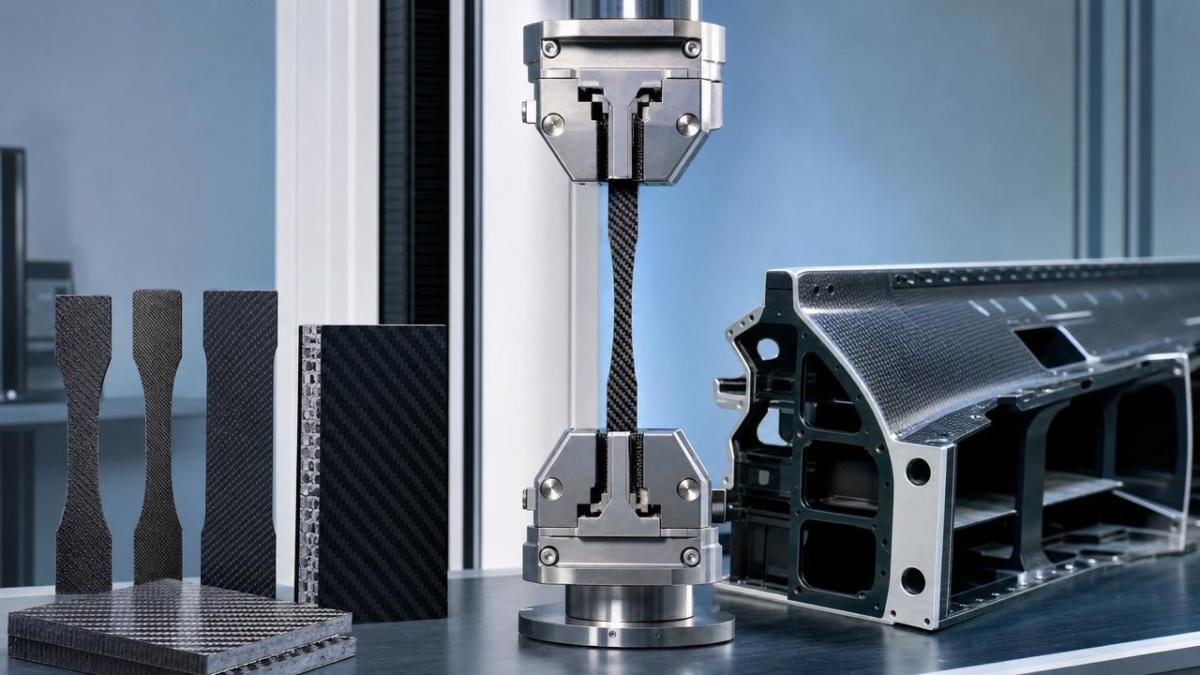
In aerospace sourcing, a single headline number is attractive because it simplifies comparison. Carbon fiber tensile strength aerospace values are easy to place on a datasheet, easy to rank, and easy to market. Yet technical evaluators know that aircraft structures, UAV frames, radomes, brackets, control surfaces, and interior composite parts do not fail only in pure axial tension under ideal lab conditions.
Aerospace components see mixed-mode loading, cyclic stress, temperature swings, moisture exposure, vibration, resin-rich zones, fastener-induced damage, and manufacturing variability. A laminate with impressive fiber tensile numbers may still underperform if fiber orientation is wrong, resin toughness is inadequate, void content is high, or the cure process is inconsistent across batches.
This is exactly where technical noise becomes dangerous. Many supplier claims highlight ultimate strength but omit compression-after-impact, open-hole performance, interlaminar shear, or fatigue knockdown factors. For procurement teams under time pressure, that gap can distort total life-cycle risk, qualification cost, and field reliability.
- A high tensile figure does not reveal how the laminate behaves after minor impact during handling or maintenance.
- It does not show stiffness stability, which directly affects deflection, flutter margins, and dimensional control.
- It does not capture process repeatability, which matters when scaling from prototype coupons to production parts.
- It rarely reflects joint behavior around holes, inserts, bonded interfaces, or multi-axial layups.
For a data-driven organization such as TechStat Vanguard, the right question is not “Which material advertises the highest number?” but “Which composite system preserves structural integrity within the real operating envelope and supply-chain reality?” That shift is what reduces trial-and-error costs and shortens qualification cycles.
What technical evaluators should measure beyond tensile strength
When carbon fiber tensile strength aerospace performance is discussed in isolation, core design risks remain hidden. A more useful evaluation framework combines constituent properties, laminate-level behavior, manufacturing controls, and service-environment durability. This broader view is essential for commercial aerospace, high-end UAV platforms, and precision structural assemblies.
Key performance categories that change the decision
- Tensile modulus: Strength indicates failure threshold; modulus indicates stiffness. In wings, arms, fairings, and sensor mounts, excessive deflection can be unacceptable long before ultimate failure.
- Compressive strength: Many aerospace parts fail in compression or buckling, especially thin laminates, sandwich skins, and structures subject to maneuver loads.
- Fatigue resistance: Repeated load cycles can reduce residual strength. Long-endurance UAVs and high-utilization airframes need fatigue data, not just static coupon results.
- Interlaminar properties: Delamination risk often drives failure in complex layups, bonded joints, and impact-prone zones.
- Impact tolerance: Composite parts may retain appearance while losing internal integrity. Barely visible impact damage is a major inspection and maintenance issue.
- Environmental stability: Moisture uptake, temperature cycling, and chemical exposure can shift performance over time.
The table below gives a practical procurement view of which parameters deserve attention when carbon fiber tensile strength aerospace data is being reviewed for supplier comparison.
For technical evaluation teams, the key lesson is simple: carbon fiber tensile strength aerospace screening should be an entry point, not a final decision gate. A valid decision matrix must reflect actual failure modes, not only brochure-friendly metrics.
How laminate design changes the meaning of carbon fiber tensile strength aerospace claims
A common purchasing mistake is to compare raw fiber properties as if they directly represented finished part performance. They do not. Aerospace structures are built from a system: fiber, matrix, layup, cure profile, tooling strategy, and quality control. Even when two suppliers cite similar carbon fiber tensile strength aerospace values, the resulting parts can behave very differently.
Coupon data versus part-level reality
Straight, unnotched coupons tested under controlled lab conditions provide useful baseline data. But aerospace components include holes, bonded seams, ply drops, curved sections, local thickness variation, and load introduction points. These features generate stress concentrations and out-of-plane effects that coupon strength alone cannot predict.
Layup architecture matters
Unidirectional plies maximize directional strength, but balanced or quasi-isotropic layups are often needed for multi-axis stability. Adding off-axis plies can reduce peak tensile values while improving overall structural usefulness. In other words, a lower headline tensile value may represent a better engineering decision if it delivers better torsional rigidity, impact tolerance, or dimensional robustness.
Process consistency matters even more in production
Vacuum quality, resin content control, cure temperature uniformity, autoclave pressure, debulk procedure, and trimming quality all influence final performance. A technically strong material system can still produce weak parts when process drift increases voids, waviness, or fiber misalignment. For supplier qualification, process capability can matter as much as nominal material strength.
- Request laminate-level data, not just fiber datasheets.
- Ask whether results are generated from cured laminate coupons representing the actual manufacturing route.
- Confirm whether values are dry, conditioned, room-temperature, hot-wet, or after thermal cycling.
- Review process records for repeatability, especially if the part will move from prototype to serial supply.
Which aerospace scenarios demand more than high tensile numbers?
Different aerospace applications place very different demands on composite performance. Carbon fiber tensile strength aerospace selection criteria should therefore be tied to mission profile, maintenance reality, and certification pathway rather than treated as a universal ranking factor.
The comparison below helps technical evaluators connect property priorities to use-case-specific risk.
This scenario-based approach is especially useful in cross-functional reviews, where design, sourcing, and quality teams need a shared language. It converts generic carbon fiber tensile strength aerospace discussion into part-specific engineering judgment.
What to ask suppliers during qualification and source selection
For technical evaluators, the practical challenge is turning broad performance concerns into clear sourcing questions. The goal is not to overwhelm suppliers with every possible test request. The goal is to identify whether the quoted material system and manufacturing route can support the intended aerospace duty cycle with acceptable qualification effort.
A focused supplier review checklist
- Ask whether the carbon fiber tensile strength aerospace values come from fiber-only data, prepreg data, or cured laminate data from the actual process route.
- Request supporting results for compression, interlaminar shear, impact tolerance, fatigue, and conditioned-environment performance where mission-critical.
- Confirm traceability of raw materials, batch control, storage conditions, and cure cycle records.
- Review inspection methods such as ultrasonic testing, dimensional verification, void assessment, and witness coupon practice.
- Check whether the supplier can support prototype iteration, low-volume production, and future scaling without changing the process baseline.
In many programs, the hidden cost is not material price. It is rework, retesting, documentation gaps, nonconformance investigations, or redesign caused by incomplete early evaluation. That is why disciplined supplier interrogation saves budget even when the quoted unit price appears higher.
Standards and compliance signals worth checking
The precise qualification route depends on the application, but technical evaluators typically review whether the supplier operates within recognized quality and aerospace process disciplines. General references may include AS9100-oriented quality management expectations, material test method alignment, lot traceability, first article discipline, and documentation rigor suited to aerospace procurement.
A compliance label alone is not enough. What matters is whether the supplier can connect records, inspection evidence, process control, and test results into a coherent qualification package. This is where data transparency becomes a real commercial advantage.
Common misconceptions about carbon fiber tensile strength aerospace decisions
“The highest tensile strength always means the best aerospace material”
Not necessarily. If the application is deflection-sensitive, a higher modulus laminate may outperform a stronger but more flexible option. If maintenance handling is rough, better damage tolerance may matter more than peak strength. If the part is joint-dominated, open-hole and bearing performance may control design allowables.
“Coupon numbers are enough for procurement approval”
Coupon results are necessary but insufficient. Aerospace parts should be reviewed in the context of geometry, loading, joining method, manufacturing route, and service environment. Otherwise, design allowables can be too optimistic and qualification risk increases late in the program.
“If two suppliers use similar carbon fiber, part performance should be close”
Process discipline can create large differences. Fiber waviness, resin distribution, cure uniformity, trimming damage, and hole quality all influence final part capability. Equivalent raw inputs do not guarantee equivalent aerospace outputs.
“A lower-cost composite option is cheaper overall”
Only if it survives validation and field use without extensive retesting or redesign. Procurement should compare total qualification cost, lead-time stability, documentation quality, and failure investigation risk, not just material price per kilogram or part piece price.
FAQ: how technical evaluators can use carbon fiber tensile strength aerospace data correctly
How should I compare carbon fiber tensile strength aerospace datasheets from different suppliers?
Start by confirming whether the values refer to raw fiber, prepreg, or cured laminate coupons. Then align the test condition, fiber orientation, environmental state, and specimen type. After that, compare supporting data for modulus, compression, fatigue, impact, and interlaminar behavior. Without these details, side-by-side ranking is unreliable.
Which parameter is most commonly overlooked in aerospace composite evaluation?
Stiffness is frequently underestimated, especially in payload frames, control structures, and sensor supports. A component may be strong enough not to break, yet still fail the mission because deflection, vibration, or thermal movement exceeds system tolerances.
When does fatigue data become mandatory rather than optional?
Fatigue data becomes essential when the part sees repeated flight cycles, continuous vibration, long loiter missions, or repeated launch-and-recovery loads. In such cases, static carbon fiber tensile strength aerospace data can significantly overstate service durability.
What documents should procurement request before moving to supplier approval?
Request material traceability records, laminate test summaries, cure-process documentation, inspection plans, dimensional control methods, non-destructive testing approach where relevant, and any available environmental or fatigue evidence related to the intended use case. This shortens later qualification discussions.
Why choose us for aerospace material benchmarking and evaluation support
TechStat Vanguard exists for teams that need engineering truth rather than marketing abstraction. When carbon fiber tensile strength aerospace claims look similar on paper, we help technical evaluators interpret what the numbers actually mean in procurement, validation, and supplier risk terms. Our approach is built around benchmark clarity, traceable parameter comparison, and application-specific decision support.
You can consult us for practical evaluation topics such as parameter confirmation, laminate comparison logic, supplier documentation review, qualification checklist design, delivery-risk screening, standards-oriented procurement questions, and technical communication structure for RFQs and spec sheets. If your team is comparing multiple composite options, preparing a sourcing decision, or trying to reduce validation uncertainty, TSV can help turn scattered data into a defensible engineering decision path.
- Clarify which carbon fiber tensile strength aerospace metrics are decision-relevant for your exact application.
- Review supplier claims for missing fatigue, stiffness, impact, or process-repeatability data.
- Build a cleaner comparison framework for samples, quotes, lead times, and qualification evidence.
- Discuss custom benchmarking priorities, sample validation needs, certification-related concerns, and quote communication requirements.
In aerospace, parameters do not lie, but isolated parameters can mislead. If your next decision depends on more than a brochure number, contact TSV to discuss the data that actually governs structural confidence, supplier credibility, and program risk.
Search News
Hot Articles
- Carbon Fiber StructuresHow to Specify Aerospace Carbon Fiber Assemblies for Lightweight, Load-Bearing PartsJul 11, 2026
- Machine VisionXiaomi, Alibaba DAMO Academy Drive Open-Source Robotics Model Ecosystem, Lowering Algorithm Development Barriers for Overseas SMEs Adopting Chinese Robotics SolutionsMar 30, 2026
- Cobots & ArmsShanxi 'AI+' Conference Showcases Embodied Intelligence with Multinational Buyer Engagement: Key Industry ImplicationsMar 30, 2026
Popular Tags
Recommended News
 Jul 11, 2026How to Specify Aerospace Carbon Fiber Assemblies for Lightweight, Load-Bearing PartsAerospace carbon fiber assemblies: learn how to specify laminate design, load data, joining methods, and inspection controls for lighter, reliable load-bearing aerospace parts.Elena Rostova (UAV Systems Researcher)
 Mar 30, 2026Xiaomi, Alibaba DAMO Academy Drive Open-Source Robotics Model Ecosystem, Lowering Algorithm Development Barriers for Overseas SMEs Adopting Chinese Robotics SolutionsXiaomi & Alibaba DAMO Academy's open-source robotics models lower algorithm barriers for global SMEs. Boost efficiency in manufacturing, logistics & smart retail with ROS 2 compatible solutions.TSV Data Lab
 Mar 30, 2026Shanxi 'AI+' Conference Showcases Embodied Intelligence with Multinational Buyer Engagement: Key Industry ImplicationsShanxi 'AI+' Conference highlights embodied intelligence with Tesla, Ubtech & Jiantao showcasing multimodal robotics. 40+ global buyers validated tech on-site, creating new B2B channels for industrial automation & AI solutions.Chen Wei (Automation Lead Engineer)
 Mar 30, 2026Zhongguancun Unveils 6G Integrated Sensing-Computing-Intelligence Platform to Empower Embodied Robots for Global Industrial ApplicationsZhongguancun's new 6G platform revolutionizes industrial robotics with <10ms latency, empowering global automotive, logistics & port automation. Discover how this tech boosts China's smart manufacturing exports.TSV Data Lab
 Mar 30, 2026Mech-Mind Tianjin Embodied Intelligence R&D and Production Base Goes Live, Cutting Delivery Time by 20%–30% for Global Customized AMR+Vision SolutionsMech-Mind's Tianjin AMR+Vision production base cuts delivery time by 20%-30% for欧美 & Latin American markets. Discover how this PLd-certified facility accelerates customized robotics solutions for smart manufacturing and logistics.Chen Wei (Automation Lead Engineer)
 Mar 30, 2026Boao Forum Reveals 'Co-evolution of Big and Small Brains' Trend in Humanoid Robots, China's Embodied Intelligence Accelerates Adaptation to Overseas Manufacturing Service ScenariosDiscover how China's humanoid robots, featuring 'Co-evolution of Big and Small Brains,' are revolutionizing global manufacturing. Learn about Embodied Tian Gong 3.0's ISO compliance and overseas deployment at Boao Forum 2026.Chen Wei (Automation Lead Engineer)
 Mar 30, 2026China Railway Industrial Secures Patent for Embodied Robotics in Material Handling, Boosting High-Precision Delivery Capabilities for Overseas Infrastructure and Manufacturing ProjectsChina Railway Industrial's new patent for embodied robotics in material handling boosts high-precision delivery for global infrastructure & manufacturing. Discover how this innovation enhances logistics accuracy in automotive, rail transit & EPC projects.Chen Wei (Automation Lead Engineer)
 Sep 28, 2026Spindle Runout Measurement in Germany: DIN Standards, Methods, and Acceptance LimitsSpindle runout measurement Germany: explore DIN standards, proven methods, acceptance limits, and audit-ready practices for reliable machining quality.Dr. Marcus Vance
 Sep 27, 2026How to Select Wall-Mount Edge Devices for Space-Constrained Factory NetworksWall mount edge devices for space-constrained factories: evaluate workload, thermal design, power resilience, cable access, and network reliability for smarter deployments.TSV Data Lab
 Sep 26, 2026Machining Tolerance Analysis: How to Set Limits That Meet Function and Cost TargetsMachining tolerance analysis: learn how to set functional limits, control tolerance stacks, reduce inspection risk, and balance precision with production cost.Dr. Marcus Vance
 Sep 25, 2026How to Evaluate an Industrial Infrastructure Data Platform for Multi-Site OperationsIndustrial infrastructure data platform evaluation guide for multi-site operations: compare data quality, edge resilience, interoperability, governance, and scalable proof-of-value criteria.Victor Lin (Chief Software Architect)
 Sep 24, 2026How to Select Machine Vision Optics for Accurate Inspection at Different Working DistancesMachine vision optics selection guide for accurate inspection at every working distance. Compare FOV, pixel scale, DOF, distortion, lighting, and telecentric options.TSV Data Lab
 Sep 23, 2026How to Evaluate a Machine Vision System Integrator for High-Speed Inspection LinesChoose a machine vision system integrator with proven expertise in high-speed inspection, reliable reject timing, robust optics, and measurable acceptance criteria.TSV Data Lab
 Sep 28, 2026When is a SCADA API the right choice for connecting plant systems?SCADA API guide: learn when governed plant data integration improves traceability, security, and scalability—without compromising real-time control.Victor Lin (Chief Software Architect)
 Sep 27, 2026How SCADA data integration improves traceability across production linesSCADA data integration connects production-line data to improve traceability, accelerate quality investigations, and strengthen safety decisions.Victor Lin (Chief Software Architect)
 Sep 26, 2026What to define before starting SCADA integration planningSCADA integration planning starts with clear scope, control boundaries, data models, cybersecurity, and testing. Discover the definitions that reduce risk and costly rework.Victor Lin (Chief Software Architect)
 Sep 25, 2026How a smart factory with Industrial IoT reduces production blind spotsDiscover how a smart factory with Industrial IoT turns real-time machine, quality, and workflow data into actionable insights that reduce production blind spots and delivery risks.Victor Lin (Chief Software Architect)
 Sep 24, 2026When does Industrial IoT make smart manufacturing easier to scale?Smart manufacturing Industrial IoT scales when trusted data, interoperable systems, and secure workflows turn connected assets into measurable gains.TSV Data Lab
 Sep 23, 2026What drives ultra-precision machining cost at 1-micron tolerance?Ultra precision machining cost per part at 1 micron tolerance depends on process, material, metrology, and yield. Learn how to compare quotes confidently.Dr. Marcus Vance
 Sep 22, 2026Drone Engine-T550CC Applications: Build the UAV Power System Around the MissionAn application guide for Drone Engine-T550CC integration, covering payload planning, airframe matching, cooling, fuel, vibration, test procedures, documentation, and service preparation.Elena Rostova (UAV Systems Researcher)
 Sep 22, 2026How to Evaluate Industrial Edge Computing Vendors for Factory DeploymentIndustrial edge computing vendor evaluation guide for factories: compare latency, protocol fit, reliability, security, and lifecycle support before deployment.TSV Data Lab
 Sep 21, 2026Drone Payload Integration: Matching Power, Data, and Center of Gravity for Reliable FlightsDrone payload integration made practical: balance power, data, center of gravity, and endurance to build safer, more reliable mission-ready flights.Elena Rostova (UAV Systems Researcher)
 Sep 20, 2026Autonomous Navigation Pricing: Cost Drivers and Budget Benchmarks for AMR ProjectsAutonomous navigation price explained: compare AMR cost drivers, software, sensors, integration, safety, and lifecycle budgets to build a scalable project plan.Chen Wei (Automation Lead Engineer)
 Sep 19, 2026How to Scope Automation Integration Services for Multi-System Factory ProjectsAutomation integration services: learn how to scope multi-system factory projects with clear workflows, interface contracts, safety boundaries, and acceptance criteria.Victor Lin (Chief Software Architect)