CATL Launches Kirin Condensed-Phase Battery (Apr 2026)
Publication Date
author
On April 19, 2026, Contemporary Amperex Technology Co. Limited (CATL) unveiled its Kirin condensed-phase battery — a cell-level energy density of 500 Wh/kg and claimed range of 1,500 km, certified to both UL 2580 and GB/T 38031 standards. The launch signals heightened technical demands for structural components in high-end EV battery systems, particularly affecting suppliers of carbon fiber battery enclosures, high-precision 5-axis CNC thermal management brackets, and industrial 3D-printed lightweight battery trays. Companies engaged in advanced automotive materials, precision machining, and additive manufacturing for EV powertrains should monitor implications closely.
Event Overview
On April 19, 2026, CATL officially released the Kirin condensed-phase battery. Publicly confirmed specifications include an energy density of 500 Wh/kg, a vehicle-level range of 1,500 km, and dual safety certification under UL 2580 (U.S. electric vehicle battery standard) and GB/T 38031 (China’s electric vehicle traction battery safety requirements). CATL stated the technology is entering accelerated integration into European premium EV supply chains. No further performance metrics, commercial timelines, or OEM partnerships were disclosed in the initial release.
Industries Affected
Carbon fiber composite manufacturers (battery enclosure segment):
Why affected: The Kirin battery’s higher energy density and thermal behavior require enclosures with improved strength-to-weight ratio and dimensional stability under dynamic thermal cycling. Current aluminum or steel-based designs may not meet new mechanical tolerance or thermal expansion thresholds.
Impact areas: Increased demand for validated carbon fiber-reinforced polymer (CFRP) solutions with certified fire resistance, low outgassing, and long-term creep resistance under sustained load.
Precision machining service providers (thermal management hardware):
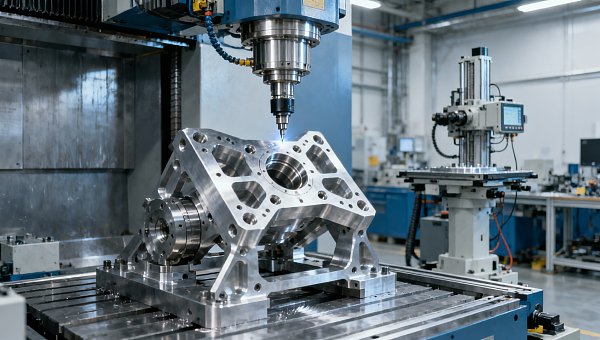
Why affected: CATL explicitly cited demand for high-precision 5-axis CNC-machined thermal management brackets — indicating tighter geometric tolerances (e.g., sub-50 µm), stricter surface finish requirements, and higher material consistency (e.g., aerospace-grade aluminum alloys or copper alloys) to ensure uniform heat dissipation across high-energy cells.
Impact areas: Need for recalibration of existing CNC workflows, expanded metrology validation protocols, and potential requalification of tooling and coolant systems.
Industrial additive manufacturing (AM) system integrators and part producers (battery tray segment):
Why affected: The reference to ‘industrial 3D printed light-weight trays’ implies adoption of metal AM (e.g., laser powder bed fusion) for topology-optimized, load-bearing structures — moving beyond prototyping into serial production.
Impact areas: Greater emphasis on batch-to-batch repeatability, NDT compliance (e.g., CT scanning per ASTM E2904), and qualification against automotive functional safety standards (e.g., ISO 26262 ASIL-B for mounting interfaces).
What Relevant Companies or Practitioners Should Focus On
Monitor official technical documentation and certification updates from CATL and EU type-approval bodies
CATL has not yet published detailed interface specifications (e.g., bolt patterns, thermal interface materials, vibration test profiles). Until those are released, procurement and design decisions remain preliminary. Watch for updates tied to upcoming EU Whole Vehicle Type Approval (WVTA) submissions involving Kirin-equipped platforms.
Assess current capacity alignment with newly emphasized material and process requirements
Suppliers should audit whether their existing carbon fiber layup processes, 5-axis CNC machine tool calibration records, or metal AM build parameters meet the implied dimensional stability and thermal cycling benchmarks referenced in the announcement — not just static mechanical specs.
Distinguish between near-term qualification activity and volume production timelines
The phrase ‘accelerating integration into European premium EV supply chains’ reflects ongoing technical engagement, not confirmed series production orders. Companies should treat this as a signal to initiate joint development discussions — not as a trigger for immediate CAPEX expansion without OEM confirmation.
Prepare cross-functional alignment between R&D, quality assurance, and supply chain teams
Meeting the stated requirements (e.g., dual-certified safety, thermal stability, lightweighting) will require synchronized updates to material traceability systems, first-article inspection plans, and supplier PPAP packages — especially where multi-material assemblies (e.g., CFRP + machined bracket + AM tray) are involved.
Editorial Perspective / Industry Observation
From an industry perspective, the Kirin condensed-phase battery launch is best understood as a technical benchmarking event rather than an immediate commercial inflection point. Analysis来看, its significance lies less in near-term volume impact and more in how it resets minimum viable capability thresholds for structural battery system suppliers — particularly outside China. Observation来看, the explicit naming of three distinct component categories (carbon fiber enclosures, 5-axis CNC brackets, industrial 3D-printed trays) suggests CATL is treating mechanical integration as a co-developed system layer, not just a packaging afterthought. Current更值得关注的是 whether this signals a broader shift toward ‘mechanical-electrochemical co-design’ in next-generation battery systems — one that elevates structural component suppliers from Tier 2 to strategic co-engineering partners.
Concluding, this announcement does not represent a finalized product rollout but rather a calibrated signal to the global EV supply chain: higher energy density at scale demands commensurately higher precision, stability, and systems-level integration in supporting hardware. It is more accurately interpreted as a specification horizon — defining what will be required, not yet confirming what is already deployed.
Source Attribution:
Main source: Official CATL announcement dated April 19, 2026.
Note: Technical claims (e.g., 500 Wh/kg, 1,500 km range, UL 2580/GB/T 38031 certification) are as stated in the release. Commercial deployment status, OEM adoption details, and full test condition disclosures remain pending and require ongoing observation.
Search News
Hot Articles
- Carbon Fiber StructuresHow to Specify Aerospace Carbon Fiber Assemblies for Lightweight, Load-Bearing PartsJul 11, 2026
- Machine VisionXiaomi, Alibaba DAMO Academy Drive Open-Source Robotics Model Ecosystem, Lowering Algorithm Development Barriers for Overseas SMEs Adopting Chinese Robotics SolutionsMar 30, 2026
- Cobots & ArmsShanxi 'AI+' Conference Showcases Embodied Intelligence with Multinational Buyer Engagement: Key Industry ImplicationsMar 30, 2026
Popular Tags
Recommended News
 Jul 11, 2026How to Specify Aerospace Carbon Fiber Assemblies for Lightweight, Load-Bearing PartsAerospace carbon fiber assemblies: learn how to specify laminate design, load data, joining methods, and inspection controls for lighter, reliable load-bearing aerospace parts.Elena Rostova (UAV Systems Researcher)
 Mar 30, 2026Xiaomi, Alibaba DAMO Academy Drive Open-Source Robotics Model Ecosystem, Lowering Algorithm Development Barriers for Overseas SMEs Adopting Chinese Robotics SolutionsXiaomi & Alibaba DAMO Academy's open-source robotics models lower algorithm barriers for global SMEs. Boost efficiency in manufacturing, logistics & smart retail with ROS 2 compatible solutions.TSV Data Lab
 Mar 30, 2026Shanxi 'AI+' Conference Showcases Embodied Intelligence with Multinational Buyer Engagement: Key Industry ImplicationsShanxi 'AI+' Conference highlights embodied intelligence with Tesla, Ubtech & Jiantao showcasing multimodal robotics. 40+ global buyers validated tech on-site, creating new B2B channels for industrial automation & AI solutions.Chen Wei (Automation Lead Engineer)
 Mar 30, 2026Zhongguancun Unveils 6G Integrated Sensing-Computing-Intelligence Platform to Empower Embodied Robots for Global Industrial ApplicationsZhongguancun's new 6G platform revolutionizes industrial robotics with <10ms latency, empowering global automotive, logistics & port automation. Discover how this tech boosts China's smart manufacturing exports.TSV Data Lab
 Mar 30, 2026Mech-Mind Tianjin Embodied Intelligence R&D and Production Base Goes Live, Cutting Delivery Time by 20%–30% for Global Customized AMR+Vision SolutionsMech-Mind's Tianjin AMR+Vision production base cuts delivery time by 20%-30% for欧美 & Latin American markets. Discover how this PLd-certified facility accelerates customized robotics solutions for smart manufacturing and logistics.Chen Wei (Automation Lead Engineer)
 Mar 30, 2026Boao Forum Reveals 'Co-evolution of Big and Small Brains' Trend in Humanoid Robots, China's Embodied Intelligence Accelerates Adaptation to Overseas Manufacturing Service ScenariosDiscover how China's humanoid robots, featuring 'Co-evolution of Big and Small Brains,' are revolutionizing global manufacturing. Learn about Embodied Tian Gong 3.0's ISO compliance and overseas deployment at Boao Forum 2026.Chen Wei (Automation Lead Engineer)
 Mar 30, 2026China Railway Industrial Secures Patent for Embodied Robotics in Material Handling, Boosting High-Precision Delivery Capabilities for Overseas Infrastructure and Manufacturing ProjectsChina Railway Industrial's new patent for embodied robotics in material handling boosts high-precision delivery for global infrastructure & manufacturing. Discover how this innovation enhances logistics accuracy in automotive, rail transit & EPC projects.Chen Wei (Automation Lead Engineer)
 Oct 21, 2026China’s Industrial Robot Exports Near RMB 10 Billion in First Nine Months of 2026China’s industrial robot exports neared RMB 10 billion in January–September 2026, with value rising faster than volume. Explore the data and what it could mean for suppliers.Chen Wei (Automation Lead Engineer)
 Oct 21, 2026Low-Latency Industrial Data Processing: Pricing and Key Cost DriversExplore industrial data latency price drivers, from edge hardware to integration and support. Learn how to compare quotes, verify performance, and avoid unnecessary costs.TSV Data Lab
 Oct 20, 2026KUKA Launches iiQKA.AI Vision to Simplify Industrial Image ProcessingKUKA iiQKA.AI Vision simplifies industrial image processing with controller-based 2D and 3D vision. Explore drag-and-drop setup for vision-guided automation.TSV Data Lab
 Oct 20, 2026Smart Industrial Edge Devices: Key Criteria for Legacy PLC IntegrationChoose smart industrial edge devices for legacy PLC integration. Discover key criteria for compatibility, data quality, security, and reliable collection without disrupting control.TSV Data Lab
 Oct 19, 2026Choosing a Radar Sensor by Application: Range, Resolution, and Field of ViewSimplify radar sensor application based product selection. Compare range, resolution, and field of view to avoid blind spots and choose with confidence. Explore the guide.TSV Data Lab
 Oct 18, 2026Comparing Material Options for Procurement: Specs, Costs, and Supply RisksExplore procurement oriented technical content on material options, specs, costs, and supply risks. Compare alternatives to cut hidden expenses and make confident sourcing decisions.Dr. Marcus Vance
 Oct 17, 20265-Axis CNC Positioning Accuracy: How to Interpret ISO 230-2 Test ResultsAssess 5 axis CNC machining positioning accuracy with ISO 230-2. Learn to interpret repeatability, reversal error, and test conditions to compare suppliers and make confident acceptance decisions.Dr. Marcus Vance
 Oct 16, 2026Choosing a Rugged Edge AI Box Supplier: Thermal Tests and Lifecycle SupportChoose a rugged edge AI box supplier with proven thermal performance and reliable lifecycle support. Discover the tests and commitments to verify before you buy.TSV Data Lab
 Oct 15, 2026R&D Cost Reduction Services: How to Evaluate Fees, Savings, and ROIEvaluate R&D cost reduction services with confidence. Compare fees, verify savings, and calculate ROI without compromising performance. Discover how to choose a provider that delivers real value.Chen Wei (Automation Lead Engineer)
 Oct 20, 2026How Do You Measure Industrial IoT Gateway Latency Under Load?Measure industrial IoT gateway latency under load with reliable timestamps, realistic traffic, and tail-latency analysis. Discover how to expose bottlenecks and choose the right gateway.TSV Data Lab
 Oct 19, 2026How Do You Verify That Precision Machined Parts Meet Tolerances?Master precision machining tolerance verification with the right tools, datum setups, and acceptance rules. Learn how to validate parts confidently and reduce costly inspection errors.Dr. Marcus Vance
 Oct 18, 2026What Should an AS9100 Machining Supplier Checklist Include?Build an AS9100 machining supplier checklist that verifies capability, traceability, inspection, and outsourced processes. Discover what to check before approving your next aerospace supplier.Dr. Marcus Vance
 Oct 17, 2026How Should You Interpret Industrial Robot Repeatability Specs?Decode industrial robot repeatability specifications, understand ISO 9283 test conditions, and avoid costly selection mistakes. Learn how to verify performance for your process.Chen Wei (Automation Lead Engineer)
 Oct 16, 2026How Can You Fairly Compare MTBF Across Industrial Servo Motors?Make a fair industrial servo motor MTBF comparison with matched operating profiles, failure criteria, and confidence bounds. Discover how to assess reliability beyond advertised numbers.Chen Wei (Automation Lead Engineer)
 Oct 15, 2026How Should You Compare TechStat Vanguard 5-Axis CNC Tolerances?TechStat Vanguard 5-axis CNC tolerance comparison: learn how to verify part accuracy, assess inspection evidence, and choose suppliers that reliably meet your drawing requirements.Dr. Marcus Vance
 Oct 14, 2026Drone Frame Composites: Carbon Fiber vs. Fiberglass for Weight and StiffnessExplore drone structural materials composites: compare carbon fiber and fiberglass for weight, stiffness, cost, and antenna compatibility. Find the right material for your drone frame.Elena Rostova (UAV Systems Researcher)
 Oct 13, 2026Smart Cameras vs. PC-Based Machine Vision: Which Fits High-Speed Inspection?This industrial product comparison for machine vision weighs smart cameras vs. PC-based systems on latency, throughput, and cost. Discover your best fit for high-speed inspection.TSV Data Lab