What to check before choosing a ToF depth camera wholesale
Publication Date
author
Before committing to tof depth camera wholesale, technical evaluators need more than supplier promises—they need verified data on depth accuracy, interference resistance, integration compatibility, and long-term reliability. In a market crowded with vague specifications, the right decision starts with measurable engineering benchmarks that reduce sourcing risk and prevent costly deployment failures.
Why a checklist matters before choosing tof depth camera wholesale
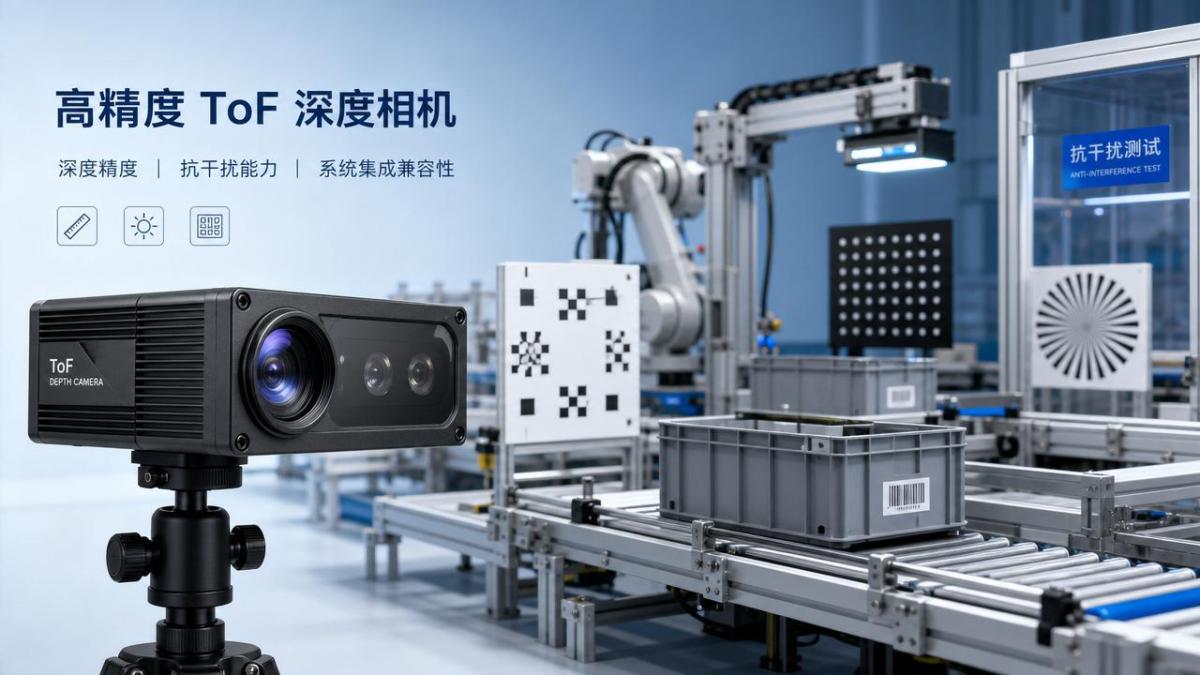
A ToF camera may look similar across catalogs, yet deployment outcomes differ sharply once lighting, target material, heat, vibration, and software integration enter the equation.
That is why tof depth camera wholesale decisions should follow a checklist, not a brochure comparison. It forces every candidate through the same engineering filters.
This approach is especially useful in cross-industry sourcing, where robotics, automation, UAV payloads, smart retail, logistics, and industrial inspection each stress different camera limits.
Core checklist for evaluating tof depth camera wholesale
- Verify depth accuracy at multiple distances, not only at one lab point, and request raw error curves across near, mid, and maximum sensing ranges.
- Check repeatability under continuous operation, because stable frame-to-frame depth output matters more than a single best-case precision claim.
- Test ambient light immunity under sunlight, warehouse LEDs, reflective floors, and mixed illumination to confirm real anti-interference performance.
- Compare field of view, blind zone, and edge distortion together, since wide coverage often changes effective usable depth quality.
- Confirm frame rate at full resolution and full depth processing, not reduced modes that hide throughput limitations.
- Review multi-camera interference behavior if several units will run nearby, especially in automation cells or dense smart-space deployments.
- Inspect SDK maturity, API documentation, sample code, and middleware support for ROS, Linux, Windows, or edge AI platforms.
- Validate synchronization options such as hardware trigger, timestamp consistency, and IMU alignment for robotics, navigation, and motion analysis.
- Audit thermal stability by checking depth drift after long runtime, because sensor heating can silently degrade measurement reliability.
- Examine enclosure grade, connector robustness, and cable strain resistance when the tof depth camera wholesale project targets harsh field conditions.
- Request compliance data for EMC, safety, and environmental standards to reduce certification delays in regulated deployments.
- Study lifecycle guarantees, firmware update policy, and component continuity to avoid redesign risk caused by unannounced hardware changes.
Key technical metrics to request from every supplier
For any tof depth camera wholesale review, ask for measurable parameters instead of generic quality statements. The most useful data points are easy to compare side by side.
- Depth error in millimeters at fixed distances
- Minimum and maximum operating range
- Resolution, frame rate, and latency
- Modulation frequency and interference control method
- Power draw, thermal profile, and startup time
- Ingress protection, shock, and vibration rating
- SDK version history and supported operating systems
- Lead time, batch consistency, and warranty terms
Application-specific checks for tof depth camera wholesale
Industrial automation and robotics
In robot guidance, pallet detection, and bin picking, usable depth quality matters more than headline range. Reflective metal, dark packaging, and conveyor motion often expose weak sensors quickly.
For automation-focused tof depth camera wholesale, prioritize trigger control, low latency, edge processing support, and stable performance near motors, inverters, and industrial lighting.
Smart logistics and warehousing
Volume measurement, obstacle avoidance, and occupancy monitoring require wide-area coverage with dependable accuracy over shifting distances. Dust, temperature change, and long operation hours are common stress factors.
The best tof depth camera wholesale option for logistics should prove stable depth maps under variable aisle lighting and support scalable installation across many nodes.
UAV, mobile platforms, and outdoor sensing
On drones and autonomous vehicles, weight, power, vibration tolerance, and sunlight resistance become decisive. A good indoor camera may fail once exposed to harsh outdoor reflectance conditions.
In this scenario, tof depth camera wholesale evaluation should include flight or mobile tests, not only bench measurements, with attention to timestamp accuracy and motion-induced depth artifacts.
Retail, access control, and people counting
Ceiling-mounted installations need reliable body segmentation, privacy-friendly depth output, and minimal maintenance. Here, software tools and long-term calibration stability often outweigh raw resolution.
A scalable tof depth camera wholesale program for smart spaces should also consider housing design, mounting flexibility, and firmware consistency across large deployments.
Commonly overlooked risks
Sample performance does not equal mass-batch consistency
A strong engineering sample can hide unstable factory calibration. Ask whether batch-to-batch testing data exists and whether optical alignment is checked at scale.
Depth data format may complicate downstream software
Some cameras output usable point clouds immediately, while others require additional processing. That difference affects compute load, latency, and integration cost.
Cable, connector, and mounting details are underestimated
Even a strong sensor fails in practice if connectors loosen, cable lengths limit installation, or the mount shifts calibration under vibration.
Firmware changes can alter performance unexpectedly
During tof depth camera wholesale sourcing, confirm version control, rollback options, and release notes. A firmware update can modify filtering behavior or timing characteristics.
A practical execution path
Use a structured comparison matrix before issuing any volume order. Keep the same targets, lighting, distances, and runtime conditions across all candidates.
- Define application thresholds for range, error, latency, and environment.
- Shortlist suppliers using published specifications and interface fit.
- Run controlled bench tests with raw data capture.
- Run field trials in the intended operating environment.
- Review lifecycle support, firmware policy, and production lead time.
- Approve wholesale volume only after sample and batch criteria align.
This method keeps tof depth camera wholesale decisions grounded in engineering evidence, not sales language. It also shortens validation cycles and lowers redesign risk later.
Final takeaway and next step
The best tof depth camera wholesale choice is rarely the cheapest sample or the broadest claim sheet. It is the camera that meets measurable depth, integration, and reliability targets in the real operating environment.
Start with a checklist, request raw performance data, and insist on scenario-based testing. When depth sensing is judged by tolerances, stability, and lifecycle control, sourcing decisions become faster, safer, and far more defensible.
Search News
Hot Articles
- Carbon Fiber StructuresHow to Specify Aerospace Carbon Fiber Assemblies for Lightweight, Load-Bearing PartsJul 11, 2026
- Machine VisionXiaomi, Alibaba DAMO Academy Drive Open-Source Robotics Model Ecosystem, Lowering Algorithm Development Barriers for Overseas SMEs Adopting Chinese Robotics SolutionsMar 30, 2026
- Cobots & ArmsShanxi 'AI+' Conference Showcases Embodied Intelligence with Multinational Buyer Engagement: Key Industry ImplicationsMar 30, 2026
Popular Tags
Recommended News
 Jul 11, 2026How to Specify Aerospace Carbon Fiber Assemblies for Lightweight, Load-Bearing PartsAerospace carbon fiber assemblies: learn how to specify laminate design, load data, joining methods, and inspection controls for lighter, reliable load-bearing aerospace parts.Elena Rostova (UAV Systems Researcher)
 Mar 30, 2026Xiaomi, Alibaba DAMO Academy Drive Open-Source Robotics Model Ecosystem, Lowering Algorithm Development Barriers for Overseas SMEs Adopting Chinese Robotics SolutionsXiaomi & Alibaba DAMO Academy's open-source robotics models lower algorithm barriers for global SMEs. Boost efficiency in manufacturing, logistics & smart retail with ROS 2 compatible solutions.TSV Data Lab
 Mar 30, 2026Shanxi 'AI+' Conference Showcases Embodied Intelligence with Multinational Buyer Engagement: Key Industry ImplicationsShanxi 'AI+' Conference highlights embodied intelligence with Tesla, Ubtech & Jiantao showcasing multimodal robotics. 40+ global buyers validated tech on-site, creating new B2B channels for industrial automation & AI solutions.Chen Wei (Automation Lead Engineer)
 Mar 30, 2026Zhongguancun Unveils 6G Integrated Sensing-Computing-Intelligence Platform to Empower Embodied Robots for Global Industrial ApplicationsZhongguancun's new 6G platform revolutionizes industrial robotics with <10ms latency, empowering global automotive, logistics & port automation. Discover how this tech boosts China's smart manufacturing exports.TSV Data Lab
 Mar 30, 2026Mech-Mind Tianjin Embodied Intelligence R&D and Production Base Goes Live, Cutting Delivery Time by 20%–30% for Global Customized AMR+Vision SolutionsMech-Mind's Tianjin AMR+Vision production base cuts delivery time by 20%-30% for欧美 & Latin American markets. Discover how this PLd-certified facility accelerates customized robotics solutions for smart manufacturing and logistics.Chen Wei (Automation Lead Engineer)
 Mar 30, 2026Boao Forum Reveals 'Co-evolution of Big and Small Brains' Trend in Humanoid Robots, China's Embodied Intelligence Accelerates Adaptation to Overseas Manufacturing Service ScenariosDiscover how China's humanoid robots, featuring 'Co-evolution of Big and Small Brains,' are revolutionizing global manufacturing. Learn about Embodied Tian Gong 3.0's ISO compliance and overseas deployment at Boao Forum 2026.Chen Wei (Automation Lead Engineer)
 Mar 30, 2026China Railway Industrial Secures Patent for Embodied Robotics in Material Handling, Boosting High-Precision Delivery Capabilities for Overseas Infrastructure and Manufacturing ProjectsChina Railway Industrial's new patent for embodied robotics in material handling boosts high-precision delivery for global infrastructure & manufacturing. Discover how this innovation enhances logistics accuracy in automotive, rail transit & EPC projects.Chen Wei (Automation Lead Engineer)
 Oct 03, 2026Selecting Automotive Radar Sensor Modules for ADAS Range, Resolution, and IntegrationAutomotive radar sensor module selection guide for ADAS: compare range, resolution, field of view, latency, and integration to build safer, reliable vehicle systems.TSV Data Lab
 Oct 02, 2026How to Qualify Machined Parts Suppliers for Hard Tech ProgramsHard tech supply chain machined parts demand rigorous supplier qualification. Learn how to assess capability, traceability, quality controls, and delivery resilience.Dr. Marcus Vance
 Oct 01, 2026How to Select an Outdoor Security Radar Sensor for Perimeter Detection?Outdoor security radar sensor selection guide: compare range, accuracy, false-alarm control, integration, and field testing for reliable perimeter detection.TSV Data Lab
 Sep 30, 2026How to Evaluate Solid-State LiDAR Hardware for Outdoor Autonomous VehiclesSolid state LiDAR hardware evaluation guide for outdoor autonomous vehicles—compare range, point-cloud quality, environmental resilience, integration, and safety.TSV Data Lab
 Sep 29, 2026ISO 9283 Repeatability: How to Evaluate Cobot Positioning PerformanceISO 9283 cobot repeatability explained: learn how payload, reach, approach direction, and test conditions affect positioning performance and cell capability.Chen Wei (Automation Lead Engineer)
 Oct 03, 2026Is Edge Computing Necessary for Real-Time Quality Inspection?Is industrial edge computing necessary for real-time quality inspection? Explore how latency, data volume, reliability, and control integration shape the right architecture.TSV Data Lab
 Oct 02, 2026What Documents Prove a Precision Machining Supplier Can Hold Tolerance?What documents prove a precision machining supplier can hold tolerance? Explore certificates, FAI reports, calibration, SPC, and traceability evidence to qualify suppliers with confidence.Dr. Marcus Vance
 Oct 01, 2026Can a Machining Supplier Meet Aerospace Fatigue Testing Requirements?Can a machining supplier meet aerospace fatigue testing requirements? Learn the traceability, process control, and test evidence needed for reliable aerospace parts.Dr. Marcus Vance
 Sep 30, 2026Which Industrial Robot Specifications Matter for High-Precision Assembly?Which industrial robot specifications matter most for high-precision assembly? Explore repeatability, accuracy, stiffness, vibration, calibration, and force control for reliable yields.Chen Wei (Automation Lead Engineer)
 Sep 29, 2026How Do You Verify Servo Motor Torque Under Continuous Load?How do I verify servo motor torque under continuous load? Learn RMS torque checks, torque-speed limits, thermal derating, and real-machine testing.Chen Wei (Automation Lead Engineer)
 Oct 02, 2026ZD330 Software Configuration: Verifying Cut-List Import Before PurchaseZD330 software and machine configuration: verify cut-list imports, data mapping, labels, and workflow before purchase to reduce errors and choose with confidence.Victor Lin (Chief Software Architect)
 Sep 28, 2026Spindle Runout Measurement in Germany: DIN Standards, Methods, and Acceptance LimitsSpindle runout measurement Germany: explore DIN standards, proven methods, acceptance limits, and audit-ready practices for reliable machining quality.Dr. Marcus Vance
 Sep 27, 2026How to Select Wall-Mount Edge Devices for Space-Constrained Factory NetworksWall mount edge devices for space-constrained factories: evaluate workload, thermal design, power resilience, cable access, and network reliability for smarter deployments.TSV Data Lab
 Sep 26, 2026Machining Tolerance Analysis: How to Set Limits That Meet Function and Cost TargetsMachining tolerance analysis: learn how to set functional limits, control tolerance stacks, reduce inspection risk, and balance precision with production cost.Dr. Marcus Vance
 Sep 25, 2026How to Evaluate an Industrial Infrastructure Data Platform for Multi-Site OperationsIndustrial infrastructure data platform evaluation guide for multi-site operations: compare data quality, edge resilience, interoperability, governance, and scalable proof-of-value criteria.Victor Lin (Chief Software Architect)
 Sep 24, 2026How to Select Machine Vision Optics for Accurate Inspection at Different Working DistancesMachine vision optics selection guide for accurate inspection at every working distance. Compare FOV, pixel scale, DOF, distortion, lighting, and telecentric options.TSV Data Lab
 Sep 23, 2026How to Evaluate a Machine Vision System Integrator for High-Speed Inspection LinesChoose a machine vision system integrator with proven expertise in high-speed inspection, reliable reject timing, robust optics, and measurable acceptance criteria.TSV Data Lab