Why an edge AI computing box supplier can affect deployment
Publication Date
author
Choosing an edge AI computing box supplier is not just a sourcing decision—it can directly shape deployment speed, system stability, and long-term integration risk. For project managers and engineering leads, the right supplier determines whether edge AI infrastructure meets real-world demands for latency, ruggedness, compatibility, and lifecycle support. In hard-tech deployment, measurable performance and supplier reliability often matter as much as the hardware itself.
Why does an edge AI computing box supplier matter so much in deployment?
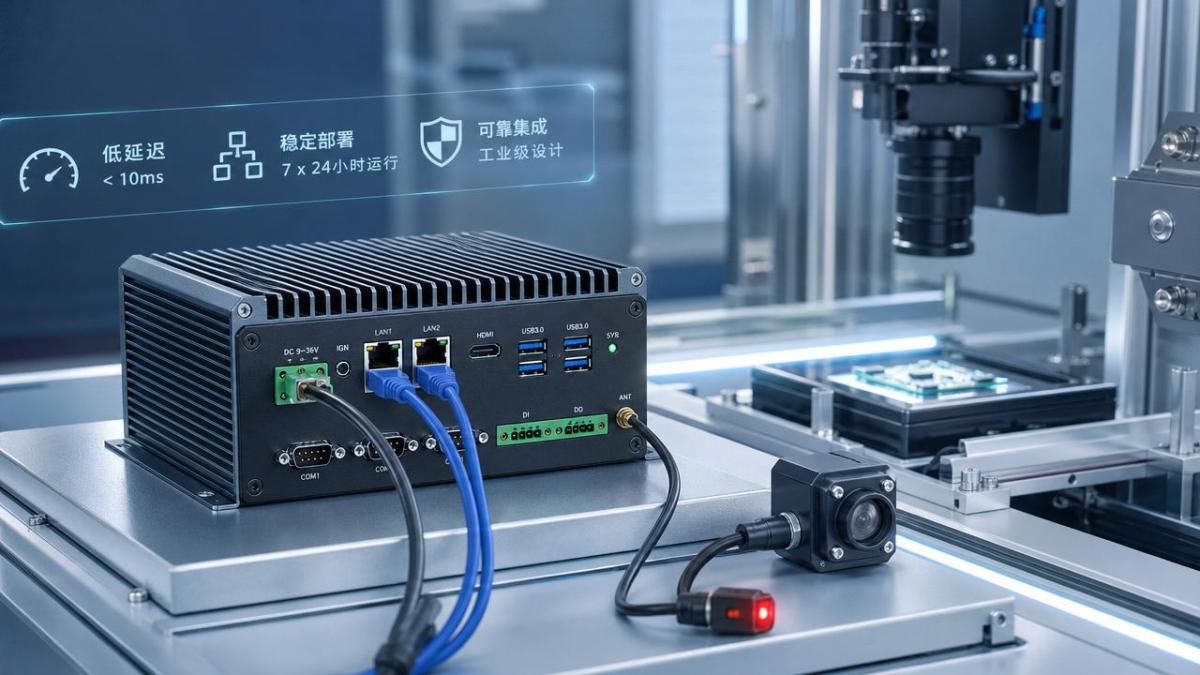
An edge AI computing box is often treated as a compact hardware node, but in deployment reality it is a system anchor. It connects sensors, cameras, industrial networks, power conditions, thermal environments, AI models, and maintenance workflows. That is why an edge AI computing box supplier affects more than procurement price.
For project managers, the real issue is schedule certainty. For engineering leads, it is technical fit under field conditions. A weak supplier may deliver a unit that looks acceptable on paper but creates delays during validation, interface adaptation, enclosure redesign, or software integration.
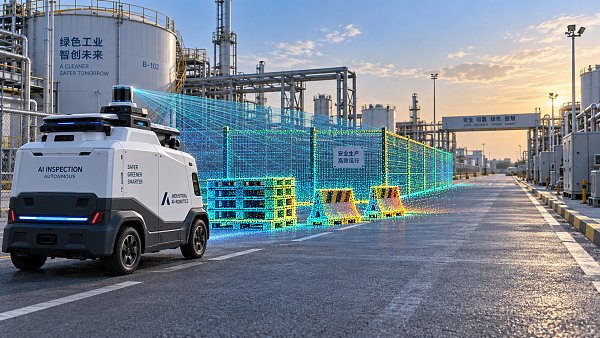
In manufacturing, logistics, UAV support systems, machine vision, and industrial inspection, deployment often fails at the edges of the specification. Latency spikes, I/O mismatch, insufficient vibration resistance, or incomplete long-term support can force redesign after purchase. Those problems become project risks, not just component issues.
- A capable edge AI computing box supplier helps define realistic operating boundaries before procurement, including temperature range, power stability, network bandwidth, and inference load.
- A weaker supplier often responds with generic marketing claims instead of thermal curves, interface mapping, or lifecycle planning, leaving project teams to absorb qualification risk.
- The best suppliers reduce trial-and-error by aligning compute architecture, enclosure design, and firmware support with actual deployment constraints.
This is exactly where a data-driven approach matters. Teams do not need vague claims about smart computing. They need verifiable parameters, interface clarity, and evidence that the supplier understands industrial deployment instead of only board-level specifications.
Which deployment risks are most influenced by the edge AI computing box supplier?
Project delays rarely come from one dramatic failure. They usually come from a chain of smaller mismatches. The table below shows how an edge AI computing box supplier can directly influence deployment outcomes across technical and operational dimensions.
For many teams, the edge AI computing box supplier becomes a hidden determinant of commissioning speed. If the supplier cannot explain system behavior under sustained inference load, noisy power input, or mixed peripheral use, the deployment burden shifts to your internal team.
Why specification sheets alone are not enough
Nominal TOPS, CPU frequency, memory size, and storage type are useful starting points. They do not reveal how the box performs in a dusty workshop, inside a mobile platform, or beside high-current motor drives. Project managers should ask for operating evidence, not only nominal specifications.
TechStat Vanguard’s hard-tech perspective is especially relevant here. In edge AI and industrial sensing, meaningful evaluation starts with parameters that can be tested: latency under load, anti-interference behavior, throughput stability, and tolerance to environmental stress.
What should project managers evaluate before selecting an edge AI computing box supplier?
A disciplined selection process reduces surprises later. The best way to compare an edge AI computing box supplier is to score the supplier across deployment-critical dimensions instead of focusing only on unit price or processor family.
Use the following selection table when shortlisting suppliers for industrial, automation, inspection, or mobile intelligence projects.
This framework helps project leaders compare suppliers on operational fit instead of presentation quality. In many deployments, a slightly more expensive supplier with stronger validation support produces lower total project cost.
A practical pre-purchase checklist
- Define the inference workload clearly: number of camera streams, model size, target latency, and edge storage requirements.
- Map all interfaces: sensor types, industrial protocols, display outputs, remote management, and power input range.
- Describe the actual environment: indoor or outdoor, sealed or ventilated, static or mobile, clean or dusty, low-noise or high-EMI.
- Request evidence: thermal data, deployment references by scenario type, firmware maintenance approach, and change notification process.
- Align validation milestones before PO approval so the edge AI computing box supplier is accountable for measurable integration targets.
How do application scenarios change supplier requirements?
Not every edge AI deployment needs the same supplier profile. A warehouse vision node, an unmanned inspection system, and a compact industrial gateway may all use edge AI boxes, yet their risk profiles differ sharply.
Factory automation and machine vision
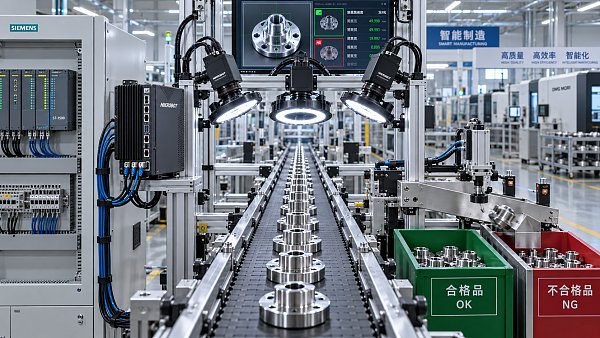
These projects typically prioritize deterministic processing, camera compatibility, industrial network integration, and stable uptime. The edge AI computing box supplier should understand trigger timing, multi-camera bandwidth, and low-latency inference behavior near PLC-driven systems.
Mobile robotics and AGV or AMR systems
Mobile platforms introduce vibration, constrained power budgets, and thermal limits in compact housings. Here the edge AI computing box supplier should discuss shock tolerance, power conditioning, connector retention, and remote diagnostics instead of only compute output.
Outdoor sensing and smart infrastructure
Outdoor nodes often need temperature resilience, ingress planning, network redundancy, and maintenance simplicity. If a supplier cannot explain derating, enclosure ventilation strategy, or field service replacement logic, deployment risk increases significantly.
UAV support, portable intelligence, and remote operations
In these scenarios, weight, footprint, data throughput, and electromagnetic robustness matter. A qualified supplier should be comfortable discussing edge processing in relation to sensor fusion, intermittent connectivity, and mission-specific reliability constraints.
What technical parameters reveal a reliable edge AI computing box supplier?
A serious supplier can move beyond brochure metrics and explain system-level behavior. Project teams should focus on parameters that directly affect deployment outcomes rather than impressive but isolated marketing numbers.
- Sustained inference performance under realistic thermal load, not only peak accelerator output.
- End-to-end latency, including sensor ingestion, preprocessing, AI inference, and output transmission.
- Data throughput limits for camera streams, LiDAR inputs, and industrial gateway traffic under concurrent workloads.
- Power input tolerance, startup behavior, and resilience to transient fluctuations common in industrial systems.
- Storage endurance and logging strategy for edge analytics environments that generate continuous data traces.
- Firmware update method, rollback capability, and remote maintenance provisions for distributed fleets.
This aligns with TSV’s engineering-first philosophy. Parameters do not lie, and tolerances dictate success. In sensors and edge AI systems, small gaps in throughput, interference resistance, or thermal margin can produce large downstream costs.
How should teams compare cost, replacement risk, and alternatives?
The lowest quoted hardware price rarely reflects actual deployment cost. When evaluating an edge AI computing box supplier, project managers should include integration hours, enclosure modifications, qualification cycles, spare parts planning, and support responsiveness.
The comparison below helps teams think in total deployment terms instead of invoice-only terms.
For complex programs, a stronger edge AI computing box supplier often reduces total cost by shortening the validation window and lowering field failure probability. That matters when project deadlines are linked to factory rollout, customer acceptance, or capital expenditure milestones.
Which standards, compliance topics, and support practices should not be ignored?
Compliance needs vary by industry, geography, and deployment environment, but supplier discipline can still be evaluated even before a final specification is frozen. Teams should ask how the supplier handles documentation, traceability, hardware revisions, and environmental assumptions.
- Ask whether product documentation is detailed enough for internal qualification, especially interface pinouts, operating conditions, and change control notes.
- Confirm whether the supplier can support projects that may later require EMC planning, safety review, or regulated-industry documentation.
- Evaluate lifecycle discipline: revision history, notice period for key component changes, and spare or replacement policy.
- Review service response expectations, especially for debugging support during pilot deployment and scale rollout.
A supplier does not need to promise every certification for every project. What matters is whether the supplier communicates clearly, understands deployment constraints, and can support documentation-driven decision-making.
Common misconceptions about choosing an edge AI computing box supplier
“If the chip platform is strong, the supplier does not matter.”
This is one of the most costly assumptions. A strong chipset inside a poorly supported platform still creates integration delays. Board support packages, thermal design, connectors, OS maintenance, and field documentation all depend on the supplier’s execution quality.
“A standard box will fit most industrial projects.”
Many industrial deployments appear similar at a high level, but differ in sensor count, communication stack, environmental stress, and service model. A standard unit may work in a lab and fail in a distributed field rollout.
“Procurement can decide after engineering gives a processor requirement.”
Processor class is only one layer of the decision. A project-ready edge AI computing box supplier should be screened jointly by engineering, project management, and procurement. Otherwise the selected device may satisfy cost targets while damaging deployment timelines.
FAQ: questions project teams often ask
How do I know whether an edge AI computing box supplier is suitable for harsh environments?
Ask for tested operating assumptions, not general statements. Review thermal behavior under sustained load, expected airflow conditions, connector retention method, and power tolerance range. If the supplier cannot discuss these clearly, field reliability may depend too heavily on your own redesign work.
What is more important: AI accelerator performance or integration support?
For real deployments, both matter, but integration support often determines time-to-value. A slightly lower peak compute platform with better driver support, better documentation, and clearer lifecycle control may outperform a faster platform that is difficult to commission and maintain.
When should we involve the supplier in the project timeline?
Ideally before finalizing the system architecture. Early discussion allows the edge AI computing box supplier to flag power, thermal, I/O, or enclosure constraints before they become expensive change requests during pilot deployment.
What are the most overlooked cost items in supplier selection?
The most overlooked items are integration labor, debugging time, firmware maintenance, replacement planning, and delays caused by undocumented hardware revisions. These costs often exceed the savings from a lower initial quote.
Why choose us for edge AI supplier evaluation and deployment planning?
TechStat Vanguard approaches edge AI from an engineering truth perspective. We focus on measurable parameters, deployment fit, and supply chain clarity instead of generic product promotion. For project managers and engineering leaders, that means less noise and better decision support.
Our strength is not in repeating vendor claims. It is in helping teams compare an edge AI computing box supplier through benchmark logic, specification discipline, and deployment-oriented questions that reduce qualification cycles and avoid hidden rework.
- Consult us for parameter confirmation when you need to validate latency targets, I/O requirements, thermal assumptions, or sensor throughput.
- Contact us for product selection support if you are comparing multiple edge AI computing box supplier options across industrial, mobile, or outdoor scenarios.
- Engage us for delivery-cycle review when component continuity, rollout timing, pilot scaling, or spare strategy could affect program milestones.
- Request guidance on custom solution paths if your project involves enclosure constraints, protocol adaptation, rugged deployment, or specialized compliance expectations.
- Use TSV as a technical filter before quotation decisions, especially when you need clearer supplier comparison criteria rather than more sales language.
If your team is preparing a specification sheet, reviewing supplier candidates, or trying to prevent deployment surprises, start with the data that actually drives outcomes. In edge AI infrastructure, the right supplier does not simply ship a box. The right supplier helps make the deployment work.
Search News
Hot Articles
- Carbon Fiber StructuresHow to Specify Aerospace Carbon Fiber Assemblies for Lightweight, Load-Bearing PartsJul 11, 2026
- Machine VisionXiaomi, Alibaba DAMO Academy Drive Open-Source Robotics Model Ecosystem, Lowering Algorithm Development Barriers for Overseas SMEs Adopting Chinese Robotics SolutionsMar 30, 2026
- Cobots & ArmsShanxi 'AI+' Conference Showcases Embodied Intelligence with Multinational Buyer Engagement: Key Industry ImplicationsMar 30, 2026
Popular Tags
Recommended News
 Jul 11, 2026How to Specify Aerospace Carbon Fiber Assemblies for Lightweight, Load-Bearing PartsAerospace carbon fiber assemblies: learn how to specify laminate design, load data, joining methods, and inspection controls for lighter, reliable load-bearing aerospace parts.Elena Rostova (UAV Systems Researcher)
 Mar 30, 2026Xiaomi, Alibaba DAMO Academy Drive Open-Source Robotics Model Ecosystem, Lowering Algorithm Development Barriers for Overseas SMEs Adopting Chinese Robotics SolutionsXiaomi & Alibaba DAMO Academy's open-source robotics models lower algorithm barriers for global SMEs. Boost efficiency in manufacturing, logistics & smart retail with ROS 2 compatible solutions.TSV Data Lab
 Mar 30, 2026Shanxi 'AI+' Conference Showcases Embodied Intelligence with Multinational Buyer Engagement: Key Industry ImplicationsShanxi 'AI+' Conference highlights embodied intelligence with Tesla, Ubtech & Jiantao showcasing multimodal robotics. 40+ global buyers validated tech on-site, creating new B2B channels for industrial automation & AI solutions.Chen Wei (Automation Lead Engineer)
 Mar 30, 2026Zhongguancun Unveils 6G Integrated Sensing-Computing-Intelligence Platform to Empower Embodied Robots for Global Industrial ApplicationsZhongguancun's new 6G platform revolutionizes industrial robotics with <10ms latency, empowering global automotive, logistics & port automation. Discover how this tech boosts China's smart manufacturing exports.TSV Data Lab
 Mar 30, 2026Mech-Mind Tianjin Embodied Intelligence R&D and Production Base Goes Live, Cutting Delivery Time by 20%–30% for Global Customized AMR+Vision SolutionsMech-Mind's Tianjin AMR+Vision production base cuts delivery time by 20%-30% for欧美 & Latin American markets. Discover how this PLd-certified facility accelerates customized robotics solutions for smart manufacturing and logistics.Chen Wei (Automation Lead Engineer)
 Mar 30, 2026Boao Forum Reveals 'Co-evolution of Big and Small Brains' Trend in Humanoid Robots, China's Embodied Intelligence Accelerates Adaptation to Overseas Manufacturing Service ScenariosDiscover how China's humanoid robots, featuring 'Co-evolution of Big and Small Brains,' are revolutionizing global manufacturing. Learn about Embodied Tian Gong 3.0's ISO compliance and overseas deployment at Boao Forum 2026.Chen Wei (Automation Lead Engineer)
 Mar 30, 2026China Railway Industrial Secures Patent for Embodied Robotics in Material Handling, Boosting High-Precision Delivery Capabilities for Overseas Infrastructure and Manufacturing ProjectsChina Railway Industrial's new patent for embodied robotics in material handling boosts high-precision delivery for global infrastructure & manufacturing. Discover how this innovation enhances logistics accuracy in automotive, rail transit & EPC projects.Chen Wei (Automation Lead Engineer)
 Oct 03, 2026Selecting Automotive Radar Sensor Modules for ADAS Range, Resolution, and IntegrationAutomotive radar sensor module selection guide for ADAS: compare range, resolution, field of view, latency, and integration to build safer, reliable vehicle systems.TSV Data Lab
 Oct 02, 2026How to Qualify Machined Parts Suppliers for Hard Tech ProgramsHard tech supply chain machined parts demand rigorous supplier qualification. Learn how to assess capability, traceability, quality controls, and delivery resilience.Dr. Marcus Vance
 Oct 01, 2026How to Select an Outdoor Security Radar Sensor for Perimeter Detection?Outdoor security radar sensor selection guide: compare range, accuracy, false-alarm control, integration, and field testing for reliable perimeter detection.TSV Data Lab
 Sep 30, 2026How to Evaluate Solid-State LiDAR Hardware for Outdoor Autonomous VehiclesSolid state LiDAR hardware evaluation guide for outdoor autonomous vehicles—compare range, point-cloud quality, environmental resilience, integration, and safety.TSV Data Lab
 Sep 29, 2026ISO 9283 Repeatability: How to Evaluate Cobot Positioning PerformanceISO 9283 cobot repeatability explained: learn how payload, reach, approach direction, and test conditions affect positioning performance and cell capability.Chen Wei (Automation Lead Engineer)
 Oct 03, 2026Is Edge Computing Necessary for Real-Time Quality Inspection?Is industrial edge computing necessary for real-time quality inspection? Explore how latency, data volume, reliability, and control integration shape the right architecture.TSV Data Lab
 Oct 02, 2026What Documents Prove a Precision Machining Supplier Can Hold Tolerance?What documents prove a precision machining supplier can hold tolerance? Explore certificates, FAI reports, calibration, SPC, and traceability evidence to qualify suppliers with confidence.Dr. Marcus Vance
 Oct 01, 2026Can a Machining Supplier Meet Aerospace Fatigue Testing Requirements?Can a machining supplier meet aerospace fatigue testing requirements? Learn the traceability, process control, and test evidence needed for reliable aerospace parts.Dr. Marcus Vance
 Sep 30, 2026Which Industrial Robot Specifications Matter for High-Precision Assembly?Which industrial robot specifications matter most for high-precision assembly? Explore repeatability, accuracy, stiffness, vibration, calibration, and force control for reliable yields.Chen Wei (Automation Lead Engineer)
 Sep 29, 2026How Do You Verify Servo Motor Torque Under Continuous Load?How do I verify servo motor torque under continuous load? Learn RMS torque checks, torque-speed limits, thermal derating, and real-machine testing.Chen Wei (Automation Lead Engineer)
 Oct 02, 2026ZD330 Software Configuration: Verifying Cut-List Import Before PurchaseZD330 software and machine configuration: verify cut-list imports, data mapping, labels, and workflow before purchase to reduce errors and choose with confidence.Victor Lin (Chief Software Architect)
 Sep 28, 2026Spindle Runout Measurement in Germany: DIN Standards, Methods, and Acceptance LimitsSpindle runout measurement Germany: explore DIN standards, proven methods, acceptance limits, and audit-ready practices for reliable machining quality.Dr. Marcus Vance
 Sep 27, 2026How to Select Wall-Mount Edge Devices for Space-Constrained Factory NetworksWall mount edge devices for space-constrained factories: evaluate workload, thermal design, power resilience, cable access, and network reliability for smarter deployments.TSV Data Lab
 Sep 26, 2026Machining Tolerance Analysis: How to Set Limits That Meet Function and Cost TargetsMachining tolerance analysis: learn how to set functional limits, control tolerance stacks, reduce inspection risk, and balance precision with production cost.Dr. Marcus Vance
 Sep 25, 2026How to Evaluate an Industrial Infrastructure Data Platform for Multi-Site OperationsIndustrial infrastructure data platform evaluation guide for multi-site operations: compare data quality, edge resilience, interoperability, governance, and scalable proof-of-value criteria.Victor Lin (Chief Software Architect)
 Sep 24, 2026How to Select Machine Vision Optics for Accurate Inspection at Different Working DistancesMachine vision optics selection guide for accurate inspection at every working distance. Compare FOV, pixel scale, DOF, distortion, lighting, and telecentric options.TSV Data Lab
 Sep 23, 2026How to Evaluate a Machine Vision System Integrator for High-Speed Inspection LinesChoose a machine vision system integrator with proven expertise in high-speed inspection, reliable reject timing, robust optics, and measurable acceptance criteria.TSV Data Lab