What affects 77ghz radar detection range in real use
Publication Date
author
In real deployments, 77ghz radar detection range is shaped by far more than datasheet numbers. Mounting angle, target material, weather, road clutter, processing algorithms, and vehicle speed can all change what operators actually see in the field. This article breaks down the engineering factors that most directly affect usable range, helping users and operators judge performance with practical, data-focused expectations.
For most users, the short answer is simple: 77ghz radar detection range in real use is rarely limited by one single parameter. Actual range depends on the radar, the target, the environment, and the way the system is installed and tuned.
If two units share the same headline range on paper, they can still behave very differently on a vehicle, at a gate, in a warehouse yard, or near roadside metal structures. That gap between advertised and usable performance is what operators must understand.
The most useful question is not, “What is the maximum range?” It is, “At what distance can this radar reliably detect my specific target, in my specific environment, with acceptable stability and false alarm rates?”
Why datasheet range and real 77ghz radar detection range are often different

Datasheet values are usually measured under controlled conditions. The target may have a known radar cross section, the mounting may be ideal, and interference may be limited. Real sites almost never look like that.
In operation, radar must separate meaningful targets from reflections caused by ground surfaces, rain, parked vehicles, walls, poles, conveyors, fences, or moving background objects. That means usable range is always a filtered engineering result, not just a transmitter number.
Operators should also remember that “detection” itself can mean different things. A radar may sense a weak return at long distance, but that does not guarantee stable tracking, classification, or trustworthy decision output.
In practice, a long raw sensing distance matters less than repeatable performance at the distance where the system must trigger braking, warning, tracking, or counting. Reliable action distance is usually the more relevant field metric.
Target size, material, and shape often decide more than frequency alone
One of the biggest real-world factors is the target itself. A large truck, a motorcycle, a person, and a plastic pallet do not reflect radar energy the same way. Their detectability can differ dramatically.
Radar responds to effective reflectivity, often discussed through radar cross section rather than simple physical size. A compact metal object can return a stronger signal than a larger object made from low-reflectivity material.
Flat metal surfaces may create strong reflections when oriented well, but weak returns when angled away. Curved surfaces can scatter energy unpredictably. Soft materials, clothing, foam, and composites often reduce practical detection distance.
This matters for operators because a supplier’s maximum range may be based on large high-reflectivity targets. If your actual targets are pedestrians, low-profile obstacles, trailers at an angle, or mixed urban objects, field range will be lower.
For use planning, ask a more specific question: what is the expected detection range for my target category, at my approach angle, and under my operating speed? That answer is far more valuable than a generic maximum number.
Mounting position and angle can improve or destroy usable range
Installation quality is one of the most controllable factors affecting 77ghz radar detection range. Even a capable sensor can underperform if it is mounted too high, too low, tilted incorrectly, or partially blocked.
A downward angle that is too aggressive may shorten far-field coverage and increase ground reflections. An upward bias may miss low obstacles near the intended path. Small angular errors can shift the effective detection zone significantly.
Mounting behind unsuitable covers can also weaken or distort signals. Not every bumper material, protective housing, or radome performs equally well at 77 GHz. Thickness, water film, paint composition, and contamination all matter.
Vibration is another overlooked issue. If the radar moves relative to the vehicle body or support frame, tracking stability and long-range consistency may suffer. In industrial settings, repeated shock can slowly change alignment over time.
Operators should treat mounting verification as part of performance validation, not as a one-time mechanical task. If field range seems inconsistent, installation geometry should be one of the first items checked.
Weather affects range, but clutter and surface conditions are often even more important
77 GHz radar is widely valued because it can work better than optical sensors in fog, dust, and darkness. That is true, but it does not mean weather has no effect on real detection range.
Heavy rain, wet snow, ice buildup, road spray, or water films on the radar cover can reduce signal quality. In many deployments, contamination on the sensor face creates more practical degradation than atmospheric attenuation alone.
Ground condition also changes the environment. Wet asphalt, puddles, mud, metallic debris, and reflective infrastructure can increase unwanted returns. These reflections may not eliminate detection, but they can complicate separation of true targets.
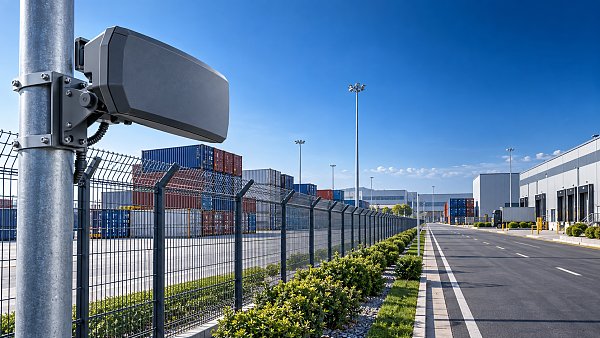
Urban and industrial clutter can be especially challenging. Guardrails, racks, parked equipment, shipping containers, and steel fencing create dense reflection scenes. In such places, clean range on paper may not translate into clean operational detection.
That is why users should judge performance by scenario: open road, loading yard, tunnel entrance, warehouse perimeter, mixed traffic lane, or agricultural field. “All-weather” capability is real, but it is never environment-independent.
Signal processing and software tuning strongly shape what operators actually see
Two radar systems using similar hardware can produce noticeably different field results because of software. Detection range is not only about transmitted power or antenna design. It is also about how returns are processed.
Threshold settings influence whether weak distant targets are kept or rejected. A low threshold may extend sensitivity, but can also raise false alarms. A high threshold may clean the scene, but shorten effective range.
Tracking logic matters too. Some systems are tuned for stable object continuity, while others prioritize early detection. Filtering can suppress clutter, but aggressive filtering may hide small or slow objects at longer distances.
Classification features, Doppler processing, beamforming quality, and multi-target separation also affect real usability. An operator may think “range is poor,” when the actual limitation is the software choosing confidence over weak target reporting.
For this reason, field evaluation should include not only first detection distance, but also track stability, object dropout frequency, false positives, and performance consistency across repeated passes.
Vehicle speed and relative motion change the meaning of detection range
In moving applications, range must be understood together with speed. A radar that detects an obstacle at 120 meters may be fully adequate at one speed, but insufficient at another if the downstream reaction system needs more time.
Relative motion helps radar measure Doppler shifts, which can improve detection of moving targets. But stationary or near-stationary objects can be harder to isolate when the background is complex or when filtering suppresses static clutter.
High closing speed compresses available response time. Even if the sensor sees a target, decision and actuation systems must still process the data and act. Real operational safety depends on total system latency, not radar range alone.
For operators, this means evaluating range in seconds as well as meters. Ask how much time the system has from first reliable detection to warning, intervention, or maneuver completion under normal and worst-case speeds.
Interference, multi-radar environments, and nearby electronics can reduce confidence
Modern environments often contain multiple radars operating nearby. Vehicles, roadside units, industrial platforms, and other machines may all emit in overlapping bands. Good systems are designed to manage this, but interference risk remains relevant.
Electromagnetic noise from surrounding electronics can also affect signal quality indirectly through system integration issues, poor shielding, grounding problems, or unstable power conditions. These problems may appear as intermittent detection loss.
In dense environments, operators should watch for symptoms such as random target dropouts, inconsistent long-range visibility, or behavior changes that only appear when other equipment is active nearby.
When troubleshooting, it is important not to blame range immediately on the sensor core. Sometimes the root cause is integration quality, local interference, or configuration conflicts between multiple sensing systems.
How operators should evaluate 77ghz radar detection range in the field
For practical assessment, users need repeatable test conditions. Start with known target types that represent actual operation: passenger vehicle, truck, pedestrian surrogate, pallet, barrier, or machine edge depending on the application.
Measure detection at different distances, approach angles, speeds, and weather states. Record not just whether the target appears, but when the track becomes stable enough for action. That is the real operational threshold.
It is also useful to test clean scenes and cluttered scenes separately. A radar may perform well in open space, then lose confidence near fences or reflective equipment. Both results are real and should be documented.
Check installation variables systematically. Small changes in height, tilt, bracket rigidity, or cover material can alter results enough to matter. If possible, compare before and after alignment correction rather than assuming the initial setup is optimal.
Review false alarm behavior alongside range. Longer apparent range is not automatically better if it comes with unstable tracks or nuisance triggers. Operators usually benefit more from predictable detection than from an impressive maximum number.
What a realistic performance expectation looks like
Realistic expectations come from matching the sensor to the mission. If the job is highway forward sensing, the important range may differ from low-speed blind-zone detection, perimeter monitoring, or short-range industrial collision avoidance.
Users should expect 77ghz radar detection range to vary by target class, installation geometry, environment, and algorithm settings. That variation is normal engineering behavior, not necessarily a sign that the radar is defective.
The best purchasing and deployment decisions come from application-specific metrics: reliable detection distance, angular coverage, false alarm rate, performance in clutter, and consistency over time. These metrics are more actionable than peak range alone.
For operators, the goal is not to chase the largest advertised number. It is to understand where the sensor remains trustworthy under real duty conditions, and where operational caution or additional sensing may still be needed.
Conclusion
What affects 77ghz radar detection range in real use? The answer is a combination of target reflectivity, mounting quality, environmental clutter, weather exposure, signal processing, motion conditions, and system integration discipline.
That is why real range should always be treated as a field performance outcome, not just a brochure figure. A radar can be excellent on paper and still disappoint if the target, site, or tuning assumptions are wrong.
For users and operators, the most practical mindset is simple: judge the system by reliable action distance in your own scenario. When 77ghz radar detection range is evaluated this way, expectations become clearer and decisions become better.
Search News
Hot Articles
- Carbon Fiber StructuresHow to Specify Aerospace Carbon Fiber Assemblies for Lightweight, Load-Bearing PartsJul 11, 2026
- Machine VisionXiaomi, Alibaba DAMO Academy Drive Open-Source Robotics Model Ecosystem, Lowering Algorithm Development Barriers for Overseas SMEs Adopting Chinese Robotics SolutionsMar 30, 2026
- Cobots & ArmsShanxi 'AI+' Conference Showcases Embodied Intelligence with Multinational Buyer Engagement: Key Industry ImplicationsMar 30, 2026
Popular Tags
Recommended News
 Jul 11, 2026How to Specify Aerospace Carbon Fiber Assemblies for Lightweight, Load-Bearing PartsAerospace carbon fiber assemblies: learn how to specify laminate design, load data, joining methods, and inspection controls for lighter, reliable load-bearing aerospace parts.Elena Rostova (UAV Systems Researcher)
 Mar 30, 2026Xiaomi, Alibaba DAMO Academy Drive Open-Source Robotics Model Ecosystem, Lowering Algorithm Development Barriers for Overseas SMEs Adopting Chinese Robotics SolutionsXiaomi & Alibaba DAMO Academy's open-source robotics models lower algorithm barriers for global SMEs. Boost efficiency in manufacturing, logistics & smart retail with ROS 2 compatible solutions.TSV Data Lab
 Mar 30, 2026Shanxi 'AI+' Conference Showcases Embodied Intelligence with Multinational Buyer Engagement: Key Industry ImplicationsShanxi 'AI+' Conference highlights embodied intelligence with Tesla, Ubtech & Jiantao showcasing multimodal robotics. 40+ global buyers validated tech on-site, creating new B2B channels for industrial automation & AI solutions.Chen Wei (Automation Lead Engineer)
 Mar 30, 2026Zhongguancun Unveils 6G Integrated Sensing-Computing-Intelligence Platform to Empower Embodied Robots for Global Industrial ApplicationsZhongguancun's new 6G platform revolutionizes industrial robotics with <10ms latency, empowering global automotive, logistics & port automation. Discover how this tech boosts China's smart manufacturing exports.TSV Data Lab
 Mar 30, 2026Mech-Mind Tianjin Embodied Intelligence R&D and Production Base Goes Live, Cutting Delivery Time by 20%–30% for Global Customized AMR+Vision SolutionsMech-Mind's Tianjin AMR+Vision production base cuts delivery time by 20%-30% for欧美 & Latin American markets. Discover how this PLd-certified facility accelerates customized robotics solutions for smart manufacturing and logistics.Chen Wei (Automation Lead Engineer)
 Mar 30, 2026Boao Forum Reveals 'Co-evolution of Big and Small Brains' Trend in Humanoid Robots, China's Embodied Intelligence Accelerates Adaptation to Overseas Manufacturing Service ScenariosDiscover how China's humanoid robots, featuring 'Co-evolution of Big and Small Brains,' are revolutionizing global manufacturing. Learn about Embodied Tian Gong 3.0's ISO compliance and overseas deployment at Boao Forum 2026.Chen Wei (Automation Lead Engineer)
 Mar 30, 2026China Railway Industrial Secures Patent for Embodied Robotics in Material Handling, Boosting High-Precision Delivery Capabilities for Overseas Infrastructure and Manufacturing ProjectsChina Railway Industrial's new patent for embodied robotics in material handling boosts high-precision delivery for global infrastructure & manufacturing. Discover how this innovation enhances logistics accuracy in automotive, rail transit & EPC projects.Chen Wei (Automation Lead Engineer)
 Oct 03, 2026Selecting Automotive Radar Sensor Modules for ADAS Range, Resolution, and IntegrationAutomotive radar sensor module selection guide for ADAS: compare range, resolution, field of view, latency, and integration to build safer, reliable vehicle systems.TSV Data Lab
 Oct 02, 2026How to Qualify Machined Parts Suppliers for Hard Tech ProgramsHard tech supply chain machined parts demand rigorous supplier qualification. Learn how to assess capability, traceability, quality controls, and delivery resilience.Dr. Marcus Vance
 Oct 01, 2026How to Select an Outdoor Security Radar Sensor for Perimeter Detection?Outdoor security radar sensor selection guide: compare range, accuracy, false-alarm control, integration, and field testing for reliable perimeter detection.TSV Data Lab
 Sep 30, 2026How to Evaluate Solid-State LiDAR Hardware for Outdoor Autonomous VehiclesSolid state LiDAR hardware evaluation guide for outdoor autonomous vehicles—compare range, point-cloud quality, environmental resilience, integration, and safety.TSV Data Lab
 Sep 29, 2026ISO 9283 Repeatability: How to Evaluate Cobot Positioning PerformanceISO 9283 cobot repeatability explained: learn how payload, reach, approach direction, and test conditions affect positioning performance and cell capability.Chen Wei (Automation Lead Engineer)
 Oct 03, 2026Is Edge Computing Necessary for Real-Time Quality Inspection?Is industrial edge computing necessary for real-time quality inspection? Explore how latency, data volume, reliability, and control integration shape the right architecture.TSV Data Lab
 Oct 02, 2026What Documents Prove a Precision Machining Supplier Can Hold Tolerance?What documents prove a precision machining supplier can hold tolerance? Explore certificates, FAI reports, calibration, SPC, and traceability evidence to qualify suppliers with confidence.Dr. Marcus Vance
 Oct 01, 2026Can a Machining Supplier Meet Aerospace Fatigue Testing Requirements?Can a machining supplier meet aerospace fatigue testing requirements? Learn the traceability, process control, and test evidence needed for reliable aerospace parts.Dr. Marcus Vance
 Sep 30, 2026Which Industrial Robot Specifications Matter for High-Precision Assembly?Which industrial robot specifications matter most for high-precision assembly? Explore repeatability, accuracy, stiffness, vibration, calibration, and force control for reliable yields.Chen Wei (Automation Lead Engineer)
 Sep 29, 2026How Do You Verify Servo Motor Torque Under Continuous Load?How do I verify servo motor torque under continuous load? Learn RMS torque checks, torque-speed limits, thermal derating, and real-machine testing.Chen Wei (Automation Lead Engineer)
 Oct 02, 2026ZD330 Software Configuration: Verifying Cut-List Import Before PurchaseZD330 software and machine configuration: verify cut-list imports, data mapping, labels, and workflow before purchase to reduce errors and choose with confidence.Victor Lin (Chief Software Architect)
 Sep 28, 2026Spindle Runout Measurement in Germany: DIN Standards, Methods, and Acceptance LimitsSpindle runout measurement Germany: explore DIN standards, proven methods, acceptance limits, and audit-ready practices for reliable machining quality.Dr. Marcus Vance
 Sep 27, 2026How to Select Wall-Mount Edge Devices for Space-Constrained Factory NetworksWall mount edge devices for space-constrained factories: evaluate workload, thermal design, power resilience, cable access, and network reliability for smarter deployments.TSV Data Lab
 Sep 26, 2026Machining Tolerance Analysis: How to Set Limits That Meet Function and Cost TargetsMachining tolerance analysis: learn how to set functional limits, control tolerance stacks, reduce inspection risk, and balance precision with production cost.Dr. Marcus Vance
 Sep 25, 2026How to Evaluate an Industrial Infrastructure Data Platform for Multi-Site OperationsIndustrial infrastructure data platform evaluation guide for multi-site operations: compare data quality, edge resilience, interoperability, governance, and scalable proof-of-value criteria.Victor Lin (Chief Software Architect)
 Sep 24, 2026How to Select Machine Vision Optics for Accurate Inspection at Different Working DistancesMachine vision optics selection guide for accurate inspection at every working distance. Compare FOV, pixel scale, DOF, distortion, lighting, and telecentric options.TSV Data Lab
 Sep 23, 2026How to Evaluate a Machine Vision System Integrator for High-Speed Inspection LinesChoose a machine vision system integrator with proven expertise in high-speed inspection, reliable reject timing, robust optics, and measurable acceptance criteria.TSV Data Lab