Camera Radar Fusion Systems Explained: Where Sensor Fusion Outperforms Single-Sensor Setups
Publication Date
author
Camera Radar Fusion Systems Explained: Where Sensor Fusion Outperforms Single-Sensor Setups
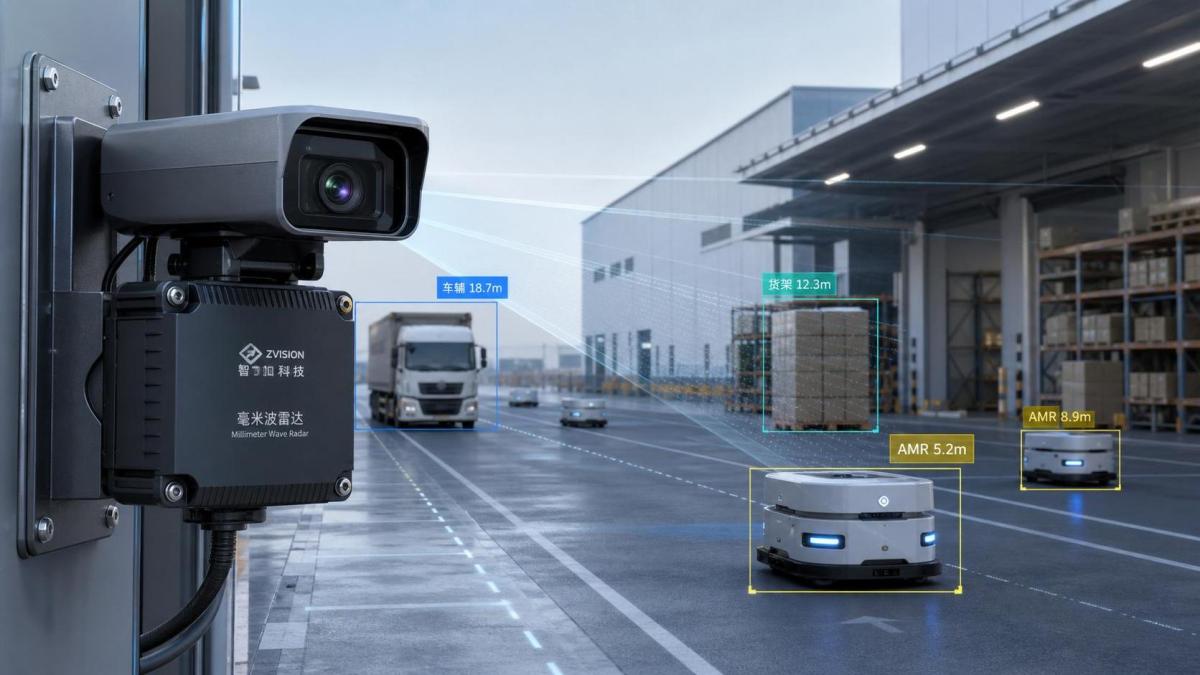
Camera radar fusion systems are moving from concept language into hard engineering decisions. In automotive, robotics, and smart infrastructure, teams now compare measurable perception outcomes, not marketing claims.
That shift matters because single-sensor perception reaches limits quickly. A camera may classify objects well, yet struggle in glare or fog. Radar can detect range and speed, yet miss semantic detail.
This is where camera radar fusion systems earn attention. They combine complementary sensing strengths, helping engineers improve detection confidence, environmental robustness, and system-level safety under real operating stress.
For organizations shaped by engineering-first evaluation, the question is practical: where does sensor fusion outperform single-sensor setups enough to justify integration cost, compute load, and validation effort?
At TechStat Vanguard, that question fits a larger pattern. In hard-tech procurement and R&D, useful decisions come from tolerances, thresholds, latency, and failure behavior, not broad promises.
What Camera Radar Fusion Systems Actually Combine
At a functional level, camera radar fusion systems merge two different information streams. Cameras provide rich visual context. Radar contributes distance, relative velocity, and stronger performance through adverse weather.
A front camera may detect lane markings, traffic lights, pallet edges, or human posture. Radar, in parallel, tracks object motion and depth, even when visibility drops or contrast weakens.
Fusion can happen at several levels:
- Data-level fusion combines raw or lightly processed signals early.
- Feature-level fusion merges extracted patterns such as object contours and Doppler signatures.
- Decision-level fusion compares independent detections and reconciles confidence scores.
The right architecture depends on latency budgets, processor capacity, software maturity, and safety goals. In practice, many deployed camera radar fusion systems use hybrid methods rather than one pure model.
Why Single-Sensor Setups Reach a Ceiling
Single-sensor systems remain attractive because they reduce cost and simplify integration. However, their weaknesses become visible when deployment leaves controlled environments and enters mixed, noisy, changing conditions.
Camera-only perception usually performs well in clear daylight with clean labels and strong contrast. It becomes less dependable in low light, backlighting, rain streaks, lens contamination, or partial occlusion.
Radar-only setups handle motion and range well, especially in poor visibility. Yet they often provide coarse spatial resolution, limited shape detail, and reduced ability to classify visually similar obstacles.
As safety targets rise, those gaps grow expensive. A system may detect an object, but fail to label its type. Or it may classify correctly, but estimate distance and closing speed with less certainty.
That is the ceiling fusion tries to break. Camera radar fusion systems are valuable when one sensor’s ambiguity can be constrained by the other sensor’s strength.
Where Camera Radar Fusion Systems Outperform Most Clearly
The strongest case for camera radar fusion systems appears in environments where perception must stay reliable across variable weather, lighting, speed, and clutter. That pattern shows up in several sectors.
1. Autonomous Driving And ADAS
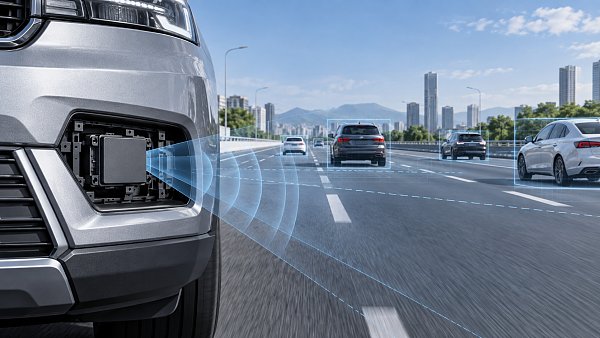
In highway driving, closing speed matters as much as object identity. Radar offers robust velocity tracking. Cameras add lane context, vehicle classification, and visual confirmation of cut-ins or roadside objects.
This combination improves automatic emergency braking, adaptive cruise control, and forward collision warning. False positives can be reduced, while genuine threats are validated earlier.
2. Industrial Mobile Robots
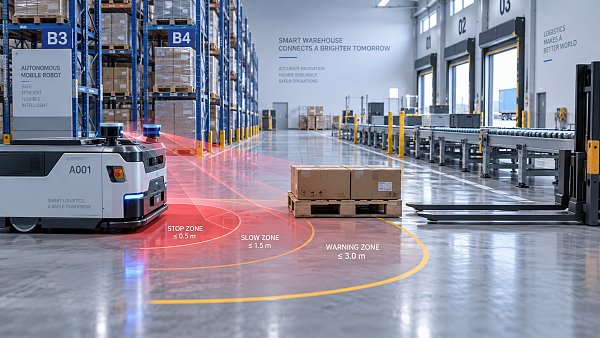
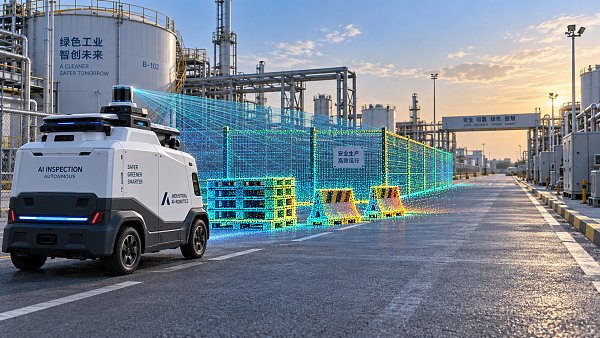
In warehouses and factories, robots face reflective surfaces, moving forklifts, pedestrian traffic, and changing aisle conditions. Cameras support object recognition. Radar adds motion sensitivity through dust, dim light, and partial blockage.
For AGV and AMR fleets, camera radar fusion systems can improve obstacle anticipation and reduce stop-start instability caused by uncertain detections.
3. Smart Intersections And Roadside Sensing
Traffic monitoring platforms need to classify pedestrians, bicycles, cars, and unusual road events. Radar tracks speed and trajectory. Cameras provide scene interpretation and event verification for control systems.
Here, camera radar fusion systems help cities improve all-weather situational awareness without depending on one fragile sensing mode.
4. UAV Sense-And-Avoid Layers
For low-altitude autonomy, visual sensing helps classify terrain and obstacles. Radar supports distance estimation and motion awareness when light changes rapidly or background textures are weak.
In these cases, fusion supports safer navigation margins, especially when platforms must operate beyond ideal weather windows.
What Performance Gains Matter In Real Evaluation
A common mistake is judging camera radar fusion systems only by feature count. The better approach is to compare measurable operating outcomes against a clear baseline.
Useful evaluation metrics often include:
- Detection rate under rain, fog, glare, and low illumination
- False positive and false negative behavior by scenario
- Range accuracy and relative velocity stability
- Classification confidence under partial occlusion
- End-to-end latency under peak compute load
- Failure mode consistency after sensor degradation
For engineering teams, this is where camera radar fusion systems become more than a design trend. Their value appears when performance remains within tolerance after conditions turn messy.
Why Fusion Is Not Automatically Better
Camera radar fusion systems are not a free performance upgrade. They improve perception only when calibration, synchronization, data alignment, and software logic are engineered carefully.
A poorly tuned fusion pipeline can create new risks. Misaligned timestamps may corrupt object association. Sensor mounting drift can distort spatial mapping. Excess compute load can increase decision latency.
There is also a commercial issue. Some suppliers present sensor fusion as proof of superiority without showing benchmark conditions, edge-case data, or degradation behavior after contamination and aging.
That is exactly why engineering-led review matters. A real assessment asks how camera radar fusion systems behave when inputs disagree, fail temporarily, or degrade unevenly over time.
How To Evaluate Camera Radar Fusion Systems Before Adoption
Before selecting a platform, teams should define the operational domain clearly. Fusion requirements for urban passenger vehicles differ from those for mining robots, perimeter systems, or UAV navigation.
A practical review framework includes five questions:
- Which failure modes exist in the current single-sensor setup?
- Under which environmental conditions does performance drop below threshold?
- Does fusion reduce those failures with verified test data?
- What is the added latency, power draw, and integration complexity?
- How transparent is the supplier about calibration, validation, and edge cases?
This method keeps the decision grounded. It also reflects TSV’s wider position that technical procurement should begin with parameter truth and repeatable benchmarking.
In many cases, camera radar fusion systems are strongest when they solve a known weakness, not when they are added simply because fusion sounds more advanced.
The Bottom Line
Camera radar fusion systems outperform single-sensor setups most clearly when the environment is variable, the safety requirement is high, and perception errors carry real operational cost.
They are especially effective where visual understanding and motion-aware ranging must work together. That includes ADAS, autonomous robots, roadside monitoring, and emerging aerospace autonomy layers.
Still, fusion should be earned through evidence. The best camera radar fusion systems are defined by tested reliability, stable latency, clear failure handling, and transparent benchmark data.
For organizations navigating sensor decisions, the useful next step is simple: compare single-sensor limits against application-specific risk, then demand measurable proof before calling fusion an upgrade.
Search News
Hot Articles
- Carbon Fiber StructuresHow to Specify Aerospace Carbon Fiber Assemblies for Lightweight, Load-Bearing PartsJul 11, 2026
- Machine VisionXiaomi, Alibaba DAMO Academy Drive Open-Source Robotics Model Ecosystem, Lowering Algorithm Development Barriers for Overseas SMEs Adopting Chinese Robotics SolutionsMar 30, 2026
- Cobots & ArmsShanxi 'AI+' Conference Showcases Embodied Intelligence with Multinational Buyer Engagement: Key Industry ImplicationsMar 30, 2026
Popular Tags
Recommended News
 Jul 11, 2026How to Specify Aerospace Carbon Fiber Assemblies for Lightweight, Load-Bearing PartsAerospace carbon fiber assemblies: learn how to specify laminate design, load data, joining methods, and inspection controls for lighter, reliable load-bearing aerospace parts.Elena Rostova (UAV Systems Researcher)
 Mar 30, 2026Xiaomi, Alibaba DAMO Academy Drive Open-Source Robotics Model Ecosystem, Lowering Algorithm Development Barriers for Overseas SMEs Adopting Chinese Robotics SolutionsXiaomi & Alibaba DAMO Academy's open-source robotics models lower algorithm barriers for global SMEs. Boost efficiency in manufacturing, logistics & smart retail with ROS 2 compatible solutions.TSV Data Lab
 Mar 30, 2026Shanxi 'AI+' Conference Showcases Embodied Intelligence with Multinational Buyer Engagement: Key Industry ImplicationsShanxi 'AI+' Conference highlights embodied intelligence with Tesla, Ubtech & Jiantao showcasing multimodal robotics. 40+ global buyers validated tech on-site, creating new B2B channels for industrial automation & AI solutions.Chen Wei (Automation Lead Engineer)
 Mar 30, 2026Zhongguancun Unveils 6G Integrated Sensing-Computing-Intelligence Platform to Empower Embodied Robots for Global Industrial ApplicationsZhongguancun's new 6G platform revolutionizes industrial robotics with <10ms latency, empowering global automotive, logistics & port automation. Discover how this tech boosts China's smart manufacturing exports.TSV Data Lab
 Mar 30, 2026Mech-Mind Tianjin Embodied Intelligence R&D and Production Base Goes Live, Cutting Delivery Time by 20%–30% for Global Customized AMR+Vision SolutionsMech-Mind's Tianjin AMR+Vision production base cuts delivery time by 20%-30% for欧美 & Latin American markets. Discover how this PLd-certified facility accelerates customized robotics solutions for smart manufacturing and logistics.Chen Wei (Automation Lead Engineer)
 Mar 30, 2026Boao Forum Reveals 'Co-evolution of Big and Small Brains' Trend in Humanoid Robots, China's Embodied Intelligence Accelerates Adaptation to Overseas Manufacturing Service ScenariosDiscover how China's humanoid robots, featuring 'Co-evolution of Big and Small Brains,' are revolutionizing global manufacturing. Learn about Embodied Tian Gong 3.0's ISO compliance and overseas deployment at Boao Forum 2026.Chen Wei (Automation Lead Engineer)
 Mar 30, 2026China Railway Industrial Secures Patent for Embodied Robotics in Material Handling, Boosting High-Precision Delivery Capabilities for Overseas Infrastructure and Manufacturing ProjectsChina Railway Industrial's new patent for embodied robotics in material handling boosts high-precision delivery for global infrastructure & manufacturing. Discover how this innovation enhances logistics accuracy in automotive, rail transit & EPC projects.Chen Wei (Automation Lead Engineer)
 Oct 11, 2026How Procurement-Oriented Content Taxonomy Improves B2B Buying JourneysProcurement-oriented content taxonomy streamlines B2B buying journeys with clearer evidence, supplier comparisons, risk visibility, and faster approvals.TSV Data Lab
 Oct 10, 2026How to Select a Machine Performance Monitoring Platform for OEE and Downtime ReductionMachine performance monitoring platform selection guide: validate machine states, OEE data, downtime reasons, integrations, and scalability to reduce losses with confidence.TSV Data Lab
 Oct 08, 2026How to Machine Inconel 625 Blades Without Heat Cracks or Edge ChippingInconel 625 blade machining guide: prevent heat cracks, edge chipping, chatter, and work hardening with proven tooling, cooling, fixturing, and inspection strategies.Dr. Marcus Vance
 Oct 07, 2026How to Evaluate an HMI Panel Distributor for Industrial Automation ProjectsHMI panel distributor evaluation guide: verify technical compatibility, traceability, supply reliability, lifecycle support, and total cost for automation projects.Victor Lin (Chief Software Architect)
 Oct 06, 2026Navigation Fault Tolerance Standards for AMRs: What Safety Teams Must VerifyNavigation fault tolerance standards: learn what AMR safety teams must verify, from localization loss and sensor faults to stopping distance, safe restart, and site-specific validation.Chen Wei (Automation Lead Engineer)
 Oct 05, 2026Calculating Edge Computing Total Cost of Ownership Across Distributed SitesEdge computing ownership cost explained: calculate deployment, energy, connectivity, security, remote support, and refresh costs across distributed sites.TSV Data Lab
 Oct 04, 2026CAD/CAM Benchmarking in the GCC: What Manufacturers Should Ask a ConsultantCAD CAM benchmark consultant GCC guide: learn the key questions manufacturers should ask to validate post-processors, workflows, machine performance, and production risk.Victor Lin (Chief Software Architect)
 Oct 03, 2026Selecting Automotive Radar Sensor Modules for ADAS Range, Resolution, and IntegrationAutomotive radar sensor module selection guide for ADAS: compare range, resolution, field of view, latency, and integration to build safer, reliable vehicle systems.TSV Data Lab
 Oct 02, 2026How to Qualify Machined Parts Suppliers for Hard Tech ProgramsHard tech supply chain machined parts demand rigorous supplier qualification. Learn how to assess capability, traceability, quality controls, and delivery resilience.Dr. Marcus Vance
 Oct 01, 2026How to Select an Outdoor Security Radar Sensor for Perimeter Detection?Outdoor security radar sensor selection guide: compare range, accuracy, false-alarm control, integration, and field testing for reliable perimeter detection.TSV Data Lab
 Sep 30, 2026How to Evaluate Solid-State LiDAR Hardware for Outdoor Autonomous VehiclesSolid state LiDAR hardware evaluation guide for outdoor autonomous vehicles—compare range, point-cloud quality, environmental resilience, integration, and safety.TSV Data Lab
 Sep 29, 2026ISO 9283 Repeatability: How to Evaluate Cobot Positioning PerformanceISO 9283 cobot repeatability explained: learn how payload, reach, approach direction, and test conditions affect positioning performance and cell capability.Chen Wei (Automation Lead Engineer)
 Oct 10, 2026When does the cost of industrial robots pay back in high-volume production?Cost of industrial robots: discover how high-volume manufacturers calculate payback through uptime, cycle time, labor, quality, and integration before investing.Chen Wei (Automation Lead Engineer)
 Oct 09, 2026What does a manufacturing robot really cost beyond the purchase price?Manufacturing robot cost goes far beyond the purchase price. Explore integration, tooling, safety, uptime, and total ownership factors for smarter automation investments.Chen Wei (Automation Lead Engineer)
 Oct 08, 2026AGV vs. AMR: Which Is Better for Frequently Changing Routes?Which is better for changing routes? Compare AGVs and AMRs for flexible navigation, docking precision, traffic control, and faster facility reconfiguration.Chen Wei (Automation Lead Engineer)
 Oct 07, 2026How Much Does an Automated Guided Vehicle Cost in 2026?How much does an automated guided vehicle cost in 2026? Explore AGV price ranges, hidden deployment costs, and smart buying factors for stronger ROI.Chen Wei (Automation Lead Engineer)
 Oct 06, 2026Are Collaborative Robots Safe Enough to Operate Without Fencing?Are collaborative robots safe enough to work without fencing? Explore risk assessment, safeguarding options, and practical guidance for safer, productive cobot cells.Chen Wei (Automation Lead Engineer)