2026 Wuhan Optoelectronics Expo Concludes with Strong International Orders for Chinese LiDAR
Publication Date
author
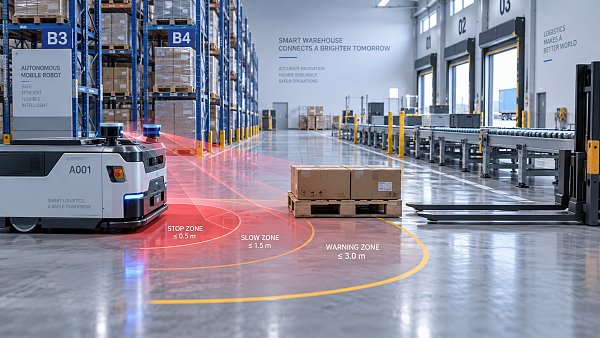
On May 21, 2026, the Wuhan Optoelectronics Expo concluded, drawing procurement delegations from 23 countries—including Germany and Japan—and securing on-site validation orders for automotive-grade solid-state LiDAR modules from major international integrators such as Bosch and Keyence. This development carries implications for suppliers in autonomous mobile robotics (AMR), automated guided vehicle (AGV), and robotaxi ecosystems—particularly those engaged in high-reliability optical sensing components and performance-validated supply chains.
Event Overview
The 2026 Wuhan Optoelectronics Expo closed on May 21, 2026. It attracted procurement delegations from 23 countries, including Germany, Japan, and South Korea. Bosch and Keyence conducted on-site verification and signed bulk orders for China-made automotive-grade solid-state LiDAR modules. The ordered modules meet three specified technical requirements: field-of-view (FOV) ≥120°, point cloud frequency ≥2.4 MHz, and IP6K9K protection rating. This outcome confirms that Chinese LiDAR manufacturers have met the technical admission criteria set by leading overseas system integrators, enabling traceable performance assurance for downstream applications in AGV/AMR and robotaxi systems.
Impact on Specific Industry Segments
Direct Export-Oriented Manufacturers
These companies—especially those producing solid-state LiDAR modules for automotive or industrial automation—are directly affected because the verified orders signal formal acceptance into Tier-1 integrator supply chains. Impact manifests in increased demand visibility for modules meeting FOV, point frequency, and IP6K9K specifications—not just volume, but qualification-driven procurement cycles.
Supply Chain Component Suppliers
Vendors of critical subcomponents—including MEMS mirrors, SPAD arrays, optical coatings, and ruggedized housings—are impacted as demand shifts toward parts certified to support IP6K9K-rated assemblies and high-speed scanning architectures. The emphasis on traceable performance assurance increases scrutiny on material certifications, process control documentation, and test report interoperability across tiers.
OEMs and System Integrators in AGV/AMR and Robotaxi
Downstream adopters face tightening specification alignment requirements. With validated LiDAR now available from domestic sources meeting Tier-1 benchmarks, integration timelines may compress—but only for platforms designed to accommodate the stated FOV and point cloud throughput. Compatibility validation (e.g., sensor fusion latency, calibration stability under IP6K9K conditions) becomes a more urgent engineering priority.
Logistics and Certification Support Providers
Third-party testing labs, export compliance consultants, and logistics firms specializing in high-value optoelectronic hardware are affected through rising demand for services tied to international automotive standards (e.g., ISO 26262 functional safety alignment, IEC 60529 ingress protection verification, and customs classification under HS code 9013.80 for laser-based rangefinders).
What Relevant Enterprises or Practitioners Should Focus On
Monitor official updates on export control classifications and technical standards alignment
While no regulatory change is reported, the fact that German and Japanese integrators completed on-site validation implies convergence on shared technical baselines. Enterprises should track whether national standardization bodies (e.g., SAC in China, DIN in Germany, JISC in Japan) issue joint guidance referencing FOV ≥120°, point frequency ≥2.4 MHz, or IP6K9K in upcoming revisions to optical sensor interface or environmental testing standards.
Assess exposure to and readiness for IP6K9K-compliant module integration
IP6K9K is an extended protection rating beyond standard IP67/IP68, indicating resistance to high-pressure, high-temperature water jets—critical for outdoor or heavy-industrial deployment. Firms designing enclosures, thermal management systems, or mounting interfaces should verify whether their current BOMs and mechanical tolerances support this level of sealing without redesign.
Differentiate between qualification signals and volume ramp timelines
The event reflects successful technical validation—not necessarily immediate mass production. Buyers and suppliers should distinguish between pilot-scale order signatures (as indicated by “batch verification”) and sustained commercial ramp. Contract terms, delivery schedules, and first-article inspection protocols—not just signing ceremonies—will determine real-world impact.
Prepare documentation packages aligned with Tier-1 integrator audit expectations
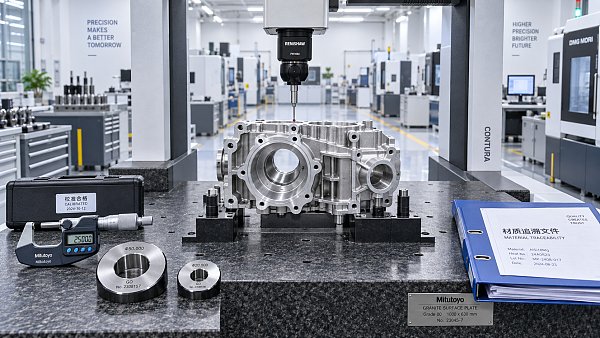
Successful validation by Bosch and Keyence suggests reliance on auditable design history files, environmental stress test reports (e.g., thermal cycling, vibration, salt mist), and full traceability of optical component sourcing. Suppliers should proactively consolidate these records—not wait for formal audit requests.
Editorial Perspective / Industry Observation
Observably, this outcome is less a sudden breakthrough and more a milestone confirming maturation in China’s LiDAR supply chain—particularly in consistency of performance validation and cross-border technical alignment. Analysis shows the focus on three hard metrics (FOV, point frequency, IP6K9K) reflects growing industry consensus around minimum viable specs for scalable autonomy deployments—not just R&D ambition. From an industry perspective, it is better understood as a signal of converging technical expectations among global integrators, rather than evidence of broad market share shift. Sustained relevance depends on whether follow-on orders reflect repeat procurement cycles, not one-off validations.
Conclusion:
This event underscores a structural shift: Chinese LiDAR vendors are transitioning from technology demonstrators to qualified component suppliers within internationally governed automotive and industrial automation value chains. However, the validation remains narrowly scoped—tied to specific parameters and specific integrators. It is more appropriately interpreted as evidence of targeted capability alignment than systemic leadership. For stakeholders, the priority remains disciplined execution against defined specs—not extrapolation beyond confirmed use cases.
Source Attribution:
Main source: Official closing announcement of the 2026 Wuhan Optoelectronics Expo, released May 21, 2026.
Points requiring ongoing observation: Long-term order fulfillment rates, expansion of certified models beyond the validated batch, and adoption of the same technical triad (FOV ≥120°, point frequency ≥2.4 MHz, IP6K9K) by additional Tier-1 integrators outside the reported German and Japanese delegations.
Search News
Hot Articles
- Carbon Fiber StructuresHow to Specify Aerospace Carbon Fiber Assemblies for Lightweight, Load-Bearing PartsJul 11, 2026
- Machine VisionXiaomi, Alibaba DAMO Academy Drive Open-Source Robotics Model Ecosystem, Lowering Algorithm Development Barriers for Overseas SMEs Adopting Chinese Robotics SolutionsMar 30, 2026
- Cobots & ArmsShanxi 'AI+' Conference Showcases Embodied Intelligence with Multinational Buyer Engagement: Key Industry ImplicationsMar 30, 2026
Popular Tags
Recommended News
 Jul 11, 2026How to Specify Aerospace Carbon Fiber Assemblies for Lightweight, Load-Bearing PartsAerospace carbon fiber assemblies: learn how to specify laminate design, load data, joining methods, and inspection controls for lighter, reliable load-bearing aerospace parts.Elena Rostova (UAV Systems Researcher)
 Mar 30, 2026Xiaomi, Alibaba DAMO Academy Drive Open-Source Robotics Model Ecosystem, Lowering Algorithm Development Barriers for Overseas SMEs Adopting Chinese Robotics SolutionsXiaomi & Alibaba DAMO Academy's open-source robotics models lower algorithm barriers for global SMEs. Boost efficiency in manufacturing, logistics & smart retail with ROS 2 compatible solutions.TSV Data Lab
 Mar 30, 2026Shanxi 'AI+' Conference Showcases Embodied Intelligence with Multinational Buyer Engagement: Key Industry ImplicationsShanxi 'AI+' Conference highlights embodied intelligence with Tesla, Ubtech & Jiantao showcasing multimodal robotics. 40+ global buyers validated tech on-site, creating new B2B channels for industrial automation & AI solutions.Chen Wei (Automation Lead Engineer)
 Mar 30, 2026Zhongguancun Unveils 6G Integrated Sensing-Computing-Intelligence Platform to Empower Embodied Robots for Global Industrial ApplicationsZhongguancun's new 6G platform revolutionizes industrial robotics with <10ms latency, empowering global automotive, logistics & port automation. Discover how this tech boosts China's smart manufacturing exports.TSV Data Lab
 Mar 30, 2026Mech-Mind Tianjin Embodied Intelligence R&D and Production Base Goes Live, Cutting Delivery Time by 20%–30% for Global Customized AMR+Vision SolutionsMech-Mind's Tianjin AMR+Vision production base cuts delivery time by 20%-30% for欧美 & Latin American markets. Discover how this PLd-certified facility accelerates customized robotics solutions for smart manufacturing and logistics.Chen Wei (Automation Lead Engineer)
 Mar 30, 2026Boao Forum Reveals 'Co-evolution of Big and Small Brains' Trend in Humanoid Robots, China's Embodied Intelligence Accelerates Adaptation to Overseas Manufacturing Service ScenariosDiscover how China's humanoid robots, featuring 'Co-evolution of Big and Small Brains,' are revolutionizing global manufacturing. Learn about Embodied Tian Gong 3.0's ISO compliance and overseas deployment at Boao Forum 2026.Chen Wei (Automation Lead Engineer)
 Mar 30, 2026China Railway Industrial Secures Patent for Embodied Robotics in Material Handling, Boosting High-Precision Delivery Capabilities for Overseas Infrastructure and Manufacturing ProjectsChina Railway Industrial's new patent for embodied robotics in material handling boosts high-precision delivery for global infrastructure & manufacturing. Discover how this innovation enhances logistics accuracy in automotive, rail transit & EPC projects.Chen Wei (Automation Lead Engineer)
 Oct 06, 2026Navigation Fault Tolerance Standards for AMRs: What Safety Teams Must VerifyNavigation fault tolerance standards: learn what AMR safety teams must verify, from localization loss and sensor faults to stopping distance, safe restart, and site-specific validation.Chen Wei (Automation Lead Engineer)
 Oct 05, 2026Calculating Edge Computing Total Cost of Ownership Across Distributed SitesEdge computing ownership cost explained: calculate deployment, energy, connectivity, security, remote support, and refresh costs across distributed sites.TSV Data Lab
 Oct 04, 2026CAD/CAM Benchmarking in the GCC: What Manufacturers Should Ask a ConsultantCAD CAM benchmark consultant GCC guide: learn the key questions manufacturers should ask to validate post-processors, workflows, machine performance, and production risk.Victor Lin (Chief Software Architect)
 Oct 03, 2026Selecting Automotive Radar Sensor Modules for ADAS Range, Resolution, and IntegrationAutomotive radar sensor module selection guide for ADAS: compare range, resolution, field of view, latency, and integration to build safer, reliable vehicle systems.TSV Data Lab
 Oct 02, 2026How to Qualify Machined Parts Suppliers for Hard Tech ProgramsHard tech supply chain machined parts demand rigorous supplier qualification. Learn how to assess capability, traceability, quality controls, and delivery resilience.Dr. Marcus Vance
 Oct 01, 2026How to Select an Outdoor Security Radar Sensor for Perimeter Detection?Outdoor security radar sensor selection guide: compare range, accuracy, false-alarm control, integration, and field testing for reliable perimeter detection.TSV Data Lab
 Sep 30, 2026How to Evaluate Solid-State LiDAR Hardware for Outdoor Autonomous VehiclesSolid state LiDAR hardware evaluation guide for outdoor autonomous vehicles—compare range, point-cloud quality, environmental resilience, integration, and safety.TSV Data Lab
 Sep 29, 2026ISO 9283 Repeatability: How to Evaluate Cobot Positioning PerformanceISO 9283 cobot repeatability explained: learn how payload, reach, approach direction, and test conditions affect positioning performance and cell capability.Chen Wei (Automation Lead Engineer)
 Oct 06, 2026Are Collaborative Robots Safe Enough to Operate Without Fencing?Are collaborative robots safe enough to work without fencing? Explore risk assessment, safeguarding options, and practical guidance for safer, productive cobot cells.Chen Wei (Automation Lead Engineer)
 Oct 05, 2026What Causes Machine Vision Systems to Miss Small Defects?What causes machine vision systems to miss small defects? Discover how lighting, optics, motion, and AI thresholds affect detection—and prevent costly escapes.TSV Data Lab
 Oct 04, 2026How Should You Compare 5-Axis CNC Machine Accuracy Claims?How do I compare 5-axis CNC machine accuracy claims? Learn how to assess standards, thermal stability, TCP accuracy, and real-world test evidence.Dr. Marcus Vance
 Oct 03, 2026Is Edge Computing Necessary for Real-Time Quality Inspection?Is industrial edge computing necessary for real-time quality inspection? Explore how latency, data volume, reliability, and control integration shape the right architecture.TSV Data Lab
 Oct 02, 2026What Documents Prove a Precision Machining Supplier Can Hold Tolerance?What documents prove a precision machining supplier can hold tolerance? Explore certificates, FAI reports, calibration, SPC, and traceability evidence to qualify suppliers with confidence.Dr. Marcus Vance
 Oct 01, 2026Can a Machining Supplier Meet Aerospace Fatigue Testing Requirements?Can a machining supplier meet aerospace fatigue testing requirements? Learn the traceability, process control, and test evidence needed for reliable aerospace parts.Dr. Marcus Vance
 Sep 30, 2026Which Industrial Robot Specifications Matter for High-Precision Assembly?Which industrial robot specifications matter most for high-precision assembly? Explore repeatability, accuracy, stiffness, vibration, calibration, and force control for reliable yields.Chen Wei (Automation Lead Engineer)
 Sep 29, 2026How Do You Verify Servo Motor Torque Under Continuous Load?How do I verify servo motor torque under continuous load? Learn RMS torque checks, torque-speed limits, thermal derating, and real-machine testing.Chen Wei (Automation Lead Engineer)
 Oct 02, 2026ZD330 Software Configuration: Verifying Cut-List Import Before PurchaseZD330 software and machine configuration: verify cut-list imports, data mapping, labels, and workflow before purchase to reduce errors and choose with confidence.Victor Lin (Chief Software Architect)