
How to compare UAV ground control station wholesale offers
Publication Date
author
Comparing UAV ground control station wholesale offers is not mainly about finding the lowest unit price. For most serious buyers, the best offer is the one that matches your aircraft protocols, supports stable low-latency control in real operating conditions, integrates with your payload and software stack, and remains supportable over the full lifecycle of the fleet. If you compare suppliers only by quotation, you risk buying a ground control station that is harder to deploy, less reliable in the field, and more expensive over time.
For researchers, operators, procurement teams, and business decision-makers, the practical evaluation framework is straightforward: verify compatibility first, then control performance, then interface expansion, then reliability, compliance, training, and long-term support. Price matters, but only after those technical and operational conditions are clear.
What buyers are really trying to compare in a UAV ground control station wholesale offer
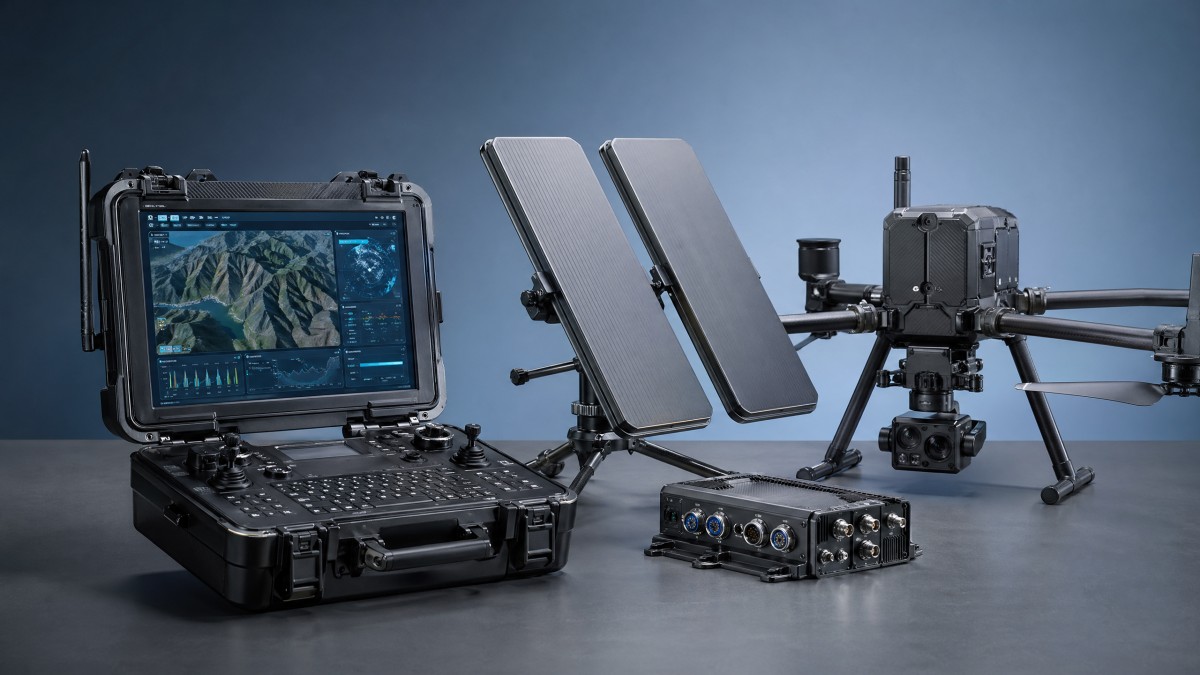
When users search for how to compare UAV ground control station wholesale offers, they are usually not looking for a generic product overview. They want a decision method. They need to know which offer is actually lower risk, easier to deploy, and better aligned with mission requirements.
In practice, four buyer groups often overlap:
- Information researchers want a reliable shortlist and clear technical comparison points.
- Operators and end users care about usability, display readability, communication stability, and field workflow.
- Procurement teams need apples-to-apples comparison criteria, total cost visibility, and supplier verification.
- Decision-makers focus on deployment risk, ROI, scalability, and after-sales continuity.
That means the article should not spend much time on broad UAV definitions. The useful comparison starts with the operating environment, mission type, control architecture, and support model behind each offer.
Start with mission fit, not price: what the ground control station must actually do
A wholesale offer only makes sense in context. A ground control station for agricultural spraying, ISR, mapping, infrastructure inspection, or tethered drone operations can look similar on paper but differ significantly in daily use.
Before comparing quotations, define these baseline requirements:
- Aircraft type: multirotor, fixed-wing, VTOL, tethered drone, or mixed fleet
- Control mode: manual, assisted, autonomous waypoint, BVLOS support, or multi-UAV coordination
- Payload integration: EO/IR camera, LiDAR, mapping sensor, loudspeaker, relay payload, or custom modules
- Communication environment: urban interference, industrial zone, open rural area, coastal, or mountain terrain
- Operator workflow: vehicle-mounted station, tripod setup, handheld control, fixed command room, or mobile shelter
- Data needs: live telemetry only, HD video downlink, sensor fusion, mission logging, or cloud sync
If a supplier cannot map its offer clearly to these operational requirements, the quotation is incomplete no matter how attractive the price looks.
Compatibility is the first filter: protocols, airframes, payloads, and software
One of the biggest hidden risks in UAV ground control station wholesale procurement is compatibility mismatch. This is especially important for buyers operating mixed fleets or sourcing from multiple vendors such as airframe manufacturers, tethered drone system factory partners, and carbon fiber drone frame wholesale suppliers.
Ask suppliers to clarify compatibility across four layers:
- Flight control compatibility: PX4, ArduPilot, proprietary autopilot, or hybrid architecture
- Communication protocols: MAVLink, SBUS, CAN, Ethernet, serial, proprietary encrypted links
- Payload interfaces: HDMI, SDI, IP stream, USB, UART, gimbal protocol, trigger control
- Software ecosystem: mission planning software, GIS integration, fleet management platform, SDK/API access
Do not accept vague claims such as “supports mainstream platforms.” Ask for a compatibility matrix. A serious supplier should provide exact supported versions, integration limitations, and any dependency on firmware or third-party modules.
If your procurement plan includes future upgrades, ask whether new aircraft or payload profiles can be added without replacing the full station. Interface scalability often separates a usable wholesale offer from a short-lived one.
Control and link performance: what to verify beyond headline range claims
Many wholesale offers highlight transmission distance, but that metric alone tells very little about real field performance. What matters more is whether control, telemetry, and video remain stable under interference, mobility, and mission load.
Focus on these engineering metrics:
- End-to-end control latency under normal and peak data load
- Telemetry refresh stability during long missions
- Video downlink consistency at different resolutions and bitrates
- Packet loss behavior in congested RF environments
- Link redundancy and failover when primary channels degrade
- Anti-interference performance near power infrastructure, industrial sites, or urban noise sources
Ask suppliers how they tested these values. Was performance measured in open-field line-of-sight conditions only, or also in realistic operating environments? A lower-cost offer can become expensive if unstable links force aborted flights, retraining, or extra field hardware.
Hardware quality and field usability: the details operators notice immediately
For operators, the best ground control station is not the one with the longest brochure. It is the one that works reliably during long field sessions, under sunlight, dust, vibration, and time pressure.
Key hardware checkpoints include:
- Display brightness and readability in outdoor conditions
- Battery endurance and hot-swap capability
- Ingress protection against dust and light rain
- Thermal management during long missions in hot climates
- Mechanical durability for transport, vibration, and repeated deployment
- Antenna layout and portability for setup speed and signal quality
- Human-machine interface including button logic, joystick feel, touchscreen usability, and glove operation
If possible, request a live demo or field test checklist. Procurement decisions often overvalue spec sheets and undervalue actual ergonomics. Operator friction turns into slower missions, avoidable errors, and longer training cycles.
Scalability and system integration: can this offer support your next phase?
Some buyers only compare the current delivery scope. A better approach is to ask whether the system can scale with your fleet, mission complexity, and data workflow.
Useful questions include:
- Can one station manage multiple UAV profiles?
- Does it support modular payload additions without custom redevelopment?
- Can it connect to third-party command systems or fleet dashboards?
- Is there API or SDK access for custom workflows?
- Can logs, telemetry, and mission records be exported in usable formats?
- Does it support future regulatory or cybersecurity upgrades?
This matters especially for enterprise users building a broader UAV ecosystem rather than buying a standalone controller. A ground control station that cannot integrate cleanly may block operational growth later.
Compare lifecycle cost, not just wholesale pricing
In B2B UAV procurement, the cheapest initial quotation is rarely the cheapest decision. To compare UAV ground control station wholesale offers properly, calculate total cost of ownership over the expected service period.
Look beyond unit price and include:
- Software licensing and upgrade fees
- Training cost for pilots, technicians, and supervisors
- Spare parts availability and replacement lead times
- Repair turnaround time and warranty terms
- Integration engineering cost for payloads or enterprise software
- Certification or compliance adaptation cost
- Downtime risk cost if support is weak or remote only
A well-supported offer with better documentation and fewer compatibility issues may produce lower lifetime cost than a lower-priced station requiring frequent workarounds.
Supplier credibility: how to verify that the wholesale offer is real and supportable
Even a technically promising product can be a poor procurement choice if the supplier cannot support volume orders, configuration control, or after-sales service. This is where professional buyers should go deeper than marketing claims.
Check the supplier on these points:
- Manufacturing consistency: can they deliver repeatable hardware across batches?
- Version control: are hardware and firmware revisions documented?
- Test records: do they provide validation data, burn-in process, or QA reports?
- Service capacity: who handles technical support, repairs, and firmware issues?
- Documentation quality: do manuals, interface guides, and training materials exist in usable form?
- Case references: do they have relevant deployments in similar industries or conditions?
For larger sourcing programs, ask for sample units, FAT/SAT criteria, or acceptance benchmarks before committing to full volume. This is especially useful when sourcing across the broader UAV supply chain, where multiple subsystems must work together reliably.
A practical comparison framework procurement teams can use
To make supplier evaluation more objective, use a weighted scorecard rather than relying on discussion alone. A simple model may include:
- Compatibility and integration: 25%
- Control/link performance: 20%
- Hardware durability and usability: 15%
- Scalability and software openness: 15%
- Support, training, and documentation: 15%
- Commercial terms and total cost: 10%
The exact weighting should reflect your use case. For example:
- Operators may weight usability and reliability higher.
- Procurement teams may emphasize supportability and lifecycle cost.
- Executives may prioritize deployment risk, expansion fit, and ROI.
This approach creates a fairer comparison between offers that differ in architecture, support model, and included accessories.
Common mistakes when comparing UAV ground control station wholesale offers
Many buying teams make avoidable errors early in the process. The most common are:
- Comparing prices before aligning technical scope
- Ignoring protocol and payload integration limits
- Accepting range claims without latency and interference data
- Underestimating training and usability issues
- Failing to verify warranty, repair flow, and spare stock
- Choosing closed systems without considering future expansion
- Overlooking supplier documentation quality and version control
Each of these mistakes can delay deployment and increase total program cost, even when the initial offer looks commercially attractive.
Conclusion: the best wholesale offer is the one with the lowest operational risk
To compare UAV ground control station wholesale offers effectively, buyers should treat price as the final filter, not the first one. The strongest offer is usually the one that proves compatibility, stable low-latency performance, field-ready hardware, scalable integration, and dependable lifecycle support.
For technical researchers, this means asking for hard compatibility and performance evidence. For operators, it means validating usability under real conditions. For procurement teams, it means building an objective scorecard and comparing total ownership cost. For decision-makers, it means selecting the supplier that reduces deployment friction and protects long-term fleet value.
In a market full of broad claims, the most reliable purchasing decision comes from engineering-level comparison. If a supplier cannot translate its wholesale offer into measurable operating outcomes, it is not yet a strong offer.
Search News
Hot Articles
- Carbon Fiber StructuresHow to Specify Aerospace Carbon Fiber Assemblies for Lightweight, Load-Bearing PartsJul 11, 2026
- Machine VisionXiaomi, Alibaba DAMO Academy Drive Open-Source Robotics Model Ecosystem, Lowering Algorithm Development Barriers for Overseas SMEs Adopting Chinese Robotics SolutionsMar 30, 2026
- Cobots & ArmsShanxi 'AI+' Conference Showcases Embodied Intelligence with Multinational Buyer Engagement: Key Industry ImplicationsMar 30, 2026
Popular Tags
Recommended News
 Jul 11, 2026How to Specify Aerospace Carbon Fiber Assemblies for Lightweight, Load-Bearing PartsAerospace carbon fiber assemblies: learn how to specify laminate design, load data, joining methods, and inspection controls for lighter, reliable load-bearing aerospace parts.Elena Rostova (UAV Systems Researcher)
 Mar 30, 2026Xiaomi, Alibaba DAMO Academy Drive Open-Source Robotics Model Ecosystem, Lowering Algorithm Development Barriers for Overseas SMEs Adopting Chinese Robotics SolutionsXiaomi & Alibaba DAMO Academy's open-source robotics models lower algorithm barriers for global SMEs. Boost efficiency in manufacturing, logistics & smart retail with ROS 2 compatible solutions.TSV Data Lab
 Mar 30, 2026Shanxi 'AI+' Conference Showcases Embodied Intelligence with Multinational Buyer Engagement: Key Industry ImplicationsShanxi 'AI+' Conference highlights embodied intelligence with Tesla, Ubtech & Jiantao showcasing multimodal robotics. 40+ global buyers validated tech on-site, creating new B2B channels for industrial automation & AI solutions.Chen Wei (Automation Lead Engineer)
 Mar 30, 2026Zhongguancun Unveils 6G Integrated Sensing-Computing-Intelligence Platform to Empower Embodied Robots for Global Industrial ApplicationsZhongguancun's new 6G platform revolutionizes industrial robotics with <10ms latency, empowering global automotive, logistics & port automation. Discover how this tech boosts China's smart manufacturing exports.TSV Data Lab
 Mar 30, 2026Mech-Mind Tianjin Embodied Intelligence R&D and Production Base Goes Live, Cutting Delivery Time by 20%–30% for Global Customized AMR+Vision SolutionsMech-Mind's Tianjin AMR+Vision production base cuts delivery time by 20%-30% for欧美 & Latin American markets. Discover how this PLd-certified facility accelerates customized robotics solutions for smart manufacturing and logistics.Chen Wei (Automation Lead Engineer)
 Mar 30, 2026Boao Forum Reveals 'Co-evolution of Big and Small Brains' Trend in Humanoid Robots, China's Embodied Intelligence Accelerates Adaptation to Overseas Manufacturing Service ScenariosDiscover how China's humanoid robots, featuring 'Co-evolution of Big and Small Brains,' are revolutionizing global manufacturing. Learn about Embodied Tian Gong 3.0's ISO compliance and overseas deployment at Boao Forum 2026.Chen Wei (Automation Lead Engineer)
 Mar 30, 2026China Railway Industrial Secures Patent for Embodied Robotics in Material Handling, Boosting High-Precision Delivery Capabilities for Overseas Infrastructure and Manufacturing ProjectsChina Railway Industrial's new patent for embodied robotics in material handling boosts high-precision delivery for global infrastructure & manufacturing. Discover how this innovation enhances logistics accuracy in automotive, rail transit & EPC projects.Chen Wei (Automation Lead Engineer)
 Oct 26, 2026AMAXiMAL Releases Open-Source TopMod 3D v3 With Claude AIExplore AMAXiMAL’s free, open-source TopMod 3D v3 with Claude AI assistance, topology-based modeling and plywood fabrication tools that connect complex designs to physical builds.Dr. Marcus Vance
 Oct 26, 2026Choosing a SCADA System Integrator Company: PLC Compatibility and Long-Term SupportChoose a scada system integrator company with proven PLC compatibility and reliable long-term support. Discover what to test, compare, and require before investing.Victor Lin (Chief Software Architect)
 Oct 25, 2026Hesai Leads Global ADAS Main Lidar Shipments in Yole’s 2026 ReportHesai led global ADAS main lidar shipments with a 43% share in 2025, according to Yole’s 2026 report. Explore what this ranking reveals about its automotive market position.TSV Data Lab
 Oct 25, 2026Choosing an Aerospace Materials Manufacturer: Quality and Traceability ChecksChoosing an aerospace materials manufacturer? Learn how to verify certifications, test reports, and lot traceability to qualify suppliers confidently and reduce costly sourcing risks.Dr. Marcus Vance
 Oct 24, 2026Guotai Haitong: Global Entry-Level 3D Printer Shipments Rose 39% in Q1 2026Entry-level 3D printer shipments rose 39% in Q1 2026, Guotai Haitong reports. Explore how AI, multicolor printing and print farms are shaping market growth.Dr. Marcus Vance
 Oct 24, 2026Choosing an Industrial Vision Inspection Supplier: Acceptance Tests That MatterChoose an industrial vision inspection supplier with confidence. Discover acceptance tests for defect detection, false rejects, production speed, and reliable part rejection before you buy.TSV Data Lab
 Oct 23, 2026US Navy Raises Gecko Robotics Contract Ceiling to $300M for Robotic Fleet MaintenanceUS Navy raises Gecko Robotics’ contract ceiling to $300M for Pacific Fleet robotic inspections. Explore potential opportunities for maintenance suppliers and key procurement considerations.Chen Wei (Automation Lead Engineer)
 Oct 23, 2026Choosing Industrial Sensing Systems for Global Plants: Protocol CompatibilityCompare industrial sensing systems international buyers can trust. Explore protocol compatibility, reduce integration risks, and select proven configurations for reliable global plant deployments.TSV Data Lab
 Oct 22, 2026KUKA Showcases Physical AI and iiQKA.AI Vision at NVIDIA GTC BerlinExplore KUKA’s Physical AI showcase at NVIDIA GTC Berlin and discover how iiQKA.AI Vision aims to simplify robotic vision integration and improve 2D and 3D scene recognition.TSV Data Lab
 Oct 22, 2026Robotic Machining of Advanced Composites: What Tolerances Are Achievable?Explore advanced materials machining robotics: discover what drives achievable composite tolerances and how to validate accuracy before investing in your next machining system.Dr. Marcus Vance
 Oct 21, 2026China’s Industrial Robot Exports Near RMB 10 Billion in First Nine Months of 2026China’s industrial robot exports neared RMB 10 billion in January–September 2026, with value rising faster than volume. Explore the data and what it could mean for suppliers.Chen Wei (Automation Lead Engineer)
 Oct 21, 2026Low-Latency Industrial Data Processing: Pricing and Key Cost DriversExplore industrial data latency price drivers, from edge hardware to integration and support. Learn how to compare quotes, verify performance, and avoid unnecessary costs.TSV Data Lab
 Oct 20, 2026KUKA Launches iiQKA.AI Vision to Simplify Industrial Image ProcessingKUKA iiQKA.AI Vision simplifies industrial image processing with controller-based 2D and 3D vision. Explore drag-and-drop setup for vision-guided automation.TSV Data Lab
 Oct 20, 2026Smart Industrial Edge Devices: Key Criteria for Legacy PLC IntegrationChoose smart industrial edge devices for legacy PLC integration. Discover key criteria for compatibility, data quality, security, and reliable collection without disrupting control.TSV Data Lab
 Oct 19, 2026Choosing a Radar Sensor by Application: Range, Resolution, and Field of ViewSimplify radar sensor application based product selection. Compare range, resolution, and field of view to avoid blind spots and choose with confidence. Explore the guide.TSV Data Lab
 Oct 18, 2026Comparing Material Options for Procurement: Specs, Costs, and Supply RisksExplore procurement oriented technical content on material options, specs, costs, and supply risks. Compare alternatives to cut hidden expenses and make confident sourcing decisions.Dr. Marcus Vance
 Oct 17, 20265-Axis CNC Positioning Accuracy: How to Interpret ISO 230-2 Test ResultsAssess 5 axis CNC machining positioning accuracy with ISO 230-2. Learn to interpret repeatability, reversal error, and test conditions to compare suppliers and make confident acceptance decisions.Dr. Marcus Vance























