
Medical Device Assembly With Cobots Raises a Traceability Challenge
Publication Date
author
As cobot for medical device assembly scales across regulated production lines, traceability becomes the real engineering test—not just speed or flexibility. From cobot ISO/TS 15066 safety standard compliance to robotic arm for electronics assembly-style precision, manufacturers need smart factory automation solutions that connect every motion, batch, and quality event into a verifiable data trail.
Why traceability becomes the real bottleneck when cobots enter medical device assembly
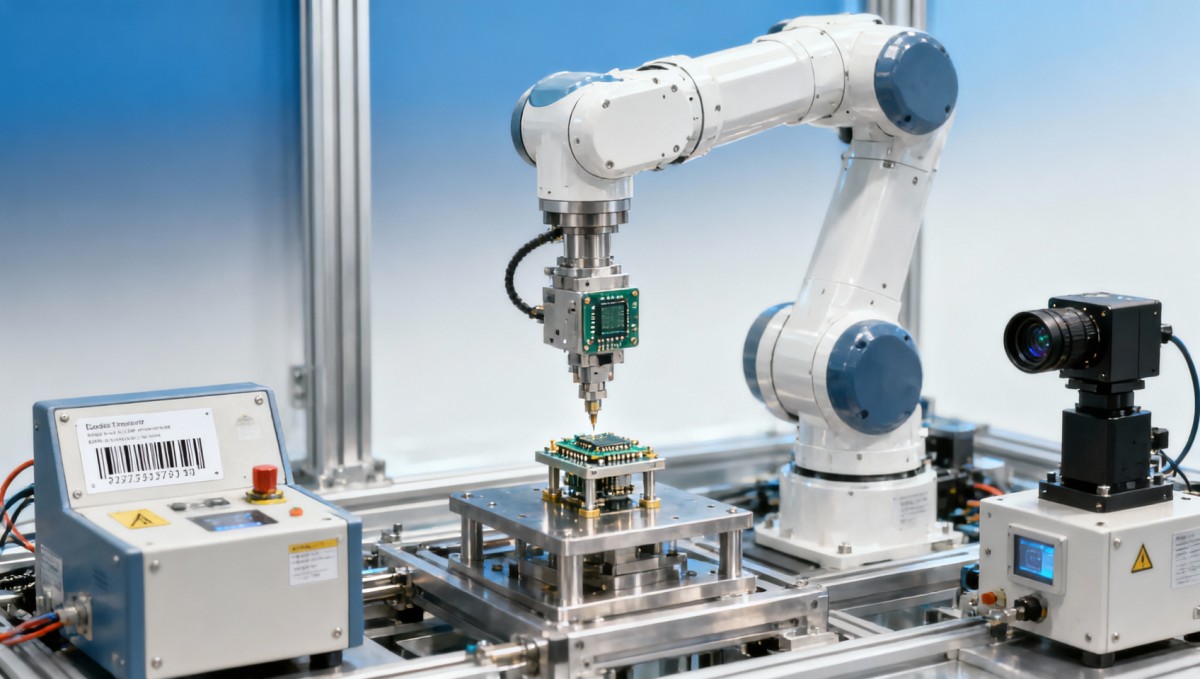
In medical device assembly, collaborative robots solve a visible problem first: repetitive manual work, ergonomic strain, and the need for stable cycle times across small and mid-volume production. Yet once a cobot is deployed, a harder question appears. Can every assembly action be linked to the correct operator authorization, lot number, torque record, vision result, and release status? In regulated manufacturing, that evidence chain matters as much as the assembly result itself.
This challenge is not limited to implantable or highly invasive devices. It affects consumables, diagnostic components, sterile packaging, and electronic subassemblies whenever producers must document process history, deviation handling, and quality decisions. A line may run with repeatability measured in fractions of a millimeter, but if data is fragmented across the robot controller, MES, scanner, and inspection station, the traceability system remains incomplete.
For information researchers, the key issue is separating automation marketing from engineering reality. For operators, the concern is whether the human-machine workflow adds scanning and confirmation steps without slowing throughput. For procurement teams, the decision often turns on integration effort over the next 6–18 months, not just the purchase price of the cobot arm. For executives, the risk is broader: audit exposure, recall complexity, and supplier qualification delays.
TechStat Vanguard approaches this problem from a data-first standpoint. In hard-tech environments, parameters, interfaces, and event records determine whether an automation project scales safely. That means evaluating not only robot payload, reach, and repeatability, but also timestamp granularity, device communication methods, e-record compatibility, user access control, and exception logging across 3 critical layers: execution, quality, and compliance.
What “traceability” must include in a cobot-driven line
Many teams reduce traceability to barcode reading. That is too narrow for medical device assembly. A practical traceability architecture should record who did what, what machine state existed at the time, which material lot was consumed, what quality check passed or failed, and what happened after any alarm or rework decision. Without this chain, root-cause investigation becomes slow and expensive.
- Material traceability: lot code, supplier batch, expiration date, and component consumption sequence.
- Process traceability: cycle start and end time, torque or force window, vision inspection status, and robotic path confirmation.
- Personnel traceability: operator login, supervisor override, maintenance access, and training authorization status.
- Quality traceability: in-process alarms, nonconformance routing, rework approvals, and final release decision.
Once these categories are defined early, cobot integration decisions become more disciplined. Instead of asking only whether the robot can assemble the part, teams ask whether the system can create an auditable digital thread within a typical production retention model of several years, depending on product class and regional regulation.
Which production scenarios create the biggest traceability risk?
Traceability risk rises when process complexity grows faster than the data model. This often happens in hybrid lines where a cobot performs pick-and-place, screwdriving, adhesive dispensing, or packaging support while operators still load trays, confirm part variants, or clear exceptions manually. The physical process looks controlled, but the event history becomes discontinuous if handoff points are not digitally captured.
The highest-risk environments usually combine 4 conditions: frequent SKU changeovers, mixed manual and automated tasks, quality-critical assembly parameters, and decentralized software systems. A plant may switch between 6–20 part configurations in a week, each with different instructions, torque recipes, labeling logic, or packaging rules. In that context, recipe control and version traceability become as important as robot speed.
Another common issue appears when manufacturers adapt a robotic arm for electronics assembly approach to medical devices without upgrading documentation discipline. Precision motion may transfer well, especially for tiny components and ESD-sensitive assemblies, but medical production adds stricter scrutiny around batch genealogy, deviation records, device history documentation, and controlled process changes.
The table below helps teams identify where cobot traceability gaps usually emerge and what should be monitored first during line design, validation, and supplier review.
The pattern is clear: the greatest risk is not usually robot failure. It is unlinked data. When a deviation occurs, teams need to reconstruct events in minutes, not after several hours of manual log review. That is why system architecture should be reviewed before installation, during FAT/SAT planning, and again after the first 2–4 weeks of stable production.
Why mixed automation lines are harder than fully manual or fully automated lines
A fully manual line relies on disciplined operator records. A fully automated line often has cleaner machine event logging. Mixed lines sit in the middle and create the most ambiguity. The cobot may complete 70% of the physical task while the operator still makes decisions on orientation, part acceptance, fixture loading, or rework routing. Each of those decisions can influence product quality, but they may never enter the digital record unless explicitly designed into the workflow.
This is why smart factory automation solutions for medical production must capture both machine events and human interventions. A timestamped alert history, role-based approval trail, and unit-level association model often matter more than one extra second of cycle-time improvement.
What technical and compliance checkpoints should buyers verify before selecting a cobot solution?
Procurement for cobot medical device assembly should not start with payload alone. Buyers need a cross-functional checklist that covers robotics, controls, software integration, validation readiness, and regulated documentation. In many projects, the robot hardware is the easiest line item to compare. The hidden complexity lies in interfaces, logging behavior, and change control across the surrounding production ecosystem.
For safety, many teams begin with cobot ISO/TS 15066 safety standard considerations, then evaluate cell design, force-limited operation, emergency stop architecture, and application-specific risk assessment. That is necessary, but not sufficient. Medical manufacturers also need to verify whether the final solution supports procedural control, electronic records discipline, and validation evidence that can withstand internal and external audit review.
A practical buyer review often spans 5 core dimensions: mechanical suitability, process capability, data connectivity, quality integration, and lifecycle support. If one of these areas is weak, the project may still launch, but scaling to multiple lines, shifts, or sites becomes slower and more expensive over the next 12–24 months.
The following table can be used during RFQ, supplier qualification, or technical clarification rounds to compare proposals on measurable items rather than marketing language.
Buyers should also ask about implementation boundaries. Does the integrator deliver only the cell, or the full digital handshake with barcode readers, printers, vision systems, and line software? A 10–15% difference in initial quote can become far less relevant if one supplier reduces interface risk and commissioning time by several weeks.
A practical shortlist for procurement teams
Five checks before approving a cobot proposal
- Confirm whether each unit, lot, or subassembly can be uniquely identified at the exact point where the cobot begins work.
- Review how recipe versions are locked, changed, and archived during changeovers across multiple SKUs.
- Verify whether alarms, rejects, overrides, and rework actions are logged with user and timestamp attribution.
- Check whether the supplier supports FAT, SAT, and post-install stabilization with documented issue closure.
- Assess spare parts, training, and support response expectations for the first 30, 90, and 180 days.
These checkpoints help procurement move from equipment buying to system buying. That distinction is critical in regulated automation.
How should manufacturers implement cobot traceability without slowing production?
The best implementation plans treat traceability as part of process engineering, not as an IT add-on after commissioning. In practice, the most effective projects define the data model before programming is finalized. Teams decide which events must be captured at unit level, which can remain batch-level, and which exceptions require mandatory operator action. This avoids retrofitting scanners, prompts, and databases after the line is already under schedule pressure.
A useful framework is a 4-step deployment path. Step 1 is process mapping. Step 2 is data binding. Step 3 is validation and controlled launch. Step 4 is stability monitoring. Each stage can take 1–3 weeks depending on line complexity, software readiness, and whether the plant already has a working MES or only local machine-level logging.
Operators should not be buried under unnecessary confirmations. Good interface design keeps human inputs limited to high-value events: login, lot confirmation, exception handling, and rework authorization. If a task can be auto-captured by a sensor, vision system, or robot controller with reliable timestamping, that is usually preferable to manual entry.
For executives and plant managers, the implementation KPI should balance throughput and evidence quality. Typical review points include first-pass yield, alarm recurrence, undocumented intervention count, and time required to reconstruct one unit history during an internal mock audit. If that reconstruction takes more than several minutes, the data architecture likely needs refinement.
Recommended implementation flow
- Map the process from incoming component to final release, including every manual and automated handoff.
- Define the minimum traceability dataset for each unit, batch, and exception path.
- Validate data links between cobot controller, scanners, inspection devices, and production software.
- Run controlled pilot lots, review deviations, and tune workflow before full-scale release.
This sequence reduces revalidation effort later. It also protects operator adoption, because the line is built around clear interactions rather than layered patches.
Common misconceptions, decision risks, and what the next wave of smart factory automation solutions looks like
One frequent misconception is that cobot deployment automatically improves compliance because robots are consistent. Consistency helps, but compliance depends on documented control. A cobot can repeat the same motion thousands of times, yet still leave a weak audit trail if system events, batch data, and user actions are not connected. Repeatable motion is not the same as complete traceability.
Another mistake is assuming the same architecture works for all product mixes. A low-variation line producing a single device family may work with relatively simple genealogy logic. A contract manufacturer handling multiple customer programs, validation packages, and rapid engineering changes will need stronger recipe governance, user permissions, and revision visibility. In that setting, software discipline often drives project success more than robot brand choice.
Looking ahead, more manufacturers will expect smart factory automation solutions to unify machine event capture, vision analytics, electronic batch records, and exception routing in near real time. Edge processing, better industrial connectivity, and standardized interfaces can help, but they do not remove the need for engineering governance. The market is moving toward connected cells, not isolated robots.
That trend aligns with TSV’s core view of industrial technology: decision quality improves when teams benchmark measurable facts instead of broad claims. In cobot medical device assembly, the winning projects are rarely the most heavily marketed ones. They are the projects where traceability logic, compliance thinking, and production engineering are designed together from day one.
FAQ for researchers, operators, buyers, and decision-makers
How do I know if a cobot is suitable for my medical device assembly process?
Start with process fit, not brand preference. Review payload, reach, repeatability, contact safety strategy, and cycle-time target, then check whether the line also requires unit-level genealogy, torque capture, vision evidence, or controlled rework. If the traceability burden is high, choose the solution with the cleanest data integration path, even if hardware cost is not the lowest.
What is the most overlooked traceability element in mixed human-cobot cells?
Human intervention logging. Plants often capture robot events but miss supervisor overrides, manual part substitutions, or rework approvals. Those events are exactly what auditors and quality engineers need when investigating deviations. Role-based access and timestamped exception records should be planned from the beginning.
How long does cobot integration for a regulated line usually take?
It depends on process complexity and software maturity. A relatively contained cell may move from design review to pilot within several weeks, while multi-station lines with MES, vision, and validation requirements can extend over a few months. The largest delays usually come from interface clarification, documentation gaps, and change control—not from robot installation alone.
Is a robotic arm for electronics assembly directly transferable to medical production?
Mechanically, sometimes yes. From a documentation and compliance perspective, not automatically. Medical production usually requires tighter control of batch genealogy, release logic, deviation handling, and validation records. Reusing a proven precision cell can save engineering time, but the traceability model often needs redesign.
Why work with TSV when evaluating cobot medical device assembly and traceability strategy?
TSV supports engineering-led decisions for teams that need more than vendor slogans. Our value is in translating hard-tech complexity into procurement-ready, validation-aware evaluation logic. We focus on measurable parameters, realistic implementation boundaries, and traceability analytics that help manufacturers reduce R&D trial-and-error costs and shorten supplier qualification cycles.
If you are comparing cobot medical device assembly solutions, we can help structure the review around the issues that matter most in regulated production: event capture, system integration, inspection linkage, changeover governance, and compliance-readiness. That is especially useful when proposals look similar at the hardware level but differ sharply in data architecture and long-term maintainability.
You can contact TSV to discuss specific topics such as parameter confirmation, application fit, traceability architecture, supplier comparison, implementation scope, expected delivery cycle, validation documentation needs, or quotation communication strategy. For teams still in the research phase, we can also help define the right shortlist criteria before formal RFQ release.
In a market full of noise, medical automation decisions should be anchored in evidence. If your next project involves cobot ISO/TS 15066 safety standard questions, robotic arm for electronics assembly migration to regulated lines, or broader smart factory automation solutions for auditable production, TSV provides a clearer path from concept review to decision-grade technical understanding.
Search News
Hot Articles
- Carbon Fiber StructuresHow to Specify Aerospace Carbon Fiber Assemblies for Lightweight, Load-Bearing PartsJul 11, 2026
- Machine VisionXiaomi, Alibaba DAMO Academy Drive Open-Source Robotics Model Ecosystem, Lowering Algorithm Development Barriers for Overseas SMEs Adopting Chinese Robotics SolutionsMar 30, 2026
- Cobots & ArmsShanxi 'AI+' Conference Showcases Embodied Intelligence with Multinational Buyer Engagement: Key Industry ImplicationsMar 30, 2026
Popular Tags
Recommended News
 Jul 11, 2026How to Specify Aerospace Carbon Fiber Assemblies for Lightweight, Load-Bearing PartsAerospace carbon fiber assemblies: learn how to specify laminate design, load data, joining methods, and inspection controls for lighter, reliable load-bearing aerospace parts.Elena Rostova (UAV Systems Researcher)
 Mar 30, 2026Xiaomi, Alibaba DAMO Academy Drive Open-Source Robotics Model Ecosystem, Lowering Algorithm Development Barriers for Overseas SMEs Adopting Chinese Robotics SolutionsXiaomi & Alibaba DAMO Academy's open-source robotics models lower algorithm barriers for global SMEs. Boost efficiency in manufacturing, logistics & smart retail with ROS 2 compatible solutions.TSV Data Lab
 Mar 30, 2026Shanxi 'AI+' Conference Showcases Embodied Intelligence with Multinational Buyer Engagement: Key Industry ImplicationsShanxi 'AI+' Conference highlights embodied intelligence with Tesla, Ubtech & Jiantao showcasing multimodal robotics. 40+ global buyers validated tech on-site, creating new B2B channels for industrial automation & AI solutions.Chen Wei (Automation Lead Engineer)
 Mar 30, 2026Zhongguancun Unveils 6G Integrated Sensing-Computing-Intelligence Platform to Empower Embodied Robots for Global Industrial ApplicationsZhongguancun's new 6G platform revolutionizes industrial robotics with <10ms latency, empowering global automotive, logistics & port automation. Discover how this tech boosts China's smart manufacturing exports.TSV Data Lab
 Mar 30, 2026Mech-Mind Tianjin Embodied Intelligence R&D and Production Base Goes Live, Cutting Delivery Time by 20%–30% for Global Customized AMR+Vision SolutionsMech-Mind's Tianjin AMR+Vision production base cuts delivery time by 20%-30% for欧美 & Latin American markets. Discover how this PLd-certified facility accelerates customized robotics solutions for smart manufacturing and logistics.Chen Wei (Automation Lead Engineer)
 Mar 30, 2026Boao Forum Reveals 'Co-evolution of Big and Small Brains' Trend in Humanoid Robots, China's Embodied Intelligence Accelerates Adaptation to Overseas Manufacturing Service ScenariosDiscover how China's humanoid robots, featuring 'Co-evolution of Big and Small Brains,' are revolutionizing global manufacturing. Learn about Embodied Tian Gong 3.0's ISO compliance and overseas deployment at Boao Forum 2026.Chen Wei (Automation Lead Engineer)
 Mar 30, 2026China Railway Industrial Secures Patent for Embodied Robotics in Material Handling, Boosting High-Precision Delivery Capabilities for Overseas Infrastructure and Manufacturing ProjectsChina Railway Industrial's new patent for embodied robotics in material handling boosts high-precision delivery for global infrastructure & manufacturing. Discover how this innovation enhances logistics accuracy in automotive, rail transit & EPC projects.Chen Wei (Automation Lead Engineer)
 Oct 15, 2026R&D Cost Reduction Services: How to Evaluate Fees, Savings, and ROIEvaluate R&D cost reduction services with confidence. Compare fees, verify savings, and calculate ROI without compromising performance. Discover how to choose a provider that delivers real value.Chen Wei (Automation Lead Engineer)
 Oct 14, 2026Drone Frame Composites: Carbon Fiber vs. Fiberglass for Weight and StiffnessExplore drone structural materials composites: compare carbon fiber and fiberglass for weight, stiffness, cost, and antenna compatibility. Find the right material for your drone frame.Elena Rostova (UAV Systems Researcher)
 Oct 13, 2026Smart Cameras vs. PC-Based Machine Vision: Which Fits High-Speed Inspection?This industrial product comparison for machine vision weighs smart cameras vs. PC-based systems on latency, throughput, and cost. Discover your best fit for high-speed inspection.TSV Data Lab
 Oct 12, 2026How to Verify RoHS Compliance in Industrial Sensing Systems Before DeploymentRoHS compliant sensing systems: learn how to verify materials, supplier declarations, testing, and configuration controls before industrial deployment.TSV Data Lab
 Oct 11, 2026How Procurement-Oriented Content Taxonomy Improves B2B Buying JourneysProcurement-oriented content taxonomy streamlines B2B buying journeys with clearer evidence, supplier comparisons, risk visibility, and faster approvals.TSV Data Lab
 Oct 10, 2026How to Select a Machine Performance Monitoring Platform for OEE and Downtime ReductionMachine performance monitoring platform selection guide: validate machine states, OEE data, downtime reasons, integrations, and scalability to reduce losses with confidence.TSV Data Lab
 Oct 08, 2026How to Machine Inconel 625 Blades Without Heat Cracks or Edge ChippingInconel 625 blade machining guide: prevent heat cracks, edge chipping, chatter, and work hardening with proven tooling, cooling, fixturing, and inspection strategies.Dr. Marcus Vance
 Oct 07, 2026How to Evaluate an HMI Panel Distributor for Industrial Automation ProjectsHMI panel distributor evaluation guide: verify technical compatibility, traceability, supply reliability, lifecycle support, and total cost for automation projects.Victor Lin (Chief Software Architect)
 Oct 06, 2026Navigation Fault Tolerance Standards for AMRs: What Safety Teams Must VerifyNavigation fault tolerance standards: learn what AMR safety teams must verify, from localization loss and sensor faults to stopping distance, safe restart, and site-specific validation.Chen Wei (Automation Lead Engineer)
 Oct 05, 2026Calculating Edge Computing Total Cost of Ownership Across Distributed SitesEdge computing ownership cost explained: calculate deployment, energy, connectivity, security, remote support, and refresh costs across distributed sites.TSV Data Lab
 Oct 04, 2026CAD/CAM Benchmarking in the GCC: What Manufacturers Should Ask a ConsultantCAD CAM benchmark consultant GCC guide: learn the key questions manufacturers should ask to validate post-processors, workflows, machine performance, and production risk.Victor Lin (Chief Software Architect)
 Oct 03, 2026Selecting Automotive Radar Sensor Modules for ADAS Range, Resolution, and IntegrationAutomotive radar sensor module selection guide for ADAS: compare range, resolution, field of view, latency, and integration to build safer, reliable vehicle systems.TSV Data Lab
 Oct 02, 2026How to Qualify Machined Parts Suppliers for Hard Tech ProgramsHard tech supply chain machined parts demand rigorous supplier qualification. Learn how to assess capability, traceability, quality controls, and delivery resilience.Dr. Marcus Vance
 Oct 01, 2026How to Select an Outdoor Security Radar Sensor for Perimeter Detection?Outdoor security radar sensor selection guide: compare range, accuracy, false-alarm control, integration, and field testing for reliable perimeter detection.TSV Data Lab
 Sep 30, 2026How to Evaluate Solid-State LiDAR Hardware for Outdoor Autonomous VehiclesSolid state LiDAR hardware evaluation guide for outdoor autonomous vehicles—compare range, point-cloud quality, environmental resilience, integration, and safety.TSV Data Lab
 Sep 29, 2026ISO 9283 Repeatability: How to Evaluate Cobot Positioning PerformanceISO 9283 cobot repeatability explained: learn how payload, reach, approach direction, and test conditions affect positioning performance and cell capability.Chen Wei (Automation Lead Engineer)
 Oct 14, 2026How tight can micro machining aerospace tolerances be in production?Micro machining aerospace tolerances can reach low-micron levels in production. Learn what controls repeatability, inspection confidence, and flight-critical quality.Dr. Marcus Vance























