MIIT Releases First List of Tech Incubators: 402 Standard-Level Hubs for Industrial AI & Precision Manufacturing
Publication Date
author
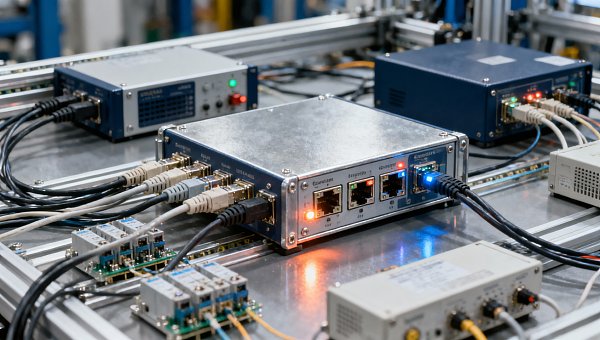
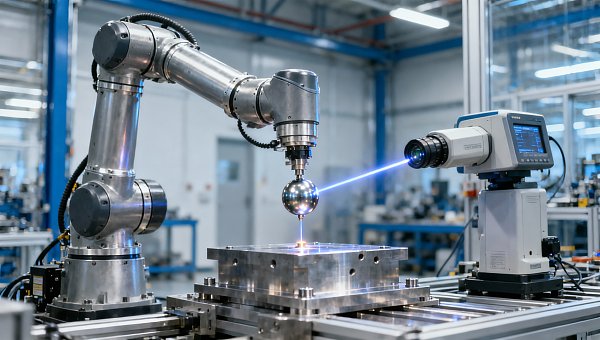
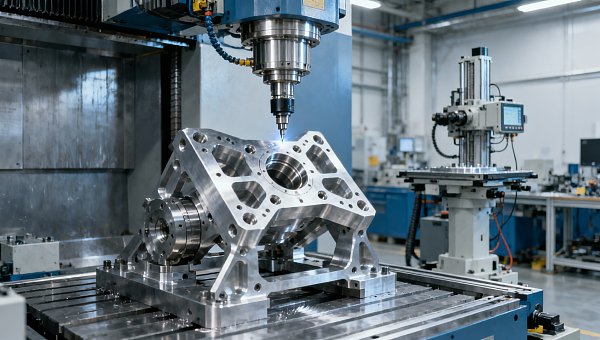
On April 21, 2026, the Ministry of Industry and Information Technology (MIIT) published its inaugural list of technology enterprise incubators, designating 402 entities as ‘Standard-Level’—with a strategic focus on industrial AI algorithms, PLC-based edge control, 5-axis CNC digital twin systems, and LiDAR embedded development. This list is positioned to serve as an authoritative whitelist for overseas procurement teams seeking high-potential Chinese technical partners, particularly for co-development and custom-delivery OEM and system integration projects.
Event Overview
On April 21, 2026, MIIT officially released the first batch of technology enterprise incubators. A total of 402 incubators were classified as ‘Standard-Level’. The selection criteria emphasize technical capabilities in four priority areas: industrial AI algorithms, PLC edge control, 5-axis CNC digital twin implementation, and LiDAR embedded development. The list is publicly available and intended for use by international stakeholders evaluating China-based R&D and engineering partners.
Industries and Segments Affected
Direct Trade Enterprises
These firms—especially those engaged in cross-border OEM or system integration contracts—may experience shifts in partner evaluation criteria. Overseas buyers are now likely to reference the MIIT list when shortlisting Chinese technical collaborators, potentially narrowing sourcing channels toward listed incubators and their resident startups. Impact includes increased demand for documented technical alignment with the four designated domains, and possible delays in procurement cycles while buyers verify eligibility against the official list.
Manufacturing Enterprises (OEM/ODM/System Integrators)
Firms delivering hardware-software integrated solutions—particularly in automation, smart machinery, or sensor-integrated equipment—may face new expectations from international clients. Clients may request evidence of collaboration with or affiliation to a Standard-Level incubator, especially when bidding for projects involving algorithm customization, real-time edge control, or digital twin deployment. This could influence bid competitiveness and technical disclosure requirements.
Supply Chain Service Providers (e.g., Technical Sourcing Agents, Certification Consultants)
Service providers supporting foreign buyers in China may need to update due diligence frameworks to include verification against the MIIT incubator list. Their value proposition may shift toward helping clients map technical needs (e.g., ‘5-axis CNC digital twin support’) to specific listed incubators—and validating whether resident startups hold relevant IP or pilot deployments in those domains.
What Relevant Enterprises or Practitioners Should Focus On
Monitor Official Updates and Tiering Clarifications
The initial release specifies only a ‘Standard-Level’ designation. Analysis来看, future announcements may introduce higher tiers (e.g., ‘Advanced’ or ‘Specialized’) or define renewal criteria, performance benchmarks, or audit mechanisms. Enterprises should track MIIT’s official notices—not just the list itself—for operational implications.
Map Technical Capabilities to the Four Priority Domains
From industry perspective, the four named technical directions serve as de facto capability signals—not just categories. Firms involved in industrial software, motion control, metrology, or embedded sensing should assess whether their current offerings align with how MIIT defines ‘PLC edge control’ or ‘LiDAR embedded development’—including documentation, test reports, or client case studies that reflect those exact scopes.
Distinguish Between Policy Signal and Commercial Utility
Current more suitable understanding is that the list functions primarily as a visibility and credibility signal—not an automatic qualification for contracts. Its immediate utility lies in third-party validation for international procurement teams, not in direct funding or regulatory privilege. Enterprises should avoid assuming inclusion guarantees business, but rather treat it as a reference point for technical positioning.
Prepare for Client-Initiated Verification Requests
Overseas OEMs and integrators may begin requesting formal statements confirming whether a supplier engages with, or is hosted by, a Standard-Level incubator—especially for proposals involving joint development. Firms should proactively document such relationships (e.g., incubation agreements, shared lab access records, or co-developed IP filings) and clarify internal roles (e.g., whether they are the incubated startup, the incubator operator, or a collaborating enterprise).
Editorial Perspective / Industry Observation
This announcement is better understood as a structural signal than an immediate operational shift. Observation来看, MIIT is formalizing a technical capability taxonomy aligned with advanced manufacturing priorities—and anchoring it to verifiable organizational entities (incubators), not individual firms. It reflects growing international demand for traceable, standards-adjacent technical capacity in China’s industrial tech sector. Analysis来看, the list does not yet confer regulatory advantage or financial benefit; its current weight derives from its intended use as a trusted filter for overseas procurement. Industry should therefore monitor adoption patterns—not just publication—i.e., whether and how frequently global buyers cite the list in RFQs or partner assessments over the next 6–12 months.
Conclusion
This list marks the institutionalization of a technical benchmarking framework for China’s industrial innovation ecosystem. Its significance lies not in immediate compliance requirements, but in signaling how international technical sourcing is increasingly structured around validated, domain-specific capability clusters. For now, it is more accurately interpreted as a reference tool for alignment—rather than a mandate, certification, or market entry gate.
Information Sources
Main source: Ministry of Industry and Information Technology (MIIT), official announcement dated April 21, 2026.
Note: Further tier definitions, evaluation methodology details, and international usage metrics remain unconfirmed and subject to ongoing observation.
Search News
Hot Articles
- Carbon Fiber StructuresHow to Specify Aerospace Carbon Fiber Assemblies for Lightweight, Load-Bearing PartsJul 11, 2026
- Machine VisionXiaomi, Alibaba DAMO Academy Drive Open-Source Robotics Model Ecosystem, Lowering Algorithm Development Barriers for Overseas SMEs Adopting Chinese Robotics SolutionsMar 30, 2026
- Cobots & ArmsShanxi 'AI+' Conference Showcases Embodied Intelligence with Multinational Buyer Engagement: Key Industry ImplicationsMar 30, 2026
Popular Tags
Recommended News
 Jul 11, 2026How to Specify Aerospace Carbon Fiber Assemblies for Lightweight, Load-Bearing PartsAerospace carbon fiber assemblies: learn how to specify laminate design, load data, joining methods, and inspection controls for lighter, reliable load-bearing aerospace parts.Elena Rostova (UAV Systems Researcher)
 Mar 30, 2026Xiaomi, Alibaba DAMO Academy Drive Open-Source Robotics Model Ecosystem, Lowering Algorithm Development Barriers for Overseas SMEs Adopting Chinese Robotics SolutionsXiaomi & Alibaba DAMO Academy's open-source robotics models lower algorithm barriers for global SMEs. Boost efficiency in manufacturing, logistics & smart retail with ROS 2 compatible solutions.TSV Data Lab
 Mar 30, 2026Shanxi 'AI+' Conference Showcases Embodied Intelligence with Multinational Buyer Engagement: Key Industry ImplicationsShanxi 'AI+' Conference highlights embodied intelligence with Tesla, Ubtech & Jiantao showcasing multimodal robotics. 40+ global buyers validated tech on-site, creating new B2B channels for industrial automation & AI solutions.Chen Wei (Automation Lead Engineer)
 Mar 30, 2026Zhongguancun Unveils 6G Integrated Sensing-Computing-Intelligence Platform to Empower Embodied Robots for Global Industrial ApplicationsZhongguancun's new 6G platform revolutionizes industrial robotics with <10ms latency, empowering global automotive, logistics & port automation. Discover how this tech boosts China's smart manufacturing exports.TSV Data Lab
 Mar 30, 2026Mech-Mind Tianjin Embodied Intelligence R&D and Production Base Goes Live, Cutting Delivery Time by 20%–30% for Global Customized AMR+Vision SolutionsMech-Mind's Tianjin AMR+Vision production base cuts delivery time by 20%-30% for欧美 & Latin American markets. Discover how this PLd-certified facility accelerates customized robotics solutions for smart manufacturing and logistics.Chen Wei (Automation Lead Engineer)
 Mar 30, 2026Boao Forum Reveals 'Co-evolution of Big and Small Brains' Trend in Humanoid Robots, China's Embodied Intelligence Accelerates Adaptation to Overseas Manufacturing Service ScenariosDiscover how China's humanoid robots, featuring 'Co-evolution of Big and Small Brains,' are revolutionizing global manufacturing. Learn about Embodied Tian Gong 3.0's ISO compliance and overseas deployment at Boao Forum 2026.Chen Wei (Automation Lead Engineer)
 Mar 30, 2026China Railway Industrial Secures Patent for Embodied Robotics in Material Handling, Boosting High-Precision Delivery Capabilities for Overseas Infrastructure and Manufacturing ProjectsChina Railway Industrial's new patent for embodied robotics in material handling boosts high-precision delivery for global infrastructure & manufacturing. Discover how this innovation enhances logistics accuracy in automotive, rail transit & EPC projects.Chen Wei (Automation Lead Engineer)
 Oct 21, 2026China’s Industrial Robot Exports Near RMB 10 Billion in First Nine Months of 2026China’s industrial robot exports neared RMB 10 billion in January–September 2026, with value rising faster than volume. Explore the data and what it could mean for suppliers.Chen Wei (Automation Lead Engineer)
 Oct 21, 2026Low-Latency Industrial Data Processing: Pricing and Key Cost DriversExplore industrial data latency price drivers, from edge hardware to integration and support. Learn how to compare quotes, verify performance, and avoid unnecessary costs.TSV Data Lab
 Oct 20, 2026KUKA Launches iiQKA.AI Vision to Simplify Industrial Image ProcessingKUKA iiQKA.AI Vision simplifies industrial image processing with controller-based 2D and 3D vision. Explore drag-and-drop setup for vision-guided automation.TSV Data Lab
 Oct 20, 2026Smart Industrial Edge Devices: Key Criteria for Legacy PLC IntegrationChoose smart industrial edge devices for legacy PLC integration. Discover key criteria for compatibility, data quality, security, and reliable collection without disrupting control.TSV Data Lab
 Oct 19, 2026Choosing a Radar Sensor by Application: Range, Resolution, and Field of ViewSimplify radar sensor application based product selection. Compare range, resolution, and field of view to avoid blind spots and choose with confidence. Explore the guide.TSV Data Lab
 Oct 18, 2026Comparing Material Options for Procurement: Specs, Costs, and Supply RisksExplore procurement oriented technical content on material options, specs, costs, and supply risks. Compare alternatives to cut hidden expenses and make confident sourcing decisions.Dr. Marcus Vance
 Oct 17, 20265-Axis CNC Positioning Accuracy: How to Interpret ISO 230-2 Test ResultsAssess 5 axis CNC machining positioning accuracy with ISO 230-2. Learn to interpret repeatability, reversal error, and test conditions to compare suppliers and make confident acceptance decisions.Dr. Marcus Vance
 Oct 16, 2026Choosing a Rugged Edge AI Box Supplier: Thermal Tests and Lifecycle SupportChoose a rugged edge AI box supplier with proven thermal performance and reliable lifecycle support. Discover the tests and commitments to verify before you buy.TSV Data Lab
 Oct 15, 2026R&D Cost Reduction Services: How to Evaluate Fees, Savings, and ROIEvaluate R&D cost reduction services with confidence. Compare fees, verify savings, and calculate ROI without compromising performance. Discover how to choose a provider that delivers real value.Chen Wei (Automation Lead Engineer)
 Oct 20, 2026How Do You Measure Industrial IoT Gateway Latency Under Load?Measure industrial IoT gateway latency under load with reliable timestamps, realistic traffic, and tail-latency analysis. Discover how to expose bottlenecks and choose the right gateway.TSV Data Lab
 Oct 19, 2026How Do You Verify That Precision Machined Parts Meet Tolerances?Master precision machining tolerance verification with the right tools, datum setups, and acceptance rules. Learn how to validate parts confidently and reduce costly inspection errors.Dr. Marcus Vance
 Oct 18, 2026What Should an AS9100 Machining Supplier Checklist Include?Build an AS9100 machining supplier checklist that verifies capability, traceability, inspection, and outsourced processes. Discover what to check before approving your next aerospace supplier.Dr. Marcus Vance
 Oct 17, 2026How Should You Interpret Industrial Robot Repeatability Specs?Decode industrial robot repeatability specifications, understand ISO 9283 test conditions, and avoid costly selection mistakes. Learn how to verify performance for your process.Chen Wei (Automation Lead Engineer)
 Oct 16, 2026How Can You Fairly Compare MTBF Across Industrial Servo Motors?Make a fair industrial servo motor MTBF comparison with matched operating profiles, failure criteria, and confidence bounds. Discover how to assess reliability beyond advertised numbers.Chen Wei (Automation Lead Engineer)
 Oct 15, 2026How Should You Compare TechStat Vanguard 5-Axis CNC Tolerances?TechStat Vanguard 5-axis CNC tolerance comparison: learn how to verify part accuracy, assess inspection evidence, and choose suppliers that reliably meet your drawing requirements.Dr. Marcus Vance
 Oct 14, 2026Drone Frame Composites: Carbon Fiber vs. Fiberglass for Weight and StiffnessExplore drone structural materials composites: compare carbon fiber and fiberglass for weight, stiffness, cost, and antenna compatibility. Find the right material for your drone frame.Elena Rostova (UAV Systems Researcher)
 Oct 13, 2026Smart Cameras vs. PC-Based Machine Vision: Which Fits High-Speed Inspection?This industrial product comparison for machine vision weighs smart cameras vs. PC-based systems on latency, throughput, and cost. Discover your best fit for high-speed inspection.TSV Data Lab