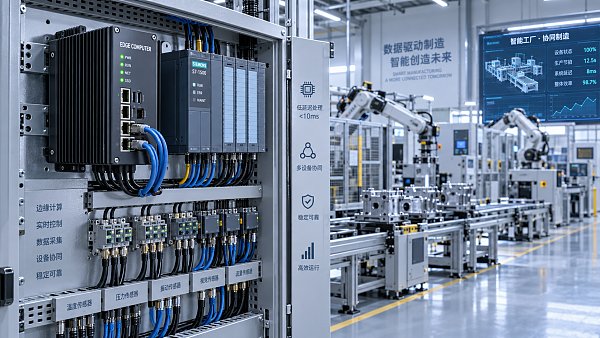
IoT Edge Gateway Software for Industrial Automation: Key Features to Compare Before Deployment
Publication Date
author
IoT Edge Gateway Software for Industrial Automation: Key Features to Compare Before Deployment
Choosing the right iot edge gateway software for industrial automation can shape uptime, data integrity, and long-term control performance.
A weak choice often looks acceptable during demos, then fails under plant-floor complexity.
That gap usually appears in protocol handling, cybersecurity, latency, and software lifecycle support.
For industrial teams, the comparison should stay grounded in engineering facts rather than product slogans.
This guide breaks down the most important evaluation points before deployment.
From recent market shifts, one pattern is clear.
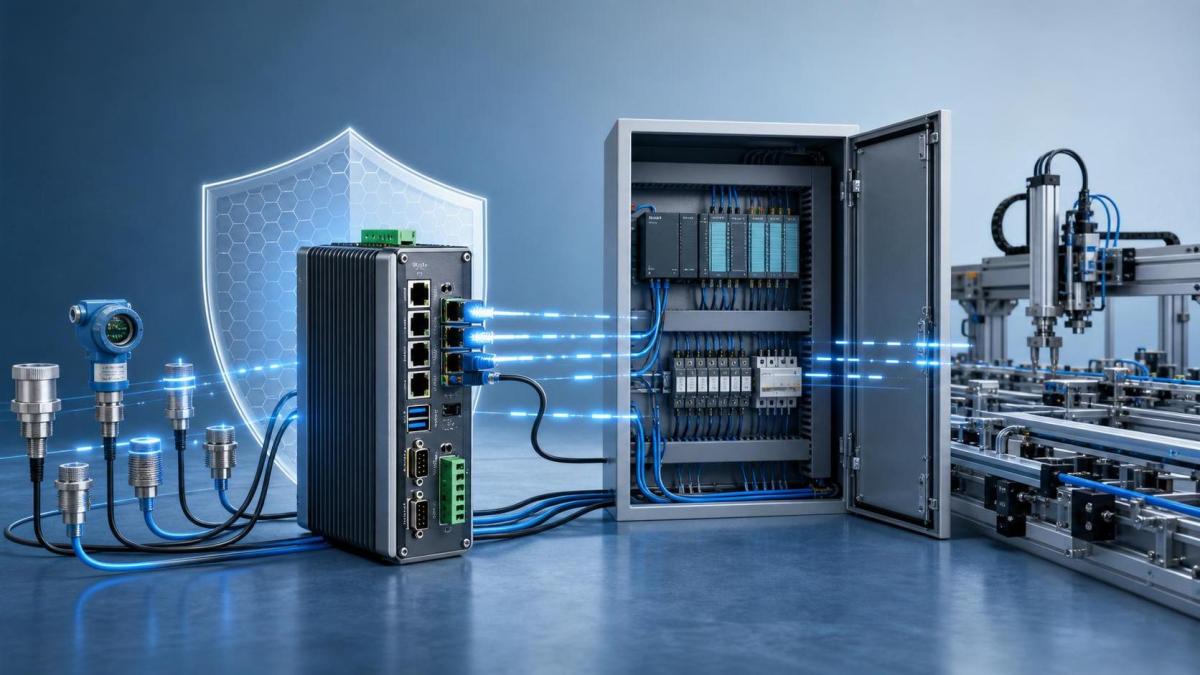
Plants now expect one edge layer to connect legacy machines, modern PLCs, cloud dashboards, and security controls.
That means iot edge gateway software for industrial automation must do more than route packets.
It must support real operations, simplify maintenance, and reduce integration risk across the asset lifecycle.
Start with the deployment context, not the feature brochure
Before comparing software, define the actual production environment.
A gateway for packaging lines has different demands than one used in process manufacturing or remote energy assets.
In practice, the strongest procurement decisions begin with five baseline questions:
- Which machine protocols must connect on day one?
- What latency is acceptable for alarms, control signals, and data forwarding?
- Will analytics run locally, or only send data upstream?
- How often will software updates be required across sites?
- What cybersecurity standards already apply internally?
This early framing prevents teams from overbuying features they will never use.
It also exposes hidden constraints, especially around legacy integration and remote support.
Protocol compatibility is still the first hard filter
No matter how advanced the dashboard looks, unsupported protocols create immediate project friction.
Good iot edge gateway software for industrial automation should handle mixed environments without excessive custom middleware.
The usual shortlist includes OPC UA, Modbus TCP, Modbus RTU, EtherNet/IP, PROFINET, BACnet, MQTT, and REST APIs.
But support claims deserve scrutiny.
Ask whether the platform offers native drivers, protocol conversion, buffering, timestamp consistency, and tag mapping tools.
A system that technically supports a protocol yet requires heavy scripting is a weak fit for scaled deployment.
This matters even more when multiple facilities use different machine generations.
One practical comparison method is to request a live data ingestion test using your own sample device list.
Latency, determinism, and edge responsiveness need real measurement
Many buying teams focus on throughput and forget timing behavior.
Yet industrial automation depends on predictable response under load, not just average performance.
For that reason, compare the software under realistic traffic, device counts, and edge analytics workloads.
Look for these metrics during evaluation:
- Data polling interval stability
- Message delivery delay during peak events
- Store-and-forward recovery time after network loss
- CPU and memory usage during local processing
- Alarm handling behavior when upstream links fail
This is where iot edge gateway software for industrial automation separates serious engineering platforms from lightweight connectors.
A fast demo is not enough.
You need repeatable timing behavior across normal operations and abnormal states.
Cybersecurity should be evaluated as an operational control layer
Cybersecurity is no longer a side requirement added near project handoff.
For industrial deployments, it directly affects acceptance, insurance, audit readiness, and downtime risk.
Strong iot edge gateway software for industrial automation should support layered security by design.
That usually includes certificate management, role-based access control, encrypted communications, secure boot, signed updates, and detailed logging.
It is also worth checking alignment with IEC 62443, NIST guidance, and internal OT segmentation policies.
More importantly, ask how security tasks are handled after commissioning.
If patching, credential rotation, and audit export require manual work at every site, maintenance costs rise quickly.
In real plants, secure operations depend on manageable processes, not just available checkboxes.
Edge analytics and local decision logic should match the business case
Not every site needs advanced AI at the gateway.
Still, many deployments benefit from filtering, event detection, compression, or local rule execution.
This is especially true where bandwidth is constrained or cloud round trips add delay.
When comparing iot edge gateway software for industrial automation, review how local logic is created and maintained.
Some platforms rely on code-heavy workflows.
Others provide visual pipelines, rule engines, containers, or model deployment frameworks.
The right choice depends on internal skills and support expectations.
A simpler rules engine may outperform a flexible platform if it reduces commissioning time and future rework.
Lifecycle maintainability often decides total cost of ownership
This is where many procurement comparisons become too shallow.
Initial license price matters, but long-term serviceability matters more in distributed operations.
Good iot edge gateway software for industrial automation should make rollout, backup, update control, and diagnostics consistent across sites.
Compare maintainability across these areas:
A platform that is easy to maintain usually lowers both internal labor and external service dependence.
Integration with existing OT and IT systems should be verified early
The gateway rarely operates alone.
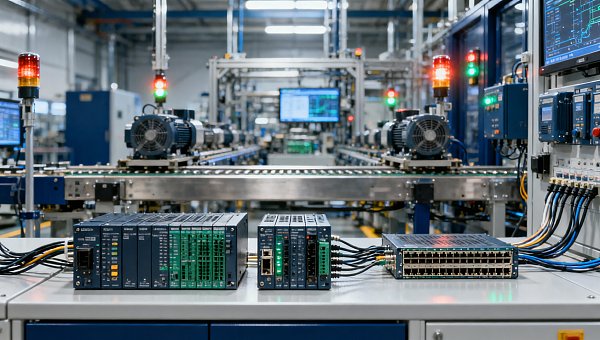
It usually sits between PLCs, SCADA, MES, historians, cloud platforms, and enterprise security tools.
Because of that, iot edge gateway software for industrial automation should be assessed as part of a broader architecture.
A product may look strong in isolation but create downstream data normalization issues.
Review data models, API quality, event routing, timestamp handling, and historian compatibility before approval.
This also helps identify ownership boundaries between OT, IT, and external integrators.
Where those boundaries stay vague, support issues tend to multiply after launch.
Use a practical scorecard before final vendor selection
A clear scorecard keeps the decision anchored in operational priorities.
It also makes supplier discussions more disciplined and easier to defend internally.
A useful shortlist can score each option across:
- Protocol coverage and proven device compatibility
- Latency and fault recovery performance
- Cybersecurity controls and update model
- Edge analytics flexibility
- Maintainability across multiple facilities
- Integration effort with current OT and IT systems
- Commercial support, roadmap, and licensing clarity
This approach keeps the iot edge gateway software for industrial automation decision tied to measurable deployment outcomes.
That is usually the difference between a pilot that stalls and a rollout that scales.
Final decision guidance
The best iot edge gateway software for industrial automation is not the one with the longest feature list.
It is the one that fits your protocol mix, timing needs, security model, and maintenance capacity.
In most industrial environments, deployment success comes from disciplined comparison, realistic testing, and lifecycle planning.
Before signing off, require a pilot using your actual devices, traffic conditions, and recovery scenarios.
That final step turns vendor claims into operational evidence and makes the selection process far more reliable.
Search News
Hot Articles
- Carbon Fiber StructuresHow to Specify Aerospace Carbon Fiber Assemblies for Lightweight, Load-Bearing PartsJul 11, 2026
- Machine VisionXiaomi, Alibaba DAMO Academy Drive Open-Source Robotics Model Ecosystem, Lowering Algorithm Development Barriers for Overseas SMEs Adopting Chinese Robotics SolutionsMar 30, 2026
- Cobots & ArmsShanxi 'AI+' Conference Showcases Embodied Intelligence with Multinational Buyer Engagement: Key Industry ImplicationsMar 30, 2026
Popular Tags
Recommended News
 Jul 11, 2026How to Specify Aerospace Carbon Fiber Assemblies for Lightweight, Load-Bearing PartsAerospace carbon fiber assemblies: learn how to specify laminate design, load data, joining methods, and inspection controls for lighter, reliable load-bearing aerospace parts.Elena Rostova (UAV Systems Researcher)
 Mar 30, 2026Xiaomi, Alibaba DAMO Academy Drive Open-Source Robotics Model Ecosystem, Lowering Algorithm Development Barriers for Overseas SMEs Adopting Chinese Robotics SolutionsXiaomi & Alibaba DAMO Academy's open-source robotics models lower algorithm barriers for global SMEs. Boost efficiency in manufacturing, logistics & smart retail with ROS 2 compatible solutions.TSV Data Lab
 Mar 30, 2026Shanxi 'AI+' Conference Showcases Embodied Intelligence with Multinational Buyer Engagement: Key Industry ImplicationsShanxi 'AI+' Conference highlights embodied intelligence with Tesla, Ubtech & Jiantao showcasing multimodal robotics. 40+ global buyers validated tech on-site, creating new B2B channels for industrial automation & AI solutions.Chen Wei (Automation Lead Engineer)
 Mar 30, 2026Zhongguancun Unveils 6G Integrated Sensing-Computing-Intelligence Platform to Empower Embodied Robots for Global Industrial ApplicationsZhongguancun's new 6G platform revolutionizes industrial robotics with <10ms latency, empowering global automotive, logistics & port automation. Discover how this tech boosts China's smart manufacturing exports.TSV Data Lab
 Mar 30, 2026Mech-Mind Tianjin Embodied Intelligence R&D and Production Base Goes Live, Cutting Delivery Time by 20%–30% for Global Customized AMR+Vision SolutionsMech-Mind's Tianjin AMR+Vision production base cuts delivery time by 20%-30% for欧美 & Latin American markets. Discover how this PLd-certified facility accelerates customized robotics solutions for smart manufacturing and logistics.Chen Wei (Automation Lead Engineer)
 Mar 30, 2026Boao Forum Reveals 'Co-evolution of Big and Small Brains' Trend in Humanoid Robots, China's Embodied Intelligence Accelerates Adaptation to Overseas Manufacturing Service ScenariosDiscover how China's humanoid robots, featuring 'Co-evolution of Big and Small Brains,' are revolutionizing global manufacturing. Learn about Embodied Tian Gong 3.0's ISO compliance and overseas deployment at Boao Forum 2026.Chen Wei (Automation Lead Engineer)
 Mar 30, 2026China Railway Industrial Secures Patent for Embodied Robotics in Material Handling, Boosting High-Precision Delivery Capabilities for Overseas Infrastructure and Manufacturing ProjectsChina Railway Industrial's new patent for embodied robotics in material handling boosts high-precision delivery for global infrastructure & manufacturing. Discover how this innovation enhances logistics accuracy in automotive, rail transit & EPC projects.Chen Wei (Automation Lead Engineer)
 Sep 29, 2026ISO 9283 Repeatability: How to Evaluate Cobot Positioning PerformanceISO 9283 cobot repeatability explained: learn how payload, reach, approach direction, and test conditions affect positioning performance and cell capability.Chen Wei (Automation Lead Engineer)
 Sep 29, 2026How Do You Verify Servo Motor Torque Under Continuous Load?How do I verify servo motor torque under continuous load? Learn RMS torque checks, torque-speed limits, thermal derating, and real-machine testing.Chen Wei (Automation Lead Engineer)
 Sep 28, 2026Spindle Runout Measurement in Germany: DIN Standards, Methods, and Acceptance LimitsSpindle runout measurement Germany: explore DIN standards, proven methods, acceptance limits, and audit-ready practices for reliable machining quality.Dr. Marcus Vance
 Sep 27, 2026How to Select Wall-Mount Edge Devices for Space-Constrained Factory NetworksWall mount edge devices for space-constrained factories: evaluate workload, thermal design, power resilience, cable access, and network reliability for smarter deployments.TSV Data Lab
 Sep 26, 2026Machining Tolerance Analysis: How to Set Limits That Meet Function and Cost TargetsMachining tolerance analysis: learn how to set functional limits, control tolerance stacks, reduce inspection risk, and balance precision with production cost.Dr. Marcus Vance
 Sep 25, 2026How to Evaluate an Industrial Infrastructure Data Platform for Multi-Site OperationsIndustrial infrastructure data platform evaluation guide for multi-site operations: compare data quality, edge resilience, interoperability, governance, and scalable proof-of-value criteria.Victor Lin (Chief Software Architect)
 Sep 24, 2026How to Select Machine Vision Optics for Accurate Inspection at Different Working DistancesMachine vision optics selection guide for accurate inspection at every working distance. Compare FOV, pixel scale, DOF, distortion, lighting, and telecentric options.TSV Data Lab
 Sep 23, 2026How to Evaluate a Machine Vision System Integrator for High-Speed Inspection LinesChoose a machine vision system integrator with proven expertise in high-speed inspection, reliable reject timing, robust optics, and measurable acceptance criteria.TSV Data Lab
 Sep 29, 2026How MES and OEE work together to identify production lossesMES and OEE work together to uncover hidden production losses, connect downtime, speed, and quality data, and drive smarter shop-floor improvements.Victor Lin (Chief Software Architect)
 Sep 28, 2026When is a SCADA API the right choice for connecting plant systems?SCADA API guide: learn when governed plant data integration improves traceability, security, and scalability—without compromising real-time control.Victor Lin (Chief Software Architect)
 Sep 27, 2026How SCADA data integration improves traceability across production linesSCADA data integration connects production-line data to improve traceability, accelerate quality investigations, and strengthen safety decisions.Victor Lin (Chief Software Architect)
 Sep 26, 2026What to define before starting SCADA integration planningSCADA integration planning starts with clear scope, control boundaries, data models, cybersecurity, and testing. Discover the definitions that reduce risk and costly rework.Victor Lin (Chief Software Architect)
 Sep 25, 2026How a smart factory with Industrial IoT reduces production blind spotsDiscover how a smart factory with Industrial IoT turns real-time machine, quality, and workflow data into actionable insights that reduce production blind spots and delivery risks.Victor Lin (Chief Software Architect)
 Sep 24, 2026When does Industrial IoT make smart manufacturing easier to scale?Smart manufacturing Industrial IoT scales when trusted data, interoperable systems, and secure workflows turn connected assets into measurable gains.TSV Data Lab
 Sep 23, 2026What drives ultra-precision machining cost at 1-micron tolerance?Ultra precision machining cost per part at 1 micron tolerance depends on process, material, metrology, and yield. Learn how to compare quotes confidently.Dr. Marcus Vance
 Sep 22, 2026Drone Engine-T550CC Applications: Build the UAV Power System Around the MissionAn application guide for Drone Engine-T550CC integration, covering payload planning, airframe matching, cooling, fuel, vibration, test procedures, documentation, and service preparation.Elena Rostova (UAV Systems Researcher)
 Sep 22, 2026How to Evaluate Industrial Edge Computing Vendors for Factory DeploymentIndustrial edge computing vendor evaluation guide for factories: compare latency, protocol fit, reliability, security, and lifecycle support before deployment.TSV Data Lab