What makes a servo motor fit one robot and fail in another
Publication Date
author
Choosing the right servo motor is never about brand claims alone. In robotics, a motor that performs flawlessly in one system can underdeliver in another because torque curves, inertia matching, thermal limits, control loops, and duty cycles rarely align the same way. This article examines what truly determines fit in servo motors for robotics applications, helping technical evaluators cut through marketing noise and focus on engineering parameters that decide real-world reliability.
Why can the same servo motor succeed in one robot and fail in another?
This is the core question behind most sourcing and design disputes. A servo motor is not selected in isolation; it is part of an electromechanical control chain that includes the gearbox, drive, encoder, power supply, structure stiffness, motion profile, and software tuning. When engineers compare servo motors for robotics applications, the common mistake is to focus on rated power or peak torque alone. In practice, success depends on system fit.
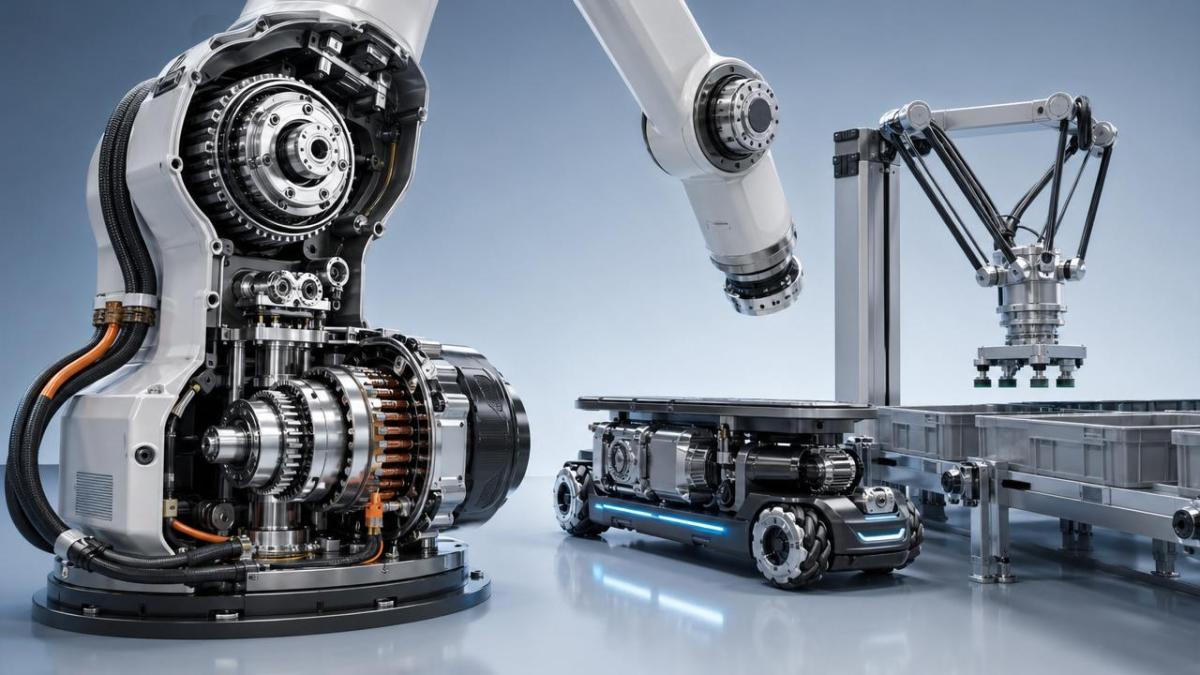
A six-axis articulated arm, an AGV steering module, a delta picker, and a collaborative robot joint may all use servo technology, yet their demand profiles differ sharply. One robot may require high peak torque for very short acceleration windows. Another may operate at moderate torque but with relentless thermal loading over long duty cycles. A third may be highly sensitive to backlash, inertia mismatch, or encoder resolution because path smoothness matters more than raw force. The motor that looks excellent on a datasheet can therefore fail in service if its usable torque band, thermal margin, and control responsiveness do not match the robotic mechanism.
For technical evaluators, the lesson is simple: fit is defined by parameter interaction, not marketing hierarchy. At TechStat Vanguard, this is the type of engineering truth that matters most—repeatable performance under actual operating constraints.
What parameters matter most when evaluating servo motors for robotics applications?
The shortlist should begin with measurable factors that directly affect motion quality, uptime, and integration risk. While many catalogs promote “high performance,” evaluators should instead verify whether the following parameters align with the robot’s real duty envelope.
The best evaluations of servo motors for robotics applications also include cable flex life, ingress protection, brake characteristics for vertical axes, vibration resistance, and bearing life under radial and axial loads. In robots, the installation geometry itself can create failure modes that never appear in standalone motor brochures.
How do torque curves and inertia matching change the outcome?
Torque curves are often misunderstood because buyers focus on rated torque and ignore how available torque falls at higher speed. A robot joint may need fast acceleration, short settling time, and repeated deceleration under payload. If the required motion spends significant time in a speed region where the motor can no longer supply adequate torque, the robot will miss cycle targets, run hotter, or trigger drive faults.
Inertia matching is equally decisive. A servo motor with very low rotor inertia can be excellent for responsiveness, but if the reflected load inertia is far too high, tuning becomes difficult and overshoot may increase. Conversely, a motor with overly large inertia may stabilize the system but blunt dynamic performance and reduce efficiency. This is why servo motors for robotics applications should be selected based on the total motion plant, including gearbox ratio, arm length, payload variation, and compliance in couplings or belts.
For evaluators, the practical question is not “What is the strongest motor?” but “What inertia ratio and torque reserve are acceptable for this motion profile?” The answer often varies by axis. Base rotation, elbow lift, wrist rotation, and end-effector feed do not deserve identical selection logic.
Why do thermal limits and duty cycle break so many otherwise good designs?
Because the motor that survives a demo may still fail in production. Thermal behavior is one of the biggest hidden gaps between laboratory performance and factory reliability. Servo motors for robotics applications are commonly tested under ideal ambient conditions, short runs, or simplified motion sequences. Real robots may operate inside guarded cells, near ovens, in dusty enclosures, or in compact joints where heat rejection is poor.
A motor can meet torque requirements on paper and still overheat because RMS torque across the full cycle exceeds the thermal design margin. Duty cycle matters here more than many teams expect. Pick-and-place robots with rapid starts and stops, mobile robots with repeated steering corrections, and palletizing arms lifting near their upper payload limit all accumulate heat differently. Continuous torque, intermittent overload duration, winding temperature rise, and cooling assumptions should be reviewed together.
Another overlooked issue is thermal drift in precision tasks. As temperature rises, resistance increases, torque constant behavior shifts, and positional consistency can degrade indirectly through structural expansion or altered tuning response. Technical evaluators should therefore request thermal test conditions, not just nominal ratings. The phrase “continuous operation” is meaningless unless test duration, ambient temperature, mounting condition, and duty profile are specified clearly.
How much do encoder choice and control loops affect robotic performance?
More than many procurement teams realize. In robotics, servo performance is not determined by motor hardware alone. Feedback quality and controller architecture strongly influence smoothness, repeatability, settling time, and low-speed behavior. A robot used for inspection, dispensing, or semiconductor handling may depend on extremely stable micro-motions. In these cases, encoder noise, interpolation quality, and loop bandwidth can matter more than headline power density.
Higher encoder resolution is not automatically better if the drive cannot process feedback effectively or if mechanical backlash dominates the system. Likewise, a high-bandwidth control loop may improve responsiveness in a rigid platform but cause instability in a compliant structure. This is why servo motors for robotics applications should always be reviewed together with the drive, communication bus, and mechanical transmission.
For technical evaluators, useful questions include: What is the actual positioning repeatability at the robot level, not just the motor shaft? How does the system behave near zero speed? What filters are active in the drive? How quickly can faults be detected and recovered? Are there differences between catalog tuning and real load tuning? These questions reveal whether a motion platform is engineered for reality or optimized only for brochure appeal.
Which application differences most often change the right servo motor choice?
Different robot types punish different weaknesses. This is why a universally “best” option rarely exists among servo motors for robotics applications.
- Industrial articulated robots usually demand strong overload behavior, thermal endurance, brake reliability on vertical axes, and robust tuning across payload changes.
- Collaborative robots place greater emphasis on compact size, smooth force-limited motion, quiet operation, and safe low-speed controllability.
- Delta and SCARA systems often prioritize acceleration, low inertia, and short settling time to preserve throughput.
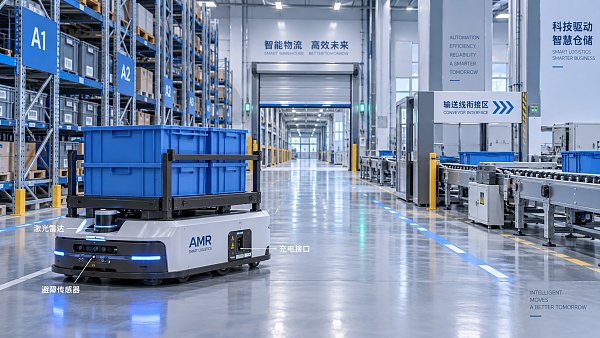
- AGV and AMR drive modules require shock tolerance, stable torque at variable speeds, environmental protection, and efficiency over long daily runtime.
- Aerospace or UAV ground robotics may add strict weight, vibration, and traceability requirements that eliminate otherwise acceptable motor options.
This application-specific view is especially relevant for organizations comparing vendors across regions. A supplier may have excellent servo motors for robotics applications in packaging automation, yet perform poorly when the same platform is adapted for precision inspection or harsh-environment field robotics. Technical fit should always be validated against the target mission profile.
What are the most common evaluation mistakes made by buyers and engineers?
The first mistake is selecting by catalog headline metrics rather than motion data. Many teams compare rated wattage, maximum speed, and peak torque without calculating RMS load, acceleration requirements, reflected inertia, and operating temperature. The second mistake is separating motor selection from gearbox, brake, and drive selection. In robotics, these components form a tightly coupled system, and weakness in one element can mask or distort the capabilities of the others.
A third mistake is trusting generic repeatability claims. End users care about robot-level performance, not shaft-level theory. Backlash, compliance, frame stiffness, cable drag, and controller tuning all influence final path quality. The fourth mistake is underestimating lifecycle cost. A lower initial purchase price can be erased quickly by overheating faults, replacement downtime, tuning delays, and failed validation cycles.
Another major issue is poor test definition. When comparing servo motors for robotics applications, evaluators should request a common benchmark: payload, acceleration profile, ambient condition, duty cycle, mounting orientation, and fault thresholds. Without standardized conditions, supplier comparisons are often misleading.
How should technical evaluators build a practical decision framework before procurement?
A robust framework starts by translating the robot’s task into measurable requirements. Instead of asking vendors for their “best servo,” define axis-by-axis load mass, peak and RMS torque, operating speed ranges, acceleration windows, required settling time, thermal environment, expected lifetime, and failure tolerance. This prevents the discussion from drifting into vague branding language.
Next, request evidence. For servo motors for robotics applications, useful evidence includes torque-speed curves with test conditions, overload duration limits, winding temperature rise data, encoder type and accuracy, bearing specifications, brake holding torque, insulation class, IP rating, EMC performance, and MTBF or field reliability references where available. If the supplier cannot explain how its data was generated, treat the claim cautiously.
Then validate integration risk. Check software tools, drive diagnostics, tuning support, spare part availability, lead times, and regional service response. In advanced manufacturing, the “best” motor on paper may still be the wrong choice if debug support is weak or supply continuity is uncertain. This is especially true for programs with certification pressure, multi-site deployment, or aggressive commissioning schedules.
Finally, run application-level testing whenever possible. Bench tests should mimic actual duty cycles and not just nominal rotation under light load. TSV’s engineering perspective is straightforward: parameters do not lie, but parameters without context can still mislead. Benchmarking must remain tied to the real machine.
What should be confirmed first if a team wants to narrow down options quickly?
Before moving into detailed quotations or supplier comparison, technical evaluators should align on a short list of critical questions. What is the actual motion profile of each axis? What is the maximum and typical payload? What overload events are expected? Is the robot operating continuously, intermittently, or in bursts? What is the acceptable temperature rise inside the final enclosure? How sensitive is the application to vibration, audible noise, or low-speed ripple? What communication protocol and functional safety requirements must the drive support?
These questions create a reliable screening filter for servo motors for robotics applications. They also improve communication between R&D, controls engineers, and procurement teams. If further confirmation is needed on specific solution direction, parameters, validation cycle, cost, or supplier cooperation model, the most productive next step is to discuss duty cycle definition, thermal margin assumptions, inertia matching range, control loop compatibility, and test methodology before discussing brand preference or final unit price.
Search News
Hot Articles
- Carbon Fiber StructuresHow to Specify Aerospace Carbon Fiber Assemblies for Lightweight, Load-Bearing PartsJul 11, 2026
- Machine VisionXiaomi, Alibaba DAMO Academy Drive Open-Source Robotics Model Ecosystem, Lowering Algorithm Development Barriers for Overseas SMEs Adopting Chinese Robotics SolutionsMar 30, 2026
- Cobots & ArmsShanxi 'AI+' Conference Showcases Embodied Intelligence with Multinational Buyer Engagement: Key Industry ImplicationsMar 30, 2026
Popular Tags
Recommended News
 Jul 11, 2026How to Specify Aerospace Carbon Fiber Assemblies for Lightweight, Load-Bearing PartsAerospace carbon fiber assemblies: learn how to specify laminate design, load data, joining methods, and inspection controls for lighter, reliable load-bearing aerospace parts.Elena Rostova (UAV Systems Researcher)
 Mar 30, 2026Xiaomi, Alibaba DAMO Academy Drive Open-Source Robotics Model Ecosystem, Lowering Algorithm Development Barriers for Overseas SMEs Adopting Chinese Robotics SolutionsXiaomi & Alibaba DAMO Academy's open-source robotics models lower algorithm barriers for global SMEs. Boost efficiency in manufacturing, logistics & smart retail with ROS 2 compatible solutions.TSV Data Lab
 Mar 30, 2026Shanxi 'AI+' Conference Showcases Embodied Intelligence with Multinational Buyer Engagement: Key Industry ImplicationsShanxi 'AI+' Conference highlights embodied intelligence with Tesla, Ubtech & Jiantao showcasing multimodal robotics. 40+ global buyers validated tech on-site, creating new B2B channels for industrial automation & AI solutions.Chen Wei (Automation Lead Engineer)
 Mar 30, 2026Zhongguancun Unveils 6G Integrated Sensing-Computing-Intelligence Platform to Empower Embodied Robots for Global Industrial ApplicationsZhongguancun's new 6G platform revolutionizes industrial robotics with <10ms latency, empowering global automotive, logistics & port automation. Discover how this tech boosts China's smart manufacturing exports.TSV Data Lab
 Mar 30, 2026Mech-Mind Tianjin Embodied Intelligence R&D and Production Base Goes Live, Cutting Delivery Time by 20%–30% for Global Customized AMR+Vision SolutionsMech-Mind's Tianjin AMR+Vision production base cuts delivery time by 20%-30% for欧美 & Latin American markets. Discover how this PLd-certified facility accelerates customized robotics solutions for smart manufacturing and logistics.Chen Wei (Automation Lead Engineer)
 Mar 30, 2026Boao Forum Reveals 'Co-evolution of Big and Small Brains' Trend in Humanoid Robots, China's Embodied Intelligence Accelerates Adaptation to Overseas Manufacturing Service ScenariosDiscover how China's humanoid robots, featuring 'Co-evolution of Big and Small Brains,' are revolutionizing global manufacturing. Learn about Embodied Tian Gong 3.0's ISO compliance and overseas deployment at Boao Forum 2026.Chen Wei (Automation Lead Engineer)
 Mar 30, 2026China Railway Industrial Secures Patent for Embodied Robotics in Material Handling, Boosting High-Precision Delivery Capabilities for Overseas Infrastructure and Manufacturing ProjectsChina Railway Industrial's new patent for embodied robotics in material handling boosts high-precision delivery for global infrastructure & manufacturing. Discover how this innovation enhances logistics accuracy in automotive, rail transit & EPC projects.Chen Wei (Automation Lead Engineer)
 Sep 28, 2026Spindle Runout Measurement in Germany: DIN Standards, Methods, and Acceptance LimitsSpindle runout measurement Germany: explore DIN standards, proven methods, acceptance limits, and audit-ready practices for reliable machining quality.Dr. Marcus Vance
 Sep 27, 2026How to Select Wall-Mount Edge Devices for Space-Constrained Factory NetworksWall mount edge devices for space-constrained factories: evaluate workload, thermal design, power resilience, cable access, and network reliability for smarter deployments.TSV Data Lab
 Sep 26, 2026Machining Tolerance Analysis: How to Set Limits That Meet Function and Cost TargetsMachining tolerance analysis: learn how to set functional limits, control tolerance stacks, reduce inspection risk, and balance precision with production cost.Dr. Marcus Vance
 Sep 25, 2026How to Evaluate an Industrial Infrastructure Data Platform for Multi-Site OperationsIndustrial infrastructure data platform evaluation guide for multi-site operations: compare data quality, edge resilience, interoperability, governance, and scalable proof-of-value criteria.Victor Lin (Chief Software Architect)
 Sep 24, 2026How to Select Machine Vision Optics for Accurate Inspection at Different Working DistancesMachine vision optics selection guide for accurate inspection at every working distance. Compare FOV, pixel scale, DOF, distortion, lighting, and telecentric options.TSV Data Lab
 Sep 23, 2026How to Evaluate a Machine Vision System Integrator for High-Speed Inspection LinesChoose a machine vision system integrator with proven expertise in high-speed inspection, reliable reject timing, robust optics, and measurable acceptance criteria.TSV Data Lab
 Sep 28, 2026When is a SCADA API the right choice for connecting plant systems?SCADA API guide: learn when governed plant data integration improves traceability, security, and scalability—without compromising real-time control.Victor Lin (Chief Software Architect)
 Sep 27, 2026How SCADA data integration improves traceability across production linesSCADA data integration connects production-line data to improve traceability, accelerate quality investigations, and strengthen safety decisions.Victor Lin (Chief Software Architect)
 Sep 26, 2026What to define before starting SCADA integration planningSCADA integration planning starts with clear scope, control boundaries, data models, cybersecurity, and testing. Discover the definitions that reduce risk and costly rework.Victor Lin (Chief Software Architect)
 Sep 25, 2026How a smart factory with Industrial IoT reduces production blind spotsDiscover how a smart factory with Industrial IoT turns real-time machine, quality, and workflow data into actionable insights that reduce production blind spots and delivery risks.Victor Lin (Chief Software Architect)
 Sep 24, 2026When does Industrial IoT make smart manufacturing easier to scale?Smart manufacturing Industrial IoT scales when trusted data, interoperable systems, and secure workflows turn connected assets into measurable gains.TSV Data Lab
 Sep 23, 2026What drives ultra-precision machining cost at 1-micron tolerance?Ultra precision machining cost per part at 1 micron tolerance depends on process, material, metrology, and yield. Learn how to compare quotes confidently.Dr. Marcus Vance
 Sep 22, 2026Drone Engine-T550CC Applications: Build the UAV Power System Around the MissionAn application guide for Drone Engine-T550CC integration, covering payload planning, airframe matching, cooling, fuel, vibration, test procedures, documentation, and service preparation.Elena Rostova (UAV Systems Researcher)
 Sep 22, 2026How to Evaluate Industrial Edge Computing Vendors for Factory DeploymentIndustrial edge computing vendor evaluation guide for factories: compare latency, protocol fit, reliability, security, and lifecycle support before deployment.TSV Data Lab
 Sep 21, 2026Drone Payload Integration: Matching Power, Data, and Center of Gravity for Reliable FlightsDrone payload integration made practical: balance power, data, center of gravity, and endurance to build safer, more reliable mission-ready flights.Elena Rostova (UAV Systems Researcher)
 Sep 20, 2026Autonomous Navigation Pricing: Cost Drivers and Budget Benchmarks for AMR ProjectsAutonomous navigation price explained: compare AMR cost drivers, software, sensors, integration, safety, and lifecycle budgets to build a scalable project plan.Chen Wei (Automation Lead Engineer)
 Sep 19, 2026How to Scope Automation Integration Services for Multi-System Factory ProjectsAutomation integration services: learn how to scope multi-system factory projects with clear workflows, interface contracts, safety boundaries, and acceptance criteria.Victor Lin (Chief Software Architect)