
What drives the real cost of wave pool equipment?
Publication Date
author
What Drives the Real Cost of Wave Pool Equipment?
The real cost of wave pool equipment is rarely defined by the purchase quote alone.
It is shaped by hydraulic design, structural tolerances, controls, energy demand, installation complexity, safety compliance, and maintenance exposure.
A data-driven review separates marketing claims from measurable engineering realities.
That review shows where capital expenditure becomes lifecycle cost, operational risk, or long-term technical debt.
This article examines practical cost drivers behind wave pool equipment for clearer budgeting, supplier comparison, and procurement confidence.
Scenario Background: Why Wave Pool Equipment Costs Differ So Much
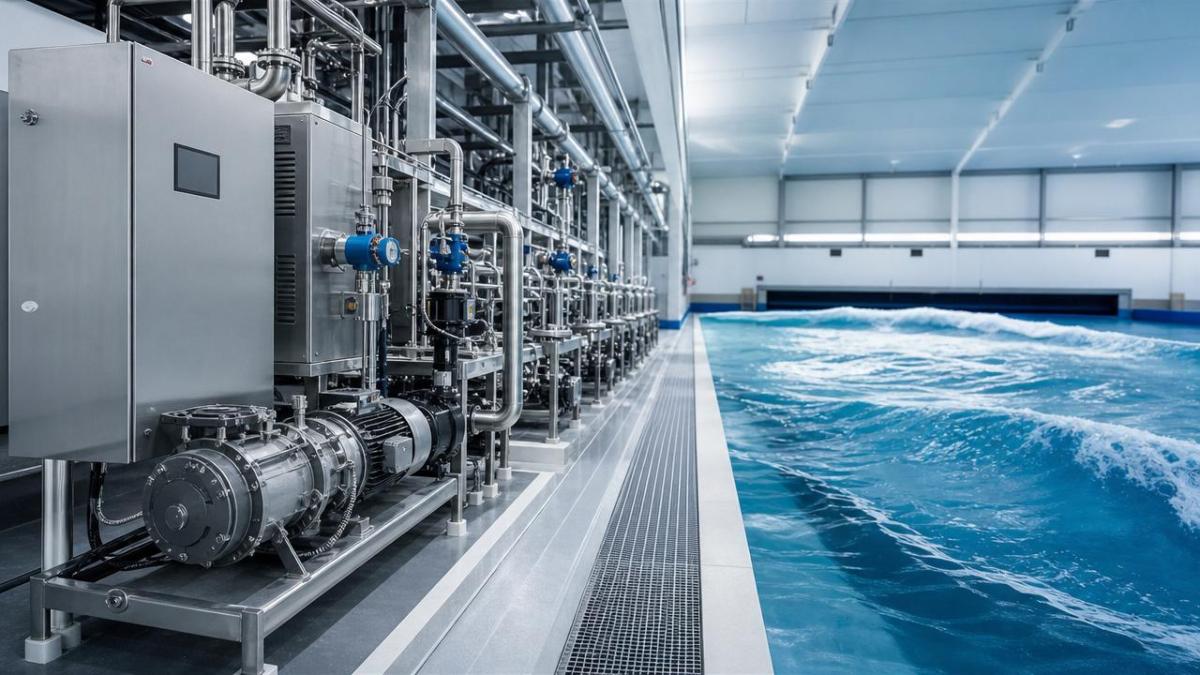
Wave pool equipment serves different commercial, leisure, training, and mixed-use environments.
Each environment changes the required wave height, cycle frequency, basin geometry, redundancy level, and control precision.
A family waterpark may prioritize reliability, predictable waves, and moderate operating cost.
A surf destination may require stronger wave profiles, faster recovery cycles, and tighter hydraulic repeatability.
A training facility may value programmable wave forms, safety margins, and documented performance data.
Therefore, wave pool equipment should be evaluated as a system, not as a single mechanical package.
The basin, pumps, chambers, actuators, valves, drives, sensors, and software all influence cost.
Ignoring one subsystem often creates expensive redesign, unstable performance, or higher service frequency later.
Scenario One: Resort Pools Need Balanced Experience and Cost Control
Resort-oriented wave pool equipment usually targets broad guest enjoyment rather than extreme wave performance.
The key cost driver is balance between comfort, throughput, safety, and predictable maintenance.
Moderate wave height reduces structural loading and lowers energy demand.
However, weak hydraulic design can still increase power consumption and create inconsistent wave distribution.
For this scenario, cost evaluation should focus on daily operating hours, peak attendance cycles, and service accessibility.
Wave pool equipment with simpler wave programs may be cheaper upfront.
Yet poor automation, low-efficiency drives, or hard-to-access components can raise lifecycle cost quickly.
Scenario Two: Surf Parks Demand Performance Repeatability
Surf parks place heavier technical demands on wave pool equipment than standard leisure pools.
The business value depends on wave quality, interval consistency, ride length, and user segmentation.
Higher wave energy requires stronger structural systems, larger power infrastructure, and advanced control algorithms.
These requirements raise initial investment, but they may support premium ticketing and differentiated operations.
In surf scenarios, the real question is not whether wave pool equipment is expensive.
The question is whether the system produces repeatable wave value under commercial loading.
Performance benchmarks should include wave interval, wave face stability, recovery time, and energy used per wave.
Scenario Three: Training and Rescue Facilities Need Programmability
Training applications require wave pool equipment that can reproduce defined water conditions.
Examples include lifeguard training, marine drills, rescue simulation, and controlled athletic practice.
Here, cost is strongly linked to control accuracy and data logging.
Programmable wave patterns need responsive sensors, stable actuators, reliable PLC architecture, and clear safety interlocks.
Lower-cost wave pool equipment may not provide enough repeatability for formal training records.
Specification should include acceptable deviation ranges for wave height, frequency, and sequence timing.
When documentation matters, unverified performance claims carry hidden compliance and operational risk.
Scenario Four: Retrofit Projects Carry Hidden Installation Costs
Retrofit projects often make wave pool equipment cost harder to predict.
Existing basins, foundations, pipe routes, plant rooms, and electrical capacity may restrict equipment choices.
A lower equipment quote can become expensive if structural modification is required.
Common retrofit cost drivers include demolition, reinforcement, waterproofing repair, control room expansion, and utility upgrades.
Wave pool equipment should be checked against site drawings before commercial comparison begins.
The most useful retrofit proposal identifies interface risks, required civil works, and commissioning constraints.
Without that clarity, the quoted system cost may represent only a fraction of final expenditure.
Different Scenarios Create Different Cost Priorities
This comparison shows why one benchmark price for wave pool equipment can be misleading.
A reliable estimate must connect the equipment specification to the operating scenario.
Technical Factors That Drive Real Cost
Hydraulic Design and Wave Generation Method
Hydraulic architecture is one of the largest cost variables in wave pool equipment.
Pneumatic chambers, mechanical plungers, pump-driven systems, and modular wave generators create different cost profiles.
The design affects wave energy, equipment footprint, response time, and maintenance difficulty.
A cheaper generation method may limit future programming options or expansion capacity.
Structural Loads and Basin Tolerances
Wave action transfers repeated loads into concrete, steel, anchors, gates, and waterproofing systems.
When wave pool equipment produces stronger or more frequent waves, fatigue exposure increases.
Structural design should consider peak forces, vibration, settlement, and long-term water pressure.
Underestimating these tolerances can create costly repairs after commissioning.
Controls, Sensors, and Automation
Modern wave pool equipment depends heavily on automation quality.
Control systems coordinate valves, drives, actuators, pumps, emergency stops, and water-level monitoring.
Advanced controls increase capital cost, but they reduce operational uncertainty.
Useful specifications include latency, fault response time, redundancy level, and remote diagnostic capability.
Energy Demand and Utility Infrastructure
Energy is a major lifecycle cost for wave pool equipment.
Wave height, cycle frequency, pump efficiency, and drive selection all affect power consumption.
Utility infrastructure may require transformers, switchgear, cabling, cooling, or backup systems.
The best comparison uses cost per operating hour and cost per generated wave.
Scenario-Based Specification Checklist
- Define target wave height, wave interval, and acceptable variation.
- Confirm basin geometry before selecting wave pool equipment.
- Request energy data under realistic operating cycles.
- Check access routes for installation and future maintenance.
- Verify automation architecture, safety logic, and diagnostic tools.
- Compare warranty scope against expected component duty cycles.
- Ask for commissioning criteria and measurable acceptance tests.
This checklist prevents wave pool equipment selection from depending only on brochure numbers.
It also creates a consistent basis for technical and commercial comparison.
Common Misjudgments That Distort Cost Planning
One common mistake is comparing wave pool equipment without matching wave profiles.
A system producing small leisure waves cannot be priced against a high-performance surf system.
Another mistake is ignoring civil and utility interfaces.
Electrical capacity, plant room ventilation, drainage, and foundation design can change total project cost.
Maintenance access is also frequently underestimated.
If critical components are difficult to remove, downtime becomes more expensive than spare parts.
Safety compliance should never be treated as a final paperwork stage.
Wave pool equipment must integrate emergency stops, water-level controls, guarding, alarms, and documented operating procedures.
How to Build a More Reliable Cost Model
A reliable model separates initial purchase cost from installation cost, utility cost, and lifecycle cost.
It should also include downtime exposure, spare parts strategy, and expected service intervals.
For wave pool equipment, measurable assumptions are more valuable than optimistic averages.
The model should use operating hours, wave cycles, energy tariff, staffing needs, and replacement schedules.
This layered approach helps reveal whether wave pool equipment is genuinely economical.
It also highlights where a lower purchase quote may hide higher operating exposure.
Action Guidance: Turning Data Into Better Decisions
The next step is to convert the intended scenario into measurable technical requirements.
Define wave performance, duty cycle, safety standards, structural assumptions, and maintenance expectations before requesting quotations.
Then compare wave pool equipment using verified parameters, not broad claims.
Request reference data, acceptance tests, energy curves, service records, and clear interface responsibilities.
The real cost of wave pool equipment becomes clearer when every claim is tied to measurable performance.
That is the engineering path to lower uncertainty, stronger budgeting, and more resilient project outcomes.
Search News
Hot Articles
- Carbon Fiber StructuresHow to Specify Aerospace Carbon Fiber Assemblies for Lightweight, Load-Bearing PartsJul 11, 2026
- Machine VisionXiaomi, Alibaba DAMO Academy Drive Open-Source Robotics Model Ecosystem, Lowering Algorithm Development Barriers for Overseas SMEs Adopting Chinese Robotics SolutionsMar 30, 2026
- Cobots & ArmsShanxi 'AI+' Conference Showcases Embodied Intelligence with Multinational Buyer Engagement: Key Industry ImplicationsMar 30, 2026
Popular Tags
Recommended News
 Jul 11, 2026How to Specify Aerospace Carbon Fiber Assemblies for Lightweight, Load-Bearing PartsAerospace carbon fiber assemblies: learn how to specify laminate design, load data, joining methods, and inspection controls for lighter, reliable load-bearing aerospace parts.Elena Rostova (UAV Systems Researcher)
 Mar 30, 2026Xiaomi, Alibaba DAMO Academy Drive Open-Source Robotics Model Ecosystem, Lowering Algorithm Development Barriers for Overseas SMEs Adopting Chinese Robotics SolutionsXiaomi & Alibaba DAMO Academy's open-source robotics models lower algorithm barriers for global SMEs. Boost efficiency in manufacturing, logistics & smart retail with ROS 2 compatible solutions.TSV Data Lab
 Mar 30, 2026Shanxi 'AI+' Conference Showcases Embodied Intelligence with Multinational Buyer Engagement: Key Industry ImplicationsShanxi 'AI+' Conference highlights embodied intelligence with Tesla, Ubtech & Jiantao showcasing multimodal robotics. 40+ global buyers validated tech on-site, creating new B2B channels for industrial automation & AI solutions.Chen Wei (Automation Lead Engineer)
 Mar 30, 2026Zhongguancun Unveils 6G Integrated Sensing-Computing-Intelligence Platform to Empower Embodied Robots for Global Industrial ApplicationsZhongguancun's new 6G platform revolutionizes industrial robotics with <10ms latency, empowering global automotive, logistics & port automation. Discover how this tech boosts China's smart manufacturing exports.TSV Data Lab
 Mar 30, 2026Mech-Mind Tianjin Embodied Intelligence R&D and Production Base Goes Live, Cutting Delivery Time by 20%–30% for Global Customized AMR+Vision SolutionsMech-Mind's Tianjin AMR+Vision production base cuts delivery time by 20%-30% for欧美 & Latin American markets. Discover how this PLd-certified facility accelerates customized robotics solutions for smart manufacturing and logistics.Chen Wei (Automation Lead Engineer)
 Mar 30, 2026Boao Forum Reveals 'Co-evolution of Big and Small Brains' Trend in Humanoid Robots, China's Embodied Intelligence Accelerates Adaptation to Overseas Manufacturing Service ScenariosDiscover how China's humanoid robots, featuring 'Co-evolution of Big and Small Brains,' are revolutionizing global manufacturing. Learn about Embodied Tian Gong 3.0's ISO compliance and overseas deployment at Boao Forum 2026.Chen Wei (Automation Lead Engineer)
 Mar 30, 2026China Railway Industrial Secures Patent for Embodied Robotics in Material Handling, Boosting High-Precision Delivery Capabilities for Overseas Infrastructure and Manufacturing ProjectsChina Railway Industrial's new patent for embodied robotics in material handling boosts high-precision delivery for global infrastructure & manufacturing. Discover how this innovation enhances logistics accuracy in automotive, rail transit & EPC projects.Chen Wei (Automation Lead Engineer)
 Oct 15, 2026R&D Cost Reduction Services: How to Evaluate Fees, Savings, and ROIEvaluate R&D cost reduction services with confidence. Compare fees, verify savings, and calculate ROI without compromising performance. Discover how to choose a provider that delivers real value.Chen Wei (Automation Lead Engineer)
 Oct 14, 2026Drone Frame Composites: Carbon Fiber vs. Fiberglass for Weight and StiffnessExplore drone structural materials composites: compare carbon fiber and fiberglass for weight, stiffness, cost, and antenna compatibility. Find the right material for your drone frame.Elena Rostova (UAV Systems Researcher)
 Oct 13, 2026Smart Cameras vs. PC-Based Machine Vision: Which Fits High-Speed Inspection?This industrial product comparison for machine vision weighs smart cameras vs. PC-based systems on latency, throughput, and cost. Discover your best fit for high-speed inspection.TSV Data Lab
 Oct 12, 2026How to Verify RoHS Compliance in Industrial Sensing Systems Before DeploymentRoHS compliant sensing systems: learn how to verify materials, supplier declarations, testing, and configuration controls before industrial deployment.TSV Data Lab
 Oct 11, 2026How Procurement-Oriented Content Taxonomy Improves B2B Buying JourneysProcurement-oriented content taxonomy streamlines B2B buying journeys with clearer evidence, supplier comparisons, risk visibility, and faster approvals.TSV Data Lab
 Oct 10, 2026How to Select a Machine Performance Monitoring Platform for OEE and Downtime ReductionMachine performance monitoring platform selection guide: validate machine states, OEE data, downtime reasons, integrations, and scalability to reduce losses with confidence.TSV Data Lab
 Oct 08, 2026How to Machine Inconel 625 Blades Without Heat Cracks or Edge ChippingInconel 625 blade machining guide: prevent heat cracks, edge chipping, chatter, and work hardening with proven tooling, cooling, fixturing, and inspection strategies.Dr. Marcus Vance
 Oct 07, 2026How to Evaluate an HMI Panel Distributor for Industrial Automation ProjectsHMI panel distributor evaluation guide: verify technical compatibility, traceability, supply reliability, lifecycle support, and total cost for automation projects.Victor Lin (Chief Software Architect)
 Oct 06, 2026Navigation Fault Tolerance Standards for AMRs: What Safety Teams Must VerifyNavigation fault tolerance standards: learn what AMR safety teams must verify, from localization loss and sensor faults to stopping distance, safe restart, and site-specific validation.Chen Wei (Automation Lead Engineer)
 Oct 05, 2026Calculating Edge Computing Total Cost of Ownership Across Distributed SitesEdge computing ownership cost explained: calculate deployment, energy, connectivity, security, remote support, and refresh costs across distributed sites.TSV Data Lab
 Oct 04, 2026CAD/CAM Benchmarking in the GCC: What Manufacturers Should Ask a ConsultantCAD CAM benchmark consultant GCC guide: learn the key questions manufacturers should ask to validate post-processors, workflows, machine performance, and production risk.Victor Lin (Chief Software Architect)
 Oct 03, 2026Selecting Automotive Radar Sensor Modules for ADAS Range, Resolution, and IntegrationAutomotive radar sensor module selection guide for ADAS: compare range, resolution, field of view, latency, and integration to build safer, reliable vehicle systems.TSV Data Lab
 Oct 02, 2026How to Qualify Machined Parts Suppliers for Hard Tech ProgramsHard tech supply chain machined parts demand rigorous supplier qualification. Learn how to assess capability, traceability, quality controls, and delivery resilience.Dr. Marcus Vance
 Oct 01, 2026How to Select an Outdoor Security Radar Sensor for Perimeter Detection?Outdoor security radar sensor selection guide: compare range, accuracy, false-alarm control, integration, and field testing for reliable perimeter detection.TSV Data Lab
 Sep 30, 2026How to Evaluate Solid-State LiDAR Hardware for Outdoor Autonomous VehiclesSolid state LiDAR hardware evaluation guide for outdoor autonomous vehicles—compare range, point-cloud quality, environmental resilience, integration, and safety.TSV Data Lab
 Sep 29, 2026ISO 9283 Repeatability: How to Evaluate Cobot Positioning PerformanceISO 9283 cobot repeatability explained: learn how payload, reach, approach direction, and test conditions affect positioning performance and cell capability.Chen Wei (Automation Lead Engineer)
 Oct 14, 2026How tight can micro machining aerospace tolerances be in production?Micro machining aerospace tolerances can reach low-micron levels in production. Learn what controls repeatability, inspection confidence, and flight-critical quality.Dr. Marcus Vance























