
For procurement teams, choosing a go kart manufacturer is not about glossy brochures or vague claims of durability.
It is about verifiable build quality, supported by records, repeatable tests, and inspection data that survive commercial scrutiny.
The strongest suppliers prove capability through chassis integrity, traceable materials, fatigue evidence, braking results, and batch-level quality documentation.
What Procurement Teams Are Really Trying to Verify
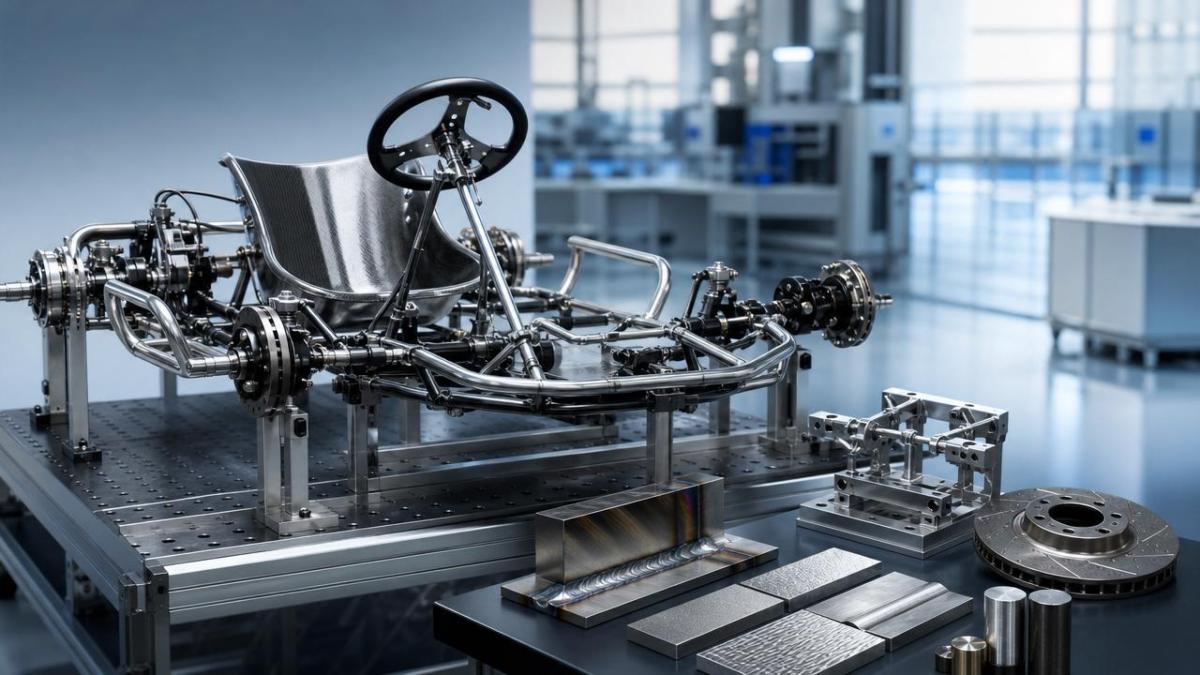
A buyer is not simply asking whether a kart looks well made. The real question is whether performance remains stable across production batches.
That distinction matters because a prototype can be polished, reinforced, or individually tuned before a factory visit or trade show presentation.
Procurement teams need proof that the same quality appears in container shipments, replacement parts, and repeat orders months later.
A reliable go kart manufacturer should therefore demonstrate process control, not only a single attractive sample or promotional test video.
The most useful evidence links design assumptions, production methods, inspection records, and field performance into one auditable quality system.
Start With Material Traceability, Not Finished Appearance
Paint quality and clean assembly are important, but they do not prove structural reliability. Build quality begins with verified incoming materials.
Buyers should request material certificates for chassis tubing, axle steel, fasteners, brake components, and safety-critical welded assemblies.
Certificates should identify grade, heat number, supplier, mechanical properties, and applicable standards rather than only listing generic material descriptions.
For steel chassis, procurement teams should confirm yield strength, tensile strength, wall thickness tolerance, and corrosion protection method.
If aluminum or composite components are used, the supplier should explain alloy grade, temper condition, layup process, or resin specification.
Traceability is especially important when karts are used in rental fleets, amusement venues, schools, or high-duty commercial environments.
Without traceability, a low-cost substitution may remain invisible until frames crack, axles deform, or warranty claims escalate unexpectedly.
Chassis Quality Must Be Proven Through Weld and Geometry Control
The chassis is the structural backbone of a go kart, so build quality claims must focus heavily on fabrication consistency.
Procurement teams should ask how tube cutting, bending, fixture positioning, and welding parameters are controlled during mass production.
A competent manufacturer should use welding fixtures that maintain geometry, reduce distortion, and ensure repeatable alignment between critical mounting points.
Inspection records should include weld visual checks, dimensional reports, fixture verification, and acceptance criteria for undercut, porosity, and incomplete fusion.
For higher-risk applications, buyers can request non-destructive testing samples, such as dye penetrant testing or magnetic particle inspection.
Dimensional control is equally important. Steering geometry, wheelbase, track width, axle alignment, and engine mounting position influence handling and tire wear.
If these values drift between batches, the kart may feel inconsistent, consume parts faster, or create avoidable safety concerns.
A serious go kart manufacturer can provide tolerance ranges and explain how deviations are detected before products leave the factory.
Fatigue Testing Separates Real Durability From Marketing Claims
Go karts experience repeated vibration, cornering loads, curb impacts, braking forces, and driver weight variation during normal operation.
Because of these conditions, static load statements alone do not prove long-term build quality or fleet-level durability.
Procurement teams should ask whether the chassis, steering column, pedal assembly, axle mounts, and seat brackets have undergone fatigue testing.
Useful fatigue evidence includes cycle count, applied load, test fixture design, failure criteria, and photographs of tested components.
A vague statement such as “tested for durability” is weak unless the supplier can define the test method and acceptance threshold.
For rental or amusement use, buyers should prefer manufacturers that simulate repetitive commercial operation rather than occasional recreational driving.
Fatigue testing does not need to be aerospace-level sophisticated, but it must be documented, repeatable, and relevant to actual service conditions.
When a supplier cannot provide fatigue data, buyers should consider higher spare-part stocking, shorter warranty assumptions, or additional third-party validation.
Braking Performance Requires Measured Results, Not Brand Names
Braking systems are safety-critical, and procurement teams should evaluate them through performance data rather than component appearance or supplier reputation.
A manufacturer should provide stopping distance, brake balance, thermal performance, pedal force, and fade resistance under defined test conditions.
Those conditions should specify kart weight, driver weight, speed, surface type, tire condition, and number of repeated braking cycles.
For electric go karts, buyers should also review regenerative braking integration, controller logic, fail-safe behavior, and emergency stop response.
For gasoline models, heat management around brake lines, fuel systems, and engine components deserves particular inspection attention.
Brake build quality also includes caliper mounting rigidity, disc runout, hose routing, fluid quality, and protection against contamination.
Procurement teams should ask whether every batch receives brake function testing, and whether results are recorded by serial number.
The best suppliers treat braking performance as a controlled engineering output, not a generic feature described in sales language.
Supplier Quality Systems Should Match the Risk of the Product
Not every go kart manufacturer needs the same certification portfolio, but every serious supplier needs a documented quality management system.
At minimum, buyers should expect controlled work instructions, incoming inspection, in-process checks, final inspection, nonconformance handling, and corrective action records.
ISO 9001 certification can be useful, but procurement teams should not treat the certificate as complete proof of build quality.
The practical question is whether procedures are actually followed on the production floor and reflected in batch-level records.
During supplier evaluation, buyers should request sample inspection reports from previous production lots, not only blank templates.
Useful records include torque checks, weld inspections, brake tests, steering checks, electrical tests, paint thickness, and packaging inspections.
For electric karts, quality systems should also cover battery pack assembly, connector retention, insulation resistance, charger compatibility, and controller programming.
A mature supplier can show how defects are detected, contained, analyzed, and prevented from recurring in future production.
Batch Consistency Is More Important Than a Perfect Sample
Many purchasing failures begin when the approved sample differs from the actual shipment. This is common in cost-sensitive manufacturing categories.
To reduce this risk, procurement teams should define golden samples, approved drawings, critical dimensions, and control plans before mass production.
A go kart manufacturer should agree which components are safety-critical and which changes require written buyer approval.
Critical items may include chassis tube grade, weld process, brake system, steering assembly, axle material, tires, battery, and controller.
Buyers should also define acceptable cosmetic limits, because paint defects and surface corrosion can create downstream customer dissatisfaction.
Pre-shipment inspection should not be limited to counting cartons. It should include functional testing and comparison against approved specifications.
For larger orders, buyers can require first-article inspection, during-production inspection, and final random inspection before balance payment.
Batch consistency becomes easier to manage when the supplier assigns serial numbers and links them to production and inspection records.
Field Data Is One of the Strongest Proof Points
Laboratory tests are valuable, but field data often reveals weaknesses that controlled tests fail to expose.
Procurement teams should ask manufacturers for warranty rates, common failure modes, replacement part demand, and complaint trends by model.
For commercial fleets, useful indicators include average operating hours before repair, brake pad life, tire wear, chain life, and frame failure rate.
The supplier does not need to disclose confidential customer names, but should be able to summarize anonymized performance evidence.
A manufacturer with strong build quality will usually understand which components fail first and what design changes reduced those failures.
That learning loop is important because go karts operate in varied environments, including rental tracks, parks, schools, and private venues.
If a supplier cannot discuss field failures honestly, buyers should question whether the company has a real quality feedback process.
How to Evaluate Test Reports Without Being Misled
Test reports are only useful when procurement teams understand what the document actually proves and what it does not prove.
A credible report should identify the tested model, sample size, test date, test equipment, procedure, result, and acceptance standard.
Buyers should be cautious with reports that show only a pass result without loads, speeds, temperatures, cycles, or measurement conditions.
Third-party laboratory reports are stronger than internal reports, but internal testing still has value when methods are transparent.
Procurement teams should compare test conditions with their own operating environment, especially driver weight, daily usage hours, and maintenance discipline.
A kart that performs adequately for private leisure use may not survive aggressive rental cycles without reinforced components.
When the purchase volume is significant, buyers should consider commissioning independent testing on pre-production or random production samples.
This cost is often small compared with recalls, downtime, injury claims, or damage to a venue operator’s reputation.
Factory Audits Should Focus on Process Evidence
A factory visit is valuable only when the audit examines process control, not just warehouse capacity or general cleanliness.
Procurement teams should review welding stations, assembly lines, inspection areas, incoming material storage, test equipment, and nonconforming product zones.
Auditors should verify calibration stickers, operator training records, production travelers, and whether inspection results are actually recorded during work.
It is also useful to observe whether operators rely on memory or controlled work instructions at each assembly step.
For paint and coating processes, buyers should inspect surface preparation, curing conditions, adhesion tests, salt-spray evidence, and thickness measurements.
For electric models, the audit should include battery handling controls, charging safety, wire harness routing, connector protection, and software configuration control.
The objective is not to punish minor imperfections. It is to identify whether the manufacturer can control repeatable quality under pressure.
Commercial Terms Can Reveal Quality Confidence
Build quality is also reflected in how confidently a supplier handles warranty, spare parts, documentation, and after-sales support.
A strong manufacturer should define warranty scope clearly, including structural parts, drivetrain components, electronics, batteries, and wear items.
Procurement teams should examine whether spare parts are available by model, serial number, and revision level.
Poor spare-part control can turn a technically acceptable kart into an operational liability for fleet owners and distributors.
Buyers should also review packaging standards, because damaged shipments can create immediate repair costs and customer dissatisfaction.
Clear installation manuals, maintenance schedules, torque specifications, and troubleshooting guides indicate that the supplier understands real operating requirements.
When a manufacturer resists reasonable warranty metrics or documentation requests, procurement teams should treat that behavior as a risk signal.
A Practical Buyer Checklist for Proving Build Quality
Before approving a go kart manufacturer, procurement teams should prepare a structured evidence request rather than relying on sales conversations.
The checklist should include material certificates, drawings, tolerance sheets, welding criteria, fatigue records, brake tests, and final inspection reports.
It should also request quality procedures, sample batch records, defect history, field performance data, and spare-part availability confirmation.
For electric karts, add battery safety documentation, electrical testing, charger certification, controller settings, and emergency shutdown verification.
For commercial rental applications, ask for operating-hour assumptions, recommended maintenance intervals, and evidence from comparable fleet usage.
Buyers should rank evidence by safety impact, operating cost impact, and likelihood of variation during production.
This approach prevents teams from overemphasizing low-risk cosmetic details while missing critical structural, braking, or electrical weaknesses.
The best purchasing decision combines supplier cost, technical evidence, operational support, and the buyer’s actual use case.
Conclusion: Real Build Quality Is Measurable
A go kart manufacturer proves build quality by showing controlled processes, verified materials, repeatable testing, and batch-level inspection evidence.
Procurement teams should move beyond general claims and require data that connects engineering design with production reality.
The strongest suppliers welcome technical questions because those questions distinguish disciplined manufacturers from low-cost vendors with unstable quality.
When build quality is proven through evidence, buyers reduce warranty risk, improve fleet uptime, and protect long-term commercial value.
In procurement, trust should not be based on adjectives. It should be built from tolerances, test results, records, and accountability.























