
Servo Drive Response Time Affects More Than Motion Smoothness
Publication Date
author
In advanced automation, servo drive response time shapes far more than motion smoothness—it directly influences positioning stability, cycle efficiency, and overall system reliability. For teams evaluating smart factory automation solutions, from cobot palletizing layout and cobot for CNC machine tending to amr for warehouse logistics, understanding how response speed interacts with load, vibration, and control accuracy is essential for better engineering decisions and lower integration risk.
The short answer is this: servo drive response time is not just a tuning metric for motion engineers. It affects how quickly a system corrects error, how consistently it holds position under changing loads, how much vibration reaches the mechanical structure, and whether the expected throughput can actually be achieved on the plant floor. For operators, procurement teams, and technical decision-makers, that means response time should be evaluated as a system-level performance factor—not as an isolated specification on a datasheet.
Why servo drive response time matters beyond motion smoothness
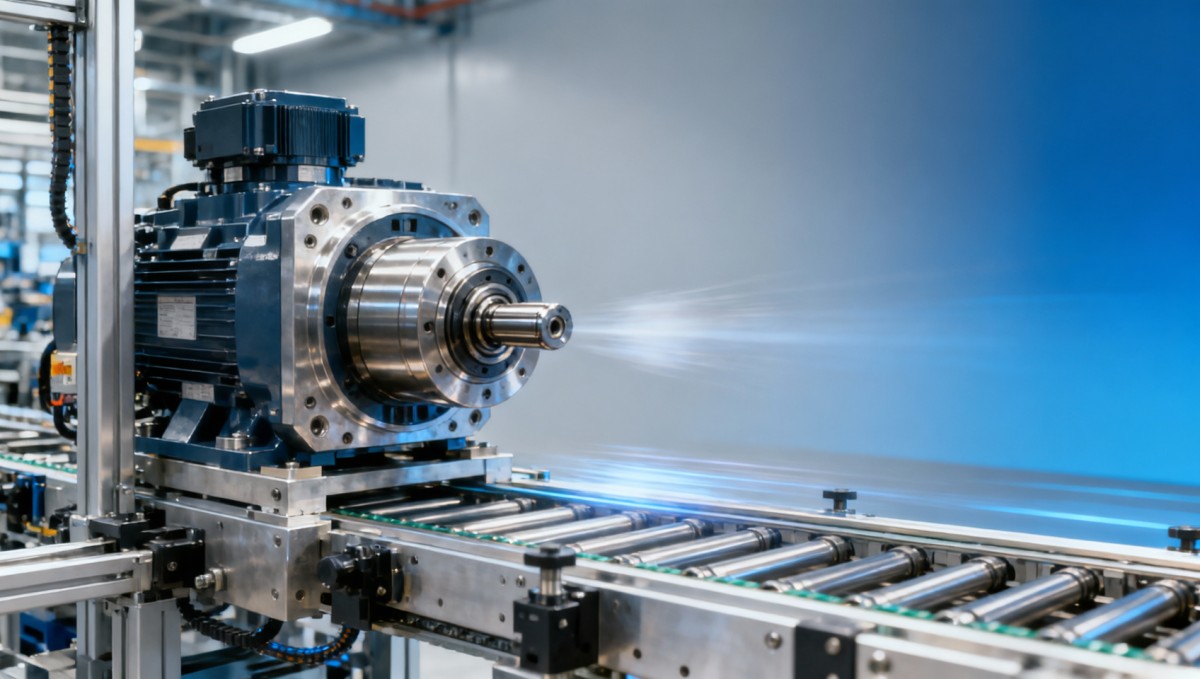
Many buyers first encounter servo drive response time when comparing machine “smoothness” or controller quality. But in real industrial use, the effect goes much further. A faster and well-controlled response improves how quickly the drive reacts to command changes and disturbance events, including sudden load shifts, inertia mismatch, tool engagement, and emergency deceleration demands.
That directly impacts several practical outcomes:
- Positioning stability: Faster correction reduces following error and improves repeatability in pick-and-place, CNC tending, and indexing tasks.
- Cycle efficiency: Shorter settling time means less waiting between moves, which supports higher throughput.
- Load handling: Systems exposed to variable payloads, such as cobot palletizing or transfer applications, benefit from better disturbance rejection.
- Vibration control: A properly tuned response can reduce oscillation, but an overly aggressive response can amplify it if the mechanics are weak.
- Equipment life and reliability: Poor response characteristics can create repeated shock, resonance, and heat stress across the drivetrain.
In other words, servo drive response time affects machine quality, output consistency, maintenance frequency, and integration risk. That is why it matters to far more stakeholders than the controls engineer alone.
What users, buyers, and decision-makers should actually evaluate
For most target readers, the main question is not “What is response time?” but “How do I know whether this servo drive is suitable for my application?” The answer requires looking at response time in context.
The most useful evaluation dimensions are:
1. Settling behavior under real load conditions
A servo system may look excellent in no-load test conditions but perform very differently when carrying off-center, changing, or high-inertia loads. This is especially relevant in:
- cobot for CNC machine tending
- robotic dispensing and assembly
- AMR top-module handling systems
- palletizing with variable box weights
Ask whether the published response performance was measured under realistic inertia ratios and duty cycles, not just ideal lab settings.
2. Disturbance rejection, not just speed
A fast servo drive that cannot maintain stability when external force or vibration enters the system may create more problems than it solves. Users should assess how the drive responds to unexpected disturbances such as belt elasticity, arm flex, gripper mass variation, or floor vibration.
3. Coordination with mechanics and controller architecture
Servo drive response time cannot be judged independently of the motor, gearbox, coupling, frame rigidity, encoder resolution, and upper-level controller. A high-performance drive paired with poor mechanics will not deliver the expected accuracy. In some cases, tuning the response more aggressively can reveal structural weaknesses rather than improve output.
4. Repeatability across shifts, temperatures, and operating states
For procurement teams and plant managers, consistency matters more than peak laboratory performance. The real benchmark is whether the system maintains stable motion behavior over long production runs, across thermal drift, operator changes, and maintenance intervals.
How servo response time influences common automation scenarios
The importance of servo drive response time becomes clearer when mapped to actual use cases.
Cobot palletizing layout
In palletizing, load changes are constant. Each pick and place can alter inertia, center of gravity, and arm dynamics. If servo response is too slow, the robot may show longer settling time at placement, reduced stack precision, and lower line speed. If response is too aggressive without enough structural damping, cartons may sway, vacuum picks may destabilize, and wear may increase at joints and end-of-arm tooling.
Cobot for CNC machine tending
This application often demands reliable approach accuracy, stable insertion/removal motion, and fast cycle recovery. Servo response time here affects door interaction timing, part handoff accuracy, and fixture engagement. Even small delays in motion stabilization can add up over thousands of cycles per day, reducing the expected return on automation investment.
AMR for warehouse logistics
Although AMRs involve broader navigation and fleet software layers, servo responsiveness still matters in drive modules, lifting platforms, conveyor transfer systems, and docking mechanisms. Poor response can reduce stop accuracy, create load shift during acceleration, and affect transfer reliability at workstations.
Precision assembly and inspection cells
In applications that depend on machine vision, probing, or micro-positioning, servo settling characteristics affect whether the system can reach the required tolerance window before the next process begins. Better response can support tighter takt times, but only if the full control loop is tuned for stability.
What can go wrong when response time is misunderstood or oversimplified
A common purchasing mistake is to assume that faster is always better. In reality, poor interpretation of servo response time can create expensive side effects.
- Mechanical resonance: If the structure has compliance, a highly aggressive drive may excite vibration modes.
- Reduced component life: Frequent sharp corrections can increase stress on couplings, bearings, and gearboxes.
- False confidence from datasheets: Published response figures may not reflect the final machine architecture.
- Over-specification: Paying for ultra-fast dynamic performance may not create value in slower, process-limited applications.
- Integration delays: Systems that are difficult to tune can consume engineering hours and extend commissioning timelines.
This is particularly important for enterprise decision-makers. The wrong servo response profile does not only affect motion quality; it can affect project ROI, maintenance burden, and supplier qualification outcomes.
How to judge servo drive suitability before purchase or integration
If your team is comparing automation solutions or servo platforms, focus on decision criteria that connect engineering performance with operational value.
Request application-relevant test evidence
Instead of asking only for generic response bandwidth or speed claims, request data linked to your use case:
- settling time at target payload
- repeatability under changing inertia
- position deviation during disturbance events
- thermal stability over production cycles
- vibration behavior at critical move profiles
Evaluate system matching, not only the drive
Check whether the servo drive has been validated with the proposed motor, encoder, gearbox, and controller combination. Component-level excellence does not guarantee system-level performance.
Look at tuning support and diagnostics
Good servo performance depends heavily on commissioning quality. Suppliers that provide practical tuning tools, resonance suppression functions, waveform analysis, and fault diagnostics can reduce deployment risk significantly.
Match performance to process economics
For procurement and business leaders, the relevant question is: does improved response time produce measurable throughput gain, quality improvement, or downtime reduction? If not, a mid-range solution may be more rational than the highest dynamic specification available.
Practical guidance for different reader roles
Different stakeholders should interpret servo drive response time through different decision lenses.
For information researchers
Focus on distinguishing marketing claims from measurable control performance. Search for test conditions, inertia assumptions, settling definitions, and real application references.
For operators and users
Watch for symptoms such as overshoot, vibration after stopping, inconsistent placement, or unstable cycle timing. These may indicate response or tuning issues, not just mechanical defects.
For procurement teams
Prioritize verifiable performance data, application fit, support capability, and lifecycle risk over headline speed claims alone. The most expensive servo is not always the best purchasing decision.
For enterprise decision-makers
Connect servo response time to broader outcomes: throughput, scrap risk, commissioning time, maintenance cost, and line scalability. A well-matched servo system improves operational resilience; a poorly matched one creates hidden cost across the asset lifecycle.
Conclusion: servo drive response time is a business and engineering variable
Servo drive response time affects much more than motion smoothness. It shapes accuracy, settling time, disturbance rejection, vibration behavior, equipment wear, and ultimately the reliability of automated production. In applications such as cobot palletizing layout, cobot for CNC machine tending, and AMR for warehouse logistics, these effects can directly influence line output and integration success.
The best takeaway is simple: do not evaluate servo response time as an isolated number. Judge it as part of a complete electromechanical system under real operating conditions. When response speed is matched correctly to load, structure, control architecture, and process economics, it becomes a meaningful source of performance advantage. When misunderstood, it becomes a hidden source of instability, cost, and disappointment.
For technical teams and buyers alike, the right question is not “Which servo drive is fastest?” but “Which servo system delivers stable, repeatable, economically useful performance in the application we actually need to run?”
Search News
Hot Articles
- Carbon Fiber StructuresHow to Specify Aerospace Carbon Fiber Assemblies for Lightweight, Load-Bearing PartsJul 11, 2026
- Machine VisionXiaomi, Alibaba DAMO Academy Drive Open-Source Robotics Model Ecosystem, Lowering Algorithm Development Barriers for Overseas SMEs Adopting Chinese Robotics SolutionsMar 30, 2026
- Cobots & ArmsShanxi 'AI+' Conference Showcases Embodied Intelligence with Multinational Buyer Engagement: Key Industry ImplicationsMar 30, 2026
Popular Tags
Recommended News
 Jul 11, 2026How to Specify Aerospace Carbon Fiber Assemblies for Lightweight, Load-Bearing PartsAerospace carbon fiber assemblies: learn how to specify laminate design, load data, joining methods, and inspection controls for lighter, reliable load-bearing aerospace parts.Elena Rostova (UAV Systems Researcher)
 Mar 30, 2026Xiaomi, Alibaba DAMO Academy Drive Open-Source Robotics Model Ecosystem, Lowering Algorithm Development Barriers for Overseas SMEs Adopting Chinese Robotics SolutionsXiaomi & Alibaba DAMO Academy's open-source robotics models lower algorithm barriers for global SMEs. Boost efficiency in manufacturing, logistics & smart retail with ROS 2 compatible solutions.TSV Data Lab
 Mar 30, 2026Shanxi 'AI+' Conference Showcases Embodied Intelligence with Multinational Buyer Engagement: Key Industry ImplicationsShanxi 'AI+' Conference highlights embodied intelligence with Tesla, Ubtech & Jiantao showcasing multimodal robotics. 40+ global buyers validated tech on-site, creating new B2B channels for industrial automation & AI solutions.Chen Wei (Automation Lead Engineer)
 Mar 30, 2026Zhongguancun Unveils 6G Integrated Sensing-Computing-Intelligence Platform to Empower Embodied Robots for Global Industrial ApplicationsZhongguancun's new 6G platform revolutionizes industrial robotics with <10ms latency, empowering global automotive, logistics & port automation. Discover how this tech boosts China's smart manufacturing exports.TSV Data Lab
 Mar 30, 2026Mech-Mind Tianjin Embodied Intelligence R&D and Production Base Goes Live, Cutting Delivery Time by 20%–30% for Global Customized AMR+Vision SolutionsMech-Mind's Tianjin AMR+Vision production base cuts delivery time by 20%-30% for欧美 & Latin American markets. Discover how this PLd-certified facility accelerates customized robotics solutions for smart manufacturing and logistics.Chen Wei (Automation Lead Engineer)
 Mar 30, 2026Boao Forum Reveals 'Co-evolution of Big and Small Brains' Trend in Humanoid Robots, China's Embodied Intelligence Accelerates Adaptation to Overseas Manufacturing Service ScenariosDiscover how China's humanoid robots, featuring 'Co-evolution of Big and Small Brains,' are revolutionizing global manufacturing. Learn about Embodied Tian Gong 3.0's ISO compliance and overseas deployment at Boao Forum 2026.Chen Wei (Automation Lead Engineer)
 Mar 30, 2026China Railway Industrial Secures Patent for Embodied Robotics in Material Handling, Boosting High-Precision Delivery Capabilities for Overseas Infrastructure and Manufacturing ProjectsChina Railway Industrial's new patent for embodied robotics in material handling boosts high-precision delivery for global infrastructure & manufacturing. Discover how this innovation enhances logistics accuracy in automotive, rail transit & EPC projects.Chen Wei (Automation Lead Engineer)
 Oct 15, 2026R&D Cost Reduction Services: How to Evaluate Fees, Savings, and ROIEvaluate R&D cost reduction services with confidence. Compare fees, verify savings, and calculate ROI without compromising performance. Discover how to choose a provider that delivers real value.Chen Wei (Automation Lead Engineer)
 Oct 14, 2026Drone Frame Composites: Carbon Fiber vs. Fiberglass for Weight and StiffnessExplore drone structural materials composites: compare carbon fiber and fiberglass for weight, stiffness, cost, and antenna compatibility. Find the right material for your drone frame.Elena Rostova (UAV Systems Researcher)
 Oct 13, 2026Smart Cameras vs. PC-Based Machine Vision: Which Fits High-Speed Inspection?This industrial product comparison for machine vision weighs smart cameras vs. PC-based systems on latency, throughput, and cost. Discover your best fit for high-speed inspection.TSV Data Lab
 Oct 12, 2026How to Verify RoHS Compliance in Industrial Sensing Systems Before DeploymentRoHS compliant sensing systems: learn how to verify materials, supplier declarations, testing, and configuration controls before industrial deployment.TSV Data Lab
 Oct 11, 2026How Procurement-Oriented Content Taxonomy Improves B2B Buying JourneysProcurement-oriented content taxonomy streamlines B2B buying journeys with clearer evidence, supplier comparisons, risk visibility, and faster approvals.TSV Data Lab
 Oct 10, 2026How to Select a Machine Performance Monitoring Platform for OEE and Downtime ReductionMachine performance monitoring platform selection guide: validate machine states, OEE data, downtime reasons, integrations, and scalability to reduce losses with confidence.TSV Data Lab
 Oct 08, 2026How to Machine Inconel 625 Blades Without Heat Cracks or Edge ChippingInconel 625 blade machining guide: prevent heat cracks, edge chipping, chatter, and work hardening with proven tooling, cooling, fixturing, and inspection strategies.Dr. Marcus Vance
 Oct 07, 2026How to Evaluate an HMI Panel Distributor for Industrial Automation ProjectsHMI panel distributor evaluation guide: verify technical compatibility, traceability, supply reliability, lifecycle support, and total cost for automation projects.Victor Lin (Chief Software Architect)
 Oct 06, 2026Navigation Fault Tolerance Standards for AMRs: What Safety Teams Must VerifyNavigation fault tolerance standards: learn what AMR safety teams must verify, from localization loss and sensor faults to stopping distance, safe restart, and site-specific validation.Chen Wei (Automation Lead Engineer)
 Oct 05, 2026Calculating Edge Computing Total Cost of Ownership Across Distributed SitesEdge computing ownership cost explained: calculate deployment, energy, connectivity, security, remote support, and refresh costs across distributed sites.TSV Data Lab
 Oct 04, 2026CAD/CAM Benchmarking in the GCC: What Manufacturers Should Ask a ConsultantCAD CAM benchmark consultant GCC guide: learn the key questions manufacturers should ask to validate post-processors, workflows, machine performance, and production risk.Victor Lin (Chief Software Architect)
 Oct 03, 2026Selecting Automotive Radar Sensor Modules for ADAS Range, Resolution, and IntegrationAutomotive radar sensor module selection guide for ADAS: compare range, resolution, field of view, latency, and integration to build safer, reliable vehicle systems.TSV Data Lab
 Oct 02, 2026How to Qualify Machined Parts Suppliers for Hard Tech ProgramsHard tech supply chain machined parts demand rigorous supplier qualification. Learn how to assess capability, traceability, quality controls, and delivery resilience.Dr. Marcus Vance
 Oct 01, 2026How to Select an Outdoor Security Radar Sensor for Perimeter Detection?Outdoor security radar sensor selection guide: compare range, accuracy, false-alarm control, integration, and field testing for reliable perimeter detection.TSV Data Lab
 Sep 30, 2026How to Evaluate Solid-State LiDAR Hardware for Outdoor Autonomous VehiclesSolid state LiDAR hardware evaluation guide for outdoor autonomous vehicles—compare range, point-cloud quality, environmental resilience, integration, and safety.TSV Data Lab
 Sep 29, 2026ISO 9283 Repeatability: How to Evaluate Cobot Positioning PerformanceISO 9283 cobot repeatability explained: learn how payload, reach, approach direction, and test conditions affect positioning performance and cell capability.Chen Wei (Automation Lead Engineer)
 Oct 14, 2026How tight can micro machining aerospace tolerances be in production?Micro machining aerospace tolerances can reach low-micron levels in production. Learn what controls repeatability, inspection confidence, and flight-critical quality.Dr. Marcus Vance























