Picking Servo Motors for Robotics Without Overbuying
Publication Date
author
Choosing servo motors for robotics applications should not mean paying for torque, precision, or environmental protection your system will never use. For procurement teams balancing performance, lifecycle cost, and supplier risk, the real challenge is separating measurable engineering requirements from inflated product claims. This guide focuses on how to match servo specifications to robotic duty cycles, load profiles, and integration needs—so you can buy confidently without overbuying.
What procurement teams should define before comparing servo motors for robotics applications
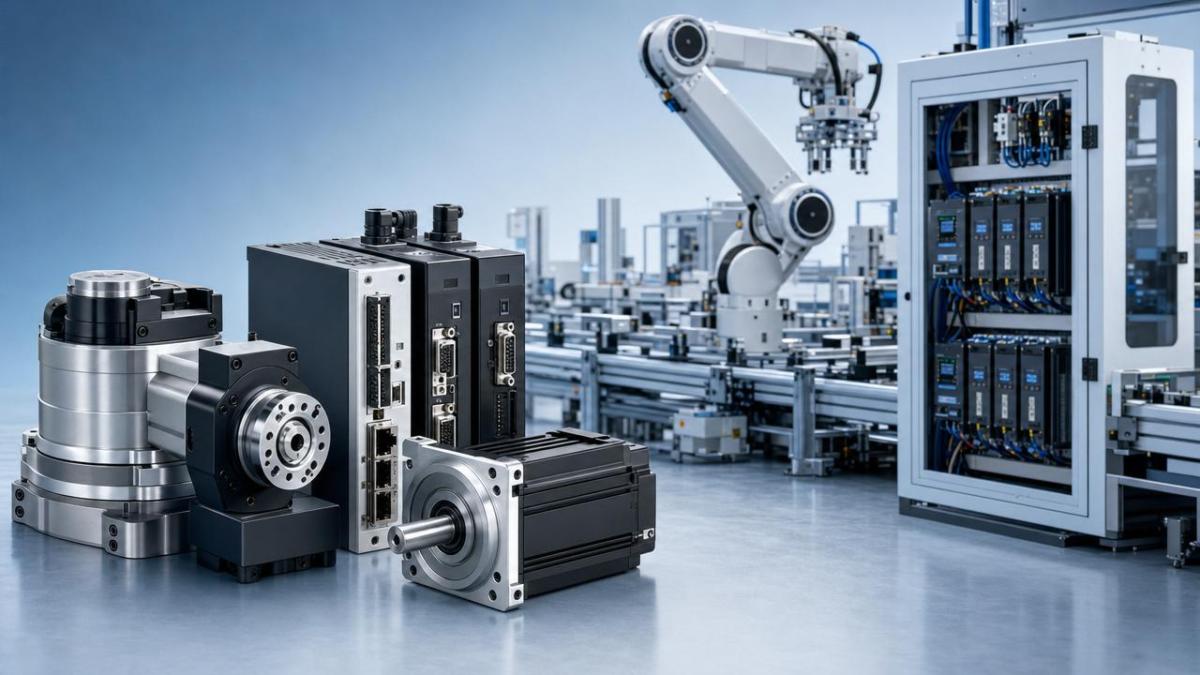
In robotics programs, overspending usually starts before supplier comparison begins. A vague request such as “high precision servo” or “industrial-grade motor” invites oversized quotes, unnecessary safety margins, and difficult technical reviews. Procurement performs better when the buying brief starts from the machine’s real motion profile rather than from catalog language.
For servo motors for robotics applications, the core question is not which motor looks strongest on paper. It is which motor meets torque, speed, feedback, thermal, and communication requirements with acceptable operating margin. TechStat Vanguard approaches this the same way engineers do: parameters first, claims second.
Start with the minimum complete specification set
- Axis function: joint actuation, end effector drive, linear stage, AGV steering, or conveyor synchronization.
- Load condition: reflected inertia, payload variation, gravity effect on vertical axes, and shock events during startup or emergency stop.
- Motion pattern: indexing, point-to-point positioning, contouring, oscillation, continuous rotation, or repeated short-cycle moves.
- Operating environment: ambient temperature, dust, washdown exposure, vibration, and enclosure limits.
- Control architecture: pulse train, EtherCAT, CANopen, PROFINET, or other fieldbus and controller compatibility.
When this information is missing, suppliers often protect themselves by quoting larger frame sizes, higher encoder resolution, and more rugged sealing than the project actually needs. That increases purchase price, drive cost, cable cost, and sometimes lead time.
Which motor parameters matter most, and which ones are often overspecified?
Many buyers are shown long datasheets, but only a few parameters truly determine whether servo motors for robotics applications will fit the machine. The table below helps procurement teams separate must-check values from frequently inflated specifications.
The practical lesson is simple: peak specifications sell products, but continuous specifications run factories. TSV’s benchmarking logic favors duty-cycle realism, thermal limits, and integration fit because those factors influence uptime and total cost more than headline numbers.
Three parameters that deserve extra scrutiny
- RMS torque under actual cycle conditions. This is often more useful than rated torque printed in large font.
- Rotor inertia. A mismatch between motor inertia and load inertia can create poor responsiveness or tuning difficulty.
- Brake requirement. Vertical axes may need holding brakes; horizontal axes often do not.
How application scenarios change the right servo selection
Servo motors for robotics applications should be selected by axis behavior, not by robot category alone. A collaborative arm wrist axis, an AGV traction module, and a dispensing gantry can all use servo technology, but their cost drivers and failure risks differ significantly.
The following scenario matrix helps procurement teams align performance needs with realistic specification levels instead of using one expensive standard across every robotic subsystem.
A scenario-led approach also simplifies supplier discussions. Instead of requesting a generic robotics servo, buyers can specify motion type, axis orientation, cycle frequency, and environmental exposure. That reduces quotation spread and makes technical comparison more objective.
What procurement should ask suppliers before issuing a PO
In the global hard-tech supply chain, information noise is a real cost. Marketing terms such as “high response,” “industrial precision,” or “heavy-duty reliability” are not enough to qualify servo motors for robotics applications. Procurement needs measurable responses that engineering can validate.
Supplier qualification questions that reveal real fit
- What continuous torque is available at the expected ambient temperature and enclosure condition?
- What is the permissible overload duration and duty cycle before thermal derating begins?
- Which feedback options are supported, and are replacement parts backward compatible?
- What fieldbus protocols and controller brands have proven interoperability?
- Are brake, connector, and cable assemblies standard items or special-order parts with longer lead times?
- What documentation is available for installation, tuning, EMC behavior, and maintenance intervals?
This line of questioning reflects TSV’s data-first philosophy. Buyers reduce risk when they compare testable characteristics, supported interfaces, and serviceability rather than relying on broad claims. It is especially useful when sourcing from multiple regions where terminology and spec formatting may differ.
A practical pre-purchase checklist
- Confirm the load inertia range and whether it changes with payload or tooling.
- Verify required acceleration, maximum speed, and dwell time in one full operating cycle.
- Check whether the axis needs a holding brake, absolute encoder, or safety-related feedback.
- Review cable bend radius, connector orientation, and cabinet space for the drive.
- Request spare part lead time and minimum stocking recommendations for critical axes.
Cost drivers: where the extra money actually goes
Overbuying servo motors for robotics applications is rarely limited to the motor itself. A larger or more specialized motor can trigger secondary costs across the drive system, mechanical design, and maintenance plan. Procurement should review cost at the system level.
The table below highlights where specification escalation often increases total acquisition and operating cost.
For buyers under budget pressure, this is where disciplined engineering language helps. Reducing unnecessary frame size or ingress protection can lower not only initial quotation cost but also cabinet heat load, cable routing complexity, and future replacement expense.
How standards, compliance, and reliability affect sourcing decisions
Servo motors for robotics applications often sit inside broader machine compliance obligations. The motor itself is only one component, but it influences electrical safety, EMC behavior, thermal management, and maintainability. Procurement should confirm what is required by the end market before assuming every axis needs the same certification level.
Common compliance considerations
- Electrical conformity for the destination market, especially where machinery exports are involved.
- EMC compatibility with drives, sensors, edge devices, and industrial networks in dense automation cells.
- Environmental ratings based on dust, humidity, coolant mist, or cleaning routine.
- Traceability of key components where regulated sectors require deeper documentation.
TSV’s perspective is especially relevant for mixed-industry procurement. A robotics buyer serving electronics assembly, aerospace tooling, and autonomous systems may face very different documentation expectations. Applying one blanket specification to all projects usually increases cost without proportionate risk reduction.
Common mistakes when buying servo motors for robotics applications
Most costly mistakes are not dramatic failures. They are quiet mismatches that show up later as extra tuning time, long lead replacement parts, oversized drives, or robotic arms carrying unnecessary mass. Procurement can prevent these issues by watching for a few recurring patterns.
Frequent sourcing errors
- Selecting by maximum torque alone instead of using a full motion cycle and RMS torque estimate.
- Ignoring mechanical integration details such as shaft type, mounting face, connector direction, and cable movement.
- Assuming higher encoder counts always improve productivity, even when the robot controller or process does not benefit.
- Failing to ask whether tuning support, software tools, and spare inventory are available locally or regionally.
- Applying harsh-environment protection levels to all installations, including clean indoor automation cells.
A disciplined sourcing process treats servo selection as a system decision. That means checking motor, drive, gearbox, cabling, controls, and maintenance as one package. The procurement team that asks for this integrated view usually spends less and experiences fewer qualification delays.
FAQ: practical questions buyers ask about servo motors for robotics applications
How much torque margin should a robotics servo have?
There is no universal percentage that fits every axis. A reasonable approach is to evaluate continuous torque against the real duty cycle and reserve peak torque for short acceleration events or disturbances. Too little margin creates overheating risk; too much margin increases cost and moving mass. The right answer comes from motion data, not a generic rule.
Are higher-resolution encoders always better for robotics?
Not always. For high-precision contouring, fine dispensing, or sensitive low-speed motion, better feedback can be justified. For simpler transfer axes or packaging robots, the process limit may come from mechanics, tooling, or controller behavior rather than encoder resolution. Procurement should verify what performance gain the higher option delivers in the actual application.
When is a brake necessary on servo motors for robotics applications?
Brakes are commonly needed on vertical or suspended loads where the axis must hold position when power is removed. They may also be used for safety or maintenance reasons. Horizontal axes often do not need them. Adding a brake without a defined requirement can increase cost, package size, and lead time.
What should procurement ask about lead time and spare parts?
Ask whether the motor, encoder option, brake, connector, and mating cable are all standard stocked items. Confirm regional availability, typical replacement lead time, and whether future substitutions require retuning or controller changes. A low initial price can become expensive if one custom cable assembly delays a robot line restart.
Why work with a data-driven technical partner
Procurement teams do not need more adjectives in the robotics supply chain. They need cleaner parameter comparison, realistic benchmarking, and better alignment between engineering requirements and commercial decisions. That is where a data-driven framework adds value.
TechStat Vanguard focuses on the kind of evidence that matters in advanced manufacturing: motion duty conditions, reliability indicators, interface fit, environmental requirements, and supply chain traceability. Instead of treating servo motors for robotics applications as a commodity line item, TSV helps buyers evaluate whether a specification is justified, inflated, or incomplete.
What you can discuss with us
- Parameter confirmation for torque, speed, encoder, brake, and ingress protection requirements.
- Servo selection support based on robotic duty cycle, payload variation, and controller architecture.
- Benchmark-style comparison of supplier quotations, especially where specifications appear inconsistent.
- Lead time, replacement risk, and spare strategy review for critical automation projects.
- Documentation and compliance review for export-oriented machinery, precision automation, and advanced robotics sourcing.
If your team is comparing servo motors for robotics applications and wants to avoid paying for unused performance, contact us with your load profile, motion cycle, integration constraints, target delivery schedule, and certification concerns. We can help you refine the spec sheet, challenge inflated assumptions, and move toward a sourcing decision grounded in engineering truth.
Search News
Hot Articles
- Carbon Fiber StructuresHow to Specify Aerospace Carbon Fiber Assemblies for Lightweight, Load-Bearing PartsJul 11, 2026
- Machine VisionXiaomi, Alibaba DAMO Academy Drive Open-Source Robotics Model Ecosystem, Lowering Algorithm Development Barriers for Overseas SMEs Adopting Chinese Robotics SolutionsMar 30, 2026
- Cobots & ArmsShanxi 'AI+' Conference Showcases Embodied Intelligence with Multinational Buyer Engagement: Key Industry ImplicationsMar 30, 2026
Popular Tags
Recommended News
 Jul 11, 2026How to Specify Aerospace Carbon Fiber Assemblies for Lightweight, Load-Bearing PartsAerospace carbon fiber assemblies: learn how to specify laminate design, load data, joining methods, and inspection controls for lighter, reliable load-bearing aerospace parts.Elena Rostova (UAV Systems Researcher)
 Mar 30, 2026Xiaomi, Alibaba DAMO Academy Drive Open-Source Robotics Model Ecosystem, Lowering Algorithm Development Barriers for Overseas SMEs Adopting Chinese Robotics SolutionsXiaomi & Alibaba DAMO Academy's open-source robotics models lower algorithm barriers for global SMEs. Boost efficiency in manufacturing, logistics & smart retail with ROS 2 compatible solutions.TSV Data Lab
 Mar 30, 2026Shanxi 'AI+' Conference Showcases Embodied Intelligence with Multinational Buyer Engagement: Key Industry ImplicationsShanxi 'AI+' Conference highlights embodied intelligence with Tesla, Ubtech & Jiantao showcasing multimodal robotics. 40+ global buyers validated tech on-site, creating new B2B channels for industrial automation & AI solutions.Chen Wei (Automation Lead Engineer)
 Mar 30, 2026Zhongguancun Unveils 6G Integrated Sensing-Computing-Intelligence Platform to Empower Embodied Robots for Global Industrial ApplicationsZhongguancun's new 6G platform revolutionizes industrial robotics with <10ms latency, empowering global automotive, logistics & port automation. Discover how this tech boosts China's smart manufacturing exports.TSV Data Lab
 Mar 30, 2026Mech-Mind Tianjin Embodied Intelligence R&D and Production Base Goes Live, Cutting Delivery Time by 20%–30% for Global Customized AMR+Vision SolutionsMech-Mind's Tianjin AMR+Vision production base cuts delivery time by 20%-30% for欧美 & Latin American markets. Discover how this PLd-certified facility accelerates customized robotics solutions for smart manufacturing and logistics.Chen Wei (Automation Lead Engineer)
 Mar 30, 2026Boao Forum Reveals 'Co-evolution of Big and Small Brains' Trend in Humanoid Robots, China's Embodied Intelligence Accelerates Adaptation to Overseas Manufacturing Service ScenariosDiscover how China's humanoid robots, featuring 'Co-evolution of Big and Small Brains,' are revolutionizing global manufacturing. Learn about Embodied Tian Gong 3.0's ISO compliance and overseas deployment at Boao Forum 2026.Chen Wei (Automation Lead Engineer)
 Mar 30, 2026China Railway Industrial Secures Patent for Embodied Robotics in Material Handling, Boosting High-Precision Delivery Capabilities for Overseas Infrastructure and Manufacturing ProjectsChina Railway Industrial's new patent for embodied robotics in material handling boosts high-precision delivery for global infrastructure & manufacturing. Discover how this innovation enhances logistics accuracy in automotive, rail transit & EPC projects.Chen Wei (Automation Lead Engineer)
 Sep 29, 2026ISO 9283 Repeatability: How to Evaluate Cobot Positioning PerformanceISO 9283 cobot repeatability explained: learn how payload, reach, approach direction, and test conditions affect positioning performance and cell capability.Chen Wei (Automation Lead Engineer)
 Sep 29, 2026How Do You Verify Servo Motor Torque Under Continuous Load?How do I verify servo motor torque under continuous load? Learn RMS torque checks, torque-speed limits, thermal derating, and real-machine testing.Chen Wei (Automation Lead Engineer)
 Sep 28, 2026Spindle Runout Measurement in Germany: DIN Standards, Methods, and Acceptance LimitsSpindle runout measurement Germany: explore DIN standards, proven methods, acceptance limits, and audit-ready practices for reliable machining quality.Dr. Marcus Vance
 Sep 27, 2026How to Select Wall-Mount Edge Devices for Space-Constrained Factory NetworksWall mount edge devices for space-constrained factories: evaluate workload, thermal design, power resilience, cable access, and network reliability for smarter deployments.TSV Data Lab
 Sep 26, 2026Machining Tolerance Analysis: How to Set Limits That Meet Function and Cost TargetsMachining tolerance analysis: learn how to set functional limits, control tolerance stacks, reduce inspection risk, and balance precision with production cost.Dr. Marcus Vance
 Sep 25, 2026How to Evaluate an Industrial Infrastructure Data Platform for Multi-Site OperationsIndustrial infrastructure data platform evaluation guide for multi-site operations: compare data quality, edge resilience, interoperability, governance, and scalable proof-of-value criteria.Victor Lin (Chief Software Architect)
 Sep 24, 2026How to Select Machine Vision Optics for Accurate Inspection at Different Working DistancesMachine vision optics selection guide for accurate inspection at every working distance. Compare FOV, pixel scale, DOF, distortion, lighting, and telecentric options.TSV Data Lab
 Sep 23, 2026How to Evaluate a Machine Vision System Integrator for High-Speed Inspection LinesChoose a machine vision system integrator with proven expertise in high-speed inspection, reliable reject timing, robust optics, and measurable acceptance criteria.TSV Data Lab
 Sep 29, 2026How MES and OEE work together to identify production lossesMES and OEE work together to uncover hidden production losses, connect downtime, speed, and quality data, and drive smarter shop-floor improvements.Victor Lin (Chief Software Architect)
 Sep 28, 2026When is a SCADA API the right choice for connecting plant systems?SCADA API guide: learn when governed plant data integration improves traceability, security, and scalability—without compromising real-time control.Victor Lin (Chief Software Architect)
 Sep 27, 2026How SCADA data integration improves traceability across production linesSCADA data integration connects production-line data to improve traceability, accelerate quality investigations, and strengthen safety decisions.Victor Lin (Chief Software Architect)
 Sep 26, 2026What to define before starting SCADA integration planningSCADA integration planning starts with clear scope, control boundaries, data models, cybersecurity, and testing. Discover the definitions that reduce risk and costly rework.Victor Lin (Chief Software Architect)
 Sep 25, 2026How a smart factory with Industrial IoT reduces production blind spotsDiscover how a smart factory with Industrial IoT turns real-time machine, quality, and workflow data into actionable insights that reduce production blind spots and delivery risks.Victor Lin (Chief Software Architect)
 Sep 24, 2026When does Industrial IoT make smart manufacturing easier to scale?Smart manufacturing Industrial IoT scales when trusted data, interoperable systems, and secure workflows turn connected assets into measurable gains.TSV Data Lab
 Sep 23, 2026What drives ultra-precision machining cost at 1-micron tolerance?Ultra precision machining cost per part at 1 micron tolerance depends on process, material, metrology, and yield. Learn how to compare quotes confidently.Dr. Marcus Vance
 Sep 22, 2026Drone Engine-T550CC Applications: Build the UAV Power System Around the MissionAn application guide for Drone Engine-T550CC integration, covering payload planning, airframe matching, cooling, fuel, vibration, test procedures, documentation, and service preparation.Elena Rostova (UAV Systems Researcher)
 Sep 22, 2026How to Evaluate Industrial Edge Computing Vendors for Factory DeploymentIndustrial edge computing vendor evaluation guide for factories: compare latency, protocol fit, reliability, security, and lifecycle support before deployment.TSV Data Lab