Custom CNC controller board projects fail when expansion is ignored
Publication Date
author
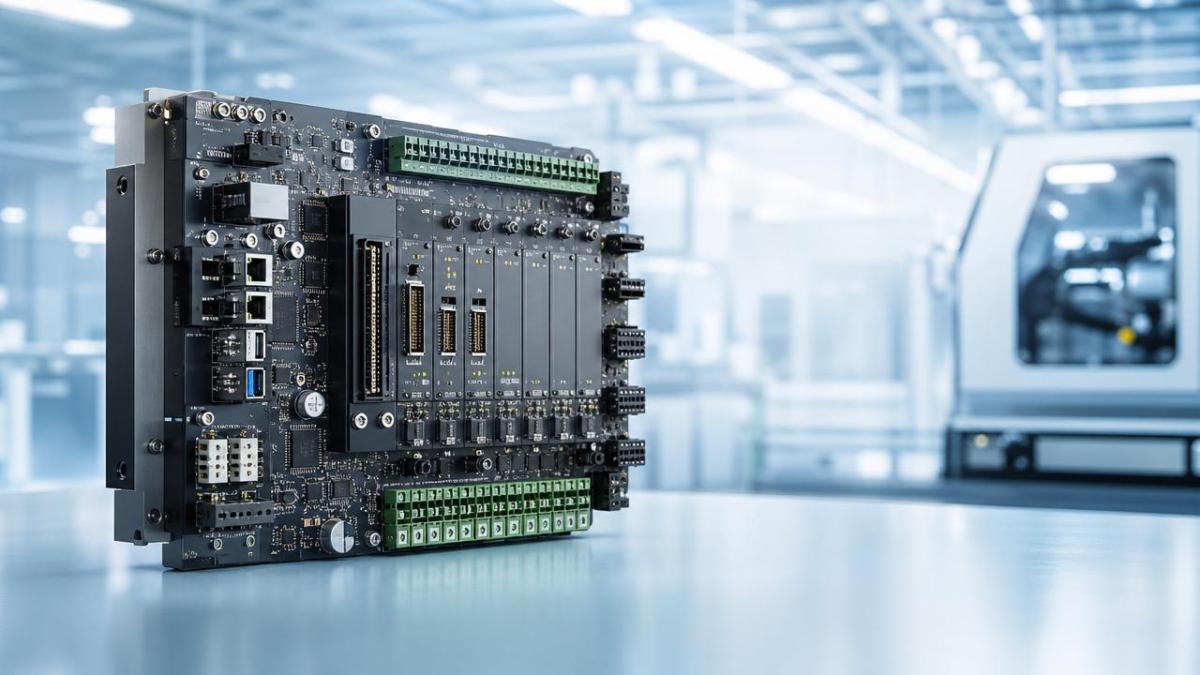
Many custom cnc controller board projects do not fail because of coding errors or machining limits, but because expansion is treated as an afterthought. For project managers and engineering leads, ignoring future I/O, motion complexity, communication protocols, and maintenance scalability can turn a promising build into a costly redesign. This article examines why expansion planning is a core engineering decision, not an optional upgrade path.
In advanced manufacturing, a controller board is rarely a static component. It sits at the intersection of motion control, signal integrity, machine safety, data exchange, and lifecycle cost. A design that works with 3 axes, 16 inputs, and one fieldbus today may be expected to support 5 axes, closed-loop feedback, remote diagnostics, or mixed-vendor peripherals within 12 to 24 months.
For project managers, that change is not theoretical. It affects schedule risk, supplier qualification, validation effort, spare parts planning, and total cost of ownership. For engineering leads, it affects PCB layout headroom, firmware architecture, connector strategy, EMI tolerance, and upgrade pathways. In a data-driven procurement environment, the right custom cnc controller board is not simply the one that boots first. It is the one that scales without forcing a second platform decision.
Why expansion is a first-order design requirement
Expansion planning matters because machine requirements almost always drift upward, not downward. A prototype may begin with 2 stepper channels, one spindle, and basic limit switches. After customer trials, the same platform may need encoder feedback, tool changer support, probe inputs, safety relays, Ethernet communication, and condition monitoring. If the original custom cnc controller board was sized only for the first milestone, the next revision can consume 6 to 12 weeks and introduce new certification or integration work.
This pattern is common across mixed industries, from precision machining cells to robotic fixtures and automated test stands. The issue is not only hardware quantity. Expansion also changes electrical load distribution, interrupt timing, thermal behavior, firmware memory use, and enclosure space. A board with only 10% headroom in CPU load or power budget may pass factory acceptance in phase 1, then become unstable when phase 2 adds higher pulse frequency, more sensors, or a second communication stack.
The four expansion domains that are usually underestimated
- I/O growth: digital inputs, analog inputs, isolated outputs, encoder channels, and safety signals often increase by 20% to 60% between pilot build and production version.
- Motion complexity: moving from 3-axis open-loop control to 4 or 5 axes, interpolation, homing logic, and synchronized motion changes processing and timing requirements.
- Protocol diversity: RS-485, CAN, Modbus, EtherCAT gateway layers, USB service access, and Ethernet diagnostics may all be requested by different stakeholders.
- Service scalability: field replacement, modular add-on cards, firmware updates, and log capture become critical when machines are deployed across multiple sites.
For project leadership, these four areas should be visible in the requirements baseline from the first review gate. If they are discussed only after the prototype is running, the redesign cost can multiply because the impacts spread across mechanical packaging, wiring harnesses, HMI behavior, and supplier lead times.
What failure looks like in practice
A custom cnc controller board project can appear successful for 8 to 10 weeks, then stall when real operational conditions surface. Typical symptoms include all GPIO already occupied, no isolated channel left for a safety interlock, firmware flash nearing capacity, or communication latency rising above acceptable control windows. In motion applications, even a shift from 50 microseconds to 120 microseconds in a critical timing path can affect consistency.
Another common failure mode is connector and power design. Teams may optimize for compactness and low initial BOM cost, then discover the board cannot support an extra daughtercard, higher inrush current, or clean grounding for sensitive encoder lines. That usually leads to patch cables, external signal conditioners, or additional interface boards, each adding assembly time and more failure points.
Early warning indicators for project managers
- No documented I/O reserve target, such as 25% spare digital channels or 15% spare power budget.
- No roadmap for axis count beyond the current scope.
- Single protocol dependency with no gateway or expansion header plan.
- Firmware architecture tied too tightly to fixed hardware mapping.
- Enclosure and harness design frozen before interface growth is assessed.
The table below shows how small planning omissions in a custom cnc controller board project can evolve into larger cost and schedule impacts.
The practical conclusion is simple: expansion is not an accessory feature. It is a risk control mechanism. Teams that define reserve capacity early usually pay a slightly higher upfront engineering cost, but they often avoid a much larger redesign burden later in the program.
How to specify a scalable custom cnc controller board
A scalable specification starts with scenarios, not only current functions. Project managers should request three requirement layers: day-one requirements, 12-month likely additions, and stretch requirements for the next product generation. This 3-layer method usually reveals whether the board needs modular headers, extra power stages, spare serial ports, or a larger processing margin.
For most industrial builds, a reasonable starting point is to reserve 20% to 30% spare digital I/O, 15% to 25% spare power capacity, at least one additional communication path, and firmware memory headroom above the initial release target. The exact numbers depend on safety architecture, servo or stepper selection, and external device density, but the principle remains consistent: reserve capacity should be measurable, not assumed.
Key specification categories
1. Electrical and signal architecture
Define supply voltage range, current peaks, isolation requirements, grounding approach, and noise environment. A custom cnc controller board designed for a clean lab fixture may fail in a spindle-rich environment if encoder lines, analog channels, and switching outputs are not isolated or routed with EMI resilience in mind. Teams should state expected ambient temperature, for example 0°C to 45°C, and whether vibration or conductive dust is present.
2. Motion roadmap
Do not specify only the current axis count. Document the probable maximum axis count, target pulse rates, feedback types, homing strategy, emergency stop behavior, and interpolation needs. A board that only supports present motion primitives may block future machine variants. For example, moving from one spindle and 3 axes to a dual-station system with synchronized actuators can change the controller requirement more than teams expect.
3. Communication and software lifecycle
Specify whether the board must support local service tools, remote updates, production data export, or third-party peripherals. This matters in multi-site deployment, where maintenance teams may need event logs, firmware rollback, and parameter backups. If the board is expected to live 5 to 7 years, protocol flexibility becomes a lifecycle issue, not a convenience feature.
The following table can be used during supplier discussions or internal reviews to assess whether a custom cnc controller board specification is truly scalable.
Notice that each row ties expansion to a measurable design decision. This is essential for cross-functional reviews. Procurement teams need concrete criteria. Engineering teams need thresholds they can validate. Leadership needs a basis for comparing one supplier proposal against another.
Procurement, validation, and lifecycle decisions that prevent redesign
Expansion risk is often created long before hardware arrives. It begins when RFQs are written too narrowly, when technical reviews focus only on current functions, or when acceptance criteria do not include upgrade scenarios. In B2B equipment programs, a controller board is part of a broader supply chain decision. Lead time, component substitution policy, documentation depth, and revision control all shape long-term project stability.
Build the RFQ around lifecycle questions
When sourcing a custom cnc controller board, ask suppliers for more than a feature list. Request the supported I/O map, processor loading assumptions, power budget, firmware update method, EMC design considerations, revision management process, and expected support window. If possible, define 4 to 6 acceptance checkpoints: schematic review, prototype bring-up, noise testing, motion validation, serviceability review, and controlled release signoff.
This approach aligns with a data-led engineering mindset. It reduces ambiguity and exposes weak spots before they become purchase-order problems. It also helps procurement avoid comparing quotes that appear similar on price but are fundamentally different in scalability.
Validate for the next revision, not only the first release
A strong validation plan should simulate at least one likely expansion case. That could mean populating extra I/O loads, testing communication under concurrent traffic, or validating thermal rise with additional output switching. Even a 24-hour stress cycle can reveal whether the custom cnc controller board retains stable behavior when future features are enabled. Waiting until the next product variant ships is usually too late.
Recommended validation checklist
- Confirm spare I/O channels are electrically functional, not only present on paper.
- Measure power rail stability under 80% to 90% projected future load.
- Test at least 1 additional communication use case beyond launch requirements.
- Verify firmware update and rollback procedure within a defined maintenance window, such as 15 to 30 minutes.
- Review connector access, labeling, and replacement steps for field technicians.
Common management mistakes
One recurring mistake is assuming a custom board is cheaper simply because the phase-1 BOM is lower. If the board later needs a respin, new compliance tests, harness changes, and revised firmware, the total cost can exceed the price of a better-scaled design by a wide margin. Another mistake is separating electronics decisions from service planning. A board that is hard to diagnose may increase downtime every time a deployed machine needs support.
A third mistake is failing to define ownership. Expansion planning crosses electrical engineering, controls software, mechanical packaging, procurement, and operations. Without a named decision owner, reserve capacity gets optimized away in favor of immediate cost or schedule pressure. Strong project governance prevents that trade-off from being made blindly.
A practical framework for project managers and engineering leads
The most effective teams treat controller scalability as a stage-gate discipline. They do not wait for customer change requests to expose missing headroom. Instead, they score each custom cnc controller board concept against a shortlist of operational realities: feature growth, environment, maintainability, integration diversity, and revision control.
Five-step decision framework
- Map the current machine architecture, including axis count, I/O count, protocol stack, and service touchpoints.
- Define the 12-month and 24-month expansion scenarios with realistic feature additions.
- Assign reserve targets for I/O, power, processing, memory, and physical connection points.
- Validate one future-state scenario during prototype testing, not after release.
- Lock documentation, revision traceability, and spare strategy before scale deployment.
This framework is especially useful for organizations managing multiple machine families or geographically distributed installations. It provides a repeatable method for deciding whether a controller design can support portfolio growth instead of solving only one isolated build.
When a modular approach is worth the extra cost
If product demand is uncertain, machine variants are likely, or customer interfaces differ by region, modular controller architecture often makes sense. A base board plus optional expansion modules may increase initial engineering effort, but it can reduce future redesign time from months to weeks. The decision becomes stronger when expected deployment exceeds a small pilot batch and when service teams need consistent replacement logic across multiple configurations.
Custom controller success depends on engineering truth, not optimistic assumptions. A custom cnc controller board should be judged by what it can absorb over time: more I/O, more motion demands, more protocols, and more service expectations. Teams that plan for those realities early typically achieve shorter change cycles, cleaner machine integration, and more stable procurement decisions.
For project managers and engineering leads, the priority is clear: convert expansion from a vague future concern into a measurable requirement at the start of the program. If you are evaluating a new control architecture, refining an RFQ, or trying to prevent a second board redesign, now is the right time to structure the decision around scalability. Contact us to discuss a tailored review framework, compare solution paths, or get a more precise specification approach for your next custom cnc controller board project.
Search News
Hot Articles
- Carbon Fiber StructuresHow to Specify Aerospace Carbon Fiber Assemblies for Lightweight, Load-Bearing PartsJul 11, 2026
- Machine VisionXiaomi, Alibaba DAMO Academy Drive Open-Source Robotics Model Ecosystem, Lowering Algorithm Development Barriers for Overseas SMEs Adopting Chinese Robotics SolutionsMar 30, 2026
- Cobots & ArmsShanxi 'AI+' Conference Showcases Embodied Intelligence with Multinational Buyer Engagement: Key Industry ImplicationsMar 30, 2026
Popular Tags
Recommended News
 Jul 11, 2026How to Specify Aerospace Carbon Fiber Assemblies for Lightweight, Load-Bearing PartsAerospace carbon fiber assemblies: learn how to specify laminate design, load data, joining methods, and inspection controls for lighter, reliable load-bearing aerospace parts.Elena Rostova (UAV Systems Researcher)
 Mar 30, 2026Xiaomi, Alibaba DAMO Academy Drive Open-Source Robotics Model Ecosystem, Lowering Algorithm Development Barriers for Overseas SMEs Adopting Chinese Robotics SolutionsXiaomi & Alibaba DAMO Academy's open-source robotics models lower algorithm barriers for global SMEs. Boost efficiency in manufacturing, logistics & smart retail with ROS 2 compatible solutions.TSV Data Lab
 Mar 30, 2026Shanxi 'AI+' Conference Showcases Embodied Intelligence with Multinational Buyer Engagement: Key Industry ImplicationsShanxi 'AI+' Conference highlights embodied intelligence with Tesla, Ubtech & Jiantao showcasing multimodal robotics. 40+ global buyers validated tech on-site, creating new B2B channels for industrial automation & AI solutions.Chen Wei (Automation Lead Engineer)
 Mar 30, 2026Zhongguancun Unveils 6G Integrated Sensing-Computing-Intelligence Platform to Empower Embodied Robots for Global Industrial ApplicationsZhongguancun's new 6G platform revolutionizes industrial robotics with <10ms latency, empowering global automotive, logistics & port automation. Discover how this tech boosts China's smart manufacturing exports.TSV Data Lab
 Mar 30, 2026Mech-Mind Tianjin Embodied Intelligence R&D and Production Base Goes Live, Cutting Delivery Time by 20%–30% for Global Customized AMR+Vision SolutionsMech-Mind's Tianjin AMR+Vision production base cuts delivery time by 20%-30% for欧美 & Latin American markets. Discover how this PLd-certified facility accelerates customized robotics solutions for smart manufacturing and logistics.Chen Wei (Automation Lead Engineer)
 Mar 30, 2026Boao Forum Reveals 'Co-evolution of Big and Small Brains' Trend in Humanoid Robots, China's Embodied Intelligence Accelerates Adaptation to Overseas Manufacturing Service ScenariosDiscover how China's humanoid robots, featuring 'Co-evolution of Big and Small Brains,' are revolutionizing global manufacturing. Learn about Embodied Tian Gong 3.0's ISO compliance and overseas deployment at Boao Forum 2026.Chen Wei (Automation Lead Engineer)
 Mar 30, 2026China Railway Industrial Secures Patent for Embodied Robotics in Material Handling, Boosting High-Precision Delivery Capabilities for Overseas Infrastructure and Manufacturing ProjectsChina Railway Industrial's new patent for embodied robotics in material handling boosts high-precision delivery for global infrastructure & manufacturing. Discover how this innovation enhances logistics accuracy in automotive, rail transit & EPC projects.Chen Wei (Automation Lead Engineer)
 Sep 29, 2026ISO 9283 Repeatability: How to Evaluate Cobot Positioning PerformanceISO 9283 cobot repeatability explained: learn how payload, reach, approach direction, and test conditions affect positioning performance and cell capability.Chen Wei (Automation Lead Engineer)
 Sep 28, 2026Spindle Runout Measurement in Germany: DIN Standards, Methods, and Acceptance LimitsSpindle runout measurement Germany: explore DIN standards, proven methods, acceptance limits, and audit-ready practices for reliable machining quality.Dr. Marcus Vance
 Sep 27, 2026How to Select Wall-Mount Edge Devices for Space-Constrained Factory NetworksWall mount edge devices for space-constrained factories: evaluate workload, thermal design, power resilience, cable access, and network reliability for smarter deployments.TSV Data Lab
 Sep 26, 2026Machining Tolerance Analysis: How to Set Limits That Meet Function and Cost TargetsMachining tolerance analysis: learn how to set functional limits, control tolerance stacks, reduce inspection risk, and balance precision with production cost.Dr. Marcus Vance
 Sep 25, 2026How to Evaluate an Industrial Infrastructure Data Platform for Multi-Site OperationsIndustrial infrastructure data platform evaluation guide for multi-site operations: compare data quality, edge resilience, interoperability, governance, and scalable proof-of-value criteria.Victor Lin (Chief Software Architect)
 Sep 24, 2026How to Select Machine Vision Optics for Accurate Inspection at Different Working DistancesMachine vision optics selection guide for accurate inspection at every working distance. Compare FOV, pixel scale, DOF, distortion, lighting, and telecentric options.TSV Data Lab
 Sep 23, 2026How to Evaluate a Machine Vision System Integrator for High-Speed Inspection LinesChoose a machine vision system integrator with proven expertise in high-speed inspection, reliable reject timing, robust optics, and measurable acceptance criteria.TSV Data Lab
 Sep 28, 2026When is a SCADA API the right choice for connecting plant systems?SCADA API guide: learn when governed plant data integration improves traceability, security, and scalability—without compromising real-time control.Victor Lin (Chief Software Architect)
 Sep 27, 2026How SCADA data integration improves traceability across production linesSCADA data integration connects production-line data to improve traceability, accelerate quality investigations, and strengthen safety decisions.Victor Lin (Chief Software Architect)
 Sep 26, 2026What to define before starting SCADA integration planningSCADA integration planning starts with clear scope, control boundaries, data models, cybersecurity, and testing. Discover the definitions that reduce risk and costly rework.Victor Lin (Chief Software Architect)
 Sep 25, 2026How a smart factory with Industrial IoT reduces production blind spotsDiscover how a smart factory with Industrial IoT turns real-time machine, quality, and workflow data into actionable insights that reduce production blind spots and delivery risks.Victor Lin (Chief Software Architect)
 Sep 24, 2026When does Industrial IoT make smart manufacturing easier to scale?Smart manufacturing Industrial IoT scales when trusted data, interoperable systems, and secure workflows turn connected assets into measurable gains.TSV Data Lab
 Sep 23, 2026What drives ultra-precision machining cost at 1-micron tolerance?Ultra precision machining cost per part at 1 micron tolerance depends on process, material, metrology, and yield. Learn how to compare quotes confidently.Dr. Marcus Vance
 Sep 22, 2026Drone Engine-T550CC Applications: Build the UAV Power System Around the MissionAn application guide for Drone Engine-T550CC integration, covering payload planning, airframe matching, cooling, fuel, vibration, test procedures, documentation, and service preparation.Elena Rostova (UAV Systems Researcher)
 Sep 22, 2026How to Evaluate Industrial Edge Computing Vendors for Factory DeploymentIndustrial edge computing vendor evaluation guide for factories: compare latency, protocol fit, reliability, security, and lifecycle support before deployment.TSV Data Lab
 Sep 21, 2026Drone Payload Integration: Matching Power, Data, and Center of Gravity for Reliable FlightsDrone payload integration made practical: balance power, data, center of gravity, and endurance to build safer, more reliable mission-ready flights.Elena Rostova (UAV Systems Researcher)
 Sep 20, 2026Autonomous Navigation Pricing: Cost Drivers and Budget Benchmarks for AMR ProjectsAutonomous navigation price explained: compare AMR cost drivers, software, sensors, integration, safety, and lifecycle budgets to build a scalable project plan.Chen Wei (Automation Lead Engineer)