
Where can wholesale compasses and dividers save costs?
Publication Date
author
For technical education, drafting, machining layout, and inspection workflows, wholesale compasses and dividers can reduce more than purchase price.
The larger savings come from fewer specification errors, lower rework, simpler supplier control, and more predictable tool availability.
Where Can Wholesale Compasses and Dividers Save Costs?
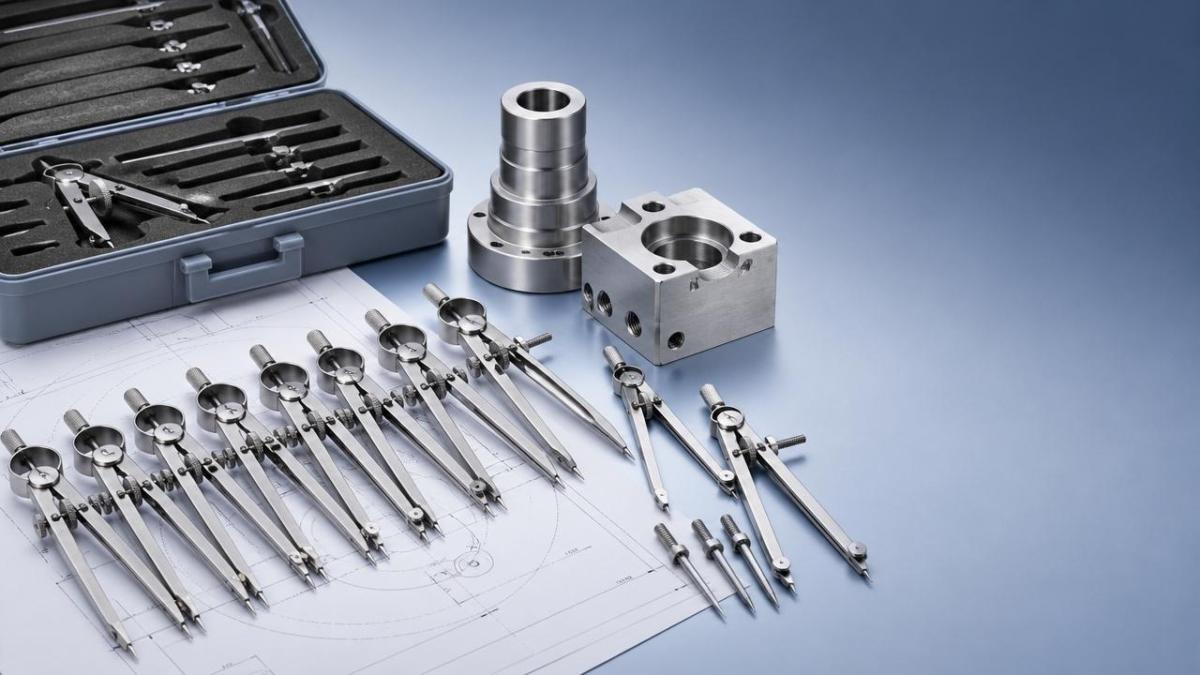
Wholesale compasses and dividers create value when small dimensional tools influence repeated operational outcomes.
A low-cost tool becomes expensive when its hinge loosens, point slips, or graduation markings cause inconsistent layouts.
In TSV’s data-driven view, the question is not whether bulk pricing is attractive.
The better question is where tolerance consistency, lifecycle durability, and traceable supply reduce avoidable cost.
Wholesale compasses and dividers are most cost-effective when requirements are standardized across many users, benches, or locations.
Scenario Judgment Starts With Use Frequency and Precision Risk
Different scenarios require different buying logic.
A classroom kit, a drafting office, and a machining layout bench do not share the same failure cost.
For occasional drawing, ergonomic handling and safe packaging may matter most.
For layout work near production, point hardness, locking stability, and repeatability become cost-control factors.
Wholesale compasses and dividers should therefore be evaluated by application risk, not only catalog appearance.
A structured scenario review prevents overbuying premium tools for low-risk tasks.
It also prevents underbuying fragile instruments where dimensional transfer affects downstream rework.
Education and Training Scenarios: Savings From Standardization
In technical education, wholesale compasses and dividers reduce cost through identical kits, simplified inventory, and faster replacement.
Standardized tools make exercises easier to calibrate, especially when geometry, drafting, and workshop basics are taught repeatedly.
The core judgment point is not extreme precision.
It is durability under frequent handling, safe point protection, and consistent opening resistance.
Bulk sourcing also reduces hidden administrative cost.
One specification, one packaging format, and one replenishment cycle lower time spent comparing unrelated substitutes.
Key checks for training environments
- Rounded storage cases to reduce point damage during transport.
- Stable hinges that do not loosen after repeated opening.
- Clear product coding for fast classroom or lab replacement.
- Mixed sets only when the curriculum requires both tools.
Drafting and Design Scenarios: Savings From Repeatable Geometry
Drafting environments benefit from wholesale compasses and dividers when repeated arcs, radius transfers, and layout references are common.
Here, the cost risk often appears as time loss.
A compass that slips during drawing wastes sheets, delays review, and creates avoidable corrections.
Dividers used for proportional spacing must hold distance without micro-movement.
For these scenarios, wholesale compasses and dividers should emphasize fine adjustment, balanced leg alignment, and smooth surface finish.
The buying decision should consider the whole workflow.
If drawings are checked manually before CAD conversion, repeatable manual geometry still protects digital accuracy.
Machining Layout Scenarios: Savings From Fewer Setup Errors
In machining layout, wholesale compasses and dividers can reduce cost by preventing repeated setup mistakes.
The tool may seem simple, but it helps transfer dimensions before drilling, marking, or inspection preparation.
The critical factors are hardened points, corrosion resistance, and locking integrity.
A weak point can deform on metal surfaces, changing the transferred distance.
Wholesale compasses and dividers are especially useful when multiple benches need identical layout references.
Consistent tools reduce operator-to-operator variation and simplify internal work instructions.
When dimensional errors trigger scrap, the saving can exceed the entire tool budget.
Inspection and Maintenance Scenarios: Savings From Availability
Inspection and maintenance scenarios often need fast access to simple measuring transfer tools.
Wholesale compasses and dividers reduce downtime when replacements are already qualified and stocked.
This matters in remote workshops, field service kits, and multi-site maintenance programs.
The cost driver is not daily consumption.
It is the delay caused by searching for compatible tools during urgent work.
For this scenario, packaging and traceability are as important as metal quality.
Clearly labeled sets make replenishment faster and reduce mismatched instruments across service locations.
Different Scenarios Require Different Specifications
A single cheapest specification rarely fits every operating environment.
The table below shows where wholesale compasses and dividers deliver savings through different technical priorities.
Scenario-Fit Sourcing Recommendations
Wholesale compasses and dividers should be selected through measurable buying rules.
A data-based approach reduces subjective judgments based on catalog images or vague quality claims.
- Define the primary scenario before comparing unit prices.
- Set minimum hinge resistance and locking requirements.
- Request material, finish, and point hardness information.
- Check sample consistency from different cartons.
- Standardize packaging labels for replenishment control.
- Keep premium units for high-risk layout work.
This method reflects the TSV principle that parameters reveal operational truth.
Even basic instruments deserve specification discipline when they affect repeatable work.
Common Misjudgments That Reduce Bulk Sourcing Value
The first mistake is treating wholesale compasses and dividers as fully interchangeable stationery items.
They may look similar, but hinge feel, point geometry, and material stability vary widely.
The second mistake is ignoring packaging damage.
Bent points or scratched legs can appear before the tool reaches actual use.
The third mistake is buying mixed sets without checking real demand.
Unused accessories increase inventory volume and reduce the apparent savings of bulk procurement.
The fourth mistake is accepting non-traceable substitutions after the first order.
A changed hinge design can disrupt consistency, even when the item number remains similar.
Practical Cost Model for Bulk Decisions
A practical cost model should include more than quoted unit price.
Wholesale compasses and dividers should be compared by total cost per reliable use.
That means adding replacement rate, defect rate, inspection time, storage loss, and rework exposure.
For low-risk education use, a moderate replacement rate may be acceptable.
For machining layout, even rare dimensional slippage may justify a higher-grade bulk specification.
The strongest savings appear when the selected tool grade matches the real consequence of failure.
Action Guide: Turn Small Tools Into Measurable Savings
Start with a scenario map covering education, drafting, layout, inspection, and maintenance needs.
Then separate low-risk drawing use from high-risk dimensional transfer work.
Request samples before placing large orders for wholesale compasses and dividers.
Check hinge stability, point alignment, finish quality, case strength, and batch labeling.
After approval, lock the specification and monitor replacement patterns.
This creates a feedback loop between tool performance and future sourcing decisions.
Wholesale compasses and dividers save costs best when bulk purchasing is connected to scenario risk, not guesswork.
With disciplined specifications, even simple instruments can support accuracy, continuity, and controlled operating cost.
Search News
Hot Articles
- Carbon Fiber StructuresHow to Specify Aerospace Carbon Fiber Assemblies for Lightweight, Load-Bearing PartsJul 11, 2026
- Machine VisionXiaomi, Alibaba DAMO Academy Drive Open-Source Robotics Model Ecosystem, Lowering Algorithm Development Barriers for Overseas SMEs Adopting Chinese Robotics SolutionsMar 30, 2026
- Cobots & ArmsShanxi 'AI+' Conference Showcases Embodied Intelligence with Multinational Buyer Engagement: Key Industry ImplicationsMar 30, 2026
Popular Tags
Recommended News
 Jul 11, 2026How to Specify Aerospace Carbon Fiber Assemblies for Lightweight, Load-Bearing PartsAerospace carbon fiber assemblies: learn how to specify laminate design, load data, joining methods, and inspection controls for lighter, reliable load-bearing aerospace parts.Elena Rostova (UAV Systems Researcher)
 Mar 30, 2026Xiaomi, Alibaba DAMO Academy Drive Open-Source Robotics Model Ecosystem, Lowering Algorithm Development Barriers for Overseas SMEs Adopting Chinese Robotics SolutionsXiaomi & Alibaba DAMO Academy's open-source robotics models lower algorithm barriers for global SMEs. Boost efficiency in manufacturing, logistics & smart retail with ROS 2 compatible solutions.TSV Data Lab
 Mar 30, 2026Shanxi 'AI+' Conference Showcases Embodied Intelligence with Multinational Buyer Engagement: Key Industry ImplicationsShanxi 'AI+' Conference highlights embodied intelligence with Tesla, Ubtech & Jiantao showcasing multimodal robotics. 40+ global buyers validated tech on-site, creating new B2B channels for industrial automation & AI solutions.Chen Wei (Automation Lead Engineer)
 Mar 30, 2026Zhongguancun Unveils 6G Integrated Sensing-Computing-Intelligence Platform to Empower Embodied Robots for Global Industrial ApplicationsZhongguancun's new 6G platform revolutionizes industrial robotics with <10ms latency, empowering global automotive, logistics & port automation. Discover how this tech boosts China's smart manufacturing exports.TSV Data Lab
 Mar 30, 2026Mech-Mind Tianjin Embodied Intelligence R&D and Production Base Goes Live, Cutting Delivery Time by 20%–30% for Global Customized AMR+Vision SolutionsMech-Mind's Tianjin AMR+Vision production base cuts delivery time by 20%-30% for欧美 & Latin American markets. Discover how this PLd-certified facility accelerates customized robotics solutions for smart manufacturing and logistics.Chen Wei (Automation Lead Engineer)
 Mar 30, 2026Boao Forum Reveals 'Co-evolution of Big and Small Brains' Trend in Humanoid Robots, China's Embodied Intelligence Accelerates Adaptation to Overseas Manufacturing Service ScenariosDiscover how China's humanoid robots, featuring 'Co-evolution of Big and Small Brains,' are revolutionizing global manufacturing. Learn about Embodied Tian Gong 3.0's ISO compliance and overseas deployment at Boao Forum 2026.Chen Wei (Automation Lead Engineer)
 Mar 30, 2026China Railway Industrial Secures Patent for Embodied Robotics in Material Handling, Boosting High-Precision Delivery Capabilities for Overseas Infrastructure and Manufacturing ProjectsChina Railway Industrial's new patent for embodied robotics in material handling boosts high-precision delivery for global infrastructure & manufacturing. Discover how this innovation enhances logistics accuracy in automotive, rail transit & EPC projects.Chen Wei (Automation Lead Engineer)
 Oct 14, 2026Drone Frame Composites: Carbon Fiber vs. Fiberglass for Weight and StiffnessExplore drone structural materials composites: compare carbon fiber and fiberglass for weight, stiffness, cost, and antenna compatibility. Find the right material for your drone frame.Elena Rostova (UAV Systems Researcher)
 Oct 13, 2026Smart Cameras vs. PC-Based Machine Vision: Which Fits High-Speed Inspection?This industrial product comparison for machine vision weighs smart cameras vs. PC-based systems on latency, throughput, and cost. Discover your best fit for high-speed inspection.TSV Data Lab
 Oct 12, 2026How to Verify RoHS Compliance in Industrial Sensing Systems Before DeploymentRoHS compliant sensing systems: learn how to verify materials, supplier declarations, testing, and configuration controls before industrial deployment.TSV Data Lab
 Oct 11, 2026How Procurement-Oriented Content Taxonomy Improves B2B Buying JourneysProcurement-oriented content taxonomy streamlines B2B buying journeys with clearer evidence, supplier comparisons, risk visibility, and faster approvals.TSV Data Lab
 Oct 10, 2026How to Select a Machine Performance Monitoring Platform for OEE and Downtime ReductionMachine performance monitoring platform selection guide: validate machine states, OEE data, downtime reasons, integrations, and scalability to reduce losses with confidence.TSV Data Lab
 Oct 08, 2026How to Machine Inconel 625 Blades Without Heat Cracks or Edge ChippingInconel 625 blade machining guide: prevent heat cracks, edge chipping, chatter, and work hardening with proven tooling, cooling, fixturing, and inspection strategies.Dr. Marcus Vance
 Oct 07, 2026How to Evaluate an HMI Panel Distributor for Industrial Automation ProjectsHMI panel distributor evaluation guide: verify technical compatibility, traceability, supply reliability, lifecycle support, and total cost for automation projects.Victor Lin (Chief Software Architect)
 Oct 06, 2026Navigation Fault Tolerance Standards for AMRs: What Safety Teams Must VerifyNavigation fault tolerance standards: learn what AMR safety teams must verify, from localization loss and sensor faults to stopping distance, safe restart, and site-specific validation.Chen Wei (Automation Lead Engineer)
 Oct 05, 2026Calculating Edge Computing Total Cost of Ownership Across Distributed SitesEdge computing ownership cost explained: calculate deployment, energy, connectivity, security, remote support, and refresh costs across distributed sites.TSV Data Lab
 Oct 04, 2026CAD/CAM Benchmarking in the GCC: What Manufacturers Should Ask a ConsultantCAD CAM benchmark consultant GCC guide: learn the key questions manufacturers should ask to validate post-processors, workflows, machine performance, and production risk.Victor Lin (Chief Software Architect)
 Oct 03, 2026Selecting Automotive Radar Sensor Modules for ADAS Range, Resolution, and IntegrationAutomotive radar sensor module selection guide for ADAS: compare range, resolution, field of view, latency, and integration to build safer, reliable vehicle systems.TSV Data Lab
 Oct 02, 2026How to Qualify Machined Parts Suppliers for Hard Tech ProgramsHard tech supply chain machined parts demand rigorous supplier qualification. Learn how to assess capability, traceability, quality controls, and delivery resilience.Dr. Marcus Vance
 Oct 01, 2026How to Select an Outdoor Security Radar Sensor for Perimeter Detection?Outdoor security radar sensor selection guide: compare range, accuracy, false-alarm control, integration, and field testing for reliable perimeter detection.TSV Data Lab
 Sep 30, 2026How to Evaluate Solid-State LiDAR Hardware for Outdoor Autonomous VehiclesSolid state LiDAR hardware evaluation guide for outdoor autonomous vehicles—compare range, point-cloud quality, environmental resilience, integration, and safety.TSV Data Lab
 Sep 29, 2026ISO 9283 Repeatability: How to Evaluate Cobot Positioning PerformanceISO 9283 cobot repeatability explained: learn how payload, reach, approach direction, and test conditions affect positioning performance and cell capability.Chen Wei (Automation Lead Engineer)
 Oct 14, 2026How tight can micro machining aerospace tolerances be in production?Micro machining aerospace tolerances can reach low-micron levels in production. Learn what controls repeatability, inspection confidence, and flight-critical quality.Dr. Marcus Vance
 Oct 13, 2026How to keep an industrial robotic integration project on scheduleIndustrial robotic integration project management: keep automation on schedule with proven controls for interfaces, suppliers, FAT, commissioning, and change risk.Victor Lin (Chief Software Architect)























