
When does stage monitors oem make sense for touring rigs?
Publication Date
author
For touring rigs, choosing stage monitors oem is not just a cost decision—it is a risk, consistency, and scalability calculation.
Business evaluators need to weigh acoustic performance, ruggedization, serviceability, lead times, and supplier transparency against brand-name alternatives.
When production schedules are tight and every failed wedge can disrupt a show, OEM sourcing only makes sense if the data proves it.
Verified components, repeatable QC, clear warranties, and measurable field reliability should define any stage monitors oem decision.
What does stage monitors oem mean for touring rigs?
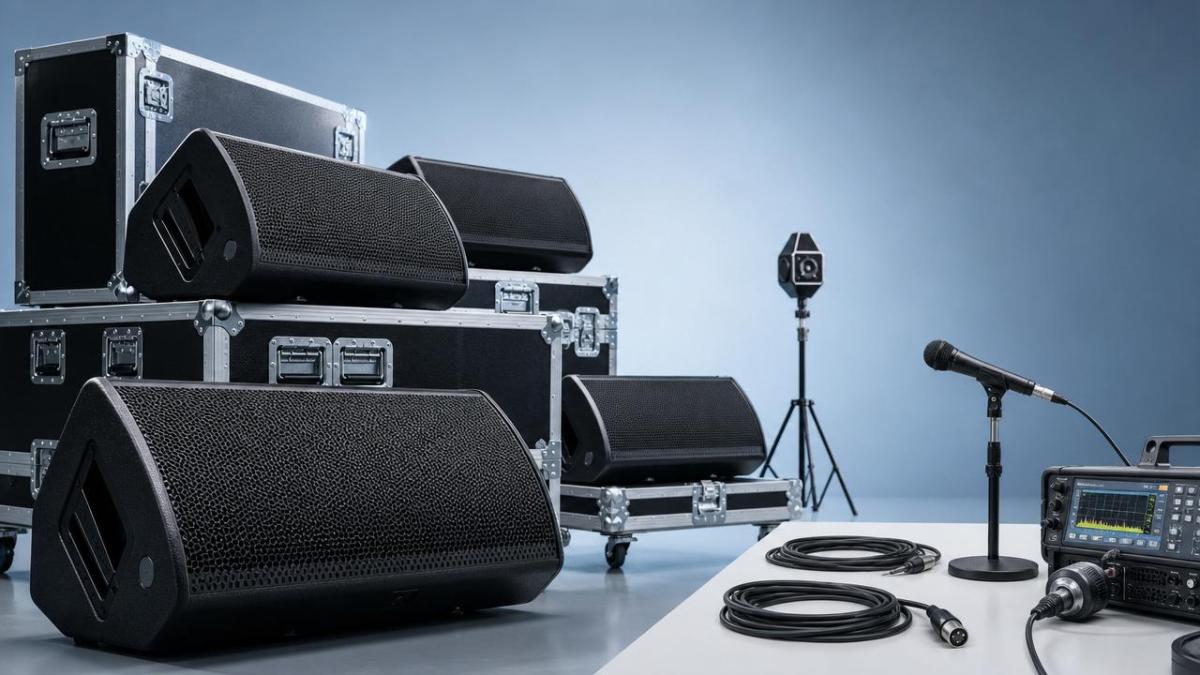
In touring audio, stage monitors oem usually means sourcing monitor wedges, coaxial cabinets, or in-fill solutions from an original equipment manufacturer.
The product may carry a private label, a regional brand, or a project-specific configuration.
The practical question is not whether the cabinet looks professional. The question is whether it behaves predictably under touring stress.
A competent stage monitors oem program should document driver origin, amplifier topology, DSP limits, enclosure material, finish thickness, and connector durability.
It should also define acoustic tolerances. Frequency response, phase behavior, maximum SPL, dispersion, and thermal compression must be measured consistently.
Touring rigs demand repeatability. One monitor cannot sound bright while another sounds muted in the same mix position.
That is where stage monitors oem becomes either strategic or dangerous. Without data, it becomes a branding shortcut.
When does stage monitors oem make commercial sense?
Stage monitors oem makes sense when fleet size, repeat orders, and configuration control can justify engineering validation.
A small one-off purchase rarely captures the full value. Tooling, sample testing, tuning time, and shipment inspection still create fixed effort.
The model becomes stronger when the touring rig needs unified monitor voicing across multiple venues, crews, and replacement cycles.
It also fits cases where a standard branded wedge is close, but not optimized for footprint, rigging, transport, or connector layout.
Stage monitors oem can reduce per-unit cost, but only after qualification costs are included.
The real gain is operational control. Spare parts, firmware versions, grille design, paint, labeling, and cable routing can be standardized.
For high-mobility touring rigs, standardization reduces setup errors. The monitor position, gain structure, and service procedure become predictable.
Stage monitors oem is commercially logical when total lifecycle cost is lower, not merely when the purchase price is lower.
Useful decision signals
- The rig requires more than a few identical monitors.
- The same tuning file must be maintained across locations.
- Replacement parts must remain available beyond one season.
- Brand-name options do not match required dimensions or I/O.
- A supplier can prove repeatable production measurements.
How should acoustic performance be verified?
The first filter for stage monitors oem is acoustic evidence. Marketing claims cannot replace measurement discipline.
A touring wedge must cut through stage noise without harshness, feedback instability, or narrow listening windows.
Key metrics include frequency response, horizontal and vertical dispersion, peak SPL, continuous SPL, distortion, latency, and phase consistency.
Measurements should be taken across multiple production samples, not only a golden prototype.
A reliable stage monitors oem supplier should explain the test environment. Anechoic, half-space, and real-stage results can differ meaningfully.
DSP presets also need scrutiny. Limiters should protect drivers without crushing transient response during demanding vocal or percussion monitoring.
If active monitors are involved, amplifier headroom and thermal management deserve equal attention.
A monitor that measures well cold may lose output after extended high-SPL operation.
Recommended acceptance checks
- Compare at least three samples from the same batch.
- Run continuous pink-noise stress tests at declared operating levels.
- Check cabinet resonance using sweep tones and physical inspection.
- Verify limiter behavior at threshold and recovery points.
- Confirm replacement drivers match the approved acoustic profile.
What ruggedization details matter on tour?
Stage monitors oem sourcing must account for physical abuse. Touring equipment lives in trucks, ramps, cases, rain, dust, and fast changeovers.
Enclosure strength matters, but so do small details. Handles, corners, grilles, rubber feet, labels, and connectors fail before cabinets sometimes do.
Plywood grade, coating thickness, grille gauge, screw retention, and internal bracing should be specified rather than assumed.
A stage monitors oem program should include drop simulations, vibration checks, humidity exposure, and connector insertion-cycle validation.
Passive wedges need robust crossover mounting. Active wedges need secured amplifier modules, protected vents, and sensible service access.
The best touring monitor is not the lightest possible unit. It is the unit with the best strength-to-service ratio.
Weight still matters for logistics. Yet excessive weight can raise labor strain and freight cost across a full rig.
Stage monitors oem should therefore balance cabinet durability, ergonomic handling, stackability, and field repair speed.
How does OEM compare with established branded monitors?
Branded monitors offer known references, rental familiarity, and documented rider acceptance. Stage monitors oem offers customization and potential cost control.
The comparison should be evidence-based. A recognized badge is useful, but it cannot guarantee suitability for every touring format.
Stage monitors oem may outperform when a rig needs exact dimensions, custom angles, hidden branding, or standardized spare parts.
It may underperform when rider acceptance, immediate replacement access, or global rental compatibility is the primary requirement.
A fair evaluation includes acquisition cost, tuning time, customs risk, spare inventory, warranty process, and resale value.
Stage monitors oem should not be selected only because the quote is attractive. The cheapest wedge can become costly after one failed tour.
What supplier transparency should be required?
A serious stage monitors oem supplier should provide more than catalog photos and power ratings.
Requested documents should include bill-of-material controls, driver specifications, amplifier certifications, QC workflow, and end-of-line test records.
Traceability is especially important. If drivers, capacitors, amplifier modules, or DSP chips change, performance may shift.
Stage monitors oem contracts should define component substitution rules. No substitute part should enter production without approval and sample testing.
Factory capacity also needs validation. Touring schedules cannot absorb vague delivery promises or uncontrolled batch variation.
Lead time should include prototype tuning, pilot production, burn-in, packaging tests, inspection, shipping, and contingency stock.
Warranty terms must be practical. Return-only warranty may be unrealistic when equipment is moving across continents.
For stage monitors oem, field-replaceable modules and stocked spare kits often matter more than theoretical warranty length.
Supplier questions that expose weak claims
- Can batch-to-batch frequency response deviation be shown?
- Which components are locked in the approved design?
- What happens when a driver model becomes unavailable?
- Are amplifier boards serialized and traceable?
- Can spare parts ship without returning the whole monitor?
What are the biggest risks and common mistakes?
The most common mistake is judging stage monitors oem by peak wattage. Watt ratings are often incomplete without thermal and distortion context.
Another mistake is approving a polished prototype without testing production units. Early samples may receive special manual attention.
A third risk is ignoring logistics packaging. Cabinet corners, grilles, and amplifier plates can be damaged before the first show.
Poor documentation is equally dangerous. Without schematics, presets, serial logs, and spare lists, emergency repairs become guesswork.
Stage monitors oem also carries compliance risk. Electrical safety, EMC, labeling, and regional import requirements must be checked early.
If active monitors are used, confirm certification coverage for the exact amplifier and power supply configuration.
The final mistake is underestimating human factors. A monitor can measure well but fail ergonomically during fast stage transitions.
Handle placement, tilt angle, visibility, cable strain relief, and stacking behavior affect real touring reliability.
How can a stage monitors oem project be implemented safely?
A safer stage monitors oem project starts with a specification sheet, not a product photo.
Define target SPL, coverage angle, cabinet size, weight limit, finish, connector type, and expected daily operating conditions.
Then request an engineering sample and test it against a known reference monitor under identical conditions.
After revisions, run a pilot batch. The pilot batch should be treated as a production rehearsal, not a ceremonial approval step.
Inspect random units, compare measurements, open cabinets, check wiring, and verify serial tracking.
Only then should stage monitors oem move into volume production for touring rigs.
The first tour should carry spare drivers, amplifier modules, grilles, feet, screws, fuses, and tested replacement presets.
Field feedback should return to the supplier as structured data. Failures, heat events, handling damage, and acoustic complaints need categorization.
- Write a measurable touring monitor specification.
- Benchmark samples against an accepted reference unit.
- Approve components, DSP presets, and substitution rules.
- Run pilot production with random inspection.
- Build spare kits before the first deployment.
Conclusion: when is the answer yes?
Stage monitors oem makes sense when customization, fleet consistency, and lifecycle economics outweigh brand familiarity.
It does not make sense when the decision depends only on a low quote, vague specifications, or unverified supplier promises.
The strongest projects use engineering discipline. Acoustic data, ruggedization tests, component traceability, and service planning must all align.
For touring rigs, silence from failed equipment is unacceptable. Every stage monitors oem decision should be justified by measurable reliability.
The practical next step is simple: build a test specification, qualify samples, audit repeatability, and calculate total operating risk.
When those numbers are favorable, stage monitors oem becomes more than sourcing. It becomes controlled audio infrastructure for demanding tours.
Search News
Hot Articles
- Carbon Fiber StructuresHow to Specify Aerospace Carbon Fiber Assemblies for Lightweight, Load-Bearing PartsJul 11, 2026
- Machine VisionXiaomi, Alibaba DAMO Academy Drive Open-Source Robotics Model Ecosystem, Lowering Algorithm Development Barriers for Overseas SMEs Adopting Chinese Robotics SolutionsMar 30, 2026
- Cobots & ArmsShanxi 'AI+' Conference Showcases Embodied Intelligence with Multinational Buyer Engagement: Key Industry ImplicationsMar 30, 2026
Popular Tags
Recommended News
 Jul 11, 2026How to Specify Aerospace Carbon Fiber Assemblies for Lightweight, Load-Bearing PartsAerospace carbon fiber assemblies: learn how to specify laminate design, load data, joining methods, and inspection controls for lighter, reliable load-bearing aerospace parts.Elena Rostova (UAV Systems Researcher)
 Mar 30, 2026Xiaomi, Alibaba DAMO Academy Drive Open-Source Robotics Model Ecosystem, Lowering Algorithm Development Barriers for Overseas SMEs Adopting Chinese Robotics SolutionsXiaomi & Alibaba DAMO Academy's open-source robotics models lower algorithm barriers for global SMEs. Boost efficiency in manufacturing, logistics & smart retail with ROS 2 compatible solutions.TSV Data Lab
 Mar 30, 2026Shanxi 'AI+' Conference Showcases Embodied Intelligence with Multinational Buyer Engagement: Key Industry ImplicationsShanxi 'AI+' Conference highlights embodied intelligence with Tesla, Ubtech & Jiantao showcasing multimodal robotics. 40+ global buyers validated tech on-site, creating new B2B channels for industrial automation & AI solutions.Chen Wei (Automation Lead Engineer)
 Mar 30, 2026Zhongguancun Unveils 6G Integrated Sensing-Computing-Intelligence Platform to Empower Embodied Robots for Global Industrial ApplicationsZhongguancun's new 6G platform revolutionizes industrial robotics with <10ms latency, empowering global automotive, logistics & port automation. Discover how this tech boosts China's smart manufacturing exports.TSV Data Lab
 Mar 30, 2026Mech-Mind Tianjin Embodied Intelligence R&D and Production Base Goes Live, Cutting Delivery Time by 20%–30% for Global Customized AMR+Vision SolutionsMech-Mind's Tianjin AMR+Vision production base cuts delivery time by 20%-30% for欧美 & Latin American markets. Discover how this PLd-certified facility accelerates customized robotics solutions for smart manufacturing and logistics.Chen Wei (Automation Lead Engineer)
 Mar 30, 2026Boao Forum Reveals 'Co-evolution of Big and Small Brains' Trend in Humanoid Robots, China's Embodied Intelligence Accelerates Adaptation to Overseas Manufacturing Service ScenariosDiscover how China's humanoid robots, featuring 'Co-evolution of Big and Small Brains,' are revolutionizing global manufacturing. Learn about Embodied Tian Gong 3.0's ISO compliance and overseas deployment at Boao Forum 2026.Chen Wei (Automation Lead Engineer)
 Mar 30, 2026China Railway Industrial Secures Patent for Embodied Robotics in Material Handling, Boosting High-Precision Delivery Capabilities for Overseas Infrastructure and Manufacturing ProjectsChina Railway Industrial's new patent for embodied robotics in material handling boosts high-precision delivery for global infrastructure & manufacturing. Discover how this innovation enhances logistics accuracy in automotive, rail transit & EPC projects.Chen Wei (Automation Lead Engineer)
 Oct 13, 2026Smart Cameras vs. PC-Based Machine Vision: Which Fits High-Speed Inspection?This industrial product comparison for machine vision weighs smart cameras vs. PC-based systems on latency, throughput, and cost. Discover your best fit for high-speed inspection.TSV Data Lab
 Oct 12, 2026How to Verify RoHS Compliance in Industrial Sensing Systems Before DeploymentRoHS compliant sensing systems: learn how to verify materials, supplier declarations, testing, and configuration controls before industrial deployment.TSV Data Lab
 Oct 11, 2026How Procurement-Oriented Content Taxonomy Improves B2B Buying JourneysProcurement-oriented content taxonomy streamlines B2B buying journeys with clearer evidence, supplier comparisons, risk visibility, and faster approvals.TSV Data Lab
 Oct 10, 2026How to Select a Machine Performance Monitoring Platform for OEE and Downtime ReductionMachine performance monitoring platform selection guide: validate machine states, OEE data, downtime reasons, integrations, and scalability to reduce losses with confidence.TSV Data Lab
 Oct 08, 2026How to Machine Inconel 625 Blades Without Heat Cracks or Edge ChippingInconel 625 blade machining guide: prevent heat cracks, edge chipping, chatter, and work hardening with proven tooling, cooling, fixturing, and inspection strategies.Dr. Marcus Vance
 Oct 07, 2026How to Evaluate an HMI Panel Distributor for Industrial Automation ProjectsHMI panel distributor evaluation guide: verify technical compatibility, traceability, supply reliability, lifecycle support, and total cost for automation projects.Victor Lin (Chief Software Architect)
 Oct 06, 2026Navigation Fault Tolerance Standards for AMRs: What Safety Teams Must VerifyNavigation fault tolerance standards: learn what AMR safety teams must verify, from localization loss and sensor faults to stopping distance, safe restart, and site-specific validation.Chen Wei (Automation Lead Engineer)
 Oct 05, 2026Calculating Edge Computing Total Cost of Ownership Across Distributed SitesEdge computing ownership cost explained: calculate deployment, energy, connectivity, security, remote support, and refresh costs across distributed sites.TSV Data Lab
 Oct 04, 2026CAD/CAM Benchmarking in the GCC: What Manufacturers Should Ask a ConsultantCAD CAM benchmark consultant GCC guide: learn the key questions manufacturers should ask to validate post-processors, workflows, machine performance, and production risk.Victor Lin (Chief Software Architect)
 Oct 03, 2026Selecting Automotive Radar Sensor Modules for ADAS Range, Resolution, and IntegrationAutomotive radar sensor module selection guide for ADAS: compare range, resolution, field of view, latency, and integration to build safer, reliable vehicle systems.TSV Data Lab
 Oct 02, 2026How to Qualify Machined Parts Suppliers for Hard Tech ProgramsHard tech supply chain machined parts demand rigorous supplier qualification. Learn how to assess capability, traceability, quality controls, and delivery resilience.Dr. Marcus Vance
 Oct 01, 2026How to Select an Outdoor Security Radar Sensor for Perimeter Detection?Outdoor security radar sensor selection guide: compare range, accuracy, false-alarm control, integration, and field testing for reliable perimeter detection.TSV Data Lab
 Sep 30, 2026How to Evaluate Solid-State LiDAR Hardware for Outdoor Autonomous VehiclesSolid state LiDAR hardware evaluation guide for outdoor autonomous vehicles—compare range, point-cloud quality, environmental resilience, integration, and safety.TSV Data Lab
 Sep 29, 2026ISO 9283 Repeatability: How to Evaluate Cobot Positioning PerformanceISO 9283 cobot repeatability explained: learn how payload, reach, approach direction, and test conditions affect positioning performance and cell capability.Chen Wei (Automation Lead Engineer)
 Oct 13, 2026How to keep an industrial robotic integration project on scheduleIndustrial robotic integration project management: keep automation on schedule with proven controls for interfaces, suppliers, FAT, commissioning, and change risk.Victor Lin (Chief Software Architect)
 Oct 12, 2026What should be included in predictive maintenance pricing for factories?Predictive maintenance pricing for factories: compare sensors, software, integration, support, and total cost to secure measurable uptime gains and avoid hidden expenses.TSV Data Lab
 Oct 11, 2026How payload and reach change the cost of an industrial robotCost of industrial robot systems depends heavily on payload and reach. Learn how sizing, torque, tooling, safety, and lifecycle factors shape smarter automation investments.Chen Wei (Automation Lead Engineer)























