
Where a cobot fits best in medical device assembly lines
Publication Date
author
In highly regulated production environments, knowing where a cobot fits best in medical device assembly lines can directly affect yield, traceability, and operator safety. For teams evaluating a cobot for medical device assembly, the real question is not automation hype, but which tasks demand repeatable precision, cleanroom compatibility, and flexible human-machine collaboration without compromising validation requirements.
Which assembly tasks are the best fit for a cobot in medical device production?
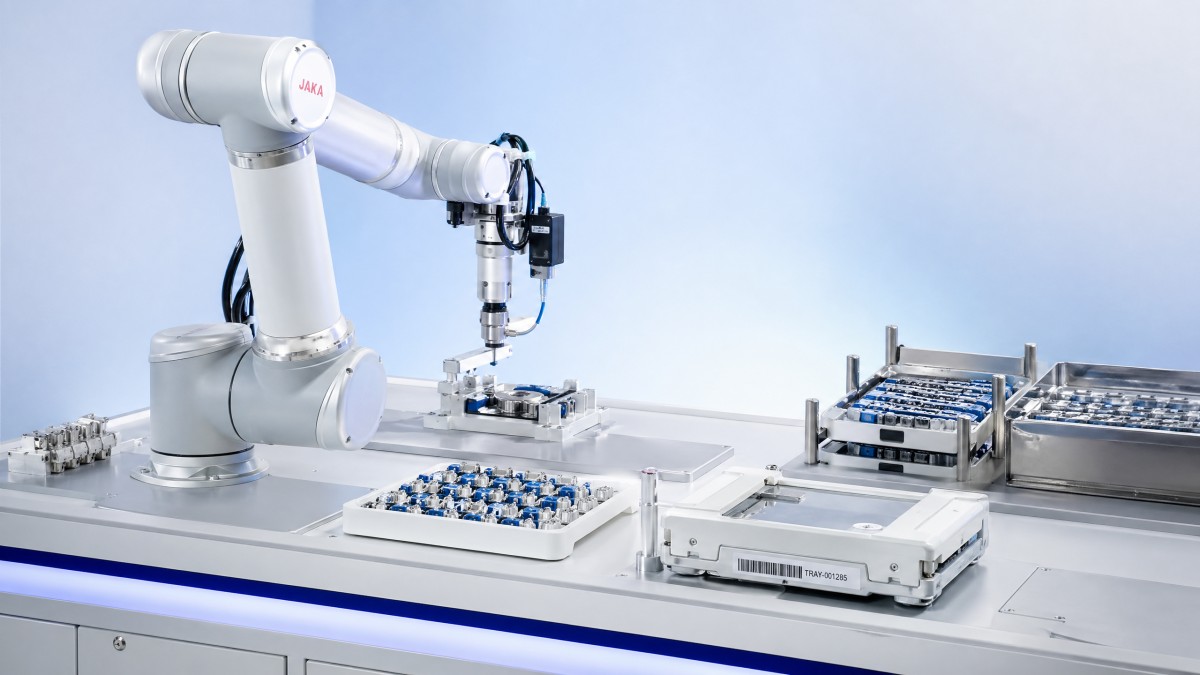
A cobot fits best in medical device assembly lines where the process is repetitive, ergonomically demanding, and sensitive to variation, but still benefits from nearby human oversight. In practice, that usually means semi-automated stations rather than fully lights-out cells. For manufacturers of diagnostic cartridges, surgical disposables, drug delivery subassemblies, and electronic medical modules, the strongest candidates are tasks with stable part presentation and cycle times that commonly fall in the 10–60 second range.
The most suitable operations often include pick-and-place, screwdriving with torque verification, adhesive or lubricant dispensing, light press-fit insertion, barcode presentation, tray loading, and machine tending for inspection or packaging equipment. These tasks benefit from the repeatability of a collaborative robot while keeping operators responsible for nuanced judgment, exception handling, line clearance, or in-process quality review. That balance matters when validation, lot traceability, and controlled change procedures are part of daily production.
By contrast, cobots are usually a weaker fit when the assembly requires highly variable fixturing, non-rigid parts that shift unpredictably, or process forces that exceed the collaborative robot’s safe operating envelope. If a line depends on sub-millimeter alignment under high insertion force, or if product variants change every few hours without standardized tooling, a conventional industrial robot or a dedicated automation station may still be the better answer.
The decision should be driven by engineering facts, not vendor slogans. TechStat Vanguard’s approach is to filter the application through measurable criteria: repeatability requirement, force profile, cleanability, payload, end-of-arm tooling complexity, and validation burden. In medical device assembly, those parameters determine whether the cobot becomes a productivity asset or a costly integration compromise.
High-value tasks that commonly justify cobot deployment
- Manual screwdriving stations where torque consistency, angle monitoring, and operator fatigue are recurring quality risks across 2–3 shifts.
- Dispensing steps where bead placement, shot repeatability, or timed cure handling require stable motion over hundreds or thousands of cycles per batch.
- Kitting, tray loading, and packaging support where the cobot reduces repetitive reaching while preserving operator control of lot segregation and visual confirmation.
- Inspection handoff processes in which the robot presents parts to a vision station, scanner, or leak tester with repeatable orientation.
Where a cobot usually underperforms
Problems arise when buyers confuse “collaborative” with “universally suitable.” A cobot is not automatically the best option for every medical assembly line. If the process requires very high speed, rigid guarding may still unlock shorter cycle times. If the station must operate in a tightly controlled cleanroom, the robot surface finish, cable management, particle behavior, and cleaning protocol all need careful review before approval.
Another common mismatch appears in micro-assembly. Some medical device components demand fine motion, force sensitivity, and vision calibration beyond what a standard collaborative platform can deliver without expensive integration. In those cases, success depends less on the robot brand and more on the total cell architecture, including feeders, grippers, cameras, force sensing, and software validation.
How to evaluate process suitability before buying a cobot
Before procurement begins, teams should score each candidate station using a structured fit matrix. This prevents over-automation and gives R&D engineers, manufacturing leads, and procurement teams a common framework. A practical review can be completed in 4 steps: map the current task, quantify process variation, define compliance constraints, and estimate cell-level return using labor, scrap, and throughput variables.
The most important question is not “Can a cobot do this task?” but “Can a cobot do this task within validated process limits?” In medical device assembly, acceptable automation must align with installation qualification, operational qualification, and performance qualification expectations. Even when the robot itself performs reliably, unstable part feeding, inconsistent fixturing, or undocumented software changes can create compliance risk.
A well-run suitability review should also examine environmental requirements. Some lines operate in controlled areas with defined cleaning routines, gowning procedures, and material restrictions. In those settings, the robot’s enclosure geometry, lubrication strategy, exposed cable routing, and ease of wipe-down can be more important than headline payload or reach figures.
To keep evaluations objective, TSV recommends comparing tasks against a short list of engineering decision criteria rather than relying on demo videos. The table below summarizes a practical screening model for a cobot for medical device assembly.
This type of matrix helps procurement teams avoid paying for flexibility they do not need, while helping operations teams identify stations where collaboration truly adds value. It also supports cleaner supplier conversations because the requirements become measurable: payload, reach, motion profile, cleanliness constraints, and changeover frequency are easier to benchmark than generic claims about “smart automation.”
A 4-step internal review checklist
- Document the current state: manual cycle time, defect categories, ergonomic strain points, and operator interventions across at least 1–2 full production shifts.
- Define the technical envelope: part mass, orientation variability, force or torque needs, required tool changes, and acceptable stop-restart behavior.
- Review quality and compliance controls: traceability fields, electronic records, line clearance needs, cleaning method, and revalidation triggers after software or hardware change.
- Compare alternatives: cobot cell, fixed automation, manual improvement, or hybrid station with semi-automated tooling.
Cobot versus traditional automation: which option makes more sense?
For many medical manufacturers, the real decision is not whether to automate, but what type of automation fits the production profile. A cobot for medical device assembly is often attractive when product mix is moderate, floor space is constrained, and engineering teams need faster redeployment. Traditional industrial robots or hard automation usually make more sense when volumes are high, product design is stable for 2–5 years, and maximum throughput outweighs flexibility.
The comparison should include more than robot purchase price. A collaborative deployment may reduce guarding complexity and operator retraining time, but it can still require significant spending on end-of-arm tooling, safety assessment, vision integration, validation documentation, and fixture design. In other words, the robot arm is only one cost line in the total cell equation.
From a procurement perspective, cobots often win when the line produces multiple SKUs in low- to mid-volume batches and changeovers occur weekly or monthly. They are also useful when manufacturers want to automate one pain point first, gather process data, and expand in phases instead of committing to a full transfer line. That phased approach can reduce qualification disruption and shorten internal approval cycles.
The table below outlines the most relevant trade-offs for buyers comparing a collaborative robot cell with conventional fixed automation in regulated assembly.
The takeaway is simple: cobots are not a replacement for all automation, and traditional systems are not obsolete. The best choice depends on the product family, expected lifecycle, operator involvement, and the cost of revalidation when changes occur. Buyers who compare total process fit instead of headline robot features usually make better long-term decisions.
When hybrid automation is the smarter answer
In many regulated factories, a hybrid model works best. The cobot handles loading, orientation, screwdriving, or presentation, while a dedicated downstream module performs sealing, leak testing, or final inspection. This approach can preserve operator flexibility and lower engineering risk because only the repeatable, low-ambiguity steps are automated first. It also lets the manufacturer expand from one validated module to the next over a staged 2-phase or 3-phase roadmap.
For enterprise decision-makers, that phased structure offers a clearer capital plan. Instead of treating automation as a one-time transformation, the business can qualify one process family, confirm yield improvement, then replicate the model across similar lines. That is often a more realistic path in medical manufacturing than a broad, all-at-once automation program.
What technical and compliance points matter most in medical device assembly?
In medical device production, technical performance cannot be separated from compliance. A cobot may demonstrate acceptable motion repeatability in a showroom, yet still be unsuitable for a validated line if it lacks the documentation structure, access controls, cleaning compatibility, or event traceability the site requires. That is why engineering, quality, validation, and procurement should review the same specification package before supplier selection begins.
At minimum, teams should review intended use, process criticality, software management, alarm handling, maintenance intervals, and how the cell supports device history records or other manufacturing traceability practices. If the station operates near sterile barrier packaging or in a cleanroom-adjacent area, material shedding, exposed surfaces, and sanitation method compatibility deserve extra attention. A robot that is easy to program but difficult to clean may create long-term operational friction.
Common quality frameworks in this environment include ISO 13485-driven quality system expectations, documented risk management practices, and equipment qualification workflows. The exact implementation varies by facility and market, but the principle is consistent: every change to the automation cell must be assessable, documentable, and controllable. That includes software updates, gripper replacement, safety parameter changes, and vision recipe adjustments.
The table below gives a practical view of what buyers should ask suppliers and integrators to clarify before approving a cobot for medical device assembly.
This checklist helps separate a technically interesting robot from a production-ready solution. For regulated manufacturers, the winning proposal is often the one with clearer engineering records, cleaner integration boundaries, and better serviceability over a 3–7 year life cycle, not merely the lowest initial quote.
Three compliance mistakes that slow deployment
- Treating the robot arm as the whole project. In reality, qualification applies to the complete cell, including grippers, feeders, sensors, software, fixtures, and data interfaces.
- Approving a pilot without defining revalidation triggers. Recipe changes, firmware updates, and tooling substitutions can all alter the validation scope.
- Ignoring maintainability. If service tasks require frequent panel opening, difficult wipe-down, or uncontrolled parameter edits, long-term compliance costs rise.
What operators and engineers should align on early
Operators want intuitive recovery steps, stable HMIs, and fast restart after a stop. Engineers focus on repeatability, signal logic, and integration. Both priorities matter. A station that saves 8 seconds per cycle but causes frequent fault recovery confusion can erase its own benefit. For that reason, user access levels, work instructions, and fault escalation paths should be finalized before formal qualification runs begin.
How should buyers compare suppliers, costs, and implementation risk?
Procurement teams often receive proposals that look similar at first glance: same payload class, similar reach, and a promise of easy programming. The real differences usually appear in integration depth, validation support, spare parts planning, service response, and how much application engineering is included. In medical device assembly, those non-obvious factors can affect launch timing more than the robot arm specification itself.
A disciplined sourcing process should compare at least 5 dimensions: application fit, documentation quality, support model, integration responsibility, and total cost of ownership. TCO should include cell design, tooling, sensors, safety components, software, FAT or SAT preparation, training, spare parts, and planned maintenance. For many projects, the hidden cost sits in engineering hours and rework, not in the list price of the cobot.
Lead time also matters. A standard cobot arm may ship faster than a custom automation platform, but the full implementation timeline still depends on fixture design, end-of-arm tooling procurement, software approval, and qualification scheduling. In practical terms, an internal pilot may move in 6–12 weeks, while a validated production cell often takes longer once documentation and acceptance criteria are included.
The following procurement checklist can help decision-makers compare proposals without getting distracted by cosmetic feature differences.
Five supplier evaluation points that reduce project risk
- Ask for application-specific assumptions. The proposal should state part presentation method, cycle target, force limits, and any manual intervention expected per batch or shift.
- Clarify validation deliverables. Confirm what documentation is included for FAT, SAT, software backup, change logs, and maintenance instructions.
- Review service boundaries. Identify who owns robot programming, peripheral integration, vision calibration, safety review, and on-site commissioning.
- Check spare parts and recovery planning. Understand replacement lead times for grippers, controllers, sensors, and critical wear items.
- Compare changeover burden. A lower-cost system can become expensive if each SKU switch requires lengthy adjustment or partial revalidation.
FAQ for teams researching a cobot for medical device assembly
Are cobots suitable for cleanroom or controlled production areas?
They can be, but suitability depends on the specific environment and cleaning protocol. Buyers should evaluate surface geometry, exposed cabling, lubrication strategy, wipe-down compatibility, and whether the complete cell design supports the area classification and contamination-control practice in use. The robot alone is not enough; end effectors and fixtures must meet the same practical standard.
What cycle times justify cobot use?
Many successful applications sit in the 10–60 second window, especially when manual work involves repetitive reaching, fastening, dispensing, or presentation to downstream inspection. Very short takt processes may favor conventional automation, while very long and variable processes may benefit more from operator-assist tooling than a full cobot cell.
What do buyers often overlook during selection?
Three items are frequently missed: fixture stability, data integration, and change control. A cobot can move repeatably, but if parts arrive inconsistently or the station cannot record key process events, the automation may fail quality expectations. Likewise, undocumented software changes can create compliance risk even if production seems normal.
Is a pilot project the best way to start?
Usually yes, if the pilot is tied to a measurable process problem and a defined validation path. The best pilot targets one repetitive task, one product family, and 3–5 success metrics such as cycle time, reject rate, operator intervention frequency, and alarm recovery time. That creates usable evidence for scaling decisions.
Why work with a data-driven technical partner before making the final decision?
Medical device manufacturers do not need another layer of automation marketing. They need sharper engineering judgment. That is where TechStat Vanguard adds value. TSV focuses on parameter-based evaluation, benchmarking logic, and traceable procurement insight so teams can distinguish between a visually impressive demo and a production-feasible cobot deployment.
Our role is especially useful when internal teams must align R&D, operations, quality, and sourcing around one investment decision. We help define what should be measured before commitment: task suitability, expected force envelope, line integration risk, documentation readiness, and likely revalidation burden. For buyers comparing multiple automation options, this reduces noise and shortens the path to a defensible recommendation.
If you are assessing where a cobot fits best in medical device assembly lines, contact TSV for focused support on application screening, parameter confirmation, supplier comparison, implementation phasing, and compliance-oriented specification drafting. We can help you review cycle assumptions, tooling requirements, traceability expectations, delivery timing, and qualification checkpoints before you commit capital.
The most productive next conversation is not “Which robot is best?” It is “Which station has the right process signature for collaborative automation, and what evidence is needed to approve it?” That is the level where better procurement decisions are made, and where engineering truth produces operational results.
Search News
Hot Articles
- Carbon Fiber StructuresHow to Specify Aerospace Carbon Fiber Assemblies for Lightweight, Load-Bearing PartsJul 11, 2026
- Machine VisionXiaomi, Alibaba DAMO Academy Drive Open-Source Robotics Model Ecosystem, Lowering Algorithm Development Barriers for Overseas SMEs Adopting Chinese Robotics SolutionsMar 30, 2026
- Cobots & ArmsShanxi 'AI+' Conference Showcases Embodied Intelligence with Multinational Buyer Engagement: Key Industry ImplicationsMar 30, 2026
Popular Tags
Recommended News
 Jul 11, 2026How to Specify Aerospace Carbon Fiber Assemblies for Lightweight, Load-Bearing PartsAerospace carbon fiber assemblies: learn how to specify laminate design, load data, joining methods, and inspection controls for lighter, reliable load-bearing aerospace parts.Elena Rostova (UAV Systems Researcher)
 Mar 30, 2026Xiaomi, Alibaba DAMO Academy Drive Open-Source Robotics Model Ecosystem, Lowering Algorithm Development Barriers for Overseas SMEs Adopting Chinese Robotics SolutionsXiaomi & Alibaba DAMO Academy's open-source robotics models lower algorithm barriers for global SMEs. Boost efficiency in manufacturing, logistics & smart retail with ROS 2 compatible solutions.TSV Data Lab
 Mar 30, 2026Shanxi 'AI+' Conference Showcases Embodied Intelligence with Multinational Buyer Engagement: Key Industry ImplicationsShanxi 'AI+' Conference highlights embodied intelligence with Tesla, Ubtech & Jiantao showcasing multimodal robotics. 40+ global buyers validated tech on-site, creating new B2B channels for industrial automation & AI solutions.Chen Wei (Automation Lead Engineer)
 Mar 30, 2026Zhongguancun Unveils 6G Integrated Sensing-Computing-Intelligence Platform to Empower Embodied Robots for Global Industrial ApplicationsZhongguancun's new 6G platform revolutionizes industrial robotics with <10ms latency, empowering global automotive, logistics & port automation. Discover how this tech boosts China's smart manufacturing exports.TSV Data Lab
 Mar 30, 2026Mech-Mind Tianjin Embodied Intelligence R&D and Production Base Goes Live, Cutting Delivery Time by 20%–30% for Global Customized AMR+Vision SolutionsMech-Mind's Tianjin AMR+Vision production base cuts delivery time by 20%-30% for欧美 & Latin American markets. Discover how this PLd-certified facility accelerates customized robotics solutions for smart manufacturing and logistics.Chen Wei (Automation Lead Engineer)
 Mar 30, 2026Boao Forum Reveals 'Co-evolution of Big and Small Brains' Trend in Humanoid Robots, China's Embodied Intelligence Accelerates Adaptation to Overseas Manufacturing Service ScenariosDiscover how China's humanoid robots, featuring 'Co-evolution of Big and Small Brains,' are revolutionizing global manufacturing. Learn about Embodied Tian Gong 3.0's ISO compliance and overseas deployment at Boao Forum 2026.Chen Wei (Automation Lead Engineer)
 Mar 30, 2026China Railway Industrial Secures Patent for Embodied Robotics in Material Handling, Boosting High-Precision Delivery Capabilities for Overseas Infrastructure and Manufacturing ProjectsChina Railway Industrial's new patent for embodied robotics in material handling boosts high-precision delivery for global infrastructure & manufacturing. Discover how this innovation enhances logistics accuracy in automotive, rail transit & EPC projects.Chen Wei (Automation Lead Engineer)
 Oct 26, 2026AMAXiMAL Releases Open-Source TopMod 3D v3 With Claude AIExplore AMAXiMAL’s free, open-source TopMod 3D v3 with Claude AI assistance, topology-based modeling and plywood fabrication tools that connect complex designs to physical builds.Dr. Marcus Vance
 Oct 26, 2026Choosing a SCADA System Integrator Company: PLC Compatibility and Long-Term SupportChoose a scada system integrator company with proven PLC compatibility and reliable long-term support. Discover what to test, compare, and require before investing.Victor Lin (Chief Software Architect)
 Oct 25, 2026Hesai Leads Global ADAS Main Lidar Shipments in Yole’s 2026 ReportHesai led global ADAS main lidar shipments with a 43% share in 2025, according to Yole’s 2026 report. Explore what this ranking reveals about its automotive market position.TSV Data Lab
 Oct 25, 2026Choosing an Aerospace Materials Manufacturer: Quality and Traceability ChecksChoosing an aerospace materials manufacturer? Learn how to verify certifications, test reports, and lot traceability to qualify suppliers confidently and reduce costly sourcing risks.Dr. Marcus Vance
 Oct 24, 2026Guotai Haitong: Global Entry-Level 3D Printer Shipments Rose 39% in Q1 2026Entry-level 3D printer shipments rose 39% in Q1 2026, Guotai Haitong reports. Explore how AI, multicolor printing and print farms are shaping market growth.Dr. Marcus Vance
 Oct 24, 2026Choosing an Industrial Vision Inspection Supplier: Acceptance Tests That MatterChoose an industrial vision inspection supplier with confidence. Discover acceptance tests for defect detection, false rejects, production speed, and reliable part rejection before you buy.TSV Data Lab
 Oct 23, 2026US Navy Raises Gecko Robotics Contract Ceiling to $300M for Robotic Fleet MaintenanceUS Navy raises Gecko Robotics’ contract ceiling to $300M for Pacific Fleet robotic inspections. Explore potential opportunities for maintenance suppliers and key procurement considerations.Chen Wei (Automation Lead Engineer)
 Oct 23, 2026Choosing Industrial Sensing Systems for Global Plants: Protocol CompatibilityCompare industrial sensing systems international buyers can trust. Explore protocol compatibility, reduce integration risks, and select proven configurations for reliable global plant deployments.TSV Data Lab
 Oct 22, 2026KUKA Showcases Physical AI and iiQKA.AI Vision at NVIDIA GTC BerlinExplore KUKA’s Physical AI showcase at NVIDIA GTC Berlin and discover how iiQKA.AI Vision aims to simplify robotic vision integration and improve 2D and 3D scene recognition.TSV Data Lab
 Oct 22, 2026Robotic Machining of Advanced Composites: What Tolerances Are Achievable?Explore advanced materials machining robotics: discover what drives achievable composite tolerances and how to validate accuracy before investing in your next machining system.Dr. Marcus Vance
 Oct 21, 2026China’s Industrial Robot Exports Near RMB 10 Billion in First Nine Months of 2026China’s industrial robot exports neared RMB 10 billion in January–September 2026, with value rising faster than volume. Explore the data and what it could mean for suppliers.Chen Wei (Automation Lead Engineer)
 Oct 21, 2026Low-Latency Industrial Data Processing: Pricing and Key Cost DriversExplore industrial data latency price drivers, from edge hardware to integration and support. Learn how to compare quotes, verify performance, and avoid unnecessary costs.TSV Data Lab
 Oct 20, 2026KUKA Launches iiQKA.AI Vision to Simplify Industrial Image ProcessingKUKA iiQKA.AI Vision simplifies industrial image processing with controller-based 2D and 3D vision. Explore drag-and-drop setup for vision-guided automation.TSV Data Lab
 Oct 20, 2026Smart Industrial Edge Devices: Key Criteria for Legacy PLC IntegrationChoose smart industrial edge devices for legacy PLC integration. Discover key criteria for compatibility, data quality, security, and reliable collection without disrupting control.TSV Data Lab
 Oct 19, 2026Choosing a Radar Sensor by Application: Range, Resolution, and Field of ViewSimplify radar sensor application based product selection. Compare range, resolution, and field of view to avoid blind spots and choose with confidence. Explore the guide.TSV Data Lab
 Oct 18, 2026Comparing Material Options for Procurement: Specs, Costs, and Supply RisksExplore procurement oriented technical content on material options, specs, costs, and supply risks. Compare alternatives to cut hidden expenses and make confident sourcing decisions.Dr. Marcus Vance
 Oct 17, 20265-Axis CNC Positioning Accuracy: How to Interpret ISO 230-2 Test ResultsAssess 5 axis CNC machining positioning accuracy with ISO 230-2. Learn to interpret repeatability, reversal error, and test conditions to compare suppliers and make confident acceptance decisions.Dr. Marcus Vance























