
Cobot for medical device assembly: speed vs validation
Publication Date
author
In medical manufacturing, cobot for medical device assembly promises faster throughput, but speed means little without airtight validation. For engineers, operators, buyers, and decision-makers, the real question is how to balance cycle-time gains with ISO 13485 compliance, process repeatability, and traceable quality. This article examines where cobots create measurable value, where validation slows deployment, and how to make data-driven automation choices.
Why speed alone is the wrong metric in medical device assembly
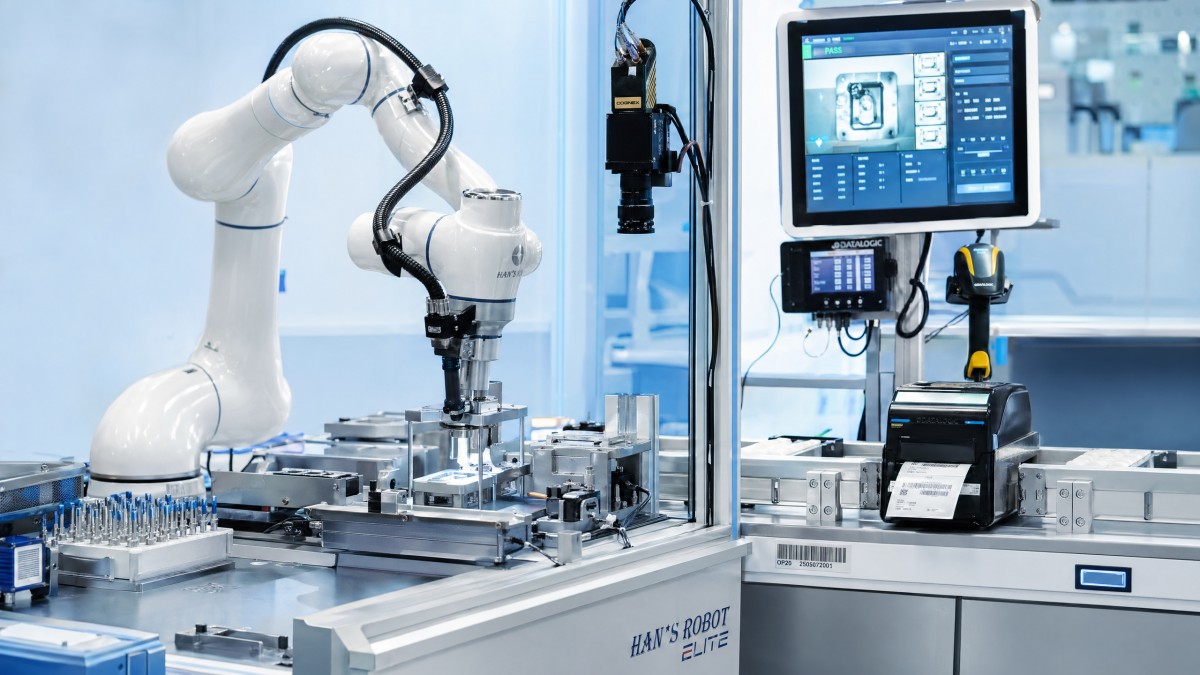
A cobot for medical device assembly is often introduced to solve labor variability, improve workstation ergonomics, and shorten cycle time. Yet in regulated production, the fastest motion profile is rarely the best operating point. What matters more is whether the process remains repeatable across shifts, batches, tooling changes, and operator interactions while preserving complete traceability.
For many teams, the tradeoff appears in the first 2–4 weeks of feasibility work. A robot path that reduces a manual step from 18 seconds to 10 seconds may still fail business review if force limits, vision alignment, or poka-yoke logic cannot be validated under documented conditions. In medical assembly, speed gains must survive protocol review, deviation handling, and change control.
This is why information quality matters. Procurement teams are often shown generic payload, reach, and marketing claims, while engineering teams need actual process boundaries: repeatability in millimeters, acceptable torque windows, vision pass-fail thresholds, and downtime exposure during revalidation. TSV’s approach is built around this engineering-first filter: parameters do not lie, and tolerances dictate success.
In practical terms, cobot adoption makes sense when the process has defined inputs, measurable outputs, and manageable validation scope. It makes less sense when assembly depends on unstable incoming components, highly variable adhesive behavior, or undocumented operator judgment. The question is not whether cobots are modern. The question is whether the process is controllable.
What regulated manufacturers actually optimize
- Consistent output quality across small-batch, medium-batch, and high-mix production rather than peak machine speed for a single demonstration run.
- Documented process windows, including alignment tolerance, insertion force range, dwell time, and rejection logic that can be defended during audits.
- Change control discipline, because every gripper revision, vision recipe update, or fixture replacement may trigger partial verification or full revalidation.
- Operator safety and usability, especially in shared workcells where hand-guiding, restarts, and cleaning procedures must remain simple and controlled.
When viewed through this lens, the best cobot for medical device assembly is not the one with the most aggressive brochure numbers. It is the one that can operate inside a documented quality system with stable process capability, readable logs, and manageable validation effort over the next 12–36 months.
Which medical assembly tasks benefit most from cobots
Not every assembly step deserves automation. The strongest use cases are repetitive, physically constrained, and easy to verify. Common examples include pick-and-place into trays, component loading into fixtures, screwdriving with monitored torque, label placement with vision checks, and simple dispensing sequences where path, volume, and cure timing are tightly defined.
A cobot for medical device assembly is especially useful when human involvement still matters but can be repositioned. In many cells, the robot handles 3–5 repetitive motions per cycle while the operator performs inspection, replenishment, exception handling, or final packaging. That hybrid layout often delivers a better risk profile than a fully lights-out concept that is difficult to validate.
High-potential applications usually share three traits. First, the product geometry is stable enough for repeatable gripping. Second, acceptance criteria can be measured with sensors, vision, torque, displacement, or barcode confirmation. Third, the process can tolerate a structured implementation window of roughly 6–12 weeks from feasibility to qualification, depending on tooling complexity.
By contrast, tasks with soft materials, unpredictable part presentation, or strong dependence on tactile operator judgment can absorb engineering resources without producing reliable returns. In such cases, semi-automation, fixture improvement, or upstream process control may outperform immediate robotic deployment.
Application fit by task type
The table below helps teams compare where cobot deployment is usually straightforward and where validation burden tends to rise. It is not a substitute for line trials, but it gives procurement and engineering a common vocabulary before supplier engagement.
The pattern is clear. The closer a process is to measurable pass-fail logic, the stronger the case for a cobot for medical device assembly. As process uncertainty increases, validation effort grows faster than cycle-time benefit, and feasibility testing becomes essential before capital approval.
Where operators still add irreplaceable value
Operators remain critical in line clearance, material verification, in-process inspection, and response to nonconforming parts. A well-designed cobot cell does not eliminate expertise; it relocates it toward tasks that improve quality. For many medical manufacturers, the most stable configuration is a collaborative station where the robot standardizes motion and the operator manages judgment-heavy decisions.
This is also a practical staffing strategy. Training an operator to supervise one validated robotic station over 3–7 days is often easier than preserving manual consistency across multiple repetitive assembly steps over long production runs. The value comes from lower variability, not from replacing every human touchpoint.
How to evaluate speed versus validation burden before you buy
A disciplined buying process starts with a simple rule: compare total validated output, not theoretical cycle time. If a supplier claims a 30% faster cell but commissioning, protocol preparation, and acceptance stretch the project by 8–14 weeks, the business case may be weaker than a slower but simpler system that reaches stable release earlier.
For procurement teams, three categories matter most: process capability, quality-system compatibility, and serviceability. Process capability covers repeatability, end-of-arm tooling stability, vision reliability, and recoverability after faults. Quality-system compatibility includes audit trails, user access control, change documentation, and evidence support for IQ/OQ/PQ activities. Serviceability addresses spare parts, remote support, mean time to repair, and software update governance.
This is where many projects fail. Buyers compare payload and reach, while the real cost driver sits in validation documentation and future engineering changes. One gripper redesign, one firmware revision, or one scanner replacement can affect the approved state of the cell. A cobot for medical device assembly should therefore be evaluated as a controlled production system, not just a robot arm.
TSV’s benchmarking mindset is useful here because it focuses on measurable questions: what tolerance band is acceptable, what alarm threshold triggers intervention, what process inputs are locked, and what data are retained per batch or unit? Those questions shorten qualification debates and expose weak supplier claims before purchase orders are issued.
Practical procurement checklist
- Define 4–6 critical process outputs before requesting quotes: torque, force, placement accuracy, vision result, reject handling, and traceability record.
- Ask suppliers to separate robot capability from full-cell capability, including feeder performance, fixture repeatability, and software interlocks.
- Request documentation scope early: user manuals, electrical drawings, software backup method, calibration points, maintenance intervals, and validation support boundaries.
- Review change control impact for 3 common events: tooling replacement, vision recipe updates, and controller software revisions.
Selection criteria by decision role
Different stakeholders judge the same cobot cell differently. The table below aligns evaluation criteria across engineering, operations, procurement, and executive review so that the purchase decision is based on a complete risk picture rather than on speed alone.
A cross-functional review reduces expensive surprises. It also prevents the common mistake of selecting a technically impressive cobot platform that becomes difficult to own, validate, or maintain under production conditions.
Validation, compliance, and data traceability: what slows deployment
Validation slows deployment because regulated manufacturing requires evidence, not intention. A cobot cell may need documented requirements, risk assessment, software and hardware configuration control, installation checks, operational challenge testing, and performance confirmation under normal production conditions. The exact level depends on product risk, process criticality, and internal quality procedures.
In medical device assembly, ISO 13485 is often central to the discussion, but teams should also think in terms of broader design and manufacturing controls: traceability of materials, cleanliness expectations, data integrity, preventive maintenance, calibration of critical instruments, and controlled training records. A fast deployment that neglects these foundations creates hidden cost later.
Typical delay points are surprisingly operational. Vision false rejects may require recipe tuning over 1–3 weeks. Gripper surfaces may need revision to reduce cosmetic marks. Sensor noise can force threshold adjustment and repeat challenge testing. Even a good cobot for medical device assembly will stall if upstream feeders, part nests, or MES interfaces are unstable.
This is why traceability architecture should be planned before installation. Decide early whether logs will capture unit ID, batch ID, torque or force records, alarm events, user actions, and recipe versions. If this data model is added late, validation expands because the cell is no longer the same system that was originally reviewed.
A realistic implementation sequence
- Feasibility and URS definition over 1–2 weeks, focused on critical quality attributes, takt target, and boundary conditions.
- Tooling and cell design over 2–6 weeks, including safety concept, fixture logic, and sensor selection.
- Factory testing and debug over 1–3 weeks, with challenge parts, fault recovery scenarios, and preliminary data logging checks.
- Site acceptance, training, and qualification over 2–4 weeks, depending on protocol depth and internal quality review cycle.
When suppliers present much shorter schedules, buyers should ask which tasks are excluded. Installation may be fast, but validated release usually depends on documentation, approved test plans, and repeatable evidence that the full process performs as intended.
Common misconceptions that distort project expectations
One misconception is that collaborative robots automatically simplify compliance because they are easier to program. Programming ease helps changeovers, but it does not remove the need for controlled access, version management, and documented testing. Another misconception is that low-force interaction means lower validation burden. Safety and process validation are related, but they are not the same task.
A third misconception is that automation always lowers inspection needs. In fact, early-stage cobot cells often require more sampling and closer process review until sufficient confidence is built. Reducing inspection intensity is usually a result of demonstrated process stability, not a default feature of automation.
Cost, alternatives, and when a cobot is not the best answer
Capital cost matters, but ownership cost matters more. A cobot for medical device assembly can look affordable at the arm level while the full cell becomes expensive once end-of-arm tooling, vision, safety devices, fixtures, software integration, validation documentation, and training are included. Buyers should compare total deployment cost over 12–24 months, not only purchase price.
There are also valid alternatives. Dedicated automation may outperform a cobot in high-volume, stable products where cycle times are extremely tight and human interaction is minimal. Manual assembly with improved fixtures may remain best for very low-volume or frequently changing SKUs. Semi-automated stations can be ideal when one critical step needs force or vision control but the rest of the workflow remains variable.
The most expensive mistake is automating a weak process. If incoming part variation, adhesive inconsistency, or unstable upstream machining already consume quality resources, the cobot may simply reproduce those issues faster. In such cases, investing first in gauge capability, component consistency, or fixture redesign often creates a better platform for later automation.
Decision-makers should therefore frame the question in tiers: can the process be standardized, can quality be measured automatically, and can the validated state be maintained without excessive engineering support? If the answer is weak on two or more of those points, an alternative path deserves serious consideration.
When to choose cobot, dedicated automation, or manual improvement
- Choose a cobot when product mix is moderate, floor space is limited, operator collaboration is valuable, and changeover flexibility matters within a 5–30 minute range.
- Choose dedicated automation when annual volume is high, part presentation is stable, and takt time pressure justifies higher engineering complexity.
- Choose manual or semi-automated improvement when product designs change often, demand is uncertain, or the validation burden would outweigh throughput gains.
The right choice depends on process maturity more than on trend adoption. TSV’s data-centered perspective is to benchmark the process first, then choose the automation layer that preserves compliance, output stability, and supplier accountability.
FAQ and next-step guidance for buyers, engineers, and operators
The final stage of evaluation is usually practical: what should the team ask next, and how can risk be reduced before formal commitment? The questions below reflect common search and procurement intent around cobot for medical device assembly.
How do I know whether my assembly step is ready for a cobot?
Start with three checks. Can you define clear pass-fail criteria? Can the part be presented in a repeatable orientation? Can the critical output be measured by force, torque, vision, displacement, or code traceability? If at least 2 of these 3 are weak, run a feasibility study before issuing an RFQ. Process readiness matters more than robot brand preference.
What should procurement ask suppliers during quotation?
Ask for a split between core hardware, custom tooling, controls, software, validation support, and after-sales obligations. Request estimated spare-part lead times, recommended preventive maintenance intervals, and a list of configurable parameters subject to change control. Also ask what evidence from FAT or SAT can support your qualification package and what still remains your internal responsibility.
How long does deployment usually take?
For modest cells, feasibility to qualified production often falls in the 6–12 week range, but complex vision, dispensing, or traceability integration can extend this. The most common schedule underestimation is not robot installation. It is protocol review, recipe tuning, exception handling, and documentation approval inside the quality system.
What are the biggest hidden risks?
The biggest hidden risks are unstable part variation, poor fixture repeatability, unclear ownership of software changes, and insufficient data logging for deviations. Another frequent issue is assuming operator workarounds will remain acceptable after automation. In a validated environment, undocumented workarounds become a quality problem very quickly.
Why work with a data-driven technical partner
When evaluating a cobot for medical device assembly, the market does not suffer from a lack of claims. It suffers from a lack of usable engineering truth. TechStat Vanguard exists to filter that noise. Our focus is not generic automation language, but measurable performance, qualification risk, and supplier credibility across robotics, sensors, edge systems, and precision manufacturing workflows.
For information researchers, we help convert broad automation interest into concrete evaluation criteria. For operators and line supervisors, we highlight usability, fault recovery, and maintainability factors that directly affect uptime. For procurement teams, we support comparison of documentation depth, support scope, and lifecycle exposure. For decision-makers, we bring the discussion back to tolerance, validation effort, and cost of ownership.
If you are screening suppliers or preparing an internal automation business case, contact TSV for support with parameter confirmation, application fit review, cell architecture comparison, validation-risk mapping, delivery timeline assessment, and quotation-side technical clarification. We can also help structure a decision matrix for cobot versus dedicated automation versus manual improvement.
Bring your process sequence, target cycle time, part constraints, traceability needs, and compliance questions. We will help you identify which 5–7 technical variables should drive the decision, what documentation should be requested before purchase, and where speed claims may conflict with real validation effort. In hard-tech manufacturing, better decisions start with better parameters.
Search News
Hot Articles
- Carbon Fiber StructuresHow to Specify Aerospace Carbon Fiber Assemblies for Lightweight, Load-Bearing PartsJul 11, 2026
- Machine VisionXiaomi, Alibaba DAMO Academy Drive Open-Source Robotics Model Ecosystem, Lowering Algorithm Development Barriers for Overseas SMEs Adopting Chinese Robotics SolutionsMar 30, 2026
- Cobots & ArmsShanxi 'AI+' Conference Showcases Embodied Intelligence with Multinational Buyer Engagement: Key Industry ImplicationsMar 30, 2026
Popular Tags
Recommended News
 Jul 11, 2026How to Specify Aerospace Carbon Fiber Assemblies for Lightweight, Load-Bearing PartsAerospace carbon fiber assemblies: learn how to specify laminate design, load data, joining methods, and inspection controls for lighter, reliable load-bearing aerospace parts.Elena Rostova (UAV Systems Researcher)
 Mar 30, 2026Xiaomi, Alibaba DAMO Academy Drive Open-Source Robotics Model Ecosystem, Lowering Algorithm Development Barriers for Overseas SMEs Adopting Chinese Robotics SolutionsXiaomi & Alibaba DAMO Academy's open-source robotics models lower algorithm barriers for global SMEs. Boost efficiency in manufacturing, logistics & smart retail with ROS 2 compatible solutions.TSV Data Lab
 Mar 30, 2026Shanxi 'AI+' Conference Showcases Embodied Intelligence with Multinational Buyer Engagement: Key Industry ImplicationsShanxi 'AI+' Conference highlights embodied intelligence with Tesla, Ubtech & Jiantao showcasing multimodal robotics. 40+ global buyers validated tech on-site, creating new B2B channels for industrial automation & AI solutions.Chen Wei (Automation Lead Engineer)
 Mar 30, 2026Zhongguancun Unveils 6G Integrated Sensing-Computing-Intelligence Platform to Empower Embodied Robots for Global Industrial ApplicationsZhongguancun's new 6G platform revolutionizes industrial robotics with <10ms latency, empowering global automotive, logistics & port automation. Discover how this tech boosts China's smart manufacturing exports.TSV Data Lab
 Mar 30, 2026Mech-Mind Tianjin Embodied Intelligence R&D and Production Base Goes Live, Cutting Delivery Time by 20%–30% for Global Customized AMR+Vision SolutionsMech-Mind's Tianjin AMR+Vision production base cuts delivery time by 20%-30% for欧美 & Latin American markets. Discover how this PLd-certified facility accelerates customized robotics solutions for smart manufacturing and logistics.Chen Wei (Automation Lead Engineer)
 Mar 30, 2026Boao Forum Reveals 'Co-evolution of Big and Small Brains' Trend in Humanoid Robots, China's Embodied Intelligence Accelerates Adaptation to Overseas Manufacturing Service ScenariosDiscover how China's humanoid robots, featuring 'Co-evolution of Big and Small Brains,' are revolutionizing global manufacturing. Learn about Embodied Tian Gong 3.0's ISO compliance and overseas deployment at Boao Forum 2026.Chen Wei (Automation Lead Engineer)
 Mar 30, 2026China Railway Industrial Secures Patent for Embodied Robotics in Material Handling, Boosting High-Precision Delivery Capabilities for Overseas Infrastructure and Manufacturing ProjectsChina Railway Industrial's new patent for embodied robotics in material handling boosts high-precision delivery for global infrastructure & manufacturing. Discover how this innovation enhances logistics accuracy in automotive, rail transit & EPC projects.Chen Wei (Automation Lead Engineer)
 Oct 26, 2026AMAXiMAL Releases Open-Source TopMod 3D v3 With Claude AIExplore AMAXiMAL’s free, open-source TopMod 3D v3 with Claude AI assistance, topology-based modeling and plywood fabrication tools that connect complex designs to physical builds.Dr. Marcus Vance
 Oct 26, 2026Choosing a SCADA System Integrator Company: PLC Compatibility and Long-Term SupportChoose a scada system integrator company with proven PLC compatibility and reliable long-term support. Discover what to test, compare, and require before investing.Victor Lin (Chief Software Architect)
 Oct 25, 2026Hesai Leads Global ADAS Main Lidar Shipments in Yole’s 2026 ReportHesai led global ADAS main lidar shipments with a 43% share in 2025, according to Yole’s 2026 report. Explore what this ranking reveals about its automotive market position.TSV Data Lab
 Oct 25, 2026Choosing an Aerospace Materials Manufacturer: Quality and Traceability ChecksChoosing an aerospace materials manufacturer? Learn how to verify certifications, test reports, and lot traceability to qualify suppliers confidently and reduce costly sourcing risks.Dr. Marcus Vance
 Oct 24, 2026Guotai Haitong: Global Entry-Level 3D Printer Shipments Rose 39% in Q1 2026Entry-level 3D printer shipments rose 39% in Q1 2026, Guotai Haitong reports. Explore how AI, multicolor printing and print farms are shaping market growth.Dr. Marcus Vance
 Oct 24, 2026Choosing an Industrial Vision Inspection Supplier: Acceptance Tests That MatterChoose an industrial vision inspection supplier with confidence. Discover acceptance tests for defect detection, false rejects, production speed, and reliable part rejection before you buy.TSV Data Lab
 Oct 23, 2026US Navy Raises Gecko Robotics Contract Ceiling to $300M for Robotic Fleet MaintenanceUS Navy raises Gecko Robotics’ contract ceiling to $300M for Pacific Fleet robotic inspections. Explore potential opportunities for maintenance suppliers and key procurement considerations.Chen Wei (Automation Lead Engineer)
 Oct 23, 2026Choosing Industrial Sensing Systems for Global Plants: Protocol CompatibilityCompare industrial sensing systems international buyers can trust. Explore protocol compatibility, reduce integration risks, and select proven configurations for reliable global plant deployments.TSV Data Lab
 Oct 22, 2026KUKA Showcases Physical AI and iiQKA.AI Vision at NVIDIA GTC BerlinExplore KUKA’s Physical AI showcase at NVIDIA GTC Berlin and discover how iiQKA.AI Vision aims to simplify robotic vision integration and improve 2D and 3D scene recognition.TSV Data Lab
 Oct 22, 2026Robotic Machining of Advanced Composites: What Tolerances Are Achievable?Explore advanced materials machining robotics: discover what drives achievable composite tolerances and how to validate accuracy before investing in your next machining system.Dr. Marcus Vance
 Oct 21, 2026China’s Industrial Robot Exports Near RMB 10 Billion in First Nine Months of 2026China’s industrial robot exports neared RMB 10 billion in January–September 2026, with value rising faster than volume. Explore the data and what it could mean for suppliers.Chen Wei (Automation Lead Engineer)
 Oct 21, 2026Low-Latency Industrial Data Processing: Pricing and Key Cost DriversExplore industrial data latency price drivers, from edge hardware to integration and support. Learn how to compare quotes, verify performance, and avoid unnecessary costs.TSV Data Lab
 Oct 20, 2026KUKA Launches iiQKA.AI Vision to Simplify Industrial Image ProcessingKUKA iiQKA.AI Vision simplifies industrial image processing with controller-based 2D and 3D vision. Explore drag-and-drop setup for vision-guided automation.TSV Data Lab
 Oct 20, 2026Smart Industrial Edge Devices: Key Criteria for Legacy PLC IntegrationChoose smart industrial edge devices for legacy PLC integration. Discover key criteria for compatibility, data quality, security, and reliable collection without disrupting control.TSV Data Lab
 Oct 19, 2026Choosing a Radar Sensor by Application: Range, Resolution, and Field of ViewSimplify radar sensor application based product selection. Compare range, resolution, and field of view to avoid blind spots and choose with confidence. Explore the guide.TSV Data Lab
 Oct 18, 2026Comparing Material Options for Procurement: Specs, Costs, and Supply RisksExplore procurement oriented technical content on material options, specs, costs, and supply risks. Compare alternatives to cut hidden expenses and make confident sourcing decisions.Dr. Marcus Vance
 Oct 17, 20265-Axis CNC Positioning Accuracy: How to Interpret ISO 230-2 Test ResultsAssess 5 axis CNC machining positioning accuracy with ISO 230-2. Learn to interpret repeatability, reversal error, and test conditions to compare suppliers and make confident acceptance decisions.Dr. Marcus Vance























