
How do you vet a uav data link supplier?
Publication Date
author
Vetting a uav data link supplier is not a branding exercise. It is an engineering risk assessment shaped by latency, interference, security, compliance, and real flight evidence.
How Do You Vet a UAV Data Link Supplier in a Data-Driven Market?
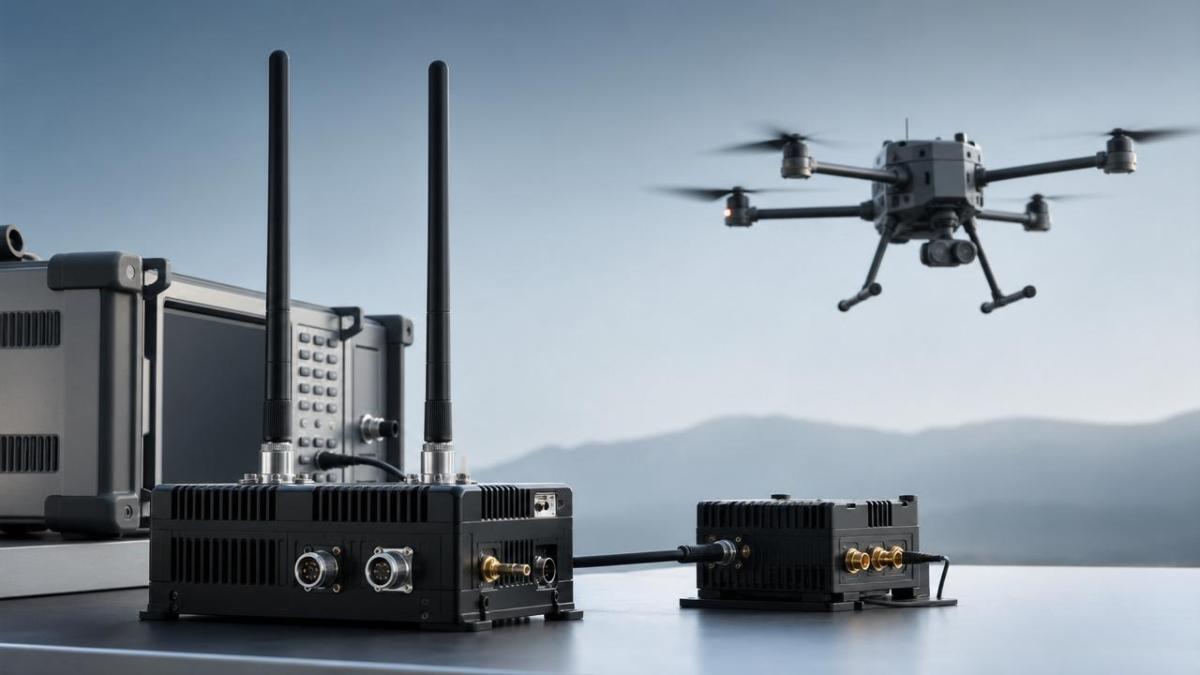
The UAV communication ecosystem is changing fast. Longer missions, denser airspace, edge AI payloads, and contested spectrum are raising supplier qualification standards.
A qualified uav data link supplier must now prove more than transmission range. It must demonstrate predictable behavior under operational stress.
Marketing claims are no longer enough. Engineering teams need measured evidence, repeatable test records, and transparent integration data.
The core question is simple. Can the link preserve command, telemetry, and payload data integrity when the environment becomes imperfect?
The Trend Signal: Communication Links Are Becoming Mission-Critical Infrastructure
UAV platforms are moving from isolated flights to connected operational networks. This shift changes how every uav data link supplier is evaluated.
The link is no longer a peripheral component. It is a safety, data, compliance, and autonomy dependency.
Mapping aircraft need stable high-throughput payload channels. Inspection drones need low-latency control. Defense and emergency systems need hardened communication behavior.
This is why supplier vetting is shifting from catalog comparison to evidence-based engineering verification.
Key Forces Driving Stricter Vetting
Start With Link Budget Truth, Not Claimed Range
Range claims are often measured under ideal conditions. A credible uav data link supplier should disclose the assumptions behind every distance figure.
Ask for transmit power, receiver sensitivity, antenna gain, cable loss, modulation mode, frequency band, and fade margin.
A complete link budget reveals whether the system has operational headroom. Without it, range is only a marketing number.
- Verify range under altitude, terrain, and antenna orientation changes.
- Request packet loss data across increasing distance intervals.
- Check whether performance collapses sharply near the range limit.
- Compare laboratory results with actual flight logs.
The strongest uav data link supplier will provide raw measurement conditions, not only polished summary charts.
Latency and Jitter Now Define Operational Confidence
Average latency can hide serious instability. For UAV control, jitter and worst-case latency often matter more than typical values.
A capable uav data link supplier should provide latency distribution, not just a single headline number.
Command links, telemetry streams, video feeds, and payload data should be tested separately. Each traffic type has different tolerance limits.
Look for prioritization behavior when bandwidth becomes constrained. Critical command packets should not compete equally with video payload bursts.
Evidence to Request
- End-to-end latency under nominal and congested conditions.
- Jitter statistics during maneuvering and antenna misalignment.
- Recovery time after temporary signal degradation.
- QoS behavior for command, telemetry, and payload channels.
Interference Resilience Separates Engineering From Claims
Real flights rarely happen in clean spectrum. Urban infrastructure, other radios, terrain reflections, and onboard electronics can degrade performance.
A serious uav data link supplier should explain anti-interference mechanisms in measurable terms.
Frequency hopping, adaptive coding, directional antennas, MIMO design, and error correction should be supported by test results.
Ask how the system behaves when interference rises gradually. Also ask how it reacts to sudden signal obstruction.
Security Vetting Must Go Beyond Encryption Labels
Encryption is necessary, but it is not a complete security architecture. A uav data link supplier must show implementation discipline.
Review key management, authentication, firmware signing, update controls, access permissions, and logging capabilities.
A secure data link should resist spoofing, unauthorized pairing, replay attacks, and malicious firmware modification.
Security claims should align with recognized standards where applicable. Documentation should be precise and version-controlled.
- Confirm encryption algorithms and key length.
- Check authentication between air and ground units.
- Review firmware update and rollback protection.
- Request vulnerability handling and patch history.
Compliance and Spectrum Strategy Reduce Future Deployment Risk
A uav data link supplier must support the regulatory reality of target operating regions.
Frequency selection affects certification, deployment speed, and operational legality. Regional differences can create hidden qualification delays.
Ask whether the system supports licensed, unlicensed, or configurable bands. Confirm output power limits and channel plans.
Compliance documentation should include relevant radio approvals, EMC reports, environmental tests, and traceable hardware revisions.
A reliable uav data link supplier will not treat compliance as an afterthought. It will design documentation into the product lifecycle.
Integration Behavior Is Where Weak Suppliers Become Visible
Many communication products look strong in isolation. Problems appear when they meet flight controllers, payloads, ground software, and power constraints.
A qualified uav data link supplier should provide interface documentation, SDK stability, API examples, and integration reference designs.
Check compatibility with MAVLink, Ethernet, serial interfaces, CAN, or custom payload protocols where relevant.
Power consumption, heat dissipation, connector reliability, and mounting geometry should be validated before fleet deployment.
Integration Questions That Matter
- Does firmware remain stable across long-duration missions?
- Can logs support root-cause analysis after anomalies?
- Are configuration tools repeatable across production units?
- Does the supplier support integration testing before order scaling?
Reliability Evidence Should Be Quantified, Not Described
Terms like rugged, reliable, and aerospace-grade need numerical backing. A uav data link supplier should provide environmental and lifecycle data.
Review MTBF methodology, vibration testing, thermal cycling, humidity exposure, shock resistance, and connector insertion life.
Pay attention to test standards, sample sizes, and failure definitions. Weak methodology can make reliability figures misleading.
Field return data is especially valuable. It reveals how the product behaves beyond controlled laboratory conditions.
Supplier Transparency Is Becoming a Competitive Divider
The strongest uav data link supplier behaves like an engineering partner. It provides data before problems become expensive.
Transparency should cover component lifecycle, firmware roadmap, production consistency, quality control, and change notification processes.
Hidden substitutions can alter RF performance, thermal behavior, or certification status. Change control is therefore a critical vetting factor.
Ask how the supplier manages end-of-life components, alternate parts, and production batch traceability.
Signals of a Mature Supplier
- Clear technical datasheets with defined test conditions.
- Documented quality management and inspection records.
- Stable firmware release notes and compatibility statements.
- Traceable production batches and hardware revision control.
Impact Across UAV Programs and Business Operations
Choosing the wrong uav data link supplier can delay certification, extend debugging cycles, and increase mission failure risk.
The effect is not limited to flight performance. It can influence service contracts, insurance confidence, maintenance planning, and customer acceptance.
For fleet operations, inconsistent communication quality multiplies quickly. A small instability can become a recurring operational cost.
For product development, late discovery of link limitations may force redesign of antennas, airframes, payload layouts, or ground systems.
- Engineering impact: longer integration and root-cause analysis cycles.
- Operational impact: reduced mission availability and confidence.
- Commercial impact: delayed delivery and higher support burden.
- Compliance impact: unexpected retesting or regional restrictions.
A Practical Vetting Framework for the Next Qualification Cycle
The best approach is staged qualification. Each stage should remove uncertainty before deeper commitment.
Use a weighted scorecard rather than subjective impressions. A uav data link supplier should pass technical gates with evidence.
A supplier that resists structured testing may create future risk. A supplier that welcomes it usually understands aerospace accountability.
What to Prioritize Before Final Selection
Before selecting a uav data link supplier, focus on the parameters that directly affect mission continuity and lifecycle cost.
- Verified link budget with transparent assumptions.
- Latency distribution under interference and payload load.
- Documented cybersecurity controls and firmware governance.
- Regional spectrum compliance and certification readiness.
- Integration evidence with target flight and payload systems.
- Reliability data backed by meaningful test methodology.
The final decision should balance performance, transparency, support depth, and long-term technical continuity.
From Supplier Selection to Engineering Confidence
The UAV industry is moving toward measurable accountability. A uav data link supplier must now prove performance across imperfect conditions.
The right vetting process reduces trial-and-error cost. It also protects flight safety, data quality, and deployment schedules.
Build a qualification matrix, request raw evidence, run controlled interference tests, and compare suppliers against mission-specific thresholds.
When data leads the decision, the best uav data link supplier becomes visible through engineering truth, not promotional language.
Search News
Hot Articles
- Carbon Fiber StructuresHow to Specify Aerospace Carbon Fiber Assemblies for Lightweight, Load-Bearing PartsJul 11, 2026
- Machine VisionXiaomi, Alibaba DAMO Academy Drive Open-Source Robotics Model Ecosystem, Lowering Algorithm Development Barriers for Overseas SMEs Adopting Chinese Robotics SolutionsMar 30, 2026
- Cobots & ArmsShanxi 'AI+' Conference Showcases Embodied Intelligence with Multinational Buyer Engagement: Key Industry ImplicationsMar 30, 2026
Popular Tags
Recommended News
 Jul 11, 2026How to Specify Aerospace Carbon Fiber Assemblies for Lightweight, Load-Bearing PartsAerospace carbon fiber assemblies: learn how to specify laminate design, load data, joining methods, and inspection controls for lighter, reliable load-bearing aerospace parts.Elena Rostova (UAV Systems Researcher)
 Mar 30, 2026Xiaomi, Alibaba DAMO Academy Drive Open-Source Robotics Model Ecosystem, Lowering Algorithm Development Barriers for Overseas SMEs Adopting Chinese Robotics SolutionsXiaomi & Alibaba DAMO Academy's open-source robotics models lower algorithm barriers for global SMEs. Boost efficiency in manufacturing, logistics & smart retail with ROS 2 compatible solutions.TSV Data Lab
 Mar 30, 2026Shanxi 'AI+' Conference Showcases Embodied Intelligence with Multinational Buyer Engagement: Key Industry ImplicationsShanxi 'AI+' Conference highlights embodied intelligence with Tesla, Ubtech & Jiantao showcasing multimodal robotics. 40+ global buyers validated tech on-site, creating new B2B channels for industrial automation & AI solutions.Chen Wei (Automation Lead Engineer)
 Mar 30, 2026Zhongguancun Unveils 6G Integrated Sensing-Computing-Intelligence Platform to Empower Embodied Robots for Global Industrial ApplicationsZhongguancun's new 6G platform revolutionizes industrial robotics with <10ms latency, empowering global automotive, logistics & port automation. Discover how this tech boosts China's smart manufacturing exports.TSV Data Lab
 Mar 30, 2026Mech-Mind Tianjin Embodied Intelligence R&D and Production Base Goes Live, Cutting Delivery Time by 20%–30% for Global Customized AMR+Vision SolutionsMech-Mind's Tianjin AMR+Vision production base cuts delivery time by 20%-30% for欧美 & Latin American markets. Discover how this PLd-certified facility accelerates customized robotics solutions for smart manufacturing and logistics.Chen Wei (Automation Lead Engineer)
 Mar 30, 2026Boao Forum Reveals 'Co-evolution of Big and Small Brains' Trend in Humanoid Robots, China's Embodied Intelligence Accelerates Adaptation to Overseas Manufacturing Service ScenariosDiscover how China's humanoid robots, featuring 'Co-evolution of Big and Small Brains,' are revolutionizing global manufacturing. Learn about Embodied Tian Gong 3.0's ISO compliance and overseas deployment at Boao Forum 2026.Chen Wei (Automation Lead Engineer)
 Mar 30, 2026China Railway Industrial Secures Patent for Embodied Robotics in Material Handling, Boosting High-Precision Delivery Capabilities for Overseas Infrastructure and Manufacturing ProjectsChina Railway Industrial's new patent for embodied robotics in material handling boosts high-precision delivery for global infrastructure & manufacturing. Discover how this innovation enhances logistics accuracy in automotive, rail transit & EPC projects.Chen Wei (Automation Lead Engineer)
 Oct 14, 2026Drone Frame Composites: Carbon Fiber vs. Fiberglass for Weight and StiffnessExplore drone structural materials composites: compare carbon fiber and fiberglass for weight, stiffness, cost, and antenna compatibility. Find the right material for your drone frame.Elena Rostova (UAV Systems Researcher)
 Oct 13, 2026Smart Cameras vs. PC-Based Machine Vision: Which Fits High-Speed Inspection?This industrial product comparison for machine vision weighs smart cameras vs. PC-based systems on latency, throughput, and cost. Discover your best fit for high-speed inspection.TSV Data Lab
 Oct 12, 2026How to Verify RoHS Compliance in Industrial Sensing Systems Before DeploymentRoHS compliant sensing systems: learn how to verify materials, supplier declarations, testing, and configuration controls before industrial deployment.TSV Data Lab
 Oct 11, 2026How Procurement-Oriented Content Taxonomy Improves B2B Buying JourneysProcurement-oriented content taxonomy streamlines B2B buying journeys with clearer evidence, supplier comparisons, risk visibility, and faster approvals.TSV Data Lab
 Oct 10, 2026How to Select a Machine Performance Monitoring Platform for OEE and Downtime ReductionMachine performance monitoring platform selection guide: validate machine states, OEE data, downtime reasons, integrations, and scalability to reduce losses with confidence.TSV Data Lab
 Oct 08, 2026How to Machine Inconel 625 Blades Without Heat Cracks or Edge ChippingInconel 625 blade machining guide: prevent heat cracks, edge chipping, chatter, and work hardening with proven tooling, cooling, fixturing, and inspection strategies.Dr. Marcus Vance
 Oct 07, 2026How to Evaluate an HMI Panel Distributor for Industrial Automation ProjectsHMI panel distributor evaluation guide: verify technical compatibility, traceability, supply reliability, lifecycle support, and total cost for automation projects.Victor Lin (Chief Software Architect)
 Oct 06, 2026Navigation Fault Tolerance Standards for AMRs: What Safety Teams Must VerifyNavigation fault tolerance standards: learn what AMR safety teams must verify, from localization loss and sensor faults to stopping distance, safe restart, and site-specific validation.Chen Wei (Automation Lead Engineer)
 Oct 05, 2026Calculating Edge Computing Total Cost of Ownership Across Distributed SitesEdge computing ownership cost explained: calculate deployment, energy, connectivity, security, remote support, and refresh costs across distributed sites.TSV Data Lab
 Oct 04, 2026CAD/CAM Benchmarking in the GCC: What Manufacturers Should Ask a ConsultantCAD CAM benchmark consultant GCC guide: learn the key questions manufacturers should ask to validate post-processors, workflows, machine performance, and production risk.Victor Lin (Chief Software Architect)
 Oct 03, 2026Selecting Automotive Radar Sensor Modules for ADAS Range, Resolution, and IntegrationAutomotive radar sensor module selection guide for ADAS: compare range, resolution, field of view, latency, and integration to build safer, reliable vehicle systems.TSV Data Lab
 Oct 02, 2026How to Qualify Machined Parts Suppliers for Hard Tech ProgramsHard tech supply chain machined parts demand rigorous supplier qualification. Learn how to assess capability, traceability, quality controls, and delivery resilience.Dr. Marcus Vance
 Oct 01, 2026How to Select an Outdoor Security Radar Sensor for Perimeter Detection?Outdoor security radar sensor selection guide: compare range, accuracy, false-alarm control, integration, and field testing for reliable perimeter detection.TSV Data Lab
 Sep 30, 2026How to Evaluate Solid-State LiDAR Hardware for Outdoor Autonomous VehiclesSolid state LiDAR hardware evaluation guide for outdoor autonomous vehicles—compare range, point-cloud quality, environmental resilience, integration, and safety.TSV Data Lab
 Sep 29, 2026ISO 9283 Repeatability: How to Evaluate Cobot Positioning PerformanceISO 9283 cobot repeatability explained: learn how payload, reach, approach direction, and test conditions affect positioning performance and cell capability.Chen Wei (Automation Lead Engineer)
 Oct 14, 2026How tight can micro machining aerospace tolerances be in production?Micro machining aerospace tolerances can reach low-micron levels in production. Learn what controls repeatability, inspection confidence, and flight-critical quality.Dr. Marcus Vance
 Oct 13, 2026How to keep an industrial robotic integration project on scheduleIndustrial robotic integration project management: keep automation on schedule with proven controls for interfaces, suppliers, FAT, commissioning, and change risk.Victor Lin (Chief Software Architect)























