What to Check Before Buying a 6 Axis Robot Arm Wholesale
Publication Date
author
Before committing to 6 axis robot arm wholesale, distributors, agents, and industrial resellers need more than sales promises—they need verified payload data, repeatability, controller compatibility, lifecycle cost clarity, and supplier traceability. In a market crowded with vague claims, this guide outlines the critical engineering and procurement checkpoints that help you reduce sourcing risk, protect margins, and choose robot arm partners with measurable long-term value.
Why a structured review matters before 6 axis robot arm wholesale
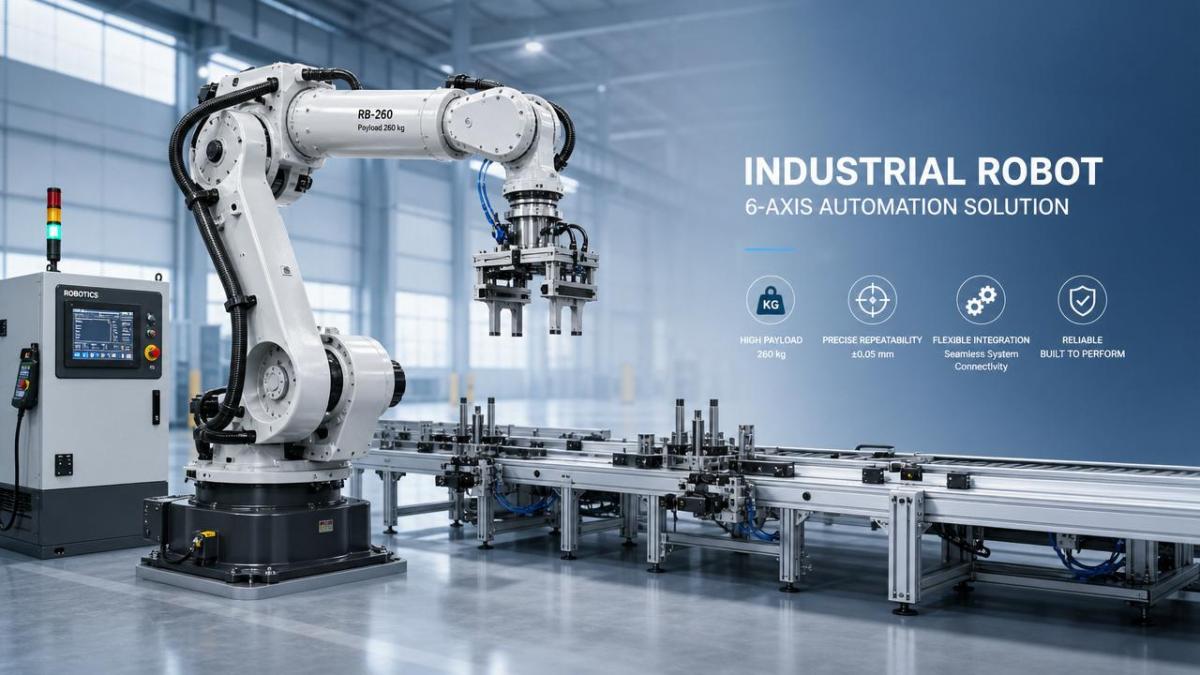
A 6 axis robot arm wholesale decision is rarely about unit price alone. In automation projects across electronics, packaging, metalworking, warehousing, medical assembly, and lab handling, the real cost is determined by uptime, integration effort, spare part availability, safety compliance, and long-term service stability. A robot arm that looks competitive on paper can become expensive if cycle time falls short, software tools are limited, or support response is slow.
This is especially true in today’s global sourcing environment, where technical descriptions are often inconsistent. One supplier may list maximum payload without stating wrist orientation limits, while another may advertise repeatability measured under ideal lab conditions rather than real production loads. A structured review helps compare like-for-like data, reduce sourcing ambiguity, and identify whether a supplier can support scaling after the first shipment.
For 6 axis robot arm wholesale, the most reliable approach is to evaluate hardware performance, control architecture, integration readiness, total ownership cost, and supplier transparency as one connected system. That is where buying confidence comes from.
Core points to verify before placing a 6 axis robot arm wholesale order
Use the following checks to assess whether a 6 axis robot arm wholesale offer is technically sound, commercially sustainable, and suitable for downstream customers.
- Confirm rated payload, maximum payload, and payload performance at different reaches, not just a single headline number from a sales sheet.
- Verify repeatability under realistic operating conditions, including tool weight, acceleration, temperature range, and multi-shift production cycles.
- Check working radius, joint range, and interference zones to ensure the arm fits actual fixtures, conveyors, cells, and guarding layouts.
- Review cycle time data for target applications such as pick-and-place, welding, screwdriving, palletizing, or inspection tasks.
- Assess controller compatibility with PLCs, HMIs, MES platforms, vision systems, fieldbus protocols, and remote diagnostics tools.
- Request documentation for safety functions, emergency stop response, collaborative limits if applicable, and required external safeguarding measures.
- Examine servo motor, reducer, encoder, and cable brand origin because core component quality directly affects service life and precision stability.
- Check available programming methods, offline simulation support, API access, and whether software licensing adds hidden deployment costs.
- Review spare parts lead times, local warehousing options, maintenance intervals, and failure response procedures before scaling orders.
- Validate certifications, factory audit records, test procedures, and serial number traceability to reduce compliance and warranty risk.
- Compare power consumption, compressed air dependency, and thermal management needs because operating cost impacts resale competitiveness.
- Request warranty terms in writing, including exclusions related to duty cycle, end-of-arm tooling, environmental exposure, and installer responsibility.
Technical specifications that deserve deeper scrutiny
When evaluating 6 axis robot arm wholesale, several numbers are easy to misuse. Payload should be matched with moment of inertia limits at the wrist, because a robot may lift a certain mass but perform poorly with offset tools or long grippers. Repeatability should also be separated from absolute positioning accuracy. Repeatability may be excellent, yet calibration effort can still be high if absolute positioning is weak.
Duty cycle is another critical point. Some robot arms perform well in short demonstrations but generate heat or lose consistency under continuous industrial operation. Ask for endurance data, reducer lifespan estimates, recommended lubrication intervals, and examples of field installations running similar loads. This moves the conversation from generic claims to measurable engineering reality.
Commercial checks that affect long-term margins
A competitive 6 axis robot arm wholesale deal should include more than the robot body and controller. Packaging standards, import documentation, installation manuals, software access, training resources, and after-sales escalation paths all influence resale success. If spare parts are tied to a single overseas warehouse or if firmware updates require paid access, future support costs can quickly erode margin.
It is also wise to examine batch consistency. For wholesale orders, variation between production lots can create downstream integration issues. Ask how the supplier controls reducer backlash, cable routing consistency, and controller firmware versioning across the same model line. Consistency matters as much as headline performance.
What to check by application scenario
Material handling and packaging
For carton handling, sorting, tray loading, and packaging lines, 6 axis robot arm wholesale selection should prioritize reach, cycle time, and gripper integration. Fast acceleration is valuable, but not if it causes unstable placement or excessive vibration at the end effector. Review tool flange standards, I/O layout, and cable routing options for vacuum or pneumatic grippers.
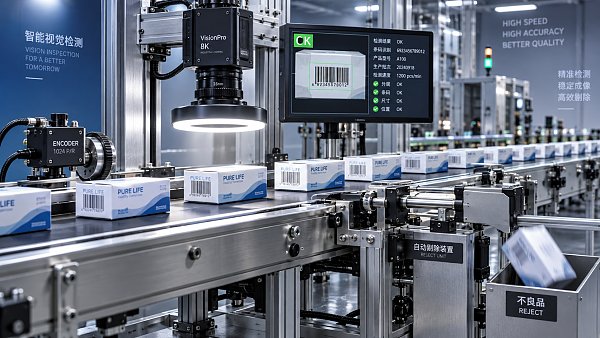
Also confirm whether the controller can support conveyor tracking, barcode or vision inputs, and rapid recipe changes. In packaging environments, uptime often depends more on integration flexibility than on raw robot speed alone.
Welding, polishing, and surface treatment
For arc welding, grinding, deburring, or polishing, 6 axis robot arm wholesale evaluation should focus on path smoothness, stiffness, wrist durability, and resistance to dust, sparks, or abrasive contamination. Repeatability numbers are useful, but surface process quality also depends on motion interpolation and stable tool orientation over long trajectories.
Check ingress protection, dress pack design, torch or spindle compatibility, and service access around axis joints. In harsh processes, maintenance convenience directly influences the real operating cost.
Electronics, light assembly, and inspection
In compact workcells for screwdriving, dispensing, component transfer, or vision inspection, 6 axis robot arm wholesale decisions should emphasize precision stability, compact footprint, low vibration, and software integration. A small robot with reliable API access and good vision compatibility can outperform a higher-payload model that is harder to program or tune.
Request sample programs, camera communication examples, and controller cycle logs. This gives a clearer picture of deployment speed and engineering effort for small-batch automation projects.
Frequently overlooked risks in 6 axis robot arm wholesale
Incomplete testing evidence
Many offers include performance claims without test context. If a supplier cannot provide load testing records, repeatability methodology, or endurance verification, the 6 axis robot arm wholesale proposal carries hidden uncertainty. Ask for test conditions, measurement methods, and date-stamped reports.
Software lock-in
A robot arm may appear affordable but rely on proprietary programming tools, paid protocol unlocks, or restricted third-party integration. This can limit downstream adaptability and reduce the resale appeal of your 6 axis robot arm wholesale portfolio. Clarify what is included at delivery and what requires extra licensing.
Weak spare parts strategy
Reducer failures, cable wear, and encoder issues are manageable only when replacement parts are accessible. A strong 6 axis robot arm wholesale partner should provide a clear spare parts matrix, forecastable lead times, and stable part numbering. Without that, field support becomes reactive and expensive.
Unclear factory traceability
Supplier traceability matters in quality disputes. Check whether each robot has a serial record tied to production date, firmware version, test status, and key component lot numbers. In 6 axis robot arm wholesale, traceability improves warranty handling and helps isolate batch-level issues quickly.
Practical steps for evaluating suppliers and offers
- Create a comparison sheet covering payload, reach, repeatability, protection level, controller protocols, warranty, and spare parts terms.
- Request application-specific videos showing the same or similar robot under realistic load, speed, and end-effector conditions.
- Ask for a bill of key components, including servo, reducer, encoder, controller, and cable system origin information.
- Review manuals, electrical drawings, and programming interfaces before confirming a wholesale model shortlist.
- Run a sample evaluation with clear acceptance criteria for cycle time, path quality, thermal behavior, and communication stability.
- Audit after-sales structure, including training materials, remote support hours, replacement part process, and escalation responsibility.
A disciplined review process supports better outcomes than price-first buying. In the spirit of data-driven sourcing, the goal is not to find the cheapest robot, but to identify the 6 axis robot arm wholesale option that can maintain precision, uptime, and supportability across many deployments.
Final decision factors and next actions
The best 6 axis robot arm wholesale choice is one that remains technically credible after detailed scrutiny. That means verified payload behavior, realistic repeatability data, open integration capability, documented compliance, transparent warranty terms, and dependable parts support. If any of these elements remain vague, the sourcing risk is still high no matter how attractive the quote appears.
As a practical next step, convert the points above into a supplier qualification sheet and score each offer using measurable criteria. Prioritize evidence over adjectives, compare test data instead of brochure language, and confirm whether the supplier can support future scale, not just the first order. In 6 axis robot arm wholesale, disciplined verification is what protects margins, strengthens customer trust, and builds a more resilient automation product line.
Search News
Hot Articles
- Carbon Fiber StructuresHow to Specify Aerospace Carbon Fiber Assemblies for Lightweight, Load-Bearing PartsJul 11, 2026
- Machine VisionXiaomi, Alibaba DAMO Academy Drive Open-Source Robotics Model Ecosystem, Lowering Algorithm Development Barriers for Overseas SMEs Adopting Chinese Robotics SolutionsMar 30, 2026
- Cobots & ArmsShanxi 'AI+' Conference Showcases Embodied Intelligence with Multinational Buyer Engagement: Key Industry ImplicationsMar 30, 2026
Popular Tags
Recommended News
 Jul 11, 2026How to Specify Aerospace Carbon Fiber Assemblies for Lightweight, Load-Bearing PartsAerospace carbon fiber assemblies: learn how to specify laminate design, load data, joining methods, and inspection controls for lighter, reliable load-bearing aerospace parts.Elena Rostova (UAV Systems Researcher)
 Mar 30, 2026Xiaomi, Alibaba DAMO Academy Drive Open-Source Robotics Model Ecosystem, Lowering Algorithm Development Barriers for Overseas SMEs Adopting Chinese Robotics SolutionsXiaomi & Alibaba DAMO Academy's open-source robotics models lower algorithm barriers for global SMEs. Boost efficiency in manufacturing, logistics & smart retail with ROS 2 compatible solutions.TSV Data Lab
 Mar 30, 2026Shanxi 'AI+' Conference Showcases Embodied Intelligence with Multinational Buyer Engagement: Key Industry ImplicationsShanxi 'AI+' Conference highlights embodied intelligence with Tesla, Ubtech & Jiantao showcasing multimodal robotics. 40+ global buyers validated tech on-site, creating new B2B channels for industrial automation & AI solutions.Chen Wei (Automation Lead Engineer)
 Mar 30, 2026Zhongguancun Unveils 6G Integrated Sensing-Computing-Intelligence Platform to Empower Embodied Robots for Global Industrial ApplicationsZhongguancun's new 6G platform revolutionizes industrial robotics with <10ms latency, empowering global automotive, logistics & port automation. Discover how this tech boosts China's smart manufacturing exports.TSV Data Lab
 Mar 30, 2026Mech-Mind Tianjin Embodied Intelligence R&D and Production Base Goes Live, Cutting Delivery Time by 20%–30% for Global Customized AMR+Vision SolutionsMech-Mind's Tianjin AMR+Vision production base cuts delivery time by 20%-30% for欧美 & Latin American markets. Discover how this PLd-certified facility accelerates customized robotics solutions for smart manufacturing and logistics.Chen Wei (Automation Lead Engineer)
 Mar 30, 2026Boao Forum Reveals 'Co-evolution of Big and Small Brains' Trend in Humanoid Robots, China's Embodied Intelligence Accelerates Adaptation to Overseas Manufacturing Service ScenariosDiscover how China's humanoid robots, featuring 'Co-evolution of Big and Small Brains,' are revolutionizing global manufacturing. Learn about Embodied Tian Gong 3.0's ISO compliance and overseas deployment at Boao Forum 2026.Chen Wei (Automation Lead Engineer)
 Mar 30, 2026China Railway Industrial Secures Patent for Embodied Robotics in Material Handling, Boosting High-Precision Delivery Capabilities for Overseas Infrastructure and Manufacturing ProjectsChina Railway Industrial's new patent for embodied robotics in material handling boosts high-precision delivery for global infrastructure & manufacturing. Discover how this innovation enhances logistics accuracy in automotive, rail transit & EPC projects.Chen Wei (Automation Lead Engineer)
 Sep 28, 2026Spindle Runout Measurement in Germany: DIN Standards, Methods, and Acceptance LimitsSpindle runout measurement Germany: explore DIN standards, proven methods, acceptance limits, and audit-ready practices for reliable machining quality.Dr. Marcus Vance
 Sep 27, 2026How to Select Wall-Mount Edge Devices for Space-Constrained Factory NetworksWall mount edge devices for space-constrained factories: evaluate workload, thermal design, power resilience, cable access, and network reliability for smarter deployments.TSV Data Lab
 Sep 26, 2026Machining Tolerance Analysis: How to Set Limits That Meet Function and Cost TargetsMachining tolerance analysis: learn how to set functional limits, control tolerance stacks, reduce inspection risk, and balance precision with production cost.Dr. Marcus Vance
 Sep 25, 2026How to Evaluate an Industrial Infrastructure Data Platform for Multi-Site OperationsIndustrial infrastructure data platform evaluation guide for multi-site operations: compare data quality, edge resilience, interoperability, governance, and scalable proof-of-value criteria.Victor Lin (Chief Software Architect)
 Sep 24, 2026How to Select Machine Vision Optics for Accurate Inspection at Different Working DistancesMachine vision optics selection guide for accurate inspection at every working distance. Compare FOV, pixel scale, DOF, distortion, lighting, and telecentric options.TSV Data Lab
 Sep 23, 2026How to Evaluate a Machine Vision System Integrator for High-Speed Inspection LinesChoose a machine vision system integrator with proven expertise in high-speed inspection, reliable reject timing, robust optics, and measurable acceptance criteria.TSV Data Lab
 Sep 28, 2026When is a SCADA API the right choice for connecting plant systems?SCADA API guide: learn when governed plant data integration improves traceability, security, and scalability—without compromising real-time control.Victor Lin (Chief Software Architect)
 Sep 27, 2026How SCADA data integration improves traceability across production linesSCADA data integration connects production-line data to improve traceability, accelerate quality investigations, and strengthen safety decisions.Victor Lin (Chief Software Architect)
 Sep 26, 2026What to define before starting SCADA integration planningSCADA integration planning starts with clear scope, control boundaries, data models, cybersecurity, and testing. Discover the definitions that reduce risk and costly rework.Victor Lin (Chief Software Architect)
 Sep 25, 2026How a smart factory with Industrial IoT reduces production blind spotsDiscover how a smart factory with Industrial IoT turns real-time machine, quality, and workflow data into actionable insights that reduce production blind spots and delivery risks.Victor Lin (Chief Software Architect)
 Sep 24, 2026When does Industrial IoT make smart manufacturing easier to scale?Smart manufacturing Industrial IoT scales when trusted data, interoperable systems, and secure workflows turn connected assets into measurable gains.TSV Data Lab
 Sep 23, 2026What drives ultra-precision machining cost at 1-micron tolerance?Ultra precision machining cost per part at 1 micron tolerance depends on process, material, metrology, and yield. Learn how to compare quotes confidently.Dr. Marcus Vance
 Sep 22, 2026Drone Engine-T550CC Applications: Build the UAV Power System Around the MissionAn application guide for Drone Engine-T550CC integration, covering payload planning, airframe matching, cooling, fuel, vibration, test procedures, documentation, and service preparation.Elena Rostova (UAV Systems Researcher)
 Sep 22, 2026How to Evaluate Industrial Edge Computing Vendors for Factory DeploymentIndustrial edge computing vendor evaluation guide for factories: compare latency, protocol fit, reliability, security, and lifecycle support before deployment.TSV Data Lab
 Sep 21, 2026Drone Payload Integration: Matching Power, Data, and Center of Gravity for Reliable FlightsDrone payload integration made practical: balance power, data, center of gravity, and endurance to build safer, more reliable mission-ready flights.Elena Rostova (UAV Systems Researcher)
 Sep 20, 2026Autonomous Navigation Pricing: Cost Drivers and Budget Benchmarks for AMR ProjectsAutonomous navigation price explained: compare AMR cost drivers, software, sensors, integration, safety, and lifecycle budgets to build a scalable project plan.Chen Wei (Automation Lead Engineer)
 Sep 19, 2026How to Scope Automation Integration Services for Multi-System Factory ProjectsAutomation integration services: learn how to scope multi-system factory projects with clear workflows, interface contracts, safety boundaries, and acceptance criteria.Victor Lin (Chief Software Architect)