What makes a robotic gripper manufacturer worth trusting
Publication Date
author
When evaluating a robotic gripper manufacturer, trust should come from measurable engineering evidence rather than polished claims. For business assessment teams, the real question is not who sounds innovative, but who can prove repeatability, durability, integration reliability, and supply chain transparency with hard data. This article examines the signals that separate credible manufacturers from marketing noise.
In practical procurement, a gripper is rarely an isolated component. It affects cycle time, scrap rate, robot utilization, operator safety, preventive maintenance frequency, and integration cost across the whole cell. That is why a trustworthy robotic gripper manufacturer should be evaluated not only on catalog variety, but also on engineering discipline, response quality, and the consistency of delivered performance over thousands or millions of cycles.
For commercial teams, sourcing managers, and technical evaluators, the challenge is clear: many suppliers claim precision, flexibility, and reliability, yet only a small group can document gripping force stability, jaw repeatability, payload margin, contamination resistance, and post-sale support with enough detail to reduce risk before a purchase order is placed.
Why trust matters more than product claims
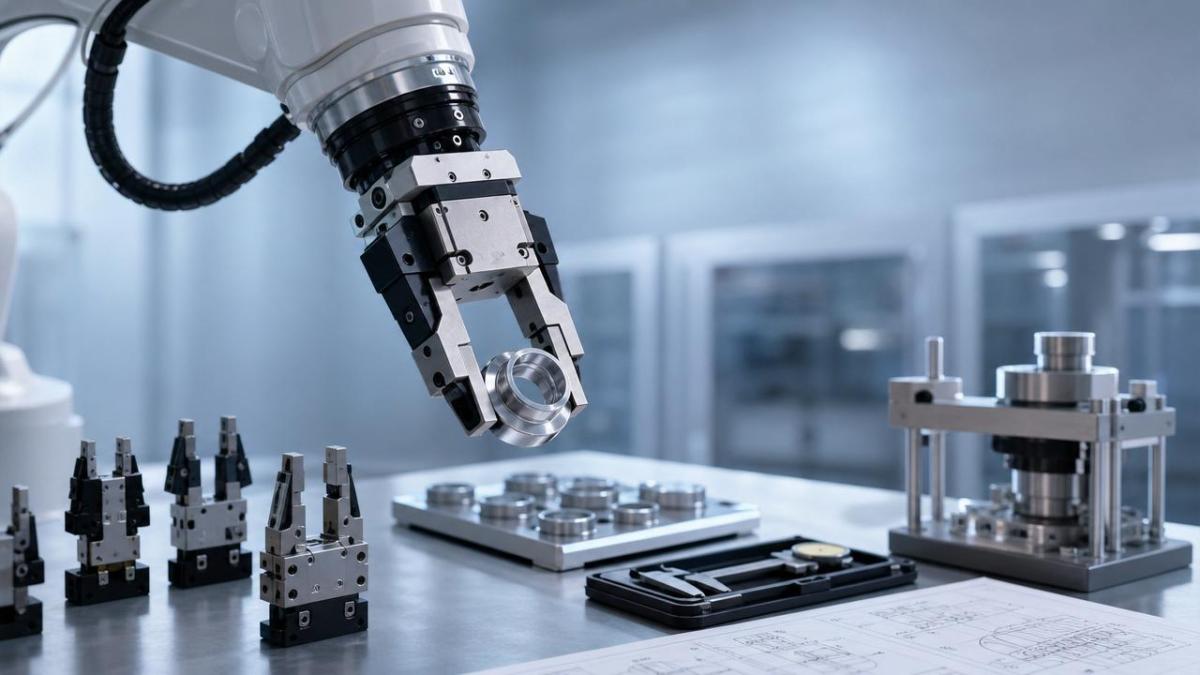
A robotic gripper manufacturer sits close to the point of physical interaction between automation equipment and the workpiece. If the gripper underperforms by even a small margin, the consequences can cascade through the line. A repeatability drift of ±0.2 mm instead of the required ±0.05 mm may be enough to damage delicate parts, interrupt pick-and-place accuracy, or reduce packaging consistency.
Business assessment teams should therefore treat trust as an operational risk-control issue. The right supplier reduces commissioning delays, supports faster qualification, and provides clearer cost forecasting over a 12- to 36-month ownership horizon. The wrong supplier often increases hidden costs through redesign, spare-part delays, and troubleshooting time during production ramp-up.
Trust is built on verifiable engineering signals
A credible robotic gripper manufacturer should offer measurable documentation rather than broad adjectives. That includes cycle life test ranges, recommended air pressure windows, force curves at different stroke lengths, environmental operating limits such as 0°C to 50°C, and mounting tolerances for integration with standard robot arms, EOAT plates, or machine tending fixtures.
Suppliers aligned with data-driven evaluation practices also tend to explain performance boundaries. Instead of saying a gripper is “high precision,” they define whether repeatability is measured under no-load or rated-load conditions, whether speed is based on a 5 mm or 25 mm stroke, and whether IP protection applies to dust, coolant mist, or washdown environments.
Questions that reveal supplier maturity
- Can the supplier provide endurance data across 1 million, 3 million, or 5 million cycles?
- Do they specify gripping force tolerance at different pressure levels or electrical loads?
- Can they explain compatibility with cobots, 6-axis robots, gantry systems, or CNC tending cells?
- Do they disclose recommended maintenance intervals such as every 2,000 hours or every 6 months?
- Is there a clear process for spare parts, service response, and failure analysis?
The table below highlights the difference between weak and strong trust signals when comparing suppliers in an industrial sourcing process.
For business assessment personnel, the strongest pattern is consistency. A trustworthy robotic gripper manufacturer does not merely answer questions; it answers them in a structured, repeatable, auditable way. That matters when a sourcing decision must be defended internally to engineering, operations, quality, and finance teams at the same time.
Core criteria for evaluating a robotic gripper manufacturer
The best evaluations use a balanced scorecard rather than a single technical spec. In most industrial projects, at least 4 dimensions matter: product performance, integration readiness, manufacturing stability, and lifecycle support. A robotic gripper manufacturer worth trusting should show competence across all four, because strength in one area does not compensate for weakness in another.
1. Product performance under real operating conditions
The first checkpoint is whether the supplier can relate the product to real use cases. A gripper for electronics assembly may prioritize low particle generation and gentle force control in the 5 N to 50 N range. A unit for metal handling may need a much higher force band, stronger jaw rigidity, and stable performance in oily or abrasive environments.
Look for evidence that performance is not measured in ideal lab conditions alone. Ask whether gripping force changes across the full stroke, how the unit behaves after 500,000 cycles, and whether the repeatability figure remains stable when mounted on a high-speed robot moving at different acceleration profiles. These details help distinguish engineering reality from catalog abstraction.
Performance details worth requesting
- Repeatability range, such as ±0.01 mm to ±0.05 mm depending on model
- Rated payload or gripping capacity with safety factor assumptions
- Opening and closing time, often measured in fractions of a second
- Duty cycle guidance for continuous, intermittent, or high-speed use
- Material compatibility for aluminum, plastic, glass, stamped metal, or composite parts
2. Integration readiness and documentation quality
A robotic gripper manufacturer can lose trust quickly if integration data is incomplete. Even a mechanically sound gripper becomes risky if CAD files are missing, pneumatic diagrams are vague, cable routing is undocumented, or communication protocols are not clearly defined. For many automation projects, poor documentation can add 1 to 3 weeks to commissioning time.
Business teams should verify whether the supplier provides 2D and 3D drawings, mounting standards, wiring instructions, PLC or robot interface notes, and preventive maintenance documentation. If the gripper is electric or sensor-equipped, IO mapping and control logic descriptions are especially important. Clear integration packages reduce dependency on back-and-forth communication during installation.
Integration checklist for sourcing review
- Confirm mechanical interface standards and adapter availability.
- Review pneumatic or electrical utility requirements.
- Verify sensor, feedback, and control signal compatibility.
- Check software, manuals, and troubleshooting documentation.
- Request commissioning and maintenance support scope in writing.
3. Manufacturing consistency and change control
Trust also depends on whether the manufacturer can deliver the same quality in batch 1, batch 20, and replacement order 18 months later. For procurement teams, inconsistency between samples and production units is one of the most expensive failure modes because it disrupts validation records, tooling setup, and spare-part planning.
Ask how product revisions are managed. Does the robotic gripper manufacturer notify customers before component changes? Is there a revision history for seals, bearings, sensors, or finger interfaces? Are incoming inspection criteria and final test steps documented? A supplier with disciplined change control protects both line stability and compliance workflows.
The following table can help business assessment teams compare suppliers during qualification meetings or request-for-quotation reviews.
A useful sourcing insight is that trust often shows up in operational detail. Manufacturers that can explain batch traceability, service kits, revision notifications, and maintenance schedules usually have internal systems robust enough to support large-scale customers, not just one-time transactions.
4. Lifecycle support and total cost of ownership
Purchase price is only one line in the cost model. A lower-cost gripper may become the expensive option if it requires more frequent maintenance, causes more stoppages, or lacks local support. Business evaluators should compare expected service intervals, spare-part pricing logic, response speed, and replacement policy before making a final shortlist.
For example, if one supplier recommends maintenance every 1,000 operating hours and another every 3,000 hours for similar duty conditions, the service burden may differ significantly over a year. Likewise, if finger replacements take 10 days and seal kits take 2 weeks, inventory planning must account for that lead time. Trust grows when the supplier is transparent about these realities.
Common risks and practical ways to reduce them
Even experienced sourcing teams can misjudge a robotic gripper manufacturer when evaluation focuses too heavily on demos, pricing, or branded positioning. In automation procurement, the most common mistakes are not technical ignorance but incomplete verification. Risk is reduced when review teams use structured checkpoints before approval.
Risk 1: Overreliance on peak specifications
Some catalogs emphasize maximum gripping force, top speed, or compact size without showing how those values change under actual conditions. A rated maximum may not represent continuous-use performance. If the part surface is oily, the workpiece shape is irregular, or robot acceleration is high, the real safety margin can shrink quickly.
A practical countermeasure is to request application-based validation. Share part weight, surface condition, cycle target, orientation, and ambient environment. A trustworthy robotic gripper manufacturer should respond with a recommended configuration and explain the assumptions behind the recommendation, including any derating needed for safety or endurance.
Risk 2: Ignoring service and supply chain resilience
A capable product is still a weak sourcing choice if replacement parts are hard to obtain or technical support is too slow. In many lines, one failed gripper can interrupt a cell producing hundreds or thousands of units per shift. Assessment teams should examine not only the product but also the support network behind it.
Important questions include whether critical components are stocked regionally, whether repair turnaround is defined, and whether there is a documented escalation path. A supplier that responds to engineering questions within 24 to 48 hours often creates far less operational friction than one that only engages after repeated follow-up.
Risk 3: Treating all applications as interchangeable
Different sectors impose different demands. Packaging, electronics, medical device assembly, warehouse automation, machine tending, and automotive subassembly all place distinct requirements on stroke, force control, cleanliness, vibration tolerance, and uptime. A robotic gripper manufacturer worth trusting understands these differences and does not push a generic answer for every use case.
This is where application literacy becomes a trust marker. Suppliers who ask about takt time, payload variability, part fragility, and preventive maintenance windows usually understand deployment realities better than those who focus only on unit sales. For assessment teams, that difference often predicts smoother execution after contract award.
A 6-point practical screening method
- Request detailed technical documentation before commercial negotiation.
- Compare performance data under realistic load and environment assumptions.
- Review integration files, manuals, and communication requirements.
- Check lead times for standard units, spare parts, and custom fingers.
- Clarify maintenance cycles, service kits, and support response windows.
- Ask how design changes are communicated over a 12- to 24-month period.
What strong manufacturers do differently
The most trusted suppliers tend to behave like engineering partners rather than product promoters. They define limitations early, recommend suitable configurations based on application data, and provide enough technical evidence to help cross-functional teams move from evaluation to approval with fewer internal objections.
This approach aligns with the broader hard-tech shift toward measurable truth. In industrial automation, trust is not created by polished messaging but by disciplined specification control, repeatable manufacturing, and support processes that survive real production pressure. That is why a robotic gripper manufacturer earns confidence over time through evidence, responsiveness, and documentation quality.
Signs of a supplier ready for serious B2B qualification
- They can discuss tolerances, wear points, and maintenance trade-offs openly.
- They provide structured answers for engineering and commercial stakeholders.
- They show traceability in production, revisions, and spare-part support.
- They adapt recommendations to the application instead of forcing a standard script.
- They understand that business trust depends on predictable execution, not promises.
For business assessment teams, the decision framework is straightforward: verify data, test assumptions, inspect service depth, and favor suppliers that make technical truth easy to audit. That is the clearest path to reducing supplier risk, shortening qualification cycles, and improving automation return on investment.
If you are reviewing options for a robotic gripper manufacturer and need a clearer benchmark for technical credibility, supplier comparability, or application fit, now is the right time to move beyond claims and into measurable criteria. Contact us to discuss your evaluation priorities, request a tailored assessment framework, or learn more solutions for data-driven automation sourcing.
Search News
Hot Articles
- Carbon Fiber StructuresHow to Specify Aerospace Carbon Fiber Assemblies for Lightweight, Load-Bearing PartsJul 11, 2026
- Machine VisionXiaomi, Alibaba DAMO Academy Drive Open-Source Robotics Model Ecosystem, Lowering Algorithm Development Barriers for Overseas SMEs Adopting Chinese Robotics SolutionsMar 30, 2026
- Cobots & ArmsShanxi 'AI+' Conference Showcases Embodied Intelligence with Multinational Buyer Engagement: Key Industry ImplicationsMar 30, 2026
Popular Tags
Recommended News
 Jul 11, 2026How to Specify Aerospace Carbon Fiber Assemblies for Lightweight, Load-Bearing PartsAerospace carbon fiber assemblies: learn how to specify laminate design, load data, joining methods, and inspection controls for lighter, reliable load-bearing aerospace parts.Elena Rostova (UAV Systems Researcher)
 Mar 30, 2026Xiaomi, Alibaba DAMO Academy Drive Open-Source Robotics Model Ecosystem, Lowering Algorithm Development Barriers for Overseas SMEs Adopting Chinese Robotics SolutionsXiaomi & Alibaba DAMO Academy's open-source robotics models lower algorithm barriers for global SMEs. Boost efficiency in manufacturing, logistics & smart retail with ROS 2 compatible solutions.TSV Data Lab
 Mar 30, 2026Shanxi 'AI+' Conference Showcases Embodied Intelligence with Multinational Buyer Engagement: Key Industry ImplicationsShanxi 'AI+' Conference highlights embodied intelligence with Tesla, Ubtech & Jiantao showcasing multimodal robotics. 40+ global buyers validated tech on-site, creating new B2B channels for industrial automation & AI solutions.Chen Wei (Automation Lead Engineer)
 Mar 30, 2026Zhongguancun Unveils 6G Integrated Sensing-Computing-Intelligence Platform to Empower Embodied Robots for Global Industrial ApplicationsZhongguancun's new 6G platform revolutionizes industrial robotics with <10ms latency, empowering global automotive, logistics & port automation. Discover how this tech boosts China's smart manufacturing exports.TSV Data Lab
 Mar 30, 2026Mech-Mind Tianjin Embodied Intelligence R&D and Production Base Goes Live, Cutting Delivery Time by 20%–30% for Global Customized AMR+Vision SolutionsMech-Mind's Tianjin AMR+Vision production base cuts delivery time by 20%-30% for欧美 & Latin American markets. Discover how this PLd-certified facility accelerates customized robotics solutions for smart manufacturing and logistics.Chen Wei (Automation Lead Engineer)
 Mar 30, 2026Boao Forum Reveals 'Co-evolution of Big and Small Brains' Trend in Humanoid Robots, China's Embodied Intelligence Accelerates Adaptation to Overseas Manufacturing Service ScenariosDiscover how China's humanoid robots, featuring 'Co-evolution of Big and Small Brains,' are revolutionizing global manufacturing. Learn about Embodied Tian Gong 3.0's ISO compliance and overseas deployment at Boao Forum 2026.Chen Wei (Automation Lead Engineer)
 Mar 30, 2026China Railway Industrial Secures Patent for Embodied Robotics in Material Handling, Boosting High-Precision Delivery Capabilities for Overseas Infrastructure and Manufacturing ProjectsChina Railway Industrial's new patent for embodied robotics in material handling boosts high-precision delivery for global infrastructure & manufacturing. Discover how this innovation enhances logistics accuracy in automotive, rail transit & EPC projects.Chen Wei (Automation Lead Engineer)
 Sep 29, 2026ISO 9283 Repeatability: How to Evaluate Cobot Positioning PerformanceISO 9283 cobot repeatability explained: learn how payload, reach, approach direction, and test conditions affect positioning performance and cell capability.Chen Wei (Automation Lead Engineer)
 Sep 28, 2026Spindle Runout Measurement in Germany: DIN Standards, Methods, and Acceptance LimitsSpindle runout measurement Germany: explore DIN standards, proven methods, acceptance limits, and audit-ready practices for reliable machining quality.Dr. Marcus Vance
 Sep 27, 2026How to Select Wall-Mount Edge Devices for Space-Constrained Factory NetworksWall mount edge devices for space-constrained factories: evaluate workload, thermal design, power resilience, cable access, and network reliability for smarter deployments.TSV Data Lab
 Sep 26, 2026Machining Tolerance Analysis: How to Set Limits That Meet Function and Cost TargetsMachining tolerance analysis: learn how to set functional limits, control tolerance stacks, reduce inspection risk, and balance precision with production cost.Dr. Marcus Vance
 Sep 25, 2026How to Evaluate an Industrial Infrastructure Data Platform for Multi-Site OperationsIndustrial infrastructure data platform evaluation guide for multi-site operations: compare data quality, edge resilience, interoperability, governance, and scalable proof-of-value criteria.Victor Lin (Chief Software Architect)
 Sep 24, 2026How to Select Machine Vision Optics for Accurate Inspection at Different Working DistancesMachine vision optics selection guide for accurate inspection at every working distance. Compare FOV, pixel scale, DOF, distortion, lighting, and telecentric options.TSV Data Lab
 Sep 23, 2026How to Evaluate a Machine Vision System Integrator for High-Speed Inspection LinesChoose a machine vision system integrator with proven expertise in high-speed inspection, reliable reject timing, robust optics, and measurable acceptance criteria.TSV Data Lab
 Sep 28, 2026When is a SCADA API the right choice for connecting plant systems?SCADA API guide: learn when governed plant data integration improves traceability, security, and scalability—without compromising real-time control.Victor Lin (Chief Software Architect)
 Sep 27, 2026How SCADA data integration improves traceability across production linesSCADA data integration connects production-line data to improve traceability, accelerate quality investigations, and strengthen safety decisions.Victor Lin (Chief Software Architect)
 Sep 26, 2026What to define before starting SCADA integration planningSCADA integration planning starts with clear scope, control boundaries, data models, cybersecurity, and testing. Discover the definitions that reduce risk and costly rework.Victor Lin (Chief Software Architect)
 Sep 25, 2026How a smart factory with Industrial IoT reduces production blind spotsDiscover how a smart factory with Industrial IoT turns real-time machine, quality, and workflow data into actionable insights that reduce production blind spots and delivery risks.Victor Lin (Chief Software Architect)
 Sep 24, 2026When does Industrial IoT make smart manufacturing easier to scale?Smart manufacturing Industrial IoT scales when trusted data, interoperable systems, and secure workflows turn connected assets into measurable gains.TSV Data Lab
 Sep 23, 2026What drives ultra-precision machining cost at 1-micron tolerance?Ultra precision machining cost per part at 1 micron tolerance depends on process, material, metrology, and yield. Learn how to compare quotes confidently.Dr. Marcus Vance
 Sep 22, 2026Drone Engine-T550CC Applications: Build the UAV Power System Around the MissionAn application guide for Drone Engine-T550CC integration, covering payload planning, airframe matching, cooling, fuel, vibration, test procedures, documentation, and service preparation.Elena Rostova (UAV Systems Researcher)
 Sep 22, 2026How to Evaluate Industrial Edge Computing Vendors for Factory DeploymentIndustrial edge computing vendor evaluation guide for factories: compare latency, protocol fit, reliability, security, and lifecycle support before deployment.TSV Data Lab
 Sep 21, 2026Drone Payload Integration: Matching Power, Data, and Center of Gravity for Reliable FlightsDrone payload integration made practical: balance power, data, center of gravity, and endurance to build safer, more reliable mission-ready flights.Elena Rostova (UAV Systems Researcher)
 Sep 20, 2026Autonomous Navigation Pricing: Cost Drivers and Budget Benchmarks for AMR ProjectsAutonomous navigation price explained: compare AMR cost drivers, software, sensors, integration, safety, and lifecycle budgets to build a scalable project plan.Chen Wei (Automation Lead Engineer)