How to vet a high precision servo drive supplier
Publication Date
author
Choosing a high precision servo drive supplier is not just about price or lead time. It is about validating engineering truth behind every specification.
In motion control, weak verification creates hidden risk. Poor tuning stability, undocumented drift, and inconsistent traceability can damage uptime, yield, and safety.
A reliable high precision servo drive supplier should prove performance with test data, quality discipline, and supply continuity. This guide shows how to examine each area step by step.
What defines a qualified high precision servo drive supplier?
A qualified high precision servo drive supplier does more than ship hardware. The supplier must connect electrical design, control algorithms, quality systems, and application support.
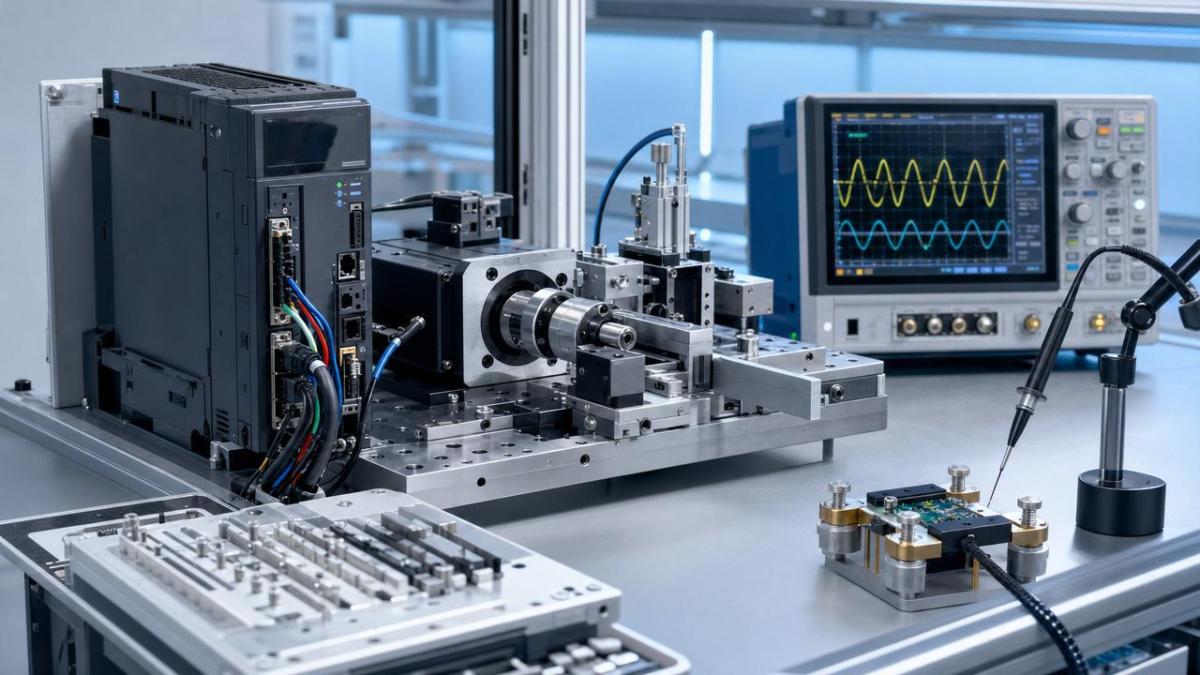
Precision is not a slogan. It should be reflected in loop response, encoder compatibility, torque control stability, thermal behavior, and repeatable performance under load.
For general industry applications, servo drives often support CNC equipment, semiconductor handling, packaging lines, robotics, inspection systems, and automated assembly cells.
That means evaluation must include both lab metrics and field readiness. A supplier may look strong on paper but fail under vibration, electrical noise, or continuous duty.
Start with these baseline attributes:
- Published control accuracy and response bandwidth
- Documented environmental and thermal limits
- Clear compliance with CE, UL, RoHS, or application standards
- Stable firmware management and revision control
- Traceable component sourcing and serial-level records
- Responsive engineering support for commissioning and tuning
The best high precision servo drive supplier will also explain test conditions. Numbers without method, load profile, or temperature range have little qualification value.
Which technical data should be verified before approval?
Many buyers compare voltage, power, and communication protocols first. Those matter, but they rarely reveal actual precision capability.
A serious high precision servo drive supplier should provide deeper validation data tied to real motion control behavior.
Core performance parameters
- Current loop, speed loop, and position loop bandwidth
- Settling time after step command changes
- Overshoot and following error under rated load
- Low-speed smoothness and torque ripple
- Encoder resolution support and feedback interpolation
- Regeneration performance and braking behavior
Reliability indicators
- MTBF calculation basis and field failure rate
- Burn-in duration and end-of-line test coverage
- Electromagnetic immunity test results
- Thermal derating curves at ambient extremes
Ask for raw test reports whenever possible. Screen captures, oscilloscope traces, and loop tuning records offer more credibility than simplified catalog tables.
If a high precision servo drive supplier claims extreme repeatability, request the load inertia ratio, motion profile, and mechanical coupling assumptions behind that claim.
Also verify software tooling. Strong drives with weak tuning software often create longer commissioning cycles and unstable field performance.
How can quality systems and traceability be checked effectively?
A dependable high precision servo drive supplier should have a visible quality framework. Certification alone is not enough. The process behind the certificate matters more.
Review whether the supplier operates under ISO 9001 and whether motion products for regulated sectors align with stricter process expectations.
Then examine traceability depth. Can the supplier link each drive to batch records, PCB assembly history, firmware version, and final functional test data?
This is essential when faults appear months later. Without traceability, root cause analysis becomes slow, expensive, and uncertain.
Useful audit questions
- How are incoming electronic components verified?
- What percentage of units receive full functional testing?
- How are firmware changes approved and documented?
- What is the corrective action workflow after field returns?
- Can serial numbers retrieve production and inspection records?
A mature high precision servo drive supplier should answer these clearly. Hesitation usually signals weak internal controls or fragmented manufacturing oversight.
TechStat Vanguard’s data-first philosophy applies here directly: parameters matter, but process discipline determines whether those parameters stay consistent over time.
What supply chain risks are commonly missed?
Many sourcing failures begin after technical approval. The drive works, yet the supply model is fragile.
A high precision servo drive supplier should be assessed for continuity, not only immediate capacity. This is especially important in volatile semiconductor and power electronics markets.
Common hidden risks include single-source chip dependency, unstable magnetics supply, undocumented second-source substitutions, and poor lifecycle communication.
Review these risk dimensions carefully:
- Component obsolescence planning and last-time-buy policy
- Safety stock strategy for control boards and power modules
- Lead time stability across normal and peak demand periods
- Notice period for engineering changes
- Regional service and replacement capability
Do not ignore after-sales structure. A technically strong high precision servo drive supplier may still create downtime if spare units, repair channels, or firmware support are delayed.
For multi-year programs, request lifecycle commitment letters. Confirm whether core models will remain available, or whether migration paths are already defined.
How should suppliers be compared beyond price?
Lowest quotation rarely equals lowest total cost. A better evaluation method compares technical fitness, qualification effort, field risk, and support burden.
A high precision servo drive supplier should be scored using weighted criteria. This reduces bias and helps separate attractive claims from usable engineering value.
This comparison method helps identify the right high precision servo drive supplier for long-term operation, not just first purchase convenience.
What mistakes should be avoided during supplier vetting?
Several errors appear repeatedly in servo drive selection. Each one can distort qualification results.
- Assuming brand visibility equals engineering suitability
- Accepting peak performance data without continuous-duty context
- Ignoring firmware maturity and update policy
- Skipping EMC validation in the actual machine environment
- Comparing quotes without matching test scope
Another mistake is failing to run an application sample test. The best high precision servo drive supplier should support a structured pilot before final approval.
That pilot should measure thermal rise, tuning repeatability, communication stability, fault logging, and recovery behavior under realistic production cycles.
If sample validation is rushed, hidden incompatibilities often appear later during commissioning or scale-up.
What is a practical final checklist for choosing a high precision servo drive supplier?
Use a simple final checklist before nomination. It keeps decisions evidence-based and easier to defend internally.
The right high precision servo drive supplier will make verification easier, not harder. Strong suppliers welcome technical scrutiny because data supports their claims.
When evaluating options, prioritize measurable performance, disciplined manufacturing, and stable support over polished marketing language.
If the goal is long-term motion control reliability, start with a structured audit, request real test evidence, and validate under application conditions before scaling volume.
Search News
Hot Articles
- Carbon Fiber StructuresHow to Specify Aerospace Carbon Fiber Assemblies for Lightweight, Load-Bearing PartsJul 11, 2026
- Machine VisionXiaomi, Alibaba DAMO Academy Drive Open-Source Robotics Model Ecosystem, Lowering Algorithm Development Barriers for Overseas SMEs Adopting Chinese Robotics SolutionsMar 30, 2026
- Cobots & ArmsShanxi 'AI+' Conference Showcases Embodied Intelligence with Multinational Buyer Engagement: Key Industry ImplicationsMar 30, 2026
Popular Tags
Recommended News
 Jul 11, 2026How to Specify Aerospace Carbon Fiber Assemblies for Lightweight, Load-Bearing PartsAerospace carbon fiber assemblies: learn how to specify laminate design, load data, joining methods, and inspection controls for lighter, reliable load-bearing aerospace parts.Elena Rostova (UAV Systems Researcher)
 Mar 30, 2026Xiaomi, Alibaba DAMO Academy Drive Open-Source Robotics Model Ecosystem, Lowering Algorithm Development Barriers for Overseas SMEs Adopting Chinese Robotics SolutionsXiaomi & Alibaba DAMO Academy's open-source robotics models lower algorithm barriers for global SMEs. Boost efficiency in manufacturing, logistics & smart retail with ROS 2 compatible solutions.TSV Data Lab
 Mar 30, 2026Shanxi 'AI+' Conference Showcases Embodied Intelligence with Multinational Buyer Engagement: Key Industry ImplicationsShanxi 'AI+' Conference highlights embodied intelligence with Tesla, Ubtech & Jiantao showcasing multimodal robotics. 40+ global buyers validated tech on-site, creating new B2B channels for industrial automation & AI solutions.Chen Wei (Automation Lead Engineer)
 Mar 30, 2026Zhongguancun Unveils 6G Integrated Sensing-Computing-Intelligence Platform to Empower Embodied Robots for Global Industrial ApplicationsZhongguancun's new 6G platform revolutionizes industrial robotics with <10ms latency, empowering global automotive, logistics & port automation. Discover how this tech boosts China's smart manufacturing exports.TSV Data Lab
 Mar 30, 2026Mech-Mind Tianjin Embodied Intelligence R&D and Production Base Goes Live, Cutting Delivery Time by 20%–30% for Global Customized AMR+Vision SolutionsMech-Mind's Tianjin AMR+Vision production base cuts delivery time by 20%-30% for欧美 & Latin American markets. Discover how this PLd-certified facility accelerates customized robotics solutions for smart manufacturing and logistics.Chen Wei (Automation Lead Engineer)
 Mar 30, 2026Boao Forum Reveals 'Co-evolution of Big and Small Brains' Trend in Humanoid Robots, China's Embodied Intelligence Accelerates Adaptation to Overseas Manufacturing Service ScenariosDiscover how China's humanoid robots, featuring 'Co-evolution of Big and Small Brains,' are revolutionizing global manufacturing. Learn about Embodied Tian Gong 3.0's ISO compliance and overseas deployment at Boao Forum 2026.Chen Wei (Automation Lead Engineer)
 Mar 30, 2026China Railway Industrial Secures Patent for Embodied Robotics in Material Handling, Boosting High-Precision Delivery Capabilities for Overseas Infrastructure and Manufacturing ProjectsChina Railway Industrial's new patent for embodied robotics in material handling boosts high-precision delivery for global infrastructure & manufacturing. Discover how this innovation enhances logistics accuracy in automotive, rail transit & EPC projects.Chen Wei (Automation Lead Engineer)
 Sep 29, 2026ISO 9283 Repeatability: How to Evaluate Cobot Positioning PerformanceISO 9283 cobot repeatability explained: learn how payload, reach, approach direction, and test conditions affect positioning performance and cell capability.Chen Wei (Automation Lead Engineer)
 Sep 28, 2026Spindle Runout Measurement in Germany: DIN Standards, Methods, and Acceptance LimitsSpindle runout measurement Germany: explore DIN standards, proven methods, acceptance limits, and audit-ready practices for reliable machining quality.Dr. Marcus Vance
 Sep 27, 2026How to Select Wall-Mount Edge Devices for Space-Constrained Factory NetworksWall mount edge devices for space-constrained factories: evaluate workload, thermal design, power resilience, cable access, and network reliability for smarter deployments.TSV Data Lab
 Sep 26, 2026Machining Tolerance Analysis: How to Set Limits That Meet Function and Cost TargetsMachining tolerance analysis: learn how to set functional limits, control tolerance stacks, reduce inspection risk, and balance precision with production cost.Dr. Marcus Vance
 Sep 25, 2026How to Evaluate an Industrial Infrastructure Data Platform for Multi-Site OperationsIndustrial infrastructure data platform evaluation guide for multi-site operations: compare data quality, edge resilience, interoperability, governance, and scalable proof-of-value criteria.Victor Lin (Chief Software Architect)
 Sep 24, 2026How to Select Machine Vision Optics for Accurate Inspection at Different Working DistancesMachine vision optics selection guide for accurate inspection at every working distance. Compare FOV, pixel scale, DOF, distortion, lighting, and telecentric options.TSV Data Lab
 Sep 23, 2026How to Evaluate a Machine Vision System Integrator for High-Speed Inspection LinesChoose a machine vision system integrator with proven expertise in high-speed inspection, reliable reject timing, robust optics, and measurable acceptance criteria.TSV Data Lab
 Sep 28, 2026When is a SCADA API the right choice for connecting plant systems?SCADA API guide: learn when governed plant data integration improves traceability, security, and scalability—without compromising real-time control.Victor Lin (Chief Software Architect)
 Sep 27, 2026How SCADA data integration improves traceability across production linesSCADA data integration connects production-line data to improve traceability, accelerate quality investigations, and strengthen safety decisions.Victor Lin (Chief Software Architect)
 Sep 26, 2026What to define before starting SCADA integration planningSCADA integration planning starts with clear scope, control boundaries, data models, cybersecurity, and testing. Discover the definitions that reduce risk and costly rework.Victor Lin (Chief Software Architect)
 Sep 25, 2026How a smart factory with Industrial IoT reduces production blind spotsDiscover how a smart factory with Industrial IoT turns real-time machine, quality, and workflow data into actionable insights that reduce production blind spots and delivery risks.Victor Lin (Chief Software Architect)
 Sep 24, 2026When does Industrial IoT make smart manufacturing easier to scale?Smart manufacturing Industrial IoT scales when trusted data, interoperable systems, and secure workflows turn connected assets into measurable gains.TSV Data Lab
 Sep 23, 2026What drives ultra-precision machining cost at 1-micron tolerance?Ultra precision machining cost per part at 1 micron tolerance depends on process, material, metrology, and yield. Learn how to compare quotes confidently.Dr. Marcus Vance
 Sep 22, 2026Drone Engine-T550CC Applications: Build the UAV Power System Around the MissionAn application guide for Drone Engine-T550CC integration, covering payload planning, airframe matching, cooling, fuel, vibration, test procedures, documentation, and service preparation.Elena Rostova (UAV Systems Researcher)
 Sep 22, 2026How to Evaluate Industrial Edge Computing Vendors for Factory DeploymentIndustrial edge computing vendor evaluation guide for factories: compare latency, protocol fit, reliability, security, and lifecycle support before deployment.TSV Data Lab
 Sep 21, 2026Drone Payload Integration: Matching Power, Data, and Center of Gravity for Reliable FlightsDrone payload integration made practical: balance power, data, center of gravity, and endurance to build safer, more reliable mission-ready flights.Elena Rostova (UAV Systems Researcher)
 Sep 20, 2026Autonomous Navigation Pricing: Cost Drivers and Budget Benchmarks for AMR ProjectsAutonomous navigation price explained: compare AMR cost drivers, software, sensors, integration, safety, and lifecycle budgets to build a scalable project plan.Chen Wei (Automation Lead Engineer)