Why agv navigation systems factory specs often mislead buyers
Publication Date
author
Many buyers assume an agv navigation systems factory datasheet tells the full story, yet published specs often hide the conditions, tolerances, and edge-case failures that matter most in real deployment. For technical evaluation, the bigger risk is not missing a feature. It is trusting performance claims without context, test boundaries, or failure disclosure.
In automation, navigation quality determines uptime, safety margin, route density, and layout flexibility. A polished brochure may promise ±10 mm accuracy, multi-sensor fusion, or intelligent obstacle avoidance. Still, those phrases mean little unless the agv navigation systems factory defines floor reflectivity, aisle width, vehicle speed, traffic load, lighting change, and localization recovery time.
This article breaks down where factory specifications mislead, which engineering signals deserve verification, and how to build a practical checklist before comparing suppliers, pilots, and deployment risk.
Why checklist-based evaluation matters for an agv navigation systems factory
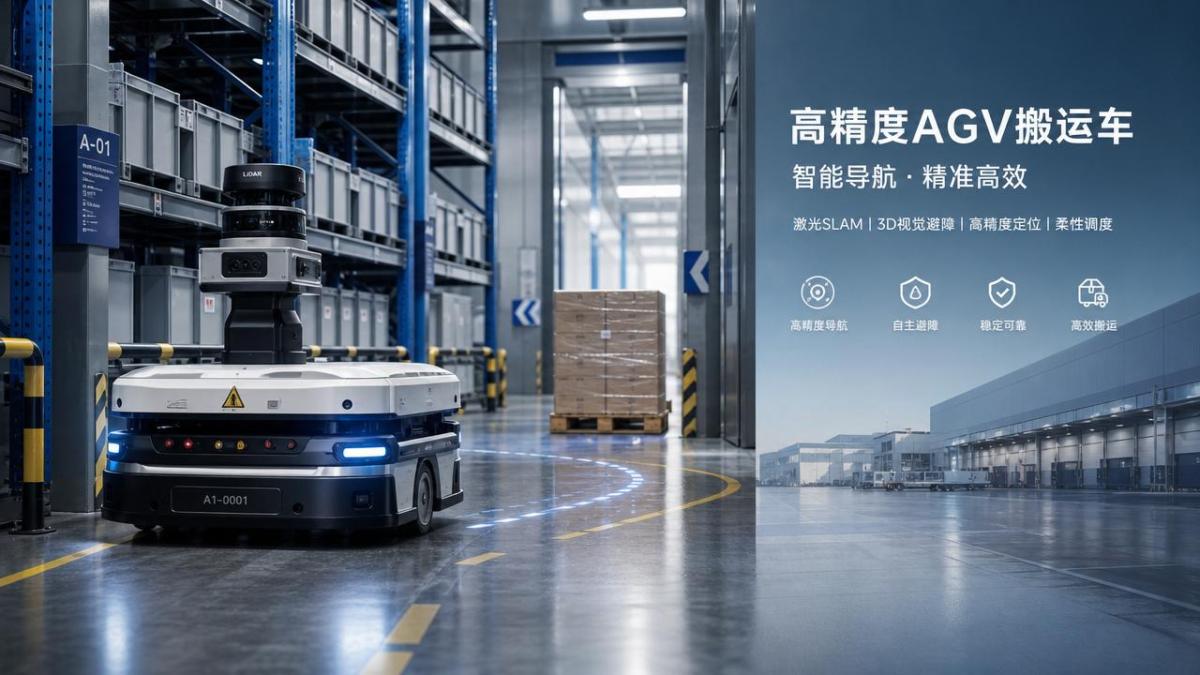
Navigation performance is rarely a single number. It is a stack of assumptions covering sensors, software, compute latency, map quality, path planner behavior, and environmental noise. When one layer changes, the headline spec may no longer hold.
That is why a checklist is essential. It forces each agv navigation systems factory to translate marketing language into measurable engineering evidence. It also exposes whether two factories use the same test method, which is necessary for any serious comparison.
In broader industrial settings, misleading specs create downstream costs. These include extra commissioning time, unexpected reflector installation, map rework, traffic bottlenecks, battery drain, and safety derating after installation.
Core checklist: what to verify before trusting published specs
- Ask for test conditions behind every accuracy claim, including speed, payload, floor flatness, slope, lighting variation, and whether values represent average error, maximum error, or repeatability only.
- Request localization recovery data after interruption, such as blocked LiDAR, wheel slip, temporary GNSS loss, or sudden map mismatch caused by pallet stacks or moving forklifts.
- Verify sensor stack composition in detail, not just “fusion,” including LiDAR type, camera role, encoder resolution, IMU drift characteristics, update rate, and failover logic.
- Compare navigation accuracy at multiple speeds, because many agv navigation systems factory brochures report tight numbers only at reduced velocity and low traffic density.
- Check map maintenance burden, including remapping frequency, toolchain complexity, version control, and whether layout changes require vendor intervention or can be handled in-house.
- Measure obstacle handling behavior, especially false positives, deadlock recovery, rerouting delay, and performance when people, carts, shrink wrap, or reflective metal surfaces appear.
- Inspect tolerance to floor conditions, such as epoxy glare, expansion joints, oil stains, dust, wheel wear, and uneven traction that may degrade odometry stability.
- Demand system latency figures from sensing to actuation, because slow perception pipelines can make an advanced navigation stack behave poorly in tight mixed-traffic zones.
- Review integration limits with WMS, MES, elevators, doors, charging logic, and traffic control layers, since navigation quality often collapses at software handoff points.
- Request failure logs and MTBF-related field records, not only success demos, to understand how the agv navigation systems factory performs under real industrial stress.
Three specification traps that appear credible but are incomplete
Trap one: quoting peak accuracy without route context. A factory may publish a fine positioning value achieved on a short straight segment. That does not represent turning zones, docking under load, or map drift across a large facility.
Trap two: using broad terms like autonomous or adaptive. These labels do not reveal whether the system handles dynamic occlusion, lane congestion, reflective interference, or unexpected pallet displacement without manual reset.
Trap three: showing pilot success without scale behavior. One vehicle in a clean aisle says little about ten vehicles sharing intersections, chargers, elevators, and dispatch priorities in a live production environment.
How claims change across real application scenarios
Warehouse aisles with repetitive geometry
In warehouses, repetitive rack patterns can confuse visual or LiDAR-based localization if the map lacks unique features. A strong agv navigation systems factory should explain how it maintains confidence levels in look-alike aisles.
Docking accuracy also changes when loads overhang, shrink wrap reflects sensors, or floor markings fade. Published numbers should include loaded and unloaded conditions, not just empty-vehicle tests.
Production lines with mixed traffic and narrow margins
Factories introduce pedestrians, carts, forklifts, machine outfeed changes, and temporary obstructions. In these zones, navigation reliability depends less on ideal map accuracy and more on recovery logic, stop behavior, and path replanning speed.
A credible agv navigation systems factory should provide evidence for deadlock handling, interaction at blind corners, and queue performance near bottlenecks such as workstations or automatic doors.
Large hybrid sites with indoor and outdoor transitions
Hybrid environments are where brochure language often breaks down. Lighting shifts, weather, ramps, wheel slip, and GNSS inconsistency can destabilize localization during transitions between buildings and yards.
Here, the right question is not whether the system supports multiple modes. It is how smoothly the system switches modes, how much position uncertainty grows, and how long it takes to regain stable navigation.
Commonly ignored factors that distort agv navigation systems factory comparisons
- Battery voltage drop can affect compute performance, sensor stability, and braking consistency, making late-shift behavior different from fresh-charge demonstrations.
- Payload center-of-gravity changes can alter wheel slip and turning response, even when the rated payload remains within specification.
- Cybersecurity updates or remote patches may introduce latency or mapping changes that were absent during factory acceptance testing.
- Safety field tuning can reduce effective speed and route flexibility, meaning the delivered system performs below the brochure headline.
- Human intervention frequency is often excluded from official metrics, even though manual recovery events strongly affect total operating efficiency.
These factors matter because two suppliers may advertise similar navigation technology while delivering very different operational stability. The stronger agv navigation systems factory is usually the one that documents degradation behavior, not only ideal-case output.
Practical execution steps before shortlist decisions
Start by converting every major specification into a testable statement. If a supplier claims precise docking, define payload, speed, floor condition, target geometry, and acceptable error band before the trial begins.
Next, require side-by-side evaluation using the same route, same shift pattern, and same obstacle scenarios. Without test symmetry, comparing one agv navigation systems factory to another becomes little more than brochure reading.
Then collect data beyond pass or fail. Track route completion time, emergency stop frequency, relocalization time, false obstacle count, docking variance, and manual intervention rate. These metrics reveal navigation maturity faster than generic feature lists.
Finally, review support depth. A capable factory should provide map governance rules, firmware change control, root-cause analysis process, and escalation timing for field anomalies. Long-term navigation quality depends on this discipline.
Conclusion and next-step action guide
The main lesson is simple: published specs from an agv navigation systems factory are starting points, not proof. Accuracy claims, fusion labels, and autonomy language become meaningful only when tied to conditions, edge cases, and recovery evidence.
A better evaluation process focuses on test boundaries, degradation behavior, and operational exceptions. That approach reduces commissioning surprises and exposes whether a supplier is selling navigation capability or selling terminology.
For the next step, build a verification sheet with scenario-specific metrics, request raw trial data, and challenge each agv navigation systems factory to demonstrate performance under realistic interference. In industrial automation, trustworthy navigation is never defined by the headline number alone.
Search News
Hot Articles
- Carbon Fiber StructuresHow to Specify Aerospace Carbon Fiber Assemblies for Lightweight, Load-Bearing PartsJul 11, 2026
- Machine VisionXiaomi, Alibaba DAMO Academy Drive Open-Source Robotics Model Ecosystem, Lowering Algorithm Development Barriers for Overseas SMEs Adopting Chinese Robotics SolutionsMar 30, 2026
- Cobots & ArmsShanxi 'AI+' Conference Showcases Embodied Intelligence with Multinational Buyer Engagement: Key Industry ImplicationsMar 30, 2026
Popular Tags
Recommended News
 Jul 11, 2026How to Specify Aerospace Carbon Fiber Assemblies for Lightweight, Load-Bearing PartsAerospace carbon fiber assemblies: learn how to specify laminate design, load data, joining methods, and inspection controls for lighter, reliable load-bearing aerospace parts.Elena Rostova (UAV Systems Researcher)
 Mar 30, 2026Xiaomi, Alibaba DAMO Academy Drive Open-Source Robotics Model Ecosystem, Lowering Algorithm Development Barriers for Overseas SMEs Adopting Chinese Robotics SolutionsXiaomi & Alibaba DAMO Academy's open-source robotics models lower algorithm barriers for global SMEs. Boost efficiency in manufacturing, logistics & smart retail with ROS 2 compatible solutions.TSV Data Lab
 Mar 30, 2026Shanxi 'AI+' Conference Showcases Embodied Intelligence with Multinational Buyer Engagement: Key Industry ImplicationsShanxi 'AI+' Conference highlights embodied intelligence with Tesla, Ubtech & Jiantao showcasing multimodal robotics. 40+ global buyers validated tech on-site, creating new B2B channels for industrial automation & AI solutions.Chen Wei (Automation Lead Engineer)
 Mar 30, 2026Zhongguancun Unveils 6G Integrated Sensing-Computing-Intelligence Platform to Empower Embodied Robots for Global Industrial ApplicationsZhongguancun's new 6G platform revolutionizes industrial robotics with <10ms latency, empowering global automotive, logistics & port automation. Discover how this tech boosts China's smart manufacturing exports.TSV Data Lab
 Mar 30, 2026Mech-Mind Tianjin Embodied Intelligence R&D and Production Base Goes Live, Cutting Delivery Time by 20%–30% for Global Customized AMR+Vision SolutionsMech-Mind's Tianjin AMR+Vision production base cuts delivery time by 20%-30% for欧美 & Latin American markets. Discover how this PLd-certified facility accelerates customized robotics solutions for smart manufacturing and logistics.Chen Wei (Automation Lead Engineer)
 Mar 30, 2026Boao Forum Reveals 'Co-evolution of Big and Small Brains' Trend in Humanoid Robots, China's Embodied Intelligence Accelerates Adaptation to Overseas Manufacturing Service ScenariosDiscover how China's humanoid robots, featuring 'Co-evolution of Big and Small Brains,' are revolutionizing global manufacturing. Learn about Embodied Tian Gong 3.0's ISO compliance and overseas deployment at Boao Forum 2026.Chen Wei (Automation Lead Engineer)
 Mar 30, 2026China Railway Industrial Secures Patent for Embodied Robotics in Material Handling, Boosting High-Precision Delivery Capabilities for Overseas Infrastructure and Manufacturing ProjectsChina Railway Industrial's new patent for embodied robotics in material handling boosts high-precision delivery for global infrastructure & manufacturing. Discover how this innovation enhances logistics accuracy in automotive, rail transit & EPC projects.Chen Wei (Automation Lead Engineer)
 Sep 29, 2026ISO 9283 Repeatability: How to Evaluate Cobot Positioning PerformanceISO 9283 cobot repeatability explained: learn how payload, reach, approach direction, and test conditions affect positioning performance and cell capability.Chen Wei (Automation Lead Engineer)
 Sep 28, 2026Spindle Runout Measurement in Germany: DIN Standards, Methods, and Acceptance LimitsSpindle runout measurement Germany: explore DIN standards, proven methods, acceptance limits, and audit-ready practices for reliable machining quality.Dr. Marcus Vance
 Sep 27, 2026How to Select Wall-Mount Edge Devices for Space-Constrained Factory NetworksWall mount edge devices for space-constrained factories: evaluate workload, thermal design, power resilience, cable access, and network reliability for smarter deployments.TSV Data Lab
 Sep 26, 2026Machining Tolerance Analysis: How to Set Limits That Meet Function and Cost TargetsMachining tolerance analysis: learn how to set functional limits, control tolerance stacks, reduce inspection risk, and balance precision with production cost.Dr. Marcus Vance
 Sep 25, 2026How to Evaluate an Industrial Infrastructure Data Platform for Multi-Site OperationsIndustrial infrastructure data platform evaluation guide for multi-site operations: compare data quality, edge resilience, interoperability, governance, and scalable proof-of-value criteria.Victor Lin (Chief Software Architect)
 Sep 24, 2026How to Select Machine Vision Optics for Accurate Inspection at Different Working DistancesMachine vision optics selection guide for accurate inspection at every working distance. Compare FOV, pixel scale, DOF, distortion, lighting, and telecentric options.TSV Data Lab
 Sep 23, 2026How to Evaluate a Machine Vision System Integrator for High-Speed Inspection LinesChoose a machine vision system integrator with proven expertise in high-speed inspection, reliable reject timing, robust optics, and measurable acceptance criteria.TSV Data Lab
 Sep 28, 2026When is a SCADA API the right choice for connecting plant systems?SCADA API guide: learn when governed plant data integration improves traceability, security, and scalability—without compromising real-time control.Victor Lin (Chief Software Architect)
 Sep 27, 2026How SCADA data integration improves traceability across production linesSCADA data integration connects production-line data to improve traceability, accelerate quality investigations, and strengthen safety decisions.Victor Lin (Chief Software Architect)
 Sep 26, 2026What to define before starting SCADA integration planningSCADA integration planning starts with clear scope, control boundaries, data models, cybersecurity, and testing. Discover the definitions that reduce risk and costly rework.Victor Lin (Chief Software Architect)
 Sep 25, 2026How a smart factory with Industrial IoT reduces production blind spotsDiscover how a smart factory with Industrial IoT turns real-time machine, quality, and workflow data into actionable insights that reduce production blind spots and delivery risks.Victor Lin (Chief Software Architect)
 Sep 24, 2026When does Industrial IoT make smart manufacturing easier to scale?Smart manufacturing Industrial IoT scales when trusted data, interoperable systems, and secure workflows turn connected assets into measurable gains.TSV Data Lab
 Sep 23, 2026What drives ultra-precision machining cost at 1-micron tolerance?Ultra precision machining cost per part at 1 micron tolerance depends on process, material, metrology, and yield. Learn how to compare quotes confidently.Dr. Marcus Vance
 Sep 22, 2026Drone Engine-T550CC Applications: Build the UAV Power System Around the MissionAn application guide for Drone Engine-T550CC integration, covering payload planning, airframe matching, cooling, fuel, vibration, test procedures, documentation, and service preparation.Elena Rostova (UAV Systems Researcher)
 Sep 22, 2026How to Evaluate Industrial Edge Computing Vendors for Factory DeploymentIndustrial edge computing vendor evaluation guide for factories: compare latency, protocol fit, reliability, security, and lifecycle support before deployment.TSV Data Lab
 Sep 21, 2026Drone Payload Integration: Matching Power, Data, and Center of Gravity for Reliable FlightsDrone payload integration made practical: balance power, data, center of gravity, and endurance to build safer, more reliable mission-ready flights.Elena Rostova (UAV Systems Researcher)
 Sep 20, 2026Autonomous Navigation Pricing: Cost Drivers and Budget Benchmarks for AMR ProjectsAutonomous navigation price explained: compare AMR cost drivers, software, sensors, integration, safety, and lifecycle budgets to build a scalable project plan.Chen Wei (Automation Lead Engineer)