What is included in a robotic system integration project cost?
Publication Date
author
A robotic cell can look straightforward on a capital request: a robot, a gripper, and a quoted purchase price. The cost picture changes once the system must pick real parts, meet cycle-time targets, protect operators, exchange data with upstream equipment, and prove stable operation during production. A robotic system integration project cost includes the work required to turn individual components into a functioning, supportable manufacturing process—not merely the robot itself.
For a business evaluation team, the practical question is not “Which quotation is lowest?” but “What operating capability, acceptance criteria, and risk allocation does each quotation include?” A lower initial proposal may exclude tooling development, guarding changes, factory acceptance testing, installation labor, production validation, or spare parts. Those omissions can return later as change orders, schedule delays, or an automation asset that cannot achieve the required throughput.
The cost categories behind an integrated robotic system
A complete project budget usually combines equipment, engineering services, site work, and post-handover obligations. The balance among these categories varies sharply by application. A simple material-handling cell with repeatable parts and an existing conveyor interface has a different cost profile from a machine-tending system that must locate variable castings, inspect features, manage multiple part families, and recover safely from faults.
Robot, controller, and basic hardware
This is the most visible part of the proposal, but it is only one cost line. It may include the robot arm, controller, teach pendant, cables, mounting hardware, and any required robot options. Payload, reach, axis configuration, cleanroom or washdown protection, and operating environment affect the selected model. A robot sized only for nominal payload may require a larger model after accounting for the end-of-arm tool, cable package, part inertia, center of gravity, and dynamic acceleration.
Quotes should identify whether the stated payload assumes a particular wrist orientation or speed. Procurement reviewers should also check whether the quoted controller includes application software licenses, safety functions, network interfaces, external axes, or vision communication capability. These items are sometimes presented as optional features even when they are necessary for the intended cell function.
End-of-arm tooling and part handling
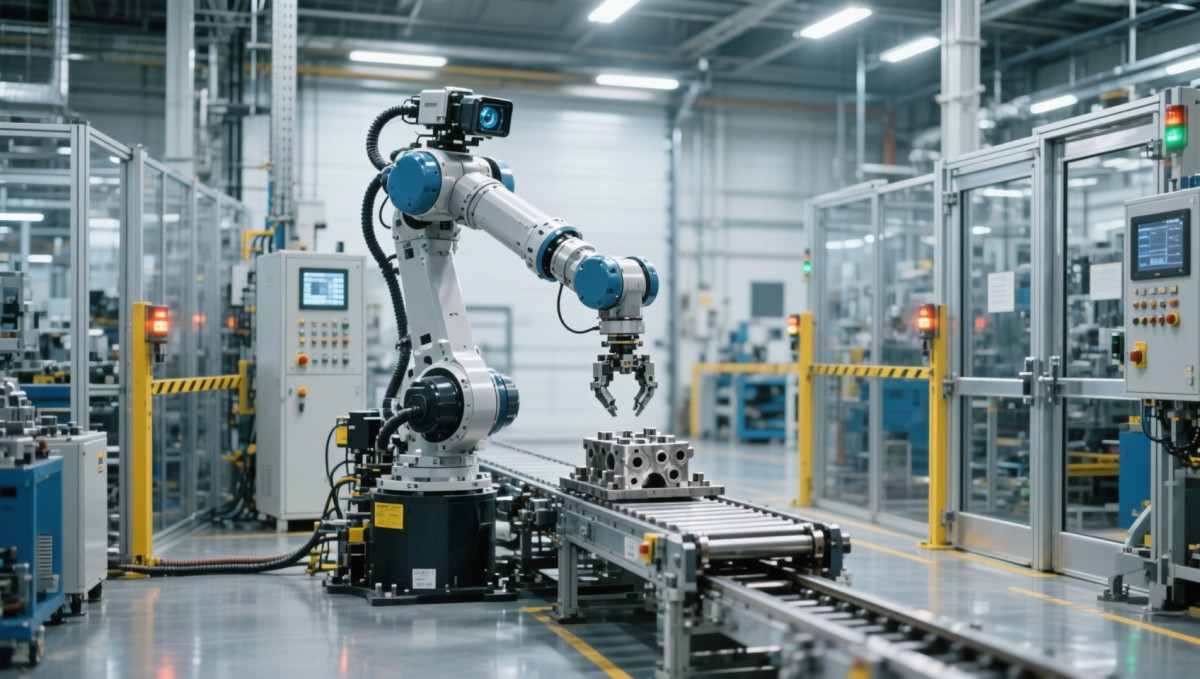
The end effector often determines whether a robotic application is reliable. Its cost can include pneumatic or electric grippers, vacuum generators, custom fingers, sensors, cable protection, quick-change devices, tool racks, compliance units, and automatic tool changers. Where parts vary in shape, surface condition, orientation, or stiffness, tooling engineering can become a significant part of the project.
Ask whether the design covers one representative part or every approved part variant. A gripper that performs well with a clean, dimensionally stable sample may fail when production parts have flash, oil, temperature variation, or tolerance stack-up. The commercial scope should state which part samples were reviewed, what gripping assumptions were used, and whether additional fingers or change parts are included.
Safety equipment and compliance-related design
Robotic cells typically require a defined safeguarding concept. Depending on the application, this can include perimeter fencing, interlocked access doors, safety scanners, light curtains, safety mats, emergency-stop devices, safety-rated controllers, and safe-speed or safe-position functions. The cost also includes engineering time to establish operating modes, access boundaries, restart behavior, lockout points, and risk-reduction measures.
Safety cost is affected by layout and material flow. A cell placed between existing machines may need more complex access control than an isolated cell. Collaborative robots do not automatically eliminate safeguarding costs. Whether a collaborative operating mode is appropriate depends on the task, tool geometry, payload, speed, pinch points, workspace, and foreseeable human interaction. A proposal should not treat “cobot” as a substitute for application-specific safety assessment.
Controls, electrical design, and software
Integration requires more than robot programming. The control package may include a PLC, safety PLC, electrical enclosure, motor drives, sensors, industrial network hardware, human-machine interface, panel fabrication, electrical drawings, and software development. The programming scope should distinguish robot motion programming from sequence control, alarm handling, recipe management, production reporting, and interface logic.
Software requirements often expand after the project begins because operating details were not specified during quoting. Examples include barcode handling, part traceability, quality interlocks, manual recovery screens, remote access rules, reject tracking, and communication with a manufacturing execution system. These are valid requirements, but they need to be visible in the scope before quotations are compared.
Vision, inspection, and process equipment
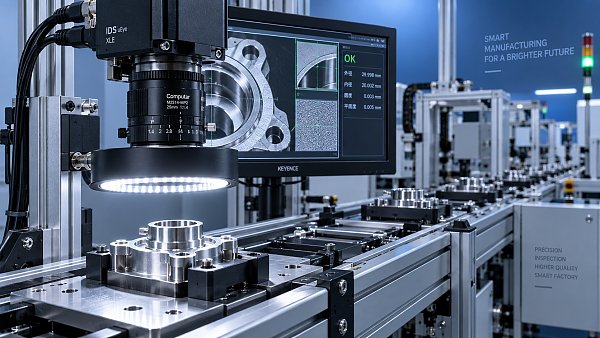
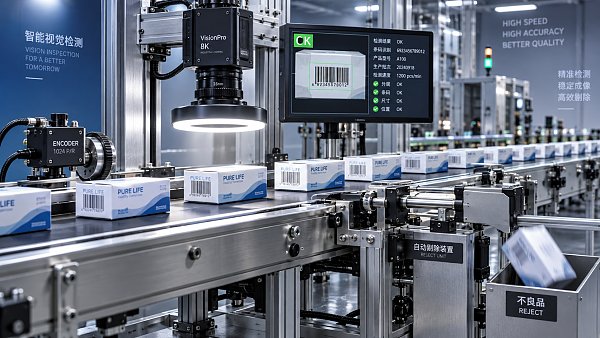
Vision guidance, dimensional inspection, force sensing, dispensing, welding, screwdriving, deburring, or other process technologies introduce their own hardware and engineering costs. A camera alone is not a vision solution. The project may require lighting, lenses, protective housings, calibration fixtures, image processing software, communication with the robot, and a method for handling failed inspections.
The same principle applies to process tools. For example, a robotic welding cell may need a power source, torch cleaning station, wire feed equipment, fume extraction interfaces, seam tracking, fixtures, and process parameter development. When these items are bundled under a general phrase such as “complete automation system,” reviewers should request an itemized functional scope.
Engineering effort is often the variable cost driver
Integration engineering covers the decisions that allow the cell to operate as one system. It normally includes process review, layout development, cycle-time analysis, mechanical design, controls design, software architecture, simulation where required, build coordination, testing, and documentation. The effort rises when information is incomplete or when the process itself has not yet been stabilized.
A quotation based on a clear specification can use defined assumptions. A quotation based on uncertain inputs must either include contingency or exclude unresolved work. Neither approach is automatically wrong, but the uncertainty should be visible. A project is more likely to generate commercial friction when the buyer assumes an open-ended performance commitment while the integrator has priced only a preliminary concept.
Costs outside the integrator’s workshop
Many proposals cover design and build but not every expense needed to make the cell productive at the plant. Site preparation can include floor assessment, anchoring, utility extensions, compressed air, electrical supply upgrades, network drops, drainage, ventilation, extraction, fire protection coordination, and removal or relocation of existing equipment. Even a physically compact cell can require substantial site coordination when it changes a material route or blocks maintenance access.
Shipping, rigging, installation, and commissioning should be separated from equipment supply. The final cost depends on module size, building access, lifting constraints, travel requirements, and the amount of site assembly. A cell may be tested in the supplier’s facility as a complete unit but need partial disassembly for transport. That affects both installation labor and the time required to revalidate operation after reassembly.
Production disruption also has economic value, even if it does not appear on the integrator’s invoice. Planned installation windows, operator training time, trial runs, and temporary manual workarounds should be reflected in the broader business case. Procurement should establish who supplies production parts, consumables, utilities, qualified operators, and technical contacts during commissioning. Delays frequently arise from dependencies that were assumed rather than assigned.
Factory testing, site acceptance, and performance proof
A meaningful robotic system integration project cost should include an agreed path to acceptance. Factory acceptance testing normally verifies the system before shipment using available tooling, representative parts, software functions, safety devices, and documented test procedures. Site acceptance then confirms correct installation and operation in the actual production environment.
Acceptance language deserves close review because it converts expectations into measurable obligations. Define the expected process sequence, approved part range, cycle-time measurement method, quality criteria, operating hours for any run-off, fault conditions to be demonstrated, and exclusions. “System will meet production requirements” is too broad unless production requirements are attached and technically defined.
Cycle time is a frequent source of disagreement. A quoted robot motion time may exclude part presentation, fixture actuation, machine handshakes, vision processing, inspection, indexing, and operator interaction. A production cycle should be measured from a defined start event to a defined completion event. The requested throughput should also distinguish average rate from guaranteed rate under the approved conditions.
Comparing quotations without rewarding missing scope
When reviewing proposals, normalize them into a common scope matrix rather than comparing only total price. This is especially important when one supplier submits a detailed engineering package and another provides a concise equipment list. The second proposal can appear less expensive while transferring unpriced work to the buyer.
Build comparison columns around functional ownership. Include mechanical design, robot supply, tooling, fixtures, guarding, electrical panels, PLC and robot programming, vision, process equipment, facility interfaces, testing, installation, training, documentation, warranty, spare parts, and post-startup support. Mark each line as included, excluded, customer-supplied, provisional, or subject to change order. Any vague line should be resolved before commercial ranking.
- Check assumptions behind the price. Review part condition, process rate, available utilities, layout dimensions, machine accessibility, and the stated number of part variants.
- Separate allowances from firm scope. An allowance may be appropriate for unknown site work, but it should have a stated basis and a process for reconciliation.
- Identify interface ownership. Confirm who programs handshakes, supplies signals, approves network access, and modifies existing equipment.
- Read exclusions as carefully as inclusions. Exclusions often reveal where additional cost or schedule risk may emerge.
- Compare warranty start points. A warranty beginning at shipment has a different practical value from one beginning after installation or formal acceptance.
Lifecycle items that belong in the investment decision
The initial project price is not the full cost of ownership. Budget holders should consider planned maintenance, replacement gripper components, sensors, vacuum cups, cable wear, lubrication where applicable, controller batteries, software backup procedures, and critical spare parts. Specialized process tools may have consumables and service intervals that exceed the routine needs of the robot itself.
Training should be matched to the people expected to operate and maintain the cell. Operator instruction may cover normal loading, fault acknowledgement, safety boundaries, and basic recovery. Maintenance training may need deeper coverage of mechanical adjustments, electrical diagnostics, backup restoration, and controlled program changes. A system that depends on the original integrator for every minor recovery can create avoidable downtime and support expense.
Change management is another lifecycle cost. Production teams may later request new parts, alternate packaging, revised pallets, a different upstream machine, or additional traceability. The original design can either make those changes manageable or make them expensive. During evaluation, ask which provisions for future variants are included: spare I/O capacity, available robot payload, floor space, configurable recipes, modular tooling, or software architecture that can accept new stations.
When a lower quote is genuinely lower—and when it is incomplete
A lower-cost solution can be the right commercial choice when the process is well understood, part variation is limited, interfaces are controlled, and the supplier’s scope accurately matches the needed function. It becomes risky when the price is achieved by leaving critical engineering questions unanswered. Cost reduction is credible when it follows a simpler layout, standardized components, fewer change parts, realistic performance requirements, or customer-provided infrastructure with clear ownership.
Before approving the budget, request a scope review that links every major cost element to a requirement, an assumption, or a deliverable. The resulting record should make clear what the cell will do, what conditions it relies on, how success will be tested, and which changes trigger additional cost. That discipline turns a robotic automation proposal from a headline equipment price into a defensible investment decision.
Search News
Hot Articles
- Carbon Fiber StructuresHow to Specify Aerospace Carbon Fiber Assemblies for Lightweight, Load-Bearing PartsJul 11, 2026
- Machine VisionXiaomi, Alibaba DAMO Academy Drive Open-Source Robotics Model Ecosystem, Lowering Algorithm Development Barriers for Overseas SMEs Adopting Chinese Robotics SolutionsMar 30, 2026
- Cobots & ArmsShanxi 'AI+' Conference Showcases Embodied Intelligence with Multinational Buyer Engagement: Key Industry ImplicationsMar 30, 2026
Popular Tags
Recommended News
 Jul 11, 2026How to Specify Aerospace Carbon Fiber Assemblies for Lightweight, Load-Bearing PartsAerospace carbon fiber assemblies: learn how to specify laminate design, load data, joining methods, and inspection controls for lighter, reliable load-bearing aerospace parts.Elena Rostova (UAV Systems Researcher)
 Mar 30, 2026Xiaomi, Alibaba DAMO Academy Drive Open-Source Robotics Model Ecosystem, Lowering Algorithm Development Barriers for Overseas SMEs Adopting Chinese Robotics SolutionsXiaomi & Alibaba DAMO Academy's open-source robotics models lower algorithm barriers for global SMEs. Boost efficiency in manufacturing, logistics & smart retail with ROS 2 compatible solutions.TSV Data Lab
 Mar 30, 2026Shanxi 'AI+' Conference Showcases Embodied Intelligence with Multinational Buyer Engagement: Key Industry ImplicationsShanxi 'AI+' Conference highlights embodied intelligence with Tesla, Ubtech & Jiantao showcasing multimodal robotics. 40+ global buyers validated tech on-site, creating new B2B channels for industrial automation & AI solutions.Chen Wei (Automation Lead Engineer)
 Mar 30, 2026Zhongguancun Unveils 6G Integrated Sensing-Computing-Intelligence Platform to Empower Embodied Robots for Global Industrial ApplicationsZhongguancun's new 6G platform revolutionizes industrial robotics with <10ms latency, empowering global automotive, logistics & port automation. Discover how this tech boosts China's smart manufacturing exports.TSV Data Lab
 Mar 30, 2026Mech-Mind Tianjin Embodied Intelligence R&D and Production Base Goes Live, Cutting Delivery Time by 20%–30% for Global Customized AMR+Vision SolutionsMech-Mind's Tianjin AMR+Vision production base cuts delivery time by 20%-30% for欧美 & Latin American markets. Discover how this PLd-certified facility accelerates customized robotics solutions for smart manufacturing and logistics.Chen Wei (Automation Lead Engineer)
 Mar 30, 2026Boao Forum Reveals 'Co-evolution of Big and Small Brains' Trend in Humanoid Robots, China's Embodied Intelligence Accelerates Adaptation to Overseas Manufacturing Service ScenariosDiscover how China's humanoid robots, featuring 'Co-evolution of Big and Small Brains,' are revolutionizing global manufacturing. Learn about Embodied Tian Gong 3.0's ISO compliance and overseas deployment at Boao Forum 2026.Chen Wei (Automation Lead Engineer)
 Mar 30, 2026China Railway Industrial Secures Patent for Embodied Robotics in Material Handling, Boosting High-Precision Delivery Capabilities for Overseas Infrastructure and Manufacturing ProjectsChina Railway Industrial's new patent for embodied robotics in material handling boosts high-precision delivery for global infrastructure & manufacturing. Discover how this innovation enhances logistics accuracy in automotive, rail transit & EPC projects.Chen Wei (Automation Lead Engineer)
 Oct 02, 2026How to Qualify Machined Parts Suppliers for Hard Tech ProgramsHard tech supply chain machined parts demand rigorous supplier qualification. Learn how to assess capability, traceability, quality controls, and delivery resilience.Dr. Marcus Vance
 Oct 01, 2026How to Select an Outdoor Security Radar Sensor for Perimeter Detection?Outdoor security radar sensor selection guide: compare range, accuracy, false-alarm control, integration, and field testing for reliable perimeter detection.TSV Data Lab
 Sep 30, 2026How to Evaluate Solid-State LiDAR Hardware for Outdoor Autonomous VehiclesSolid state LiDAR hardware evaluation guide for outdoor autonomous vehicles—compare range, point-cloud quality, environmental resilience, integration, and safety.TSV Data Lab
 Sep 29, 2026ISO 9283 Repeatability: How to Evaluate Cobot Positioning PerformanceISO 9283 cobot repeatability explained: learn how payload, reach, approach direction, and test conditions affect positioning performance and cell capability.Chen Wei (Automation Lead Engineer)
 Oct 01, 2026Can a Machining Supplier Meet Aerospace Fatigue Testing Requirements?Can a machining supplier meet aerospace fatigue testing requirements? Learn the traceability, process control, and test evidence needed for reliable aerospace parts.Dr. Marcus Vance
 Sep 30, 2026Which Industrial Robot Specifications Matter for High-Precision Assembly?Which industrial robot specifications matter most for high-precision assembly? Explore repeatability, accuracy, stiffness, vibration, calibration, and force control for reliable yields.Chen Wei (Automation Lead Engineer)
 Sep 29, 2026How Do You Verify Servo Motor Torque Under Continuous Load?How do I verify servo motor torque under continuous load? Learn RMS torque checks, torque-speed limits, thermal derating, and real-machine testing.Chen Wei (Automation Lead Engineer)
 Oct 02, 2026ZD330 Software Configuration: Verifying Cut-List Import Before PurchaseZD330 software and machine configuration: verify cut-list imports, data mapping, labels, and workflow before purchase to reduce errors and choose with confidence.Victor Lin (Chief Software Architect)
 Sep 28, 2026Spindle Runout Measurement in Germany: DIN Standards, Methods, and Acceptance LimitsSpindle runout measurement Germany: explore DIN standards, proven methods, acceptance limits, and audit-ready practices for reliable machining quality.Dr. Marcus Vance
 Sep 27, 2026How to Select Wall-Mount Edge Devices for Space-Constrained Factory NetworksWall mount edge devices for space-constrained factories: evaluate workload, thermal design, power resilience, cable access, and network reliability for smarter deployments.TSV Data Lab
 Sep 26, 2026Machining Tolerance Analysis: How to Set Limits That Meet Function and Cost TargetsMachining tolerance analysis: learn how to set functional limits, control tolerance stacks, reduce inspection risk, and balance precision with production cost.Dr. Marcus Vance
 Sep 25, 2026How to Evaluate an Industrial Infrastructure Data Platform for Multi-Site OperationsIndustrial infrastructure data platform evaluation guide for multi-site operations: compare data quality, edge resilience, interoperability, governance, and scalable proof-of-value criteria.Victor Lin (Chief Software Architect)
 Sep 24, 2026How to Select Machine Vision Optics for Accurate Inspection at Different Working DistancesMachine vision optics selection guide for accurate inspection at every working distance. Compare FOV, pixel scale, DOF, distortion, lighting, and telecentric options.TSV Data Lab
 Sep 23, 2026How to Evaluate a Machine Vision System Integrator for High-Speed Inspection LinesChoose a machine vision system integrator with proven expertise in high-speed inspection, reliable reject timing, robust optics, and measurable acceptance criteria.TSV Data Lab
 Oct 01, 2026What is included in a robotic system integration project cost?Robotic system integration project cost explained: compare equipment, engineering, safety, testing, installation, and lifecycle factors for smarter automation investments.Chen Wei (Automation Lead Engineer)
 Sep 30, 2026How much does warehouse automation cost for a growing distribution center?How much does warehouse automation cost? Explore equipment, integration, facility upgrades, lifecycle expenses, and ROI factors for a growing distribution center.Chen Wei (Automation Lead Engineer)
 Sep 29, 2026How MES and OEE work together to identify production lossesMES and OEE work together to uncover hidden production losses, connect downtime, speed, and quality data, and drive smarter shop-floor improvements.Victor Lin (Chief Software Architect)