What affects the cost of a pick and place robot cell?
Publication Date
author
A quotation for a robotic handling system can look deceptively simple: robot, gripper, guard, controls, installation. Yet procurement teams know that the line at the bottom is rarely explained by the robot arm alone. The pick and place robot cost is shaped by the level of certainty the cell must deliver—at a defined throughput, with real parts, across real shifts, and within the constraints of an existing factory.
A low initial quote may reflect a reasonable solution for a stable, manually loaded process. It may also omit the items that make automation dependable: part presentation, error recovery, safety zoning, upstream/downstream interfaces, commissioning support, and documented acceptance testing. Conversely, a more expensive proposal is not automatically over-engineered. It may contain the controls architecture, tooling durability, and validation work needed to prevent the cell from becoming a costly source of downtime.
For buyers comparing proposals, the useful question is not simply “What does a pick and place robot cost?” It is: What performance boundary is this supplier pricing, and what risks remain outside that boundary?
The robot is only one line in the capital budget
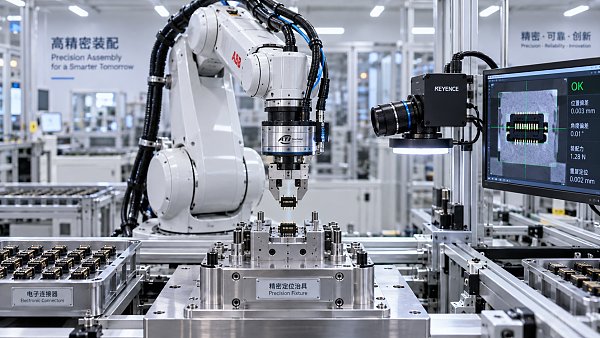
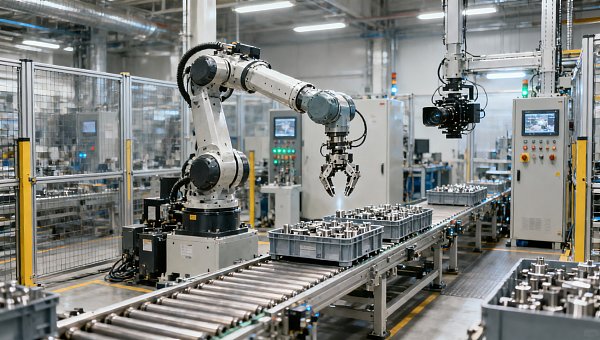
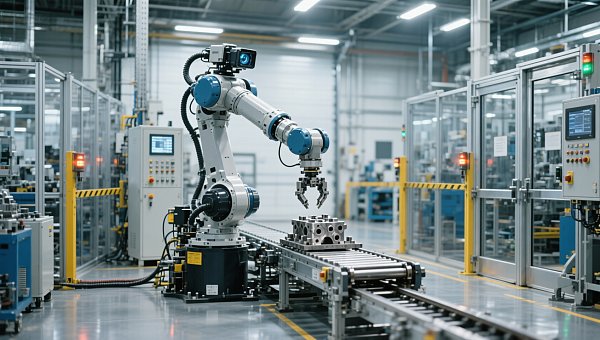
In a typical pick and place application, the robot may be the most visible component, but it is one element in a coordinated system. A cell must receive a part, identify or orient it, pick it without damage, move it safely, place it accurately, confirm the result, handle exceptions, and communicate its status to operators or plant controls. Each step introduces hardware, engineering time, and integration risk.
That is why two cells built around a similar six-axis robot—or a similar delta, SCARA, or collaborative robot—can have very different total costs. One may pick identical components from a fixed nest and place them into trays. Another may have to distinguish mixed products on a moving conveyor, compensate for variable orientation, inspect features, reject defective items, and coordinate with packaging equipment. Both are called “pick and place,” but they are not equivalent procurement packages.
A sound comparison starts by separating the budget into three categories:
- Core equipment: robot, controller, end-of-arm tooling, safety hardware, feeders, conveyors, vision components, and electrical enclosure.
- Engineering and integration: mechanical design, electrical design, programming, risk assessment, simulation, controls integration, and factory acceptance testing.
- Lifecycle readiness: installation, site acceptance, training, spare parts, documentation, remote support, maintenance access, and planned expansion capacity.
If these categories are not visible in a quotation, buyers may be comparing a complete system against a partial equipment list.
Throughput targets often drive the design more than payload
Payload is an obvious specification, but it is not the sole determinant of robot selection. A cell handling a light component at a moderate pace may use a compact robot with straightforward tooling. The same component, picked at high frequency with short dwell times and demanding acceleration, can require a different kinematic platform, stiffer tooling, more robust fixturing, faster controls, and more careful cable management.
Procurement specifications should distinguish between an average target and a guaranteed operating rate. Ask whether the quoted cycle time includes gripping, vision processing, conveyor tracking, inspection, placement confirmation, and normal recovery movements. A supplier may cite a robot’s catalog speed, while the actual cell cycle includes process steps that take longer than the robot motion itself.
It is also important to define how performance is measured. Is the target based on ideal conditions, a representative product mix, or a sustained production run? Are changeovers included? What happens when a part is missing, skewed, or presented incorrectly? These questions do not merely refine the specification; they can materially alter the pick and place robot cost because they determine the sophistication of the system around the arm.
Part presentation: the hidden source of automation expense
Robots are highly repeatable, but incoming parts are not always repeatable. A component that arrives consistently oriented in a precision tray is relatively easy to automate. A component arriving randomly in a tote, overlapping with other parts, reflecting light unpredictably, or varying slightly in shape demands more intelligence and more mechanical control.
Feeder design may include bowl feeders, step feeders, flex feeders, tray denesters, conveyor indexing, escapements, or custom nests. Each has a different cost, maintenance profile, noise level, footprint, and suitability for future product changes. The right question is not whether a feeder can present a part once; it is whether it can maintain stable presentation through normal variation in the material stream.
Bulk picking creates a separate cost class. Random bin picking may require 3D vision, calibration routines, collision-aware path planning, and exception handling for occluded or tangled parts. It can eliminate dedicated feeding in some situations, but it should not be treated as a universal shortcut. When part geometry, surface finish, stacking behavior, or orientation tolerance is unfavorable, the engineering effort can exceed that of a controlled feeding approach.
Vision systems should be priced against the decision they must make
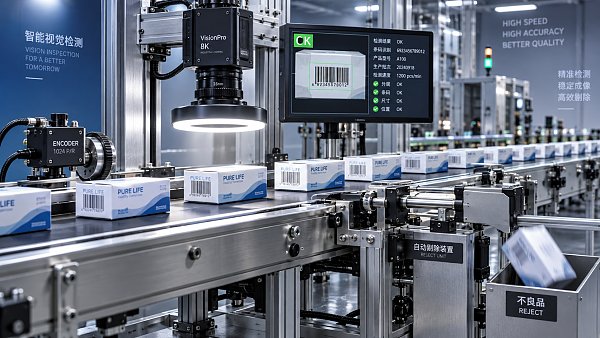
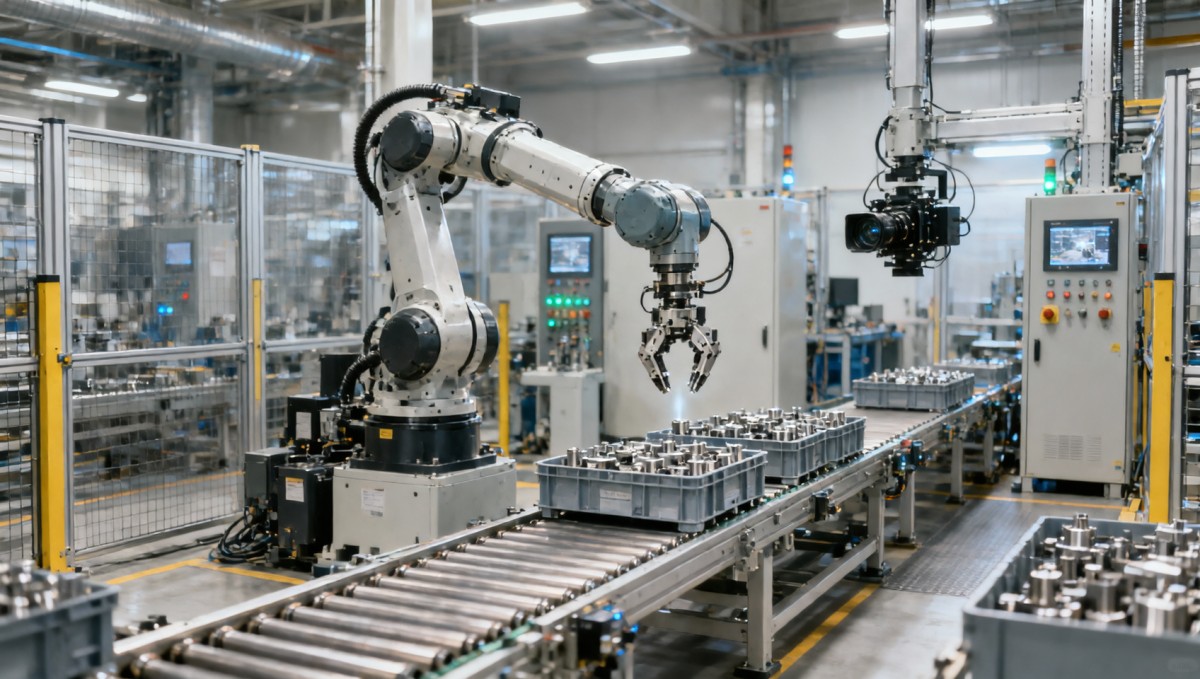
Machine vision is often included in automation quotes under a broad label, yet its scope can range from simple presence detection to demanding inspection and guidance. A basic camera may locate a high-contrast item in a controlled scene. A more complex application may need to identify mixed variants, measure features, read codes, compensate for variable lighting, or guide a robot to randomly oriented parts.
The cost is influenced by camera resolution, lens selection, lighting design, environmental protection, calibration, processing hardware, and software development. Lighting is especially easy to underestimate. Many vision failures are not caused by a poor camera but by reflections, shadows, inconsistent ambient light, or a part surface that changes from lot to lot.
Buyers should request clear language on the vision task: detection, location, identification, inspection, or traceability. They should also ask what happens when confidence is below the acceptance threshold. Does the system reject the part, request operator intervention, retry the image, or stop the machine? A quotation that includes a camera but does not define the decision logic leaves an important operating cost unresolved.
End-of-arm tooling is where product knowledge becomes mechanical reality
The gripper or end effector may be compact, but it frequently determines whether the cell can run reliably. Vacuum cups, mechanical fingers, magnetic tools, soft grippers, needle grippers, and custom fixtures all suit different materials and handling conditions. A tool that works in a demonstration may not withstand dusty surfaces, oily components, porous packaging, sharp edges, temperature variation, or a large family of part sizes.
Tooling costs rise when the application needs compliance, force sensing, multiple pick points, automatic tool changing, part-presence sensing, quick-change interfaces, or ESD-safe materials. Fragile products may require controlled acceleration and verified placement force. Food, medical, and regulated manufacturing environments can add cleanability, material traceability, washdown resistance, or documentation requirements.
Do not evaluate tooling only by its initial price. Ask about expected wear items, replacement time, availability of consumables, and whether an operator can restore the tool’s position accurately after service. A low-cost gripper that causes intermittent pick failures can erase its apparent saving in lost output and technician time.
Safety architecture changes both the capital cost and the usable footprint
Safety is not an optional accessory added at the end of a project. It shapes the cell layout from the beginning. Traditional industrial robot cells may require perimeter guarding, interlocked doors, safety scanners, light curtains, emergency-stop circuits, and safe access procedures. Collaborative robots can sometimes reduce physical barriers, but “collaborative” does not automatically mean guard-free.
The actual safety design depends on robot speed, tool geometry, payload, pinch points, surrounding machinery, operator tasks, and the risk assessment for the complete cell. A cobot carrying a sharp or heavy part, for example, may still require substantial protective measures. Likewise, a high-speed pick-and-place system may need a larger exclusion zone than its physical size suggests.
For procurement teams, this is also a facilities question. Guarding and access routes affect floor space, material flow, maintenance clearance, and future line modifications. Request a preliminary layout early. A proposal can be technically sound while becoming expensive to install because it interferes with aisles, utilities, existing conveyors, or operator workstations.
Controls integration is where “standalone” becomes “production-ready”
A robot cell that cycles independently is not necessarily ready for production. It may need to exchange signals with a PLC, manufacturing execution system, barcode system, quality database, safety network, conveyor controller, or upstream machine. The greater the number of handshakes, recipes, traceability requirements, and fault states, the more controls engineering is involved.
Specify ownership of the control boundary. Will the integrator provide the cell PLC? Who programs communication with plant equipment? Which industrial network is required? Who supplies the electrical drawings and software backups? These details matter because interface gaps are commonly discovered during installation, when changes are slower and more expensive.
Good quotations describe operating modes, alarms, manual recovery, recipe changeover, user access levels, and data outputs. This is not paperwork for its own sake. A cell that cannot be diagnosed by maintenance staff often becomes dependent on outside support for ordinary faults.
Validation, documentation, and acceptance criteria can be substantial cost drivers
For low-risk general manufacturing, a practical functional acceptance test may be enough. In aerospace, medical device, electronics, food, or highly traceable assembly environments, buyers may require more extensive documentation and controlled validation. Requirements can include software version control, electrical schematics, risk assessment records, material declarations, gauge verification, traceability records, repeatability studies, and formal factory and site acceptance protocols.
These requirements should be disclosed before suppliers quote. Adding them late can create avoidable scope changes and disputes over whether a system is “complete.” The same is true for performance guarantees. A guaranteed placement accuracy or sustained output rate must be tied to test conditions: part type, tooling condition, environmental conditions, operator responsibilities, and allowable fault rate.
TechStat Vanguard’s approach to automation benchmarking is useful here: separate a claimed capability from the measurable conditions behind it. Repeatability, uptime assumptions, recovery behavior, and failure modes should be discussed with the same seriousness as the initial capital figure.
A practical quotation comparison matrix
When evaluating bids, place every supplier against the same engineering baseline. The table below highlights the questions that reveal whether quotations are genuinely comparable.
How to reduce cost without purchasing fragility
The most productive savings often come from simplifying the process rather than forcing the integrator to discount complex engineering. Stabilize incoming part orientation where possible. Reduce unnecessary variant combinations. Agree on realistic changeover needs. Use common components across cells when plant standards support them. Clarify whether every data point truly needs to be collected and retained.
At the same time, resist savings that remove essential fault recovery, safe maintenance access, commissioning support, or documented acceptance criteria. These elements can appear peripheral during capital approval, but they are central to lifecycle performance.
A phased approach may also be sensible. A cell can be designed with provisions for a second gripper, future inspection, or additional feeder capacity, while the initial scope remains focused on the highest-volume product family. The important point is to document what is included now and what the future-ready design actually accommodates.
The procurement decision: buy a defined outcome, not a collection of components
The final pick and place robot cost reflects the degree of variation, speed, certainty, and accountability required from the cell. A robust procurement package states the product range, expected rate, quality conditions, interface responsibilities, operator involvement, acceptance method, and support expectations. Once those boundaries are visible, pricing becomes easier to interpret.
For purchasing teams, the best proposal is rarely the shortest bill of materials or the lowest initial number. It is the quotation that makes its engineering assumptions explicit, identifies the variables that could change scope, and provides a credible path from factory acceptance to sustained production. In automation, the real value is not simply a robot moving parts. It is a process that continues to move the right parts, in the right orientation, at the agreed rate, when the factory is depending on it.
Search News
Hot Articles
- Carbon Fiber StructuresHow to Specify Aerospace Carbon Fiber Assemblies for Lightweight, Load-Bearing PartsJul 11, 2026
- Machine VisionXiaomi, Alibaba DAMO Academy Drive Open-Source Robotics Model Ecosystem, Lowering Algorithm Development Barriers for Overseas SMEs Adopting Chinese Robotics SolutionsMar 30, 2026
- Cobots & ArmsShanxi 'AI+' Conference Showcases Embodied Intelligence with Multinational Buyer Engagement: Key Industry ImplicationsMar 30, 2026
Popular Tags
Recommended News
 Jul 11, 2026How to Specify Aerospace Carbon Fiber Assemblies for Lightweight, Load-Bearing PartsAerospace carbon fiber assemblies: learn how to specify laminate design, load data, joining methods, and inspection controls for lighter, reliable load-bearing aerospace parts.Elena Rostova (UAV Systems Researcher)
 Mar 30, 2026Xiaomi, Alibaba DAMO Academy Drive Open-Source Robotics Model Ecosystem, Lowering Algorithm Development Barriers for Overseas SMEs Adopting Chinese Robotics SolutionsXiaomi & Alibaba DAMO Academy's open-source robotics models lower algorithm barriers for global SMEs. Boost efficiency in manufacturing, logistics & smart retail with ROS 2 compatible solutions.TSV Data Lab
 Mar 30, 2026Shanxi 'AI+' Conference Showcases Embodied Intelligence with Multinational Buyer Engagement: Key Industry ImplicationsShanxi 'AI+' Conference highlights embodied intelligence with Tesla, Ubtech & Jiantao showcasing multimodal robotics. 40+ global buyers validated tech on-site, creating new B2B channels for industrial automation & AI solutions.Chen Wei (Automation Lead Engineer)
 Mar 30, 2026Zhongguancun Unveils 6G Integrated Sensing-Computing-Intelligence Platform to Empower Embodied Robots for Global Industrial ApplicationsZhongguancun's new 6G platform revolutionizes industrial robotics with <10ms latency, empowering global automotive, logistics & port automation. Discover how this tech boosts China's smart manufacturing exports.TSV Data Lab
 Mar 30, 2026Mech-Mind Tianjin Embodied Intelligence R&D and Production Base Goes Live, Cutting Delivery Time by 20%–30% for Global Customized AMR+Vision SolutionsMech-Mind's Tianjin AMR+Vision production base cuts delivery time by 20%-30% for欧美 & Latin American markets. Discover how this PLd-certified facility accelerates customized robotics solutions for smart manufacturing and logistics.Chen Wei (Automation Lead Engineer)
 Mar 30, 2026Boao Forum Reveals 'Co-evolution of Big and Small Brains' Trend in Humanoid Robots, China's Embodied Intelligence Accelerates Adaptation to Overseas Manufacturing Service ScenariosDiscover how China's humanoid robots, featuring 'Co-evolution of Big and Small Brains,' are revolutionizing global manufacturing. Learn about Embodied Tian Gong 3.0's ISO compliance and overseas deployment at Boao Forum 2026.Chen Wei (Automation Lead Engineer)
 Mar 30, 2026China Railway Industrial Secures Patent for Embodied Robotics in Material Handling, Boosting High-Precision Delivery Capabilities for Overseas Infrastructure and Manufacturing ProjectsChina Railway Industrial's new patent for embodied robotics in material handling boosts high-precision delivery for global infrastructure & manufacturing. Discover how this innovation enhances logistics accuracy in automotive, rail transit & EPC projects.Chen Wei (Automation Lead Engineer)
 Oct 02, 2026How to Qualify Machined Parts Suppliers for Hard Tech ProgramsHard tech supply chain machined parts demand rigorous supplier qualification. Learn how to assess capability, traceability, quality controls, and delivery resilience.Dr. Marcus Vance
 Oct 01, 2026How to Select an Outdoor Security Radar Sensor for Perimeter Detection?Outdoor security radar sensor selection guide: compare range, accuracy, false-alarm control, integration, and field testing for reliable perimeter detection.TSV Data Lab
 Sep 30, 2026How to Evaluate Solid-State LiDAR Hardware for Outdoor Autonomous VehiclesSolid state LiDAR hardware evaluation guide for outdoor autonomous vehicles—compare range, point-cloud quality, environmental resilience, integration, and safety.TSV Data Lab
 Sep 29, 2026ISO 9283 Repeatability: How to Evaluate Cobot Positioning PerformanceISO 9283 cobot repeatability explained: learn how payload, reach, approach direction, and test conditions affect positioning performance and cell capability.Chen Wei (Automation Lead Engineer)
 Oct 02, 2026What Documents Prove a Precision Machining Supplier Can Hold Tolerance?What documents prove a precision machining supplier can hold tolerance? Explore certificates, FAI reports, calibration, SPC, and traceability evidence to qualify suppliers with confidence.Dr. Marcus Vance
 Oct 01, 2026Can a Machining Supplier Meet Aerospace Fatigue Testing Requirements?Can a machining supplier meet aerospace fatigue testing requirements? Learn the traceability, process control, and test evidence needed for reliable aerospace parts.Dr. Marcus Vance
 Sep 30, 2026Which Industrial Robot Specifications Matter for High-Precision Assembly?Which industrial robot specifications matter most for high-precision assembly? Explore repeatability, accuracy, stiffness, vibration, calibration, and force control for reliable yields.Chen Wei (Automation Lead Engineer)
 Sep 29, 2026How Do You Verify Servo Motor Torque Under Continuous Load?How do I verify servo motor torque under continuous load? Learn RMS torque checks, torque-speed limits, thermal derating, and real-machine testing.Chen Wei (Automation Lead Engineer)
 Oct 02, 2026ZD330 Software Configuration: Verifying Cut-List Import Before PurchaseZD330 software and machine configuration: verify cut-list imports, data mapping, labels, and workflow before purchase to reduce errors and choose with confidence.Victor Lin (Chief Software Architect)
 Sep 28, 2026Spindle Runout Measurement in Germany: DIN Standards, Methods, and Acceptance LimitsSpindle runout measurement Germany: explore DIN standards, proven methods, acceptance limits, and audit-ready practices for reliable machining quality.Dr. Marcus Vance
 Sep 27, 2026How to Select Wall-Mount Edge Devices for Space-Constrained Factory NetworksWall mount edge devices for space-constrained factories: evaluate workload, thermal design, power resilience, cable access, and network reliability for smarter deployments.TSV Data Lab
 Sep 26, 2026Machining Tolerance Analysis: How to Set Limits That Meet Function and Cost TargetsMachining tolerance analysis: learn how to set functional limits, control tolerance stacks, reduce inspection risk, and balance precision with production cost.Dr. Marcus Vance
 Sep 25, 2026How to Evaluate an Industrial Infrastructure Data Platform for Multi-Site OperationsIndustrial infrastructure data platform evaluation guide for multi-site operations: compare data quality, edge resilience, interoperability, governance, and scalable proof-of-value criteria.Victor Lin (Chief Software Architect)
 Sep 24, 2026How to Select Machine Vision Optics for Accurate Inspection at Different Working DistancesMachine vision optics selection guide for accurate inspection at every working distance. Compare FOV, pixel scale, DOF, distortion, lighting, and telecentric options.TSV Data Lab
 Sep 23, 2026How to Evaluate a Machine Vision System Integrator for High-Speed Inspection LinesChoose a machine vision system integrator with proven expertise in high-speed inspection, reliable reject timing, robust optics, and measurable acceptance criteria.TSV Data Lab
 Oct 02, 2026What affects the cost of a pick and place robot cell?Pick and place robot cost depends on throughput, tooling, vision, safety, and integration. Compare quotes confidently and avoid hidden automation costs.Chen Wei (Automation Lead Engineer)
 Oct 01, 2026What is included in a robotic system integration project cost?Robotic system integration project cost explained: compare equipment, engineering, safety, testing, installation, and lifecycle factors for smarter automation investments.Chen Wei (Automation Lead Engineer)