
Is robot welding aluminum profiles worth the setup cost?
Publication Date
author
Is robot welding aluminum profiles worth the setup cost?
For technical evaluators, the question is not whether automation looks impressive, but whether the numbers justify deployment.
robot welding aluminum profiles can reduce variability, improve weld repeatability, and stabilize throughput across structured production environments.
Yet aluminum brings difficult variables: high thermal conductivity, oxide layers, distortion risk, and strong fixture sensitivity.
The real decision depends on measurable factors: volume, joint complexity, tolerance demand, rework rate, labor dependency, and payback horizon.
Cost basis for robot welding aluminum profiles
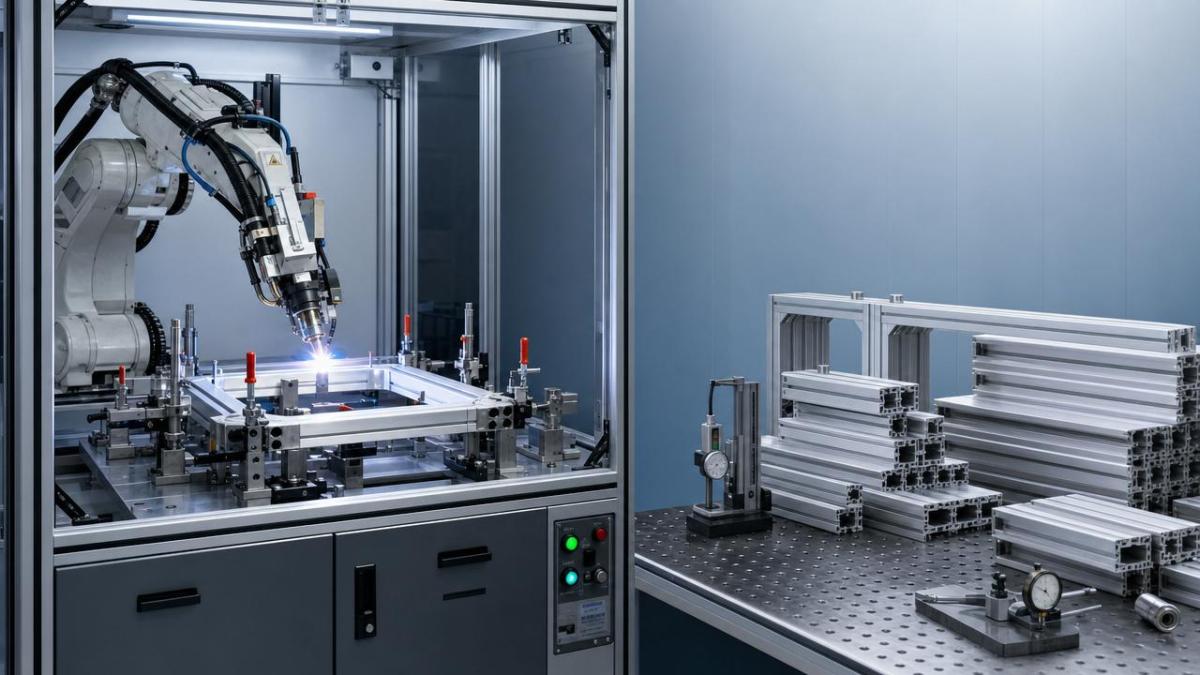
The setup cost of robot welding aluminum profiles includes more than the robot arm and welding power source.
A complete cell may require a positioner, extraction system, seam tracking, pulse MIG or laser capability, and safety enclosure.
For aluminum profiles, fixturing often becomes the hidden cost driver.
Thin walls, extruded tolerances, and heat-sensitive geometry demand precise clamping without over-constraining the part.
Programming also matters. Simple straight seams are cheaper to automate than multi-angle, intermittent, or variable-gap joints.
The baseline investment should be compared against total process cost, not only direct welding labor.
Technical fundamentals behind the decision
Aluminum welding is less forgiving than many carbon steel applications.
Its oxide layer melts at a much higher temperature than the base metal.
This creates a narrow process window for stable fusion and clean bead formation.
robot welding aluminum profiles is attractive when that window can be controlled better by automation than by manual work.
A robot can repeat torch angle, stick-out, wire feed, and travel speed with high consistency.
However, repeatability only helps when incoming profiles and fixtures are also repeatable.
If extrusions vary widely, the robot repeats the same path against changing geometry.
That mismatch can increase lack of fusion, undercut, burn-through, or visual inconsistency.
Seam tracking, touch sensing, laser vision, or adaptive control may solve this problem.
They also increase capital cost and integration complexity.
Industry signals that support automation
The broader manufacturing environment increasingly favors controlled, data-driven welding processes.
Demand for lightweight structures has expanded aluminum profile use in transport, energy, machinery, and modular equipment.
At the same time, skilled welding capacity remains difficult to stabilize in many regions.
These pressures make robot welding aluminum profiles more relevant for plants seeking predictable output.
- Higher demand for lightweight frames and assemblies.
- Greater documentation requirements for weld parameters.
- More pressure to reduce rework and scrap.
- Shorter delivery windows and tighter production planning.
- Increasing need for stable quality across shifts.
Automation is strongest when these signals appear together.
A single driver, such as labor cost alone, rarely provides the most reliable justification.
Business value beyond direct labor savings
The payback case for robot welding aluminum profiles should include quality economics.
Manual welding can be excellent, but it may vary across shifts, fatigue levels, and skill availability.
Automation reduces variation after the process is validated and controlled.
Lower variation can reduce rework, grinding, inspection delays, scrap, and schedule disruption.
The value increases when welded profiles move into downstream machining, coating, assembly, or sealing operations.
A distorted welded frame can create expensive downstream correction, even if the weld itself passes visual checks.
robot welding aluminum profiles also improves traceability when parameters are recorded by part, batch, or fixture cycle.
This supports root-cause analysis when defects appear after assembly or field use.
Typical application categories
Not every aluminum profile assembly deserves a robotic cell.
The best candidates usually combine repeatable geometry, stable volumes, and measurable quality pressure.
robot welding aluminum profiles is usually easier to justify for families of parts than for isolated products.
A flexible fixture strategy can spread setup cost across several similar assemblies.
Key metrics for payback analysis
The payback horizon should be calculated from verified shop-floor data.
Estimated labor savings alone may understate or overstate the real value.
A stronger model includes cycle time, defect rate, consumables, downtime, changeover, and inspection effort.
- Annual weld hours suitable for automation.
- Average rework cost per welded profile assembly.
- Scrap value from burn-through or distortion.
- Robot cell utilization rate across shifts.
- Fixture changeover time between part families.
- Programming cost for each new design revision.
For robot welding aluminum profiles, utilization is often the decisive financial variable.
A technically excellent cell running only a few hours weekly may not beat manual production.
A moderately priced cell with high repeat utilization can deliver a faster return.
Risks that can erode the return
Automation does not remove process discipline. It exposes weaknesses faster.
Poor joint preparation will still create poor welds, only at a more consistent speed.
Surface contamination, inconsistent saw cuts, variable gaps, and profile twist can destabilize robotic welding.
robot welding aluminum profiles requires clean material flow before the cell begins.
Another risk is underestimating design-for-welding changes.
A joint optimized for manual reach may not suit robotic torch access.
Small adjustments to tabs, gaps, locating faces, and weld sequence can improve automation stability.
Maintenance planning also affects return. Torches, liners, contact tips, cooling systems, and sensors need scheduled control.
Practical implementation path
A disciplined pilot reduces the risk of over-investment.
Start with one representative part family, not the easiest showcase part.
The selected assembly should reflect real profile tolerances, real joint gaps, and real cycle expectations.
- Measure current cycle time, rework, scrap, and inspection effort.
- Classify joints by length, access, gap variation, and tolerance sensitivity.
- Build a fixture concept before selecting final robot hardware.
- Run weld trials using production-grade extrusions.
- Validate distortion, penetration, bead profile, and downstream assembly fit.
- Model payback using confirmed throughput, not ideal demonstration speed.
This path keeps robot welding aluminum profiles tied to evidence rather than assumption.
It also clarifies whether a standard robot cell is enough, or adaptive sensing is required.
Decision framework for setup cost
The setup cost is justified when automation improves the total production system.
That means better repeatability, controlled heat input, fewer defects, and more predictable output.
robot welding aluminum profiles is worth serious consideration when annual volume is stable and joint geometry repeats.
It becomes stronger when rework is expensive, dimensional control is difficult, or documentation is valuable.
It becomes weaker when designs change constantly, batches are small, or profile variation remains uncontrolled.
A practical threshold is not a universal price number.
The threshold is the point where verified savings exceed capital, integration, training, maintenance, and changeover costs.
Actionable next steps
Before committing capital, create a quantified welding baseline.
Record current labor hours, rejected welds, fixture problems, downstream correction, and delivery delays.
Then compare that baseline against a trial cell using production materials and realistic takt time.
For high-repeat assemblies, robot welding aluminum profiles can be worth the setup cost.
The strongest projects treat automation as an engineered process, not a purchased shortcut.
In a data-driven evaluation, the right question is simple: does the cell reduce total variation and total cost?
If the answer is proven through trials, robot welding aluminum profiles becomes a measurable manufacturing advantage.
Search News
Hot Articles
- Carbon Fiber StructuresHow to Specify Aerospace Carbon Fiber Assemblies for Lightweight, Load-Bearing PartsJul 11, 2026
- Machine VisionXiaomi, Alibaba DAMO Academy Drive Open-Source Robotics Model Ecosystem, Lowering Algorithm Development Barriers for Overseas SMEs Adopting Chinese Robotics SolutionsMar 30, 2026
- Cobots & ArmsShanxi 'AI+' Conference Showcases Embodied Intelligence with Multinational Buyer Engagement: Key Industry ImplicationsMar 30, 2026
Popular Tags
Recommended News
 Jul 11, 2026How to Specify Aerospace Carbon Fiber Assemblies for Lightweight, Load-Bearing PartsAerospace carbon fiber assemblies: learn how to specify laminate design, load data, joining methods, and inspection controls for lighter, reliable load-bearing aerospace parts.Elena Rostova (UAV Systems Researcher)
 Mar 30, 2026Xiaomi, Alibaba DAMO Academy Drive Open-Source Robotics Model Ecosystem, Lowering Algorithm Development Barriers for Overseas SMEs Adopting Chinese Robotics SolutionsXiaomi & Alibaba DAMO Academy's open-source robotics models lower algorithm barriers for global SMEs. Boost efficiency in manufacturing, logistics & smart retail with ROS 2 compatible solutions.TSV Data Lab
 Mar 30, 2026Shanxi 'AI+' Conference Showcases Embodied Intelligence with Multinational Buyer Engagement: Key Industry ImplicationsShanxi 'AI+' Conference highlights embodied intelligence with Tesla, Ubtech & Jiantao showcasing multimodal robotics. 40+ global buyers validated tech on-site, creating new B2B channels for industrial automation & AI solutions.Chen Wei (Automation Lead Engineer)
 Mar 30, 2026Zhongguancun Unveils 6G Integrated Sensing-Computing-Intelligence Platform to Empower Embodied Robots for Global Industrial ApplicationsZhongguancun's new 6G platform revolutionizes industrial robotics with <10ms latency, empowering global automotive, logistics & port automation. Discover how this tech boosts China's smart manufacturing exports.TSV Data Lab
 Mar 30, 2026Mech-Mind Tianjin Embodied Intelligence R&D and Production Base Goes Live, Cutting Delivery Time by 20%–30% for Global Customized AMR+Vision SolutionsMech-Mind's Tianjin AMR+Vision production base cuts delivery time by 20%-30% for欧美 & Latin American markets. Discover how this PLd-certified facility accelerates customized robotics solutions for smart manufacturing and logistics.Chen Wei (Automation Lead Engineer)
 Mar 30, 2026Boao Forum Reveals 'Co-evolution of Big and Small Brains' Trend in Humanoid Robots, China's Embodied Intelligence Accelerates Adaptation to Overseas Manufacturing Service ScenariosDiscover how China's humanoid robots, featuring 'Co-evolution of Big and Small Brains,' are revolutionizing global manufacturing. Learn about Embodied Tian Gong 3.0's ISO compliance and overseas deployment at Boao Forum 2026.Chen Wei (Automation Lead Engineer)
 Mar 30, 2026China Railway Industrial Secures Patent for Embodied Robotics in Material Handling, Boosting High-Precision Delivery Capabilities for Overseas Infrastructure and Manufacturing ProjectsChina Railway Industrial's new patent for embodied robotics in material handling boosts high-precision delivery for global infrastructure & manufacturing. Discover how this innovation enhances logistics accuracy in automotive, rail transit & EPC projects.Chen Wei (Automation Lead Engineer)
 Oct 15, 2026R&D Cost Reduction Services: How to Evaluate Fees, Savings, and ROIEvaluate R&D cost reduction services with confidence. Compare fees, verify savings, and calculate ROI without compromising performance. Discover how to choose a provider that delivers real value.Chen Wei (Automation Lead Engineer)
 Oct 14, 2026Drone Frame Composites: Carbon Fiber vs. Fiberglass for Weight and StiffnessExplore drone structural materials composites: compare carbon fiber and fiberglass for weight, stiffness, cost, and antenna compatibility. Find the right material for your drone frame.Elena Rostova (UAV Systems Researcher)
 Oct 13, 2026Smart Cameras vs. PC-Based Machine Vision: Which Fits High-Speed Inspection?This industrial product comparison for machine vision weighs smart cameras vs. PC-based systems on latency, throughput, and cost. Discover your best fit for high-speed inspection.TSV Data Lab
 Oct 12, 2026How to Verify RoHS Compliance in Industrial Sensing Systems Before DeploymentRoHS compliant sensing systems: learn how to verify materials, supplier declarations, testing, and configuration controls before industrial deployment.TSV Data Lab
 Oct 11, 2026How Procurement-Oriented Content Taxonomy Improves B2B Buying JourneysProcurement-oriented content taxonomy streamlines B2B buying journeys with clearer evidence, supplier comparisons, risk visibility, and faster approvals.TSV Data Lab
 Oct 10, 2026How to Select a Machine Performance Monitoring Platform for OEE and Downtime ReductionMachine performance monitoring platform selection guide: validate machine states, OEE data, downtime reasons, integrations, and scalability to reduce losses with confidence.TSV Data Lab
 Oct 08, 2026How to Machine Inconel 625 Blades Without Heat Cracks or Edge ChippingInconel 625 blade machining guide: prevent heat cracks, edge chipping, chatter, and work hardening with proven tooling, cooling, fixturing, and inspection strategies.Dr. Marcus Vance
 Oct 07, 2026How to Evaluate an HMI Panel Distributor for Industrial Automation ProjectsHMI panel distributor evaluation guide: verify technical compatibility, traceability, supply reliability, lifecycle support, and total cost for automation projects.Victor Lin (Chief Software Architect)
 Oct 06, 2026Navigation Fault Tolerance Standards for AMRs: What Safety Teams Must VerifyNavigation fault tolerance standards: learn what AMR safety teams must verify, from localization loss and sensor faults to stopping distance, safe restart, and site-specific validation.Chen Wei (Automation Lead Engineer)
 Oct 05, 2026Calculating Edge Computing Total Cost of Ownership Across Distributed SitesEdge computing ownership cost explained: calculate deployment, energy, connectivity, security, remote support, and refresh costs across distributed sites.TSV Data Lab
 Oct 04, 2026CAD/CAM Benchmarking in the GCC: What Manufacturers Should Ask a ConsultantCAD CAM benchmark consultant GCC guide: learn the key questions manufacturers should ask to validate post-processors, workflows, machine performance, and production risk.Victor Lin (Chief Software Architect)
 Oct 03, 2026Selecting Automotive Radar Sensor Modules for ADAS Range, Resolution, and IntegrationAutomotive radar sensor module selection guide for ADAS: compare range, resolution, field of view, latency, and integration to build safer, reliable vehicle systems.TSV Data Lab
 Oct 02, 2026How to Qualify Machined Parts Suppliers for Hard Tech ProgramsHard tech supply chain machined parts demand rigorous supplier qualification. Learn how to assess capability, traceability, quality controls, and delivery resilience.Dr. Marcus Vance
 Oct 01, 2026How to Select an Outdoor Security Radar Sensor for Perimeter Detection?Outdoor security radar sensor selection guide: compare range, accuracy, false-alarm control, integration, and field testing for reliable perimeter detection.TSV Data Lab
 Sep 30, 2026How to Evaluate Solid-State LiDAR Hardware for Outdoor Autonomous VehiclesSolid state LiDAR hardware evaluation guide for outdoor autonomous vehicles—compare range, point-cloud quality, environmental resilience, integration, and safety.TSV Data Lab
 Sep 29, 2026ISO 9283 Repeatability: How to Evaluate Cobot Positioning PerformanceISO 9283 cobot repeatability explained: learn how payload, reach, approach direction, and test conditions affect positioning performance and cell capability.Chen Wei (Automation Lead Engineer)
 Oct 14, 2026How tight can micro machining aerospace tolerances be in production?Micro machining aerospace tolerances can reach low-micron levels in production. Learn what controls repeatability, inspection confidence, and flight-critical quality.Dr. Marcus Vance























