
Do stainless steel watch bands cause skin irritation?
Publication Date
author
Do Stainless Steel Watch Bands Cause Skin Irritation? A Data-Led Comfort Trend
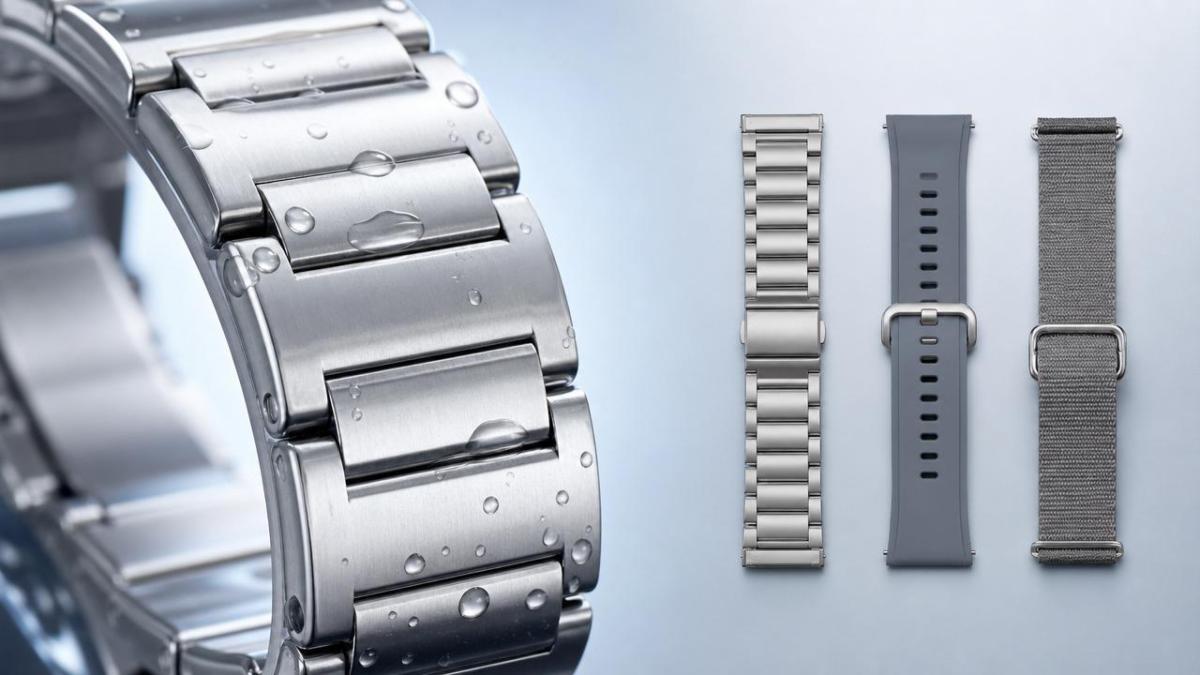
Do stainless steel watch bands cause skin irritation, or is the problem linked to sweat, friction, and metal composition?
For daily smartwatches and classic timepieces, comfort now matters as much as durability, finish, and corrosion resistance.
Stainless steel watch bands remain popular because they look refined, resist wear, and suit formal or active routines.
Yet redness, itching, swelling, or rashes can appear when skin chemistry, band fit, moisture, and alloy composition interact.
Wearable Comfort Is Becoming a Measurable Product Standard
The watch market is moving from appearance-led buying toward measurable skin comfort, hygiene, and long-hour usability.
This shift is strongest in smart wearables, where devices stay on the wrist during work, sleep, exercise, and health tracking.
As wear time increases, stainless steel watch bands face closer scrutiny than traditional occasional-use metal bracelets.
A band once worn for eight hours may now contact skin for twenty-two hours, changing the irritation risk profile.
In TSV terms, the question is not marketing comfort. It is exposure duration, material release, friction load, and cleaning frequency.
The Main Signal: Irritation Is Usually Multi-Causal
Stainless steel watch bands do not automatically irritate skin, but they can contribute under specific conditions.
The most discussed factor is nickel sensitivity, because many stainless steels contain nickel for strength and corrosion resistance.
However, a rash near the wrist does not prove nickel allergy by itself.
Sweat trapped under links, soap residue, tight sizing, and repeated wrist movement can produce similar symptoms.
That is why evaluating stainless steel watch bands requires a system view, not a single-cause assumption.
Why Stainless Steel Watch Bands Can Trigger Reactions
Several engineering and lifestyle factors explain why stainless steel watch bands feel comfortable for some users but irritating for others.
- Alloy composition matters, especially nickel content and surface stability during sweat exposure.
- Surface finish matters because rough edges increase localized pressure and micro-abrasion.
- Band geometry matters because dense links trap heat, moisture, and skin debris.
- Fit matters because tight bracelets reduce airflow and increase friction cycles.
- Cleaning habits matter because residues may accumulate inside links and clasp joints.
Nickel release is the technical concern most often connected with stainless steel watch bands and contact dermatitis.
Quality stainless steel forms a passive oxide layer that limits corrosion and metal ion migration.
But sweat, salt, cosmetics, and wear can challenge that surface over time.
The issue is not simply whether nickel exists. It is whether enough nickel becomes bioavailable at the skin interface.
Material Choices Are Shaping the Next Comfort Upgrade
The rising focus on skin-safe wearables is changing how stainless steel watch bands are compared with titanium, silicone, nylon, and ceramic.
Steel keeps an advantage in strength, scratch resistance, and premium appearance.
Yet alternatives are gaining attention where sweat, allergies, or sports use dominate the decision.
This comparison shows why stainless steel watch bands still belong in the market, but require more informed selection.
The best choice depends on skin sensitivity, daily activity, climate, hygiene routine, and expected wear duration.
How the Trend Affects Daily Wear, Design, and Aftercare
For daily wear, the biggest change is the need to treat watch bands as skin-contact systems.
Stainless steel watch bands are no longer judged only by shine, weight, and clasp security.
They are judged by breathability, edge finishing, cleanability, and performance after repeated sweat exposure.
For product design, link spacing and clasp architecture are becoming comfort variables.
A bracelet with fewer dirt traps and smoother contact points can reduce irritation risk meaningfully.
For aftercare, the message is simple: metal bands need cleaning, drying, and periodic skin breaks.
- Remove the watch after heavy sweating, swimming, or exposure to sunscreen.
- Rinse stainless steel watch bands with mild soap and water when appropriate.
- Dry the band fully, especially inside links and around the clasp.
- Avoid wearing the band tightly during sleep or exercise.
- Rotate with fabric, silicone, or titanium if irritation appears repeatedly.
Key Checks Before Choosing Stainless Steel Watch Bands
A practical decision starts with evidence, not assumptions about premium metals or allergy claims.
Use the following checkpoints before buying or continuing to wear stainless steel watch bands.
- Check whether the steel grade is disclosed, such as 316L stainless steel.
- Look for smooth finishing around link edges, clasp corners, and adjustment pins.
- Confirm whether the coating, plating, or black finish can wear unevenly.
- Choose micro-adjustable clasps when wrist swelling changes during the day.
- Avoid unknown alloys if previous reactions to jewelry have occurred.
- Test short wear periods before using a new band continuously.
If symptoms appear only under the band, fit and moisture may be the dominant drivers.
If symptoms occur with earrings, rings, or belt buckles, nickel sensitivity becomes more likely.
A Simple Response Plan When Irritation Appears
When irritation begins, continuing to wear the same setup can intensify the reaction.
The goal is to isolate variables: material, sweat, friction, cleaning agents, and wear duration.
Persistent, painful, spreading, or blistering reactions should be evaluated by a qualified health professional.
Patch testing can help confirm whether nickel or another contact allergen is involved.
What to Watch Next in Skin-Friendly Wearables
The next stage will likely bring clearer disclosure around alloys, coatings, and biocompatibility claims.
Stainless steel watch bands may increasingly be compared using measurable nickel release and long-wear comfort data.
Surface engineering will also matter more, including polishing quality, passivation consistency, and coating durability.
From a hard-tech perspective, comfort is becoming a specification rather than a vague promise.
That aligns with the broader movement toward data-led consumer products and transparent material performance.
Bottom Line: Choose by Evidence, Not Metal Myth
So, do stainless steel watch bands cause skin irritation? Sometimes, but usually through combined material and usage factors.
Nickel sensitivity is real, yet sweat, friction, trapped residue, and tight sizing are often equally important.
Stainless steel watch bands can be a durable and comfortable choice when alloy quality, finish, fit, and hygiene are controlled.
If comfort is uncertain, start with disclosed materials, smooth construction, adjustable sizing, and short trial wear.
For a practical next step, document when irritation appears, clean the band, adjust the fit, and compare another material.
That evidence-based approach turns a vague wrist rash into a manageable decision about stainless steel watch bands.
Search News
Hot Articles
- Carbon Fiber StructuresHow to Specify Aerospace Carbon Fiber Assemblies for Lightweight, Load-Bearing PartsJul 11, 2026
- Machine VisionXiaomi, Alibaba DAMO Academy Drive Open-Source Robotics Model Ecosystem, Lowering Algorithm Development Barriers for Overseas SMEs Adopting Chinese Robotics SolutionsMar 30, 2026
- Cobots & ArmsShanxi 'AI+' Conference Showcases Embodied Intelligence with Multinational Buyer Engagement: Key Industry ImplicationsMar 30, 2026
Popular Tags
Recommended News
 Jul 11, 2026How to Specify Aerospace Carbon Fiber Assemblies for Lightweight, Load-Bearing PartsAerospace carbon fiber assemblies: learn how to specify laminate design, load data, joining methods, and inspection controls for lighter, reliable load-bearing aerospace parts.Elena Rostova (UAV Systems Researcher)
 Mar 30, 2026Xiaomi, Alibaba DAMO Academy Drive Open-Source Robotics Model Ecosystem, Lowering Algorithm Development Barriers for Overseas SMEs Adopting Chinese Robotics SolutionsXiaomi & Alibaba DAMO Academy's open-source robotics models lower algorithm barriers for global SMEs. Boost efficiency in manufacturing, logistics & smart retail with ROS 2 compatible solutions.TSV Data Lab
 Mar 30, 2026Shanxi 'AI+' Conference Showcases Embodied Intelligence with Multinational Buyer Engagement: Key Industry ImplicationsShanxi 'AI+' Conference highlights embodied intelligence with Tesla, Ubtech & Jiantao showcasing multimodal robotics. 40+ global buyers validated tech on-site, creating new B2B channels for industrial automation & AI solutions.Chen Wei (Automation Lead Engineer)
 Mar 30, 2026Zhongguancun Unveils 6G Integrated Sensing-Computing-Intelligence Platform to Empower Embodied Robots for Global Industrial ApplicationsZhongguancun's new 6G platform revolutionizes industrial robotics with <10ms latency, empowering global automotive, logistics & port automation. Discover how this tech boosts China's smart manufacturing exports.TSV Data Lab
 Mar 30, 2026Mech-Mind Tianjin Embodied Intelligence R&D and Production Base Goes Live, Cutting Delivery Time by 20%–30% for Global Customized AMR+Vision SolutionsMech-Mind's Tianjin AMR+Vision production base cuts delivery time by 20%-30% for欧美 & Latin American markets. Discover how this PLd-certified facility accelerates customized robotics solutions for smart manufacturing and logistics.Chen Wei (Automation Lead Engineer)
 Mar 30, 2026Boao Forum Reveals 'Co-evolution of Big and Small Brains' Trend in Humanoid Robots, China's Embodied Intelligence Accelerates Adaptation to Overseas Manufacturing Service ScenariosDiscover how China's humanoid robots, featuring 'Co-evolution of Big and Small Brains,' are revolutionizing global manufacturing. Learn about Embodied Tian Gong 3.0's ISO compliance and overseas deployment at Boao Forum 2026.Chen Wei (Automation Lead Engineer)
 Mar 30, 2026China Railway Industrial Secures Patent for Embodied Robotics in Material Handling, Boosting High-Precision Delivery Capabilities for Overseas Infrastructure and Manufacturing ProjectsChina Railway Industrial's new patent for embodied robotics in material handling boosts high-precision delivery for global infrastructure & manufacturing. Discover how this innovation enhances logistics accuracy in automotive, rail transit & EPC projects.Chen Wei (Automation Lead Engineer)
 Oct 15, 2026R&D Cost Reduction Services: How to Evaluate Fees, Savings, and ROIEvaluate R&D cost reduction services with confidence. Compare fees, verify savings, and calculate ROI without compromising performance. Discover how to choose a provider that delivers real value.Chen Wei (Automation Lead Engineer)
 Oct 15, 2026How Should You Compare TechStat Vanguard 5-Axis CNC Tolerances?TechStat Vanguard 5-axis CNC tolerance comparison: learn how to verify part accuracy, assess inspection evidence, and choose suppliers that reliably meet your drawing requirements.Dr. Marcus Vance
 Oct 14, 2026Drone Frame Composites: Carbon Fiber vs. Fiberglass for Weight and StiffnessExplore drone structural materials composites: compare carbon fiber and fiberglass for weight, stiffness, cost, and antenna compatibility. Find the right material for your drone frame.Elena Rostova (UAV Systems Researcher)
 Oct 13, 2026Smart Cameras vs. PC-Based Machine Vision: Which Fits High-Speed Inspection?This industrial product comparison for machine vision weighs smart cameras vs. PC-based systems on latency, throughput, and cost. Discover your best fit for high-speed inspection.TSV Data Lab
 Oct 12, 2026How to Verify RoHS Compliance in Industrial Sensing Systems Before DeploymentRoHS compliant sensing systems: learn how to verify materials, supplier declarations, testing, and configuration controls before industrial deployment.TSV Data Lab
 Oct 11, 2026How Procurement-Oriented Content Taxonomy Improves B2B Buying JourneysProcurement-oriented content taxonomy streamlines B2B buying journeys with clearer evidence, supplier comparisons, risk visibility, and faster approvals.TSV Data Lab
 Oct 10, 2026How to Select a Machine Performance Monitoring Platform for OEE and Downtime ReductionMachine performance monitoring platform selection guide: validate machine states, OEE data, downtime reasons, integrations, and scalability to reduce losses with confidence.TSV Data Lab
 Oct 08, 2026How to Machine Inconel 625 Blades Without Heat Cracks or Edge ChippingInconel 625 blade machining guide: prevent heat cracks, edge chipping, chatter, and work hardening with proven tooling, cooling, fixturing, and inspection strategies.Dr. Marcus Vance
 Oct 07, 2026How to Evaluate an HMI Panel Distributor for Industrial Automation ProjectsHMI panel distributor evaluation guide: verify technical compatibility, traceability, supply reliability, lifecycle support, and total cost for automation projects.Victor Lin (Chief Software Architect)
 Oct 06, 2026Navigation Fault Tolerance Standards for AMRs: What Safety Teams Must VerifyNavigation fault tolerance standards: learn what AMR safety teams must verify, from localization loss and sensor faults to stopping distance, safe restart, and site-specific validation.Chen Wei (Automation Lead Engineer)
 Oct 05, 2026Calculating Edge Computing Total Cost of Ownership Across Distributed SitesEdge computing ownership cost explained: calculate deployment, energy, connectivity, security, remote support, and refresh costs across distributed sites.TSV Data Lab
 Oct 04, 2026CAD/CAM Benchmarking in the GCC: What Manufacturers Should Ask a ConsultantCAD CAM benchmark consultant GCC guide: learn the key questions manufacturers should ask to validate post-processors, workflows, machine performance, and production risk.Victor Lin (Chief Software Architect)
 Oct 03, 2026Selecting Automotive Radar Sensor Modules for ADAS Range, Resolution, and IntegrationAutomotive radar sensor module selection guide for ADAS: compare range, resolution, field of view, latency, and integration to build safer, reliable vehicle systems.TSV Data Lab
 Oct 02, 2026How to Qualify Machined Parts Suppliers for Hard Tech ProgramsHard tech supply chain machined parts demand rigorous supplier qualification. Learn how to assess capability, traceability, quality controls, and delivery resilience.Dr. Marcus Vance
 Oct 01, 2026How to Select an Outdoor Security Radar Sensor for Perimeter Detection?Outdoor security radar sensor selection guide: compare range, accuracy, false-alarm control, integration, and field testing for reliable perimeter detection.TSV Data Lab
 Sep 30, 2026How to Evaluate Solid-State LiDAR Hardware for Outdoor Autonomous VehiclesSolid state LiDAR hardware evaluation guide for outdoor autonomous vehicles—compare range, point-cloud quality, environmental resilience, integration, and safety.TSV Data Lab
 Sep 29, 2026ISO 9283 Repeatability: How to Evaluate Cobot Positioning PerformanceISO 9283 cobot repeatability explained: learn how payload, reach, approach direction, and test conditions affect positioning performance and cell capability.Chen Wei (Automation Lead Engineer)























