
Are climbing wall holds wholesale deals worth the risk?
Publication Date
author
For quality control and safety teams, climbing wall holds wholesale offers can look like a fast way to reduce project costs. Yet savings only matter when engineering evidence supports them.
Before any bulk purchase, teams must verify material consistency, load ratings, texture durability, bolt compatibility, and supplier traceability. A low unit price means little if holds fail inspection.
The current market is shifting from simple volume buying toward data-backed sourcing. That change makes climbing wall holds wholesale both attractive and risky.
Why climbing wall holds wholesale is entering a more demanding phase
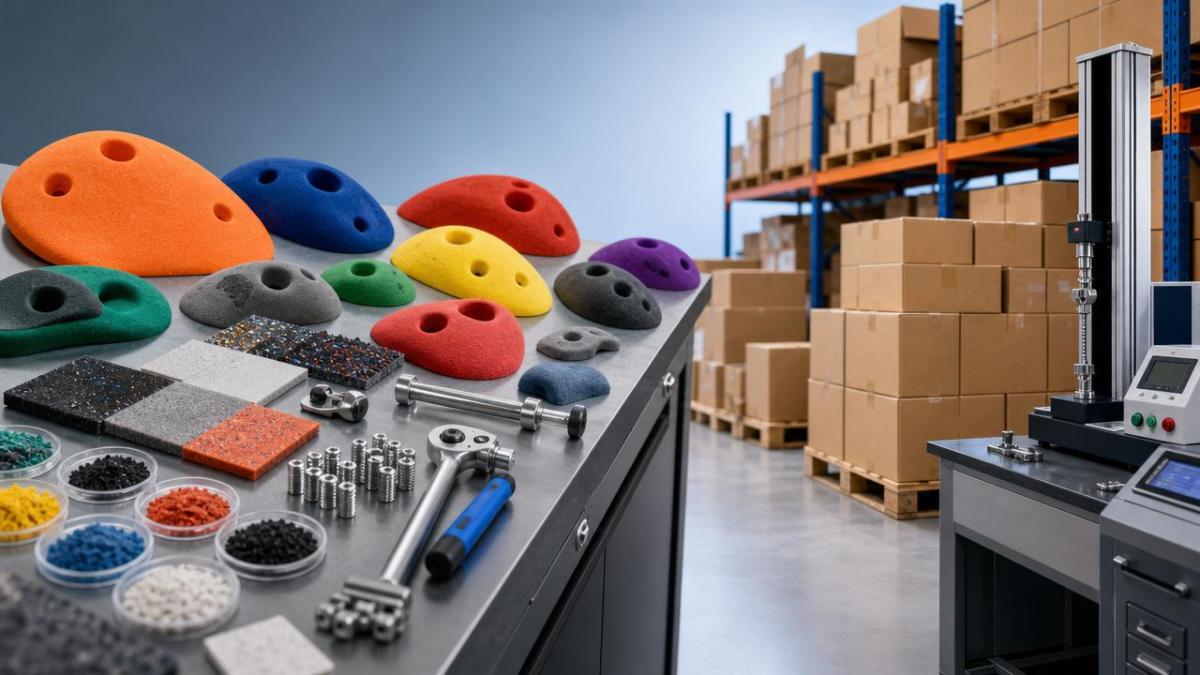
Climbing facilities are expanding across schools, gyms, training centers, hotels, retail spaces, and mixed-use recreation projects. Demand is no longer limited to specialist venues.
This broader demand has increased interest in climbing wall holds wholesale, especially for projects needing hundreds or thousands of pieces.
However, higher volume creates a new problem. Small variation becomes visible across routes, difficulty grades, installation patterns, and maintenance cycles.
A single weak batch may not only affect replacement cost. It can disrupt route setting, inspection schedules, and user confidence.
At TechStat Vanguard, the core question is not whether wholesale is cheap. The question is whether the numbers remain stable under operational stress.
The trend signal: bulk buying is moving from price comparison to evidence comparison
In earlier purchasing cycles, many buyers compared climbing wall holds wholesale offers mainly by unit price, color mix, size assortment, and shipping cost.
That model is losing credibility. Modern projects require documented performance, repeatable manufacturing, and reliable after-sales replacement policies.
The market is also becoming more transparent. Failed inserts, glossy surfaces, brittle edges, and inconsistent bolt holes are harder to hide.
Social reviews, inspection reports, and operational data now expose weak climbing wall holds wholesale decisions much faster than before.
This does not mean wholesale deals should be avoided. It means bulk orders need engineering filters before procurement approval.
What is pushing the risk curve higher
Several structural forces are making climbing wall holds wholesale more complex. These forces affect safety, cost, and long-term facility performance.
The biggest risk is not always catastrophic failure. Often, the damage appears through accelerated maintenance and unpredictable replacement needs.
That is why climbing wall holds wholesale should be evaluated as a lifecycle decision, not a one-time discount opportunity.
Material consistency is where many wholesale savings disappear
Climbing holds are commonly made from polyurethane, polyester resin, wood, fiberglass-reinforced compounds, or hybrid materials. Each material has different failure behavior.
In climbing wall holds wholesale, the critical issue is not the advertised material name. It is whether the formula is stable across batches.
Density variation can affect edge strength, surface feel, impact resistance, and drilling accuracy. Even small differences change route usability.
Bulk orders should request batch-level documentation, including production date, material lot, insert type, pigment record, and curing process notes.
If a supplier cannot link each carton to production records, climbing wall holds wholesale risk increases immediately.
Key material checks before approval
- Compare sample weight against declared product range.
- Check surface hardness and edge integrity after impact.
- Inspect insert bonding and thread alignment.
- Test color stability after cleaning exposure.
- Record defects by batch, not only by shipment.
Load ratings need context, not just a printed number
Many climbing wall holds wholesale listings mention load strength, tensile capacity, or tested performance. These claims require careful interpretation.
A single maximum load value may not describe fatigue behavior, edge leverage, installation angle, or repeated tightening cycles.
Static testing is useful, but holds experience dynamic movement, twisting force, falls, route changes, cleaning, and storage impacts.
A stronger wholesale decision asks for test method, sample count, failure mode, safety factor, and whether tests were independently verified.
Without that context, climbing wall holds wholesale claims become marketing statements rather than engineering evidence.
Texture durability is becoming a major operating cost indicator
Texture is not only about grip preference. It affects skin abrasion, route difficulty, cleaning frequency, and long-term visual quality.
Cheap climbing wall holds wholesale packages may use aggressive texture to create immediate grip appeal. That texture can polish quickly.
Once polished, holds may become inconsistent across identical sets. This changes route grading and increases reset complaints.
Durability testing should simulate shoes, chalk, sweat, brushing, washing, and repeated handling. Visual inspection alone is insufficient.
The best climbing wall holds wholesale offers disclose cleaning tolerance and expected surface degradation under normal use.
Bolt compatibility can turn a discount into a hidden installation problem
Bolt hole geometry is often overlooked during climbing wall holds wholesale evaluation. Yet it directly affects installation speed and safety.
Problems include shallow bolt recesses, poor washer seating, off-center holes, weak countersinks, and insert positions that limit orientation.
These problems create extra labor and may force route setters to reject otherwise usable shapes.
Bulk samples should be tested on the same wall panels, T-nuts, bolts, and torque ranges intended for the final installation.
A climbing wall holds wholesale deal is not complete until hardware interaction is verified under real assembly conditions.
How wholesale decisions affect different operating areas
The impact of climbing wall holds wholesale choices spreads across design, installation, inspection, cleaning, replacement, and user experience.
For route planning, inconsistent shapes or textures reduce grading accuracy. For maintenance, weak inserts increase inspection frequency.
For finance, a low purchase price may be offset by early replacement, shipping claims, downtime, and labor waste.
- Design teams need repeatable dimensions and predictable grip families.
- Installation teams need clean bolt seating and consistent backing geometry.
- Maintenance teams need traceable batches and replacement availability.
- Operators need durable texture and stable color identification.
This is why climbing wall holds wholesale evaluation should include operational scenarios, not only supplier quotations.
A practical scoring model for safer bulk sourcing
A structured scorecard reduces emotional decisions. It also creates a fair comparison between climbing wall holds wholesale suppliers.
The scorecard should be completed before price negotiation. Otherwise, weak technical offers may appear financially attractive.
Warning signs that a wholesale offer carries excessive risk
Some climbing wall holds wholesale offers reveal risk before testing begins. The warning signs are usually visible in documentation quality.
- The supplier provides only promotional photos.
- Load claims lack test conditions.
- Material descriptions change between documents.
- Replacement policy excludes batch defects.
- Samples differ noticeably from quoted bulk goods.
- Cartons lack production tracking codes.
Any one warning sign deserves review. Several together should pause the climbing wall holds wholesale purchase immediately.
When climbing wall holds wholesale is worth the risk
Wholesale becomes worthwhile when the supplier proves repeatability. The deal must be supported by inspection access and clear accountability.
Good wholesale value appears when samples match production goods, batches are traceable, and defects are handled through measurable thresholds.
It is also valuable when shape families support route diversity without requiring excessive inventory complexity.
In that scenario, climbing wall holds wholesale can reduce cost while improving stocking, replacement planning, and design consistency.
The risk becomes acceptable only when testing, traceability, and supplier behavior reduce uncertainty to a manageable level.
How to respond before placing a bulk order
A disciplined response starts with a small pilot order. The pilot should represent the full intended product mix.
Inspect jugs, crimps, slopers, volumes, footholds, and training holds separately. Each category faces different stress patterns.
- Request technical files before accepting the quotation.
- Test samples on real wall panels.
- Document defects with photos and batch references.
- Compare supplier response time and corrective action.
- Approve climbing wall holds wholesale volume only after evidence review.
This staged method protects project budgets without treating safety as a negotiable variable.
Final judgment: savings are real only when data survives inspection
Are climbing wall holds wholesale deals worth the risk? They can be, but only when procurement follows engineering discipline.
The lowest quote is rarely the best indicator. The better signal is stable production data, credible testing, and transparent batch control.
Climbing wall holds wholesale should be judged by total lifecycle value, not initial unit savings. That includes inspection, replacement, downtime, and safety confidence.
The next practical step is simple. Build a supplier scorecard, request samples, verify data, and compare evidence before committing volume.
In a market filled with claims, parameters still matter. For climbing wall holds wholesale, verified performance is the boundary between smart savings and avoidable risk.
Search News
Hot Articles
- Carbon Fiber StructuresHow to Specify Aerospace Carbon Fiber Assemblies for Lightweight, Load-Bearing PartsJul 11, 2026
- Machine VisionXiaomi, Alibaba DAMO Academy Drive Open-Source Robotics Model Ecosystem, Lowering Algorithm Development Barriers for Overseas SMEs Adopting Chinese Robotics SolutionsMar 30, 2026
- Cobots & ArmsShanxi 'AI+' Conference Showcases Embodied Intelligence with Multinational Buyer Engagement: Key Industry ImplicationsMar 30, 2026
Popular Tags
Recommended News
 Jul 11, 2026How to Specify Aerospace Carbon Fiber Assemblies for Lightweight, Load-Bearing PartsAerospace carbon fiber assemblies: learn how to specify laminate design, load data, joining methods, and inspection controls for lighter, reliable load-bearing aerospace parts.Elena Rostova (UAV Systems Researcher)
 Mar 30, 2026Xiaomi, Alibaba DAMO Academy Drive Open-Source Robotics Model Ecosystem, Lowering Algorithm Development Barriers for Overseas SMEs Adopting Chinese Robotics SolutionsXiaomi & Alibaba DAMO Academy's open-source robotics models lower algorithm barriers for global SMEs. Boost efficiency in manufacturing, logistics & smart retail with ROS 2 compatible solutions.TSV Data Lab
 Mar 30, 2026Shanxi 'AI+' Conference Showcases Embodied Intelligence with Multinational Buyer Engagement: Key Industry ImplicationsShanxi 'AI+' Conference highlights embodied intelligence with Tesla, Ubtech & Jiantao showcasing multimodal robotics. 40+ global buyers validated tech on-site, creating new B2B channels for industrial automation & AI solutions.Chen Wei (Automation Lead Engineer)
 Mar 30, 2026Zhongguancun Unveils 6G Integrated Sensing-Computing-Intelligence Platform to Empower Embodied Robots for Global Industrial ApplicationsZhongguancun's new 6G platform revolutionizes industrial robotics with <10ms latency, empowering global automotive, logistics & port automation. Discover how this tech boosts China's smart manufacturing exports.TSV Data Lab
 Mar 30, 2026Mech-Mind Tianjin Embodied Intelligence R&D and Production Base Goes Live, Cutting Delivery Time by 20%–30% for Global Customized AMR+Vision SolutionsMech-Mind's Tianjin AMR+Vision production base cuts delivery time by 20%-30% for欧美 & Latin American markets. Discover how this PLd-certified facility accelerates customized robotics solutions for smart manufacturing and logistics.Chen Wei (Automation Lead Engineer)
 Mar 30, 2026Boao Forum Reveals 'Co-evolution of Big and Small Brains' Trend in Humanoid Robots, China's Embodied Intelligence Accelerates Adaptation to Overseas Manufacturing Service ScenariosDiscover how China's humanoid robots, featuring 'Co-evolution of Big and Small Brains,' are revolutionizing global manufacturing. Learn about Embodied Tian Gong 3.0's ISO compliance and overseas deployment at Boao Forum 2026.Chen Wei (Automation Lead Engineer)
 Mar 30, 2026China Railway Industrial Secures Patent for Embodied Robotics in Material Handling, Boosting High-Precision Delivery Capabilities for Overseas Infrastructure and Manufacturing ProjectsChina Railway Industrial's new patent for embodied robotics in material handling boosts high-precision delivery for global infrastructure & manufacturing. Discover how this innovation enhances logistics accuracy in automotive, rail transit & EPC projects.Chen Wei (Automation Lead Engineer)
 Oct 14, 2026Drone Frame Composites: Carbon Fiber vs. Fiberglass for Weight and StiffnessExplore drone structural materials composites: compare carbon fiber and fiberglass for weight, stiffness, cost, and antenna compatibility. Find the right material for your drone frame.Elena Rostova (UAV Systems Researcher)
 Oct 13, 2026Smart Cameras vs. PC-Based Machine Vision: Which Fits High-Speed Inspection?This industrial product comparison for machine vision weighs smart cameras vs. PC-based systems on latency, throughput, and cost. Discover your best fit for high-speed inspection.TSV Data Lab
 Oct 12, 2026How to Verify RoHS Compliance in Industrial Sensing Systems Before DeploymentRoHS compliant sensing systems: learn how to verify materials, supplier declarations, testing, and configuration controls before industrial deployment.TSV Data Lab
 Oct 11, 2026How Procurement-Oriented Content Taxonomy Improves B2B Buying JourneysProcurement-oriented content taxonomy streamlines B2B buying journeys with clearer evidence, supplier comparisons, risk visibility, and faster approvals.TSV Data Lab
 Oct 10, 2026How to Select a Machine Performance Monitoring Platform for OEE and Downtime ReductionMachine performance monitoring platform selection guide: validate machine states, OEE data, downtime reasons, integrations, and scalability to reduce losses with confidence.TSV Data Lab
 Oct 08, 2026How to Machine Inconel 625 Blades Without Heat Cracks or Edge ChippingInconel 625 blade machining guide: prevent heat cracks, edge chipping, chatter, and work hardening with proven tooling, cooling, fixturing, and inspection strategies.Dr. Marcus Vance
 Oct 07, 2026How to Evaluate an HMI Panel Distributor for Industrial Automation ProjectsHMI panel distributor evaluation guide: verify technical compatibility, traceability, supply reliability, lifecycle support, and total cost for automation projects.Victor Lin (Chief Software Architect)
 Oct 06, 2026Navigation Fault Tolerance Standards for AMRs: What Safety Teams Must VerifyNavigation fault tolerance standards: learn what AMR safety teams must verify, from localization loss and sensor faults to stopping distance, safe restart, and site-specific validation.Chen Wei (Automation Lead Engineer)
 Oct 05, 2026Calculating Edge Computing Total Cost of Ownership Across Distributed SitesEdge computing ownership cost explained: calculate deployment, energy, connectivity, security, remote support, and refresh costs across distributed sites.TSV Data Lab
 Oct 04, 2026CAD/CAM Benchmarking in the GCC: What Manufacturers Should Ask a ConsultantCAD CAM benchmark consultant GCC guide: learn the key questions manufacturers should ask to validate post-processors, workflows, machine performance, and production risk.Victor Lin (Chief Software Architect)
 Oct 03, 2026Selecting Automotive Radar Sensor Modules for ADAS Range, Resolution, and IntegrationAutomotive radar sensor module selection guide for ADAS: compare range, resolution, field of view, latency, and integration to build safer, reliable vehicle systems.TSV Data Lab
 Oct 02, 2026How to Qualify Machined Parts Suppliers for Hard Tech ProgramsHard tech supply chain machined parts demand rigorous supplier qualification. Learn how to assess capability, traceability, quality controls, and delivery resilience.Dr. Marcus Vance
 Oct 01, 2026How to Select an Outdoor Security Radar Sensor for Perimeter Detection?Outdoor security radar sensor selection guide: compare range, accuracy, false-alarm control, integration, and field testing for reliable perimeter detection.TSV Data Lab
 Sep 30, 2026How to Evaluate Solid-State LiDAR Hardware for Outdoor Autonomous VehiclesSolid state LiDAR hardware evaluation guide for outdoor autonomous vehicles—compare range, point-cloud quality, environmental resilience, integration, and safety.TSV Data Lab
 Sep 29, 2026ISO 9283 Repeatability: How to Evaluate Cobot Positioning PerformanceISO 9283 cobot repeatability explained: learn how payload, reach, approach direction, and test conditions affect positioning performance and cell capability.Chen Wei (Automation Lead Engineer)
 Oct 14, 2026How tight can micro machining aerospace tolerances be in production?Micro machining aerospace tolerances can reach low-micron levels in production. Learn what controls repeatability, inspection confidence, and flight-critical quality.Dr. Marcus Vance
 Oct 13, 2026How to keep an industrial robotic integration project on scheduleIndustrial robotic integration project management: keep automation on schedule with proven controls for interfaces, suppliers, FAT, commissioning, and change risk.Victor Lin (Chief Software Architect)























