Is a cobot for CNC machine tending worth the setup effort?
Publication Date
author
For procurement teams evaluating automation ROI, a cobot for CNC machine tending is only worthwhile when setup effort, cycle stability, integration risk, and long-term operating costs are measured against real production demands. This article cuts through vendor claims to examine where deployment friction comes from, how quickly value can be realized, and what technical and sourcing benchmarks matter before approving an investment.
What makes a cobot for CNC machine tending difficult or easy to justify?
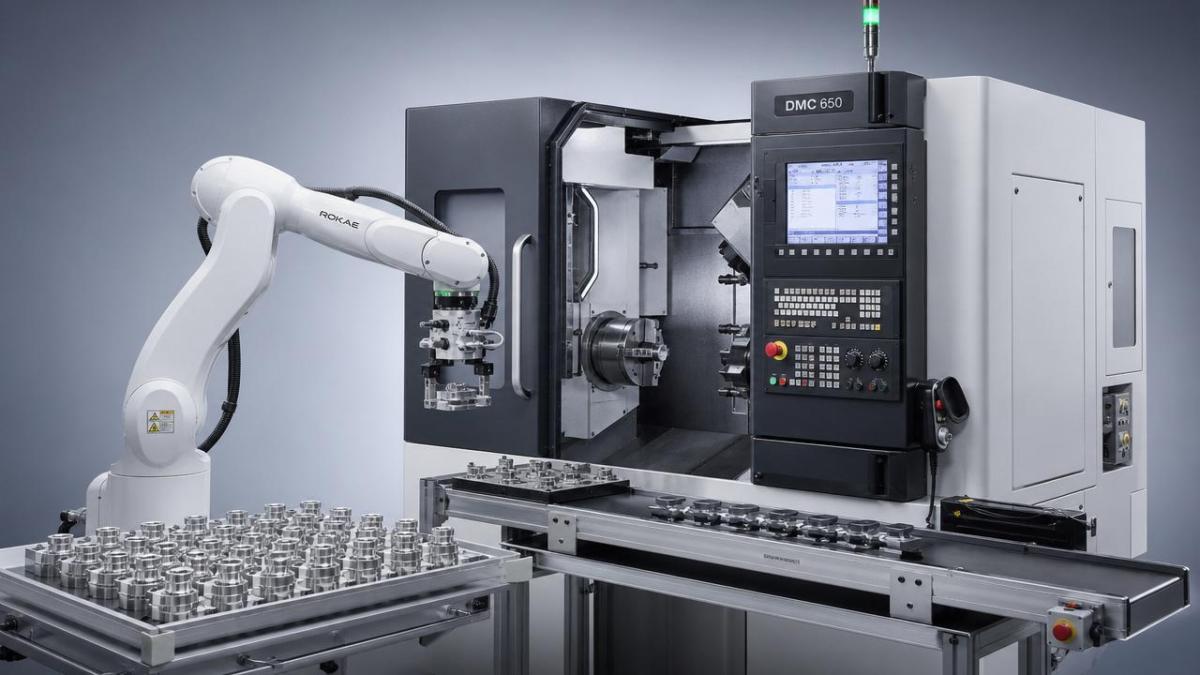
A cobot for CNC machine tending is not bought for its arm alone. Procurement is funding a working cell that must load parts, interface with machine doors, manage chuck or vise conditions, confirm part presence, and sustain output with limited operator intervention.
That is why setup effort often becomes the deciding factor. A low purchase price can still produce a weak business case if grippers, guarding, machine I/O, fixtures, and programming time expand faster than expected.
TechStat Vanguard evaluates automation decisions through engineering evidence rather than sales language. For buyers, that means focusing on repeatability, cycle consistency, integration maturity, and supplier support depth instead of generic claims about smart manufacturing transformation.
- Setup is usually easier when the CNC machine has standardized door actuation, stable part geometry, and accessible I/O documentation.
- Setup becomes harder when jobs change frequently, chips interfere with gripping, or the machine tool fleet includes mixed brands and controller generations.
- Return improves when labor coverage is thin across second and third shifts, spindle idle time is visible, and parts are suitable for repetitive loading.
The real purchase question is not “Can it automate?”
The practical question is whether a cobot for CNC machine tending can automate without destabilizing machining throughput, quality control, or maintenance routines. Procurement should ask how much engineering work is required before the first stable unattended cycle is achieved.
In high-mix production, even a technically sound robot can disappoint if each new part family requires excessive reteaching, jaw changes, vision recalibration, or safety revalidation. Setup effort must therefore be tied to the plant’s actual production model.
Which production scenarios make a cobot for CNC machine tending worth the effort?
The following comparison helps procurement teams decide where a cobot for CNC machine tending usually creates practical value and where manual tending may remain the better short-term choice.
This table shows why the setup effort should never be judged in isolation. A cobot for CNC machine tending often looks expensive during installation, yet becomes justified when it supports unattended shifts, removes repeat labor bottlenecks, and stabilizes spindle utilization.
Best-fit operational patterns
- Cycle times long enough to allow safe loading, unloading, and part confirmation without creating robot-induced machine waiting.
- Part surfaces and weights that can be handled by standard or semi-custom grippers rather than fragile, highly specialized tooling.
- Machine platforms with predictable coolant splash, chip control, and workholding repeatability.
Poor-fit warning signs
- Parts emerge in inconsistent orientation, forcing heavy use of vision or operator intervention.
- Machine tools have undocumented interface limitations or require custom logic for every state signal.
- The business case assumes major labor elimination but ignores the need for cell supervision, replenishment, and preventive maintenance.
Where does setup effort actually come from?
Many buyers underestimate setup because they focus on robot programming only. In practice, the effort behind a cobot for CNC machine tending is distributed across mechanical design, electrical integration, safety validation, process tuning, and operator training.
For procurement, this matters because each layer affects project cost, lead time, and supplier responsibility. A weak statement of work can turn a simple automation cell into a chain of change orders.
Typical setup workstreams
- Machine interface mapping: confirming start, stop, chuck state, door state, alarm handling, and cycle complete signals.
- End-of-arm tooling design: matching grip force, jaw material, part geometry, chip exposure, and orientation repeatability.
- Part presentation: trays, conveyors, drawers, or pallets must deliver consistent pickup conditions.
- Safety architecture: risk assessment, collaborative mode assumptions, machine safeguarding, and restart logic require careful review.
- Cycle optimization: robot path speed, door timing, blow-off steps, and in-process verification influence overall spindle utilization.
A procurement team that asks for itemized setup scope usually gains a much clearer view of total project risk. This is especially important in mixed-industry plants where aerospace, medical, industrial, or contract machining jobs may carry different traceability and validation expectations.
What technical benchmarks should buyers verify before approval?
A data-driven purchase decision needs more than brochure specifications. The table below lists the technical checkpoints that matter when evaluating a cobot for CNC machine tending in real production conditions.
These benchmarks reflect TSV’s engineering-first view: parameters matter only when linked to operational consequences. Procurement should insist that vendors explain how each specification translates into cycle stability, maintainability, and changeover performance.
Metrics often missing from supplier discussions
- Time required to recover from a dropped part, machine alarm, or gripper misalignment.
- Impact of coolant, chips, and surface oil on pickup reliability over long production runs.
- How many part variants can be supported before fixturing complexity erodes ROI.
How should procurement compare cobots, traditional robots, and manual tending?
A cobot for CNC machine tending is not automatically the best answer. Some plants need a collaborative cell for flexibility and easier deployment, while others need a higher-speed industrial robot or a disciplined manual process with improved fixtures.
The comparison below helps frame the choice according to sourcing priorities rather than automation fashion.
If throughput is extremely high and part variation is low, a non-collaborative robot may outperform a cobot economically. If batch sizes are small but labor is unreliable, a cobot for CNC machine tending may offer a better balance between flexibility and automation depth.
How should buyers calculate cost beyond the robot price?
Capital price alone can mislead procurement. The real decision requires total installed cost and total operating burden across the expected life of the cell.
Cost elements that change the ROI story
- Integration engineering, including electrical work, safety reviews, machine interfacing, and floor layout adjustments.
- End-of-arm tooling and fixturing, especially if multiple part families require quick-change or dual-grip strategies.
- Operator and maintenance training, because a poorly supported cell often creates hidden dependence on the integrator.
- Downtime during commissioning and process debugging, which can be significant if acceptance criteria are vague.
- Spare parts, software support, and recovery response time once the cell is in production.
A disciplined ROI model should include baseline spindle idle time, labor cost by shift, expected utilization, scrap risk, and the number of part changeovers per month. Without those values, projected payback for a cobot for CNC machine tending becomes guesswork.
A practical approval rule
Approve the project when the supplier can show not only expected labor relief, but also a credible path to stable cycle execution, documented interface responsibility, and manageable support obligations. Reject or delay it when ROI depends on assumptions no one has validated on the actual part family.
What standards, validation steps, and sourcing controls reduce risk?
In machining environments serving regulated or high-consequence industries, automation cells must fit broader quality and compliance systems. Procurement does not need every project to meet the same burden, but it does need clear validation logic.
Recommended sourcing controls
- Request a documented risk assessment and machine interface description before purchase order release.
- Define factory acceptance and site acceptance criteria around cycle success, fault recovery, and changeover tasks.
- Clarify ownership for guarding, electrical compliance, software revisions, and operator training records.
- If applicable, align the cell documentation with existing quality systems used in aerospace, medical, or traceable precision manufacturing programs.
This is where TSV’s benchmark mindset matters. Buyers should filter proposals by evidence quality: measurable parameters, explicit tolerances, interface definitions, and support commitments. That reduces qualification cycles and protects against marketing-heavy but under-engineered offers.
FAQ: what do procurement teams ask most often about a cobot for CNC machine tending?
How quickly can a cobot for CNC machine tending be deployed?
Deployment speed depends less on the robot arm and more on machine interface clarity, gripper design, and part presentation. A straightforward single-part application can move relatively fast, while mixed-machine or multi-part cells take longer due to safety, fixturing, and debugging requirements.
What is the most common reason ROI models fail?
The most common failure is assuming the cell replaces labor completely. In reality, operators may still replenish raw material, clear chips, inspect parts, and recover faults. If the ROI ignores these duties, the business case can be overstated.
Is a cobot always better for high-mix machining?
Not always. A cobot for CNC machine tending helps when changeovers are structured and recipes are repeatable. If every new job requires extensive tooling changes or manual alignment, flexibility on paper may not become flexibility on the shop floor.
What should be included in the RFQ?
Include part dimensions, weight, surface condition, cycle time, machine controller type, door logic, workholding method, target shifts, quality requirements, and expected annual part mix. Also ask for acceptance criteria, support response terms, and a breakdown of setup responsibilities.
Why choose us for data-driven evaluation and sourcing support?
TechStat Vanguard helps procurement teams assess a cobot for CNC machine tending through verifiable engineering criteria rather than promotional language. Our value is not selling automation hype. It is clarifying what must be measured before capital is committed.
You can contact us for parameter confirmation, application-fit review, supplier comparison logic, machine interface checklist development, delivery-risk screening, quality documentation expectations, and quote-side technical gap analysis. If your team needs a clearer benchmark before approving an automation project, TSV provides the commercial filter that turns vendor noise into decision-grade evidence.
Search News
Hot Articles
- Carbon Fiber StructuresHow to Specify Aerospace Carbon Fiber Assemblies for Lightweight, Load-Bearing PartsJul 11, 2026
- Machine VisionXiaomi, Alibaba DAMO Academy Drive Open-Source Robotics Model Ecosystem, Lowering Algorithm Development Barriers for Overseas SMEs Adopting Chinese Robotics SolutionsMar 30, 2026
- Cobots & ArmsShanxi 'AI+' Conference Showcases Embodied Intelligence with Multinational Buyer Engagement: Key Industry ImplicationsMar 30, 2026
Popular Tags
Recommended News
 Jul 11, 2026How to Specify Aerospace Carbon Fiber Assemblies for Lightweight, Load-Bearing PartsAerospace carbon fiber assemblies: learn how to specify laminate design, load data, joining methods, and inspection controls for lighter, reliable load-bearing aerospace parts.Elena Rostova (UAV Systems Researcher)
 Mar 30, 2026Xiaomi, Alibaba DAMO Academy Drive Open-Source Robotics Model Ecosystem, Lowering Algorithm Development Barriers for Overseas SMEs Adopting Chinese Robotics SolutionsXiaomi & Alibaba DAMO Academy's open-source robotics models lower algorithm barriers for global SMEs. Boost efficiency in manufacturing, logistics & smart retail with ROS 2 compatible solutions.TSV Data Lab
 Mar 30, 2026Shanxi 'AI+' Conference Showcases Embodied Intelligence with Multinational Buyer Engagement: Key Industry ImplicationsShanxi 'AI+' Conference highlights embodied intelligence with Tesla, Ubtech & Jiantao showcasing multimodal robotics. 40+ global buyers validated tech on-site, creating new B2B channels for industrial automation & AI solutions.Chen Wei (Automation Lead Engineer)
 Mar 30, 2026Zhongguancun Unveils 6G Integrated Sensing-Computing-Intelligence Platform to Empower Embodied Robots for Global Industrial ApplicationsZhongguancun's new 6G platform revolutionizes industrial robotics with <10ms latency, empowering global automotive, logistics & port automation. Discover how this tech boosts China's smart manufacturing exports.TSV Data Lab
 Mar 30, 2026Mech-Mind Tianjin Embodied Intelligence R&D and Production Base Goes Live, Cutting Delivery Time by 20%–30% for Global Customized AMR+Vision SolutionsMech-Mind's Tianjin AMR+Vision production base cuts delivery time by 20%-30% for欧美 & Latin American markets. Discover how this PLd-certified facility accelerates customized robotics solutions for smart manufacturing and logistics.Chen Wei (Automation Lead Engineer)
 Mar 30, 2026Boao Forum Reveals 'Co-evolution of Big and Small Brains' Trend in Humanoid Robots, China's Embodied Intelligence Accelerates Adaptation to Overseas Manufacturing Service ScenariosDiscover how China's humanoid robots, featuring 'Co-evolution of Big and Small Brains,' are revolutionizing global manufacturing. Learn about Embodied Tian Gong 3.0's ISO compliance and overseas deployment at Boao Forum 2026.Chen Wei (Automation Lead Engineer)
 Mar 30, 2026China Railway Industrial Secures Patent for Embodied Robotics in Material Handling, Boosting High-Precision Delivery Capabilities for Overseas Infrastructure and Manufacturing ProjectsChina Railway Industrial's new patent for embodied robotics in material handling boosts high-precision delivery for global infrastructure & manufacturing. Discover how this innovation enhances logistics accuracy in automotive, rail transit & EPC projects.Chen Wei (Automation Lead Engineer)
 Oct 03, 2026Selecting Automotive Radar Sensor Modules for ADAS Range, Resolution, and IntegrationAutomotive radar sensor module selection guide for ADAS: compare range, resolution, field of view, latency, and integration to build safer, reliable vehicle systems.TSV Data Lab
 Oct 02, 2026How to Qualify Machined Parts Suppliers for Hard Tech ProgramsHard tech supply chain machined parts demand rigorous supplier qualification. Learn how to assess capability, traceability, quality controls, and delivery resilience.Dr. Marcus Vance
 Oct 01, 2026How to Select an Outdoor Security Radar Sensor for Perimeter Detection?Outdoor security radar sensor selection guide: compare range, accuracy, false-alarm control, integration, and field testing for reliable perimeter detection.TSV Data Lab
 Sep 30, 2026How to Evaluate Solid-State LiDAR Hardware for Outdoor Autonomous VehiclesSolid state LiDAR hardware evaluation guide for outdoor autonomous vehicles—compare range, point-cloud quality, environmental resilience, integration, and safety.TSV Data Lab
 Sep 29, 2026ISO 9283 Repeatability: How to Evaluate Cobot Positioning PerformanceISO 9283 cobot repeatability explained: learn how payload, reach, approach direction, and test conditions affect positioning performance and cell capability.Chen Wei (Automation Lead Engineer)
 Oct 03, 2026Is Edge Computing Necessary for Real-Time Quality Inspection?Is industrial edge computing necessary for real-time quality inspection? Explore how latency, data volume, reliability, and control integration shape the right architecture.TSV Data Lab
 Oct 02, 2026What Documents Prove a Precision Machining Supplier Can Hold Tolerance?What documents prove a precision machining supplier can hold tolerance? Explore certificates, FAI reports, calibration, SPC, and traceability evidence to qualify suppliers with confidence.Dr. Marcus Vance
 Oct 01, 2026Can a Machining Supplier Meet Aerospace Fatigue Testing Requirements?Can a machining supplier meet aerospace fatigue testing requirements? Learn the traceability, process control, and test evidence needed for reliable aerospace parts.Dr. Marcus Vance
 Sep 30, 2026Which Industrial Robot Specifications Matter for High-Precision Assembly?Which industrial robot specifications matter most for high-precision assembly? Explore repeatability, accuracy, stiffness, vibration, calibration, and force control for reliable yields.Chen Wei (Automation Lead Engineer)
 Sep 29, 2026How Do You Verify Servo Motor Torque Under Continuous Load?How do I verify servo motor torque under continuous load? Learn RMS torque checks, torque-speed limits, thermal derating, and real-machine testing.Chen Wei (Automation Lead Engineer)
 Oct 02, 2026ZD330 Software Configuration: Verifying Cut-List Import Before PurchaseZD330 software and machine configuration: verify cut-list imports, data mapping, labels, and workflow before purchase to reduce errors and choose with confidence.Victor Lin (Chief Software Architect)
 Sep 28, 2026Spindle Runout Measurement in Germany: DIN Standards, Methods, and Acceptance LimitsSpindle runout measurement Germany: explore DIN standards, proven methods, acceptance limits, and audit-ready practices for reliable machining quality.Dr. Marcus Vance
 Sep 27, 2026How to Select Wall-Mount Edge Devices for Space-Constrained Factory NetworksWall mount edge devices for space-constrained factories: evaluate workload, thermal design, power resilience, cable access, and network reliability for smarter deployments.TSV Data Lab
 Sep 26, 2026Machining Tolerance Analysis: How to Set Limits That Meet Function and Cost TargetsMachining tolerance analysis: learn how to set functional limits, control tolerance stacks, reduce inspection risk, and balance precision with production cost.Dr. Marcus Vance
 Sep 25, 2026How to Evaluate an Industrial Infrastructure Data Platform for Multi-Site OperationsIndustrial infrastructure data platform evaluation guide for multi-site operations: compare data quality, edge resilience, interoperability, governance, and scalable proof-of-value criteria.Victor Lin (Chief Software Architect)
 Sep 24, 2026How to Select Machine Vision Optics for Accurate Inspection at Different Working DistancesMachine vision optics selection guide for accurate inspection at every working distance. Compare FOV, pixel scale, DOF, distortion, lighting, and telecentric options.TSV Data Lab
 Sep 23, 2026How to Evaluate a Machine Vision System Integrator for High-Speed Inspection LinesChoose a machine vision system integrator with proven expertise in high-speed inspection, reliable reject timing, robust optics, and measurable acceptance criteria.TSV Data Lab