MQTT Industrial Data Architecture: From Factory Devices to Cloud
Publication Date
author
An MQTT industrial data architecture can connect factory equipment to cloud applications without exposing every device directly to the internet. Its effectiveness, however, depends less on the publish-subscribe protocol alone than on how the system handles source data, edge buffering, message semantics, security, and recovery across each network boundary.
The central design decision is where responsibility moves from the control system to the data platform. MQTT is well suited to distributing operational data, but it does not by itself guarantee accurate timestamps, complete historical records, deterministic control, or consistent meaning across machines. Those properties must be designed and tested across the entire factory-to-cloud path.
From device signals to cloud services
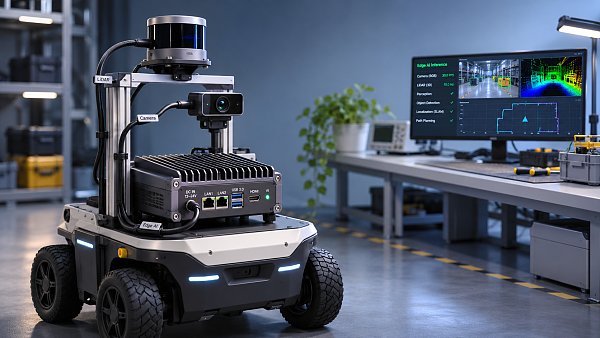
A typical architecture begins with sensors, drives, PLCs, or machine controllers. An edge gateway collects values through device-specific interfaces or industrial protocols, converts selected data into MQTT messages, and publishes them to a broker. Subscribers may include local applications, cloud ingestion services, historians, analytics systems, or maintenance tools.
The path is not necessarily a single linear chain. A plant may run a local broker for site applications and forward selected messages to a cloud broker. Alternatively, gateways may publish directly to a cloud endpoint when network and availability requirements allow it. The choice determines which functions remain available during a wide-area network outage and where buffering, access control, and operational ownership reside.
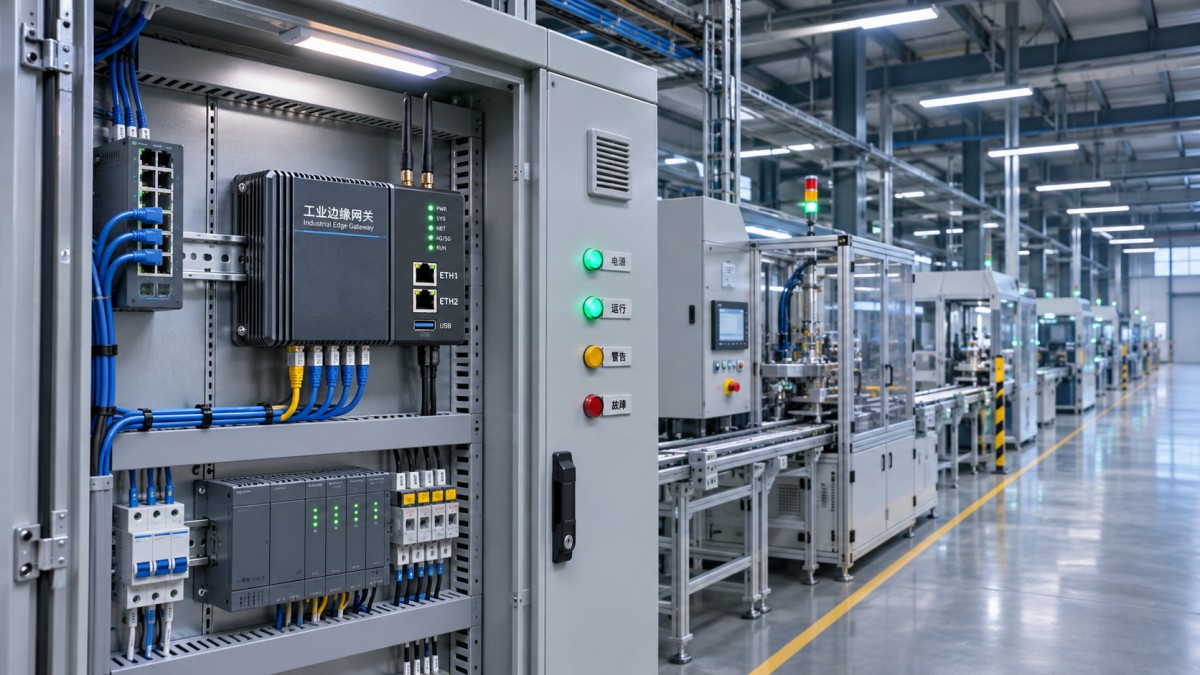
A useful boundary is between control traffic and information traffic. A PLC can continue executing its control logic while an edge gateway publishes production counts or equipment status. Cloud connectivity should not be assumed to provide the timing guarantees needed for a safety function or a closed-loop motion-control task.
Device acquisition determines what MQTT can actually deliver
MQTT transports what the publisher sends; it cannot recover information the gateway never acquired. If a gateway polls a PLC register every second, a state that changes and resets between polls can be missed. Publishing that register at a higher MQTT rate does not restore the lost transition.
Collection design therefore starts with the behavior of the source signal. Slow-changing temperatures may be suitable for periodic polling. Short fault pulses may require an event latch, controller-side counter, or another acquisition method that preserves transitions. High-frequency vibration waveforms may need local processing or a different transfer mechanism, with MQTT carrying derived features, alarms, or references to stored files.
Sampling and publishing rates also need not be identical. An edge application can sample locally at one rate and publish aggregates at another, provided the payload identifies the aggregation interval and method. A one-minute average, for example, cannot replace the underlying samples when an application needs to investigate short peaks.
Gateway capacity must be assessed against more than network bandwidth. Polling load on controllers, protocol connection limits, conversion overhead, local storage, and recovery traffic can all constrain the design. A gateway that handles steady-state telemetry may still struggle when it must resume live collection while draining a large offline backlog.
Topics route data; payloads give it meaning
MQTT topics define where messages are published and which subscribers receive them. A hierarchy such as site/plant-a/line-2/press-04/telemetry can support access policies and selective subscriptions. The hierarchy should use stable identifiers rather than names that change whenever a machine is moved or renamed.
Topic structure alone is not a data model. A useful payload also identifies the measured value, unit, source, timestamp, and quality or validity where available. For example, a temperature value of 72.4 is ambiguous without knowing whether it represents degrees Celsius, when it was measured, and whether the controller reported a valid reading.
Distinguish at least three times when the application needs them: the time of measurement at the source, the time the gateway received or generated the message, and the time the cloud ingested it. During an outage, these timestamps can differ substantially. Source timestamps are valuable only when the originating clock is trustworthy; clock synchronization, time zones, and behavior after power loss need explicit treatment.
Schema versioning matters when machines and applications evolve independently. Adding a field can be compatible for one consumer and disruptive for another. Define how consumers handle unknown fields, missing values, unit changes, and renamed assets. JSON is convenient to inspect, while compact binary formats can reduce payload overhead, but neither format supplies semantic consistency automatically.
Retained messages require particular care. A broker can store the latest retained message for a topic and deliver it to new subscribers. That is useful for a current configuration or last known state, but it is not a historical database. A retained “running” status can also be stale after a device disconnects; consumers should evaluate it alongside timestamps and connection status.
Delivery guarantees end at specific boundaries
MQTT defines three quality-of-service levels, but the selected level is not an end-to-end guarantee that a business record has been stored correctly in the cloud.
- QoS 0: At-most-once delivery, without protocol-level acknowledgment. It avoids retransmission overhead but permits message loss.
- QoS 1: At-least-once delivery between MQTT peers, with acknowledgment and retransmission as needed. Duplicate messages are possible.
- QoS 2: Exactly-once delivery within the MQTT protocol exchange between peers, using a more involved handshake and additional state.
The effective delivery behavior also depends on the publisher-to-broker and broker-to-subscriber connections, subscription settings, session configuration, and implementation. Even QoS 2 does not ensure that a cloud database writes a record exactly once after an application crash. For records where duplicates matter, use a stable event identifier or source sequence number and make downstream processing idempotent.
Persistent sessions can help a broker preserve subscriptions and eligible queued messages for a disconnected client, subject to protocol settings, broker limits, and storage durability. They are not a substitute for gateway-side buffering when the gateway cannot reach the broker at all. In MQTT 5, session expiry and message expiry settings give more control over how long session state and messages remain relevant; configuration must still match the broker’s supported limits.
Last Will and Testament messages can notify subscribers when a broker detects an ungraceful client disconnection. They do not prove that every upstream sensor is healthy, and detection can be delayed by network conditions and keep-alive settings. A separate heartbeat or data-quality signal may be needed to distinguish a connected gateway from a functioning acquisition chain.
Designing for disconnection and recovery
Offline operation should be defined in terms of the data that must survive and the maximum outage to tolerate. A gateway publishing a dashboard update every few seconds may discard superseded values, while a production event or alarm transition may need durable storage until delivery succeeds.
Local buffer sizing depends on the incoming message rate, average stored record size, required outage duration, and storage overhead. As an illustrative calculation, 100 records per second at 500 bytes each represent approximately 4.3 GB of raw data over 24 hours, before indexes, filesystem overhead, replication, or safety margin. The same design also needs a policy for what happens when the buffer fills: stop acquisition, discard oldest records, discard newest records, or prioritize selected event classes.
Recovery bandwidth is as important as buffer capacity. If a connection can forward data only as fast as new records arrive, the backlog will never clear. If it can forward twice the continuing ingest rate, a 24-hour backlog takes roughly another 24 hours to drain, assuming constant rates and no competing traffic. Rate limiting and prioritization can prevent old telemetry from delaying current alarms.
Ordering deserves separate testing. Messages may be delayed, duplicated, or processed out of order across reconnects, multiple topics, parallel consumers, or storage pipelines. Include sequence information where the application needs to detect gaps, and define whether consumers should order by source time, arrival time, or a device-generated sequence.
Broker placement changes availability and security boundaries
A local broker can keep plant subscribers connected when the cloud link fails and reduce the need for each device to establish an external connection. It also becomes infrastructure that requires patching, certificate management, capacity monitoring, and a recovery plan. Broker persistence settings and disk behavior should be verified; an acknowledgment should not automatically be interpreted as proof that every deployment has committed data to durable storage.
A cloud-hosted broker reduces local broker administration but makes cloud reachability part of the normal publishing path. Local buffering can mitigate interruptions, although local applications may still need another route to receive current data. A broker bridge or forwarding service can connect local and cloud environments, but its filtering, reconnection, loop prevention, and delivery behavior are implementation-specific.
Security begins before the broker. A gateway that can read PLC data may have significant access to the operational network. Network segmentation, restricted device interfaces, hardened gateway configuration, and controlled remote administration reduce exposure at that boundary.
For MQTT connections, TLS protects data in transit when correctly configured, including certificate validation. Give clients distinct identities and restrict publication and subscription by topic. A machine gateway that publishes telemetry should not automatically be able to subscribe to every plant topic or issue commands. Credential rotation, certificate expiry, revocation, and audit logging should be included in operating procedures rather than treated as one-time commissioning tasks.
MQTT 3.1.1 and MQTT 5 are OASIS standards; selecting a version does not by itself establish interoperability for every feature. Confirm the exact client and broker versions, supported authentication methods, session behavior, payload limits, and any vendor-specific bridge features. MQTT 5 properties can assist with functions such as message expiry and response correlation, but applications must use them consistently.
Cloud-to-device commands need a separate contract
Publishing a command to an MQTT topic is not equivalent to proving that a machine acted on it. A broker acknowledgment confirms a protocol exchange, not physical execution. A command path needs authorization, a unique command identifier, an expiry or validity window, and an application-level response that distinguishes receipt, acceptance, execution, and failure where those states matter.
Retained commands are hazardous unless deliberately designed for: a reconnecting device could receive an old instruction. Offline queues also need rules about whether a delayed command remains safe or relevant. Local controller logic and independent safety protections must continue to enforce operating limits, regardless of what arrives from the cloud.
What an architecture test should demonstrate
A credible evaluation follows a known signal from its source through acquisition, publication, broker delivery, cloud ingestion, and final storage. It should verify not only that messages arrive, but that their values, units, timestamps, quality indicators, and asset identities remain correct.
Disconnect the wide-area link for a defined interval, continue generating both routine telemetry and important events, then restore connectivity. Measure what was lost, duplicated, delayed, or reordered; confirm that the backlog clears without starving live traffic. Repeat with a broker restart, a gateway restart, exhausted local storage, expired credentials, and an unavailable cloud consumer where those failures are relevant to the deployment.
The resulting acceptance criteria should be expressed as application requirements: permissible data loss by message class, maximum age of operational data, recoverable outage duration, and the time allowed to detect a failed source. Those requirements turn MQTT from a connectivity choice into a verifiable factory-to-cloud data architecture.
Search News
Hot Articles
- Carbon Fiber StructuresHow to Specify Aerospace Carbon Fiber Assemblies for Lightweight, Load-Bearing PartsJul 11, 2026
- Machine VisionXiaomi, Alibaba DAMO Academy Drive Open-Source Robotics Model Ecosystem, Lowering Algorithm Development Barriers for Overseas SMEs Adopting Chinese Robotics SolutionsMar 30, 2026
- Cobots & ArmsShanxi 'AI+' Conference Showcases Embodied Intelligence with Multinational Buyer Engagement: Key Industry ImplicationsMar 30, 2026
Popular Tags
Recommended News
 Jul 11, 2026How to Specify Aerospace Carbon Fiber Assemblies for Lightweight, Load-Bearing PartsAerospace carbon fiber assemblies: learn how to specify laminate design, load data, joining methods, and inspection controls for lighter, reliable load-bearing aerospace parts.Elena Rostova (UAV Systems Researcher)
 Mar 30, 2026Xiaomi, Alibaba DAMO Academy Drive Open-Source Robotics Model Ecosystem, Lowering Algorithm Development Barriers for Overseas SMEs Adopting Chinese Robotics SolutionsXiaomi & Alibaba DAMO Academy's open-source robotics models lower algorithm barriers for global SMEs. Boost efficiency in manufacturing, logistics & smart retail with ROS 2 compatible solutions.TSV Data Lab
 Mar 30, 2026Shanxi 'AI+' Conference Showcases Embodied Intelligence with Multinational Buyer Engagement: Key Industry ImplicationsShanxi 'AI+' Conference highlights embodied intelligence with Tesla, Ubtech & Jiantao showcasing multimodal robotics. 40+ global buyers validated tech on-site, creating new B2B channels for industrial automation & AI solutions.Chen Wei (Automation Lead Engineer)
 Mar 30, 2026Zhongguancun Unveils 6G Integrated Sensing-Computing-Intelligence Platform to Empower Embodied Robots for Global Industrial ApplicationsZhongguancun's new 6G platform revolutionizes industrial robotics with <10ms latency, empowering global automotive, logistics & port automation. Discover how this tech boosts China's smart manufacturing exports.TSV Data Lab
 Mar 30, 2026Mech-Mind Tianjin Embodied Intelligence R&D and Production Base Goes Live, Cutting Delivery Time by 20%–30% for Global Customized AMR+Vision SolutionsMech-Mind's Tianjin AMR+Vision production base cuts delivery time by 20%-30% for欧美 & Latin American markets. Discover how this PLd-certified facility accelerates customized robotics solutions for smart manufacturing and logistics.Chen Wei (Automation Lead Engineer)
 Mar 30, 2026Boao Forum Reveals 'Co-evolution of Big and Small Brains' Trend in Humanoid Robots, China's Embodied Intelligence Accelerates Adaptation to Overseas Manufacturing Service ScenariosDiscover how China's humanoid robots, featuring 'Co-evolution of Big and Small Brains,' are revolutionizing global manufacturing. Learn about Embodied Tian Gong 3.0's ISO compliance and overseas deployment at Boao Forum 2026.Chen Wei (Automation Lead Engineer)
 Mar 30, 2026China Railway Industrial Secures Patent for Embodied Robotics in Material Handling, Boosting High-Precision Delivery Capabilities for Overseas Infrastructure and Manufacturing ProjectsChina Railway Industrial's new patent for embodied robotics in material handling boosts high-precision delivery for global infrastructure & manufacturing. Discover how this innovation enhances logistics accuracy in automotive, rail transit & EPC projects.Chen Wei (Automation Lead Engineer)
 Nov 19, 2026Choosing a Palletizing System for Bagged Food: Speed and Bag HandlingChoose the right palletizing system for bagged food. Compare throughput, bag handling, food safety, and robotic vs. conventional options.Chen Wei (Automation Lead Engineer)
 Nov 18, 2026Formnext 2026 Opens as Additive Manufacturing Advances Industrial ApplicationsFormnext 2026 highlights additive manufacturing innovations for industrial applications. Explore what they could mean for production, procurement and suppliers.Dr. Marcus Vance
 Nov 18, 2026Flexible Robotics Integration for High-Mix, Low-Volume ProductionFlexible robotics integration can make high-mix, low-volume production more adaptable. Explore practical ways to reduce changeover risk and plan a reliable robotic cell.Victor Lin (Chief Software Architect)
 Nov 17, 2026Formnext 2026: UK Additive Manufacturing Leads in Research but Faces Production BarriersUK additive manufacturing leads in research but faces barriers to production at scale. Explore the Formnext 2026 insights and what businesses should consider.Dr. Marcus Vance
 Nov 17, 2026Choosing Warehouse Automation Packaging Systems: Throughput and SpaceCompare warehouse automation packaging systems by throughput, footprint, and order mix. Discover how to choose a layout that meets peak demand.Victor Lin (Chief Software Architect)
 Nov 16, 2026China's October Industrial Robot Output Up 26%, 3D Printing Equipment Up 85.9%China's industrial robot output reportedly rose 26% in October, while 3D printing equipment grew 85.9%. Explore what the figures could mean for buyers.Chen Wei (Automation Lead Engineer)
 Nov 16, 2026Commercial Drones in North America: Choosing Payloads for Inspection and MappingCommercial drones North America: compare RGB, thermal and LiDAR payloads for inspection and mapping, and choose a system that delivers reliable data.Elena Rostova (UAV Systems Researcher)
 Nov 15, 2026Aerospace Materials in the UK: Choosing Metals and Composites for AircraftExplore aerospace materials UK teams use for aircraft. Compare metals and composites by weight, fatigue, manufacturing and approval needs to make informed choices.Dr. Marcus Vance
 Nov 14, 2026Ukraine Tests 3D-Printed Protective Structure Against M2 Heavy Machine-Gun FireUkraine’s 3D-printed protective structure reportedly resisted M2 heavy machine-gun fire. Explore the test’s limits and potential procurement implications.Dr. Marcus Vance
 Nov 14, 2026Rugged UAV Metrics: Assessing Wind Resistance, Endurance and IP RatingsCompare rugged UAV metrics for wind resistance, endurance and IP ratings. Learn what evidence to request and choose a platform fit for your mission.Chen Wei (Automation Lead Engineer)
 Nov 13, 2026Physical AI Gains Attention as Robot Investment Moves Beyond HardwarePhysical AI is reshaping robot investment beyond hardware. Explore what the shift toward perception and algorithms could mean for buyers and suppliers.Chen Wei (Automation Lead Engineer)
 Nov 13, 2026Precision Machining Benchmarks: A Guide to Tolerances and Surface FinishExplore this precision machining benchmarks guide to compare tolerances, surface finish, and inspection methods—and specify parts with confidence.Dr. Marcus Vance
 Nov 12, 2026Beijing Issues Three-Year Plan for Embodied AI Robotics IndustryBeijing’s embodied AI robotics plan targets leading humanoid robot makers by 2028. Explore its goals for supply chains, AI models and deployment.Chen Wei (Automation Lead Engineer)
 Nov 12, 2026Choosing an Edge AI Box for Robotics: Compute, Latency and I/OChoose the right edge AI box for robotics with practical guidance on compute, latency, sensor I/O and sustained performance. Explore the selection checklist.Chen Wei (Automation Lead Engineer)
 Nov 11, 2026Beijing Sets 200,000-Unit Annual Capacity Goal in Robotics PlanBeijing's robotics plan targets 200,000 units of annual capacity by 2027. Explore its technology goals, benchmark applications and adoption outlook.Chen Wei (Automation Lead Engineer)
 Nov 11, 2026Aero Engine Blade Machining: 5-Axis CNC Methods and ChallengesExplore aero engine blade machining, from 5-axis toolpaths to thin-wall challenges, surface integrity, and inspection. Learn what makes a process reliable.Dr. Marcus Vance
 Nov 10, 2026FAA Authorizes Skyways’ Long-Distance BVLOS Flights for Shell in Gulf of MexicoFAA authorizes Skyways’ long-distance BVLOS drone flights for Shell in the Gulf of Mexico. Discover what the decision means for offshore pipeline inspection.Elena Rostova (UAV Systems Researcher)