Industrial robots for welding applications: where quality is won
Publication Date
author
In welding, quality is not an abstract promise—it is measured in repeatability, heat input control, seam consistency, and defect rates. Industrial robots for welding applications have become critical tools for quality and safety managers who must reduce variability, document process stability, and protect operators in demanding production environments. This article examines where welding quality is truly won: in data-backed performance, precise programming, and process control that stand up to real factory conditions.
Why scenario differences matter more than generic robot claims
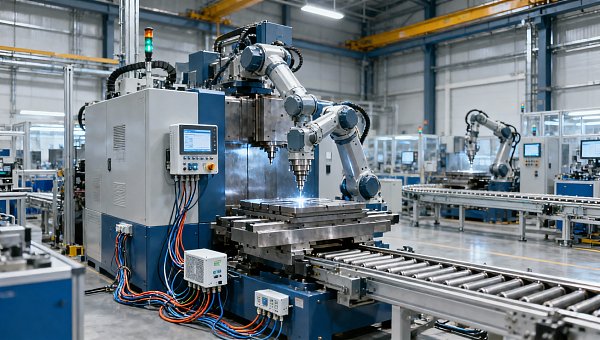
For quality control teams and safety managers, the wrong question is often, “Which robot is best?” The more useful question is, “Which industrial robots for welding applications fit our exact production scenario?” A robot that performs well in a high-volume automotive cell may be poorly suited to heavy structural fabrication, stainless food-grade assemblies, or mixed-model contract manufacturing. Welding quality depends on fixture stability, part variation, torch access, duty cycle, wire-feed reliability, sensing, and documentation discipline. These factors change dramatically from one shop environment to another.
This is where TechStat Vanguard’s data-first mindset matters. In hard-tech procurement, vague promises about “high precision” are not enough. Quality is won when engineers and managers verify repeatability under load, path accuracy during thermal distortion, arc-on time, spatter behavior, fume extraction compatibility, and the consistency of weld parameters across shifts. For industrial robots for welding applications, scenario fit is the bridge between capital investment and measurable quality outcomes.
Typical business scenarios where welding robots create real quality value
Most organizations evaluating industrial robots for welding applications fall into a few recurring scenarios. Each one changes what quality and safety leaders should validate before approval.
High-volume repetitive production
This includes automotive subassemblies, appliance frames, storage racks, and standardized metal furniture. Here, the value of robotic welding is strongest because repeatability can be fully exploited. Quality managers should focus on cycle consistency, weld bead uniformity, rework reduction, and in-line traceability. Safety managers should examine guarding logic, interlocks, arc flash containment, and stable operator loading procedures.
Heavy fabrication and large workpieces
Construction machinery, agricultural equipment, truck frames, and energy-sector fabrications often present thicker materials, longer weld paths, and higher heat input variation. In these settings, industrial robots for welding applications must handle positional complexity, weld distortion, and access constraints. Quality is less about headline speed and more about penetration consistency, multi-pass accuracy, and reduced variability across large assemblies.
Mixed-model and high-mix low-volume production
Job shops and contract manufacturers face a different challenge: frequent changeovers. A robot may still be justified, but quality teams should verify how fast programs can be adjusted, whether offline programming is practical, and how seam tracking compensates for part variation. The main risk is assuming that industrial robots for welding applications automatically improve quality even when upstream fixturing and part consistency are unstable.
Precision welds with strict compliance requirements
Aerospace subcomponents, pressure-related fabrications, medical support structures, and critical enclosures demand stronger process control and deeper records. In such scenarios, robotic welding is not merely an automation project. It becomes a controlled manufacturing system. Quality leaders should prioritize parameter logging, weld procedure adherence, calibration intervals, and defect trend analysis over simple output metrics.
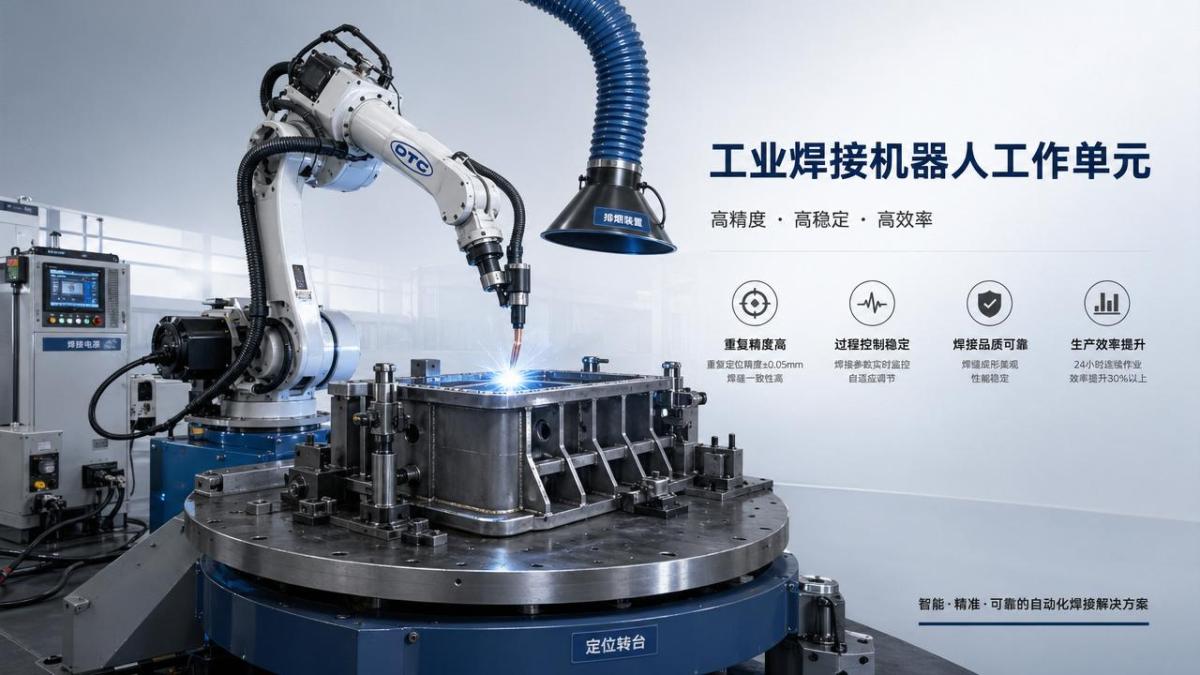
Scenario comparison: what to evaluate before selecting industrial robots for welding applications
The table below helps quality and safety stakeholders compare common welding scenarios and the decision criteria that matter most.
What quality managers should look for in each welding scenario
Quality is not won by robot ownership alone. It is won by controlling the variables that robots expose more clearly than manual welding ever could. In repetitive production, the key indicators are weld geometry consistency, reduced spatter cleanup, fewer skipped welds, and lower variation between operators and shifts. If these indicators do not improve after automation, the root cause often lies in part presentation or parameter tuning rather than in the robot itself.
In large-structure welding, quality managers should ask whether the robot cell includes positioners, sensing, and fixture strategies to manage cumulative tolerances. Industrial robots for welding applications may hold a path accurately, but if the workpiece shifts, the result is still a defect. This is why TSV consistently emphasizes parameter truth over marketing language: actual weld quality is the result of a system, not a catalog specification.
In high-mix environments, the priority shifts toward first-pass yield after changeover. Here, the best robotic welding system may be the one that minimizes programming burden and captures process recipes reliably. A slightly slower robot with better usability and stronger traceability can outperform a faster platform that introduces setup errors and undocumented parameter drift.
What safety managers should verify before deployment
Safety evaluation for industrial robots for welding applications must go beyond perimeter fencing. Welding cells involve arc radiation, hot surfaces, fumes, moving axes, rotating positioners, wire-feed hazards, and maintenance exposure. In practice, safety managers should validate five areas.
- Risk assessment matched to the exact cell layout, including loading, cleaning, tip dressing, and maintenance tasks.
- Interlock reliability and safe restart behavior after stoppages or fault conditions.
- Fume extraction performance based on real arc-on conditions, not only nominal airflow values.
- Operator training for abnormal scenarios such as collision recovery, wire jams, torch replacement, and consumable handling.
- Preventive maintenance routines that preserve both safety integrity and weld quality stability.
The best industrial robots for welding applications are not just productive; they are predictable under upset conditions. For safety teams, predictability is often the deciding factor.
Common misjudgments when matching robots to welding applications
Several selection mistakes appear repeatedly across industries. The first is overvaluing nominal robot repeatability while undervaluing fixture quality. A robot can only repeat what the workholding system presents. The second is assuming that all welding defects are programming defects. In reality, wire quality, shielding gas consistency, joint fit-up, torch consumables, and thermal distortion may be the dominant variables.
Another common error is selecting industrial robots for welding applications based only on current production volume. Quality and safety leaders should also examine future part complexity, documentation requirements, and expected customer audits. A low-cost cell that lacks process data capture may become expensive when traceability requirements increase. Likewise, buying a highly complex robotic system for unstable, low-discipline production can create new failure modes rather than solve old ones.
How different organizations should judge fit
A large manufacturer with mature engineering support can often justify advanced industrial robots for welding applications that include offline programming, seam tracking, integrated vision, and detailed process analytics. The business case extends beyond labor savings into documented quality capability and lower supplier-risk exposure.
A mid-sized fabricator should judge fit more carefully. If product families are similar and fixtures can be standardized, robotic welding can sharply improve consistency and operator safety. If every batch is different and engineering support is thin, the company should first strengthen workholding, drawing control, and process discipline before expecting the robot to deliver stable quality.
For contract manufacturers, the strongest use case is often not maximum speed but maximum repeatable setup control. In that environment, industrial robots for welding applications become valuable when they reduce customer complaints, support qualification records, and shorten validation after job changeovers.
Practical checklist for scenario-based evaluation
Before approving a welding robot project, quality and safety stakeholders should confirm the following:
- Are part tolerances stable enough for robotic path repetition?
- Can fixtures hold the joint in a repeatable, inspectable position?
- Do we need seam tracking, touch sensing, or adaptive control for real-world variation?
- Which defects are we trying to reduce: porosity, undercut, missed welds, distortion, or inconsistency?
- What process data must be recorded for customer, regulatory, or internal quality purposes?
- How will maintenance, tip changes, and fault recovery affect both safety and output?
- Can operators and technicians sustain the programming and preventive maintenance discipline required?
FAQ: industrial robots for welding applications in real factory decisions
Are industrial robots for welding applications only suitable for large factories?
No. They are suitable wherever production patterns justify repeatable welding control. Smaller firms can benefit significantly if they have recurring part families, stable fixturing, and a clear quality problem to solve.
Do robots automatically improve weld quality?
No. Robots improve consistency, but only when upstream variables are controlled. Poor fit-up, unstable wire feed, weak shielding gas control, or bad fixtures will still produce defects.
Which scenario benefits most from robotic welding?
High-volume repetitive welding usually gains the fastest return. However, compliance-driven or safety-critical operations may justify industrial robots for welding applications even at lower volumes because traceability and exposure reduction carry strategic value.
What should safety managers ask suppliers first?
Ask how the cell handles abnormal conditions: collision detection, restart logic, maintenance access, fume control under real load, and operator interaction during changeovers. These details often matter more than headline throughput.
Where quality is actually won
For industrial robots for welding applications, quality is won long before production starts. It is won when companies match the robot to the right scenario, validate fixtures and tolerances, define measurable defect-reduction targets, and build traceable process control into the cell. It is won when safety systems are designed for real maintenance and recovery tasks, not only normal operation. And it is won when procurement decisions are based on engineering evidence rather than broad claims.
For quality control and safety leaders, the next step is not simply to request quotes. It is to map your own scenario—volume, mix, material behavior, compliance burden, and operator exposure—then compare those conditions against real robotic welding performance data. In the TSV approach, that is how trust is built: not through adjectives, but through parameters, tolerances, and verified process stability.
Search News
Hot Articles
- Carbon Fiber StructuresHow to Specify Aerospace Carbon Fiber Assemblies for Lightweight, Load-Bearing PartsJul 11, 2026
- Machine VisionXiaomi, Alibaba DAMO Academy Drive Open-Source Robotics Model Ecosystem, Lowering Algorithm Development Barriers for Overseas SMEs Adopting Chinese Robotics SolutionsMar 30, 2026
- Cobots & ArmsShanxi 'AI+' Conference Showcases Embodied Intelligence with Multinational Buyer Engagement: Key Industry ImplicationsMar 30, 2026
Popular Tags
Recommended News
 Jul 11, 2026How to Specify Aerospace Carbon Fiber Assemblies for Lightweight, Load-Bearing PartsAerospace carbon fiber assemblies: learn how to specify laminate design, load data, joining methods, and inspection controls for lighter, reliable load-bearing aerospace parts.Elena Rostova (UAV Systems Researcher)
 Mar 30, 2026Xiaomi, Alibaba DAMO Academy Drive Open-Source Robotics Model Ecosystem, Lowering Algorithm Development Barriers for Overseas SMEs Adopting Chinese Robotics SolutionsXiaomi & Alibaba DAMO Academy's open-source robotics models lower algorithm barriers for global SMEs. Boost efficiency in manufacturing, logistics & smart retail with ROS 2 compatible solutions.TSV Data Lab
 Mar 30, 2026Shanxi 'AI+' Conference Showcases Embodied Intelligence with Multinational Buyer Engagement: Key Industry ImplicationsShanxi 'AI+' Conference highlights embodied intelligence with Tesla, Ubtech & Jiantao showcasing multimodal robotics. 40+ global buyers validated tech on-site, creating new B2B channels for industrial automation & AI solutions.Chen Wei (Automation Lead Engineer)
 Mar 30, 2026Zhongguancun Unveils 6G Integrated Sensing-Computing-Intelligence Platform to Empower Embodied Robots for Global Industrial ApplicationsZhongguancun's new 6G platform revolutionizes industrial robotics with <10ms latency, empowering global automotive, logistics & port automation. Discover how this tech boosts China's smart manufacturing exports.TSV Data Lab
 Mar 30, 2026Mech-Mind Tianjin Embodied Intelligence R&D and Production Base Goes Live, Cutting Delivery Time by 20%–30% for Global Customized AMR+Vision SolutionsMech-Mind's Tianjin AMR+Vision production base cuts delivery time by 20%-30% for欧美 & Latin American markets. Discover how this PLd-certified facility accelerates customized robotics solutions for smart manufacturing and logistics.Chen Wei (Automation Lead Engineer)
 Mar 30, 2026Boao Forum Reveals 'Co-evolution of Big and Small Brains' Trend in Humanoid Robots, China's Embodied Intelligence Accelerates Adaptation to Overseas Manufacturing Service ScenariosDiscover how China's humanoid robots, featuring 'Co-evolution of Big and Small Brains,' are revolutionizing global manufacturing. Learn about Embodied Tian Gong 3.0's ISO compliance and overseas deployment at Boao Forum 2026.Chen Wei (Automation Lead Engineer)
 Mar 30, 2026China Railway Industrial Secures Patent for Embodied Robotics in Material Handling, Boosting High-Precision Delivery Capabilities for Overseas Infrastructure and Manufacturing ProjectsChina Railway Industrial's new patent for embodied robotics in material handling boosts high-precision delivery for global infrastructure & manufacturing. Discover how this innovation enhances logistics accuracy in automotive, rail transit & EPC projects.Chen Wei (Automation Lead Engineer)
 Sep 28, 2026Spindle Runout Measurement in Germany: DIN Standards, Methods, and Acceptance LimitsSpindle runout measurement Germany: explore DIN standards, proven methods, acceptance limits, and audit-ready practices for reliable machining quality.Dr. Marcus Vance
 Sep 27, 2026How to Select Wall-Mount Edge Devices for Space-Constrained Factory NetworksWall mount edge devices for space-constrained factories: evaluate workload, thermal design, power resilience, cable access, and network reliability for smarter deployments.TSV Data Lab
 Sep 26, 2026Machining Tolerance Analysis: How to Set Limits That Meet Function and Cost TargetsMachining tolerance analysis: learn how to set functional limits, control tolerance stacks, reduce inspection risk, and balance precision with production cost.Dr. Marcus Vance
 Sep 25, 2026How to Evaluate an Industrial Infrastructure Data Platform for Multi-Site OperationsIndustrial infrastructure data platform evaluation guide for multi-site operations: compare data quality, edge resilience, interoperability, governance, and scalable proof-of-value criteria.Victor Lin (Chief Software Architect)
 Sep 24, 2026How to Select Machine Vision Optics for Accurate Inspection at Different Working DistancesMachine vision optics selection guide for accurate inspection at every working distance. Compare FOV, pixel scale, DOF, distortion, lighting, and telecentric options.TSV Data Lab
 Sep 23, 2026How to Evaluate a Machine Vision System Integrator for High-Speed Inspection LinesChoose a machine vision system integrator with proven expertise in high-speed inspection, reliable reject timing, robust optics, and measurable acceptance criteria.TSV Data Lab
 Sep 28, 2026When is a SCADA API the right choice for connecting plant systems?SCADA API guide: learn when governed plant data integration improves traceability, security, and scalability—without compromising real-time control.Victor Lin (Chief Software Architect)
 Sep 27, 2026How SCADA data integration improves traceability across production linesSCADA data integration connects production-line data to improve traceability, accelerate quality investigations, and strengthen safety decisions.Victor Lin (Chief Software Architect)
 Sep 26, 2026What to define before starting SCADA integration planningSCADA integration planning starts with clear scope, control boundaries, data models, cybersecurity, and testing. Discover the definitions that reduce risk and costly rework.Victor Lin (Chief Software Architect)
 Sep 25, 2026How a smart factory with Industrial IoT reduces production blind spotsDiscover how a smart factory with Industrial IoT turns real-time machine, quality, and workflow data into actionable insights that reduce production blind spots and delivery risks.Victor Lin (Chief Software Architect)
 Sep 24, 2026When does Industrial IoT make smart manufacturing easier to scale?Smart manufacturing Industrial IoT scales when trusted data, interoperable systems, and secure workflows turn connected assets into measurable gains.TSV Data Lab
 Sep 23, 2026What drives ultra-precision machining cost at 1-micron tolerance?Ultra precision machining cost per part at 1 micron tolerance depends on process, material, metrology, and yield. Learn how to compare quotes confidently.Dr. Marcus Vance
 Sep 22, 2026Drone Engine-T550CC Applications: Build the UAV Power System Around the MissionAn application guide for Drone Engine-T550CC integration, covering payload planning, airframe matching, cooling, fuel, vibration, test procedures, documentation, and service preparation.Elena Rostova (UAV Systems Researcher)
 Sep 22, 2026How to Evaluate Industrial Edge Computing Vendors for Factory DeploymentIndustrial edge computing vendor evaluation guide for factories: compare latency, protocol fit, reliability, security, and lifecycle support before deployment.TSV Data Lab
 Sep 21, 2026Drone Payload Integration: Matching Power, Data, and Center of Gravity for Reliable FlightsDrone payload integration made practical: balance power, data, center of gravity, and endurance to build safer, more reliable mission-ready flights.Elena Rostova (UAV Systems Researcher)
 Sep 20, 2026Autonomous Navigation Pricing: Cost Drivers and Budget Benchmarks for AMR ProjectsAutonomous navigation price explained: compare AMR cost drivers, software, sensors, integration, safety, and lifecycle budgets to build a scalable project plan.Chen Wei (Automation Lead Engineer)
 Sep 19, 2026How to Scope Automation Integration Services for Multi-System Factory ProjectsAutomation integration services: learn how to scope multi-system factory projects with clear workflows, interface contracts, safety boundaries, and acceptance criteria.Victor Lin (Chief Software Architect)