How industrial robots for palletizing cut end of line costs
Publication Date
author
For enterprise decision-makers under pressure to reduce throughput bottlenecks and labor dependency, industrial robots for palletizing applications offer a measurable path to lower end-of-line costs. Beyond automation hype, the real value lies in repeatability, uptime, safer material handling, and faster payback across high-volume operations. This article examines how palletizing robotics turns engineering data into smarter capital decisions.
What industrial robots for palletizing applications actually solve
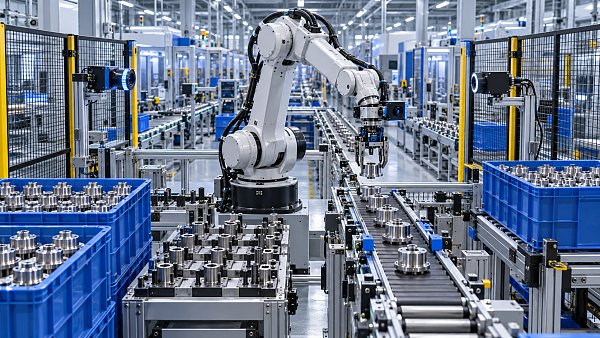
Industrial robots for palletizing applications automate the final stacking of cartons, bags, trays, pails, and cases onto pallets for storage or shipment.
At the end of a production line, this task appears simple. In reality, it drives labor variability, damage risk, safety exposure, and line stoppages.
Manual palletizing depends on shift availability, operator endurance, product weight, and layout constraints. Those variables directly influence total delivered cost.
Industrial robots for palletizing applications address these issues with programmed motion, stable cycle times, and consistent load patterns across long operating windows.
The cost advantage is not only wage substitution. It also includes fewer damaged loads, lower rework, reduced ergonomic claims, and better warehouse flow.
In mixed manufacturing environments, robotic palletizing also helps standardize outbound handling. That matters when plants package different SKUs on one line.
Core technical elements behind cost reduction
- Repeatable placement accuracy improves pallet stability.
- Programmable cycle rates reduce output variability.
- End effectors adapt to boxes, bags, or layered products.
- Integrated safety systems reduce restricted labor exposure.
- Data collection supports OEE, downtime, and maintenance analysis.
End-of-line cost pressure in current industrial operations
Across comprehensive industry sectors, end-of-line handling has become a visible cost center. Throughput targets are rising while labor stability remains uncertain.
Packaging lines now run faster, SKU counts are broader, and customer penalties for shipping errors are stricter. Manual palletizing struggles under these conditions.
This explains why industrial robots for palletizing applications are moving from niche upgrades to mainstream capital projects.
Signals shaping investment decisions
From an engineering perspective, the strongest business case comes when cost pressure combines with poor consistency and measurable line interruptions.
How industrial robots for palletizing applications lower total end-of-line cost
The economics of industrial robots for palletizing applications should be analyzed through total cost, not only initial equipment price.
A palletizing cell affects labor, safety, throughput, maintenance, quality, and logistics. These cost layers interact more than many budget models assume.
1. Labor cost normalization
Robots reduce dependency on repetitive manual handling. This can lower direct labor hours, overtime, temporary staffing, and shift disruption.
2. Better throughput consistency
Consistent cycle time keeps packaging, conveying, and wrapping synchronized. Fewer stoppages mean lower idle equipment cost and more predictable output.
3. Reduced product and pallet damage
Accurate placement and stable layer formation reduce leaning loads, crushed cartons, and transit instability. That protects both product value and customer service metrics.
4. Safety-related savings
Repetitive lifting injuries, strain events, and restricted work claims often carry long-term cost. Robotic palletizing reduces this exposure in measurable ways.
5. Space and layout efficiency
Modern cells can fit compact footprints while serving several infeed lines. Better floor use can delay expansion spending and improve material flow.
6. Data-driven maintenance planning
When connected to line controls, industrial robots for palletizing applications provide fault history, cycle counts, and utilization data for planned maintenance.
That supports TSV-style engineering evaluation, where decisions are based on uptime, repeatability, and recoverable cost rather than generic automation claims.
Typical application patterns across comprehensive industry lines
Industrial robots for palletizing applications are widely used because end-of-line handling exists in nearly every production environment.
The most suitable configuration depends on payload, package stability, speed target, and changeover frequency.
Common robot cell variants
- Single-line palletizing cells for stable, high-volume output.
- Multi-line systems serving several conveyors with one robot.
- Bag palletizing cells using clamps or vacuum tooling.
- Mixed-case palletizing with vision-guided pattern selection.
- Collaborative setups for lower payload and tighter footprints.
Implementation factors that determine financial results
Not every automation project delivers the same return. The performance of industrial robots for palletizing applications depends on system engineering discipline.
Key evaluation points before approval
- Confirm actual line rate, peak rate, and seasonal surge rate.
- Measure payload, carton rigidity, and center-of-gravity variation.
- Review pallet patterns, slip sheet use, and wrapping sequence.
- Check robot reach, acceleration limits, and duty cycle.
- Validate gripper compatibility across present and future SKUs.
- Plan safety fencing, access zones, and recovery procedures.
- Define spare parts strategy and local service response time.
One frequent mistake is selecting by nominal speed alone. Real performance depends on infeed stability, layer formation logic, and downstream pallet discharge.
Another mistake is ignoring data integration. Without usable production data, savings are harder to verify and optimize after startup.
Practical ROI framing
A realistic model should include labor replacement, injury reduction, scrap avoidance, damage claim reduction, uptime improvement, and expected maintenance cost.
For many sites, payback improves further when one robot cell supports multiple shifts or replaces unstable weekend staffing.
A practical next step for evaluating palletizing automation
The best path forward is a data-first review of the current end-of-line process. Start with stoppage history, labor hours, injury records, and damage rates.
Then map line speed, package mix, pallet pattern requirements, and floor constraints. This creates a factual baseline for comparing automation options.
Industrial robots for palletizing applications should be judged by repeatability, uptime, recoverability, and cost per pallet moved, not by brochure language.
That approach aligns with the TSV principle that parameters matter more than claims. In end-of-line operations, measured engineering truth produces better capital outcomes.
If current palletizing limits throughput, raises labor exposure, or increases load damage, a structured technical benchmark is the most actionable next step.
Search News
Hot Articles
- Carbon Fiber StructuresHow to Specify Aerospace Carbon Fiber Assemblies for Lightweight, Load-Bearing PartsJul 11, 2026
- Machine VisionXiaomi, Alibaba DAMO Academy Drive Open-Source Robotics Model Ecosystem, Lowering Algorithm Development Barriers for Overseas SMEs Adopting Chinese Robotics SolutionsMar 30, 2026
- Cobots & ArmsShanxi 'AI+' Conference Showcases Embodied Intelligence with Multinational Buyer Engagement: Key Industry ImplicationsMar 30, 2026
Popular Tags
Recommended News
 Jul 11, 2026How to Specify Aerospace Carbon Fiber Assemblies for Lightweight, Load-Bearing PartsAerospace carbon fiber assemblies: learn how to specify laminate design, load data, joining methods, and inspection controls for lighter, reliable load-bearing aerospace parts.Elena Rostova (UAV Systems Researcher)
 Mar 30, 2026Xiaomi, Alibaba DAMO Academy Drive Open-Source Robotics Model Ecosystem, Lowering Algorithm Development Barriers for Overseas SMEs Adopting Chinese Robotics SolutionsXiaomi & Alibaba DAMO Academy's open-source robotics models lower algorithm barriers for global SMEs. Boost efficiency in manufacturing, logistics & smart retail with ROS 2 compatible solutions.TSV Data Lab
 Mar 30, 2026Shanxi 'AI+' Conference Showcases Embodied Intelligence with Multinational Buyer Engagement: Key Industry ImplicationsShanxi 'AI+' Conference highlights embodied intelligence with Tesla, Ubtech & Jiantao showcasing multimodal robotics. 40+ global buyers validated tech on-site, creating new B2B channels for industrial automation & AI solutions.Chen Wei (Automation Lead Engineer)
 Mar 30, 2026Zhongguancun Unveils 6G Integrated Sensing-Computing-Intelligence Platform to Empower Embodied Robots for Global Industrial ApplicationsZhongguancun's new 6G platform revolutionizes industrial robotics with <10ms latency, empowering global automotive, logistics & port automation. Discover how this tech boosts China's smart manufacturing exports.TSV Data Lab
 Mar 30, 2026Mech-Mind Tianjin Embodied Intelligence R&D and Production Base Goes Live, Cutting Delivery Time by 20%–30% for Global Customized AMR+Vision SolutionsMech-Mind's Tianjin AMR+Vision production base cuts delivery time by 20%-30% for欧美 & Latin American markets. Discover how this PLd-certified facility accelerates customized robotics solutions for smart manufacturing and logistics.Chen Wei (Automation Lead Engineer)
 Mar 30, 2026Boao Forum Reveals 'Co-evolution of Big and Small Brains' Trend in Humanoid Robots, China's Embodied Intelligence Accelerates Adaptation to Overseas Manufacturing Service ScenariosDiscover how China's humanoid robots, featuring 'Co-evolution of Big and Small Brains,' are revolutionizing global manufacturing. Learn about Embodied Tian Gong 3.0's ISO compliance and overseas deployment at Boao Forum 2026.Chen Wei (Automation Lead Engineer)
 Mar 30, 2026China Railway Industrial Secures Patent for Embodied Robotics in Material Handling, Boosting High-Precision Delivery Capabilities for Overseas Infrastructure and Manufacturing ProjectsChina Railway Industrial's new patent for embodied robotics in material handling boosts high-precision delivery for global infrastructure & manufacturing. Discover how this innovation enhances logistics accuracy in automotive, rail transit & EPC projects.Chen Wei (Automation Lead Engineer)
 Oct 10, 2026How to Select a Machine Performance Monitoring Platform for OEE and Downtime ReductionMachine performance monitoring platform selection guide: validate machine states, OEE data, downtime reasons, integrations, and scalability to reduce losses with confidence.TSV Data Lab
 Oct 08, 2026How to Machine Inconel 625 Blades Without Heat Cracks or Edge ChippingInconel 625 blade machining guide: prevent heat cracks, edge chipping, chatter, and work hardening with proven tooling, cooling, fixturing, and inspection strategies.Dr. Marcus Vance
 Oct 07, 2026How to Evaluate an HMI Panel Distributor for Industrial Automation ProjectsHMI panel distributor evaluation guide: verify technical compatibility, traceability, supply reliability, lifecycle support, and total cost for automation projects.Victor Lin (Chief Software Architect)
 Oct 06, 2026Navigation Fault Tolerance Standards for AMRs: What Safety Teams Must VerifyNavigation fault tolerance standards: learn what AMR safety teams must verify, from localization loss and sensor faults to stopping distance, safe restart, and site-specific validation.Chen Wei (Automation Lead Engineer)
 Oct 05, 2026Calculating Edge Computing Total Cost of Ownership Across Distributed SitesEdge computing ownership cost explained: calculate deployment, energy, connectivity, security, remote support, and refresh costs across distributed sites.TSV Data Lab
 Oct 04, 2026CAD/CAM Benchmarking in the GCC: What Manufacturers Should Ask a ConsultantCAD CAM benchmark consultant GCC guide: learn the key questions manufacturers should ask to validate post-processors, workflows, machine performance, and production risk.Victor Lin (Chief Software Architect)
 Oct 03, 2026Selecting Automotive Radar Sensor Modules for ADAS Range, Resolution, and IntegrationAutomotive radar sensor module selection guide for ADAS: compare range, resolution, field of view, latency, and integration to build safer, reliable vehicle systems.TSV Data Lab
 Oct 02, 2026How to Qualify Machined Parts Suppliers for Hard Tech ProgramsHard tech supply chain machined parts demand rigorous supplier qualification. Learn how to assess capability, traceability, quality controls, and delivery resilience.Dr. Marcus Vance
 Oct 01, 2026How to Select an Outdoor Security Radar Sensor for Perimeter Detection?Outdoor security radar sensor selection guide: compare range, accuracy, false-alarm control, integration, and field testing for reliable perimeter detection.TSV Data Lab
 Sep 30, 2026How to Evaluate Solid-State LiDAR Hardware for Outdoor Autonomous VehiclesSolid state LiDAR hardware evaluation guide for outdoor autonomous vehicles—compare range, point-cloud quality, environmental resilience, integration, and safety.TSV Data Lab
 Sep 29, 2026ISO 9283 Repeatability: How to Evaluate Cobot Positioning PerformanceISO 9283 cobot repeatability explained: learn how payload, reach, approach direction, and test conditions affect positioning performance and cell capability.Chen Wei (Automation Lead Engineer)
 Oct 10, 2026When does the cost of industrial robots pay back in high-volume production?Cost of industrial robots: discover how high-volume manufacturers calculate payback through uptime, cycle time, labor, quality, and integration before investing.Chen Wei (Automation Lead Engineer)
 Oct 09, 2026What does a manufacturing robot really cost beyond the purchase price?Manufacturing robot cost goes far beyond the purchase price. Explore integration, tooling, safety, uptime, and total ownership factors for smarter automation investments.Chen Wei (Automation Lead Engineer)
 Oct 08, 2026AGV vs. AMR: Which Is Better for Frequently Changing Routes?Which is better for changing routes? Compare AGVs and AMRs for flexible navigation, docking precision, traffic control, and faster facility reconfiguration.Chen Wei (Automation Lead Engineer)
 Oct 07, 2026How Much Does an Automated Guided Vehicle Cost in 2026?How much does an automated guided vehicle cost in 2026? Explore AGV price ranges, hidden deployment costs, and smart buying factors for stronger ROI.Chen Wei (Automation Lead Engineer)
 Oct 06, 2026Are Collaborative Robots Safe Enough to Operate Without Fencing?Are collaborative robots safe enough to work without fencing? Explore risk assessment, safeguarding options, and practical guidance for safer, productive cobot cells.Chen Wei (Automation Lead Engineer)
 Oct 05, 2026What Causes Machine Vision Systems to Miss Small Defects?What causes machine vision systems to miss small defects? Discover how lighting, optics, motion, and AI thresholds affect detection—and prevent costly escapes.TSV Data Lab