
Before buying, ask these about robotic arm IP67 waterproof test
Publication Date
author
Before investing in a robotic arm for wet, dusty, or washdown environments, do not treat “IP67” as proof by itself. The most important buying question is not whether the vendor prints IP67 on a brochure, but how the robotic arm IP67 waterproof test was performed, what parts of the system were actually tested, and whether the result reflects your real operating conditions. For engineers, operators, buyers, and plant leaders, the safest approach is to verify the test method, scope, limitations, maintenance impact, and total lifecycle risk before purchase.
What buyers really need to verify before trusting an IP67 claim
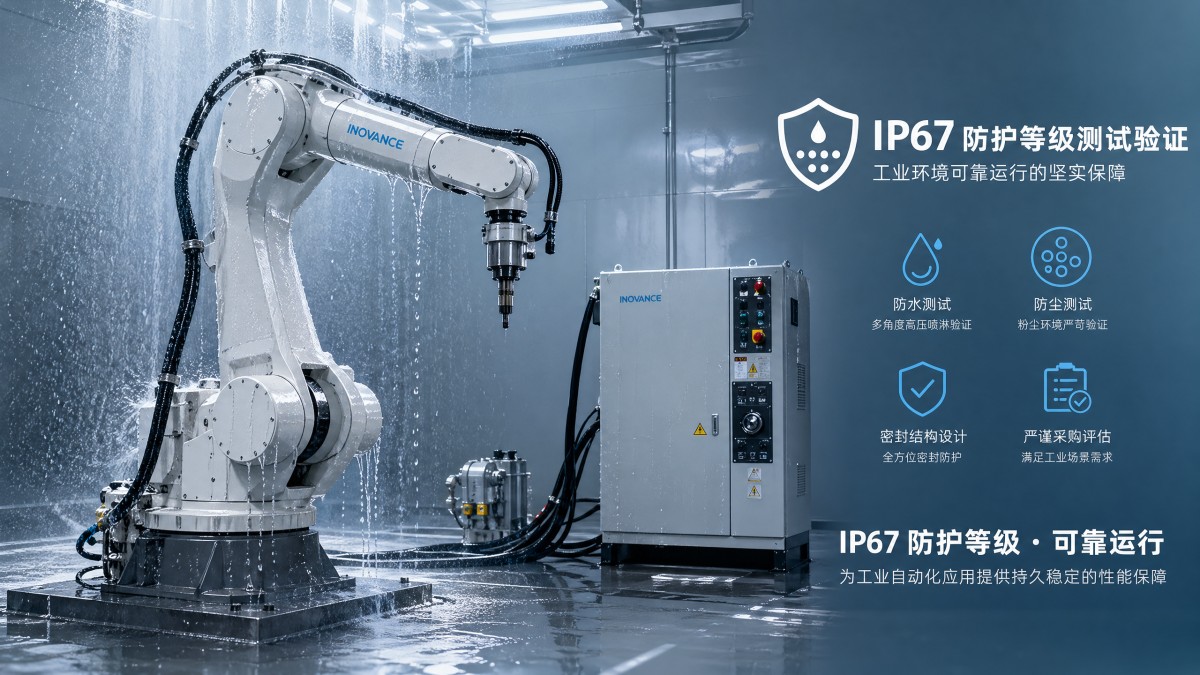
The core search intent behind this topic is practical purchase validation. Readers are not looking for a generic definition of ingress protection. They want to know what questions to ask before buying a robotic arm that may face water spray, dust, coolant mist, cleaning cycles, or outdoor humidity.
For most industrial buyers, the real concern is simple: Will this robot survive my environment without unexpected failures, contamination risk, or expensive downtime? That makes the robotic arm IP67 waterproof test a decision tool, not a marketing label.
Before buying, focus on these fundamentals:
- Was the entire robot system tested, or only the arm body?
- Was the test performed by the manufacturer, a third party, or under a recognized standard?
- Does IP67 apply during static lab conditions only, or under cable movement, thermal cycling, and repeated production use?
- What exclusions apply to connectors, teach pendants, control cabinets, end effectors, and external sensors?
- How does waterproof performance change over time as seals wear and maintenance accumulates?
These questions matter because many failures in harsh environments do not happen on day one. They appear after repeated cleaning, joint motion, seal aging, hose routing changes, or field modifications. A credible vendor should be able to discuss all of this in detail.
What does a robotic arm IP67 waterproof test actually prove?
IP67 generally means two things: complete dust protection and resistance to temporary immersion in water under defined test conditions. That sounds reassuring, but buyers should understand the limit of what it proves.
A robotic arm IP67 waterproof test usually demonstrates that a product can resist ingress during a controlled laboratory procedure. It does not automatically prove long-term durability in every harsh production scenario, such as:
- High-pressure washdown
- Hot water or chemical cleaning agents
- Coolant splash with oil content
- Continuous outdoor rain and UV exposure
- Frequent temperature swings causing seal expansion and contraction
- Daily operation with repetitive axis motion under contamination
This is why buyers should ask vendors to distinguish between:
- Ingress protection rating
- Real application durability
- Maintenance requirements to preserve rating
In short, IP67 is a baseline indicator, not a complete environmental reliability guarantee.
Questions engineers and procurement teams should ask about the test method
If you are comparing suppliers, this is where technical due diligence becomes valuable. Ask direct, auditable questions instead of accepting broad claims.
1. What exact standard and procedure was used?
Ask for the formal test reference, test duration, immersion depth, dust test conditions, and pass criteria. If the vendor cannot provide a clear protocol, treat the claim cautiously.
2. Was the robot tested in a powered or unpowered state?
A robotic arm may behave differently when static versus when joints, seals, and cable paths are moving. If your use case involves operation in wet areas, dynamic condition data is more relevant.
3. Which configuration was tested?
Was the unit tested with the same wrist, mounting orientation, dress pack, connectors, and accessories you plan to buy? Small configuration differences can affect sealing performance.
4. Were cable entry points and connectors included?
In many field failures, water ingress happens at connectors, cable glands, or custom integration points rather than through the main casting of the robotic arm.
5. Was the end effector included in the waterproof test?
The robotic arm may be IP67, but the gripper, tool changer, camera, or pneumatic assembly may not be. For buyers, the effective environmental rating of the cell is often limited by the weakest component.
6. Is there third-party certification or only internal validation?
Internal testing can still be useful, but third-party validation often gives procurement and compliance teams higher confidence.
7. What are the failure criteria?
Did the vendor only inspect for visible leakage, or also verify insulation resistance, encoder function, servo integrity, corrosion onset, and post-test repeatability?
8. Was there any post-test performance drift?
A robot may technically pass ingress testing but still show long-term reliability issues after exposure. Ask for data on repeatability, joint torque behavior, and error rates after testing.
Which parts of the robot system are most often misunderstood?
One of the biggest buying mistakes is assuming the entire automation package shares the same protection level as the robotic arm itself. In reality, environmental resilience depends on the full system.
Pay close attention to these components:
- Controller cabinet: Often installed outside the wet zone, but if it is nearby, its rating matters.
- Teach pendant: A common vulnerability in washdown or high-humidity areas.
- Connectors and junction boxes: Frequent sources of ingress after installation or maintenance.
- EOAT and grippers: Often less protected than the arm.
- Vision systems and sensors: May need extra enclosures or air purge solutions.
- Pneumatic and vacuum lines: Can create hidden contamination or moisture risks.
For operators and maintenance teams, this matters because downtime rarely occurs from brochure language. It happens when one exposed interface fails under real plant conditions.
How to judge whether IP67 is enough for your actual environment
Not every wet or dusty application needs the same level of protection. Buyers should map the robotic arm IP67 waterproof test against the real exposure profile of the production line.
Ask these application questions:
- Is exposure occasional splash, regular washdown, or full sanitation cleaning?
- Is water clean, salty, oily, chemically treated, or mixed with abrasive particles?
- Is dust dry and fine, or sticky and conductive?
- Will the robot experience high-pressure spray rather than temporary immersion?
- Are there hygiene requirements such as food, pharma, or medical production?
- Will the robot operate outdoors or in condensation-prone facilities?
If your application involves aggressive cleaning chemicals, pressurized spray, or corrosion-heavy environments, IP67 alone may be insufficient. In such cases, buyers may need to evaluate higher sealing requirements, corrosion-resistant coatings, specialized hygienic design, or additional protective enclosures.
For decision-makers, the key is this: the right rating is the one that matches the full operating environment, not just the headline spec.
What evidence separates a reliable vendor from a marketing-driven one?
Strong suppliers can usually provide a technical paper trail. Weak ones tend to stay vague.
Look for the following evidence:
- Formal ingress test report or certification summary
- Exploded views or design notes showing seal architecture
- Recommended maintenance intervals for preserving waterproof performance
- Chemical compatibility guidance for cleaning agents
- Field case studies in similar environments
- Warranty language that clearly states environmental coverage
- Failure mode history or MTBF data for harsh-condition deployments
A credible manufacturer should also explain tradeoffs honestly. For example, stronger sealing can affect maintenance access, heat dissipation, cable routing, or replacement cost. Technical transparency is usually a better predictor of long-term supplier quality than polished sales language.
Operational and maintenance questions that buyers often overlook
Even a properly rated robot can fail early if maintenance practice does not support the environmental design. This is especially relevant for operators, plant engineers, and lifecycle cost reviewers.
Before purchase, ask:
- How often should seals be inspected or replaced?
- Does routine maintenance require opening protected areas?
- What happens to the IP rating after repair or cable replacement?
- Are there approved cleaning methods and prohibited detergents?
- Can maintenance be performed in-house, or is factory service required?
- How is waterproof integrity verified after service?
These details directly affect uptime, spare parts planning, and total cost of ownership. A lower-cost robot with weak serviceability in wet conditions can become more expensive than a premium unit with better environmental robustness.
How enterprise buyers should compare suppliers beyond the waterproof label
For procurement leaders and business decision-makers, the best buying framework combines technical fit with commercial risk control.
When comparing robotic arm options, score suppliers across these dimensions:
- Test credibility: documented, repeatable, auditable evidence
- System completeness: arm, controller, connectors, tooling, and accessories
- Application fit: proven use in comparable environmental conditions
- Lifecycle support: maintenance method, seal replacement, service network
- Failure risk: warranty scope, field reliability, downtime exposure
- Integration risk: third-party EOAT, sensor compatibility, cable routing
- Total cost: not just purchase price, but long-term operating impact
This approach helps avoid a common sourcing error: selecting the robot that looks compliant on paper but performs poorly once integrated into a real production cell.
Final buying checklist: ask these before you sign
If you want a short version, these are the most useful questions to ask before approving a purchase:
- Can you provide the full robotic arm IP67 waterproof test details and pass criteria?
- Was the tested configuration identical to the one quoted?
- Does the rating apply to the full system or only the arm body?
- What are the known limits regarding washdown, chemicals, pressure, and temperature?
- What maintenance is required to preserve waterproof performance?
- What field data exists from similar installations?
- What is excluded from warranty coverage in wet or dusty environments?
- What post-service steps are needed to confirm sealing integrity?
A robotic arm with a credible IP67 claim can be an excellent choice for many industrial settings. But the smart buying decision comes from validating the test context, system boundaries, and long-term reliability factors behind that claim.
In summary, buyers should treat a robotic arm IP67 waterproof test as the start of technical evaluation, not the end of it. The best suppliers will welcome detailed questions, provide evidence, and help you match the protection level to your actual process risks. That is how researchers, operators, procurement teams, and executives reduce downtime, avoid specification mistakes, and invest in automation with confidence.
Search News
Hot Articles
- Carbon Fiber StructuresHow to Specify Aerospace Carbon Fiber Assemblies for Lightweight, Load-Bearing PartsJul 11, 2026
- Machine VisionXiaomi, Alibaba DAMO Academy Drive Open-Source Robotics Model Ecosystem, Lowering Algorithm Development Barriers for Overseas SMEs Adopting Chinese Robotics SolutionsMar 30, 2026
- Cobots & ArmsShanxi 'AI+' Conference Showcases Embodied Intelligence with Multinational Buyer Engagement: Key Industry ImplicationsMar 30, 2026
Popular Tags
Recommended News
 Jul 11, 2026How to Specify Aerospace Carbon Fiber Assemblies for Lightweight, Load-Bearing PartsAerospace carbon fiber assemblies: learn how to specify laminate design, load data, joining methods, and inspection controls for lighter, reliable load-bearing aerospace parts.Elena Rostova (UAV Systems Researcher)
 Mar 30, 2026Xiaomi, Alibaba DAMO Academy Drive Open-Source Robotics Model Ecosystem, Lowering Algorithm Development Barriers for Overseas SMEs Adopting Chinese Robotics SolutionsXiaomi & Alibaba DAMO Academy's open-source robotics models lower algorithm barriers for global SMEs. Boost efficiency in manufacturing, logistics & smart retail with ROS 2 compatible solutions.TSV Data Lab
 Mar 30, 2026Shanxi 'AI+' Conference Showcases Embodied Intelligence with Multinational Buyer Engagement: Key Industry ImplicationsShanxi 'AI+' Conference highlights embodied intelligence with Tesla, Ubtech & Jiantao showcasing multimodal robotics. 40+ global buyers validated tech on-site, creating new B2B channels for industrial automation & AI solutions.Chen Wei (Automation Lead Engineer)
 Mar 30, 2026Zhongguancun Unveils 6G Integrated Sensing-Computing-Intelligence Platform to Empower Embodied Robots for Global Industrial ApplicationsZhongguancun's new 6G platform revolutionizes industrial robotics with <10ms latency, empowering global automotive, logistics & port automation. Discover how this tech boosts China's smart manufacturing exports.TSV Data Lab
 Mar 30, 2026Mech-Mind Tianjin Embodied Intelligence R&D and Production Base Goes Live, Cutting Delivery Time by 20%–30% for Global Customized AMR+Vision SolutionsMech-Mind's Tianjin AMR+Vision production base cuts delivery time by 20%-30% for欧美 & Latin American markets. Discover how this PLd-certified facility accelerates customized robotics solutions for smart manufacturing and logistics.Chen Wei (Automation Lead Engineer)
 Mar 30, 2026Boao Forum Reveals 'Co-evolution of Big and Small Brains' Trend in Humanoid Robots, China's Embodied Intelligence Accelerates Adaptation to Overseas Manufacturing Service ScenariosDiscover how China's humanoid robots, featuring 'Co-evolution of Big and Small Brains,' are revolutionizing global manufacturing. Learn about Embodied Tian Gong 3.0's ISO compliance and overseas deployment at Boao Forum 2026.Chen Wei (Automation Lead Engineer)
 Mar 30, 2026China Railway Industrial Secures Patent for Embodied Robotics in Material Handling, Boosting High-Precision Delivery Capabilities for Overseas Infrastructure and Manufacturing ProjectsChina Railway Industrial's new patent for embodied robotics in material handling boosts high-precision delivery for global infrastructure & manufacturing. Discover how this innovation enhances logistics accuracy in automotive, rail transit & EPC projects.Chen Wei (Automation Lead Engineer)
 Oct 26, 2026AMAXiMAL Releases Open-Source TopMod 3D v3 With Claude AIExplore AMAXiMAL’s free, open-source TopMod 3D v3 with Claude AI assistance, topology-based modeling and plywood fabrication tools that connect complex designs to physical builds.Dr. Marcus Vance
 Oct 26, 2026Choosing a SCADA System Integrator Company: PLC Compatibility and Long-Term SupportChoose a scada system integrator company with proven PLC compatibility and reliable long-term support. Discover what to test, compare, and require before investing.Victor Lin (Chief Software Architect)
 Oct 25, 2026Hesai Leads Global ADAS Main Lidar Shipments in Yole’s 2026 ReportHesai led global ADAS main lidar shipments with a 43% share in 2025, according to Yole’s 2026 report. Explore what this ranking reveals about its automotive market position.TSV Data Lab
 Oct 25, 2026Choosing an Aerospace Materials Manufacturer: Quality and Traceability ChecksChoosing an aerospace materials manufacturer? Learn how to verify certifications, test reports, and lot traceability to qualify suppliers confidently and reduce costly sourcing risks.Dr. Marcus Vance
 Oct 24, 2026Guotai Haitong: Global Entry-Level 3D Printer Shipments Rose 39% in Q1 2026Entry-level 3D printer shipments rose 39% in Q1 2026, Guotai Haitong reports. Explore how AI, multicolor printing and print farms are shaping market growth.Dr. Marcus Vance
 Oct 24, 2026Choosing an Industrial Vision Inspection Supplier: Acceptance Tests That MatterChoose an industrial vision inspection supplier with confidence. Discover acceptance tests for defect detection, false rejects, production speed, and reliable part rejection before you buy.TSV Data Lab
 Oct 23, 2026US Navy Raises Gecko Robotics Contract Ceiling to $300M for Robotic Fleet MaintenanceUS Navy raises Gecko Robotics’ contract ceiling to $300M for Pacific Fleet robotic inspections. Explore potential opportunities for maintenance suppliers and key procurement considerations.Chen Wei (Automation Lead Engineer)
 Oct 23, 2026Choosing Industrial Sensing Systems for Global Plants: Protocol CompatibilityCompare industrial sensing systems international buyers can trust. Explore protocol compatibility, reduce integration risks, and select proven configurations for reliable global plant deployments.TSV Data Lab
 Oct 22, 2026KUKA Showcases Physical AI and iiQKA.AI Vision at NVIDIA GTC BerlinExplore KUKA’s Physical AI showcase at NVIDIA GTC Berlin and discover how iiQKA.AI Vision aims to simplify robotic vision integration and improve 2D and 3D scene recognition.TSV Data Lab
 Oct 22, 2026Robotic Machining of Advanced Composites: What Tolerances Are Achievable?Explore advanced materials machining robotics: discover what drives achievable composite tolerances and how to validate accuracy before investing in your next machining system.Dr. Marcus Vance
 Oct 21, 2026China’s Industrial Robot Exports Near RMB 10 Billion in First Nine Months of 2026China’s industrial robot exports neared RMB 10 billion in January–September 2026, with value rising faster than volume. Explore the data and what it could mean for suppliers.Chen Wei (Automation Lead Engineer)
 Oct 21, 2026Low-Latency Industrial Data Processing: Pricing and Key Cost DriversExplore industrial data latency price drivers, from edge hardware to integration and support. Learn how to compare quotes, verify performance, and avoid unnecessary costs.TSV Data Lab
 Oct 20, 2026KUKA Launches iiQKA.AI Vision to Simplify Industrial Image ProcessingKUKA iiQKA.AI Vision simplifies industrial image processing with controller-based 2D and 3D vision. Explore drag-and-drop setup for vision-guided automation.TSV Data Lab
 Oct 20, 2026Smart Industrial Edge Devices: Key Criteria for Legacy PLC IntegrationChoose smart industrial edge devices for legacy PLC integration. Discover key criteria for compatibility, data quality, security, and reliable collection without disrupting control.TSV Data Lab
 Oct 19, 2026Choosing a Radar Sensor by Application: Range, Resolution, and Field of ViewSimplify radar sensor application based product selection. Compare range, resolution, and field of view to avoid blind spots and choose with confidence. Explore the guide.TSV Data Lab
 Oct 18, 2026Comparing Material Options for Procurement: Specs, Costs, and Supply RisksExplore procurement oriented technical content on material options, specs, costs, and supply risks. Compare alternatives to cut hidden expenses and make confident sourcing decisions.Dr. Marcus Vance
 Oct 17, 20265-Axis CNC Positioning Accuracy: How to Interpret ISO 230-2 Test ResultsAssess 5 axis CNC machining positioning accuracy with ISO 230-2. Learn to interpret repeatability, reversal error, and test conditions to compare suppliers and make confident acceptance decisions.Dr. Marcus Vance























